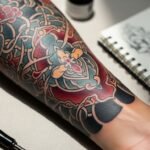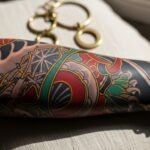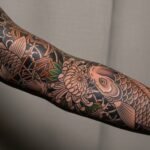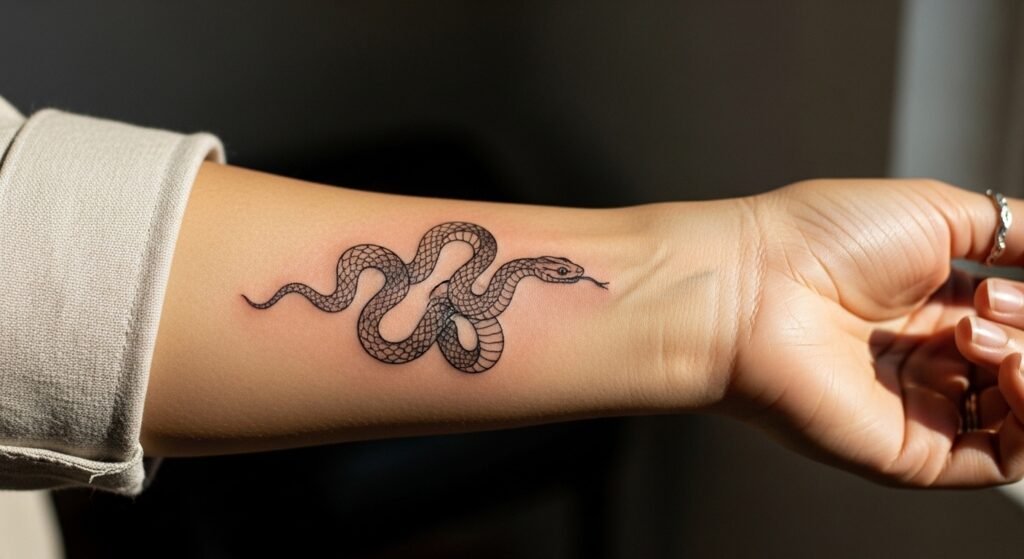
You’re sitting in a consultation, scrolling late-night for that one idea that finally feels right. A small Japanese snake tattoo can be mysterious, symbolic, and elegant all at once — perfect if you want ink with cultural weight and quiet presence. This collection of 21 small Japanese snake tattoo ideas walks you through styles, placements, and real aftercare tips so you can go into your session confident.
Each idea below covers design details, the best placements, and how the piece heals. I also drop honest product suggestions I use myself — like Zensa numbing cream to take the edge off sensitive spots and Saniderm second-skin bandages to protect fresh linework. Save the pins you love and bring them to your artist — these small Japanese snake tattoo ideas are designed to be both poetic and practical.
- Minimal Fine-Line Japanese Snake on Inner Wrist
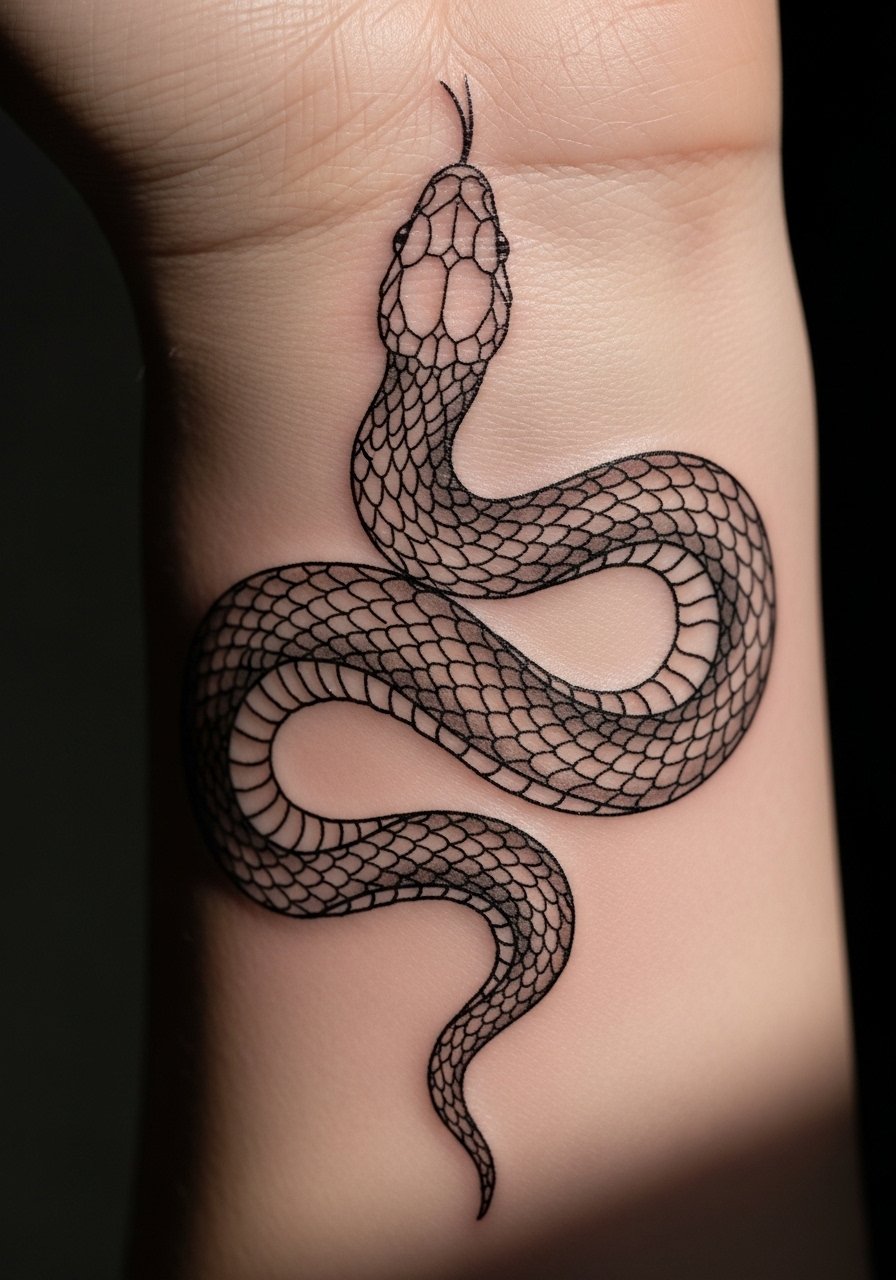
This tiny wrist snake is all about whisper-quiet detail. A single-needle fine-line coil that follows the wrist curve reads like jewelry. It’s symbolic without shouting, and the delicate linework ages well if you protect it from sun.
Style & Design Details
- Tattoo style: fine-line, single-needle
- Recommended size: 1–2 inches (palm-width)
- Best placements: inner wrist (follows bone), side of finger, behind ear for a micro version
- Color vs. blackwork: blackwork with light gray wash for depth
- Design elements: single-needle line, minimal negative-space highlight, tiny scale dots, tapered tail, subtle tongue flick
- Longevity note: fine lines blur over decades if frequently sun-exposed; SPF helps
- Who it suits: first-timers, minimalists, work-conscious clients
Finding the Right Artist
Look for portfolios heavy on single-needle and fine-line portraits. Ask about needle sizes they use and how they prevent blowouts. Red flags: heavy-handed machines for delicate lines, artists without healed photos. An experienced fine-line artist is best — apprentices often aren’t the right fit.
Aftercare & Healing Tips
Leave the first wrap per your artist’s instructions; many recommend a short Saniderm application. Wash gently twice daily with fragrance-free soap, then apply a thin layer of unscented lotion like Lubriderm fragrance-free lotion while peeling occurs. Avoid wrist jewelry during healing and use an SPF stick after fully healed.
- Blackwork Coiled Snake Over Forearm
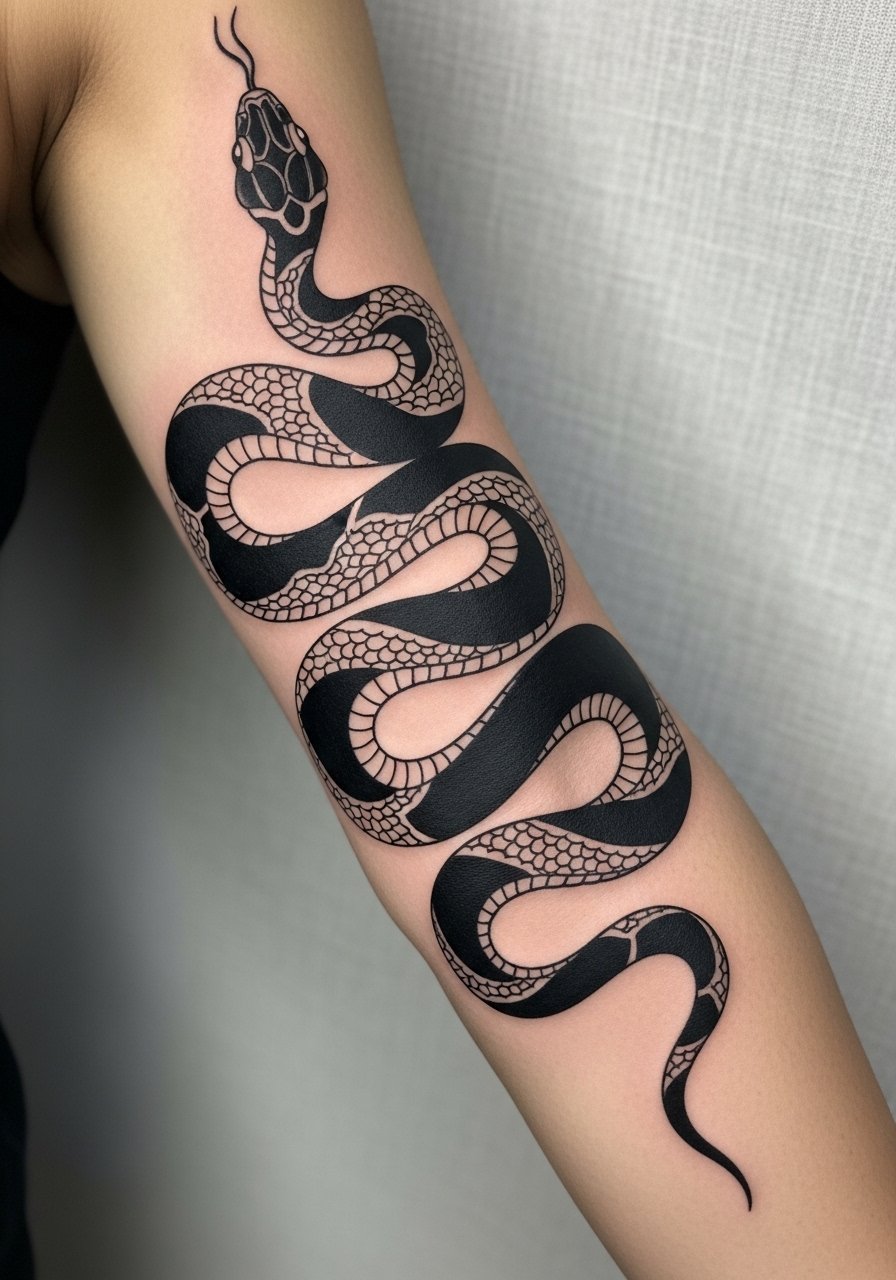
A bold blackwork coil channels classic Japanese silhouette into modern minimalism. The solid black body with controlled negative space reads strong from a distance and keeps visual drama tight in a small size.
Style & Design Details
- Tattoo style: blackwork with illustrative Japanese influence
- Recommended size: 3–4 inches (palm-sized)
- Best placements: outer forearm (wrap effect), calf, upper arm
- Color vs. blackwork: solid black, no color needed
- Design elements: thick silhouette, negative-space highlights, stipple texture on belly, tapered head detail
- Longevity note: solid blacks last longest when healed and protected
- Who it suits: collectors, minimalists who want a graphic look
Finding the Right Artist
Search portfolios for blackwork and Japanese-inspired pieces. Ask about ink types they use and whether they dilute black for shading. Avoid artists who only do color neo-traditional work. Experienced blackwork artists understand saturation and packing.
Aftercare & Healing Tips
Blackwork can scab heavier, so follow your artist’s wrap timing. Clean with mild soap and pat dry; apply a small amount of Hustle Butter Deluxe tattoo aftercare balm after the initial peel to soothe thick areas. Long-term, keep deep blacks out of harsh sun to avoid early fading.
- Neo-Traditional Snake Wrapped with Peony (Mini)
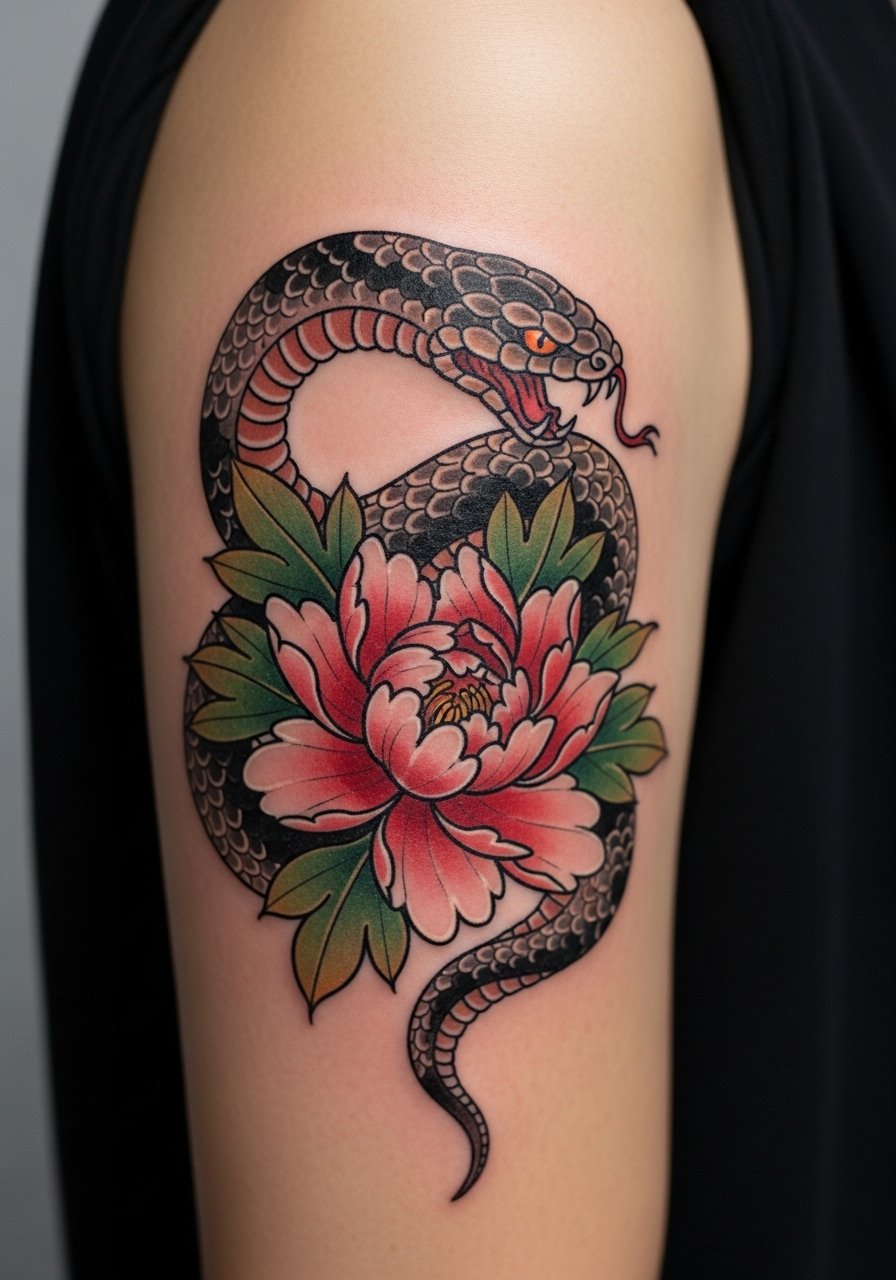
This mini neo-traditional piece mixes traditional Japanese motifs with contemporary color. The snake’s sinuous line complements peony petals, creating a compact narrative that reads beautifully on the upper arm.
Style & Design Details
- Tattoo style: neo-traditional with Japanese motifs
- Recommended size: 2.5–3.5 inches (palm-sized)
- Best placements: outer upper arm, shoulder blade, thigh
- Color vs. blackwork: color advised — muted reds, deep greens, and warm black outlines
- Design elements: bold outline, saturated color fills, subtle shading, floral petals, scale detail
- Longevity note: colored pieces need SPF to avoid premature color fade
- Who it suits: people who want narrative pieces with color, collectors of neo-traditional work
Finding the Right Artist
Choose artists who show neo-traditional florals and small colored scales. Ask how they blend Japanese design elements with neo-traditional lines. Avoid artists who over-saturate color in tiny pieces. A mid-experienced color artist is fine.
Aftercare & Healing Tips
Color heals differently than black; use a light layer of fragrance-free lotion as advised. During the peel stage, switch to an unscented moisturizing lotion like Aveeno fragrance-free lotion to keep pigments bright. After healed, apply SPF when exposed.
- Koi–Snake Hybrid, Small Calf Accent
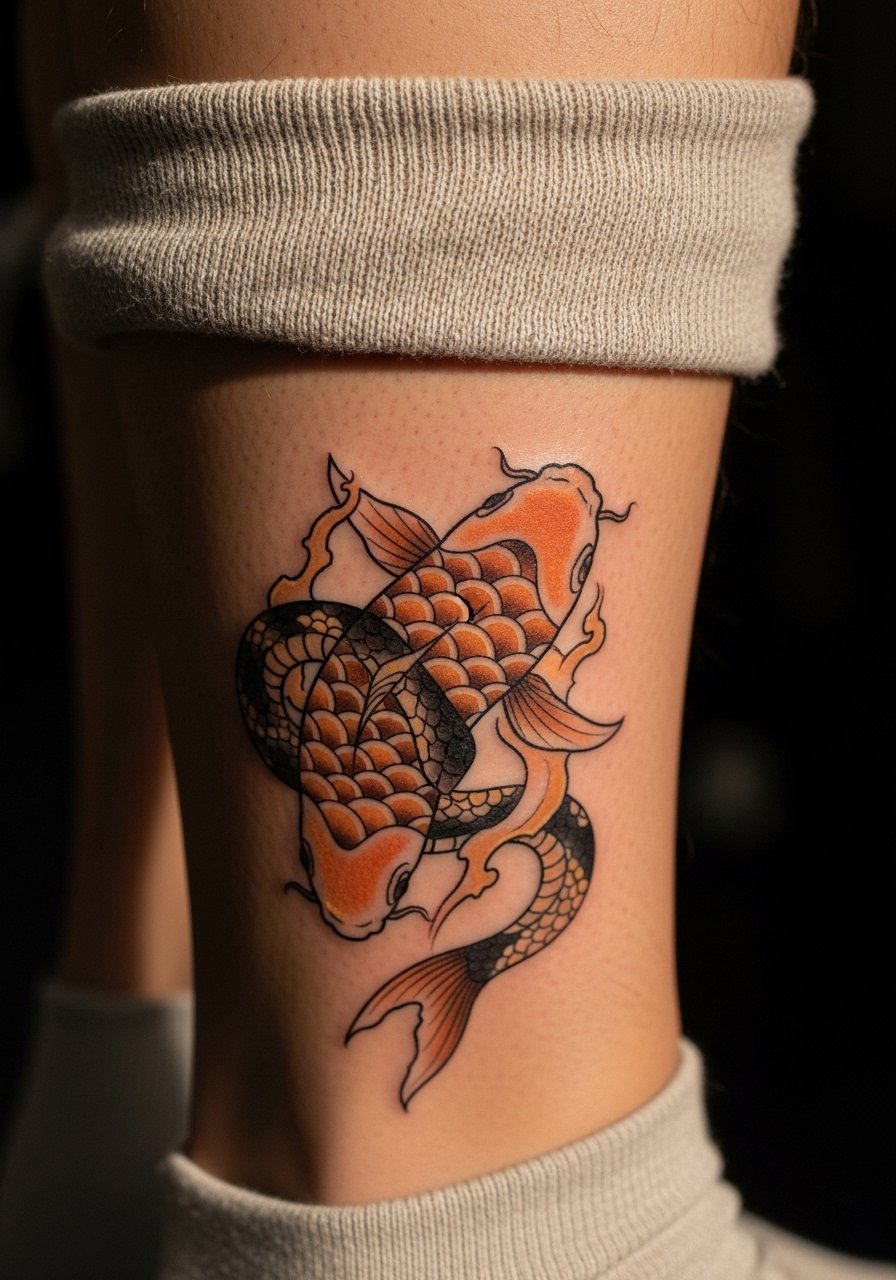
Blend two Japanese cultural symbols: koi patterns and a winding snake form. This hybrid reads as subtle folklore — a compact statement for someone who wants depth without a large backpiece.
Style & Design Details
- Tattoo style: illustrative Japanese with micro-colorwork
- Recommended size: 3–4 inches (calf band)
- Best placements: outer calf, lower arm, upper thigh
- Color vs. blackwork: small color accents (orange, gold) over black linework
- Design elements: koi-scale patterning, flowing S-curve, tapered fins replaced by snake tail, minimal dot shading, wave hints
- Longevity note: mixed color requires sun protection to keep oranges vibrant
- Who it suits: fans of Japanese iconography who want a unique twist
Finding the Right Artist
Look for artists who post small Japanese pieces, koi, or scale work. Ask about colorfastness and layering in small spaces. Avoid artists unfamiliar with scale gradients. Procreate mockups help visualize the hybrid — bring sketches or digital references.
Aftercare & Healing Tips
Follow standard cleaning and moisturizing. For color areas, switch to a gentle aftercare balm as directed. Avoid soaking the calf in pools or baths during the first two weeks. Long-term, use SPF and a brightening lotion if needed.
- Micro Ouroboros on Side Finger
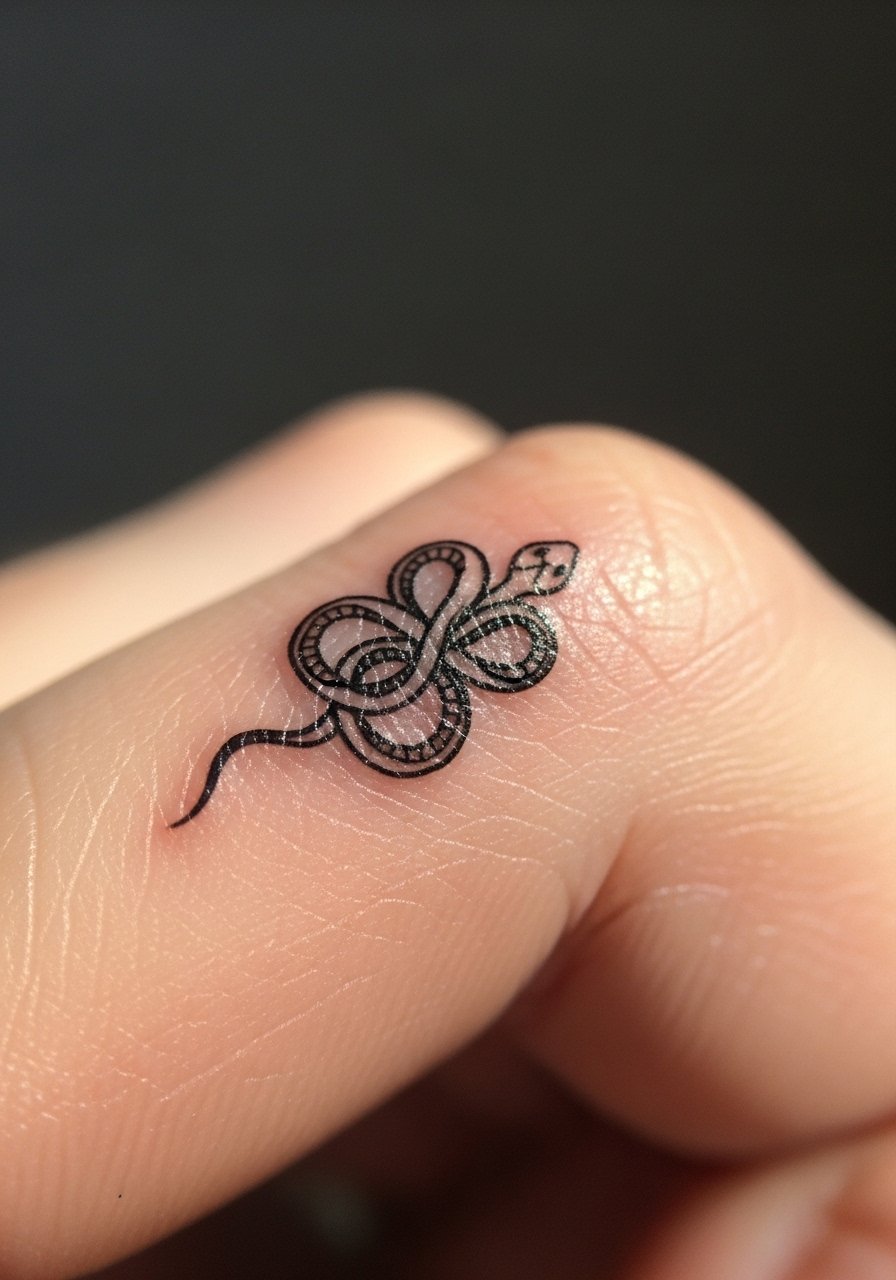
A tiny ouroboros is bite-sized symbolism: cycles, renewal, and self-containment. The finger placement packs a punch despite the size, acting like a secret signet.
Style & Design Details
- Tattoo style: micro-fine line, symbolic
- Recommended size: 0.5–1 inch
- Best placements: side finger, knuckle, behind ear
- Color vs. blackwork: blackwork only
- Design elements: single-needle line, tiny teeth detail, minimal scale marks
- Longevity note: finger tattoos fade fastest; expect faster touch-ups
- Who it suits: minimalists, people who like subtle symbolism
Finding the Right Artist
Choose an artist experienced with finger and micro work. Ask how they prevent blowout on delicate skin. Avoid artists who rarely tattoo hands. Expect to book touch-ups; fingers are high-motion areas.
Aftercare & Healing Tips
Finger pieces need gentle care. Keep hands dry and clean; begin moisturizing early but sparingly. Because of constant wear, consider scheduling touch-up at 3–6 months. A protective Tattoo sunscreen stick SPF 50 is valuable after healing.
- Snake and Wave Ankle Band — Japanese Linework
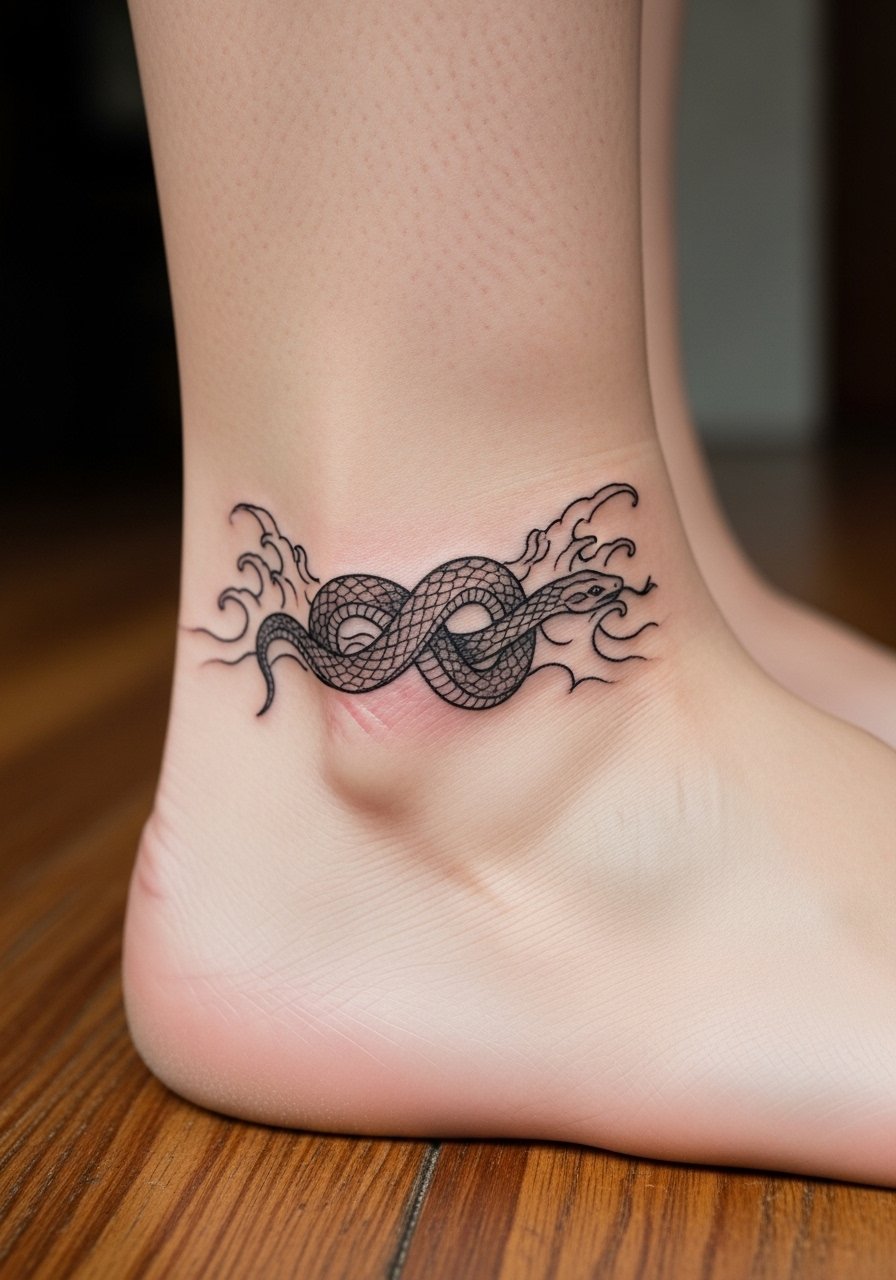
Wrap the ankle with rhythmic Japanese waves and a slithering snake. The band reads like a continuous pattern and looks graceful under socks or sandals.
Style & Design Details
- Tattoo style: Japanese linework with illustrative waves
- Recommended size: band height 1.5–2 inches, circumference varies
- Best placements: ankle band, wrist band, upper arm wrap
- Color vs. blackwork: black and gray recommended for contrast
- Design elements: wave motifs, scale pattern, fluid S-curve, negative-space highlights, tapered ends
- Longevity note: bands can blur if too tight; give space between elements
- Who it suits: people who want wearable, patterned ink
Finding the Right Artist
Search for linework bands and Japanese wave studies. Ask about how they scale patterns around curved areas. Avoid artists who try to compress too many details into a tiny band.
Aftercare & Healing Tips
Bands can scab along movement areas; keep the ankle elevated when possible early on. Use thin layers of unscented lotion; avoid ankle straps until fully healed. Saniderm is useful if your artist recommends it for movement-prone spots.
- Hidden Ear Snake — Subtle, Secret Placement
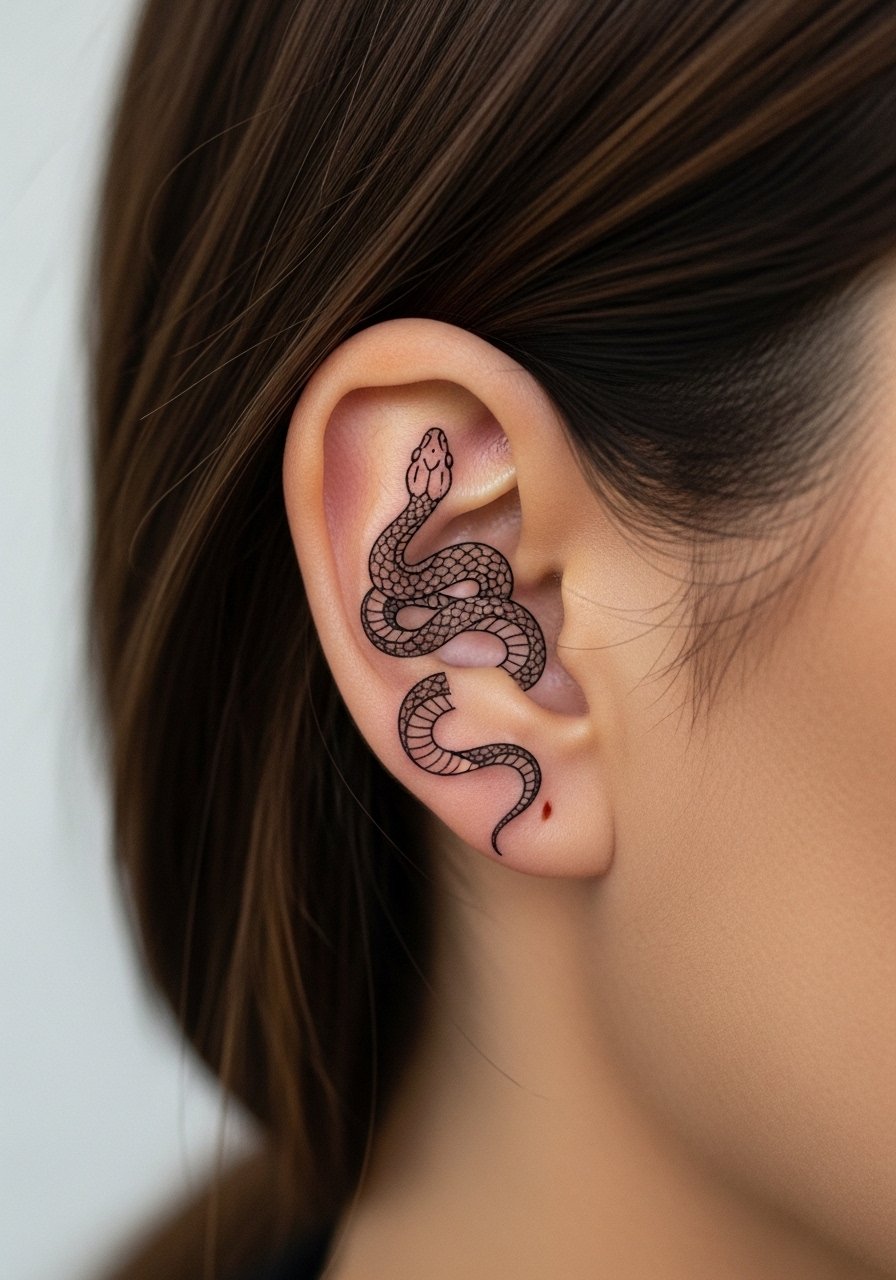
A hidden snake behind the ear is a private charm. It’s a quiet placement that peeks out when you tuck hair back. The small scale keeps the design intimate and mysterious.
Style & Design Details
- Tattoo style: micro-illustrative, fine-line
- Recommended size: 0.5–1.5 inches
- Best placements: behind ear, hairline, behind collar at nape
- Color vs. blackwork: blackwork, maybe a hint of gray
- Design elements: tapered head, small scale dots, negative-space stripes, slight curl to fit anatomy
- Longevity note: skin here is thin; lines can dull faster with hair oils
- Who it suits: discreet wearers, music and arts types, first-timers
Finding the Right Artist
Choose artists experienced with delicate facial-area placements. Ask about ink depth for thin skin and how they handle small needles. Avoid artists who use heavy lining tools for this area.
Aftercare & Healing Tips
Keep hair away from the area and avoid heavy hair products until healed. Clean twice daily and avoid sleeping directly on the ear for a week. A scent-free soap and minimal lotion are best.
- Mini Orochi Head on Upper Back (Japanese Folklore Nod)
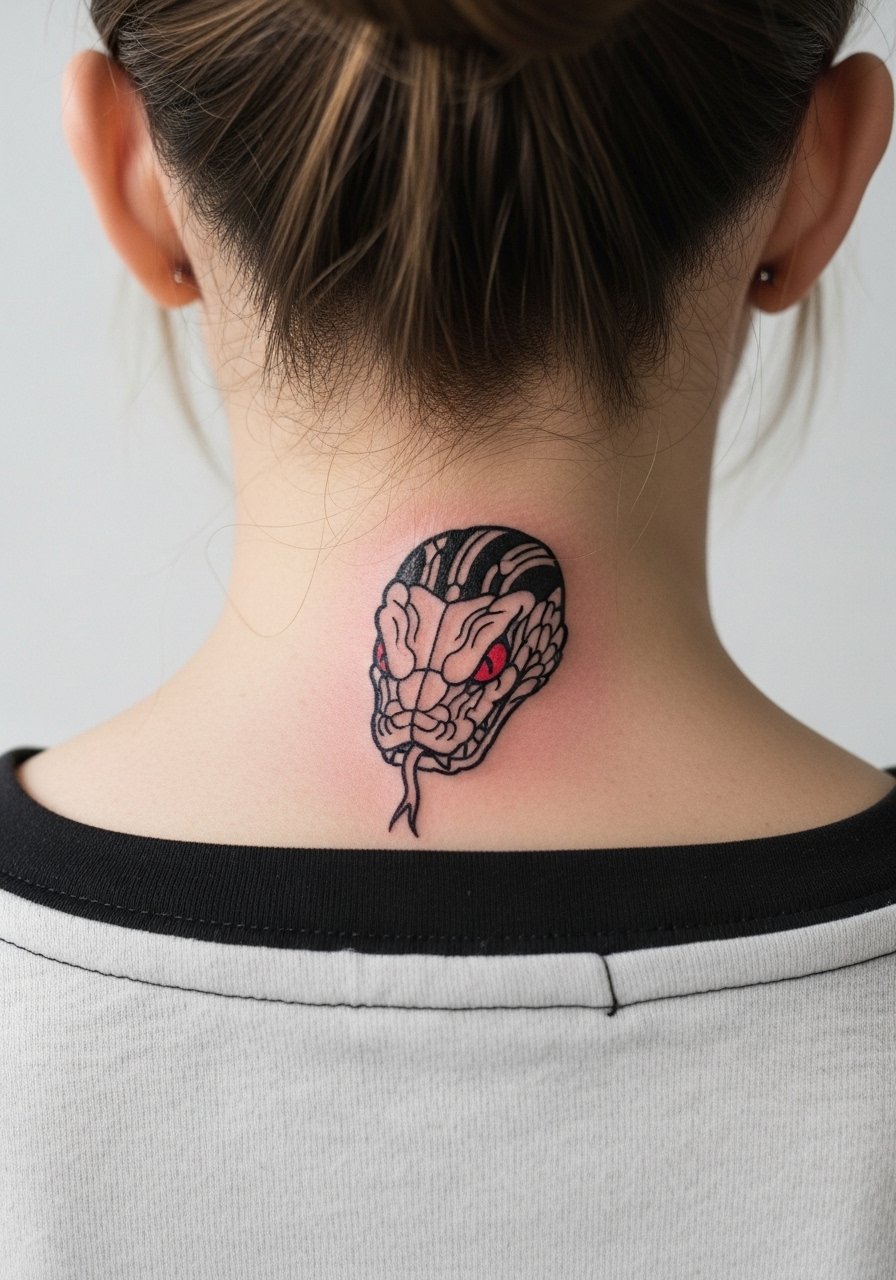
A tiny Orochi head nods to Japanese legend with scale patterning and subtle menace. Positioned on the upper back, it’s discreet yet powerful.
Style & Design Details
- Tattoo style: illustrative Japanese, small-scale
- Recommended size: 2–3 inches
- Best placements: upper back nape, between shoulder blades, center chest
- Color vs. blackwork: mostly blackwork with a possible colored eye
- Design elements: stylized jaw, scale accents, flared hood suggestion, geometric pattern fill
- Longevity note: upper back holds detail well but sunscreens are necessary when exposed
- Who it suits: folklore lovers, people who want small but symbolic tattoos
Finding the Right Artist
Look for artists who post Japanese heads and small illustrative beasts. Ask for healed photos of similar-sized work. Avoid artists who lack consistent scale work.
Aftercare & Healing Tips
Back pieces are easy to wrap with Saniderm for movement protection. Keep clothing soft against the area and avoid tight straps for two weeks. For healing comfort, a fragrance-free soap and lotion are recommended.
- Snake with Cherry Blossoms, Calf Accent
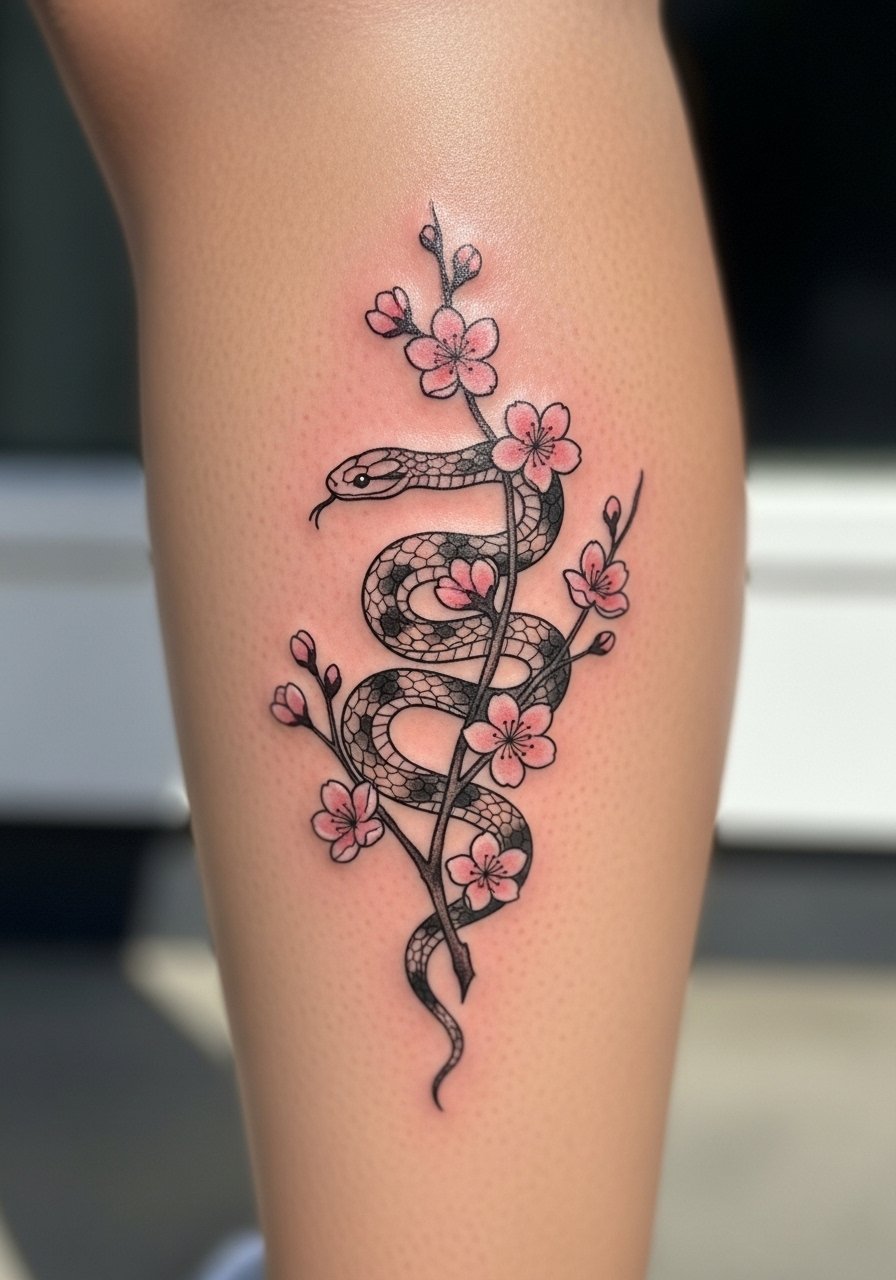
Cherry blossoms add transient beauty to the snake motif. A calf placement gives a long canvas to show both curve and floral detail.
Style & Design Details
- Tattoo style: Japanese floral-illustrative
- Recommended size: 3–4 inches vertical
- Best placements: outer calf, lower leg, rib side
- Color vs. blackwork: subtle color accents (pale pinks) over black outlines
- Design elements: blossom clusters, curved snake body, light stipple shading, petal drop details
- Longevity note: pastel colors can fade; SPF after healing helps
- Who it suits: romantics, cottagecore fans, floral tattoo lovers
Finding the Right Artist
Pick artists skilled in tiny florals and soft color palettes. Ask how they layer pastel tones for lasting results. Avoid artists who overload color into fine petals.
Aftercare & Healing Tips
Follow standard cleaning. Swap to an unscented lotion when peeling starts to maintain color vibrancy. Use a mineral-based SPF on healed ink when exposed.
- Geometric Snake Cuff Around Wrist
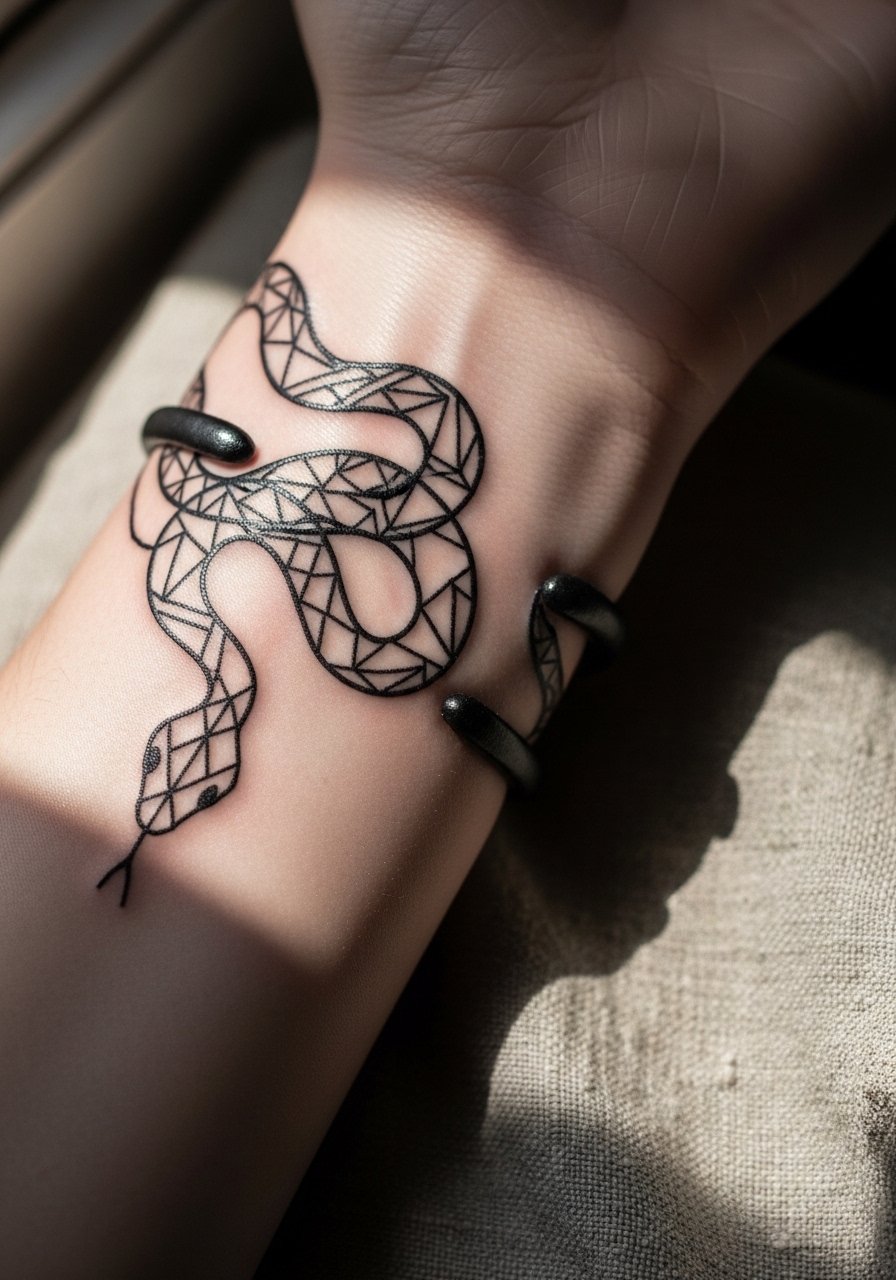
This cuff marries geometry and Japanese scale motifs. Clean edges and repeating patterns make it read like wearable art.
Style & Design Details
- Tattoo style: geometric with Japanese scale accents
- Recommended size: cuff height 1–2 inches
- Best placements: wrist cuff, upper arm band, ankle band
- Color vs. blackwork: blackwork preferred for crisp contrast
- Design elements: repeating scale triangles, negative-space bands, continuous loop, dotwork fill
- Longevity note: sharp geometry needs crisp healing; touch-up may be needed if lines shift
- Who it suits: modernists, architecture and design lovers
Finding the Right Artist
Find artists with steady linework and band experience. Ask about placement stenciling to ensure symmetry. Avoid artists who freehand long bands without proper marking.
Aftercare & Healing Tips
Keep bands dry and avoid constrictive jewelry. Saniderm may help maintain line integrity over the wrist during early movement. After healed, use SPF to retain crisp blackness.
- Single-Needle Sternum Snake — Subtle Centerpiece
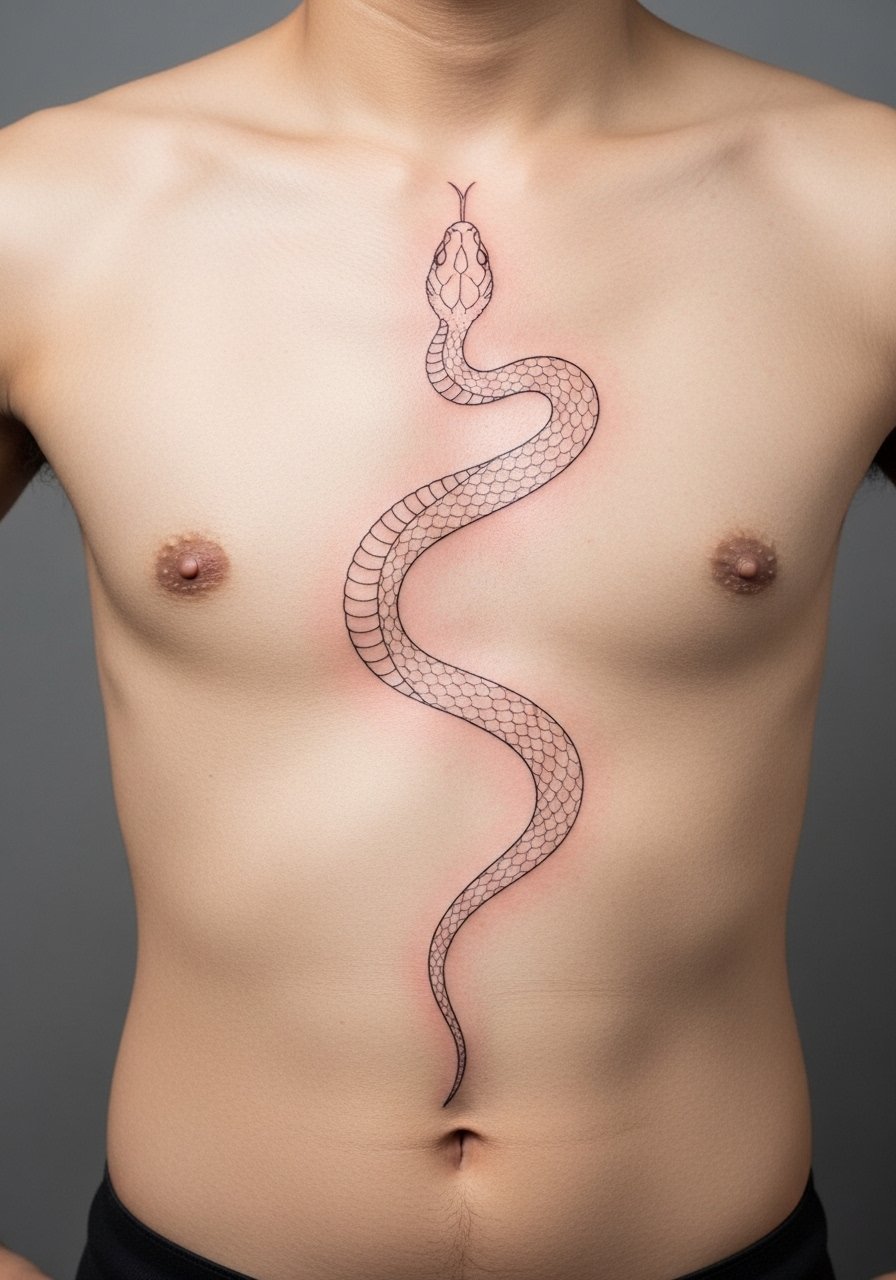
A sternum snake reads intimate and sculptural. The vertical form flatters the chest and can peek out under low-cut tops.
Style & Design Details
- Tattoo style: single-needle fine-line
- Recommended size: 3–5 inches vertical
- Best placements: sternum center, down the rib, along spine
- Color vs. blackwork: blackwork with light gray shading for the belly
- Design elements: elongated body, dot shading, minimal head detailing, negative-space midline
- Longevity note: central chest keeps detail well but sun exposure accelerates wear
- Who it suits: confident clients, those wanting a subtle center-line piece
Finding the Right Artist
Choose someone comfortable with chest anatomy and fine single-needle work. Ask about placement stencils and breathing adjustments during the sit. Avoid artists who rush large vertical compositions.
Aftercare & Healing Tips
Rib and sternum areas can be painful; applying a numbing cream like Zensa numbing cream beforehand can help. Wear loose clothing and sleep elevated if soreness persists. Keep moist and protected, then apply SPF after healing.
- Tiny Dotwork Snake Nape of Neck
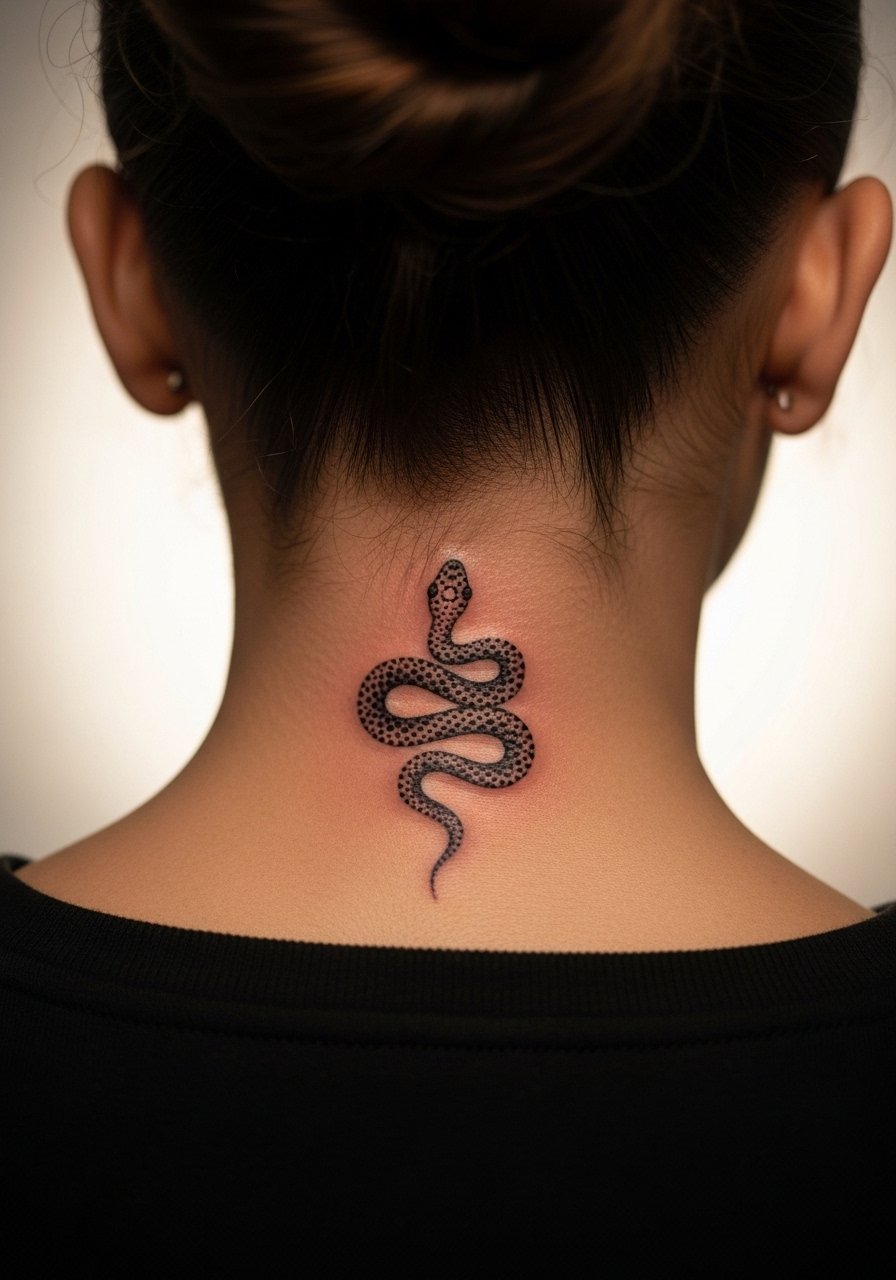
Dotwork adds texture while staying tiny. On the nape, a dotwork snake reads almost like a patch of decorative skin.
Style & Design Details
- Tattoo style: dotwork / micro-illustrative
- Recommended size: 1–2 inches
- Best placements: nape, behind collar, upper shoulder
- Color vs. blackwork: black/gray dot gradients
- Design elements: stippling, tiny scale clusters, light head shadow, negative-space highlights
- Longevity note: dotwork holds detail well when done with correct depth
- Who it suits: dark-academia fans, people who want texture over linework
Finding the Right Artist
Find dotwork specialists or blackwork artists with strong stippling. Ask to see healed dotwork photos at similar scales. Avoid generalists without dotwork portfolios.
Aftercare & Healing Tips
Dotwork heals like blackwork but needs moisture control to avoid scabbing that disrupts stipple. Use gentle unscented lotion and keep the area clean. After healed, apply SPF when exposed.
- Watercolor Snake Shoulder Blade Accent
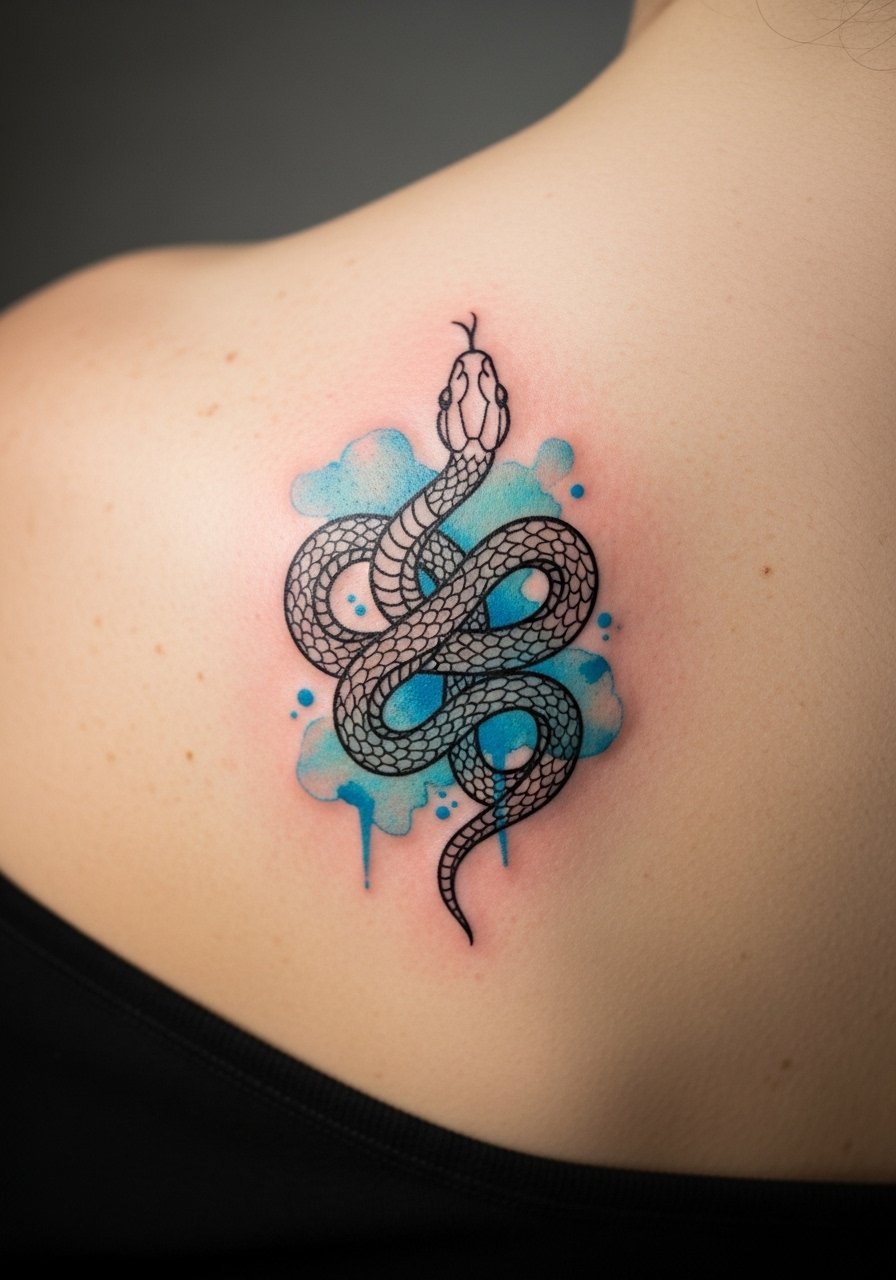
Watercolor behind crisp lines gives a painterly, airy feel. The shoulder blade is an ideal canvas for a small splash of color paired with Japanese form.
Style & Design Details
- Tattoo style: watercolor + illustrative linework
- Recommended size: 3–4 inches
- Best placements: shoulder blade, upper chest, thigh
- Color vs. blackwork: color accent under or around black lines
- Design elements: diluted color washes, light line overlay, soft edge blends, scale hinting
- Longevity note: watercolor fades faster; protect with SPF
- Who it suits: cottagecore fans, color lovers, artists
Finding the Right Artist
Pick artists who post watercolor tattoos and clean overlays. Ask how they mix pigments and maintain soft blends in small areas. Avoid artists without stable color saturation in small work.
Aftercare & Healing Tips
Watercolor areas need diligent sun protection and gentle moisturizing. Consider a post-heal color protection balm if needed. A light application of Hustle Butter Deluxe tattoo aftercare balm after peeling can soothe pigment-rich spots.
- Small Ribcage Snake with Kanji Accent
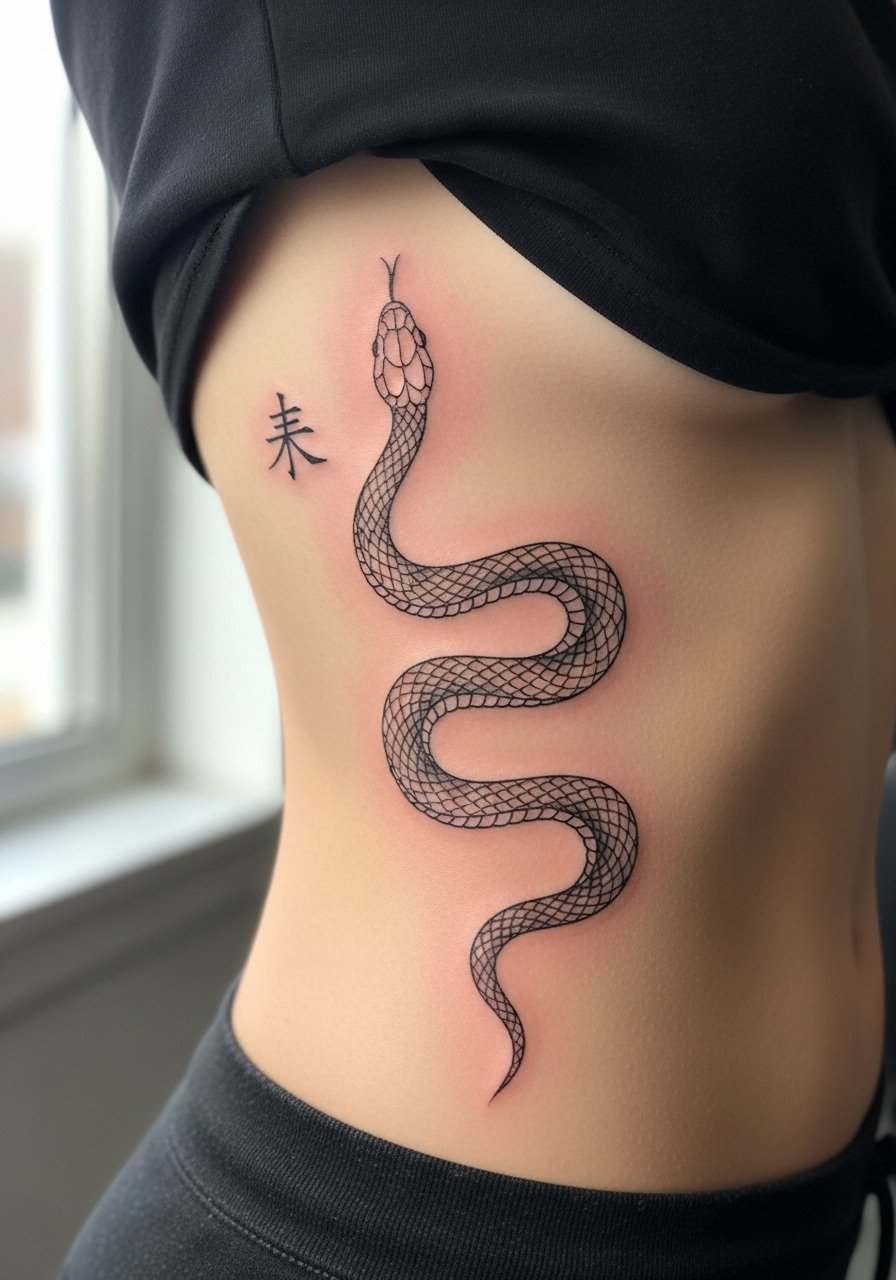
Combining kanji and snake image on the rib gives personal meaning. The rib is intimate and dramatic, perfect for someone ready for a slightly more painful placement.
Style & Design Details
- Tattoo style: fine-line illustrative + script
- Recommended size: 3–4 inches horizontal
- Best placements: ribcage side, sternum side, underboob border
- Color vs. blackwork: blackwork recommended for script clarity
- Design elements: flowing body, small kanji character, light shading, curved composition
- Longevity note: ribs hold detail but move with breathing; careful scaling matters
- Who it suits: people wanting a meaningful, private piece
Finding the Right Artist
Seek artists comfortable with script and Japanese characters. Bring clear references for kanji translation and ask the artist to verify placement. Avoid shops that don’t double-check translations.
Aftercare & Healing Tips
Rib pieces can sting; a numbing cream like EMLA topical anesthetic is often mentioned for comfort. Keep clothing loose and avoid heavy bras for two weeks. Saniderm can be helpful for reducing friction at this placement.
- Hannya-Entwined Mini Snake on Upper Arm
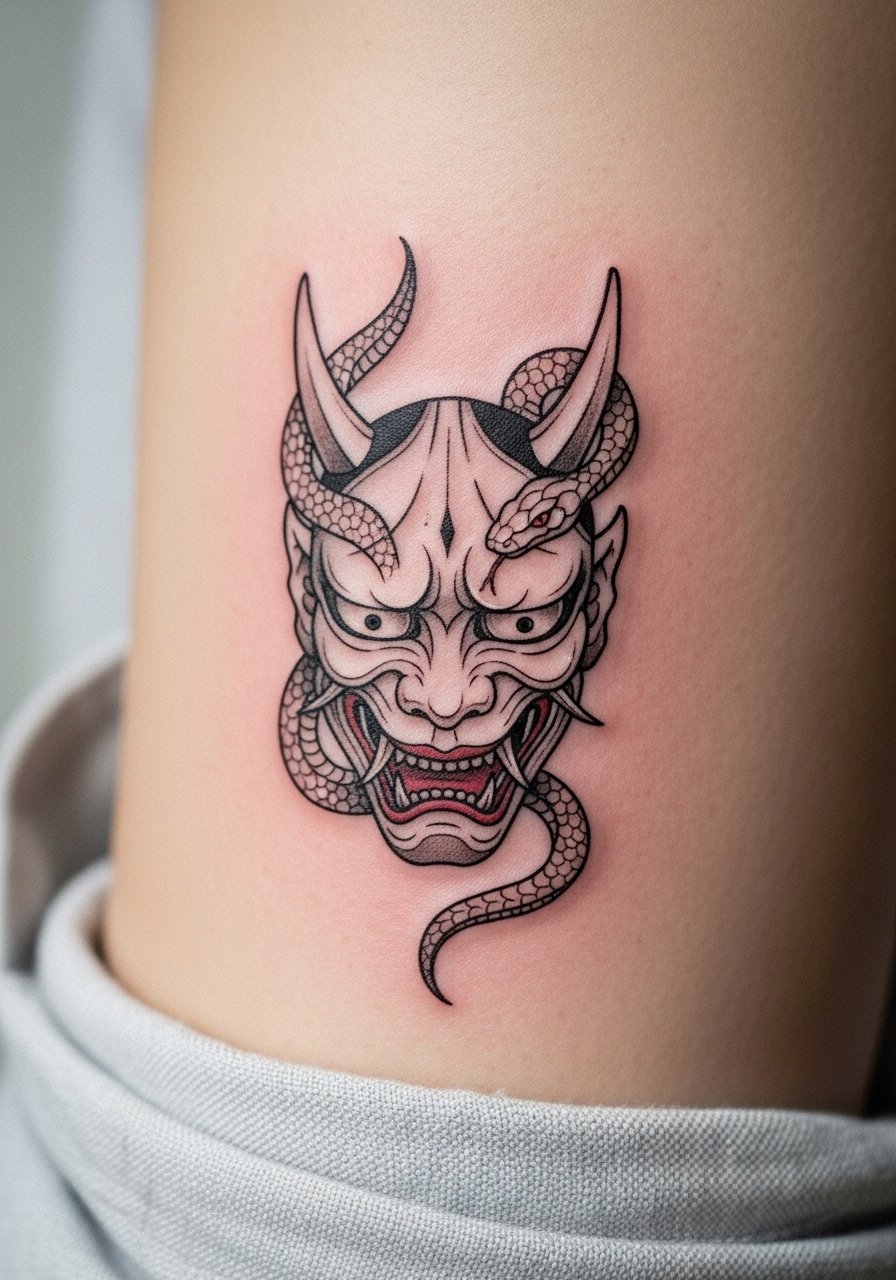
A tiny Hannya motif with a snake introduces classic Japanese theater-iconography at a scale that works as a statement accent.
Style & Design Details
- Tattoo style: Japanese motif, neo-traditional influence
- Recommended size: 2–3 inches
- Best placements: outer upper arm, shoulder cap, back of arm
- Color vs. blackwork: mixed — black outlines with muted reds
- Design elements: Hannya mask face details, snake wrapping, small dots for texture, minimal background fill
- Longevity note: facial details are fine but need crisp initial work to remain readable
- Who it suits: fans of Japanese theater symbols, collectors of cultural imagery
Finding the Right Artist
Look for artists who tattoo Japanese masks and small neo-traditional pieces. Ask about how they scale facial details down. Avoid artists without portfolio examples of small faces.
Aftercare & Healing Tips
Upper-arm pieces are comfortable to heal; keep them moisturized and avoid tight sleeves. Clean with gentle soap, and apply a thin layer of fragrance-free lotion during peeling phases.
- Symmetrical Twin Snakes on Collarbone
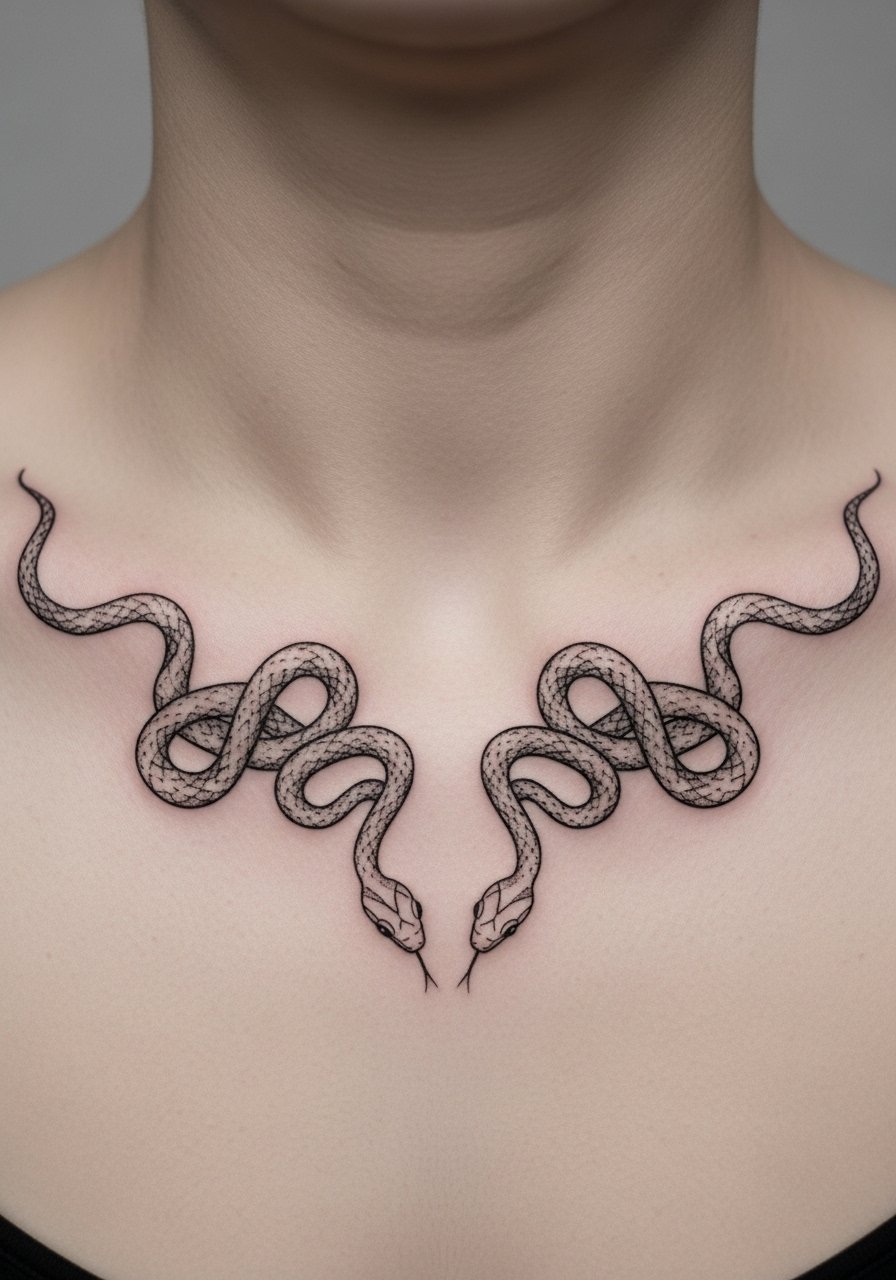
Two snakes mirrored across the collarbone read like symmetrical talismans. The composition flatters the neckline and looks balanced under jewelry.
Style & Design Details
- Tattoo style: illustrative symmetry
- Recommended size: each 2–3 inches horizontal
- Best placements: collarbone, sternum flanking, upper chest
- Color vs. blackwork: blackwork with light gray shading
- Design elements: mirrored S-curve, negative-space center, scale linework, tapered heads pointing inward
- Longevity note: chest placement keeps lines stable if not overexposed
- Who it suits: fashion-forward wearers, symmetry lovers
Finding the Right Artist
Choose artists who handle symmetrical, mirrored designs and can stencil for precision. Ask about how they measure and mirror the design. Avoid artists who freehand without careful mapping.
Aftercare & Healing Tips
Keep the area free from necklaces during healing. Use a fragrance-free lotion and a mineral SPF once healed. Consider an initial Saniderm if your artist recommends it for chest placements.
- Serpent Tail Anklet — Delicate Back-of-Ankle Detail
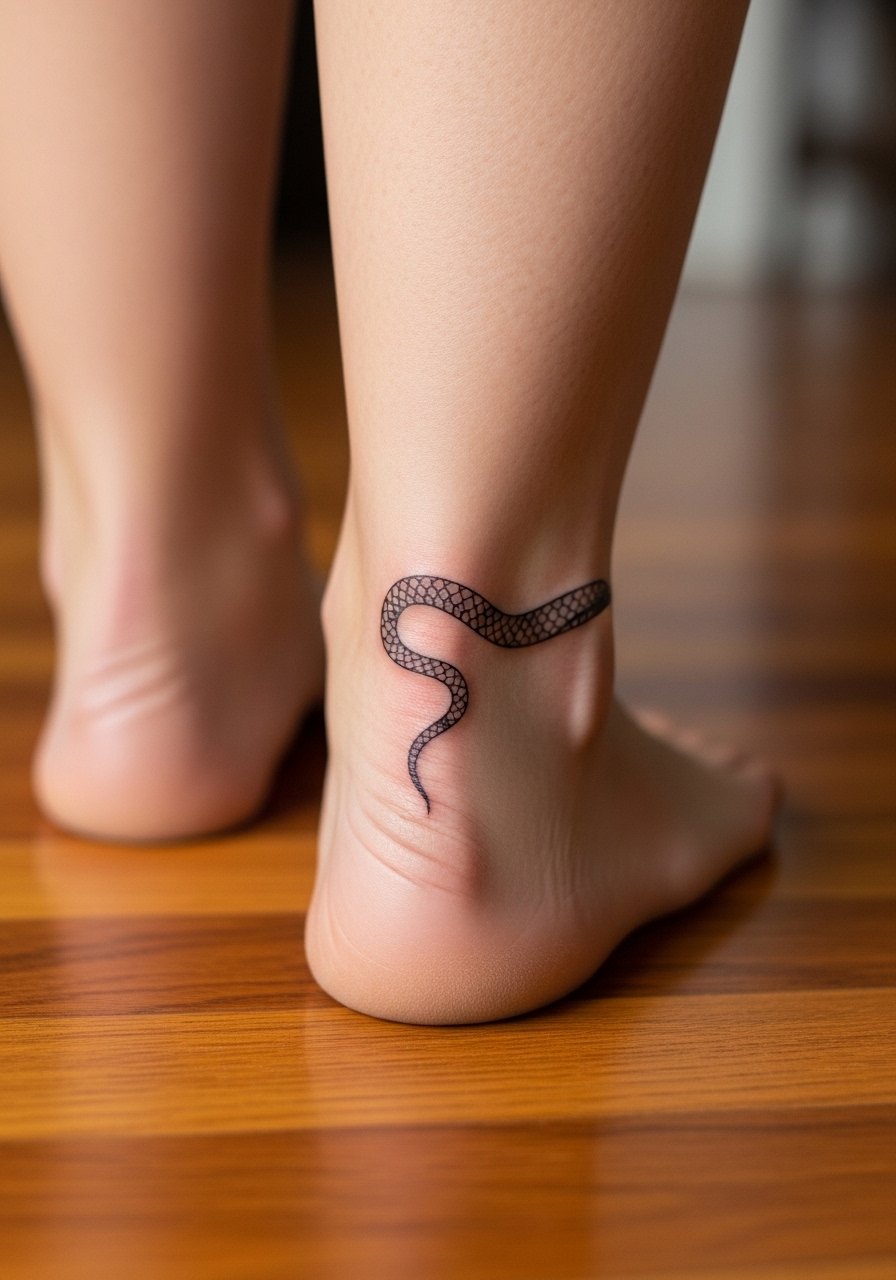
A back-of-ankle tail is unobtrusive and elegant. The small curl works as an anklet substitute, almost like an engraved pattern on skin.
Style & Design Details
- Tattoo style: micro-illustrative
- Recommended size: 1–2 inches
- Best placements: back of ankle, behind knee, around wrist
- Color vs. blackwork: blackwork
- Design elements: tapered tail, micro-scale etching, single dot accents, light negative-space
- Longevity note: low-friction area heals well but foot exposure can fade faster
- Who it suits: minimalists, shoe lovers, discreet style-seekers
Finding the Right Artist
Seek micro work specialists. Ask about how they handle areas near bone and movement zones. Avoid artists who don’t have healed foot or ankle examples.
Aftercare & Healing Tips
Avoid socks that rub directly on the fresh tattoo and keep shoes loose. Clean twice daily and moisturize lightly. After healed, use a SPF stick when wearing sandals.
- Tiny Snake Behind the Knee — Playful Hidden Spot
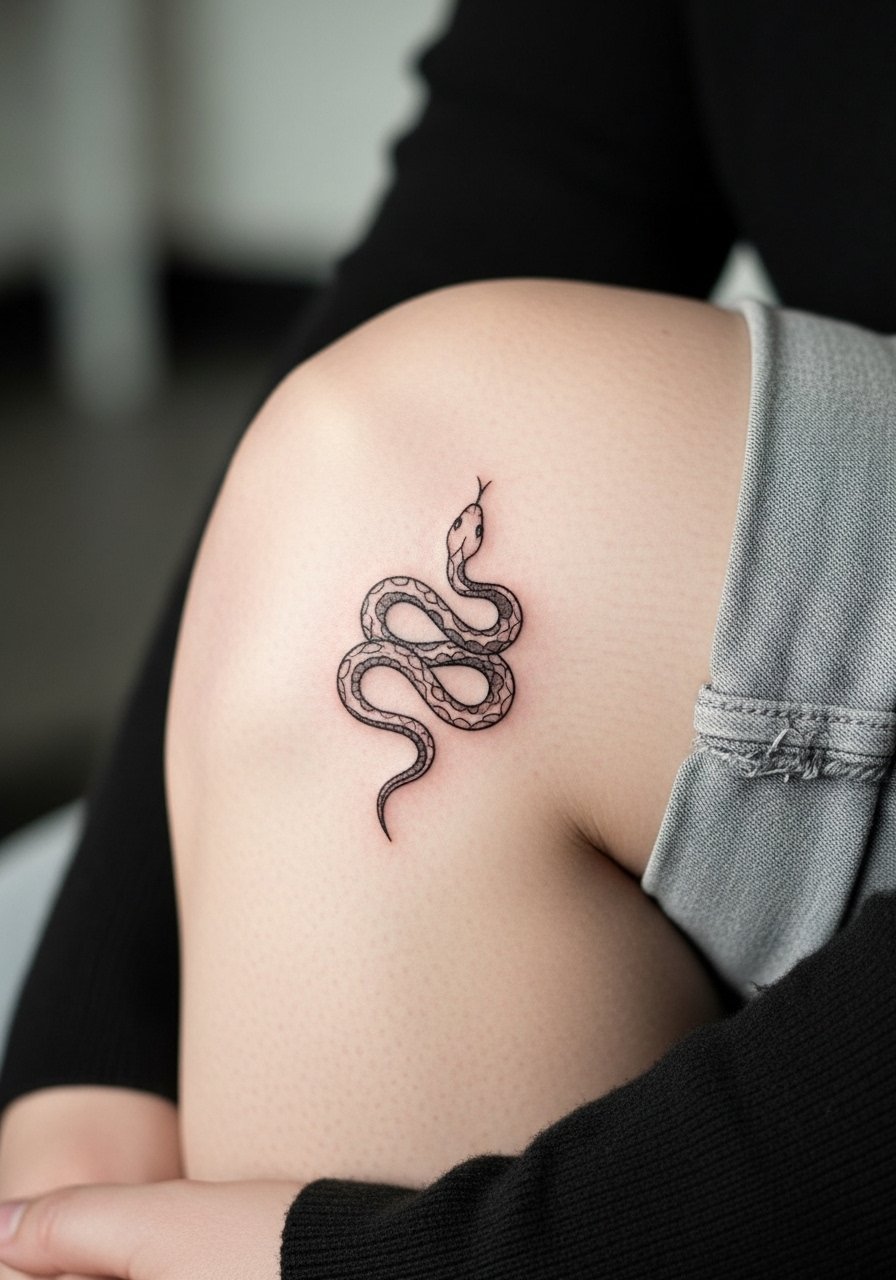
Behind-knee placement is playful and private. As a small piece, it reveals itself during shorts season and hides beneath pants otherwise.
Style & Design Details
- Tattoo style: fine-line, micro
- Recommended size: 1–2 inches
- Best placements: behind knee, inner elbow, ankle
- Color vs. blackwork: blackwork
- Design elements: gentle curl to match knee fold, tiny scale dotwork, tapered tail
- Longevity note: folds can cause minor distortion if placed over joint creases; good scaling solves this
- Who it suits: people who want a flirty, surprise placement
Finding the Right Artist
Pick someone who tattoos joint areas and small curves. Discuss how the design will sit when your leg is bent and extended. Avoid artists who underestimate design stretching.
Aftercare & Healing Tips
Keep movement moderate while healing. Watch for excessive scabbing in the fold; keep the area moisturized but not occluded. If advised, use a second-skin bandage for the first few days.
- Micro Japanese Snake on Side of Thumb
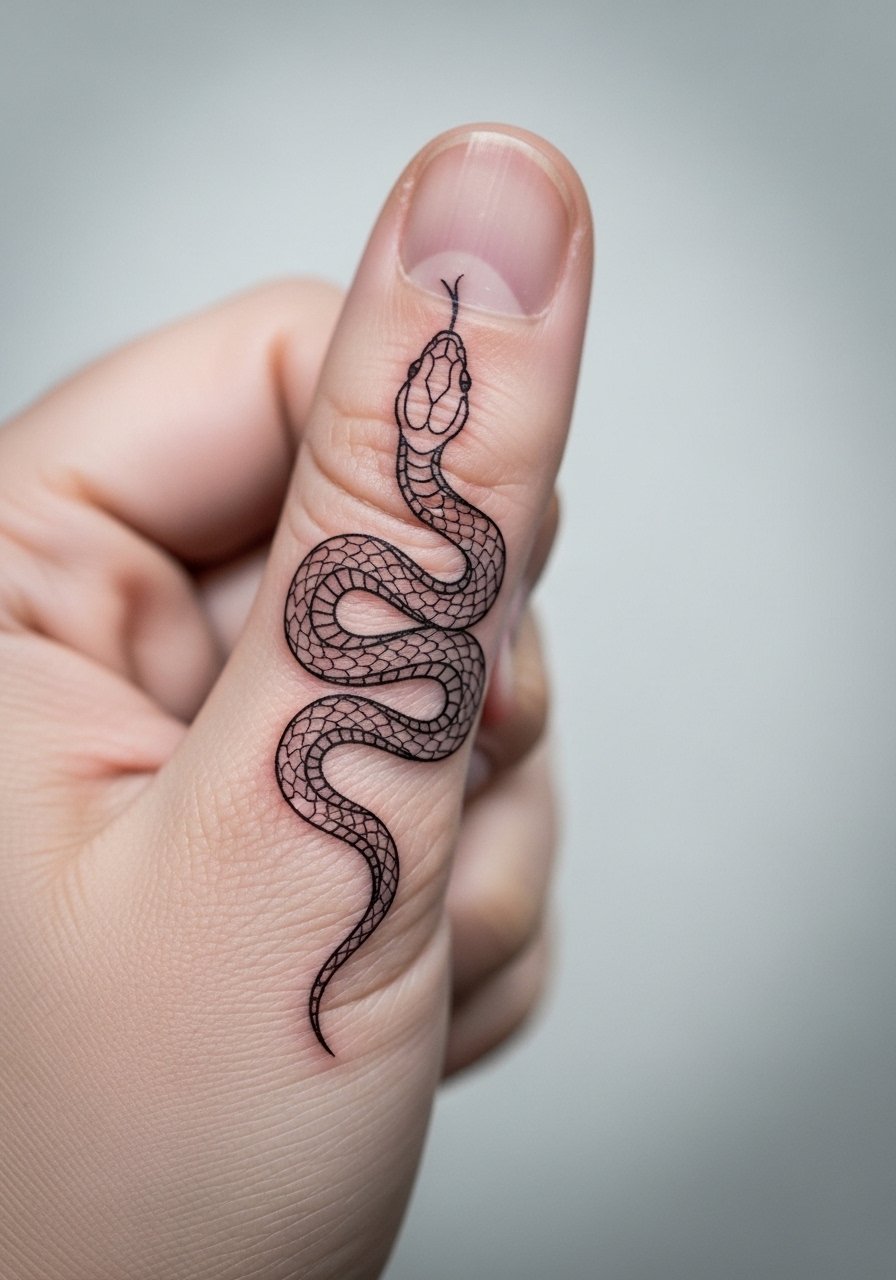
A micro thumb-side snake is a subtle display with everyday visibility. Tiny snakes on thumbs look like miniature talismans.
Style & Design Details
- Tattoo style: micro single-needle
- Recommended size: 0.5–1 inch
- Best placements: side thumb, webbing area, pinky side
- Color vs. blackwork: blackwork
- Design elements: micro-head, tapered tail, slight scale suggestion, negative-space highlight
- Longevity note: hands and thumbs wear fast; expect touch-ups
- Who it suits: people who like daily-visible tiny tattoos
Finding the Right Artist
Choose artists experienced with hand tattoo longevity and micro placement. Ask about their touch-up policy for hand work. Avoid artists who rarely tattoo hands.
Aftercare & Healing Tips
Hands are exposed constantly; keep the area clean and moisturized. Plan for follow-up touch-ups after a few months. Test placement with Inkbox semi-permanent tattoo kits if you want to trial the spot first.
- Small Traditional Irezumi-Style Thigh Patch
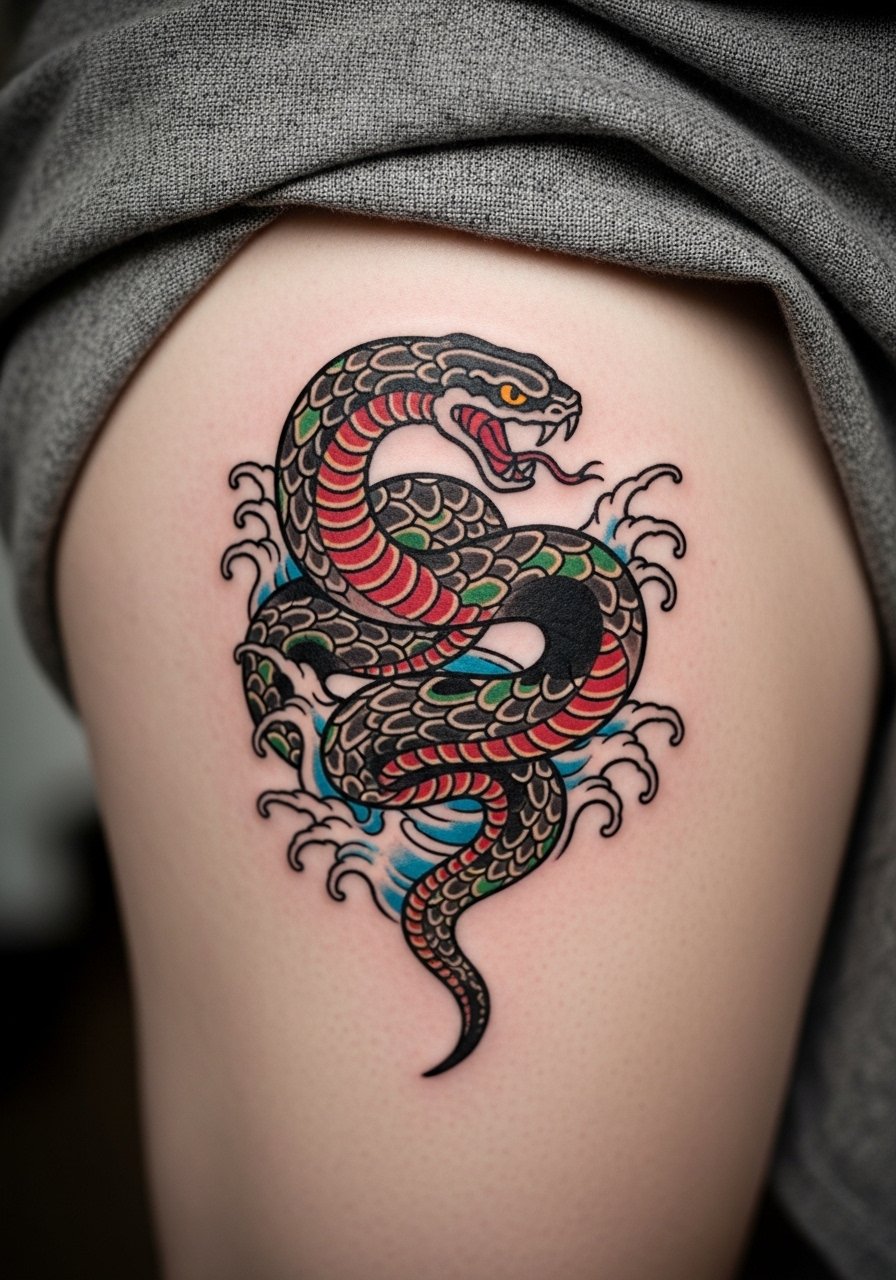
A compact irezumi-inspired patch on the thigh carries cultural tone while staying small. The thigh's flesh makes saturation pop and reduces pain intensity.
Style & Design Details
- Tattoo style: traditional Japanese (ire zumi) mini
- Recommended size: 3–5 inches
- Best placements: upper thigh, outer hip, lower rib
- Color vs. blackwork: color with bold outlines
- Design elements: stylized scales, wave background, floral hints, bold contour lines
- Longevity note: thighs hold pigment well and age gracefully if kept out of constant sun
- Who it suits: lovers of traditional Japanese art, people who prefer thigh placement for privacy
Finding the Right Artist
Find artists who study irezumi motifs and have small-scale irezumi examples. Ask about color layering on thigh skin. Avoid artists who only do western traditional work.
Aftercare & Healing Tips
Thighs are comfortable to heal; avoid tight underwear and friction. Use unscented lotion during peeling. After healed, use SPF if exposed.
- Snake and Crescent Moon — Dark Academia Wrist or Inner Forearm
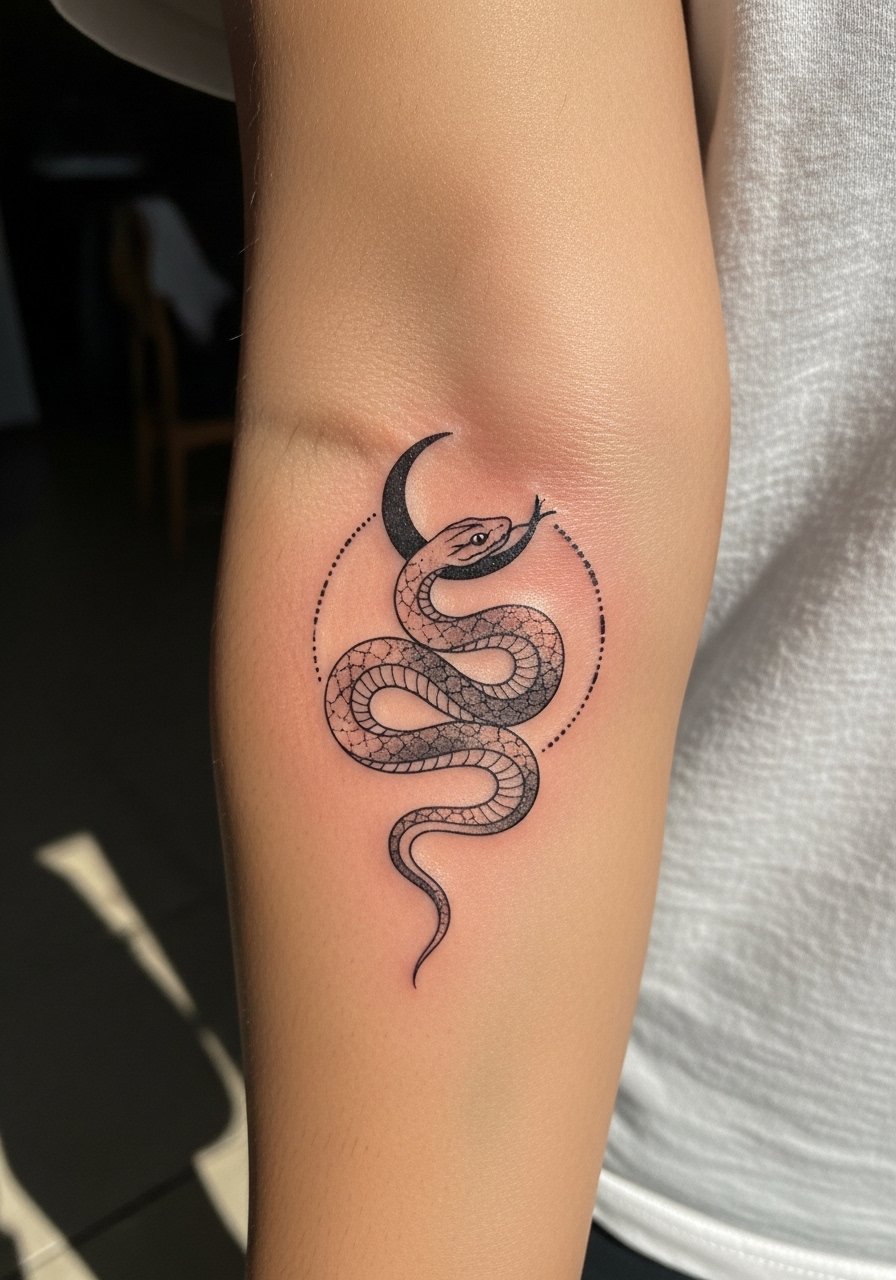
This moody little piece pairs serpent iconography with a moon for an academia-ish vibe. It's elegant, symbolic, and reads well in small formats.
Style & Design Details
- Tattoo style: fine-line illustrative
- Recommended size: 2–3 inches
- Best placements: inner forearm, inner wrist, side rib
- Color vs. blackwork: black and gray
- Design elements: crescent moon silhouette, subtle scales, dot shading, tapered tail
- Longevity note: inner-forearm ink holds detail and ages predictably with SPF
- Who it suits: dark-academia fans, readers, introspective creatives
Finding the Right Artist
Look for portfolios with small illustrative moons, moonscapes, and fine-line serpent work. Ask about shading techniques to keep the moon soft. Avoid artists who over-ink tiny celestial details.
Aftercare & Healing Tips
Forearm pieces are low-maintenance. Clean twice daily, apply a light layer of unscented lotion during peeling, and protect with an SPF stick when exposed to the sun. A dab of Vitamin E oil after full healing can help maintain sheen.
You're covered in options now — from micro finger marks to thigh patches and neo-traditional color mixes. These 21 small Japanese snake tattoo ideas span styles like fine-line, blackwork, neo-traditional, watercolor, and dotwork, so you can pick what resonates with your aesthetic and lifestyle. Save this list, pin your favorites, and bring a few options to your consultation so your artist can combine the elements you love.
If you’re undecided, grab a stencil sheet or test a temporary design with Inkbox semi-permanent tattoo kits to live with placement for a few weeks. And honestly, investing in an aftercare product like Hustle Butter Deluxe tattoo aftercare balm before your appointment is one of the most calming moves — having everything ready means you’re not scrambling post-session when your skin needs immediate attention.
Which small Japanese snake tattoo idea feels most like you? Pin the image you love and bring it to your consult — I'd love to hear which placement you're leaning toward.