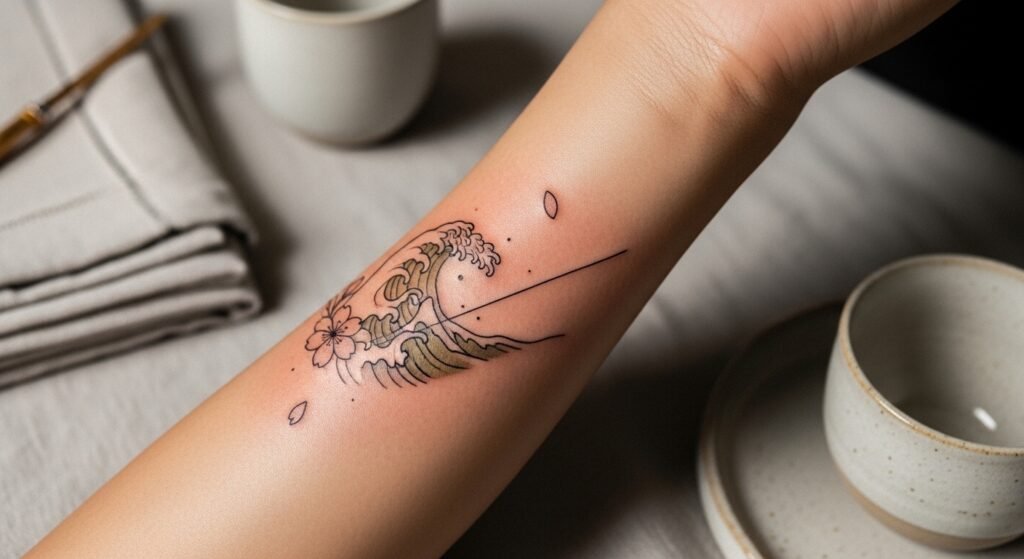
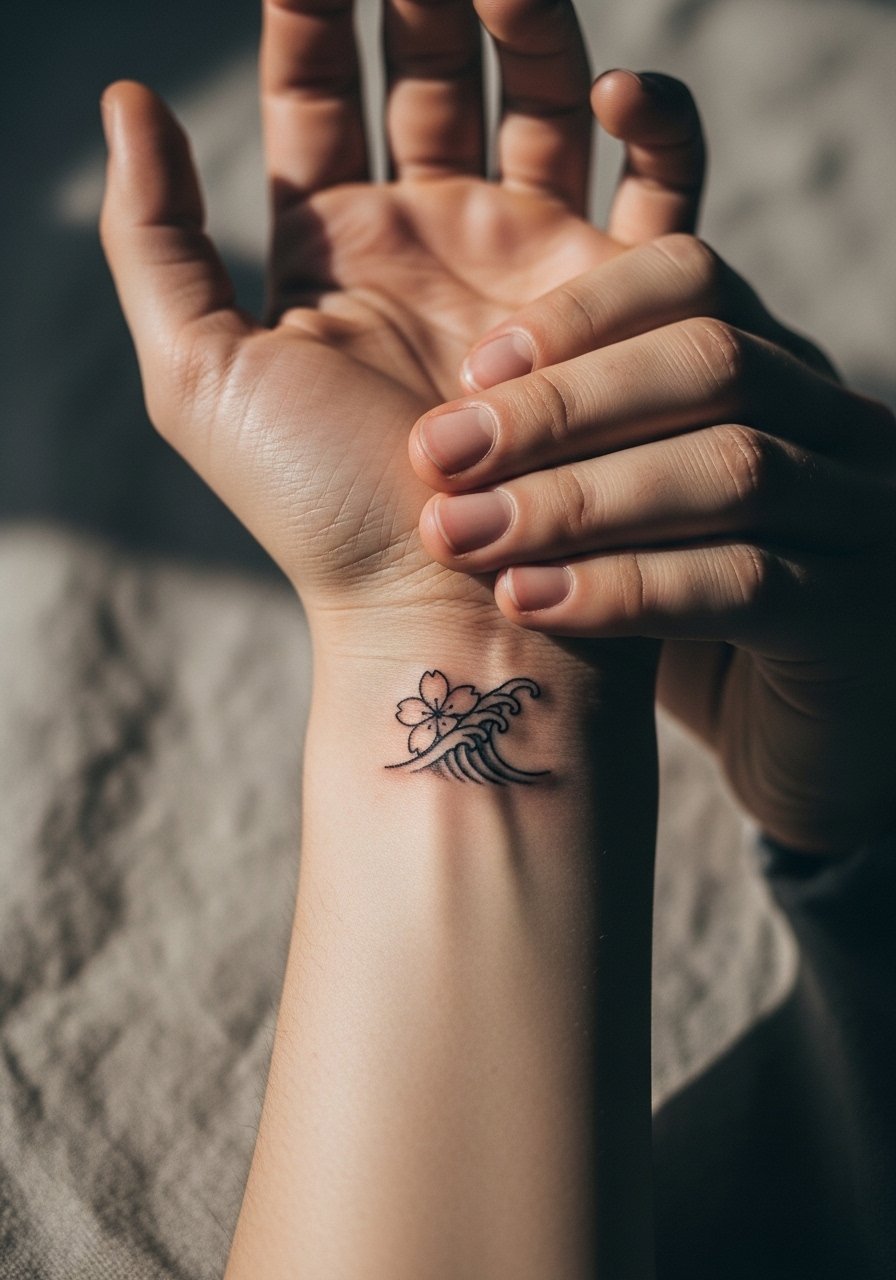
You’re sitting in the waiting room scrolling inspiration at 2 a.m., finally booked that tiny Japanese piece you’ve sketched for months. That small Japanese tattoo will read differently if you care for it the right way — fine line details and muted color need tidy healing to stay sharp. This guide walks you through exactly how to care for a small Japanese tattoo so it heals clean, keeps contrast, and stays vibrant for years.
I always keep a roll of Saniderm roll in my kit and a bottle of fragrance-free antibacterial soap at home. Those two items simplify the early hours and reduce fuss. Read on for placement tips, a no-nonsense aftercare routine, and realistic timelines to expect.
What to Do Immediately After Your Session
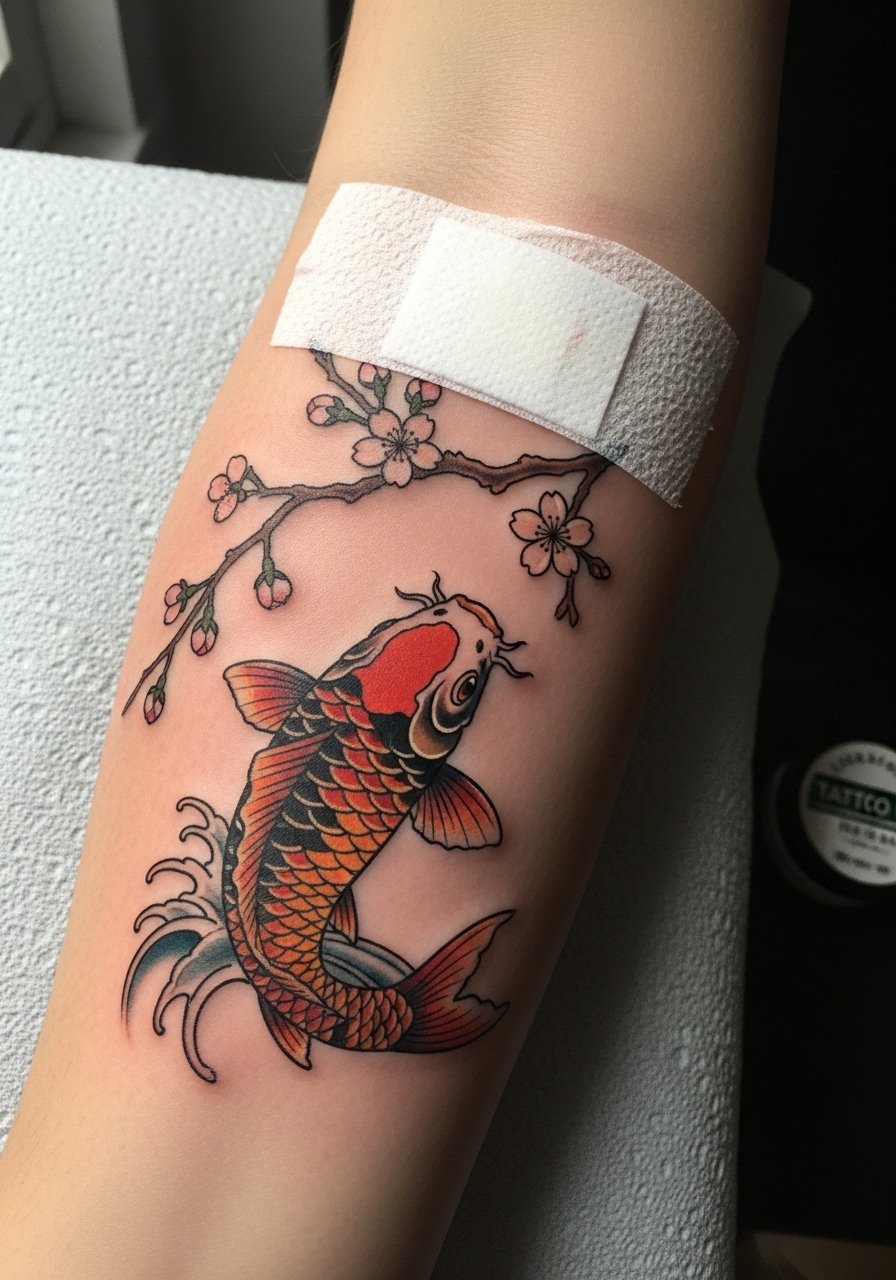
- Keep the studio wrap on for the artist’s recommended time — usually 1–6 hours for a standard wrap. If your artist used a second-skin like Saniderm in-studio, follow their instruction and expect 24–72 hours before swapping.
- First wash: gently remove the wrap, warm water, and a small amount of fragrance-free antibacterial soap. Wash twice quickly, pat dry with a clean towel, never rub.
- If you’re using a second-skin at home, a roll like Saniderm roll can be applied to protect the area from friction and bacteria during the first 3–5 days.
Quick tips:
- Use lukewarm water only.
- Keep clothing soft and loose over the placement.
- If the area leaks a lot of plasma, gently wash and reapply a clean protective covering.
The First Week: What Normal Healing Looks Like
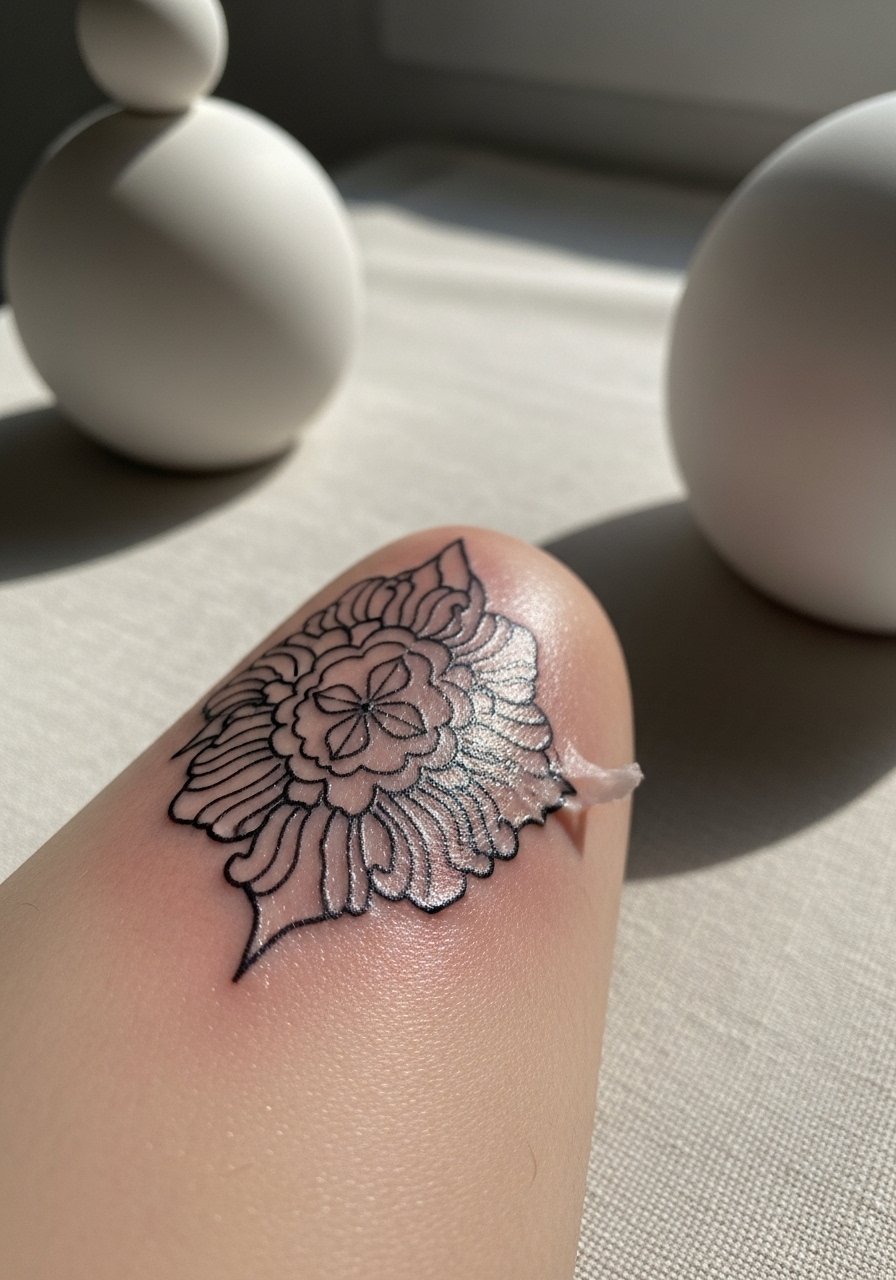
Expect a predictable cycle: days 2–4: light swelling and brightness; days 4–14: peeling and light scabbing; weeks 2–3: flaking finishes and itchiness peaks. Care routine:
- Wash gently twice a day with fragrance-free antibacterial soap.
- Apply a thin layer of unscented tattoo aftercare lotion 2–3 times daily during peeling. Less is more — don’t smother the skin.
- For balm users, smooth a small amount of Hustle Butter Deluxe after the initial scabbing phase to keep skin supple.
Honest warnings:
- Don’t pick flakes or scabs — that’s how fine-line edges break up.
- Avoid soaking (pools, hot tubs) for at least 2 weeks.
Keeping the Ink Looking Sharp Long-Term
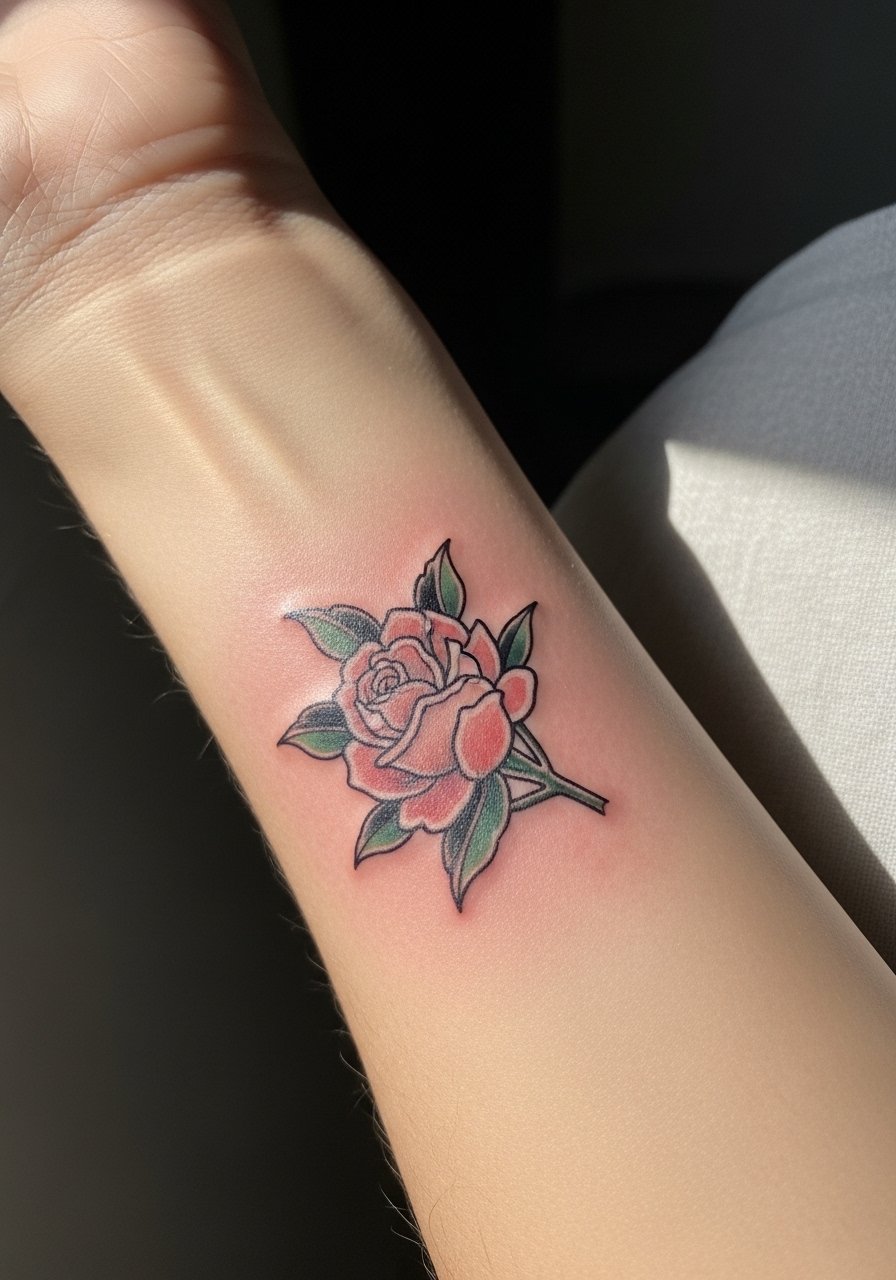
Long-term care preserves contrast and color:
- Use a mineral SPF stick daily on any ink that gets sun. UV exposure fades pigments faster than anything.
- Keep skin hydrated: rotate between unscented tattoo aftercare lotion or a vitamin E oil for extra glow on healed areas.
- Consider a tattoo brightening lotion if colors start to dull after a year.
Timing for touch-ups: wait 8–12 weeks so pigment has fully settled. Small Japanese tattoos often need tiny line touch-ups to maintain that crisp fine-line look.
Common Mistakes That Ruin Fresh Tattoos (and How to Avoid Them)
Avoid these traps:
- Over-moisturizing: heavy layers trap moisture and slow healing. Apply thin layers only.
- Picking or peeling scabs: this causes patches and ink loss.
- Sun exposure too soon: cover healed ink and use a mineral SPF stick once healed.
- Poor prep: shave carefully with a single-use prep razor and, if you’re nervous about pain, a small amount of numbing cream an hour before the session helps.
Test placement if you’re unsure: try an Inkbox semi-permanent kit for a week to see how size and flow read on your skin.
You’ve got this — with a clear aftercare routine and a couple of reliable products, you can keep that small Japanese tattoo crisp and true for years. Pin this guide before your consultation, prep your aftercare kit the night before (I’d pack Saniderm roll, fragrance-free soap, and unscented tattoo aftercare lotion), and book that appointment. Which placement are you leaning toward? Drop it below!