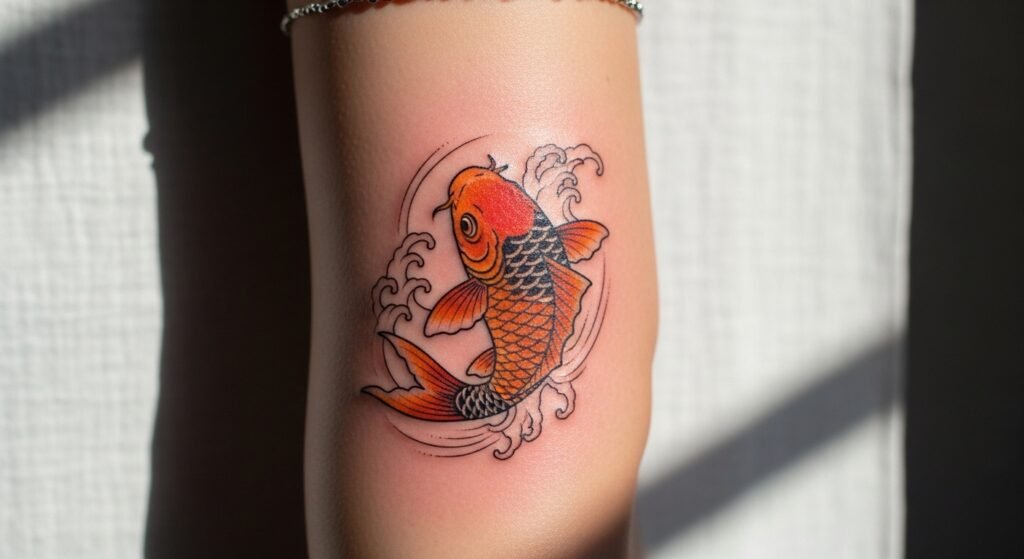
Sitting in a Friday-night tattoo consult, scrolling for the perfect little piece — that’s where the best ideas start. If you’ve been bookmarking koi imagery and dreaming of a small Japanese koi fish tattoo, you’re in the right place. These compact designs carry rich symbolism — perseverance, transformation, and luck — while working beautifully in color or crisp blackwork.
This list gives you 26 bold small Japanese koi fish tattoo ideas: from minimalist single-needle koi to colorful neo-traditional pieces. You’ll find placement tips, style breakdowns, artist guidance, and realistic healing notes so you can walk into your session ready. I also mention products that actually help — like leaving the Saniderm second-skin bandage roll on for a few days, or a numbing cream for sensitive spots. Save a few favorites, pin for later, and bring the ideas to your consultation.
- Tiny Single Koi with Minimal Water Ripples
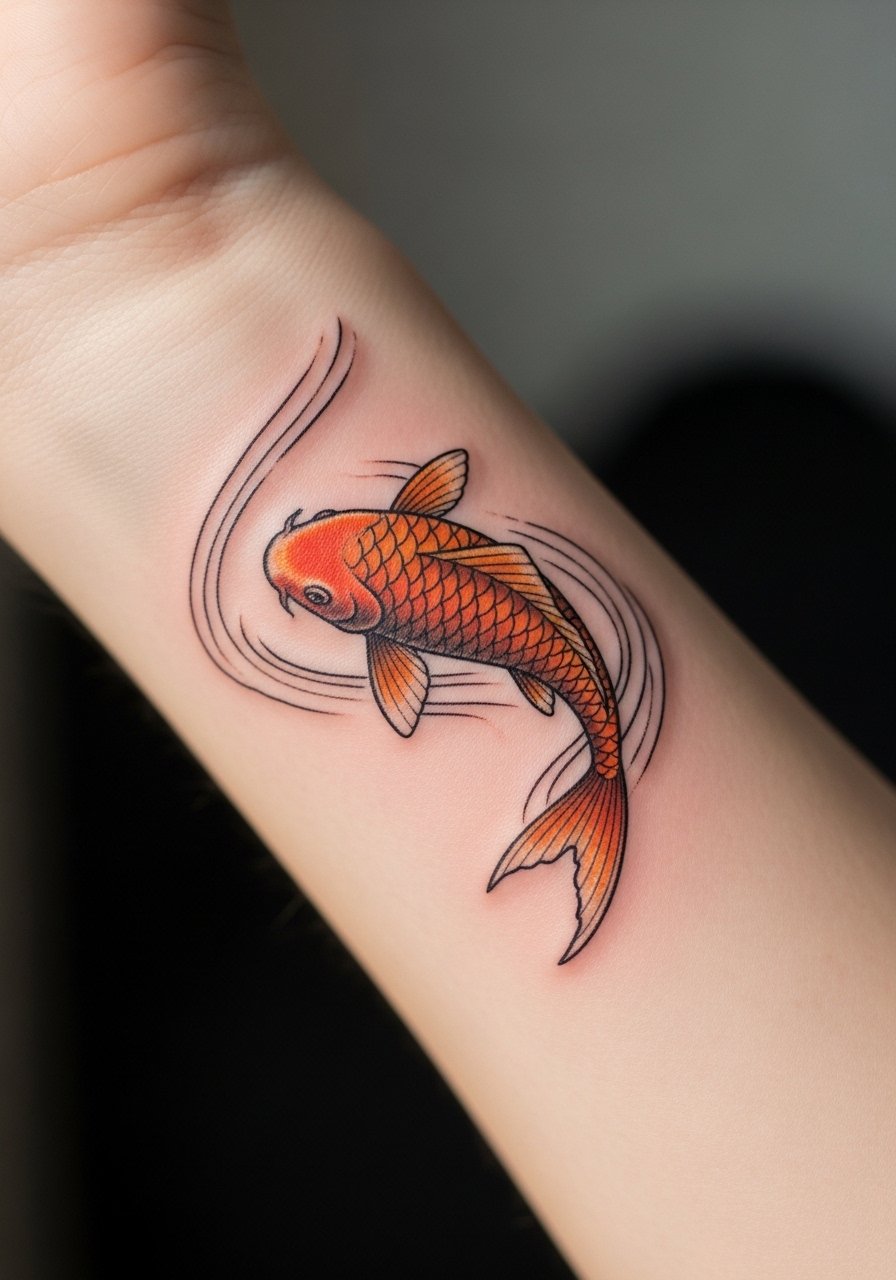
This idea keeps everything subtle: a small orange koi about 1.5–2 inches with delicate ripples. The minimal water lines let the fish read clearly at small scale. It’s symbolic and readable, perfect if you want meaning without a big commitment. For wrist placements, I sometimes prep skin with a light wipe and let the artist stencil precisely; a thin layer of Zensa numbing cream an hour before can make wrist work easier.
Style & Design Details
- Tattoo style: fine line with minimal neo-Japanese touches
- Recommended size: 1.5–2 inches
- Best placement(s): inner wrist, ankle, behind ear — sits naturally on curved areas
- Color vs. blackwork: small color pop (orange + black) keeps it readable
- Design elements: single-needle outline, light dot shading, tiny water ripples, subtle white highlights, negative-space fins
- Longevity note: fine line fades faster; sunscreen helps keep the orange vivid
- Who it suits: first-timers, minimalists, people who want a discreet symbolic piece
Finding the Right Artist
Look for portfolios with small-scale fine-line fish or tiny animals. Ask about needle sizes (single-needle or 3RL) and how they handle color at this scale. Avoid artists who only do large sleeves for this job. An experienced tattooist who shows healed small pieces is ideal. Procreate mockups or a placement stencil test can help confirm size.
Aftercare & Healing Tips
Leave the initial wrap per artist instructions — I prefer 24 hours then switch to a light wash. Wash gently twice a day with a fragrance-free soap like Dr. Bronner’s unscented Castile. Follow with a thin layer of unscented lotion. Expect the best clarity after 4–6 weeks; book touch-ups after month two if lines spread.
- Micro Color Koi on the Ankle
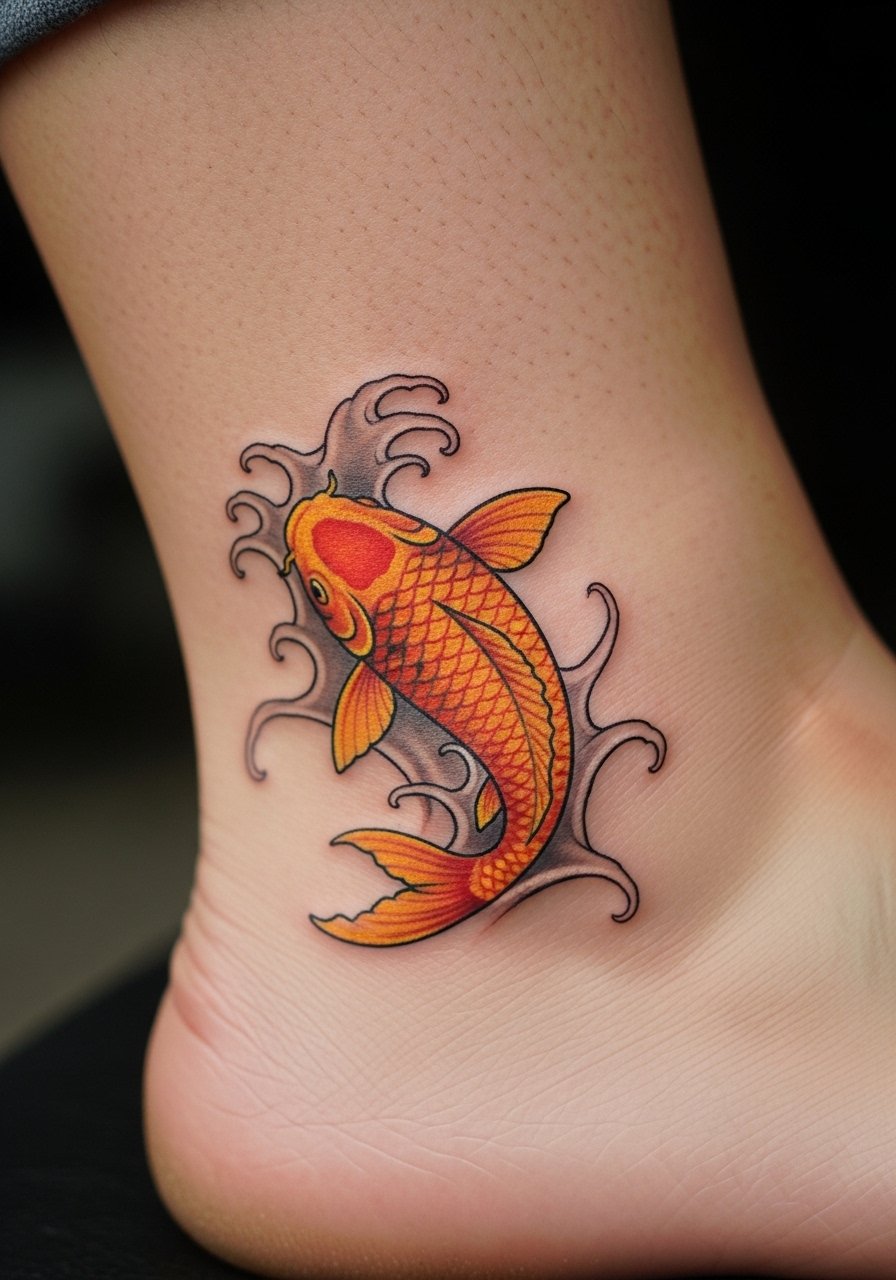
A micro colored koi sitting just above the ankle reads delicate and feminine. The watercolor-like fill is saturated but kept tiny, which feels modern and youthful. If you’re sensitive around lower-leg placements, applying a thin coat of EMLA numbing cream beforehand helps take the edge off.
Style & Design Details
- Tattoo style: watercolor micro with illustrative outline
- Recommended size: 1–2 inches (palm-sized is too big here)
- Best placement(s): ankle, inner ankle, top of foot — moves with shoes and socks so consider friction
- Color vs. blackwork: color recommended for koi symbolism; keep pigments saturated but small
- Design elements: soft watercolor fills, light outline, tiny white ink accents, faint wave motion, gold flecks
- Longevity note: foot/ankle sees more friction — expect faster fade without sunscreen and touch-ups
- Who it suits: trend-forward, cottagecore or boho aesthetic lovers
Finding the Right Artist
Search for micro watercolor portfolios and check healed shots on similar placements. Ask how they prevent pigment blowout in flaky ankle skin. Avoid artists who can’t show consistent micro color pieces. If you want a custom sketch, a quick Procreate mockup helps.
Aftercare & Healing Tips
Feet and ankles swell and scab more. Keep elevated when possible and wear clean, low-friction socks. Use a second-skin like Saniderm second-skin bandage roll if your artist recommends it. Keep the area moisturized with an unscented lotion until fully healed.
- Blackwork Koi with Bold Contrast
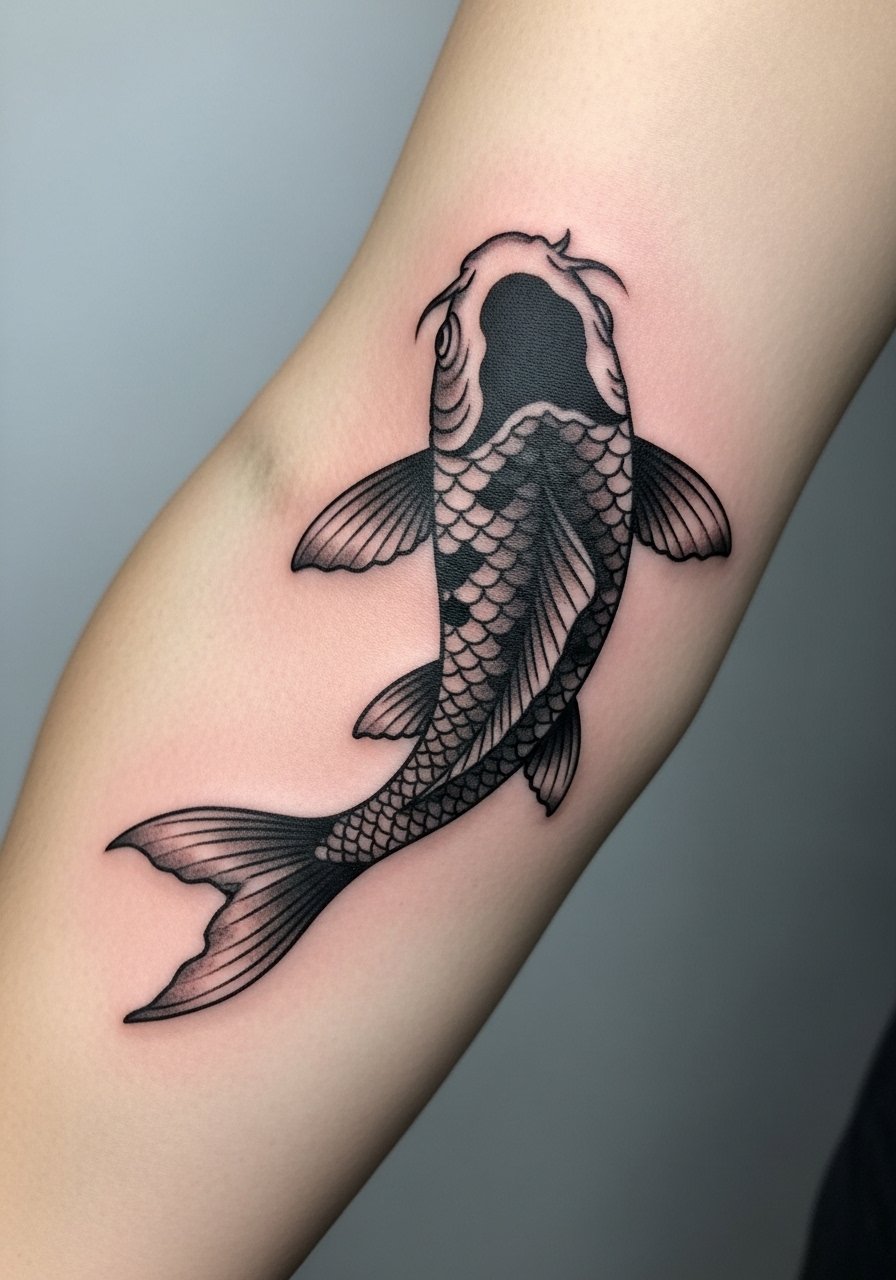
This is for people who prefer bold silhouettes over color. A small blackwork koi uses heavy fills and negative space to define scales and fins. It reads graphic and ages well. For black-heavy work, the artist may recommend slightly larger needle groupings to avoid blowout.
Style & Design Details
- Tattoo style: blackwork / graphic
- Recommended size: 2–3 inches for strong silhouette
- Best placement(s): outer forearm, calf, shoulder blade — flatter skin helps crisp edges
- Color vs. blackwork: blackwork preferred; contrast keeps the koi legible long-term
- Design elements: solid black fills, negative-space scales, bold outlines, slight dot shading for depth, crescent-shaped fins
- Longevity note: blackwork holds up well; fading is gradual and touch-ups are straightforward
- Who it suits: dark academia, blackwork collectors, those who prefer low-maintenance ink
Finding the Right Artist
Pick an artist with strong blackwork or geometric portfolios. Ask about their needle groupings and how they prevent thick-line blowout. Avoid someone whose work shows inconsistent black patches. Instagram tags like #blackworktattoo or shops on Tattoodo are good places to look.
Aftercare & Healing Tips
Black inks form thicker scabs; keep the area clean and avoid picking. A thin layer of Hustle Butter Deluxe tattoo aftercare balm can soothe without suffocating ink. After healing, apply SPF 50 to preserve dense black tones.
- Yin-Yang Dual Koi in Mini Circle
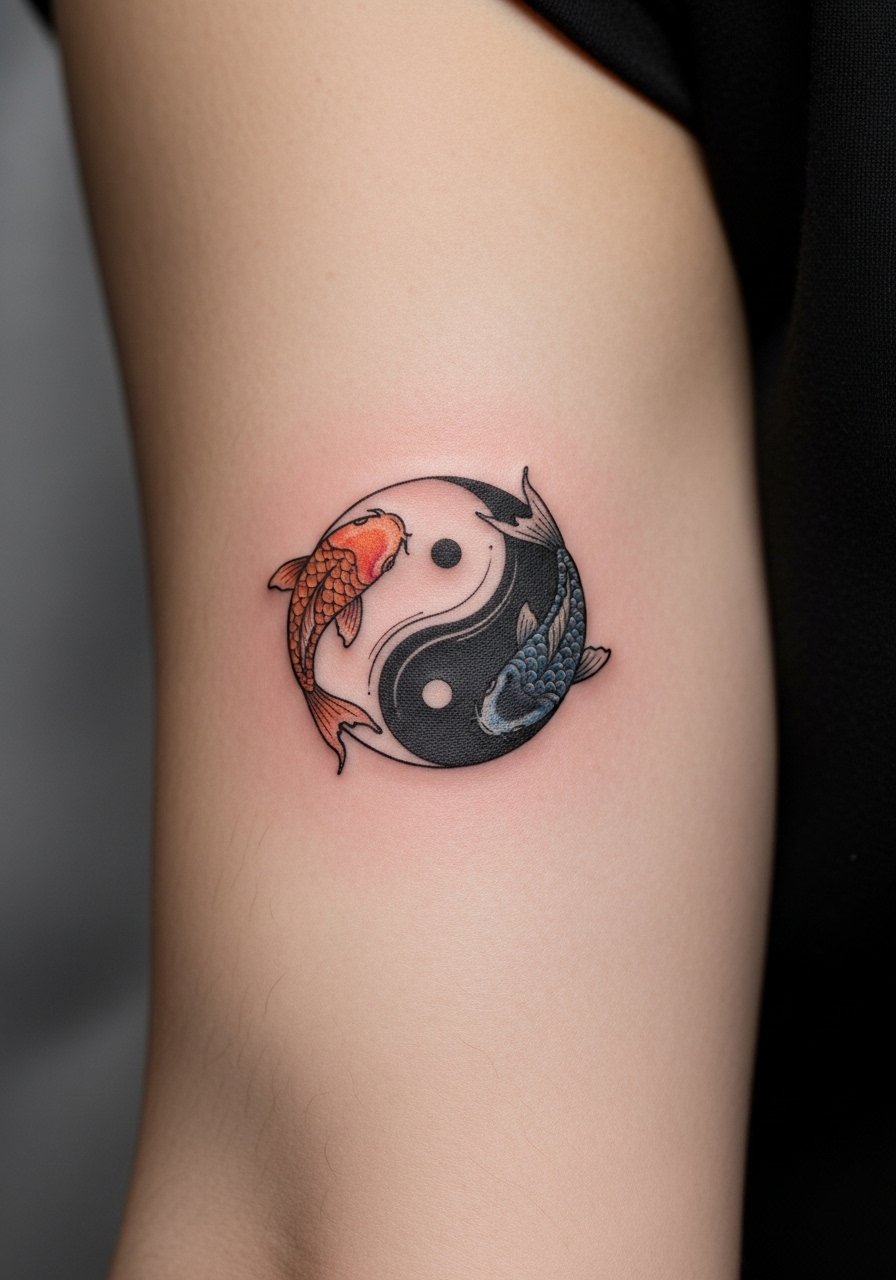
Small yin-yang koi symbolize balance and perseverance — two fish circling in a compact badge. This miniature circular composition is great for forearms, inner biceps, or behind the ear. For symmetric designs, ask your artist to print a stencil and hold it in position before inking.
Style & Design Details
- Tattoo style: illustrative / neo-Japanese micro
- Recommended size: 2–3 inches for clarity of both koi
- Best placement(s): inner bicep, back of shoulder, mid-back
- Color vs. blackwork: two-tone color (warm + cool) emphasizes the yin-yang idea
- Design elements: mirrored fish, thin water ring, tiny bubbles, stipple highlights, light white ink dots
- Longevity note: symmetrical pieces need crisp lines; small size requires careful touch-ups in a year or two
- Who it suits: symbolic seekers, couples who want matching halves, collectors
Finding the Right Artist
Find an artist who does twin or mirrored designs well. Ask for a symmetric stencil and how they’ll scale the fish for legibility. Avoid artists who lack experience with tiny mirrored compositions. A sketchbook or digital mockup is useful.
Aftercare & Healing Tips
This placement rarely rubs on clothing; standard washing and thin unscented lotion are fine. For extra protection in the first 48 hours, a Saniderm second-skin bandage roll works well. Expect settling by 6 weeks.
- Tiny Koi with Cherry Blossoms (Sakura Accent)
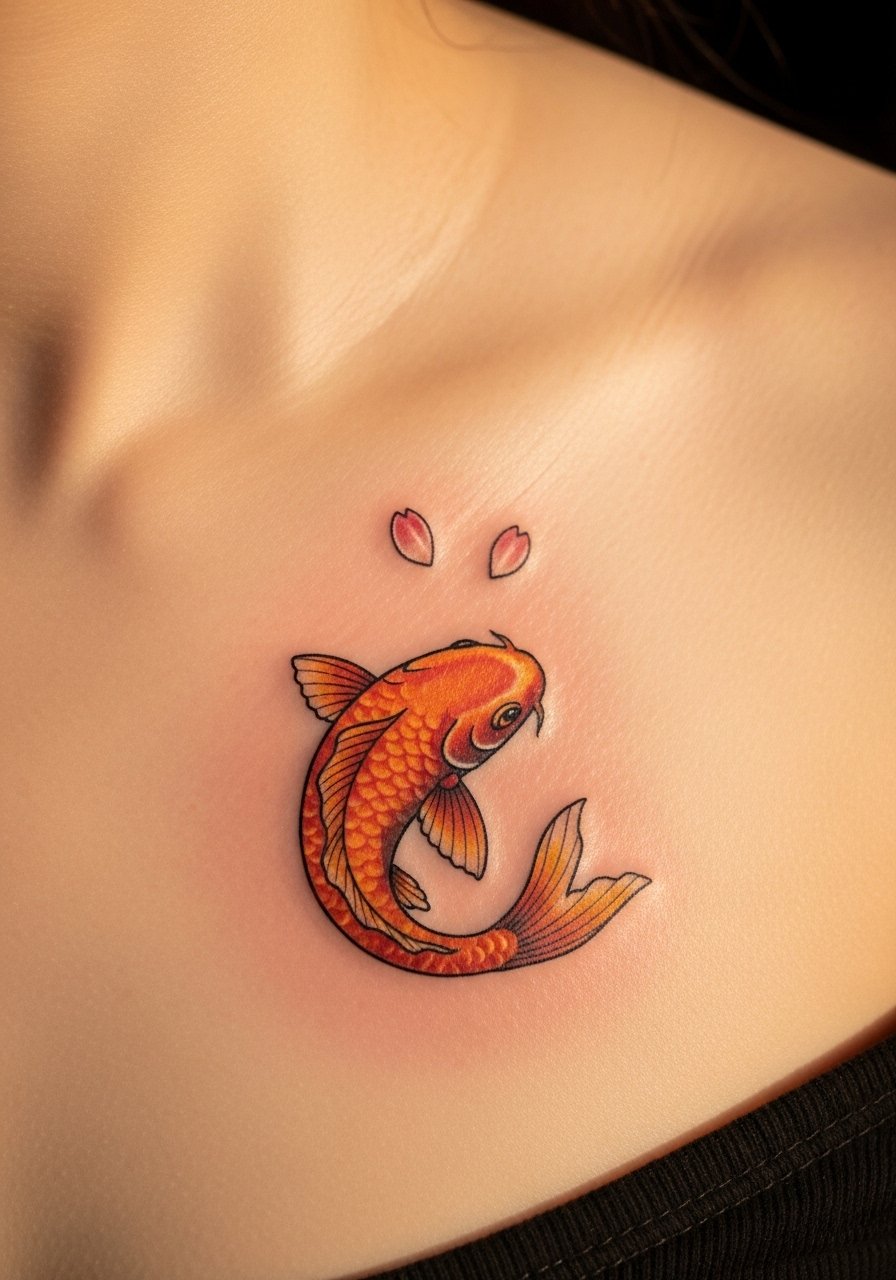
Pairing a koi with sakura brings a poetic Japanese feel — the fish for perseverance, blossoms for transience. Kept small, the blossoms act as delicate punctuation. This works beautifully near the collarbone or on the ribcage. If you’re getting color near the chest, consider using Hustle Butter Deluxe tattoo aftercare balm after the initial wrap to help soothe the area.
Style & Design Details
- Tattoo style: illustrative / mini neo-Japanese
- Recommended size: 2–3 inches to preserve blossom detail
- Best placement(s): clavicle, upper chest, ribcage — flattering flow with body curves
- Color vs. blackwork: color for blossoms and koi adds emotional warmth
- Design elements: tiny sakura petals, soft gradient fills, thin outlines, light wave hints, tiny kanji option
- Longevity note: chest skin is stable; color retention is good with SPF care
- Who it suits: cottagecore, romantic aesthetic, memorial pieces
Finding the Right Artist
Look for artists who post healed color pieces on chest or clavicle. Ask how they’ll keep blossom petals distinct at small sizes. Avoid artists inexperienced with color transitions in small work.
Aftercare & Healing Tips
Chest placements can be sensitive. Keep the area clean, wear loose tops while healing, and apply a fragrance-free lotion. For the first few days, gentle Saniderm protection or bandaging per your artist helps. After fully healed, protect the tattoo from sun.
- Geometric Frame Koi (Tiny Mandala Border)
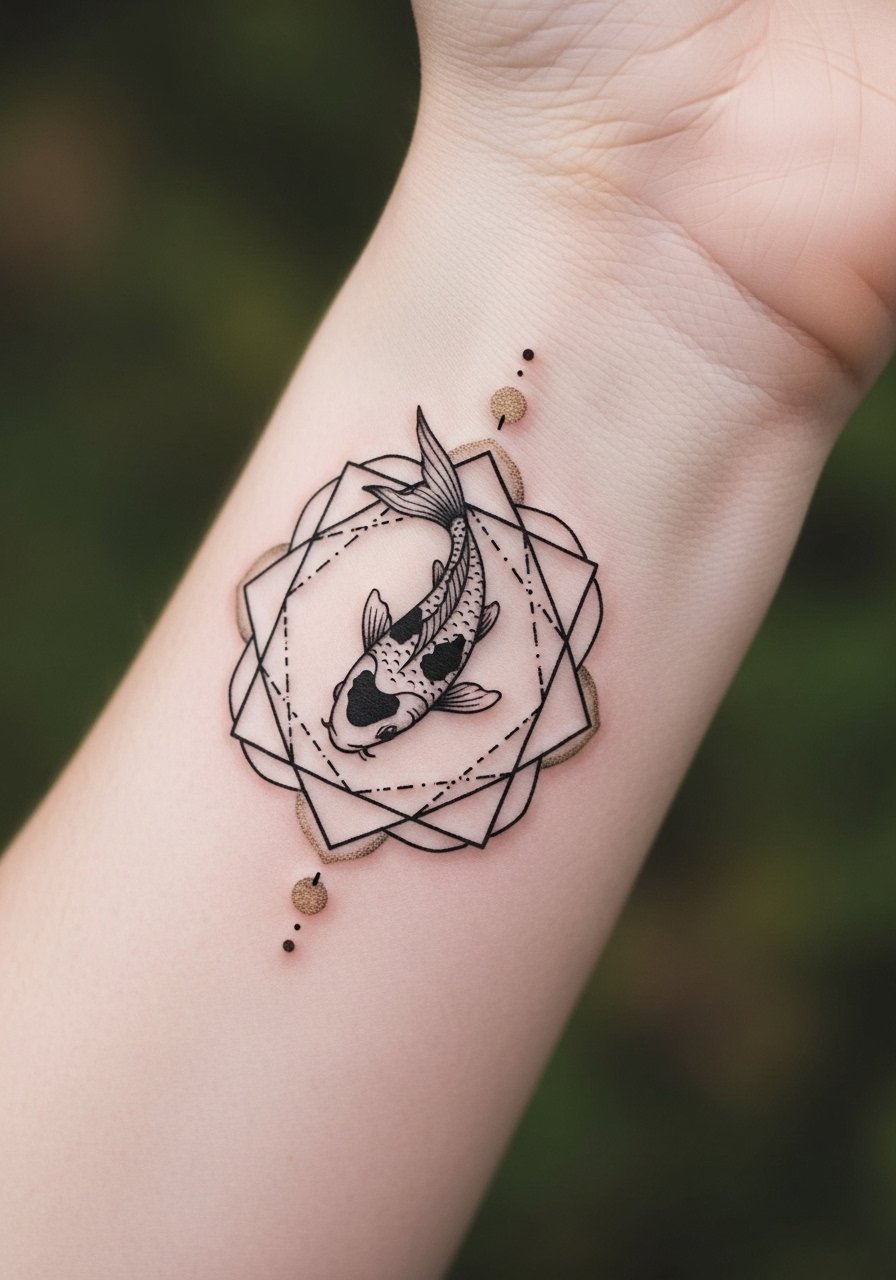
A koi inside a minimal geometric or mandala frame makes the composition feel modern and symbolic. The border gives structure and works especially well on flatter placements. For gold or metallic-looking tones, artists often layer warm orange and pale yellow inks — ask about pigment brands they prefer and healed photos.
Style & Design Details
- Tattoo style: geometric + illustrative
- Recommended size: 2–3 inches to keep frame details sharp
- Best placement(s): wrist, inner forearm, nape — flat, visible areas suit frames
- Color vs. blackwork: black frame with muted color koi avoids too many pigments
- Design elements: thin geometric lines, negative-space mandala petals, tiny koi, dotwork shading, micro-line fins
- Longevity note: fine geometric lines can blur over time; slightly larger scale helps longevity
- Who it suits: minimalists, geometric art lovers, modern design fans
Finding the Right Artist
Search for artists with geometric portfolios that show healed linework. Ask how they handle near-zero-width lines and which inks they use for small color spots. Avoid artists who don’t show precision work on small framed tattoos.
Aftercare & Healing Tips
Keep lines dry initially and avoid heavy friction that could distort the geometry. A thin layer of unscented lotion preserves crisp edges. If you want metallic sheen photos, wait for full healing before applying topical balms.
- Small Japanese Koi Fish Tattoo with Traditional Waves
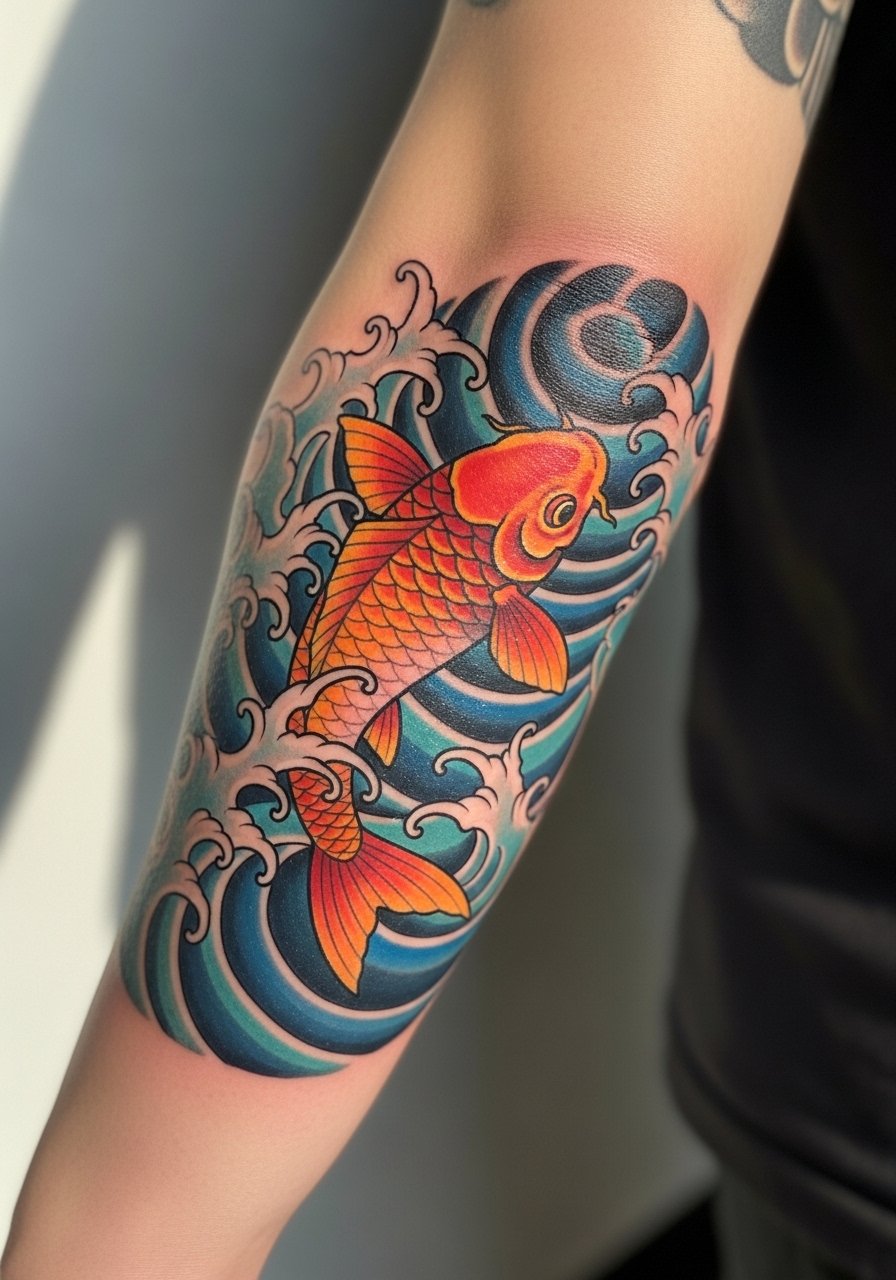
This compact neo-traditional koi surrounded by stylized Japanese wave patterns gives that classic, iconic look at a small scale. The motion of the waves helps the koi feel dynamic. For this style, many artists use pigments from lines like Eternal Ink or Intenze for strong, lasting color.
Style & Design Details
- Tattoo style: neo-traditional / small Japanese
- Recommended size: 2–3 inches to keep waves and koi distinct
- Best placement(s): outer forearm, calf, upper arm — flat flesh accentuates wave flow
- Color vs. blackwork: color recommended for authentic neo-Japanese look (orange, teal, navy)
- Design elements: stylized waves, bold outlines, shaded scales, small white highlights, subtle patterning on fins
- Longevity note: line thickness and pigment quality affect how well waves hold up; choose saturated inks
- Who it suits: lovers of classic tattoo motifs, neo-traditional collectors, people who want bold symbolism
Finding the Right Artist
Book an artist who posts small neo-traditional pieces. Ask about their ink brands, how they approach scaling wave patterns, and see healed work. Avoid artists who only do large back pieces if you want a small, tight composition.
Aftercare & Healing Tips
Keep the area gently clean and use a fragrance-free lotion once the wrap is off. Pigments like orange require sun protection; use an SPF 50 stick when exposed. A good long-term product is a tattoo sunscreen stick.
- Minimal Outline Koi Behind the Ear
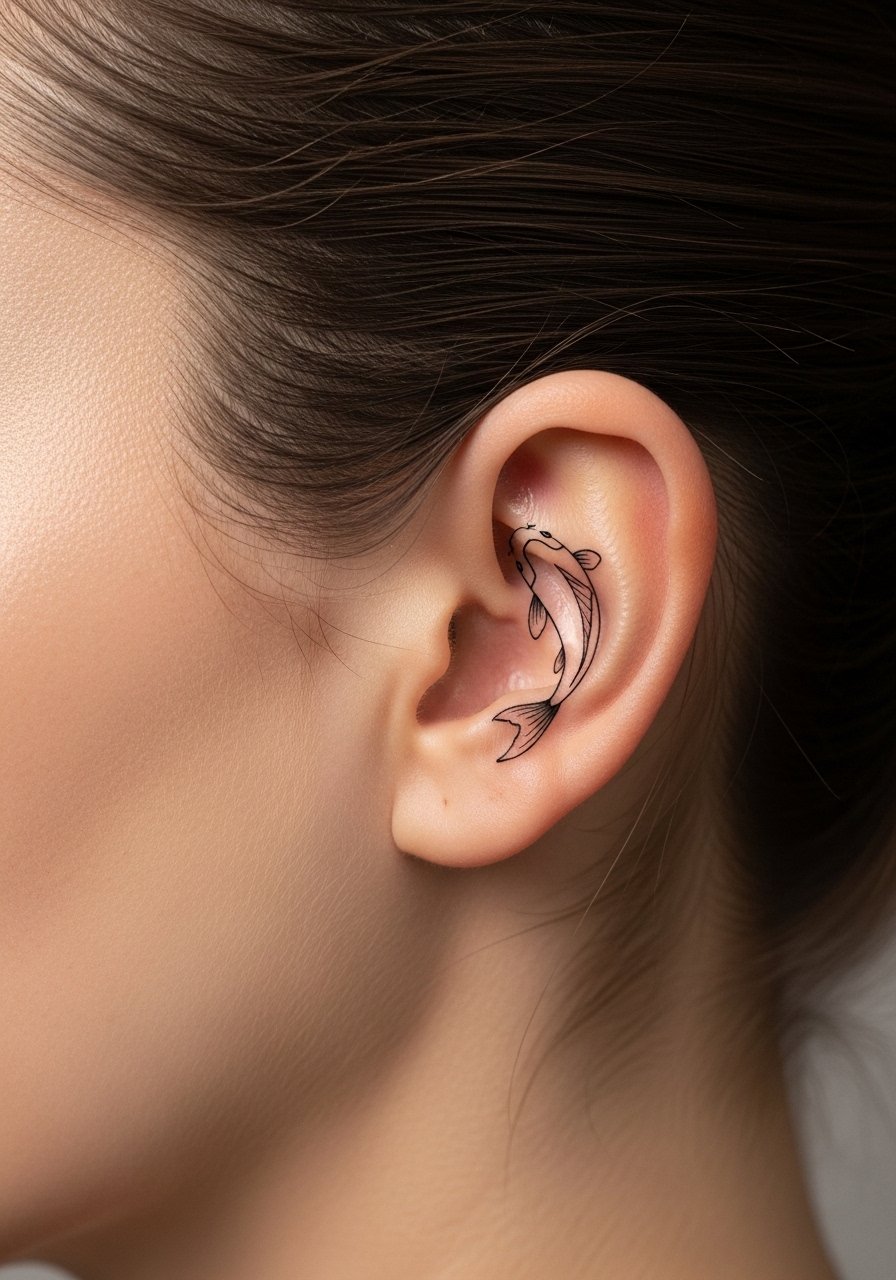
A behind-the-ear koi is discreet and playful. This look uses a single-line technique with minimal shading — great if you want something tiny and symbolic. The placement is sensitive; a numbing patch helps if you’re concerned.
Style & Design Details
- Tattoo style: single-line / minimalist
- Recommended size: 0.5–1.5 inches
- Best placement(s): behind ear, mastoid area, nape — hidden but intimate spots
- Color vs. blackwork: black single-line recommended for subtlety
- Design elements: continuous line form, tiny eye dot, minimal fins, negative space for flow
- Longevity note: tiny single lines can blur; choose an experienced fine-line artist
- Who it suits: first-timers, those wanting a small secret ink, minimalists
Finding the Right Artist
Pick someone who does excellent small ear or facial tattoos. Ask about needle choice for single-line work and healed examples. Avoid artists without micro-line consistency.
Aftercare & Healing Tips
Keep hair off the area and wash gently. Use a tiny dab of unscented lotion; avoid heavy hair products near fresh ink. Given the placement, avoid sleeping with pressure on that spot for a few nights.
- Koi with Maple Leaves — Autumn Palette
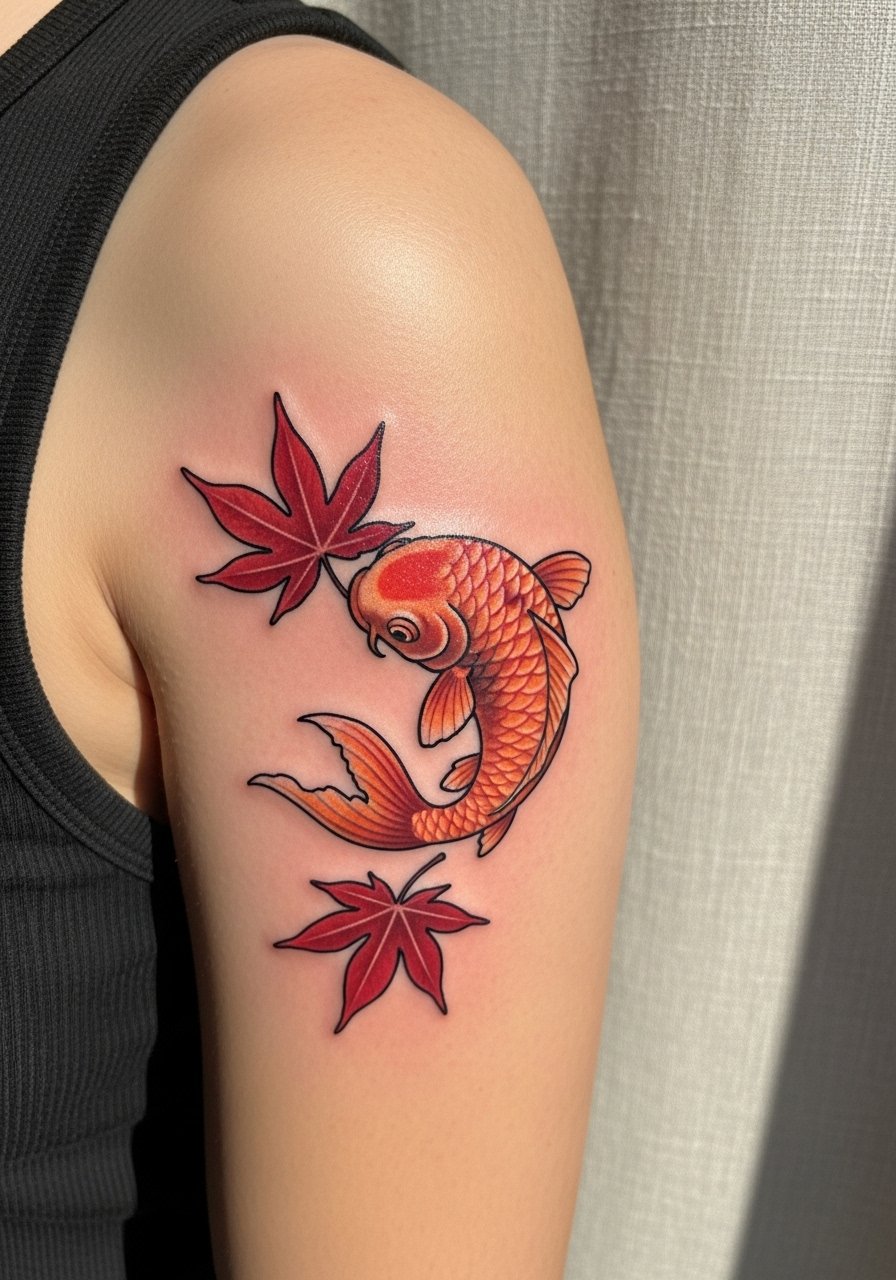
Maple leaves add seasonal symbolism and a strong color contrast. An autumnal palette (amber, crimson, deep maroon) makes the koi feel dramatic yet small. This works well for someone who wants nature-driven symbolism.
Style & Design Details
- Tattoo style: illustrative neo-Japanese
- Recommended size: 2–3 inches
- Best placement(s): upper arm, shoulder cap, ribcage — room for leaf placement
- Color vs. blackwork: warm color palette recommended for seasonal feel
- Design elements: overlapping leaves, textured scales, light dot shading, small wave lines, kanji option for meaning
- Longevity note: red pigments can fade faster; choose quality inks and wear SPF
- Who it suits: nature-lovers, seasonal aesthetic fans, memorial pieces
Finding the Right Artist
Seek artists with botanical and small animal examples. Ask how they layer red inks and what healed results look like in similar skin tones. Avoid artists who don’t show healed color on overlapping elements.
Aftercare & Healing Tips
Red and crimson pigments need sun protection and moisturizing during peeling. Use an unscented lotion and avoid direct sun exposure. Consider a touch-up after three months for saturated reds.
- Bracelet-Style Koi Encircling Wrist
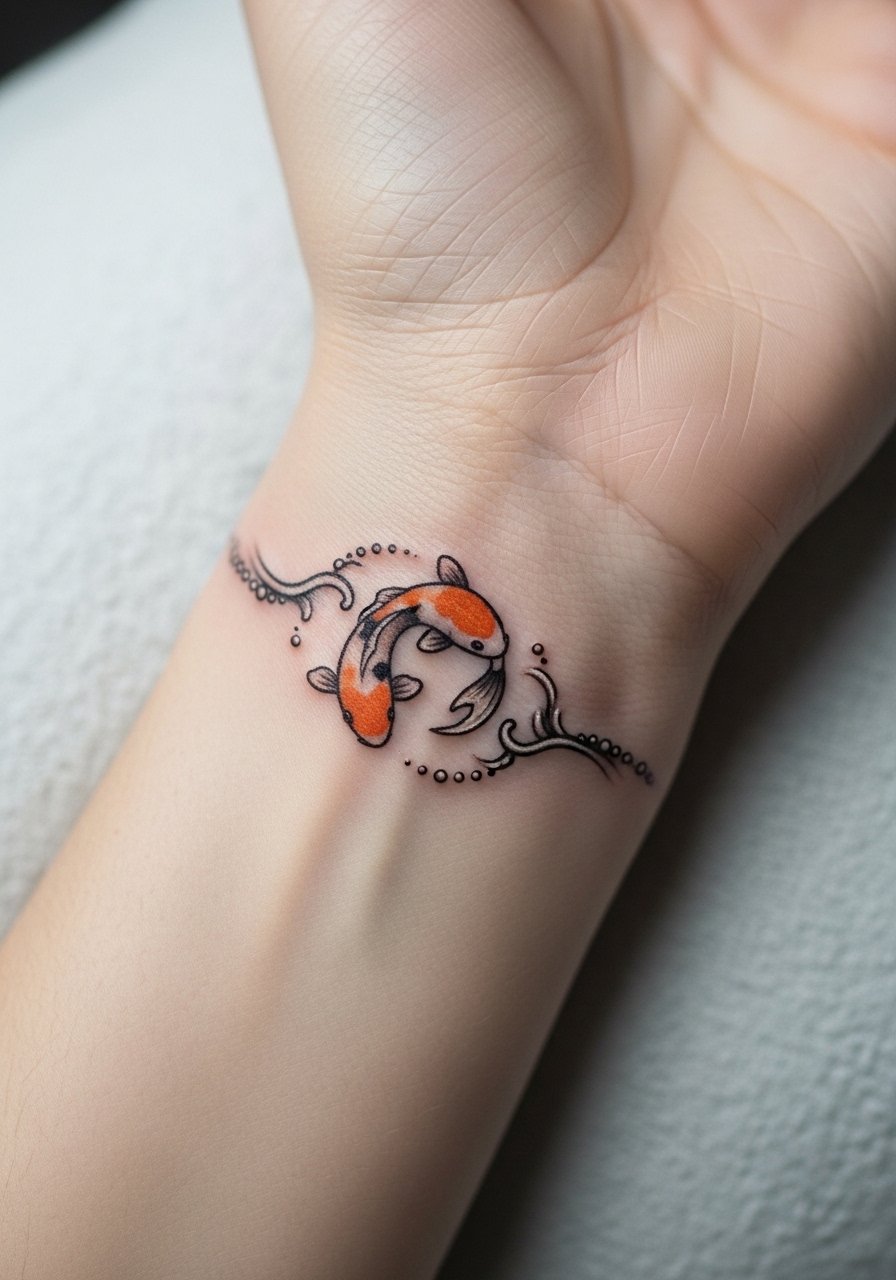
A koi that loops into a bracelet feels like jewelry and art. This circular composition suits the wrist perfectly and reads like a personal talisman. For wrist bands, ask your artist about how the design behaves when you bend your wrist.
Style & Design Details
- Tattoo style: illustrative / ornamental
- Recommended size: fits wrist circumference, about 2–3 inches diameter
- Best placement(s): wrist, ankle, upper arm band — movement-friendly zones
- Color vs. blackwork: color or black band both work depending on jewelry vibe
- Design elements: continuous koi tail-head loop, bead dots, tiny wavelets, subtle shadowing, small negative spaces
- Longevity note: wrist areas get more wash friction; expect lightening without SPF and lotion
- Who it suits: jewelry-style tattoo lovers, minimalists wanting a repeating motif
Finding the Right Artist
Choose an artist experienced with wrap designs. Ask whether the wrist bend will distort details and how they’ll size for comfort. Avoid one-off sketches without prior wrap examples.
Aftercare & Healing Tips
Avoid bracelets or watches that rub during healing. Use mild soap and light lotion. If your artist recommends it, a short Saniderm application for the first 48 hours helps.
- Tiny Koi with Wave Band on the Ribcage
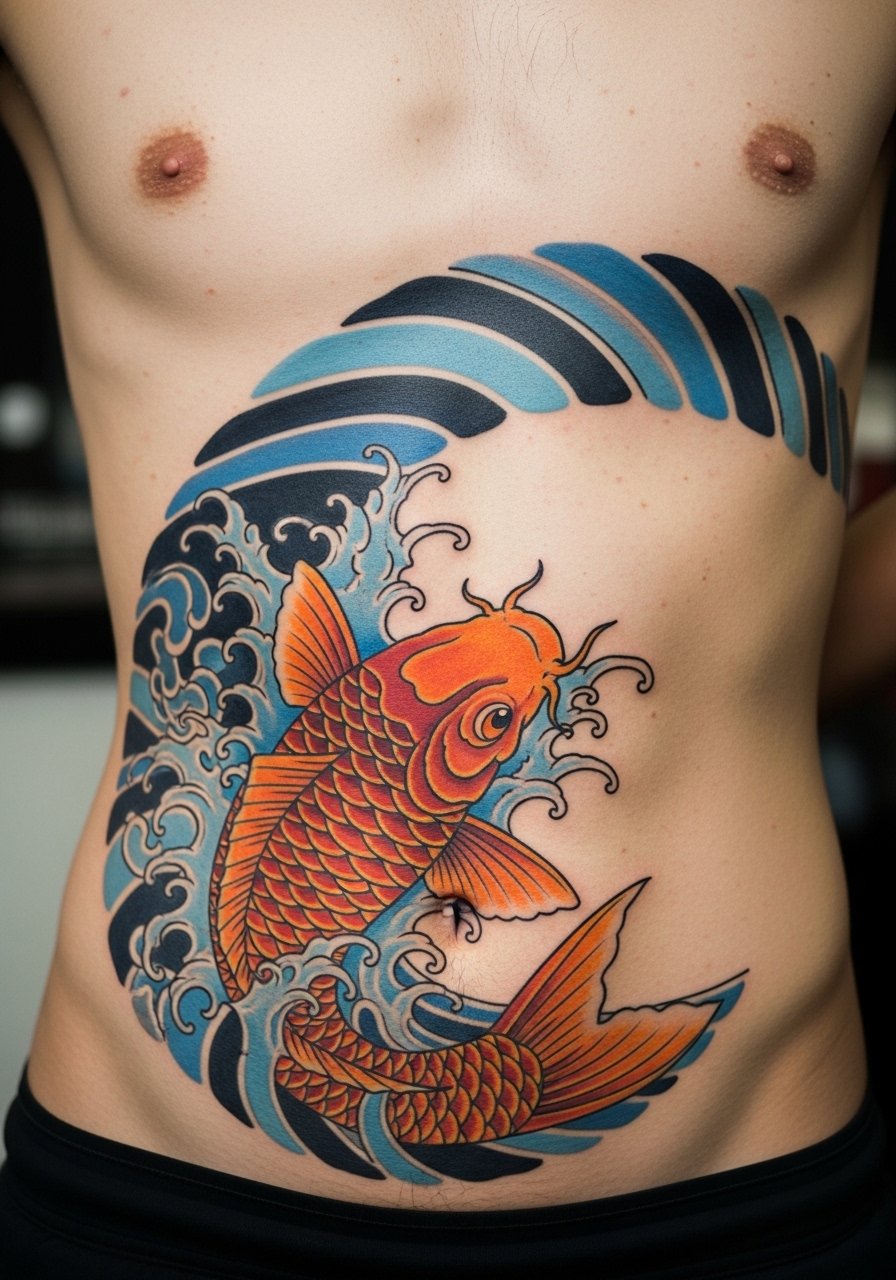
Ribcage placements can be sensitive but stunning. A small koi paired with a thin wave band fits the curve of the body and feels intimate. For rib work, many people use a numbing cream like Ebanel numbing cream beforehand.
Style & Design Details
- Tattoo style: mini neo-Japanese / illustrative
- Recommended size: 2–3 inches depending on rib curve
- Best placement(s): side ribcage, lower rib, underboob — curved surfaces look dynamic
- Color vs. blackwork: color enhances movement against skin tone
- Design elements: thin wave band, small koi curl, stipple shading, tiny white highlights, fin flow records body curvature
- Longevity note: rib skin may stretch over time; choose slight over-sizing to maintain detail
- Who it suits: committed ink-seekers, people who enjoy hidden placements
Finding the Right Artist
Pick an artist comfortable with rib anatomy and shading on curving skin. Ask for healed ribcage examples. Avoid someone who suggests tight micro-lines that may blur with movement.
Aftercare & Healing Tips
Rib areas can ache for a few days. Wear loose tops, avoid heavy lifting, and keep the area clean. A thin layer of unscented lotion helps once scabbing ends. Expect full settling by 6–8 weeks.
- Small Japanese Koi Fish Tattoo on the Clavicle
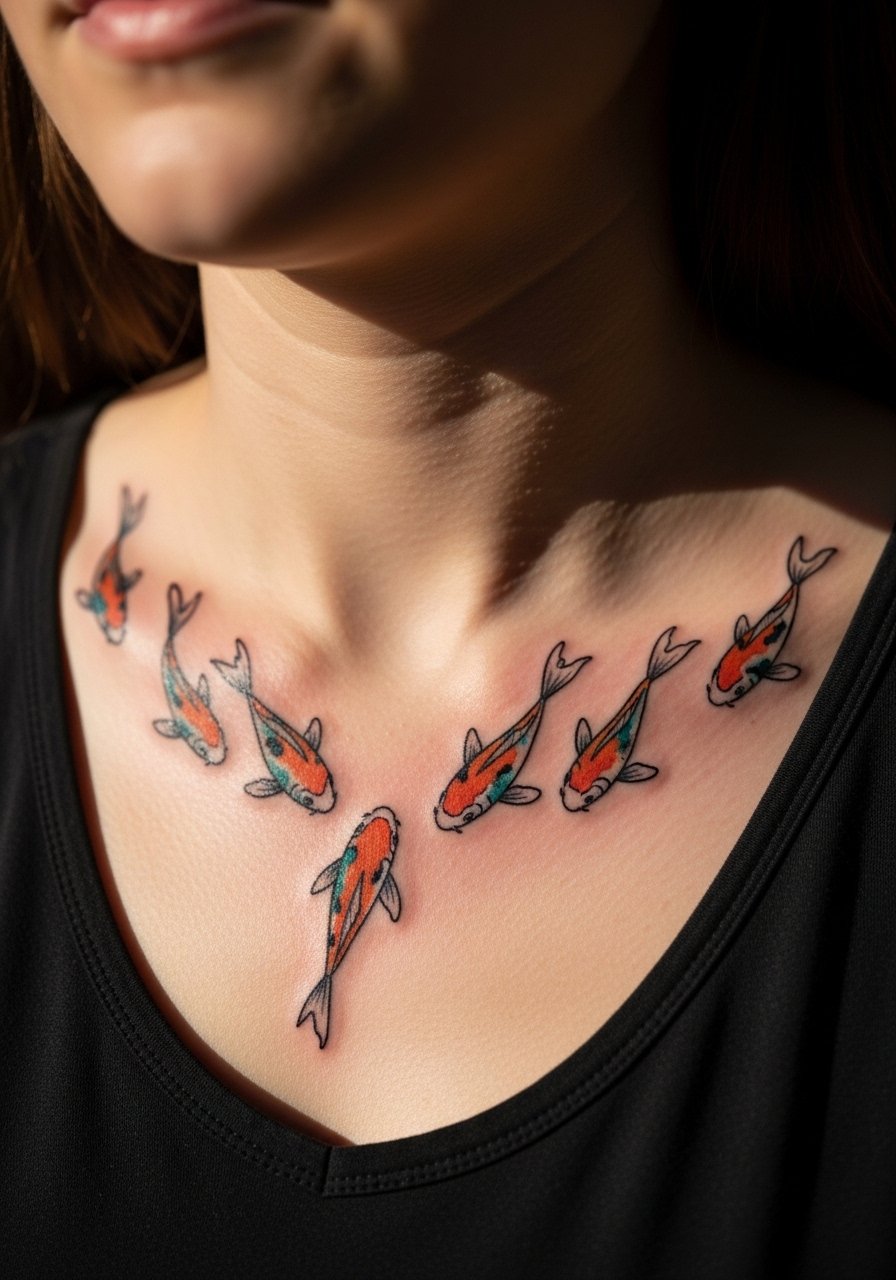
A tiny koi near the clavicle makes an elegant statement. The placement sits beautifully with jewelry and necklines, and reads personal and bold. Wearing a strapless top or necklace highlights the piece nicely.
Style & Design Details
- Tattoo style: fine line illustrative
- Recommended size: 1.5–3 inches depending on desired visibility
- Best placement(s): clavicle, upper chest, shoulder — showcases with necklines
- Color vs. blackwork: color creates a focal pop along the collarbone
- Design elements: slight curve to match collarbone, soft fill, minimal waves, tiny bubbles, subtle white highlights
- Longevity note: this area is stable; sun exposure is the main concern for fading
- Who it suits: fashion-forward, statement-seekers, elegant minimalists
Finding the Right Artist
Look for chest or collarbone examples in portfolios. Ask about how the design will move with shoulder motion. Avoid artists unfamiliar with collarbone curvature.
Aftercare & Healing Tips
Keep straps off the area while healing. Use a gentle washing routine and low-friction clothing. When healed, use an SPF 50 stick on exposed collarbone ink.
- Micro Realism Koi Eye Detail
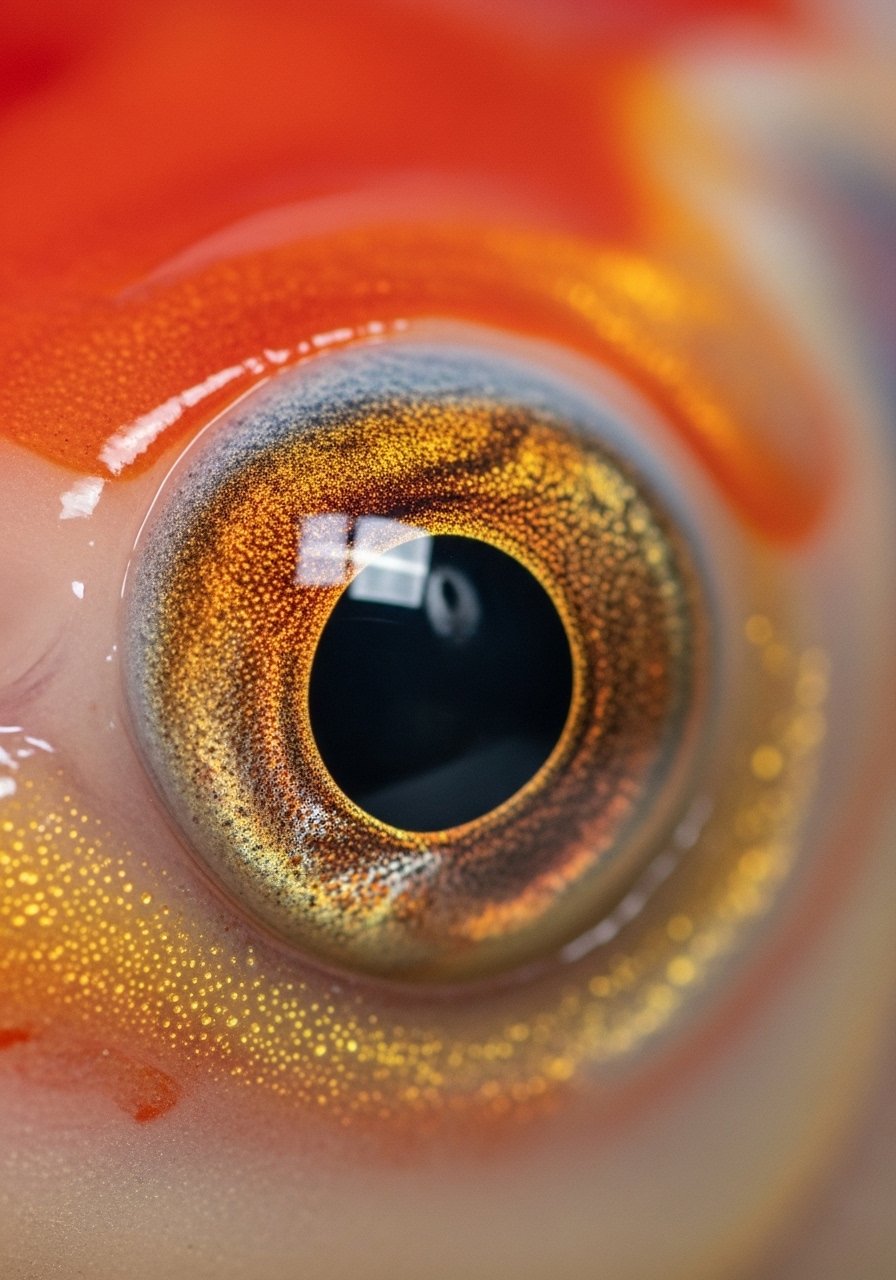
Micro realism focuses on tiny, photorealistic detail — a single koi eye or scale cluster can be a striking micro piece. This is for collectors who appreciate the craft of tiny realism. Expect longer booking times and higher hourly rates.
Style & Design Details
- Tattoo style: micro-realism
- Recommended size: 0.5–1.5 inches depending on detail
- Best placement(s): inside wrist, behind ear, finger side — tiny, visible spots
- Color vs. blackwork: color often used for lifelike depth; black & grey also effective
- Design elements: precise tiny highlight, micro-shading, ultra-fine liner control, realistic texture
- Longevity note: micro realism can soften; minimal touch-ups help preserve contrast
- Who it suits: realism lovers, detail collectors, people comfortable with small, high-cost sessions
Finding the Right Artist
Book a specialist in micro-realism; examine healed detail images. Ask for magnified healed photos and needle choices. Avoid artists without specific micro-realism examples.
Aftercare & Healing Tips
Micro realism requires careful cleaning and moisturizing. Use a fragrance-free soap and a thin, non-greasy lotion. Avoid friction and keep out of sun. Consider touch-ups in 6–12 months.
- Tiny Koi with Kanji Accent
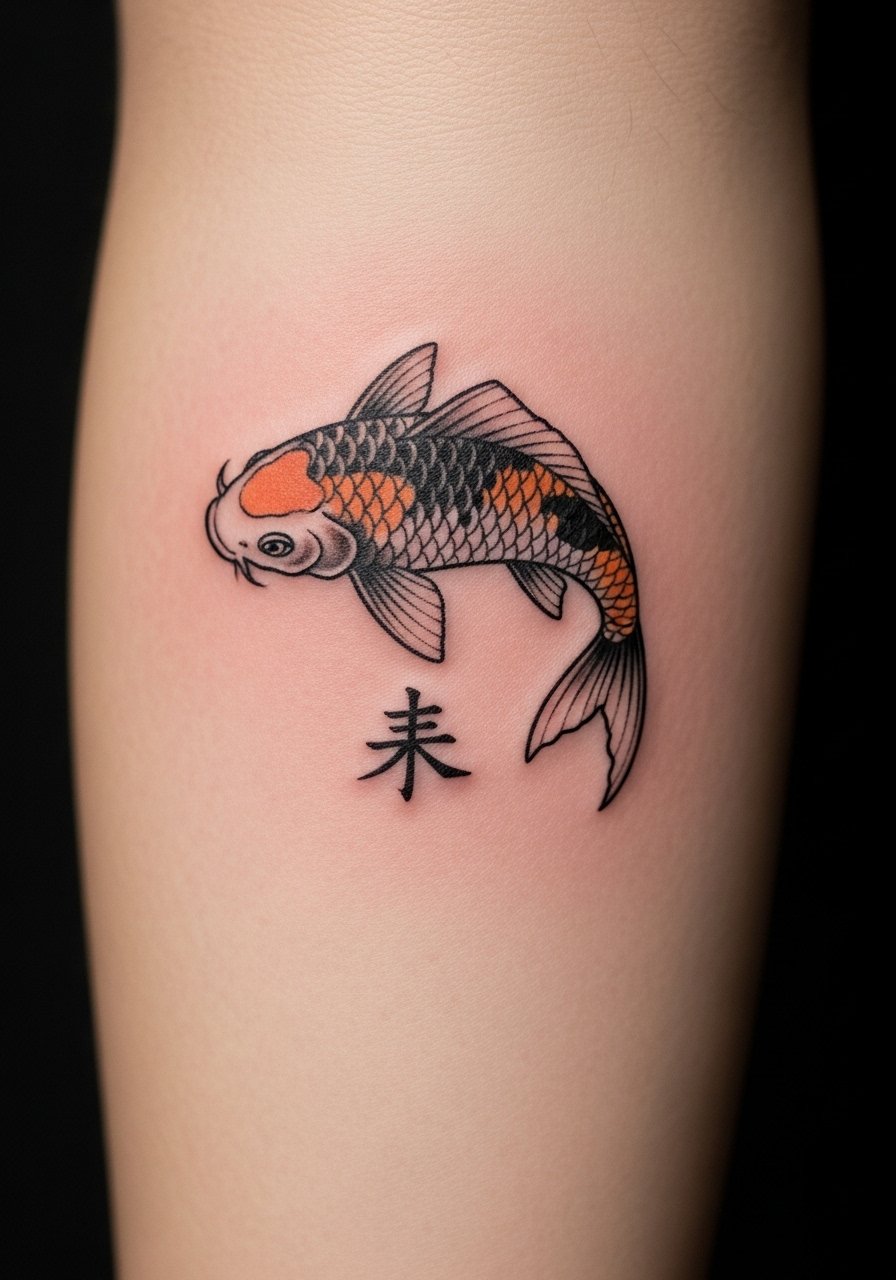
Add a meaningful kanji character (perseverance, courage) as a subtle caption for your koi. Keep the kanji small but legible; ask a native speaker or translator for accuracy. This pairing feels personal and intentional.
Style & Design Details
- Tattoo style: illustrative with script
- Recommended size: 1.5–2.5 inches total
- Best placement(s): inner forearm, side rib, calf — areas easy to read
- Color vs. blackwork: koi color with black kanji provides balance
- Design elements: tiny kanji, small koi, light wave hints, thin outlines, negative space
- Longevity note: script needs clear spacing; avoid cursive-looking kanji that could blur
- Who it suits: sentimental collectors, those wanting symbolic text
Finding the Right Artist
Bring exact kanji verified by a language source. Ask artist to show healed letter work. Avoid designs where the kanji is speculative or stylized to the point of illegibility.
Aftercare & Healing Tips
Keep text areas clean and avoid stretching the skin during healing. Use unscented lotion and protect from sun. Check in for touch-ups if the kanji softens.
- Tiny Koi on the Side of a Finger
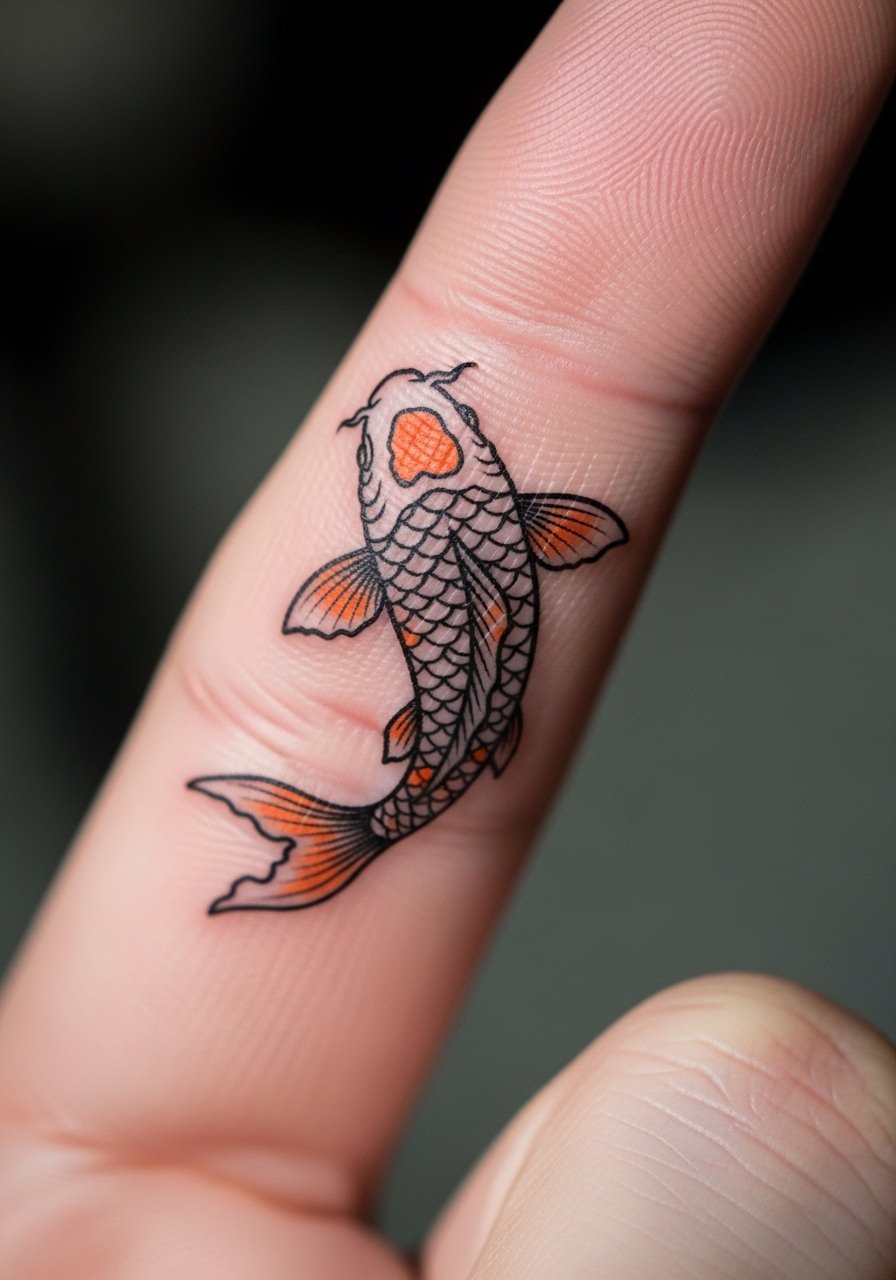
Finger tattoos are trendy but finicky. A micro koi on the side of a finger is subtle and often visible only in certain gestures. Understand that finger ink tends to fade faster and may need more frequent touch-ups.
Style & Design Details
- Tattoo style: micro-line
- Recommended size: 0.5–1 inch
- Best placement(s): side of finger, ring finger base, thumb side — small, intimate spots
- Color vs. blackwork: black or muted color recommended due to frequent washing
- Design elements: narrow vertical koi, minimal waves, thin outline, tiny highlights
- Longevity note: fingers fade quicker; expect maintenance every 1–3 years
- Who it suits: confident risk-takers, people okay with future touch-ups
Finding the Right Artist
Choose an artist who does healed finger tattoos and discusses retention strategies. Ask about deeper placement versus superficial lines. Avoid artists without finger portfolio pieces.
Aftercare & Healing Tips
Avoid frequent washing and soaking early on. Use a thin layer of unscented lotion and avoid jewelry on that finger while healing. Expect touch-ups sooner than other placements.
- Mini Koi with Lotus Pad
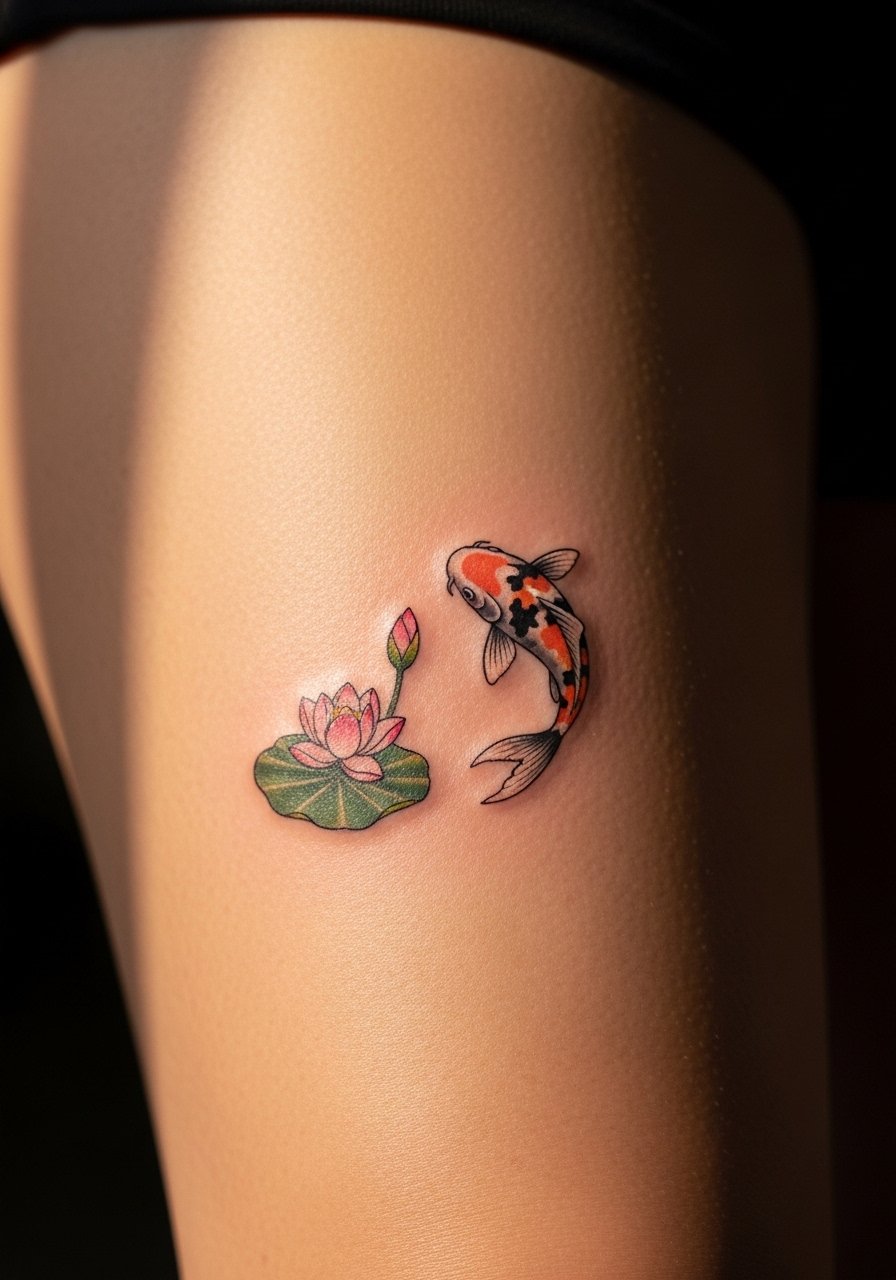
A koi swimming near a lotus conveys growth out of struggle. On the thigh, the piece can be slightly larger without losing intimacy. For thigh work, consider wearing loose shorts post-session.
Style & Design Details
- Tattoo style: illustrative / botanical
- Recommended size: 2–3 inches on thigh
- Best placement(s): outer thigh, upper leg, hip — roomy flats for composition
- Color vs. blackwork: color emphasizes natural elements (green lotus pad, orange koi)
- Design elements: lotus pad, ripples, shaded scales, subtle white ink, tiny bubble accents
- Longevity note: thigh holds ink well; color retention is solid with SPF care
- Who it suits: symbolic nature lovers, people who prefer hidden placements
Finding the Right Artist
Find an artist who pairs botanical and animal designs. Ask about how they balance flora and fauna at small sizes. Avoid artists lacking floral detail in portfolios.
Aftercare & Healing Tips
Wear loose bottoms and avoid friction. Keep area clean and moisturized. After healed, use brightening balms if you want saturated color longevity.
- Small Koi with Geometric Water Lines
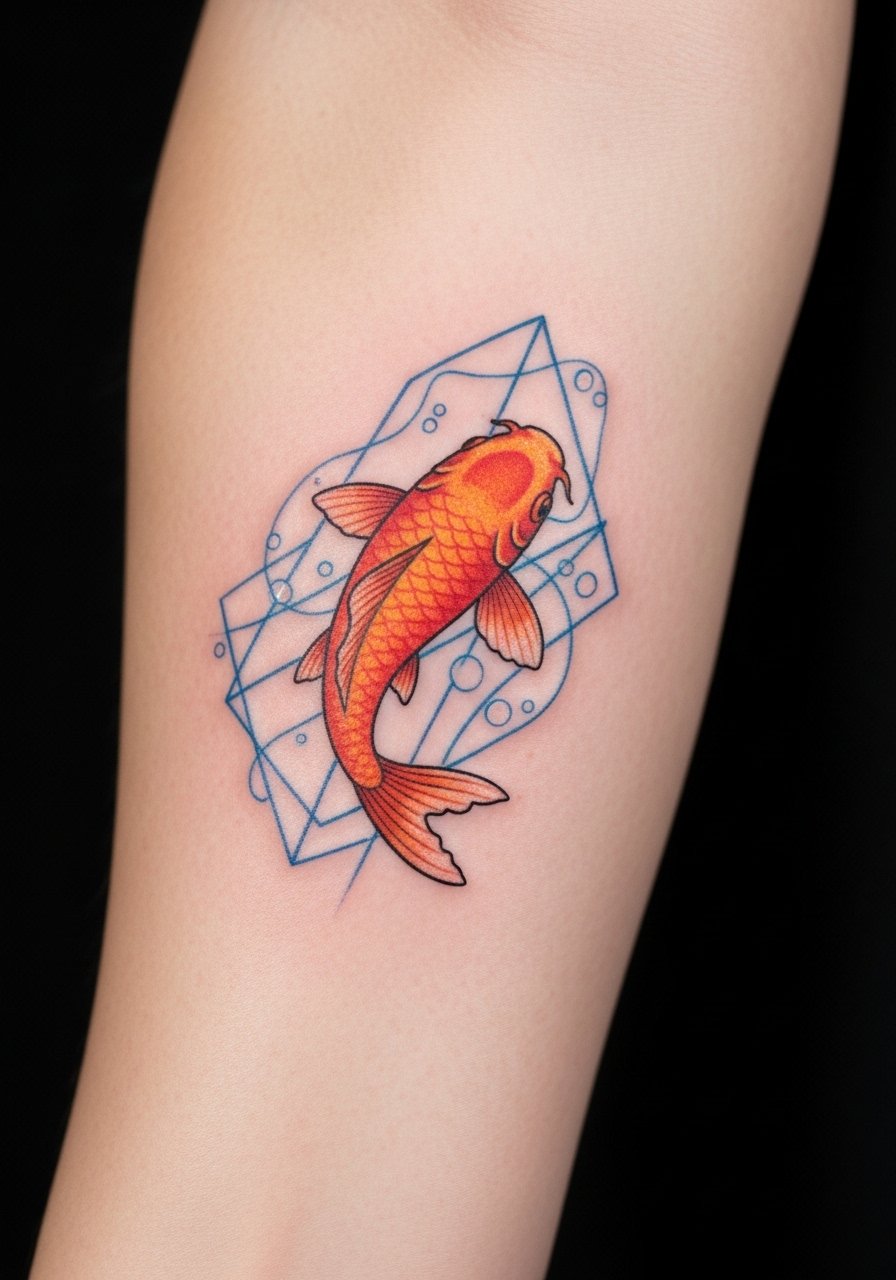
Combining organic koi form with angular water lines makes an eye-catching contrast. This modern mix suits people who love juxtaposition between soft and structural visuals.
Style & Design Details
- Tattoo style: contemporary illustrative + geometric
- Recommended size: 1.5–2.5 inches
- Best placement(s): inner forearm, outer calf, upper arm — visible yet not intrusive
- Color vs. blackwork: color koi with black geometric lines keeps clarity
- Design elements: linear water bands, koi silhouette, micro-dot shading, negative-space scales
- Longevity note: geometric lines need slight thickness to avoid blurring; ask for healed examples
- Who it suits: modern art fans, minimalists who like contrast
Finding the Right Artist
Look for artists who successfully combine geometry and illustrative work. Ask how they’ll keep lines crisp and how the two styles will age together. Avoid artists who specialize in only one approach.
Aftercare & Healing Tips
Keep geometric areas dry initially to avoid ink migration. Use unscented lotion; apply SPF to preserve color. If lines soften, schedule a touch-up.
- Small Color-Blocked Koi (Flat Graphic Color)
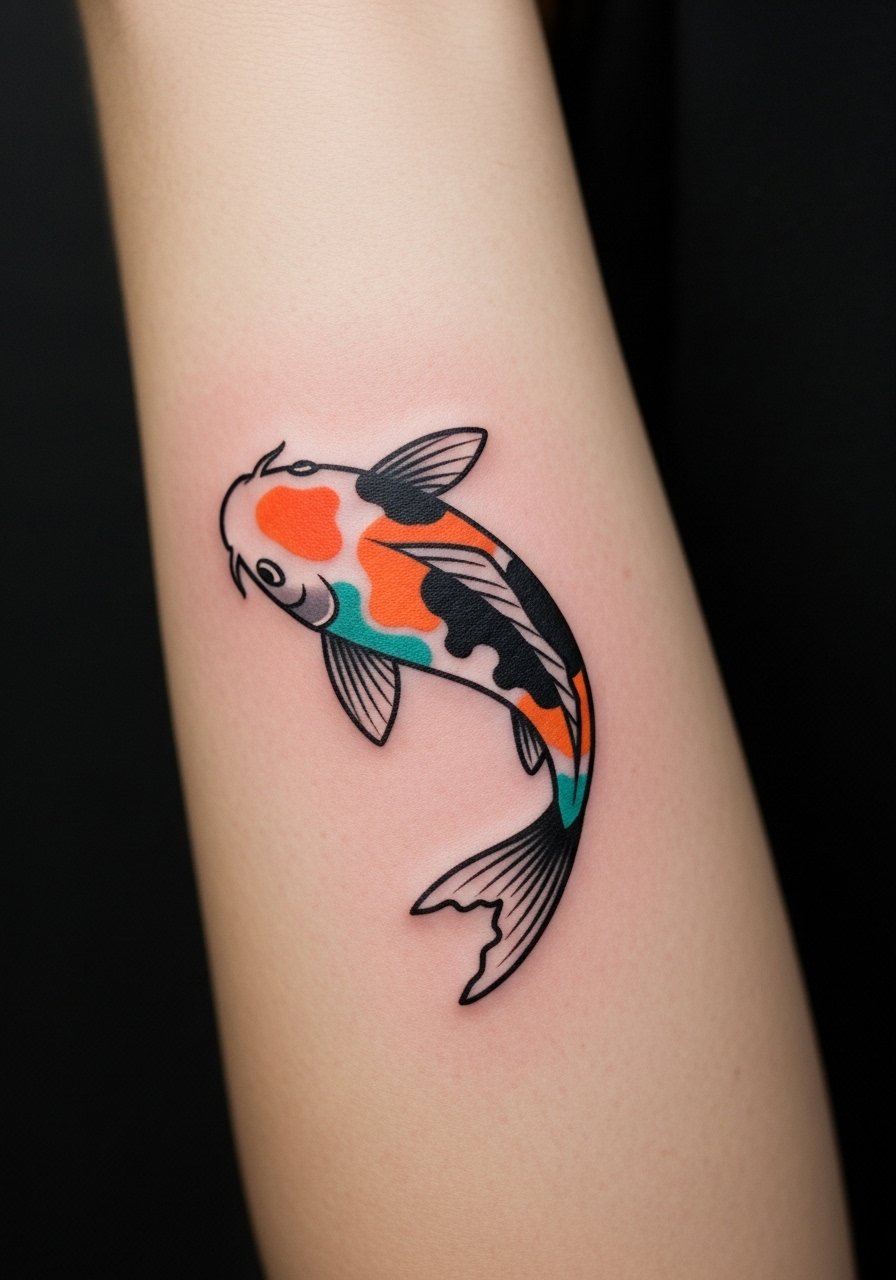
Color-blocking gives a modern graphic twist. Solid color fields with minimal gradients feel bold even at small sizes. Artists often use high-pigment inks like Intenze for these pieces.
Style & Design Details
- Tattoo style: graphic color-block
- Recommended size: 1.5–3 inches
- Best placement(s): outer forearm, calf, shoulder — flat areas showcase blocks
- Color vs. blackwork: strong color-blocks recommended; avoid tiny gradients
- Design elements: flat fills, thick outlines, small negative spaces, minimal shading, block waves
- Longevity note: saturated blocks resist some fading but need SPF and moisturizing to stay vibrant
- Who it suits: bold style lovers, graphic design fans, color collectors
Finding the Right Artist
Choose an artist experienced with saturated solids. Ask about ink brands and healed examples. Avoid artists whose color work shows patchiness in healed photos.
Aftercare & Healing Tips
Flat color can scab more prominently; keep moisturized with unscented lotion. Apply SPF once healed to prevent pigment loss.
- Tiny Koi with Tiny Lantern (Cultural Accent)
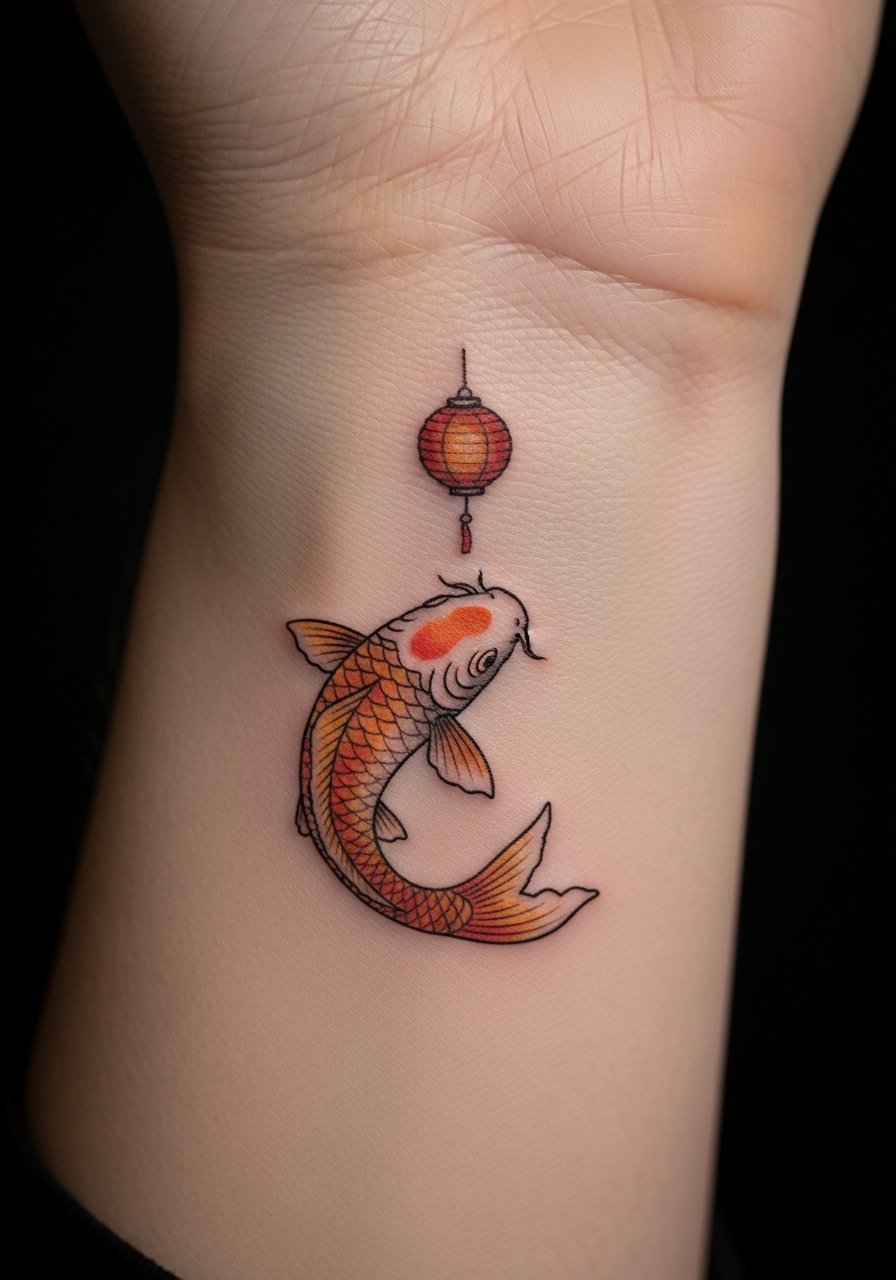
The lantern adds cultural resonance and a delicate secondary motif. Kept small, it provides context without overpowering the koi. This is a good option for those who want subtle Japanese-inspired compositions.
Style & Design Details
- Tattoo style: illustrative mini neo-Japanese
- Recommended size: 1.5–2.5 inches combined
- Best placement(s): wrist, forearm, ankle — visible accents with jewelry-friendly spots
- Color vs. blackwork: color lantern warm tones complement koi orange
- Design elements: tiny lantern, soft shading, linework, small flame, negative-space fins
- Longevity note: small motifs require spacing for legibility over time
- Who it suits: culturally curious collectors, symbol-minded tattoo seekers
Finding the Right Artist
Seek artists with small cultural motif examples and ask about historical stylings if that matters. Avoid artists who overly stylize cultural symbols without context.
Aftercare & Healing Tips
Keep the area clean and avoid rubbing from bracelets or watches. Use an unscented lotion through peeling. Consider a touch-up if small details soften.
- Minimalist Koi Silhouette on the Hip
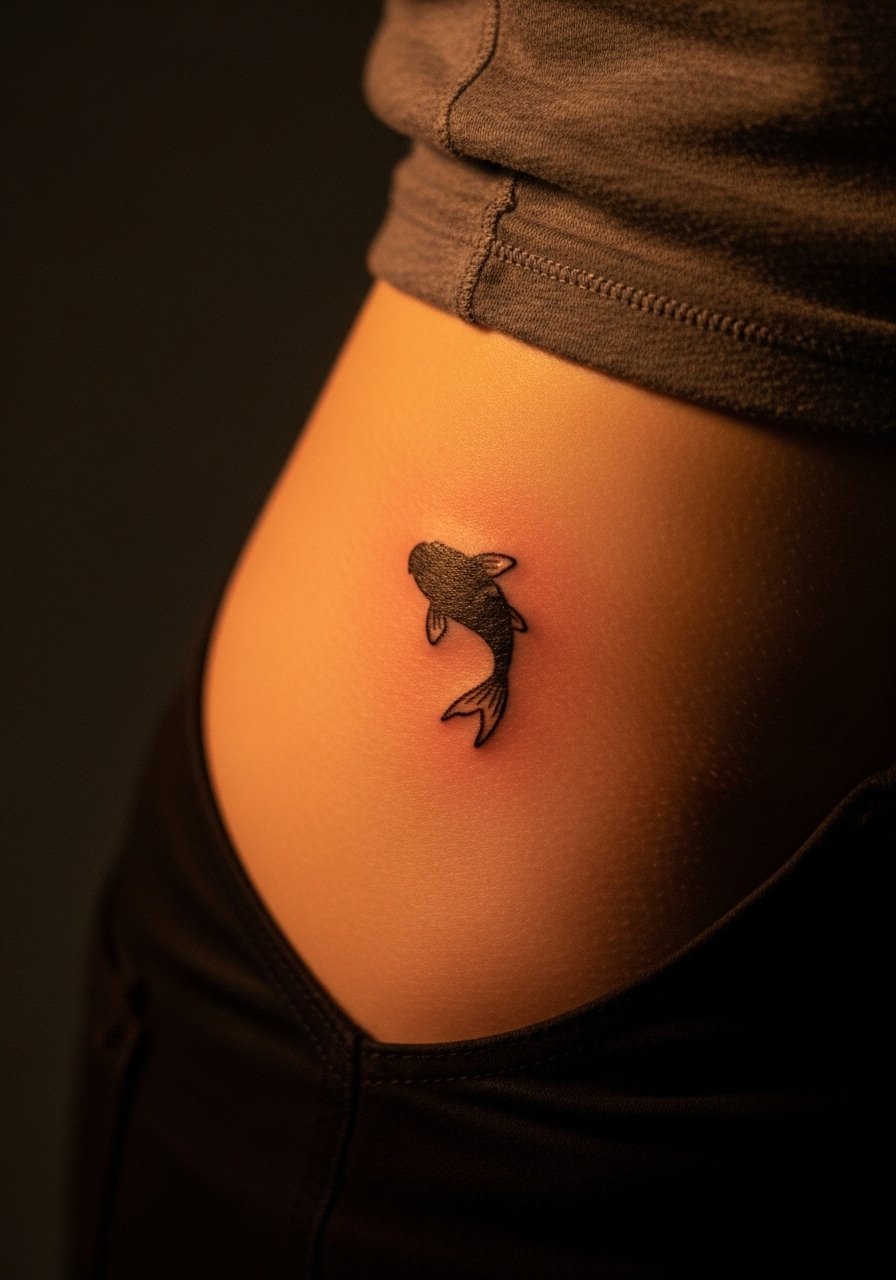
The hip gives a private canvas for a silhouette koi: simple, elegant, and intimate. This low-visibility spot is great if you want something personal that’s also flirty.
Style & Design Details
- Tattoo style: minimal silhouette
- Recommended size: 1–2 inches
- Best placement(s): hip, lower abdomen, upper thigh — private and sensual placements
- Color vs. blackwork: black silhouette is bold and low-maintenance
- Design elements: clean silhouette, slight fin indentation, optional tiny wave dot
- Longevity note: silhouette ages well; keep out of prolonged sun exposure
- Who it suits: private tattoo seekers, minimalists, romantic aesthetic
Finding the Right Artist
Find someone skilled in clean silhouettes with consistent healed edges. Ask about how they handle skin elasticity in that area. Avoid artists without body-curvature examples.
Aftercare & Healing Tips
Wear loose underwear and bottoms during healing. Clean routinely and moisturize lightly. Expect settling after 6 weeks.
- Tiny Koi with Starry Accent (Celestial Motif)
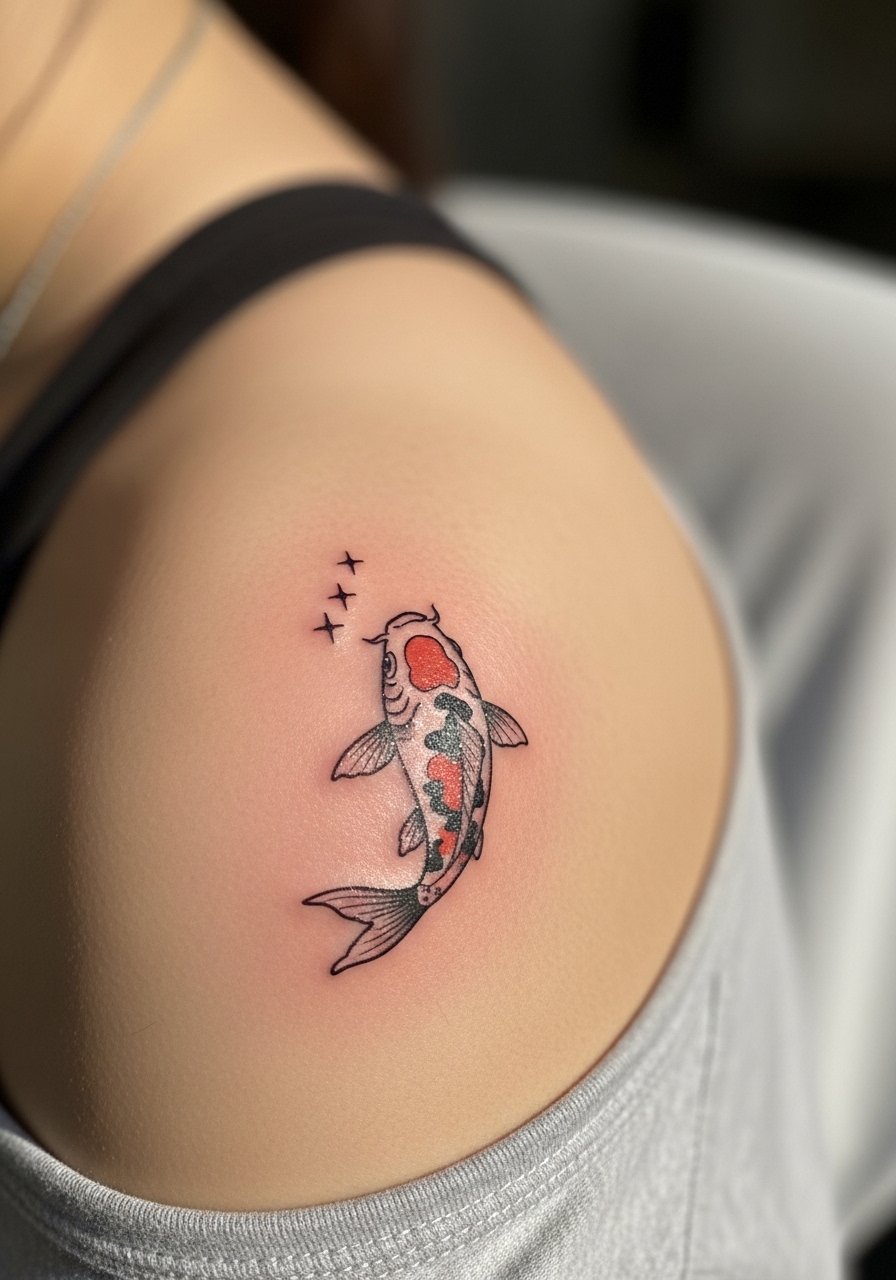
A few tiny stars give a dreamy accent that pairs well with koi symbolism of aspiration. This feels whimsical and slightly mystical. Perfect for shoulder or upper arm.
Style & Design Details
- Tattoo style: illustrative + tiny celestial
- Recommended size: 1–2 inches
- Best placement(s): shoulder, upper arm, back of neck — open, visible areas for star accents
- Color vs. blackwork: soft color koi with black stars or reverse for contrast
- Design elements: star dots, small koi curl, micro shading, tiny white highlights
- Longevity note: small stars are easy to touch up if they fade
- Who it suits: spiritual, dreamy aesthetic fans, subtle symbolism lovers
Finding the Right Artist
Choose an artist who posts tiny celestial themes alongside animals. Ask for healed examples. Avoid portfolios lacking micro-precision.
Aftercare & Healing Tips
Stars and tiny details often need touch-ups; keep the area out of sun and moisturized. A small dab of Hustle Butter or unscented lotion helps during peeling.
- Koi with Tiny Scripted Name (Memorial Mini)
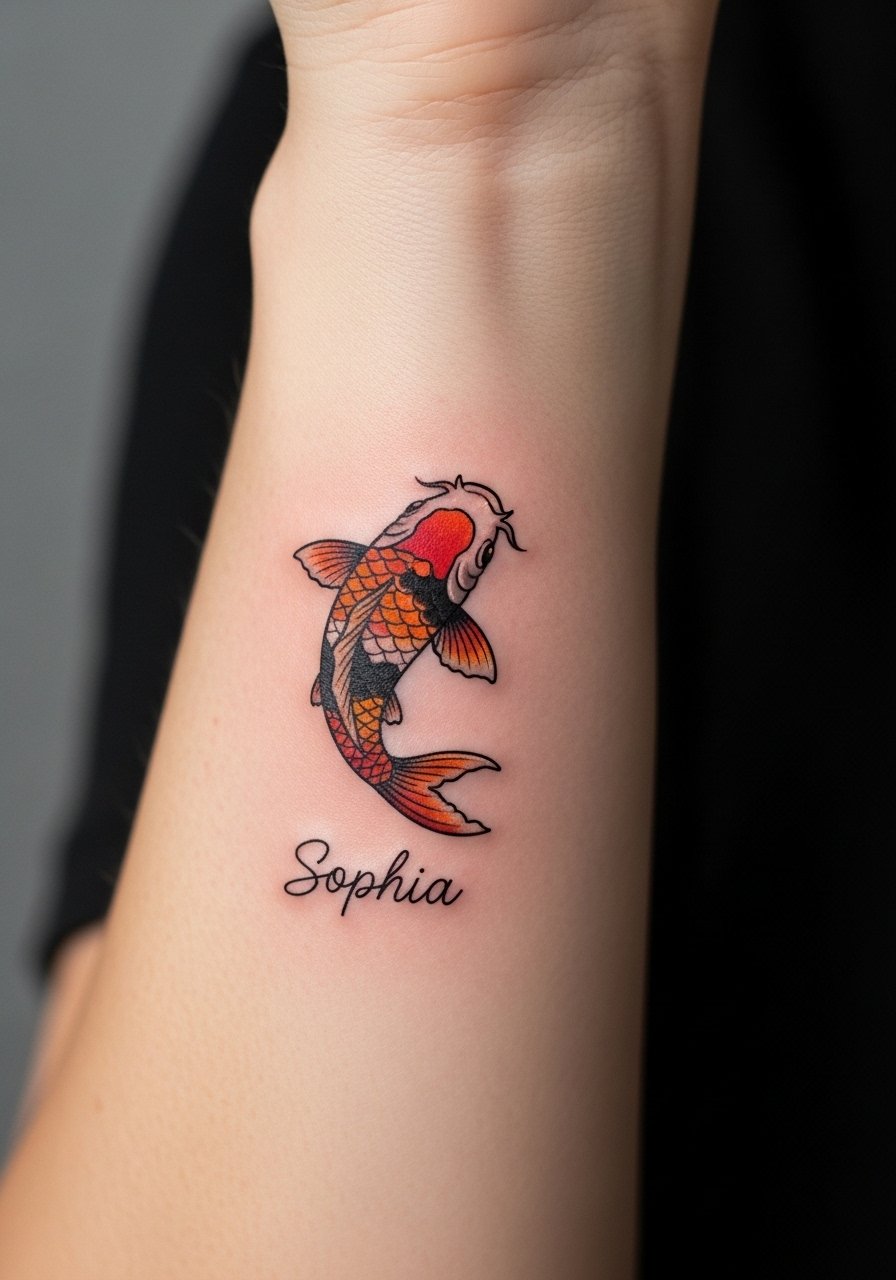
Pair a subtle koi with a tiny script name for a personal memorial or tribute. Keep the name legible and avoid overly ornate scripts at micro-scales. Verify spelling with your artist before the stencil.
Style & Design Details
- Tattoo style: illustrative + micro-script
- Recommended size: 1.5–3 inches total depending on script length
- Best placement(s): inner forearm, rib, sternum — personal readable spots
- Color vs. blackwork: black script with colored koi balances meaning and clarity
- Design elements: tiny name, small koi curl, soft shading, optional date dot
- Longevity note: script size affects durability; slightly larger letters last longer
- Who it suits: memorial seekers, sentimentalists, those honoring someone
Finding the Right Artist
Bring the exact spelling and ask to see healed script samples. Ask how they handle micro-script spacing. Avoid artists who hand-letter poorly or lack clear, healed script examples.
Aftercare & Healing Tips
Scripts can blur if placed too small; follow cleaning and moisturizing routines. Avoid stretching the skin during healing and check for touch-ups after weeks.
- Tiny Koi Wrapped in a Cherry Blossom Wreath
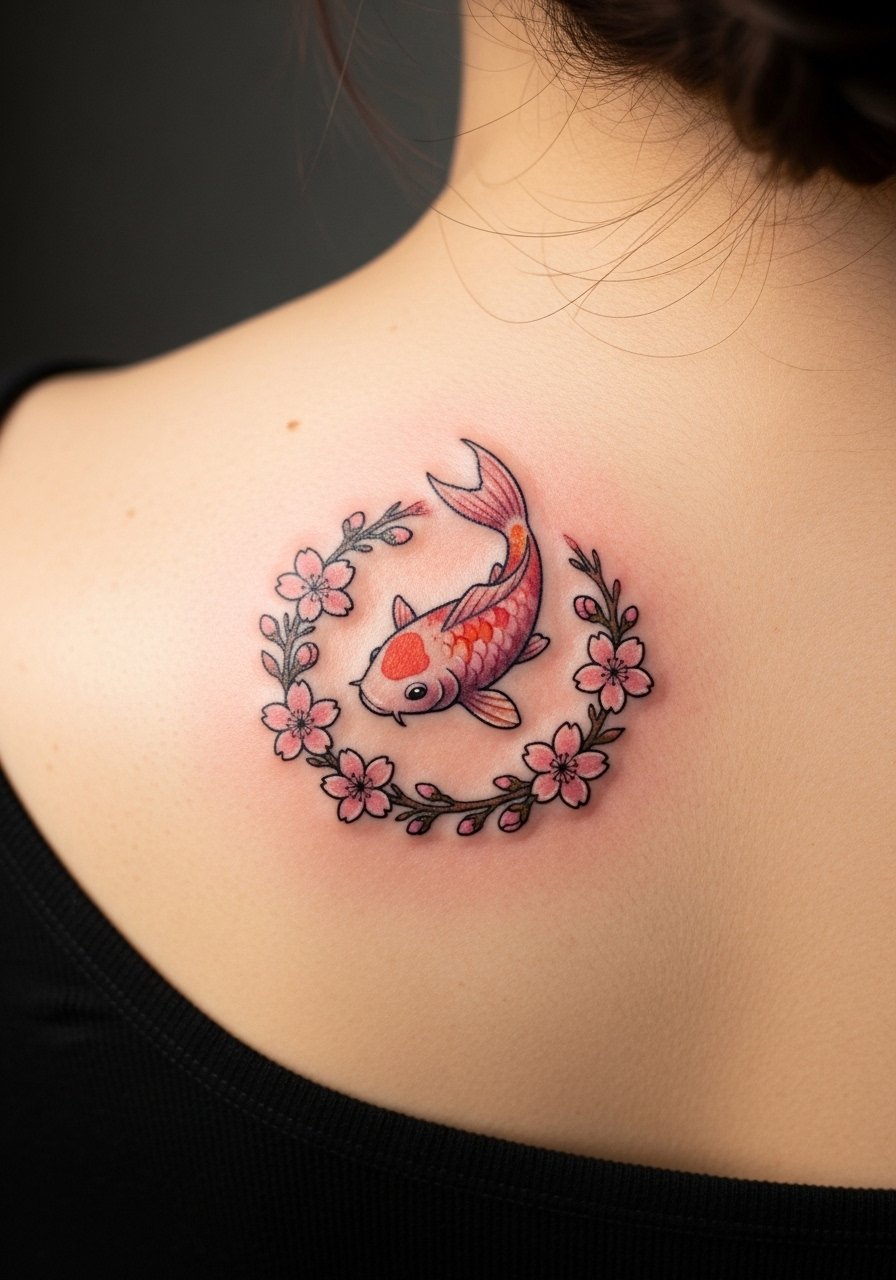
This wreath composition gives the koi a framed, almost emblematic look. It feels feminine, poetic, and very Japanese-inspired. Works well for a back shoulder or upper arm.
Style & Design Details
- Tattoo style: illustrative / floral
- Recommended size: 2–3 inches to keep blossom detail visible
- Best placement(s): back shoulder, upper arm, back of chest — wider canvases for wreath flow
- Color vs. blackwork: color for blossoms; soft shading for depth
- Design elements: circular wreath, tiny sakura petals, koi curl, thin outlines, dot highlights
- Longevity note: floral details need space; avoid shrinking too small or they blur
- Who it suits: romantic-minded, floral tattoo fans, symbolic collectors
Finding the Right Artist
Pick an artist who posts floral wreaths and small animals. Ask about spacing and healed blossom clarity. Avoid artists who compress flowers in tiny spaces.
Aftercare & Healing Tips
Wreaths sit near clothing edges; avoid friction while healing. Use lotion and sun protection after healed. A touch-up may be needed for tiny petal detail.
- Tiny Koi with Small Wave Tattoo Band (Forearm Wrap)
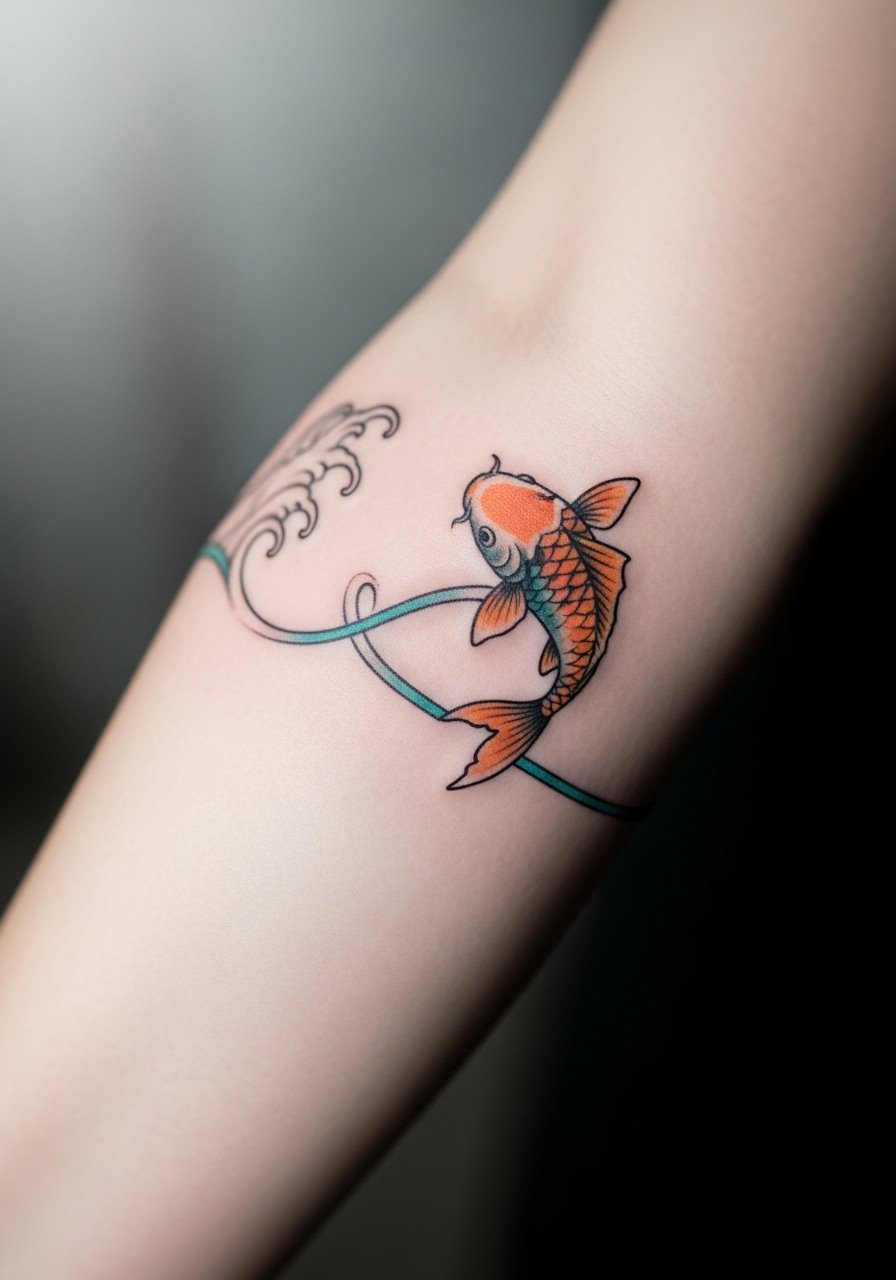
A thin wave band ties the koi into a mini sleeve concept without committing to a full arm. It’s great if you want continuity across placements later.
Style & Design Details
- Tattoo style: mini-sleeve / illustrative
- Recommended size: koi 1.5–3 inches with band wrapping 3–4 inches of forearm
- Best placement(s): forearm, wrist-to-forearm transition, calf sleeve — for continuity
- Color vs. blackwork: color koi with blue/teal wave band gives contrast
- Design elements: thin wave band, small koi, dotted highlights, micro-patterning, negative space
- Longevity note: bands can blur if lines too thin; slightly thicker bands last better
- Who it suits: sleeve aspirants, people who want coherence between pieces
Finding the Right Artist
Find someone experienced with bands and continuity across curved skin. Ask how the band will wrap and resist distortion. Avoid artists without sleeve transition examples.
Aftercare & Healing Tips
Keep the band clean and moisturized. Avoid tight clothing that compresses the band while healing. Consider Saniderm for initial protection.
- Tiny Koi with Subtle White Ink Accents
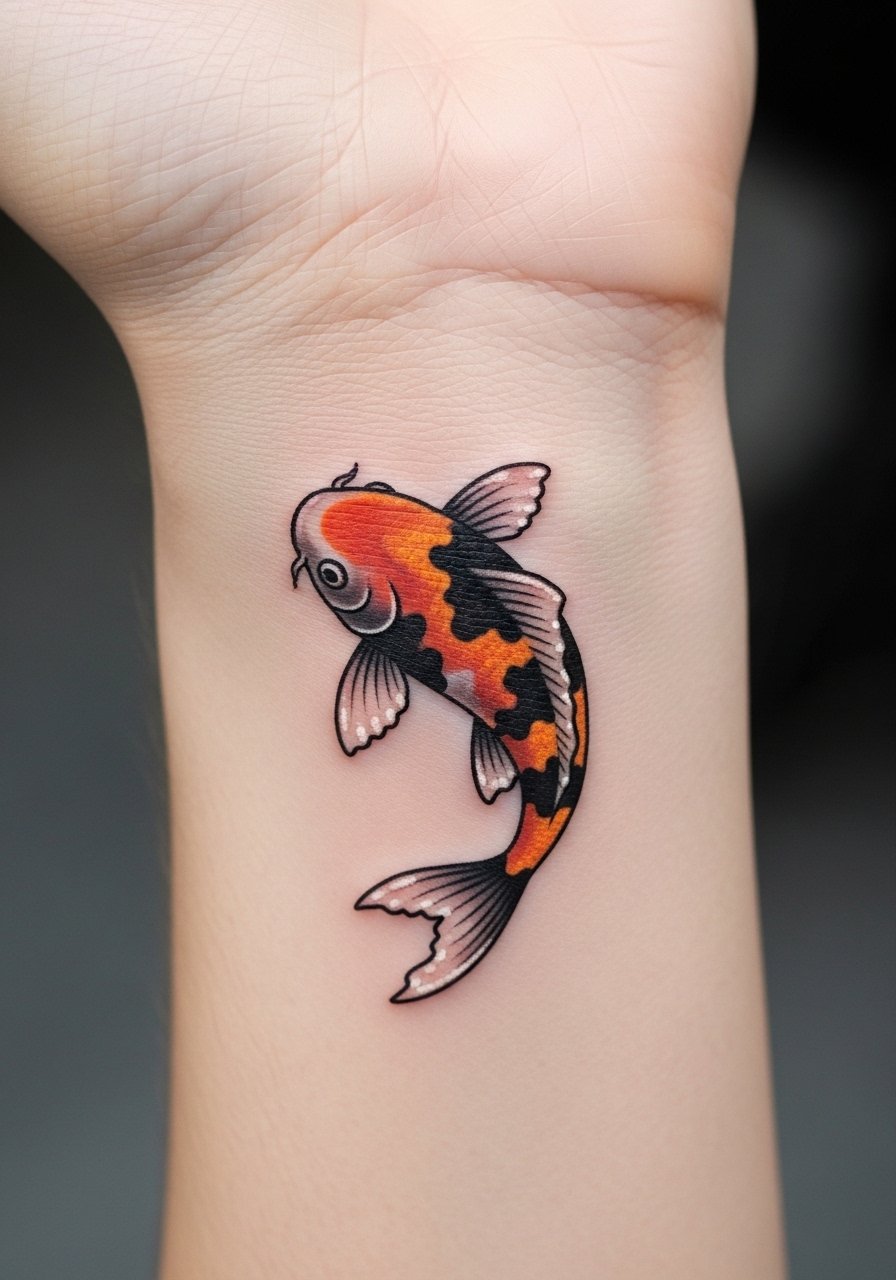
White ink adds tiny glints that make a small koi pop. Use it sparingly since white fades faster and can change tone on some skin types. Ask your artist for healed white-on-color examples on your skin tone.
Style & Design Details
- Tattoo style: illustrative with white ink highlights
- Recommended size: 1–2.5 inches to see white detail
- Best placement(s): wrist, clavicle, ankle — places where highlights catch light
- Color vs. blackwork: color base with white accents recommended for contrast
- Design elements: faint white dots on fins, small reflective eye highlight, crisp outline, light dot shading
- Longevity note: white fades faster; it often looks best in the first year without touch-ups
- Who it suits: people comfortable with potential future fading of white ink
Finding the Right Artist
Find artists experienced with white highlights and ask for healed white-on-color photos across different skin tones. Avoid artists who rarely use white ink.
Aftercare & Healing Tips
White ink needs diligent SPF after healing; avoid heavy exfoliation. Keep moisturized and check for touch-ups in 6–12 months.
- Two Tiny Koi Facing Opposite Directions (Symbolic Pair)
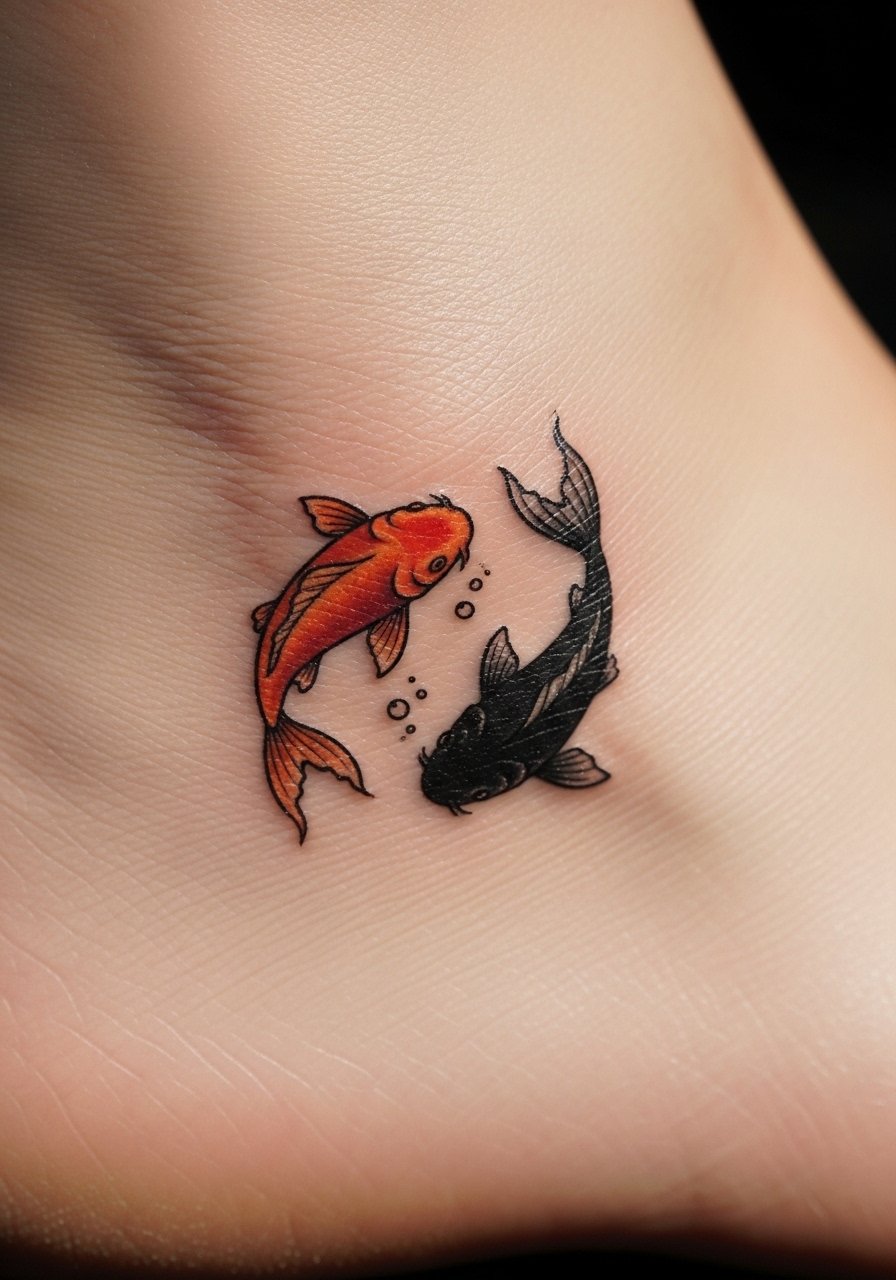
Two small koi facing opposite ways can symbolize duality, relationships, or personal contrast. Kept tiny, they’re ideal as matching tattoos with a friend or partner.
Style & Design Details
- Tattoo style: illustrative / pairing
- Recommended size: 1–2 inches each
- Best placement(s): ankle, inner wrist, below collarbone — places suitable for pairs
- Color vs. blackwork: contrasting color pairs (orange + black) highlight difference
- Design elements: mirrored composition, tiny bubble connectors, minimal waves, fine outlines
- Longevity note: symmetry matters; small mirrored pieces need precise stencil work
- Who it suits: partners, best friends, people who like paired symbolism
Finding the Right Artist
Choose an artist who demonstrates mirrored or paired tattoos. Ask about how they’ll match scale exactly. Avoid artists who improvise sizing without consultation.
Aftercare & Healing Tips
Keep both areas clean and moisturized. If matching with someone, coordinate aftercare routines and appointment timing to ensure similar healing. Use a fragrance-free lotion and protect from sun once healed.
Thanks for scrolling through 26 small Japanese koi fish tattoo ideas — a whole range of tiny koi looks that can be bold, subtle, colorful, or purely blackwork. Pin the ideas you love and bring them to your consult; a printed stencil or Procreate mockup helps communicate size and flow with your artist. I always recommend having a Saniderm second-skin bandage roll on hand and unscented lotion like Lubriderm unscented for the peeling phase.
Which style resonates most with you — the tiny yin-yang koi, the watercolor ankle piece, or a micro-realism detail? Save this pin and share it with a friend who’s planning their next session.