You’re scrolling at midnight, saving images, dreaming about finally booking that consultation. Maybe you’ve loved Japanese imagery for years, or you want a piece that reads feminine, symbolic, and rich with cultural motifs. A well-chosen Japanese traditional tattoo for women can do all of that — balance bold composition with delicate details, and sit beautifully on a variety of placements.
This list gathers 23 trendy, culturally-informed Japanese traditional tattoo ideas for women that feel elegant and wearable. You’ll find style breakdowns, placement suggestions, realistic healing notes, and honest pain context. If you want a gentler session on the ribs, try a numbing cream like Zensa tattoo numbing cream about 45 minutes before your appointment. For healing, many artists recommend a Saniderm second-skin wrap; I often keep a roll of Saniderm/Tegaderm bandage on hand so I’m ready the minute I leave the shop.
Save the designs you love and bring this to your consultation — these ideas are practical and stylish, whether you’re getting your first piece or adding to a collection.
- Koi and Cherry Blossom Flow
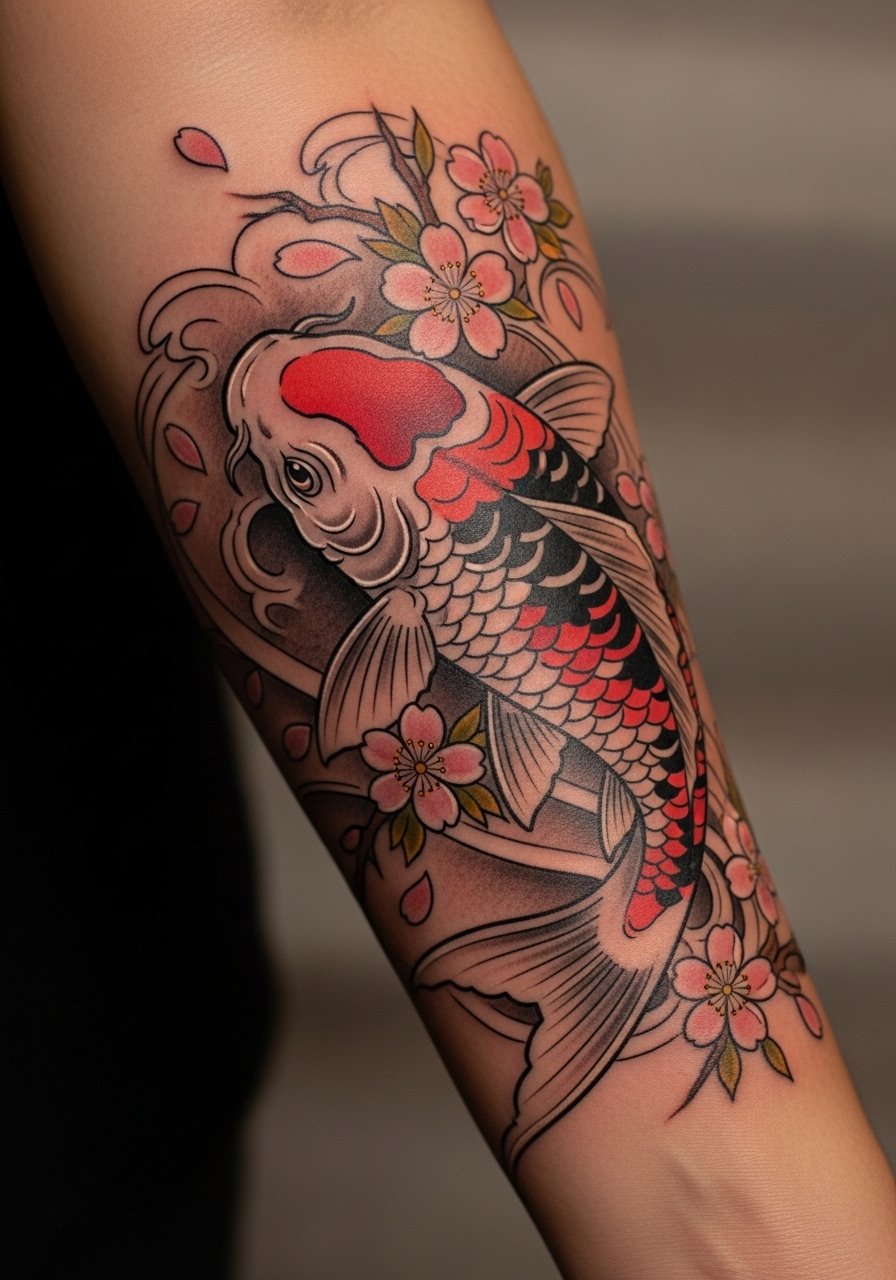
This design pairs a graceful koi with scattered sakura petals, giving movement across the forearm. The koi’s scales are built with bold outlines and subtle color gradients, while the cherry blossoms use delicate single-needle edgework. It reads feminine without being fragile and looks beautiful both as a standalone and as a piece that can grow into a sleeve. If you’re sensitive around the inner forearm, consider applying a small amount of EMLA numbing cream before longer sessions.
Style & Design Details
- Tattoo style: Neo-traditional with Japanese iconography
- Recommended size: palm to half-forearm (4–7 inches)
- Best placement(s): outer or inner forearm for flow, or calf for visibility
- Color vs. blackwork: Color recommended (orange/red koi + soft pink sakura) for contrast
- Design elements: bold outlines, soft color gradient fills, scale stippling, flowing water lines, negative-space highlights
- Longevity note: Color holds well on forearm; UV exposure fades reds faster
- Who it suits: lovers of feminine symbolism, first-timers wanting visible art
Finding the Right Artist
Look for portfolios that show neo-traditional Japanese pieces, koi anatomy, and confident color fades. Ask how the artist plans to scale the koi and how they’ll keep sakura petals readable over time. Avoid artists who specialize only in tiny flash if you want detailed scales. An experienced artist is best for scale detail; apprentices may struggle with consistent color gradients. Browse Instagram tags like #japanesetattoo and #koitattoo and check shop profiles on Tattoodo.
Aftercare & Healing Tips
Keep the initial Saniderm on for 24–72 hours based on your artist’s call. Wash gently twice daily with a fragrance-free soap like Dr. Bronner’s Unscented Castile Soap. After the wrap, apply a thin layer of unscented lotion such as Lubriderm Daily Moisture Lotion during peeling. Expect mild itching around days 3–7; avoid scratching and sunscreen the healed piece.
- Hannya Mask with Peony Accents
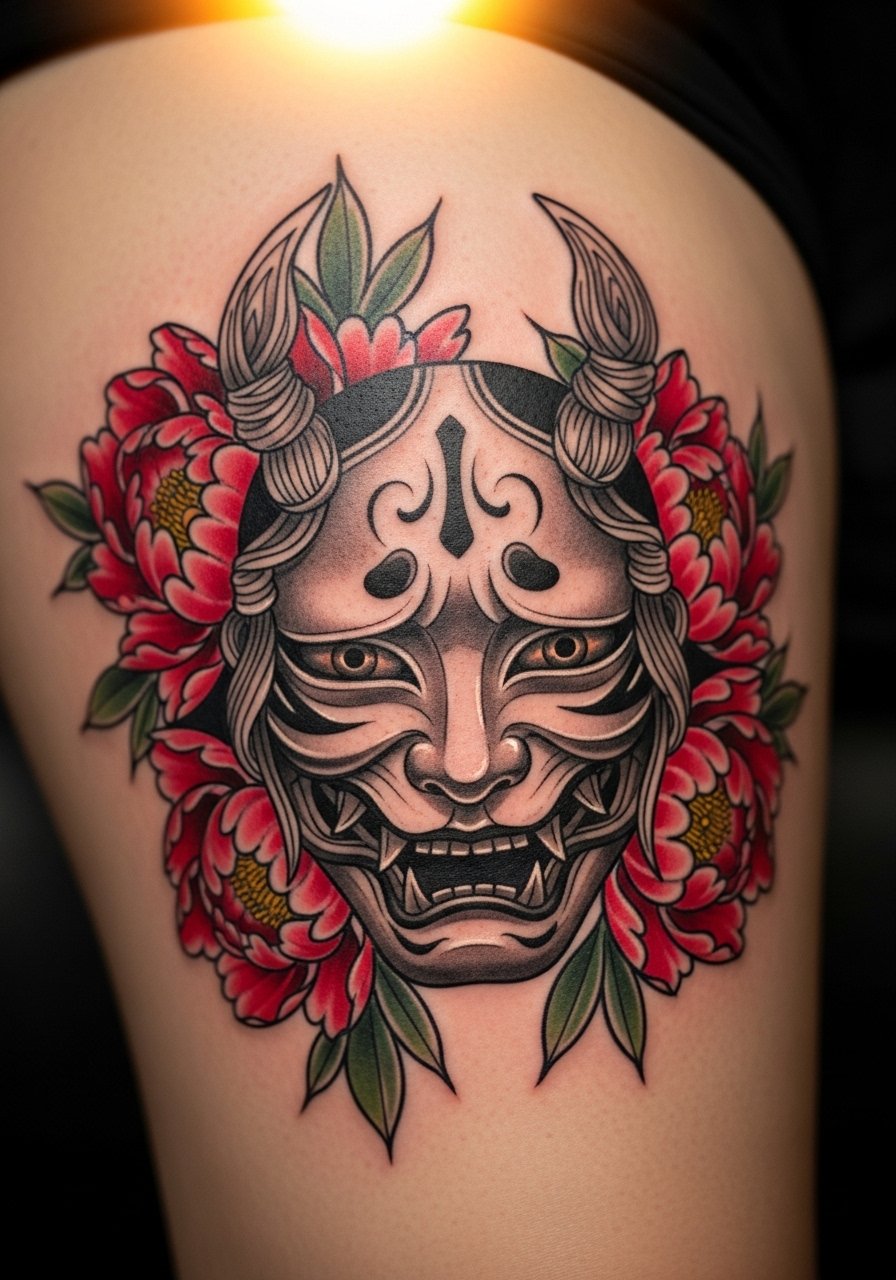
A Hannya mask brings dramatic emotion — jealousy, protection, and complex femininity — softened by lush peony blooms. This composition balances dark, expressive shading in the mask with bright floral pops to keep the vibe elegant. For thigh placements that can be hairy, using a single-use skin prep razor beforehand helps the stencil sit cleanly; try a simple disposable skin prep razor.
Style & Design Details
- Tattoo style: Japanese traditional / Irezumi-inspired black & color
- Recommended size: palm-sized to large thigh panel (5–9 inches)
- Best placement(s): upper thigh for private display, upper arm for visibility
- Color vs. blackwork: Mixed — deep blacks for mask, saturated reds/pinks for peonies
- Design elements: bold black shading, silk skin highlights, layered petals, horn detailing, fierce facial expression
- Longevity note: Heavy black holds long; bright florals may need touch-ups over time
- Who it suits: collectors who want symbolic contrast, people who prefer bold statements
Finding the Right Artist
Search for artists experienced in Japanese masks and Irezumi motifs. Bring reference images showing the mask angle and peony style you prefer. Ask about their approach to horn and teeth detailing and whether they’ll add white highlights. Avoid artists who try to “modernize” the Hannya’s face too much — classic proportion matters. Local tattoo conventions and studio portfolios are good sources.
Aftercare & Healing Tips
Upper-thigh areas move a lot; keep clothing loose during the first two weeks. Clean with a mild antibacterial soap like Dial Gold Antibacterial Soap and apply a thin layer of Hustle Butter Deluxe tattoo aftercare balm during peeling to protect color saturation. Expect full settle by 6–8 weeks; schedule a touch-up if reds look patchy.
- Crane and Pine Branch Minimal Sleeve
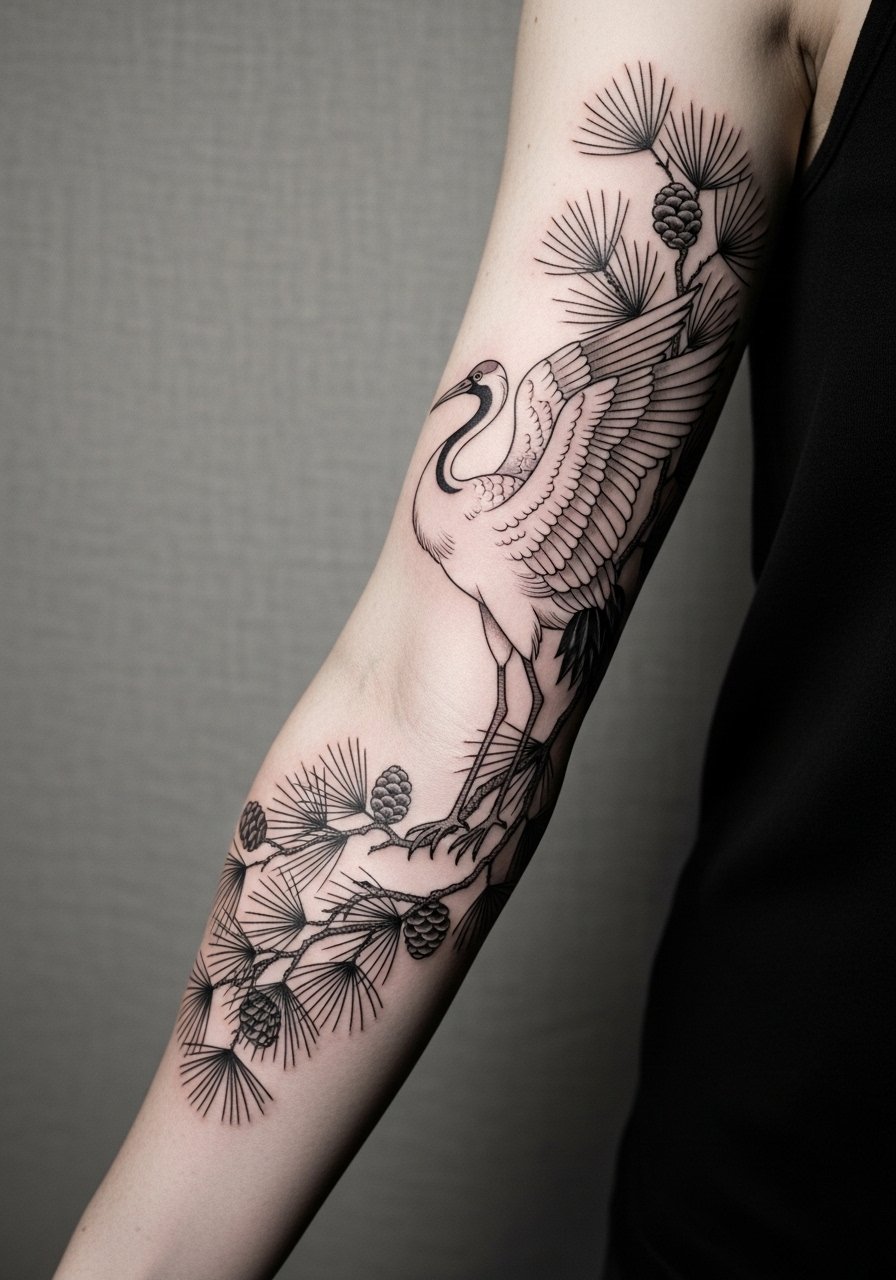
A crane perched on a pine branch is elegant and elongating — perfect for an outer arm mini-sleeve. The crane’s long neck and negative-space wings add airy movement, while pine needles provide fine-line texture. If you’re aiming for delicate single-needle work, plan shorter sessions so the artist can keep line crisp; having a sketchbook or reference on an iPad using Procreate helps you and the artist align on composition.
Style & Design Details
- Tattoo style: Fine line / illustrative blackwork
- Recommended size: palm to half-sleeve (4–8 inches)
- Best placement(s): outer arm, upper arm, side rib for elongation
- Color vs. blackwork: Pure blackwork recommended for longevity and crispness
- Design elements: single-needle linework, negative space wings, thin pine needles, subtle stipple shading, minimal dot highlights
- Longevity note: Fine lines can fade or blur without SPF and touch-ups; keep out of intense sun
- Who it suits: minimalists, cottagecore or dark academia aesthetic lovers, first-timers wanting subtle art
Finding the Right Artist
Look for portfolios with consistent single-needle work and steady lines. Ask about needle configuration (single vs. tight liners) and whether they'll scale thin lines up slightly to prevent blowouts. Avoid artists known only for bold blackwork if you want ultra-fine detail. Search hashtags like #finelinetattoo and check local fine-line specialists’ portfolios.
Aftercare & Healing Tips
Fine-line pieces are sensitive during peeling; keep the area clean and use a thin, unscented lotion like Aveeno Fragrance-Free Lotion. Protect healed ink with a daily SPF stick like SPF 50 mineral sunscreen stick whenever it’s exposed. Plan a 6–8 week revisit for any softening lines.
- Phoenix Rising Back Piece
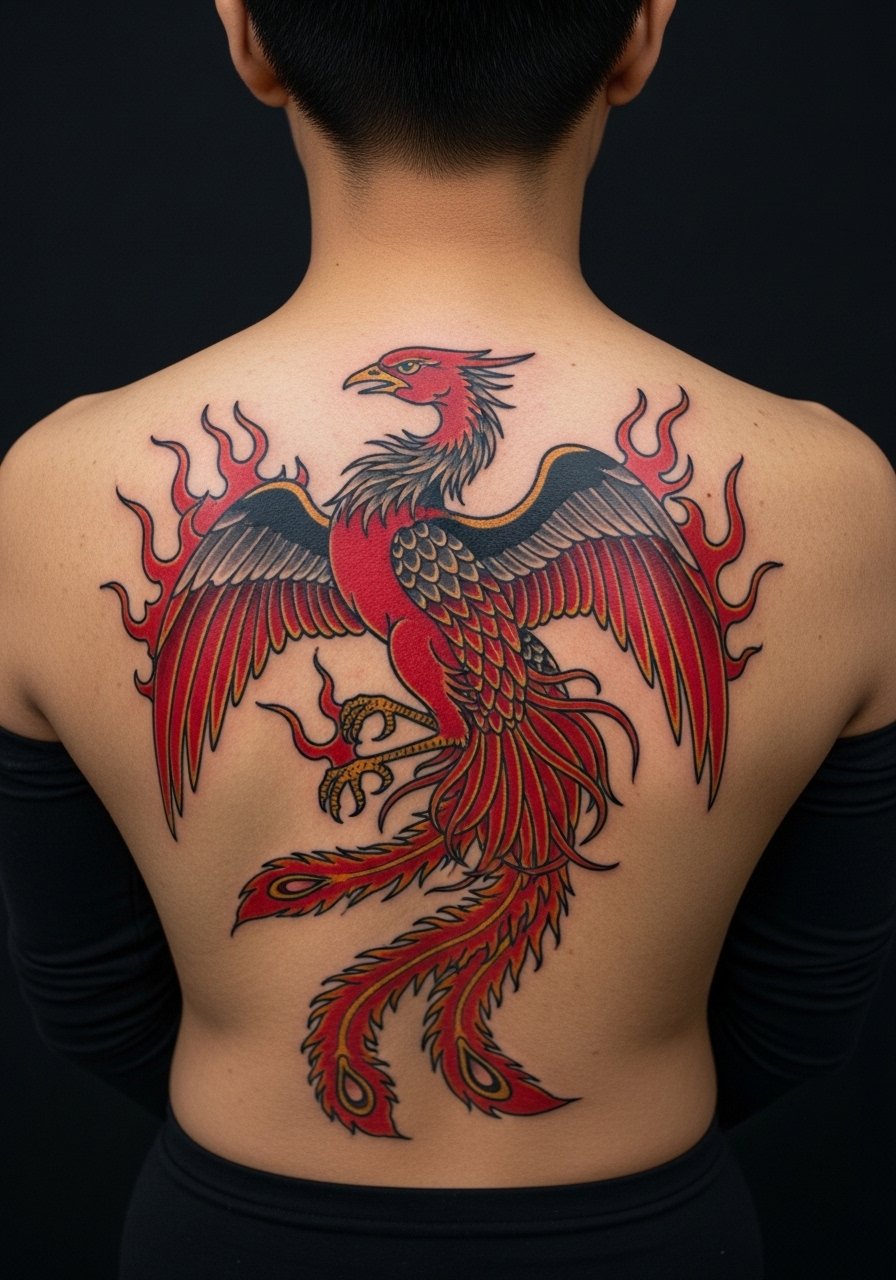
A phoenix rising makes a striking backpiece: symbolic rebirth, dramatic movement, and plenty of room for layered detail. The feathers use directional linework and soft color blends, which read especially well on the scapula and upper back. For larger sessions, pack comforts like electrolyte drinks and bring a loose button-up shirt for post-session comfort. A Saniderm roll like Tegaderm/Saniderm is handy for multi-day coverage if your artist recommends it.
Style & Design Details
- Tattoo style: Traditional Japanese Irezumi with neo-classical color
- Recommended size: large upper back to full back (8–14 inches)
- Best placement(s): upper back, full back, shoulder blade wrap for wing effect
- Color vs. blackwork: Color for phoenix — reds, golds, black for contrast
- Design elements: layered feather lines, flame motifs, dramatic negative space, wind bars, cloud patterns
- Longevity note: Large color fields need SPF and regular moisturizing to prevent dulling
- Who it suits: experienced collectors, people ready for multi-session work
Finding the Right Artist
Choose artists experienced in large-scale Japanese compositions who can map flow to the body. Ask how they’ll break sessions and how many sessions they estimate. Avoid studios that push for finishing too quickly. Look through portfolios on Instagram and Tattoodo; request healed photos of backpieces specifically.
Aftercare & Healing Tips
Large pieces sweat and move with the body; keep fabric breathable and avoid friction for two weeks. Follow your artist’s Saniderm timeline or wash gently with Dr. Bronner’s Unscented Castile Soap and switch to a thin layer of Hustle Butter Deluxe during peeling for vibrant color retention.
- Lotus Mandala Sternum Piece
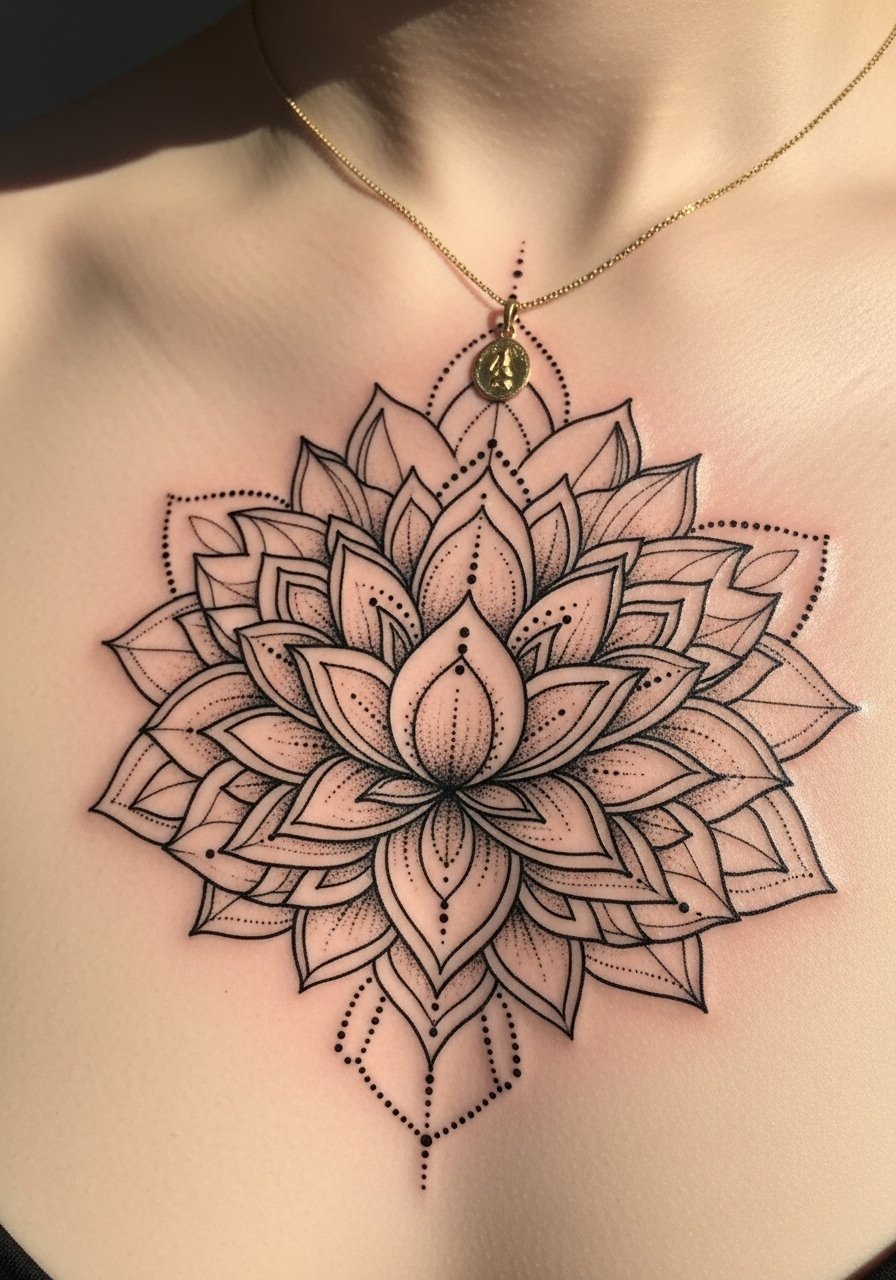
A lotus mandala on the sternum is intimate and symbolic, blending spirituality with symmetry. The design uses dotwork shading and crisp black outlines to create depth without heavy color. Sternum work can be tender — consider a numbing product like Zensa numbing cream if you’re anxious about pain.
Style & Design Details
- Tattoo style: Dotwork / mandala with Japanese lotus motifs
- Recommended size: 3–6 inches (centered for symmetry)
- Best placement(s): sternum, upper chest, between the breasts for central balance
- Color vs. blackwork: Blackwork recommended for clarity and longevity
- Design elements: concentric lotus petals, stipple shading, thin filigree lines, small sakura nods, negative-space highlights
- Longevity note: Fine dotwork holds well but needs touch-ups if lines blur; chest sees less sun so it ages nicely
- Who it suits: spiritual seekers, minimalists wanting central focal piece
Finding the Right Artist
Seek artists with mandala and dotwork portfolios. Ask how they'll center and stencil the design to match your anatomy. Avoid artists who treat symmetry casually; precise mapping matters. Studios with lots of fine-line work are your best bet.
Aftercare & Healing Tips
Chest areas are prone to irritation from bras and straps — wear soft, loose tops during healing. Clean twice daily and moisturize with Lubriderm fragrance-free lotion once the wrap comes off. Expect 4–6 weeks for settling and schedule touch-ups if needed.
- Wave and Moon Sleeve Accent
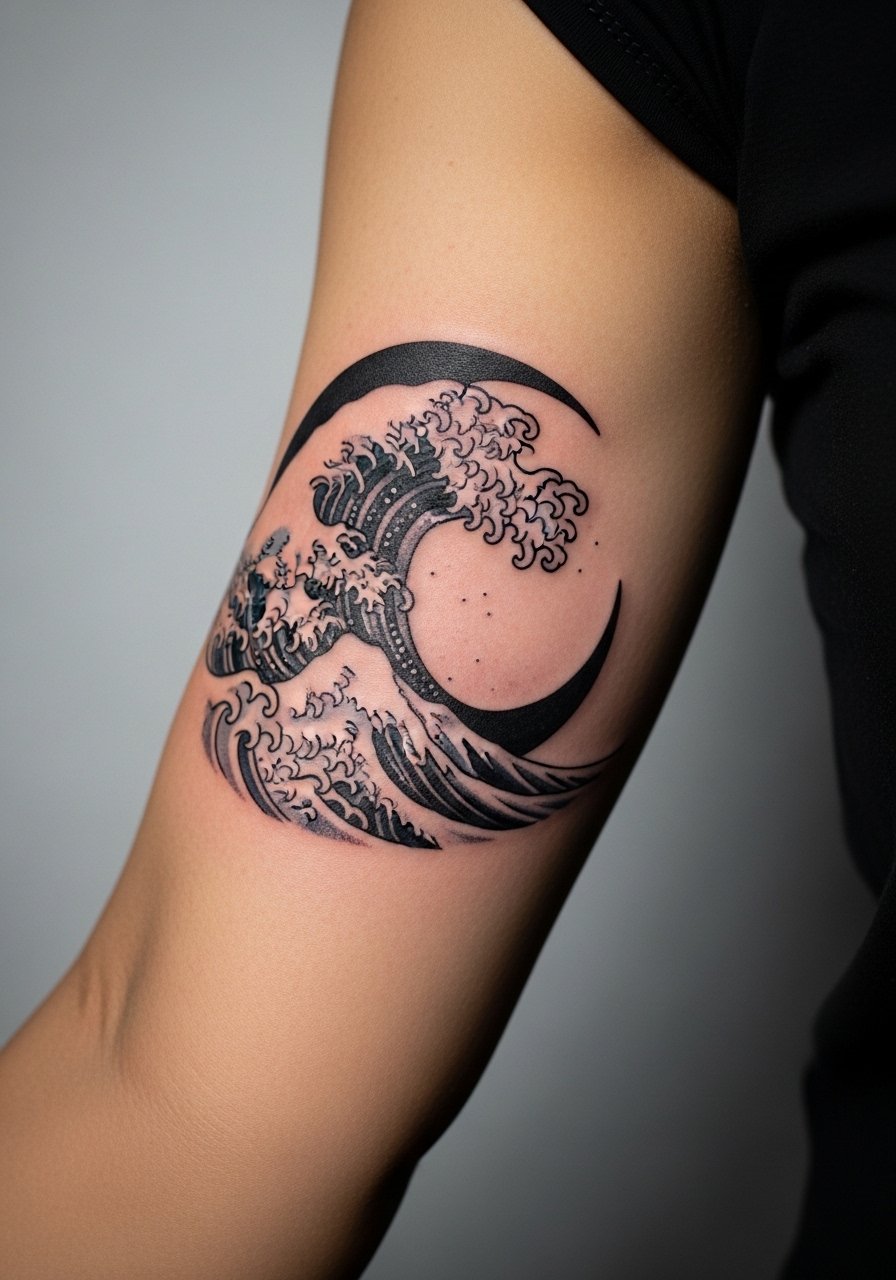
This motif mixes seascape iconography with lunar symbolism for a calm, poetic sleeve accent. The wave uses traditional Japanese wave curves and rim shading; the moon provides a quiet focal point. For fluid grayscale work, artists often recommend softer-made inks, and you should ask about the brand they use.
Style & Design Details
- Tattoo style: Japanese wave motif / illustrative black & grey
- Recommended size: wrist to half-sleeve (3–8 inches)
- Best placement(s): forearm wrap, outer bicep, ankle for smaller variants
- Color vs. blackwork: Black and grey with optional soft blue wash for water
- Design elements: rimmed wave lines, layered wave caps, crescent moon, subtle stippling, negative-space foam
- Longevity note: Black and grey ages predictably; soft blue fades faster
- Who it suits: cottagecore-adjacent aesthetics, minimal color lovers, meditative personalities
Finding the Right Artist
Choose artists who show crisp line-consistency and flowing Japanese wave studies. Ask about black ink brand (e.g., Dynamic, Intenze) and how they achieve smooth grey washes. Avoid shop portfolios lacking wave motifs if you want classic curves.
Aftercare & Healing Tips
Keep the area lightly moisturized; avoid soaking (baths, pools) for two weeks. Use an unscented lotion like Aveeno fragrance-free lotion during peeling. If your artist used color, protect with SPF once healed.
- Fox (Kitsune) with Maple Leaves
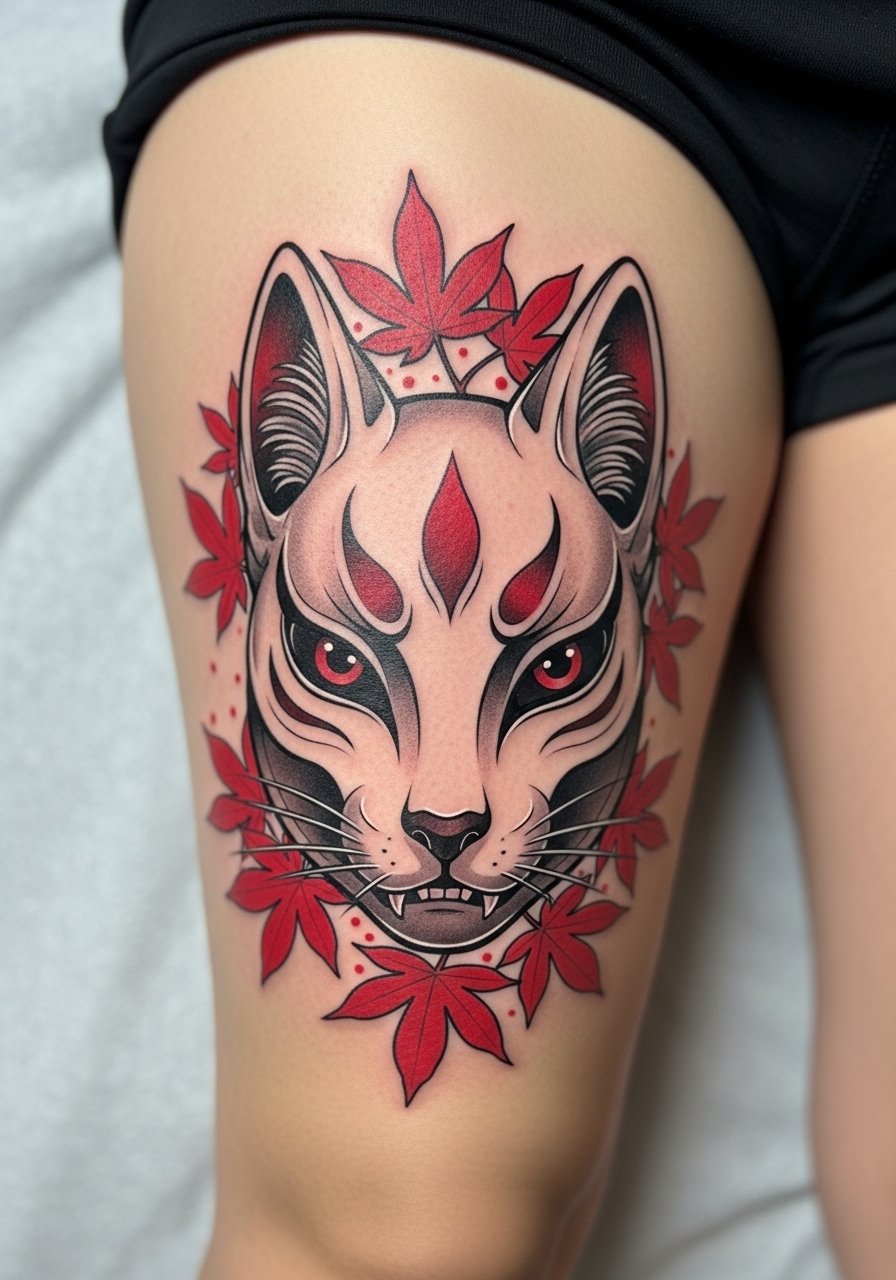
A kitsune (fox) brings playful mystique and folklore energy. Paired with autumnal maple leaves, it reads feminine and slightly whimsical. Single-session thigh pieces work well here; bring a warm compress for circulation between sessions if needed.
Style & Design Details
- Tattoo style: Illustrative / neo-Japanese
- Recommended size: 4–7 inches (thigh-friendly)
- Best placement(s): outer thigh, calf, behind the shoulder for intimate display
- Color vs. blackwork: Warm color palette (orange/red leaves) with black line anchoring
- Design elements: expressive fox eyes, leaf veins, wind bars, subtle whisker lines, soft petal shading
- Longevity note: Color in leaves may need refreshes every few years; blacks stay strong
- Who it suits: folklore fans, colorful aesthetic lovers, those wanting personal symbolism
Finding the Right Artist
Look for artists who draw animals and Japanese folktale motifs with personality. Ask for healed photos of similar color choices and how they prevent heavy saturation from pooling. Avoid artists inexperienced with animal faces or proportion.
Aftercare & Healing Tips
Thigh tattoos are tolerant but can rub with tight clothing; wear loose bottoms for 1–2 weeks. Clean with a mild soap and apply a thin layer of Tattoo Goo Aftercare or Hustle Butter Deluxe during peeling. Keep the healed piece moisturized and out of prolonged sun.
- Geisha Silhouette with Fan
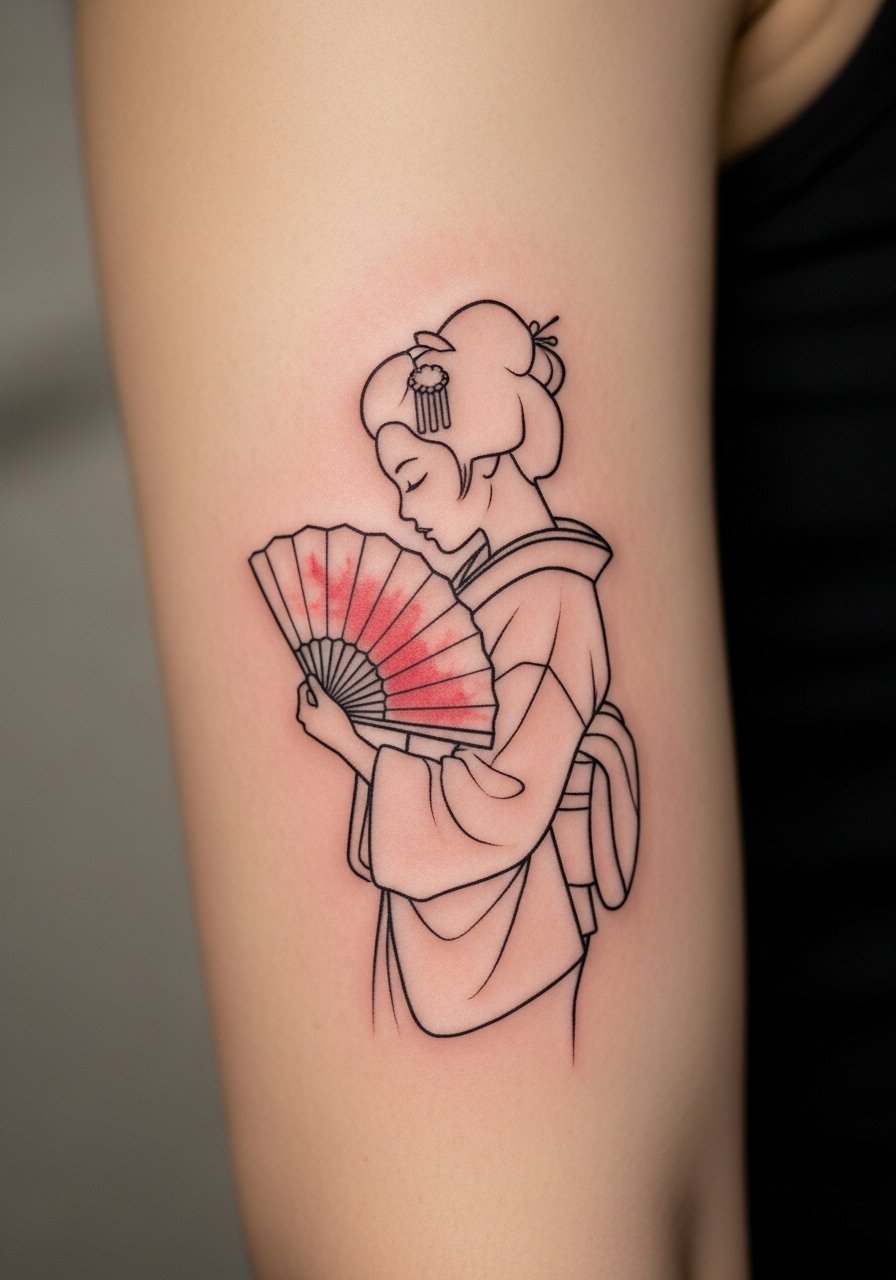
A geisha silhouette is elegantly feminine and fits a variety of placements. Minimal color on the fan adds just enough emphasis. Inner bicep placements are intimate — expect more sensitivity and consider numbing cream if you’re concerned.
Style & Design Details
- Tattoo style: Minimalist illustrative with watercolor accents
- Recommended size: 3–5 inches (for clean silhouette)
- Best placement(s): inner bicep, ribcage, behind the ear for micro versions
- Color vs. blackwork: Black silhouette with selective watercolor red on fan
- Design elements: solid silhouette shapes, soft watercolor bleed, elegant hair bun, kimono line suggestion, negative space face
- Longevity note: Silhouettes hold well; watercolor accents may fade and need touch-ups
- Who it suits: lovers of understated feminine art, minimalists, first-timers
Finding the Right Artist
Find artists whose portfolios include silhouette work and watercolor techniques. Ask how they’ll prevent watercolor blotching and whether they’ll scale the image to keep the silhouette readable. Avoid artists unfamiliar with watercolor tattoo timing.
Aftercare & Healing Tips
Inner bicep needs moisturizer as it’s prone to dryness from friction. Use a fragrance-free lotion like Lubriderm. Apply a thin layer and avoid tight sleeves; keep the area out of sun once healed and use SPF.
- Samurai Helmet (Kabuto) with Wind Bars
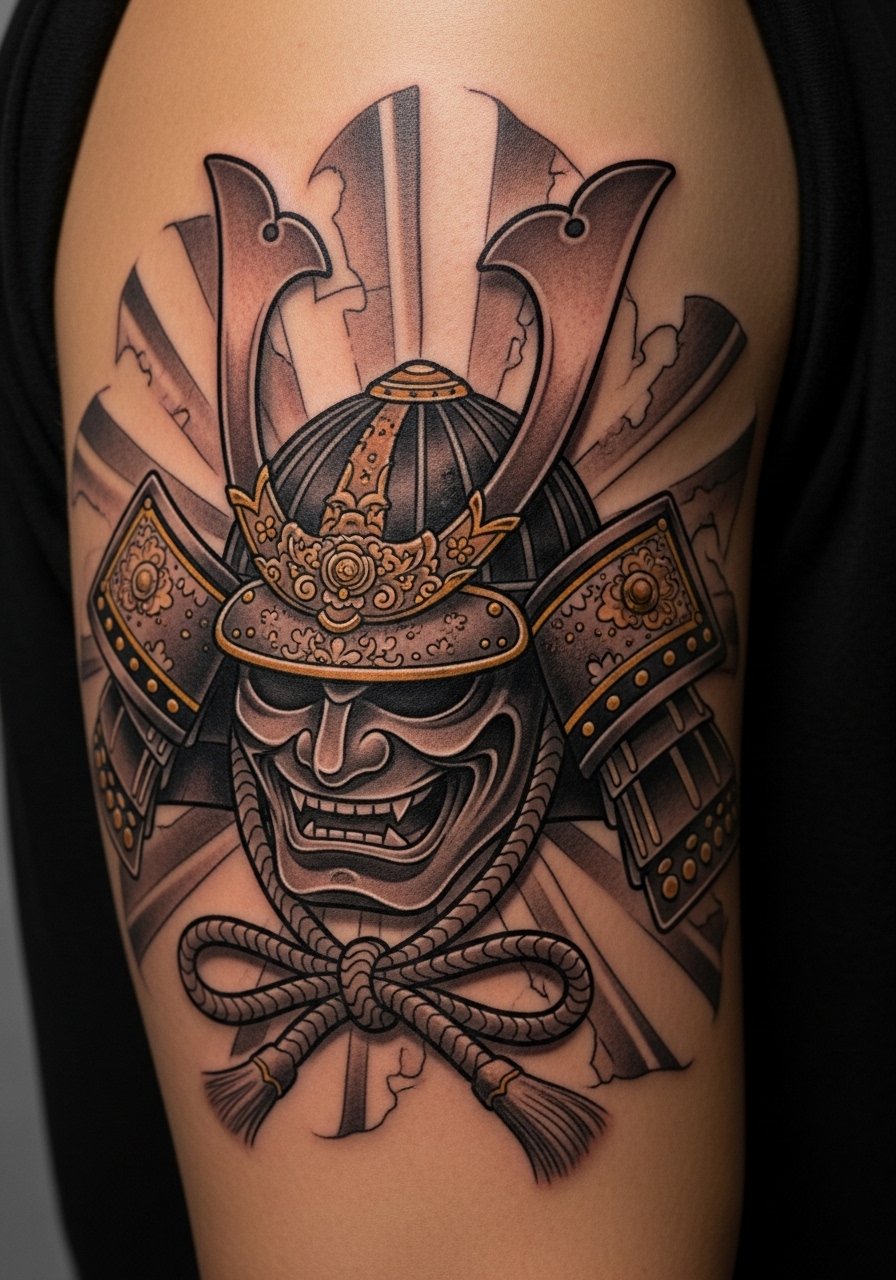
A kabuto helmet symbolizes honor, bravery, and protection. Paired with wind bars and cloud patterns, it reads historical and bold. The helmet’s ornamental details require confident linework, so plan for an artist who’s practiced in armor textures.
Style & Design Details
- Tattoo style: Japanese traditional / black & color realism
- Recommended size: palm-sized to upper-arm panel (5–8 inches)
- Best placement(s): upper arm, chest, shoulder cap for armor wrap
- Color vs. blackwork: Predominantly black with muted gold/bronze accents
- Design elements: ornamental detailing, metal texture, wind bars, rope straps, shadowing under helmet rim
- Longevity note: Heavy black retains shape; metallic pigments may need refreshment over years
- Who it suits: bold personalities, historical interest, collectors
Finding the Right Artist
Seek artists who display armor/realism work and can render texture. Ask about needle groupings for metallic shading and how they’ll emphasize helmet edges. Avoid artists who rush ornate detail work.
Aftercare & Healing Tips
Upper-arm placements need standard care: clean, then apply a light layer of Hustle Butter Deluxe during the peeling phase. Keep the area out of direct sun and use SPF once healed.
- Komainu (Guardian Lion) Ankle Ornament
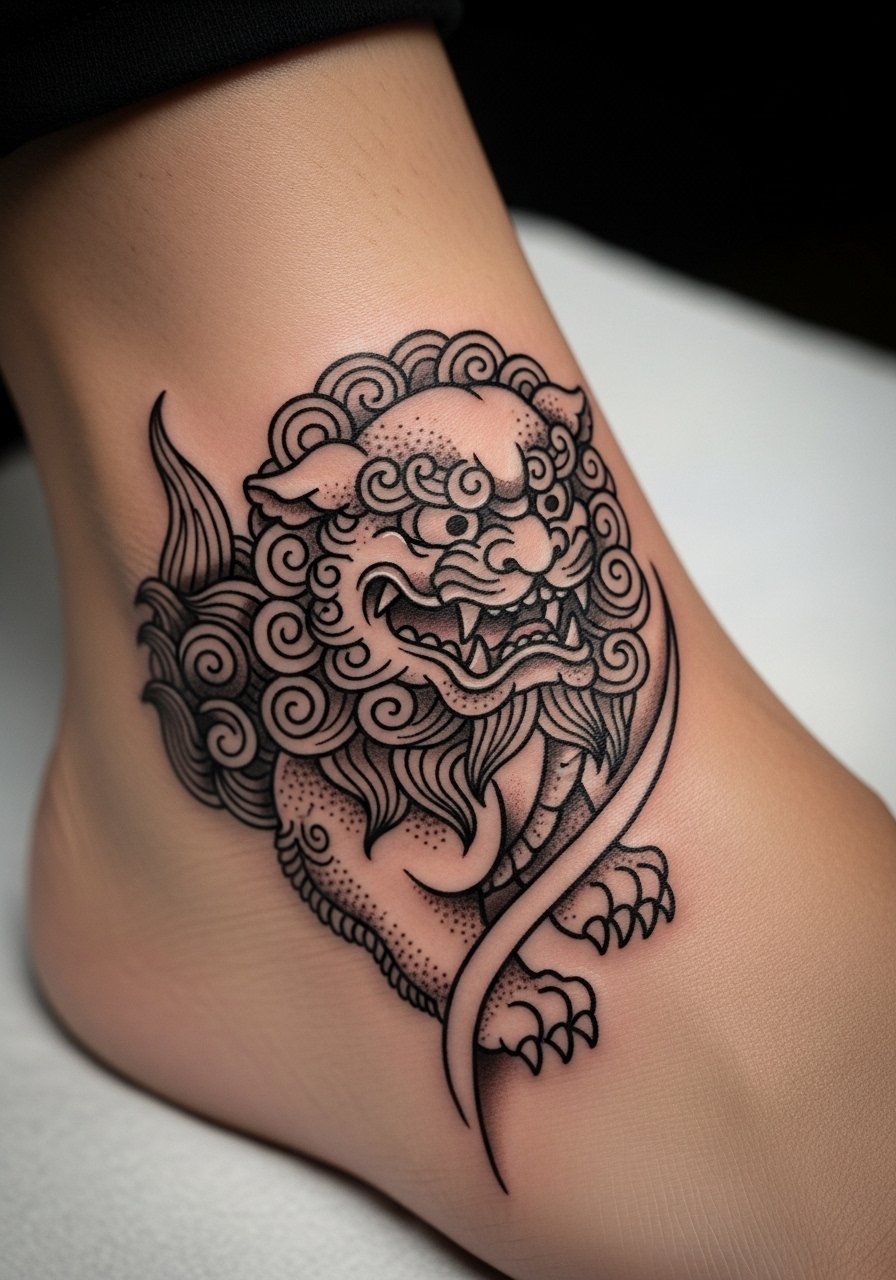
Komainu make a protective ankle ornament that’s both symbolic and wearable. The compact design uses bold lines and textured dot shading to feel like a miniature sculpture. Ankles can be painful and prone to blowouts if lines are too tight — choose slightly thicker lines.
Style & Design Details
- Tattoo style: Traditional Japanese miniaturized blackwork
- Recommended size: 2–3 inches (ankle-friendly)
- Best placement(s): ankle, top of foot, behind the heel for secret placements
- Color vs. blackwork: Blackwork recommended for lasting contrast on ankle
- Design elements: stout guardian posture, curled mane, textured dot shading, small wind bars, negative-space teeth
- Longevity note: Ankles see friction from shoes; heavier lines help longevity
- Who it suits: travelers, symbolic tattoo seekers, minimalists
Finding the Right Artist
Look for artists with clean small blackwork and low-blowout line samples. Ask how they prevent ink migration around joints. Avoid artists who suggest ultra-thin single needles for ankle work.
Aftercare & Healing Tips
Ankle tattoos need minimal rubbing; wear soft socks and low-profile shoes for the first week. Clean with a mild soap and apply a thin layer of Tattoo Goo Aftercare or Hustle Butter Deluxe. Expect slight scabbing; resist the urge to pick.
- Daruma Doll Wrist Band
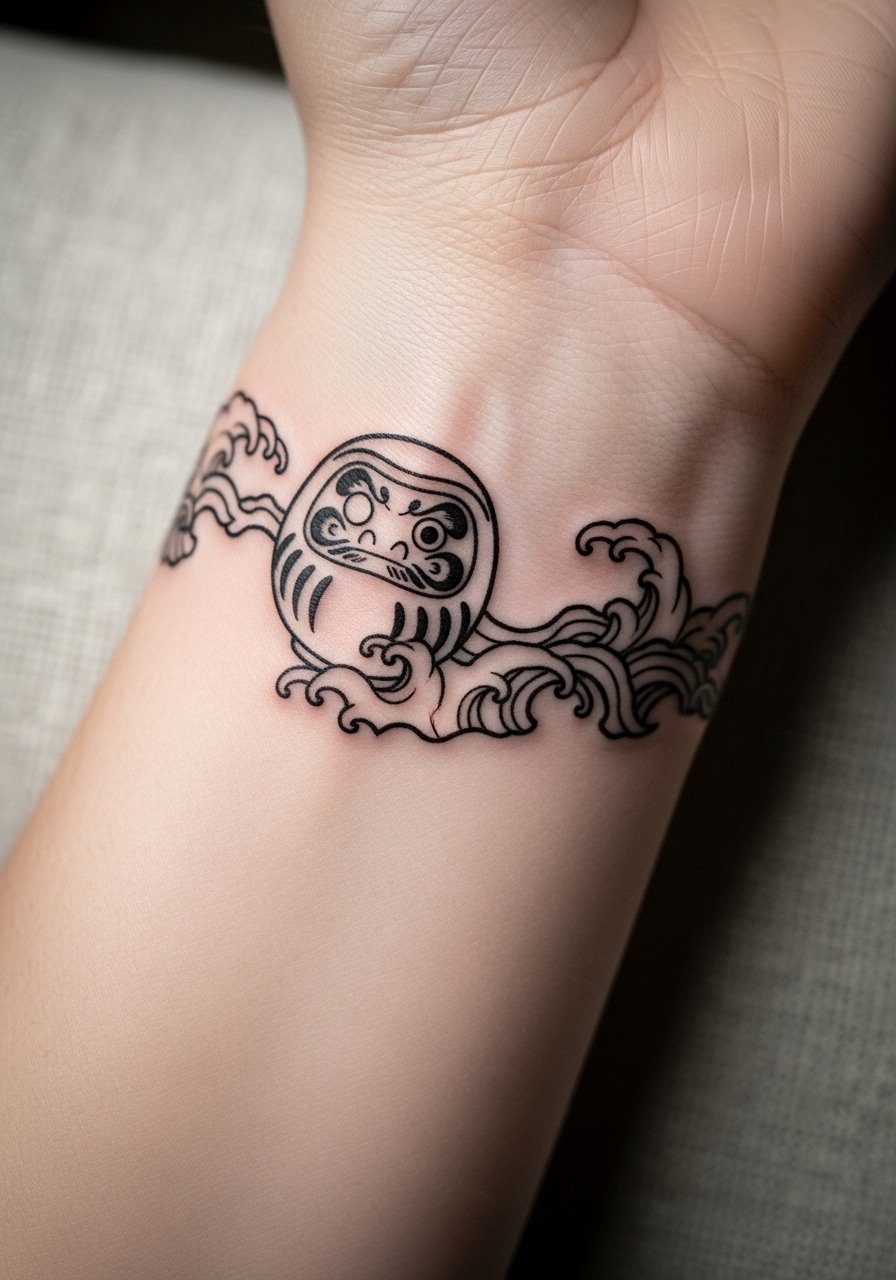
A Daruma doll wrist band is a compact, symbolic reminder of goals and perseverance. The circular form wraps nicely around the wrist, and its bold face holds up well as an everyday piece. Wrist pain is moderate; small sessions are often doable in one sitting.
Style & Design Details
- Tattoo style: Traditional Japanese minimalist band
- Recommended size: 1.5–3 inches (wrapable)
- Best placement(s): wrist, forearm band, ankle band variant
- Color vs. blackwork: Blackwork with optional red fill in eyes or accents
- Design elements: Daruma face, wrapping waves, thin band outline, negative-space highlights, small kanji accents optional
- Longevity note: Wrist exposure to sun and washing may cause faster fading; touch-ups common
- Who it suits: goal-oriented folks, minimalists, first-timers wanting visible reminders
Finding the Right Artist
Pick artists who show crisp micro-work and band consistency. Ask about stencil placement since wrist curves matter. Avoid artists who don’t account for wrist movement when planning placement.
Aftercare & Healing Tips
Wrist areas are washed frequently; keep lotion handy like Lubriderm and avoid bracelets until healed. Saniderm can be useful for wrists to reduce friction.
- Peony and Snake Contrast Panel
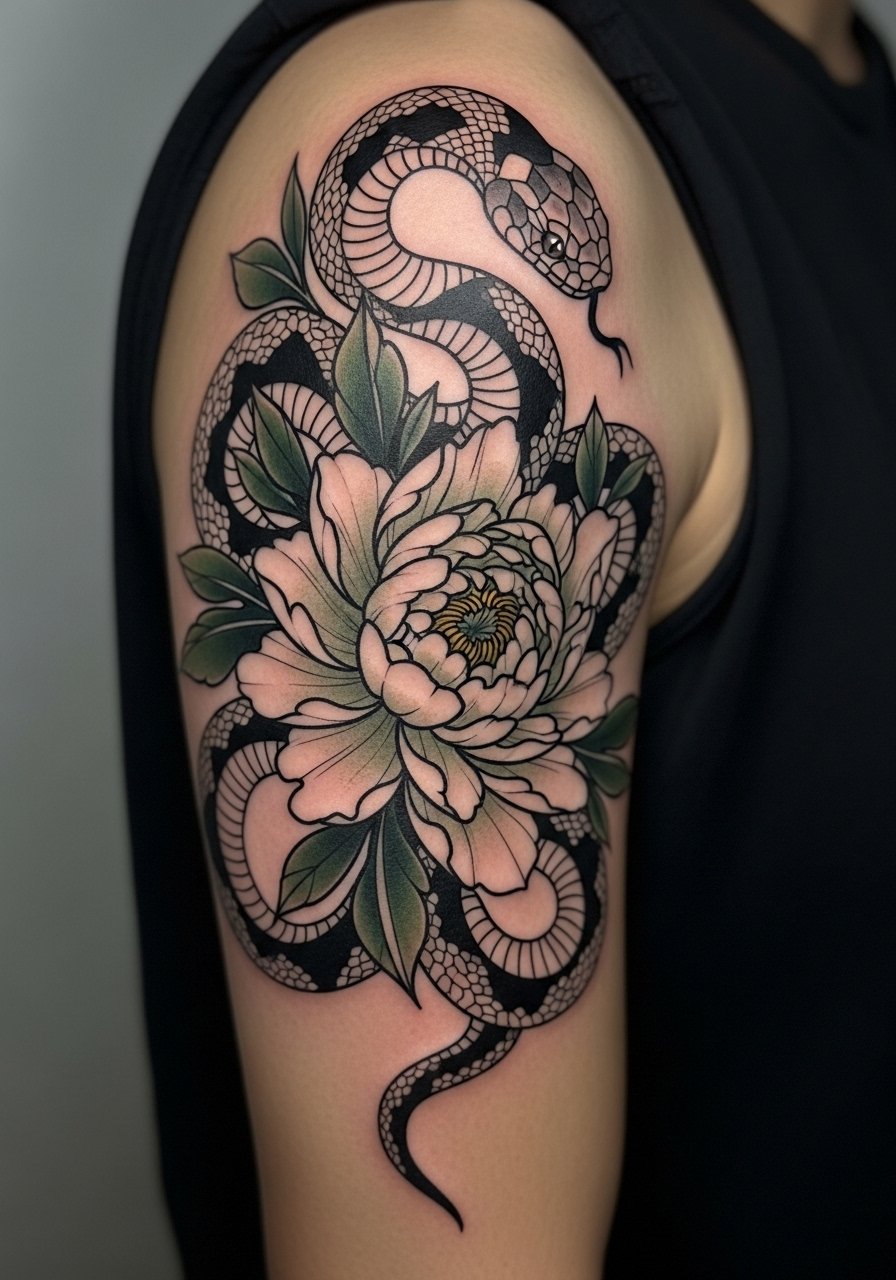
A snake and peony pair nicely — the snake’s movement contrasts with the peony’s softness. This combo is both feminine and a little dangerous, and it photographs beautifully when the snake’s scales use subtle dotwork. If you’re nervous about scale texture, ask artists to show healed close-ups.
Style & Design Details
- Tattoo style: Neo-traditional Japanese floral + animal
- Recommended size: 4–8 inches depending on wrap
- Best placement(s): outer arm, thigh, side torso for elongation
- Color vs. blackwork: Mixed; deep blacks for snake, soft color in petals
- Design elements: coiling snake form, peony layers, scale stippling, leaf veins, wind bars
- Longevity note: Contrast pieces age well with SPF; scales may soften without touch-ups
- Who it suits: bold romantics, collectors of contrasting motifs
Finding the Right Artist
Look for balance in portfolios where animals and florals share space. Ask how they’ll keep scale detail from overpowering petals. Avoid artists who separate animal and floral skills.
Aftercare & Healing Tips
Keep the area clean and avoid tight clothing rubbing the piece. Use Dr. Bronner’s Unscented Castile Soap initially and switch to a light lotion like Hustle Butter Deluxe during peeling. Schedule touch-ups at 8–12 weeks if scales look soft.
- Bamboo and Sparrow Rib Panel
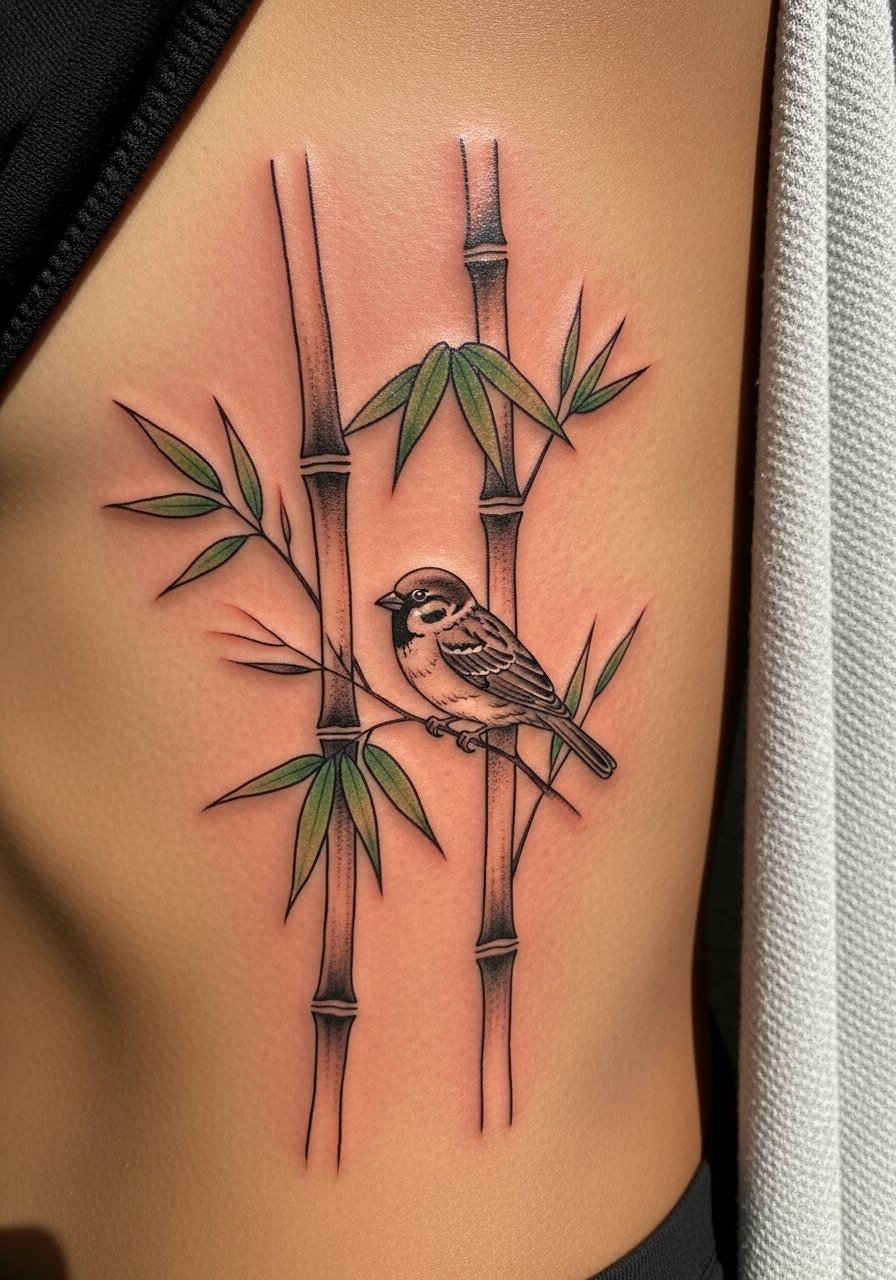
A vertical bamboo and sparrow panel fits ribs beautifully, using the body’s curve to accentuate growth and resilience. Ribs are among the more painful spots, so plan for breaks and consider a numbing cream like EMLA if needed.
Style & Design Details
- Tattoo style: Fine-line Japanese botanical
- Recommended size: 4–7 inches vertical panel
- Best placement(s): ribs, side torso, sternum side for vertical emphasis
- Color vs. blackwork: Mostly black with soft green wash for bamboo if desired
- Design elements: thin bamboo stalks, sparrow contour, leaf vein lines, subtle stippling, negative-space gaps
- Longevity note: Rib pieces see less sun but more stretching — thin lines can fade over time
- Who it suits: people who like botanical symbolism, those wanting body-flowing pieces
Finding the Right Artist
Choose artists who excel in botanical fine-line work and can show rib placements healed. Ask about session breaks and how they protect rib skin during long sittings. Avoid shops that rush ribline work.
Aftercare & Healing Tips
Rib tattoos need loose clothing and patience during movement. Clean twice daily and apply an unscented lotion such as Aveeno Fragrance-Free Lotion. Expect tenderness for 1–2 weeks and full settle by 6 weeks.
- Wave-Filled Geometric Sleeve
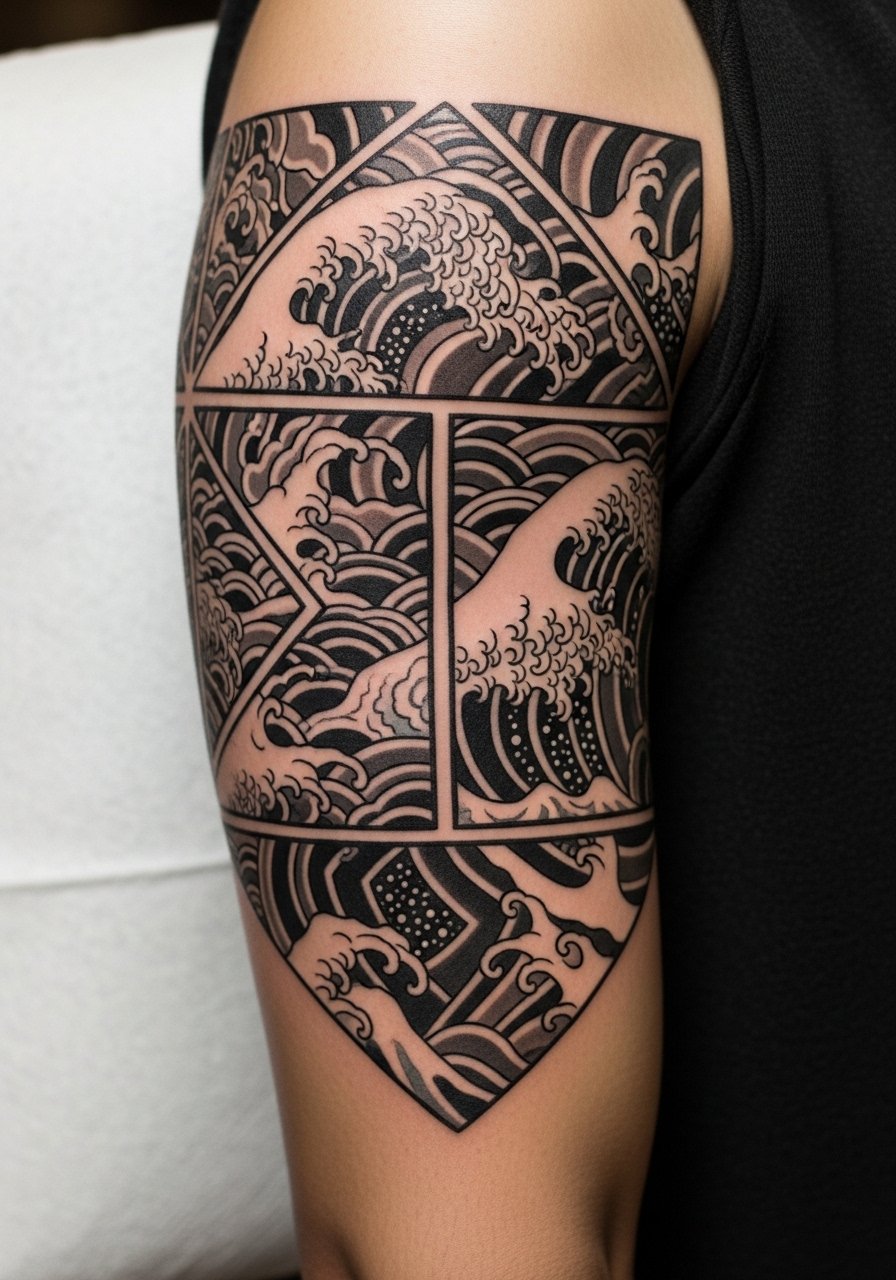
This design marries classic wave forms with modern geometric framing for a fresh take on Japanese motifs. The interplay of curved waves and straight lines feels contemporary while paying homage. For crisp geometric edges, ask about stencil adhesion and session staging.
Style & Design Details
- Tattoo style: Illustrative Japanese + geometric blackwork
- Recommended size: quarter to half-sleeve (6–10 inches)
- Best placement(s): upper arm sleeve, calf panel, thigh wrap
- Color vs. blackwork: Blackwork preferred; subtle blue washes optional for depth
- Design elements: wave curls, geometric borders, negative-space triangles, stipple shading, rim lines
- Longevity note: Geometric edges need clean lines and SPF maintenance to stay sharp
- Who it suits: modern aesthetic lovers, collectors who like structure
Finding the Right Artist
Find artists who post healed geometric and wave pieces. Ask about how they handle edges around muscle curves and whether they’ll slightly thicken lines for longevity. Avoid artists who don’t show consistent geometry.
Aftercare & Healing Tips
Keep geometric edges dry and clean; avoid friction from clothing seams. Use a fragrance-free soap and a light lotion like Lubriderm during flaking. Protect edges with sunscreen post-heal.
- Small Kutani-style Floral behind Ear
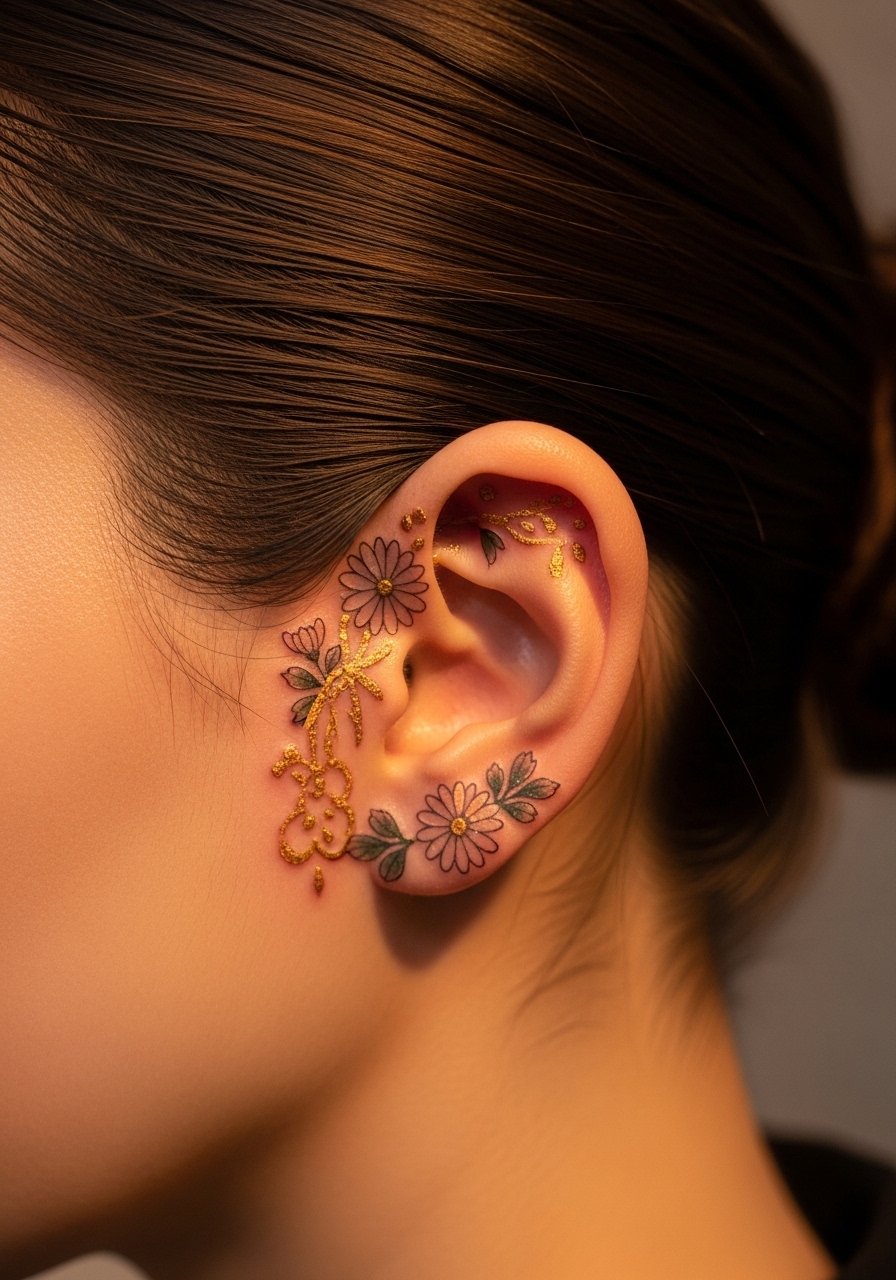
A tiny Kutani-inspired floral behind the ear is dainty and elegant. The porcelain-paint feel translates into soft color pallets and thin outlines. Behind-ear placements are low-pain but delicate — keep hair clean and avoid hair products on the area while healing.
Style & Design Details
- Tattoo style: Micro Japanese porcelain-inspired colorwork
- Recommended size: 1–2 inches micro piece
- Best placement(s): behind ear, behind collarbone, nape of neck
- Color vs. blackwork: Soft muted colors for porcelain effect; sparing black outlines
- Design elements: chrysanthemum petals, tiny leaf accents, pale blue/gold washes, thin outlines, dot highlights
- Longevity note: Micro color can fade quickly; gentle touch-ups help retention
- Who it suits: minimalists, jewelry-alternative seekers, first-time micro tattoo lovers
Finding the Right Artist
Pick artists with steady micro color portfolios. Ask for healed close-ups of similarly sized pieces. Avoid tattooers who don’t regularly work in micro color.
Aftercare & Healing Tips
Keep hair away from the area and wash gently. Apply a small amount of Hustle Butter Deluxe during peeling. Avoid putting perfume, hair oil, or heavy product on the site.
- Minimal Koi Line on Collarbone
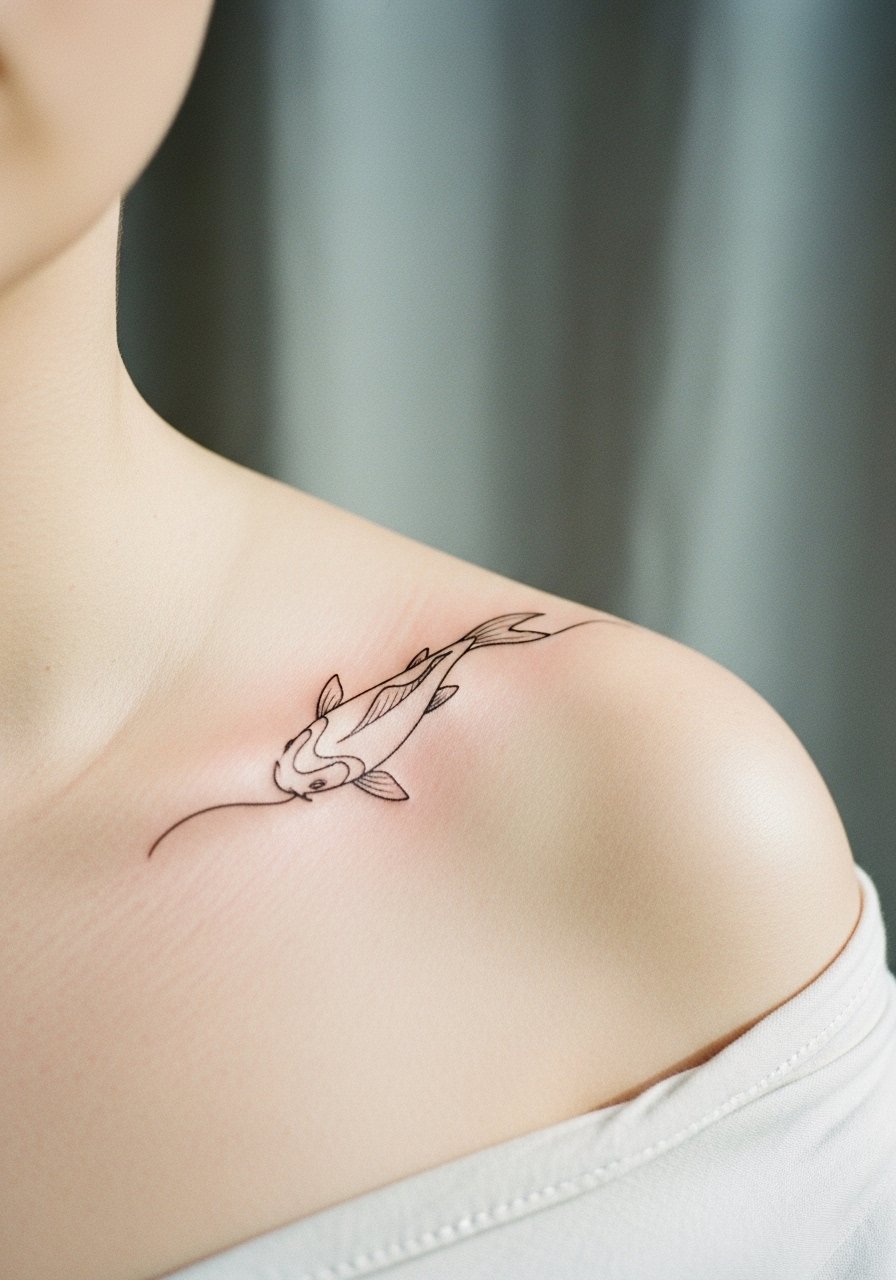
A single-line koi tracing the collarbone is delicate and feminine. The simplicity makes the piece subtle but meaningful. Collarbone is a bony area — expect sharper sensations during inking.
Style & Design Details
- Tattoo style: Single-line / minimal Japanese motif
- Recommended size: 3–6 inches following collarbone curve
- Best placement(s): collarbone, along clavicle, upper chest line
- Color vs. blackwork: Black single-line recommended for crispness
- Design elements: continuous single line, minimal fins, small scale suggestions, light negative-space highlights
- Longevity note: Thin lines can soften; sun exposure accelerates fading
- Who it suits: minimalists, first-timers, those wanting an understated nod to tradition
Finding the Right Artist
Find artists skilled in continuous linework. Ask about line thickness; slightly stronger lines prevent blowouts. Avoid studios lacking single-line examples.
Aftercare & Healing Tips
Collarbone moves with breathing; keep clothing loose and avoid heavy necklaces. Clean with mild soap and use Aveeno fragrance-free lotion in thin layers. Apply SPF once healed.
- Tiger and Bamboo Sleeve Accent
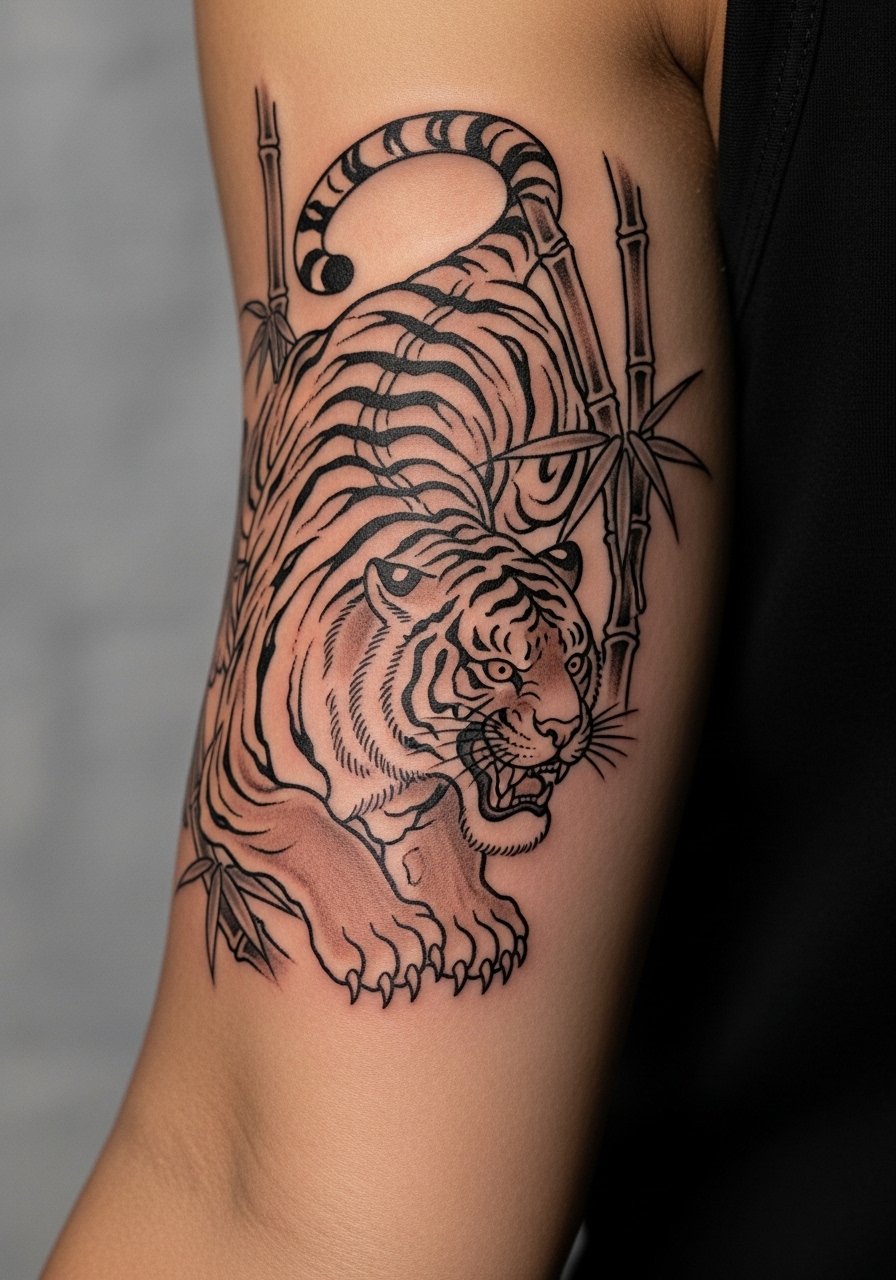
A tiger in bamboo is fierce and graceful — the tiger’s stripes and bamboo verticals complement body curvature. This piece works as an accent or an expansion into a larger sleeve. Tigers require confident black striping and a steady hand.
Style & Design Details
- Tattoo style: Traditional Japanese / bold illustrative
- Recommended size: 5–9 inches for clear tiger anatomy
- Best placement(s): upper forearm, bicep, thigh wrap
- Color vs. blackwork: Black with orange/yellow highlights for tiger realism
- Design elements: bold stripes, bamboo stalks, leaf texture, muscle shading, wind bars
- Longevity note: Strong black stripes last; orange pigments can dull over years
- Who it suits: bold individuals, collectors of animal iconography
Finding the Right Artist
Look for artists with animal anatomy and Japanese composition in their work. Ask about pigment brands and how they layer orange safely. Avoid artists who can’t show healed stripe detail.
Aftercare & Healing Tips
Forearm placements are visible and need sunscreen post-heal. Clean with gentle soap and use a thin layer of Hustle Butter Deluxe during the peeling phase. Consider a touch-up if orange tones mute.
- Small Fan with Crane on Rib
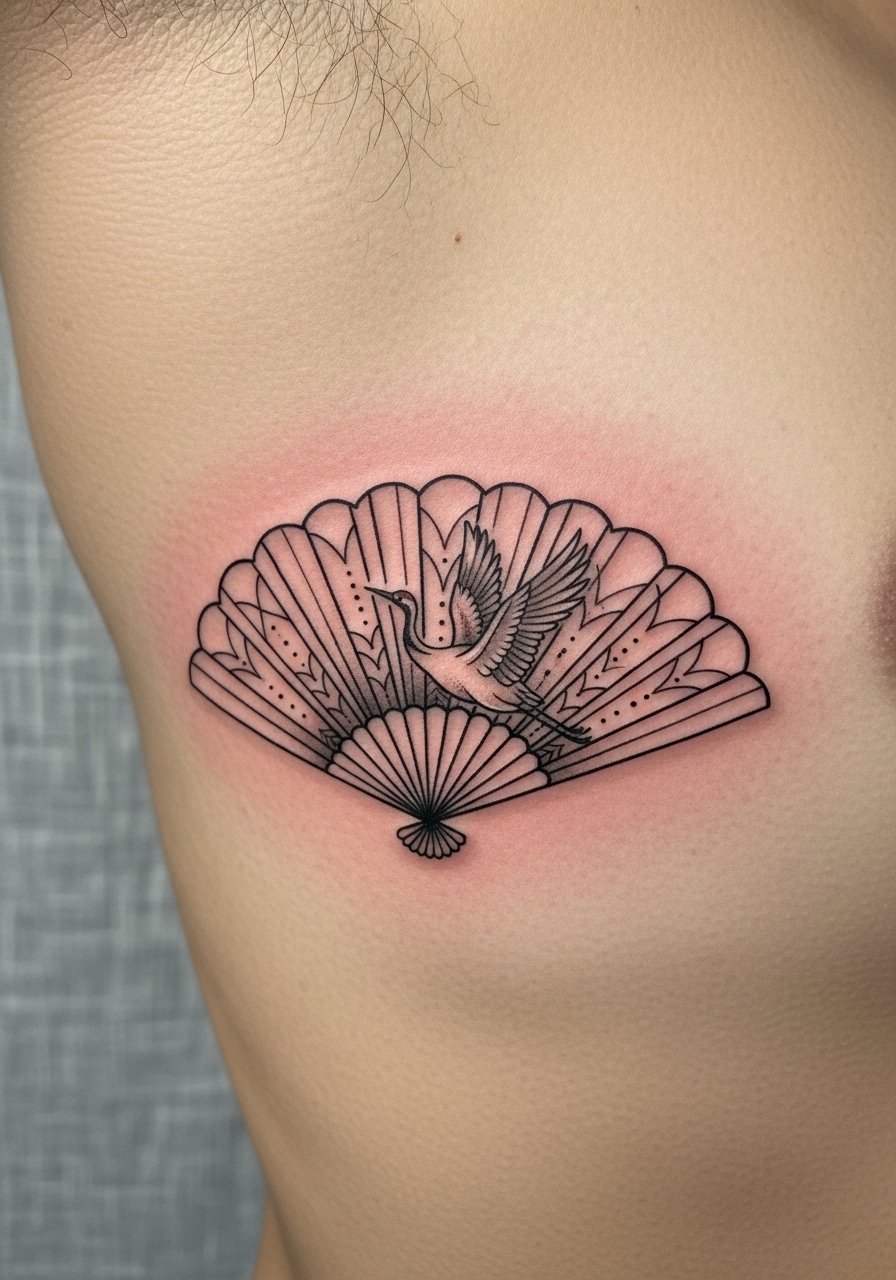
A small fan on the rib makes for a discreet, artful placement. The curve of the fan hugs the ribs naturally, and the crane inside keeps the design poetic. Ribs are tender — book time to rest and use a numbing cream like Zensa if it helps.
Style & Design Details
- Tattoo style: Fine-line Japanese emblem
- Recommended size: 3–5 inches fan width
- Best placement(s): ribs, side torso, under-breast area for secrecy
- Color vs. blackwork: Blackwork or light grey wash for subtlety
- Design elements: fan arc, crane silhouette, thin rib detailing, subtle stipple, wind bars
- Longevity note: Light grey washes can blur; black lines help anchor the piece
- Who it suits: intimate placement seekers, people who prefer subtle meaning
Finding the Right Artist
Choose artists experienced in rib placements and fans. Ask how they position the fan so it reads flat on your torso. Avoid artists who don’t take time adapting stencils to body curvature.
Aftercare & Healing Tips
Rib tattoos need loose clothing to prevent friction against the fan. Clean gently and apply Lubriderm fragrance-free lotion once the wrap comes off. Take it slow during healing and avoid strenuous torso-bending workouts for two weeks.
- Amaterasu Sun Disc Shoulder Cap
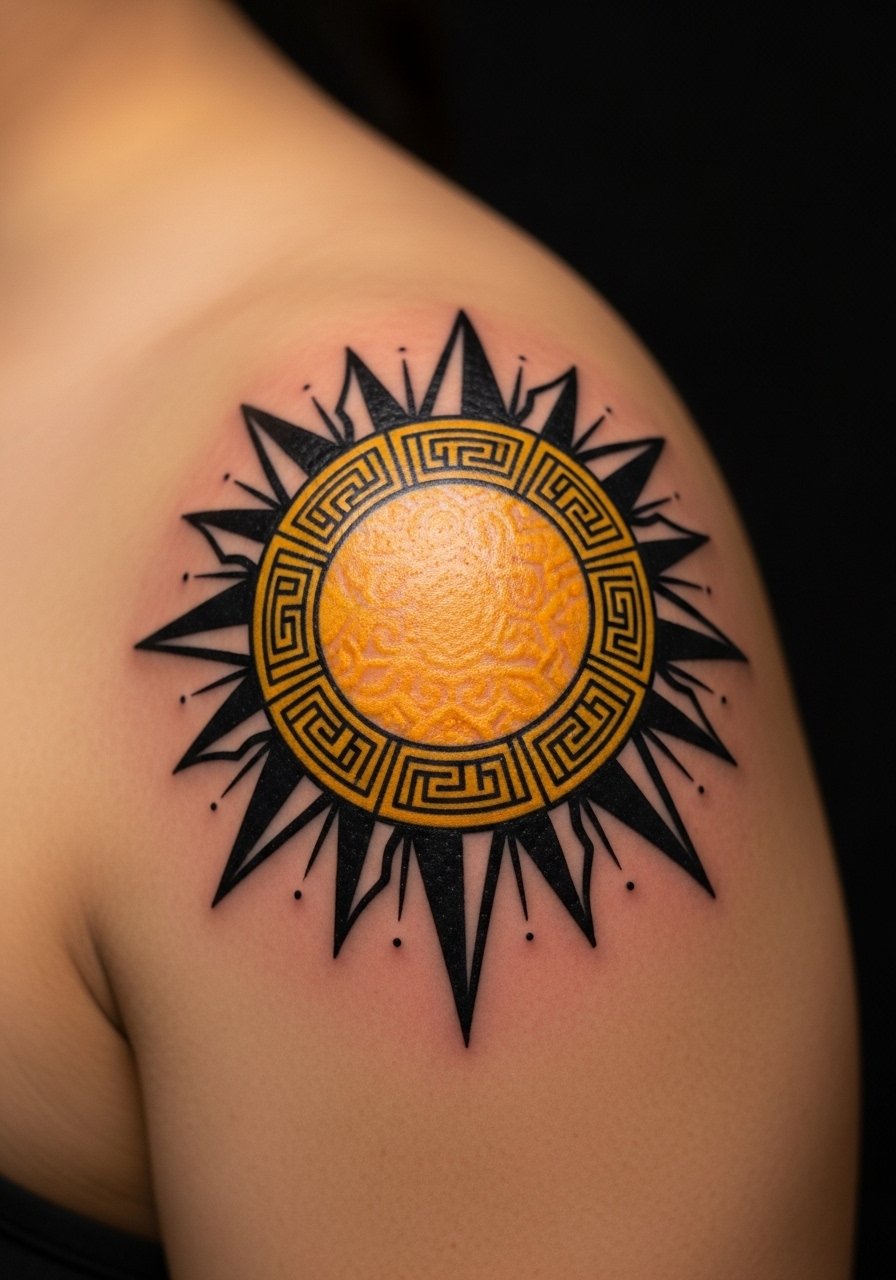
A sun disc nods to Amaterasu and reads like feminine radiance when placed on the shoulder cap. The circular motif sits naturally on rounded anatomy and angles beautifully in sleeveless tops. For brighter yellows that don’t fade, ask your artist about pigment layering.
Style & Design Details
- Tattoo style: Japanese emblematic colorwork
- Recommended size: 3–6 inches to cover shoulder cap nicely
- Best placement(s): shoulder cap, upper arm, back of shoulder blade
- Color vs. blackwork: Bright yellow/gold with black linework for contrast
- Design elements: sun rays, circular disc, small sakura or cloud accents, clean fill fields, rim shading
- Longevity note: Yellow can fade faster, so SPF and occasional touch-ups help
- Who it suits: confident, expressive personalities, sun symbolism lovers
Finding the Right Artist
Find color specialists who show bright yellow work and healed photos. Ask about pigment brands and layering. Avoid artists who downplay yellow’s tendency to fade without maintenance.
Aftercare & Healing Tips
Shoulder tattoos recover quickly but see sun exposure; apply SPF 50 once healed using an SPF 50 mineral sunscreen stick. During the first weeks, clean and use a thin layer of Hustle Butter Deluxe to keep color rich.
- Akizakura (Autumn Cherry) Back-of-Arm Accent
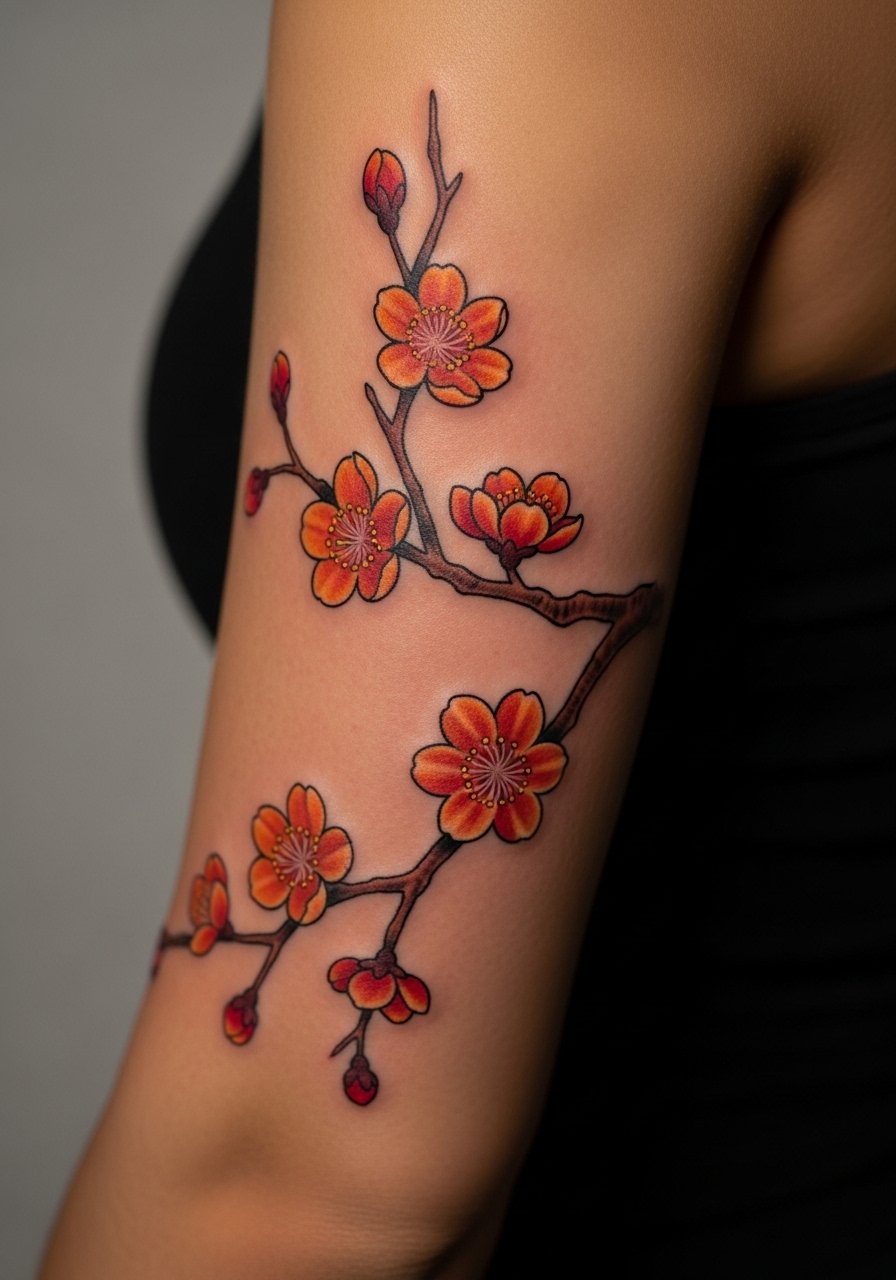
Akizakura brings seasonal warmth and subtle color to the back of the arm. The branch’s angle can lengthen the arm visually and look delicate in sleeveless outfits. For color vibrancy, ask about the ink brand your artist prefers.
Style & Design Details
- Tattoo style: Botanical Japanese colorwork
- Recommended size: 3–6 inches along the arm curve
- Best placement(s): back of arm, triceps area, scapula edge for extension
- Color vs. blackwork: Warm oranges and reds recommended for autumnal effect
- Design elements: slender branch, clustered blossoms, tiny buds, leaf veins, negative-space gaps
- Longevity note: Reds may mute; consistent moisturizing and SPF extend life
- Who it suits: seasonal aesthetics, romantic styles, subtle color lovers
Finding the Right Artist
Pick artists with botanical color portfolios and healed color photos. Ask about ink brands and pigment layering for reds. Avoid shops without healed color examples.
Aftercare & Healing Tips
Back-of-arm placement experiences friction; choose loose sleeves and apply Tattoo Goo Aftercare during scabbing. Protect the healed piece with SPF when exposed.
- Masked Noh Performer Thigh Panel
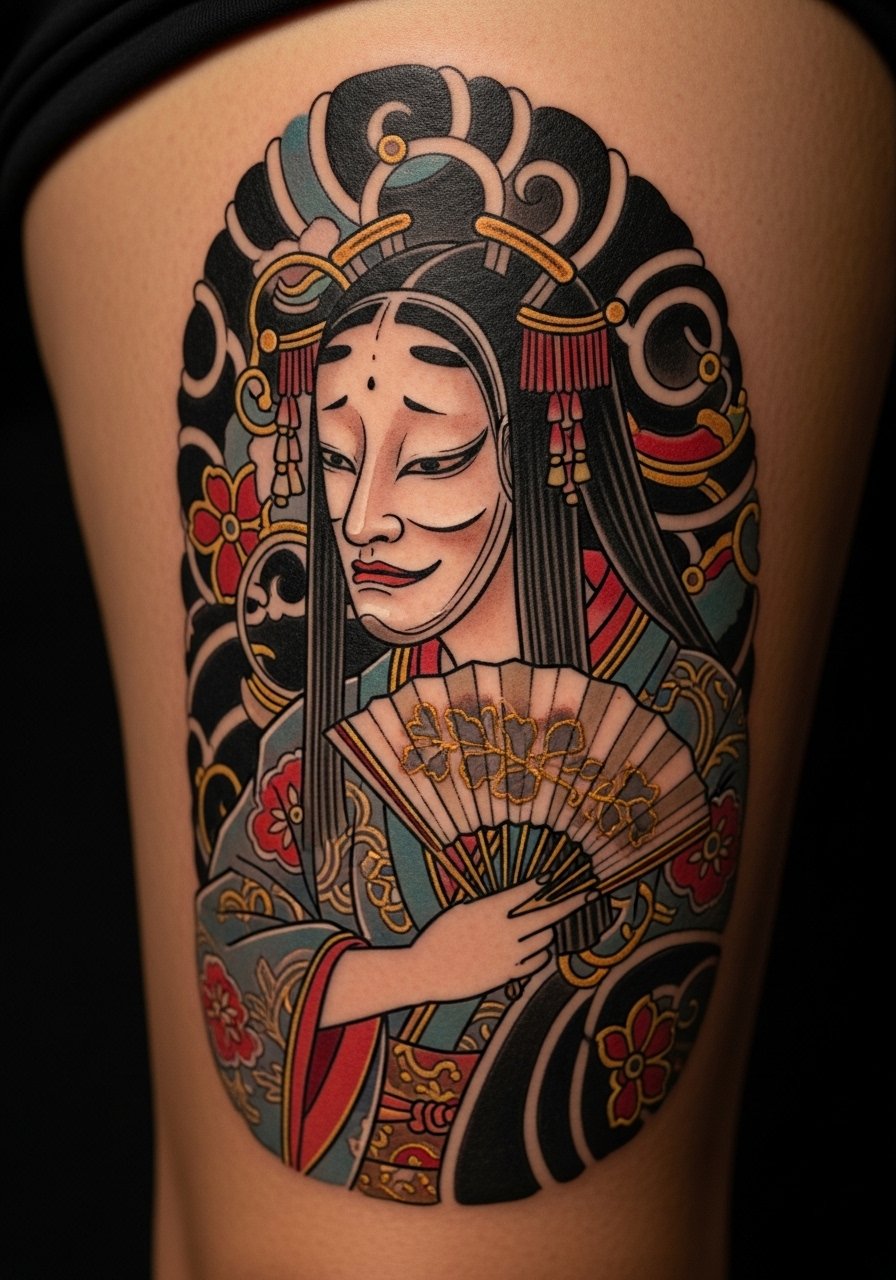
A Noh mask evokes theatre, mystery, and performance. On the thigh, it can be large and ornate, showing the kimono folds and stage motifs. Thighs tolerate long sessions well, but keep sessions paced.
Style & Design Details
- Tattoo style: Irezumi-inspired illustrative
- Recommended size: 6–10 inches for detail and kimono folds
- Best placement(s): outer thigh, hip panel, calf for vertical placement
- Color vs. blackwork: Muted color palette with bold black anchoring
- Design elements: mask face, kimono folds, pattern fillers, subtle golds, negative-space fabric flow
- Longevity note: Large thigh panels age nicely; keep moisturized to prevent dulling
- Who it suits: lovers of theatre, drama, large-scale collectors
Finding the Right Artist
Seek artists experienced in portraiture and textile patterning. Ask for healed photos of large panels and their session plan. Avoid artists who underestimate session time for folds and patterning.
Aftercare & Healing Tips
Thigh healing enjoys less sun, but friction from jeans can irritate. Wear soft leggings and use Hustle Butter Deluxe during the peeling period. Schedule a touch-up if patterns soften.
- Small Kanji with Floral Accent Behind Collar
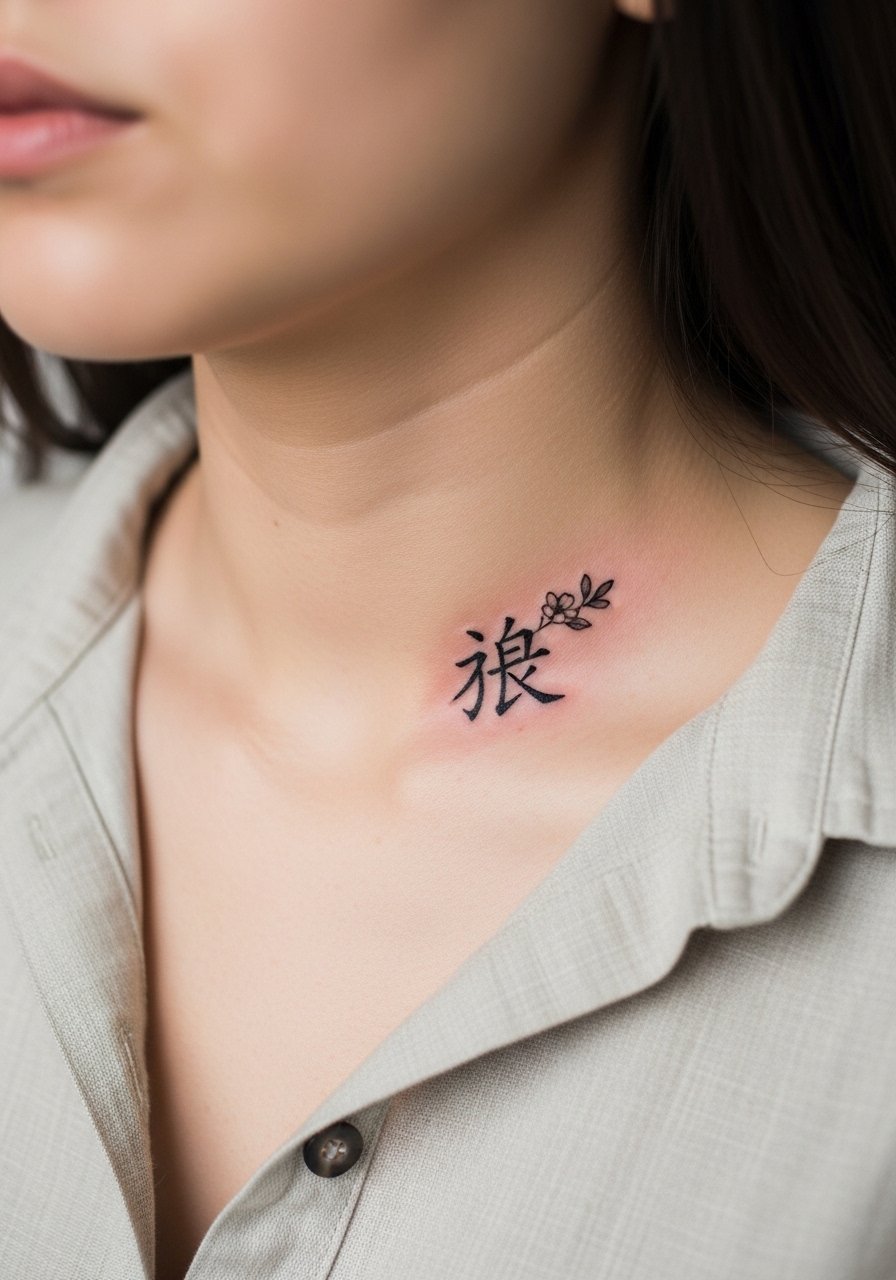
A single kanji paired with a tiny floral flourish makes for a meaningful, minimalist piece. Keep kanji singular and well-researched; artists may recommend slightly boldening strokes for longevity on small lettering.
Style & Design Details
- Tattoo style: Micro-lettering with accent floral
- Recommended size: 1–2 inches for clarity
- Best placement(s): behind collar, nape, inner wrist for secret script
- Color vs. blackwork: Black ink recommended for clarity
- Design elements: clean kanji strokes, tiny petal accents, thin outline, negative spacing
- Longevity note: Small lettering can blur; slightly stronger lines help longevity
- Who it suits: minimalists, people valuing meaningful script, collectors of micro tattoos
Finding the Right Artist
Choose an artist who does lettering and can show micro kanji samples. Ask them to write the kanji on paper and show how it looks scaled. Avoid artists unfamiliar with kanji proportions.
Aftercare & Healing Tips
Keep the area clean and moisturized with Aveeno fragrance-free lotion once the wrap is off. If behind the collar, avoid hair product contact during healing.
- Inkbox Preview: Try a Semi-Permanent Japanese Motif
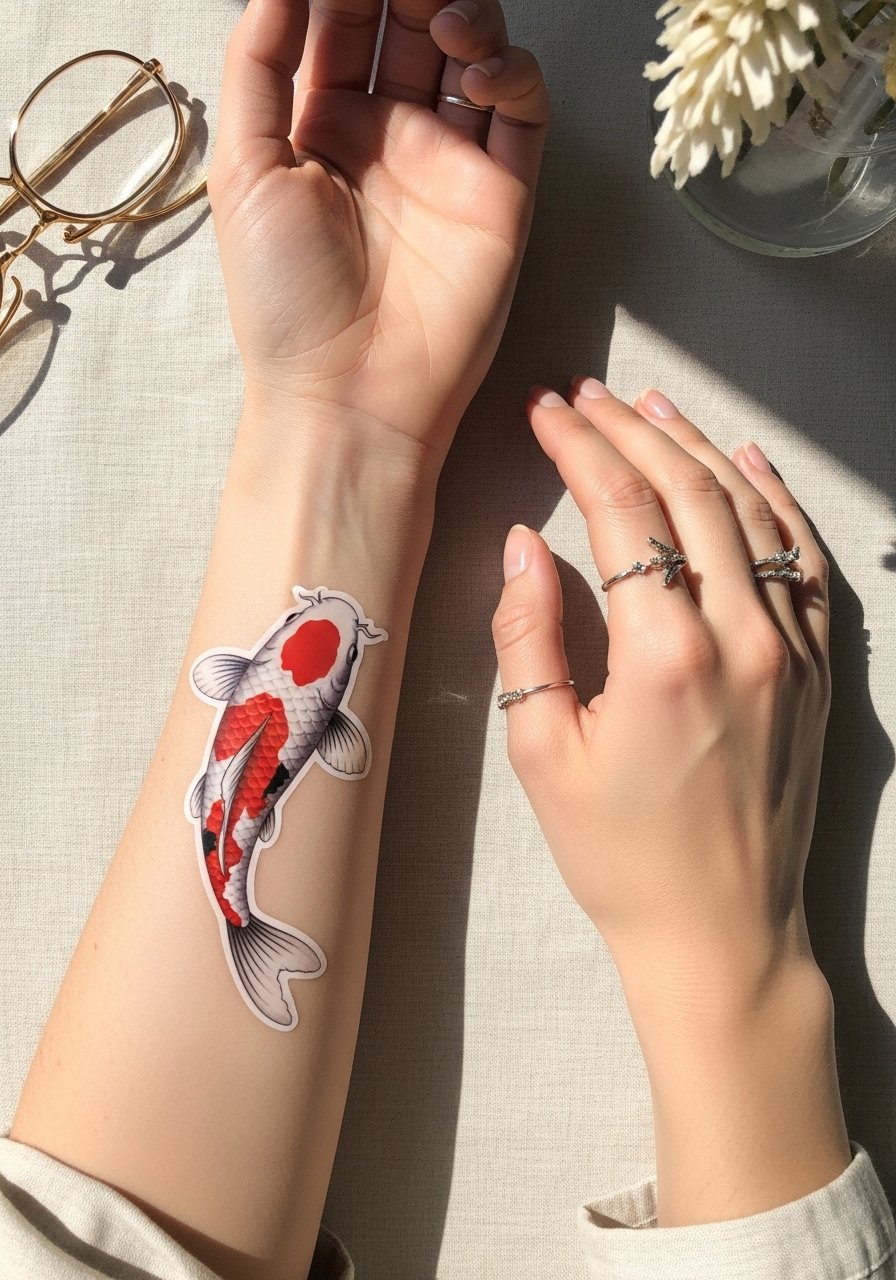
If you’re undecided about placement or scale, try a semi-permanent Inkbox kit to preview a Japanese traditional tattoo for women. It’s a low-risk way to test daily wear, see how a motif reads, and confirm size before committing to permanent ink. I used an Inkbox kit to test my forearm placement before going full-time.
Style & Design Details
- Tattoo style: Temporary semi-permanent preview
- Recommended size: any — choose the size you plan to commit to
- Best placement(s): anywhere you want to test visibility and movement
- Color vs. blackwork: Inkbox lends a temporary black-brown hue similar to healed blackwork
- Design elements: temporary scale texture, flow testing, negative-space checks, mirror-symmetry tests
- Longevity note: Inkbox fades over 1–2 weeks depending on skin and placement
- Who it suits: indecisive shoppers, first-timers wanting placement tests
Finding the Right Artist
Use a temporary design to inform the conversation with your artist. Bring your Inkbox-covered area to consults so the artist can recommend scaling and line weight adjustments. Avoid skipping the trial if you're unsure about a visible placement.
Aftercare & Healing Tips
Treat Inkbox like a dress rehearsal: note how it feels with clothing and jewelry and whether you liked the placement during workouts. If you loved it, show the design to your artist and ask how they’d adapt it into tattoo-safe line weight. For temporary testing, purchase an Inkbox semi-permanent tattoo kit.
You’ve just scrolled through 23 ways to channel Japanese traditional aesthetics into pieces that feel feminine, elegant, and personal. From tiny behind-ear Kutani florals to dramatic phoenix backpieces, there’s a mix for first-timers and seasoned collectors alike. Save this collection and bring your favorites to your consultation so you and your artist can talk scale, line weight, and how motifs will age on your skin.
If I had to recommend one prep item before any session, get a small roll of Saniderm second-skin bandage — having it ready takes stress out of the immediate post-session period. Which design called to you most, and where are you thinking of placing it? Pin this for later and share with a friend who’s also planning their next tattoo.