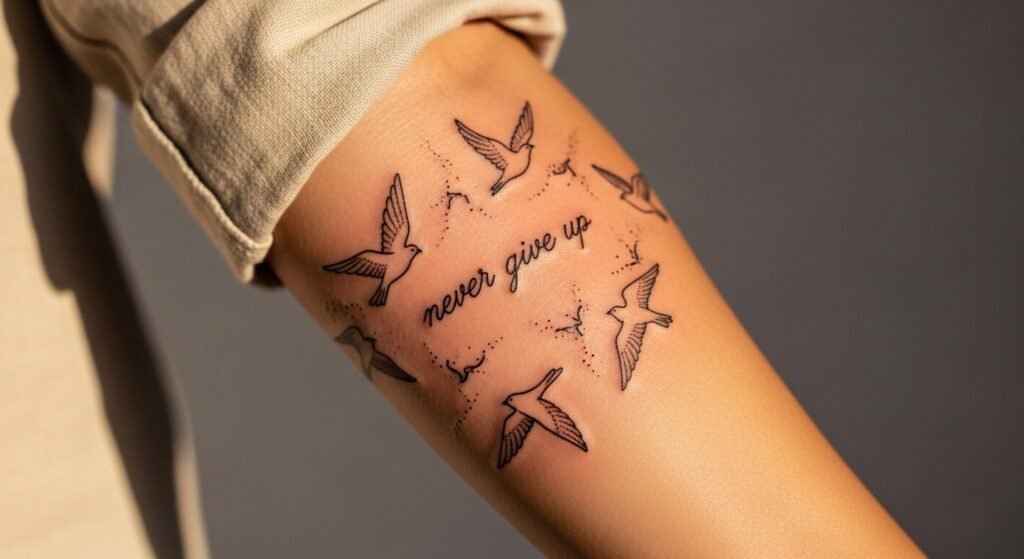
You’re sitting in a consultation at midnight scrolling for the exact design that feels like you — that little tattoo that will remind you to push forward. A never give up tattoo with birds is perfect: birds bring motion and freedom, while lettering and symbols anchor personal meaning. Here you’ll find 29 distinct takes on that theme, each one balanced for symbolism, style, and real-life wearability.
These ideas cover everything from fine line wrist pieces to bold neo-traditional back panels, with placement advice, artist guidance, and practical healing tips. I’ll also mention products that actually make a difference — like using Zensa numbing cream on sensitive placements, or switching to Hustle Butter Deluxe tattoo aftercare balm during peeling to keep lines crisp. Keep this saved for your consult, and bring the images and notes to your artist.
- Small Script "Never Give Up" with a Flying Sparrow
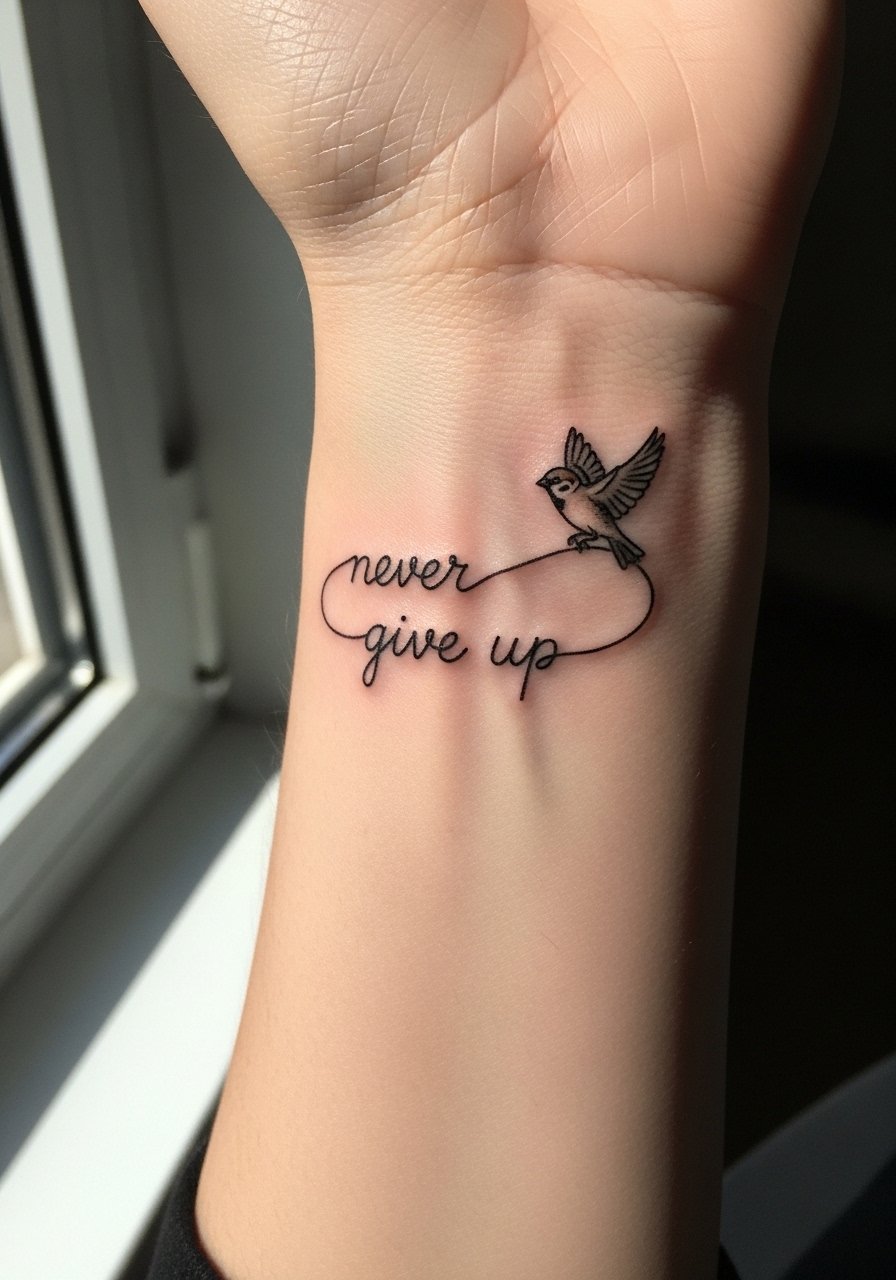
This tiny pairing reads like a private mantra: cursive single-needle lettering paired with a sparrow in mid-flap for motion. It’s quiet but loaded with meaning — the bird symbolizes resilience and everyday courage, while the script keeps it intimate. Ideal for first-timers who want something discreet that still tells a story. For sensitive wrist work, many people apply Emla numbing cream an hour ahead to take the edge off.
Style & Design Details
- Tattoo style: fine line, single-needle script + miniature illustrative bird
- Recommended size: 1.5–2 inches (small cuff or inner wrist)
- Best placements: inner wrist, side of hand, behind ear — intimate and visible when you want it
- Color vs. blackwork: Blackwork recommended for long-term crispness
- Design elements: single-needle script, tiny wing feathers, light stipple shading, negative space for wing highlights, micro-dot eye
- Longevity note: Fine-line script fades faster; SPF and moisturization preserve detail
- Who it suits: Minimalists, first-timers, memorial wearers
Finding the Right Artist
Look for portfolios heavy on single-needle and micro scripts. Ask about needle size, stencil scaling, and how the artist stabilizes the wrist for steady lines. Red flags: portfolios with shaky lettering or oversaturated line weight. Apprentices can do tiny pieces if supervised; for clean single-needle work, choose an experienced artist. Use Instagram tags like #finelinetattoo or #smalltattoo for local discovery.
Aftercare & Healing Tips
Leave the initial wrap on for the period your artist recommends; many shops use Saniderm. Wash gently twice daily with a fragrance-free soap like Dr. Bronner's Unscented Castile soap. Switch to a thin layer of Hustle Butter Deluxe tattoo aftercare balm during peeling to keep the script from cracking. Expect mild peeling days 4–10 and settled ink by 4–6 weeks. Use SPF 50 on exposed wrists long-term.
- Small Flock Over Collarbone (Delicate Cottagecore Vibe)
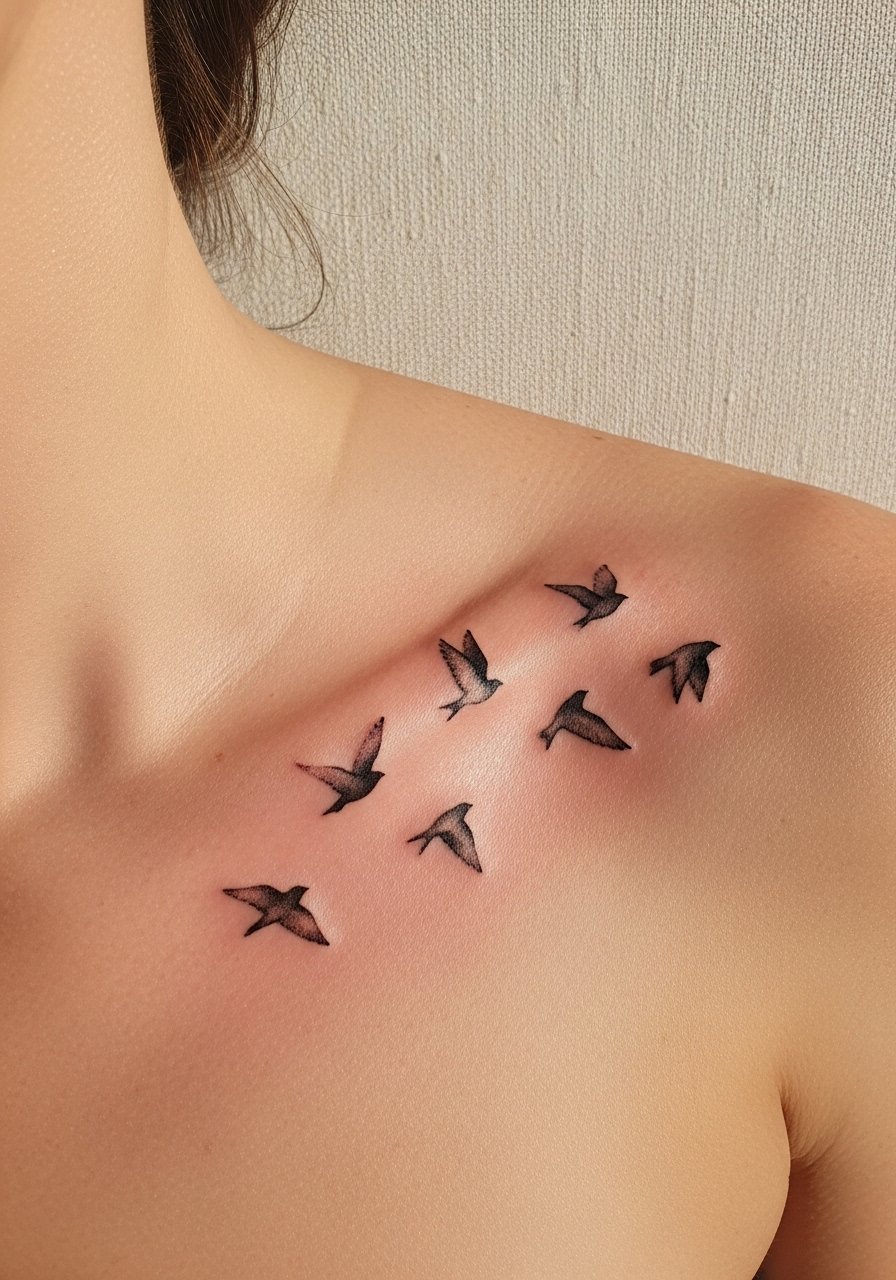
A gentle flock arching over the collarbone reads like a quiet promise to keep going. This placement follows natural contours and looks lovely with cottagecore or romantic wardrobes. It’s elegant when done in soft gray wash with micro-line wings, and it flatters both collarbone curves and necklines. If you test placement first, try a temporary kit like Inkbox semi-permanent tattoos.
Style & Design Details
- Tattoo style: illustrative/soft gray wash with fine-line details
- Recommended size: palm-sized spread or 3–5 small birds across collarbone
- Best placements: upper chest/collarbone, sternum edge, clavicle curve — shows with necklines
- Color vs. blackwork: Gray wash softens edges, great for delicate skin but may need touch-ups sooner
- Design elements: micro feather strokes, subtle gray wash gradients, negative-space highlights, slight motion blur lines
- Longevity note: Gray wash can soften over years; sun exposure accelerates fading
- Who it suits: Romantic wardrobe lovers, people who want a visible but soft reminder
Finding the Right Artist
Choose artists with airy chest pieces and gray-wash shading in their portfolios. Ask how they handle skin movement across the collarbone and whether they’ll stencil exactly to your neckline. Avoid artists who only do bold traditional work for this delicate style. Use portfolio platforms and search #graywashtattoo.
Aftercare & Healing Tips
Collarbones are thin-skinned and may sting more; consider a numbing cream like Zensa if you’re nervous. Keep the area out of tight straps while healing and use unscented lotion like Lubriderm Daily Moisture Fragrance-Free after the initial wrap. Avoid heavy necklaces and sun exposure for at least a month.
- "Never Give Up Tattoo with Birds" Minimalist Ankle Band
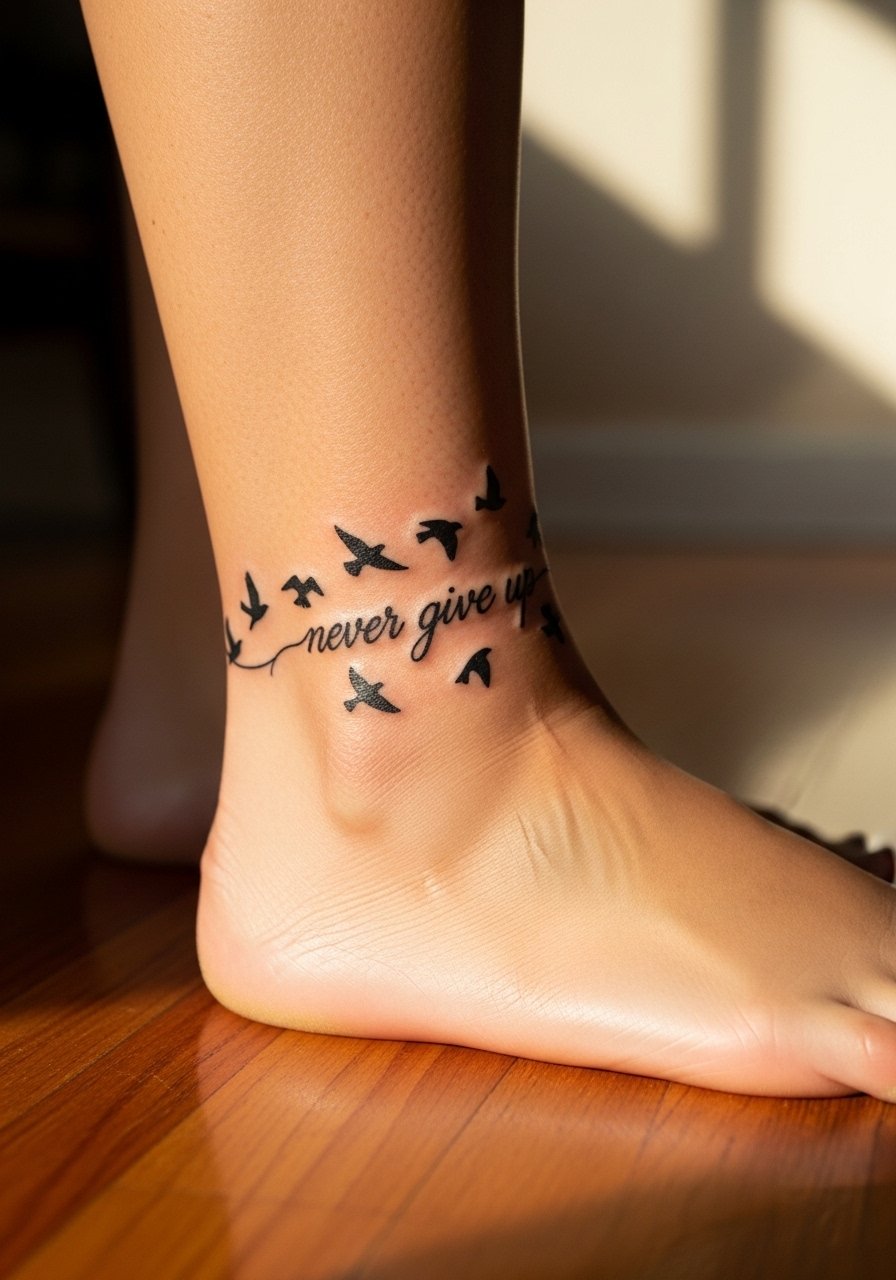
This circular ankle band spells the mantra into a continuous ribbon, birds in silhouette breaking the band to suggest freedom. It’s subtle, wearable with boots or sandals, and perfect if you want the phrase incorporated visually. Ankle placements can be tender — pre-apply Emla cream if you have low tolerance.
Style & Design Details
- Tattoo style: minimalist script + silhouette
- Recommended size: 2–3 inches wrapped around ankle or single side placement
- Best placements: ankle, outer calf, lower leg — moves with footwear
- Color vs. blackwork: Solid black silhouettes hold up best on ankles
- Design elements: continuous script, negative-space breaks, silhouette birds, thin bandline, micro-knot detail at join
- Longevity note: Ankles rub against socks and shoes; clean drying and moisturizer help prevent early fade
- Who it suits: Minimalists, on-the-go lifestyles, travel lovers
Finding the Right Artist
Look for artists comfortable with curved lettering and tiny silhouettes. Bring photos of how socks or shoe lines might interact with the stencil. Avoid artists who oversize bands or use heavy line weight for ankle placement. Local shop walk-ins can be fine for minimal work, but check portfolio first.
Aftercare & Healing Tips
Ankles need careful sock/footwear management. Keep the area wrapped as recommended, then wash gently and apply a thin layer of Tattoo Goo aftercare ointment or Hustle Butter. Avoid tight socks and boots for the first week. If you notice raised lines or blowouts, schedule a touch-up after 8–12 weeks.
- Single Line Dove Behind the Ear (Whispered Strength)
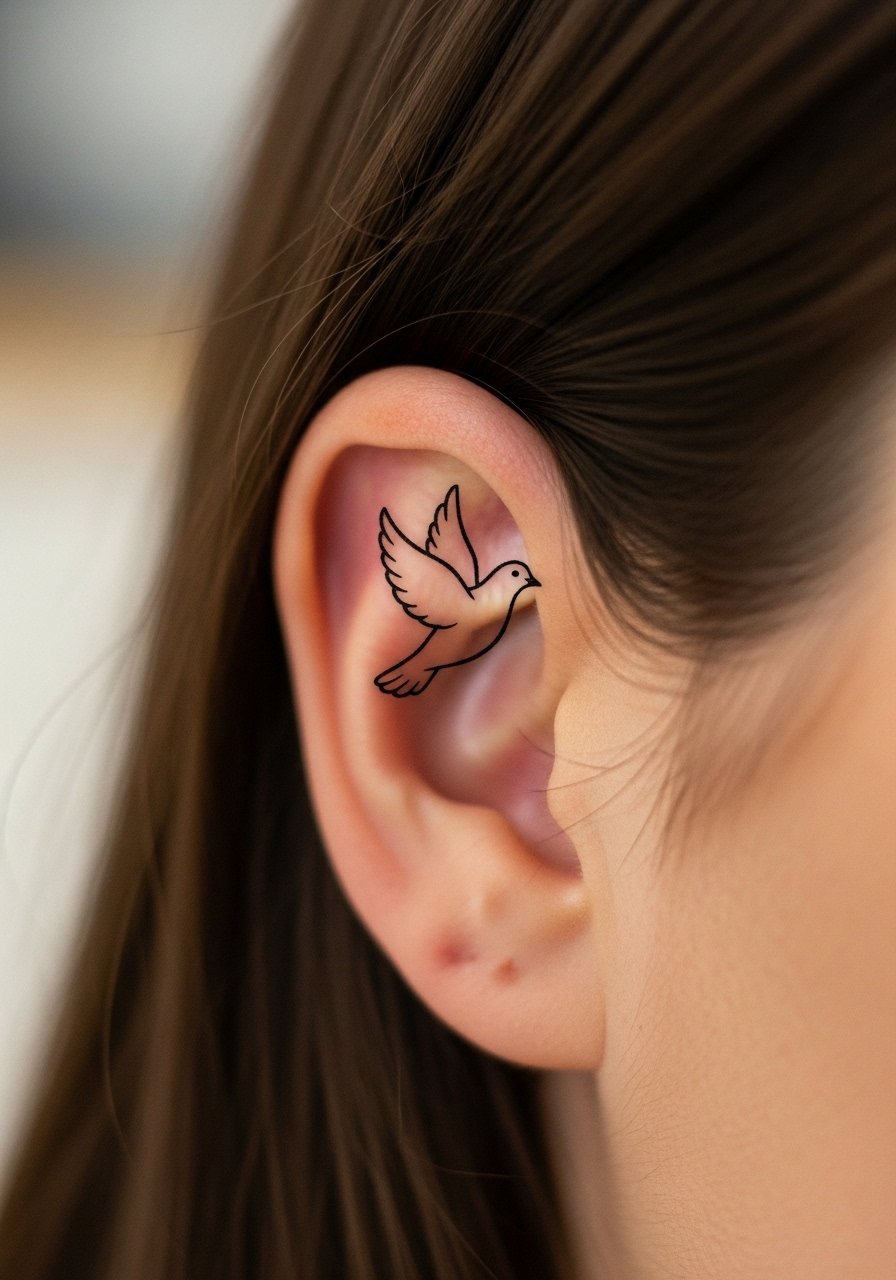
A tiny single-line dove behind the ear is the kind of whisper reminder that only you and close friends notice. Its placement makes it low-pain but intimate, and the single-line look feels modern and airy. Perfect if you want a subtle never give up tattoo with birds that’s private yet elegant. For prep, bring a small headband and try a temporary stencil from a sheet like tattoo stencil transfer paper to preview placement.
Style & Design Details
- Tattoo style: single-line/continuous line
- Recommended size: 0.5–1 inch small and subtle
- Best placements: behind ear, nape of neck, behind shoulder — low visibility, personal
- Color vs. blackwork: Black single-line ages predictably and keeps the design crisp
- Design elements: continuous one-stroke outline, minimal negative space, slight beak and wing hint, micro-dot eye optional
- Longevity note: Tiny single-line tattoos can blur if done too deep; choose an experienced artist
- Who it suits: Quiet personalities, people who prefer hidden meanings
Finding the Right Artist
Artists who do continuous-line portraits are ideal. Ask to see healed photos of single-line work on similar skin tones. Red flags: portfolios where thin lines have become thick and blurry after healing. Apprentices may be fine if supervised.
Aftercare & Healing Tips
Behind-ear spots can scab quickly due to hair contact. Clean with mild soap and pat dry, keeping hair away with a headband. Use a light application of After Inked Tattoo Moisturizer during peeling. Avoid heavy fragrances that can irritate the area.
- Bold Neo-Traditional Swift Across the Shoulder Blade
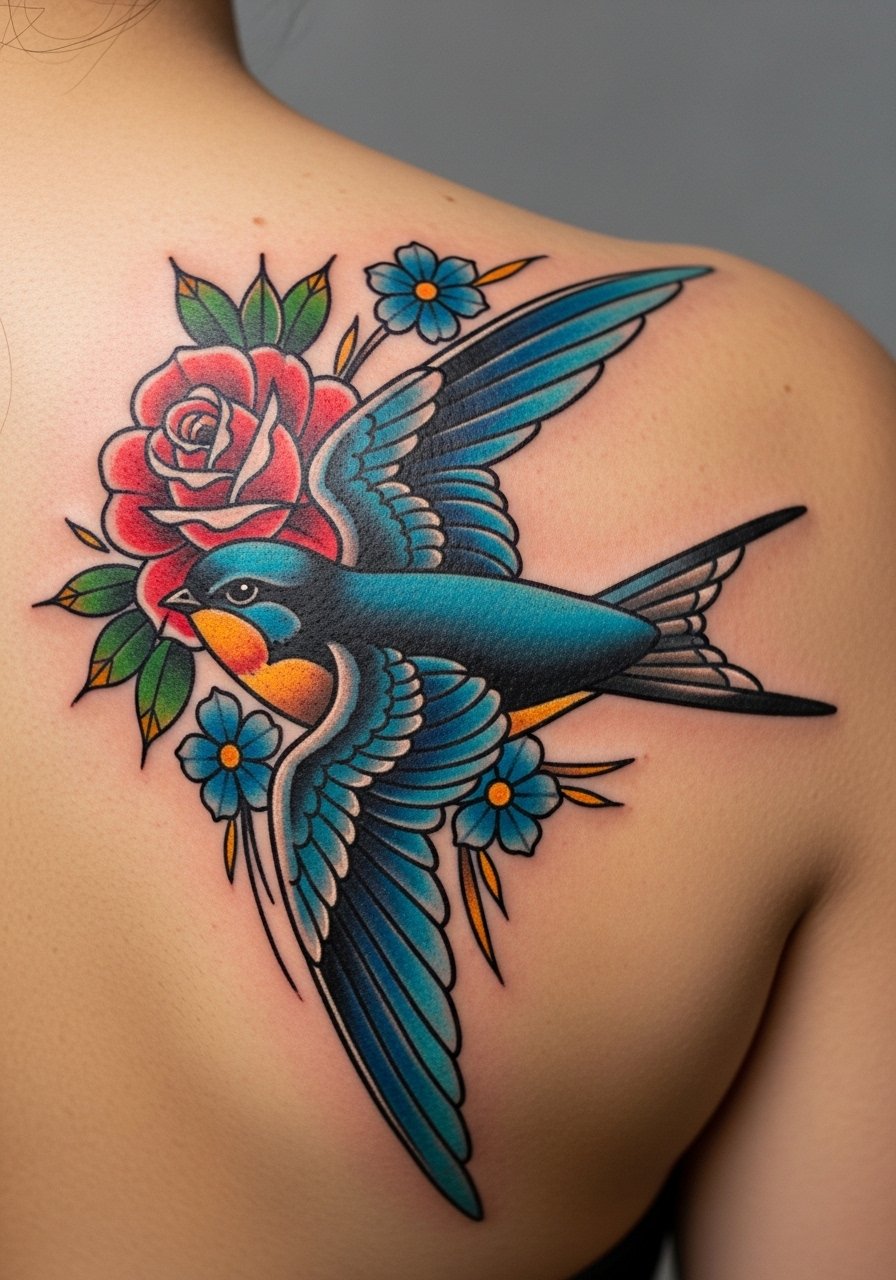
This is a statement piece — a single bird rendered in neo-traditional style with saturated colors, ornamental leaves, and bold outlines. It reads like an emblem of resilience and works beautifully across the shoulder blade where the canvas is large. Ideal for collectors wanting a vivid never give up tattoo with birds that ages well with touch-ups. For color saturation, artists often use reputable inks like Intenze or Eternal.
Style & Design Details
- Tattoo style: neo-traditional with bold lines and saturated color
- Recommended size: palm-sized to shoulder-blade panel (4–8 inches)
- Best placements: shoulder blade, upper back, lateral chest — flat canvas for color work
- Color vs. blackwork: Full color recommended to keep neo-traditional impact
- Design elements: bold outline, color fills, subtle dotwork background, floral accents, shaded beak and wing highlights
- Longevity note: Colorful pieces need SPF and occasional refreshers to combat fading
- Who it suits: Tattoo collectors, people wanting a visible, statement reminder
Finding the Right Artist
Look for neo-traditional portfolios with consistent saturation and crisp lines. Ask which ink brands they use (Intenze, Eternal) and their approach to layering color. Avoid artists whose color looks patchy in healed photos. A skilled colorist is worth the booking wait.
Aftercare & Healing Tips
Color pieces benefit from a second-skin wrap like Saniderm for the first 2–4 days. Use a fragrance-free soap and switch to a non-greasy lotion like Aveeno Daily Moisturizing Lotion Fragrance Free during peeling. Protect with an SPF 50 stick when exposed to sun.
- Watercolor Swallow with Brushstroke Wings
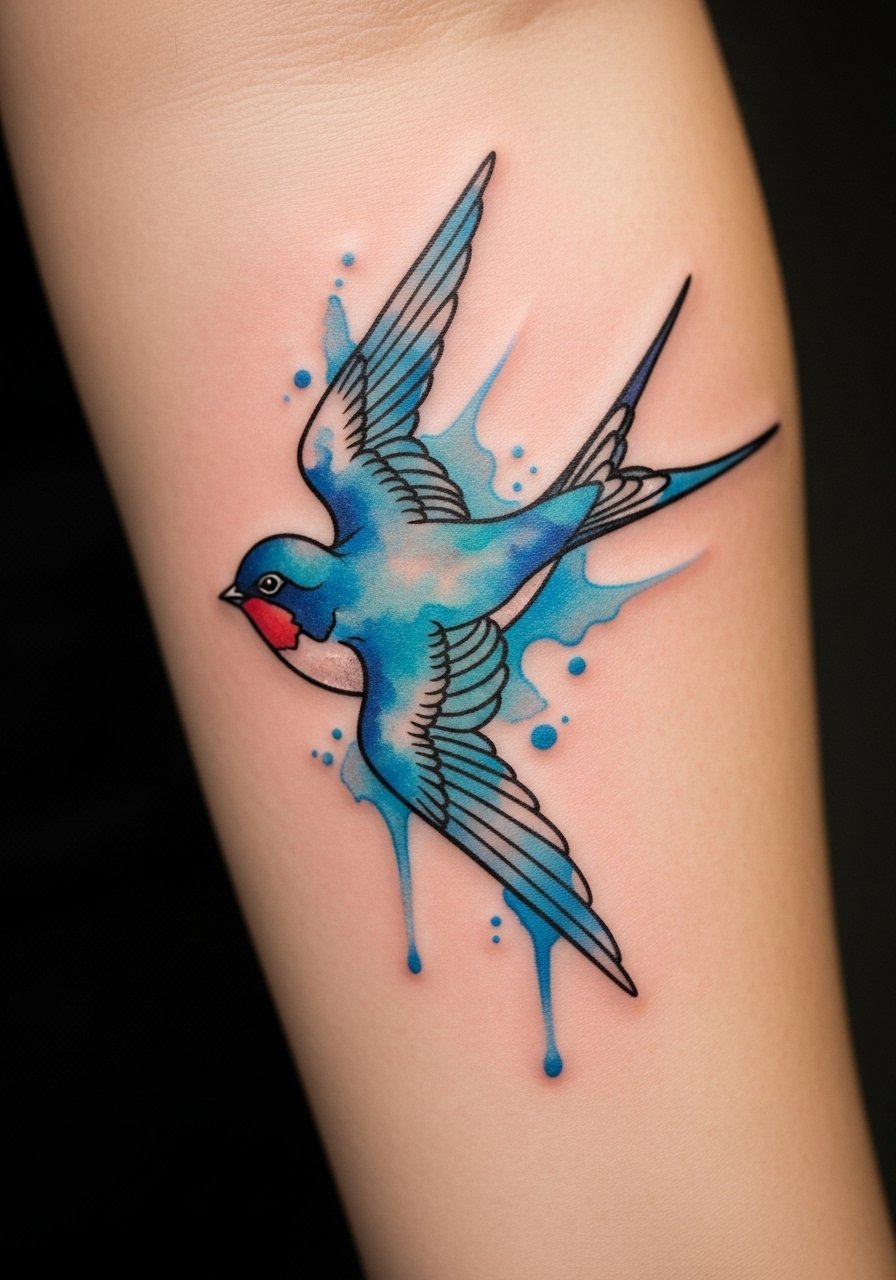
Watercolor birds feel free-spirited and painterly. A swallow with brushstroke wings makes the mantra visual rather than textual — movement and color imply perseverance. Watercolor requires a skilled hand; it can look magical when healed but needs careful aftercare. I recommend confirming the artist's healed watercolor photos in their book.
Style & Design Details
- Tattoo style: watercolor + illustrative with soft line anchors
- Recommended size: palm-sized (3–5 inches) to allow color flow
- Best placements: inner forearm, ribs, thigh — areas with flat skin for color movement
- Color vs. blackwork: Color-focused; thin black outline anchors the watercolor
- Design elements: washed color overlays, feather brushstrokes, subtle white ink highlights, fine-line contour
- Longevity note: Watercolor blurs faster; expect more frequent refreshes and strict sun protection
- Who it suits: Creative types, people who love painterly aesthetics
Finding the Right Artist
Watercolor is specialized — look for healed examples and ask how they approach color saturation versus wash. Confirm ink brands and how they handle touch-up scheduling. Avoid anyone who lacks long-term healed photos of similar pieces.
Aftercare & Healing Tips
Use a Saniderm wrap initially if the artist recommends. Keep color moist with a thin layer of Hustle Butter Deluxe and avoid soaking. Long-term use an SPF 50 stick to protect watercolor pigment.
- Geometric Bird Rising (Blackwork with Negative Space)
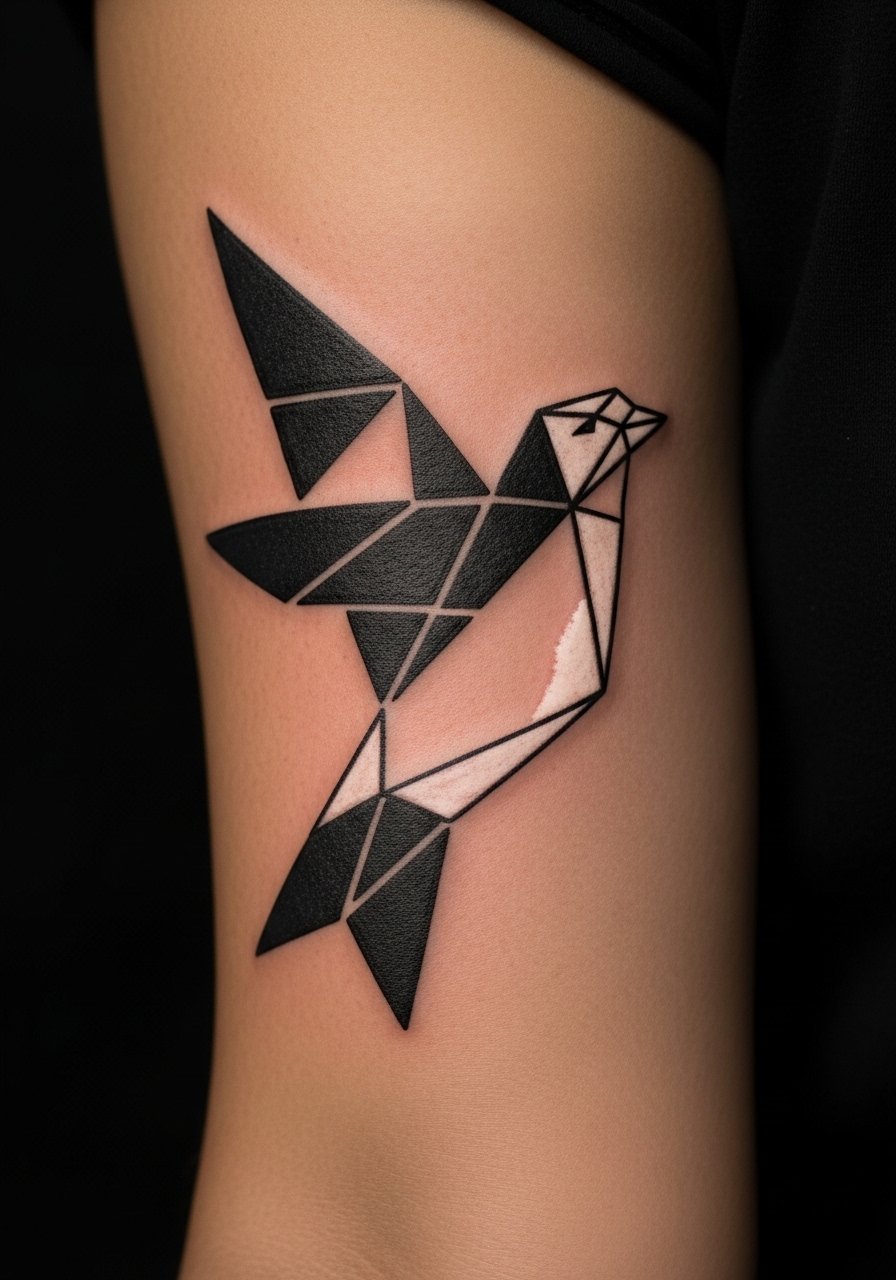
A geometric bird uses blackwork and negative space to create a striking, modern image of ascent. It’s bold and graphic — perfect if you want a visual "never give up" without words. This style holds up well and reads clearly from a distance. Consider asking about Tegaderm/Saniderm as many blackwork artists prefer second-skin to protect heavy fills.
Style & Design Details
- Tattoo style: blackwork/geomatic with negative-space technique
- Recommended size: 3–6 inches (forearm or chest)
- Best placements: upper forearm, chest, shin — flat areas for crisp geometry
- Color vs. blackwork: Deep blackwork recommended to maintain contrast
- Design elements: solid black triangles, negative-space feather gaps, small stipple gradients, sharp edges, symmetrical composition
- Longevity note: Solid black is durable but heavy fills can scab; proper aftercare is critical
- Who it suits: Minimalists who like modern design, lovers of dark academia or architecture-inspired styles
Finding the Right Artist
Find artists with clean blackwork portfolios and healed photos that show consistent fill. Ask about needle groups and ink saturation techniques. Avoid artists who blend blackwork with uneven healing photos.
Aftercare & Healing Tips
Blackwork can scab dense; leave a protective second-skin for the recommended period. Clean with fragrance-free soap and apply a light layer of Tattoo Goo Aftercare Ointment during scabbing. Long-term, use SPF and a color maintenance balm like After Inked.
- Minimalist Origami Crane on Finger
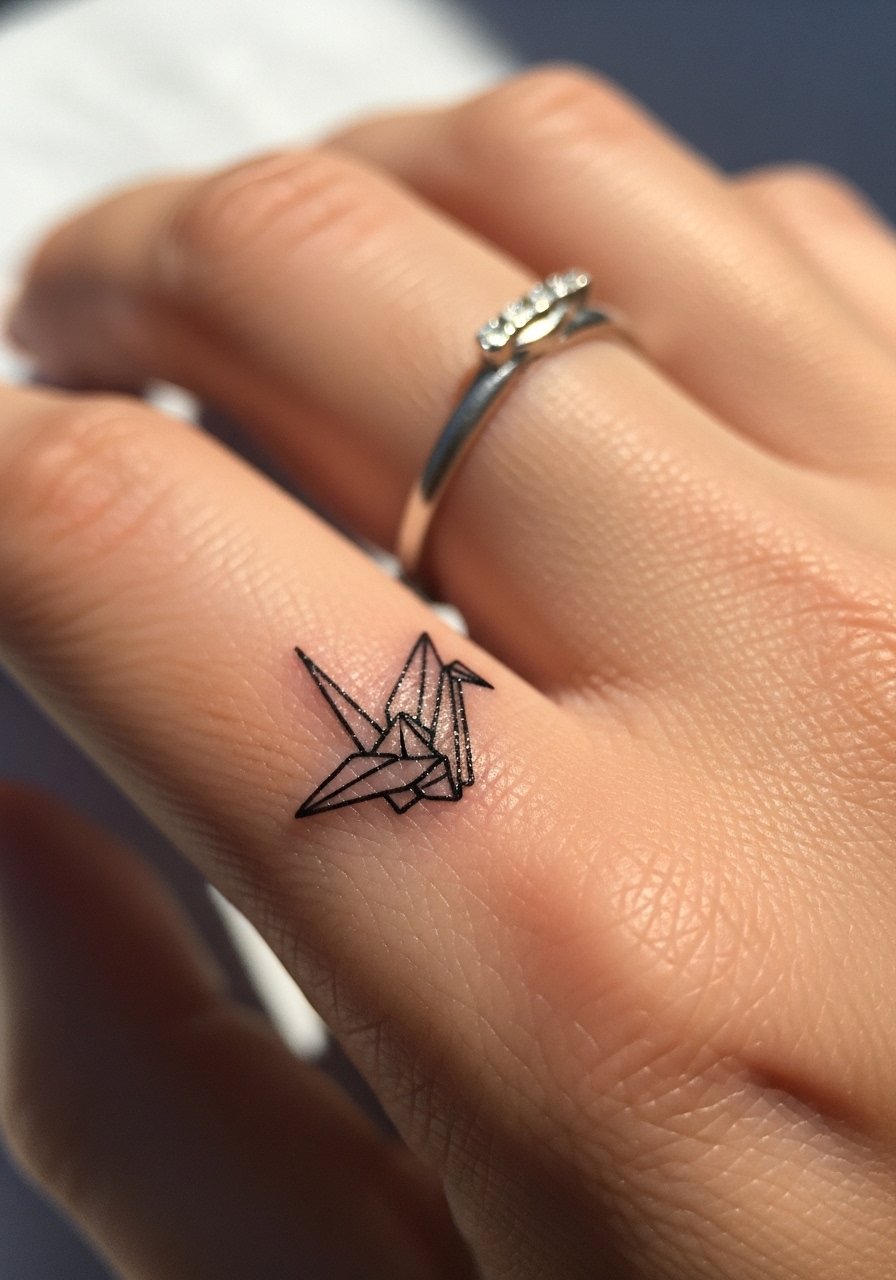
An origami crane is a geometric take on a bird that symbolizes hope. Finger placements are intimate but prone to fading, so scale expectations and plan for touch-ups. Use a thin, simple line to keep the design readable. Try a practice placement with temporary tattoo stencil paper.
Style & Design Details
- Tattoo style: minimalist/line geometric
- Recommended size: tiny (0.5–1 inch)
- Best placements: side of finger, knuckle, webbing between thumb and index — delicate and visible
- Color vs. blackwork: Black line only; color tends to fade faster on fingers
- Design elements: single-line origami folds, micro negative-space creases, open angles for readability
- Longevity note: Finger tattoos fade fastest; expect annual refreshes
- Who it suits: People who want a meaningful everyday reminder and accept upkeep
Finding the Right Artist
Seek artists used to finger work with healed photos showing crisp lines after months. Ask about touch-up policies and whether they charge for finger touch-ups. Avoid artists who don’t tattoo hands frequently.
Aftercare & Healing Tips
Avoid submerging hands; wash gently and pat dry. Use a thin layer of unscented lotion like Lubriderm Fragrance Free and expect touch-ups after initial settling.
- "Never Give Up Tattoo with Birds" Sleeve Accent: Broken Chains & Flying Ravens
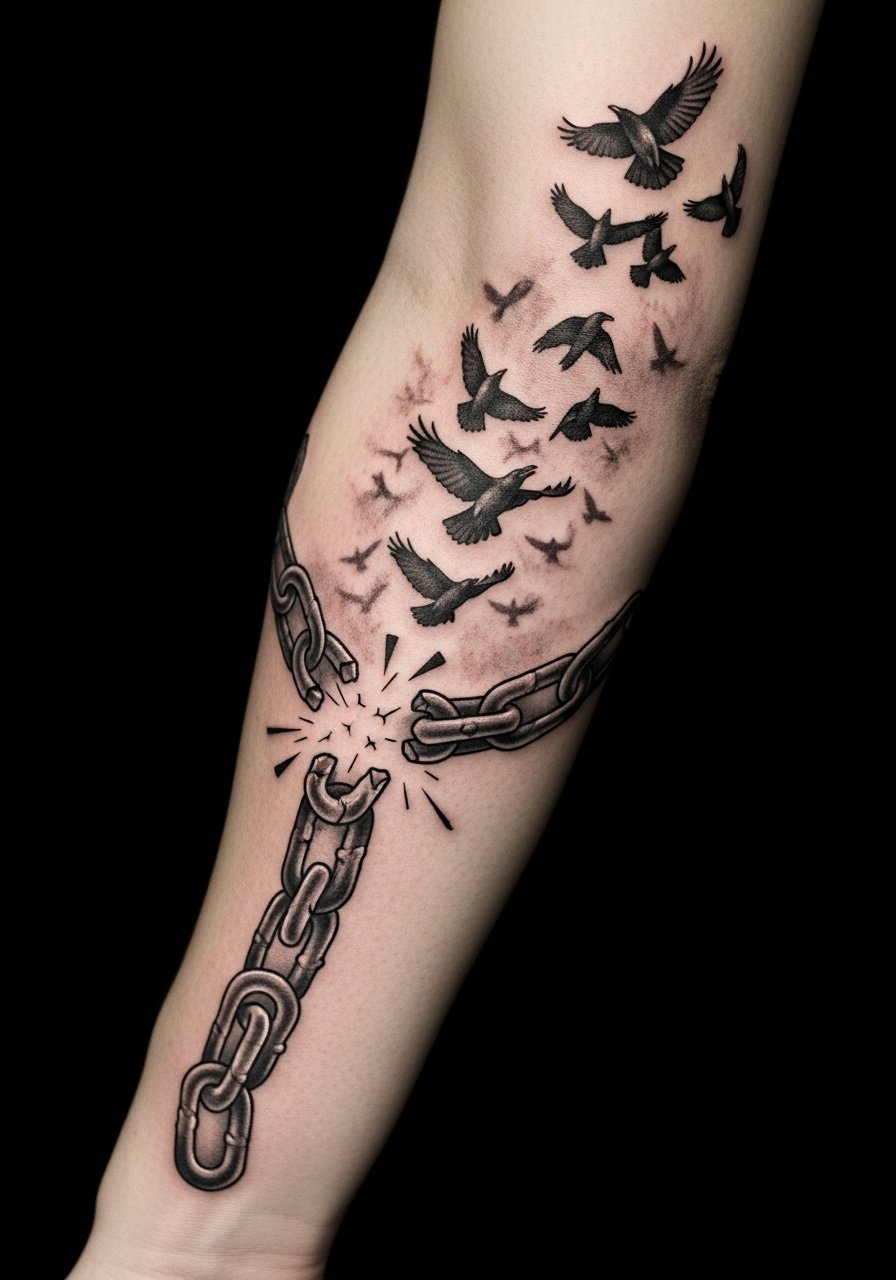
For a more dramatic take, a broken chain dissolving into ravens visually narrates release and perseverance. Placed as a sleeve accent, it reads like a story of breaking limits. This concept fits a darker, more symbolic aesthetic. Big pieces may require topical numbing and staged sessions; consider Zensa numbing cream for long sittings.
Style & Design Details
- Tattoo style: illustrative/blackwork with storytelling composition
- Recommended size: quarter to half sleeve (5–10 inches)
- Best placements: inner forearm sleeve, upper arm, rib area — great for narrative flow
- Color vs. blackwork: Black and gray recommended to keep a bold narrative tone
- Design elements: chain links, break shards, flight motion lines, raven silhouettes, stipple shadowing, negative-space trails
- Longevity note: Dense black/gray holds well; touch-ups rarely needed if healed properly
- Who it suits: People who want a visible, narrative piece with emotional weight
Finding the Right Artist
Look for illustrators with experience composing multi-element panels and clean black/gray shading. Ask about session planning and how they map motion across limbs. Avoid artists inexperienced with large compositions that require flow and negative space planning.
Aftercare & Healing Tips
Large sessions need staged care; use a second-skin wrap and follow with fragrance-free soap and Hustle Butter during peeling. Keep the area elevated if swelling occurs and schedule touch-ups after 8–12 weeks if needed.
- Traditional Swallow & Banner Script on Chest
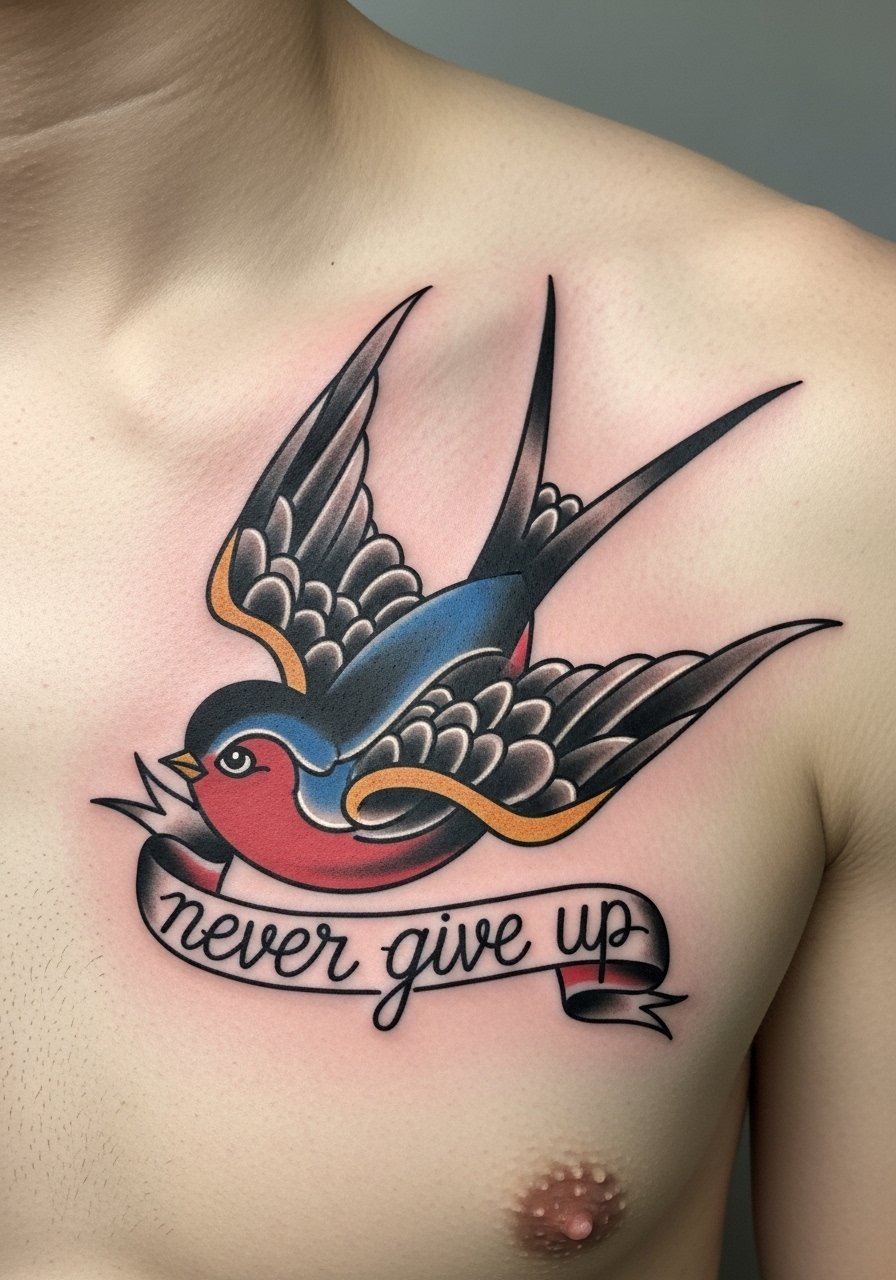
This nod to sailor tattoos uses a traditional swallow and banner, marrying old-school aesthetics with a modern mantra. Traditional linework holds up beautifully, and chest placement gives this message room to breathe. Ask about ink brands for saturation; many artists use Eternal or Intenze.
Style & Design Details
- Tattoo style: American Traditional with bold outlines and flat color fills
- Recommended size: palm-sized to chest panel (3–6 inches)
- Best placements: upper chest, sternum, pectoral edge — wears well with clothing cuts
- Color vs. blackwork: Classic color recommended for this style (reds, blues, greens)
- Design elements: thick black outlines, solid color fills, banner script, anchor or rope accents, dotwork shading optional
- Longevity note: Traditional colors fade predictably but retain graphic shape longer than thin lines
- Who it suits: Lovers of vintage aesthetics, people wanting a visible motivational piece
Finding the Right Artist
Choose artists known for traditional flash; check healed photos for color retention. Ask about layering and how many passes they'll do to pack color. Avoid artists without clear healed color pieces.
Aftercare & Healing Tips
Use a second-skin for initial protection, then wash and apply a thin layer of Tattoo Goo or Hustle Butter. Keep chest area uncompressed and avoid tight shirts until fully healed.
- Botanical Bird Perched on a Scripted Branch (Cottagecore)
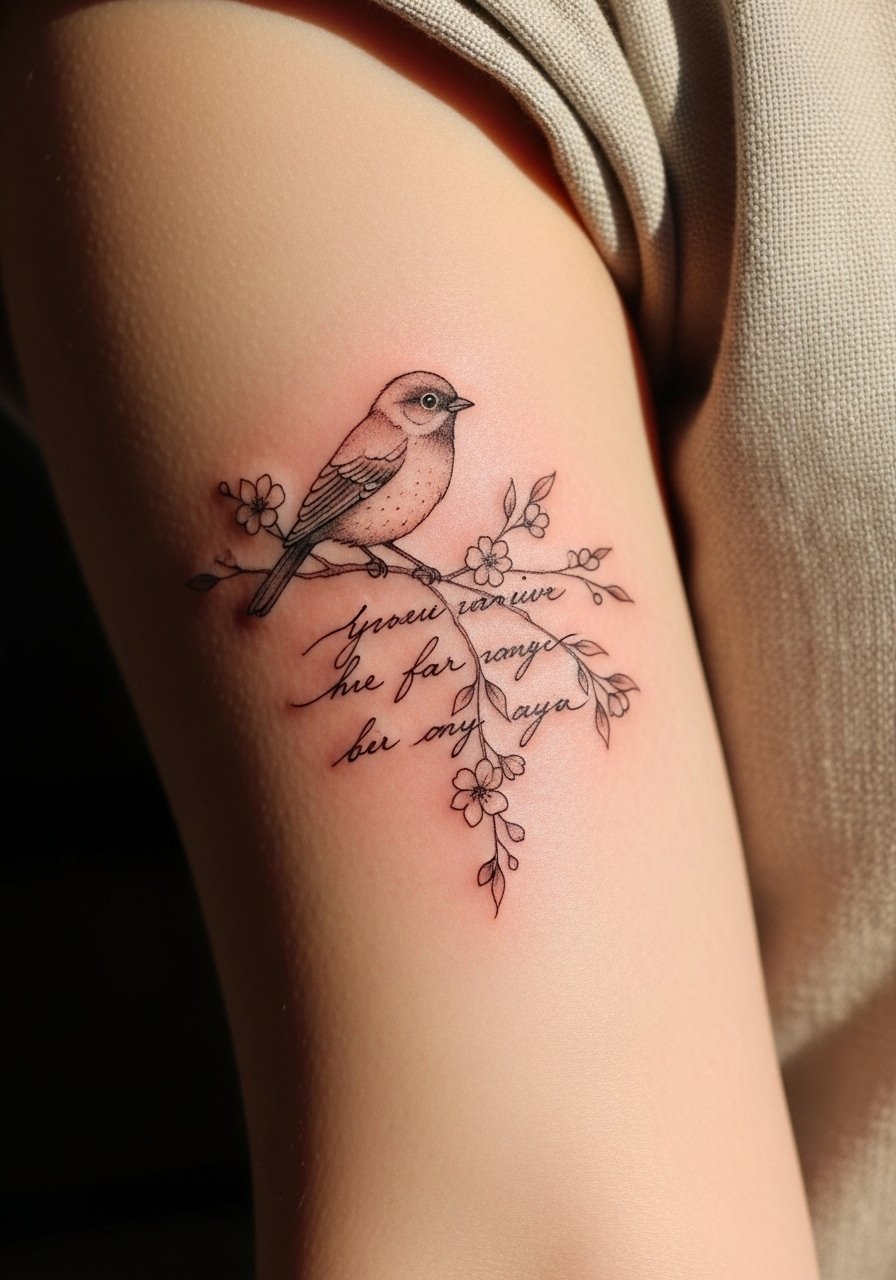
Combining floral branches and birds gives you a living, breathing symbol of persistence. The botanical elements pair beautifully with a scripted branch that includes tiny handwritten "never give up" text woven in. This is ideal if you love cottagecore and natural motifs. Use a reference guide like Procreate on iPad with Apple Pencil to sketch custom ideas.
Style & Design Details
- Tattoo style: illustrative/botanical with fine-line script
- Recommended size: 2–4 inches (forearm or inner bicep)
- Best placements: inner bicep, forearm, rib — places that curve with muscles
- Color vs. blackwork: Black-and-gray or muted watercolor for florals; black script for longevity
- Design elements: delicate branch script, tiny blossoms, perched bird with feather detail, micro-stipple shadowing, thin anchor script
- Longevity note: Fine botanical strokes soften over time; thicker branch/script helps longevity
- Who it suits: Nature lovers, cottagecore aesthetic fans, those wanting a poetic reminder
Finding the Right Artist
Look for botanical portfolios and artists comfortable with script integration. Ask how they’ll scale floral detail for long-term clarity. Avoid artists without healed close-ups of botanical work.
Aftercare & Healing Tips
Botanical details benefit from a short Saniderm period and using unscented lotion like Aveeno Fragrance Free after. Keep the area moisturized but not greasy during peeling.
- Small Phoenix Hatching on Ribcage (Symbolic Rebirth)
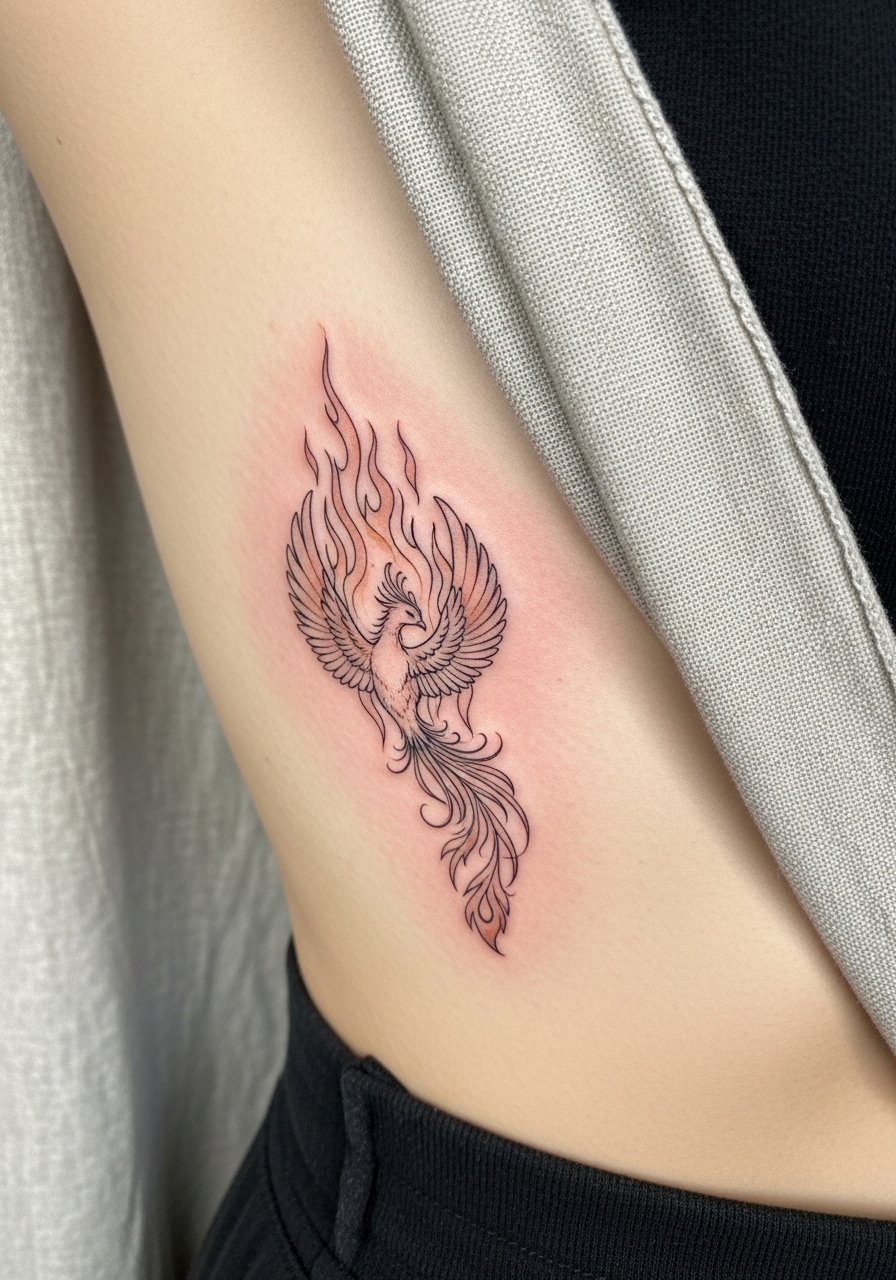
A phoenix is literally the visual of re-emergence — perfect for a never give up tattoo with birds if your story is about renewal. Ribcage pieces are intimate and meaningful but more painful; consider a numbing cream like Emla and plan for short sessions.
Style & Design Details
- Tattoo style: illustrative with soft color accents
- Recommended size: 3–5 inches (ribcage-friendly)
- Best placements: ribcage, side torso, sternum — private, symbolic spaces
- Color vs. blackwork: Warm-red/orange accents add rebirth symbolism; black lines anchor detail
- Design elements: rising wings, flame tendrils, subtle gradient fills, fine feather strokes, tiny ash particles in negative space
- Longevity note: Ribcage skin moves a lot; detailed small feathers may need touch-up
- Who it suits: Survivors, people marking new chapters, lovers of dramatic symbolism
Finding the Right Artist
Choose illustrators who handle figure work and dynamic motion. Ask about session length and pacing. Avoid artists who haven’t worked on ribcage pieces often.
Aftercare & Healing Tips
Rib pieces need gentle clothing choices and careful washing. Use a second-skin for the initial days and then a thin layer of Hustle Butter. Avoid heavy exercise that stretches the area for two weeks.
- Tiny Linework Kingfisher at Inner Elbow
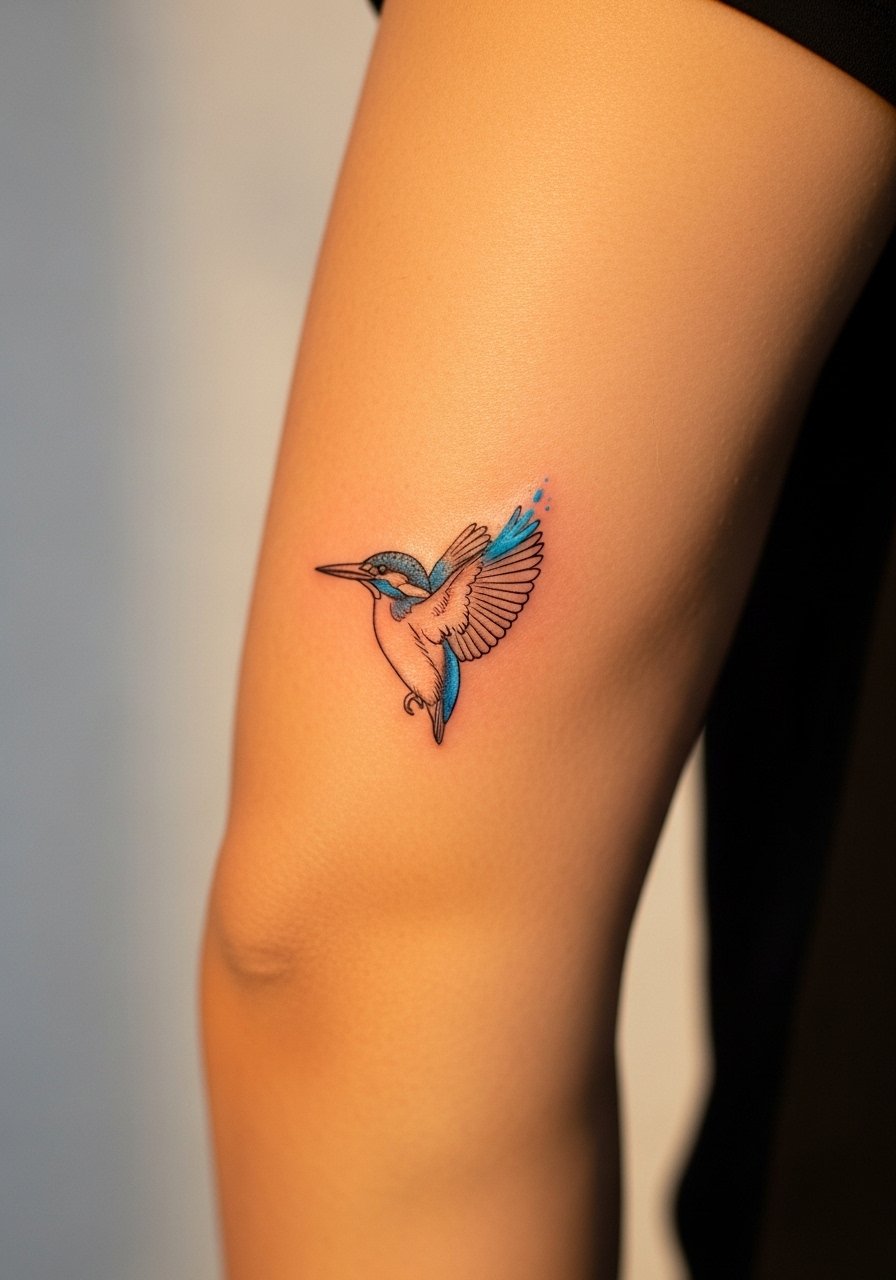
Kingfishers represent determination and precision — a small kingfisher at the inner elbow is an energetic reminder to stay focused. Inner elbow placements flex often; expect some itchiness during healing and consider saniderm as an option.
Style & Design Details
- Tattoo style: fine line illustrative with micro-color pop
- Recommended size: 1.5–3 inches (inner elbow area)
- Best placements: inner elbow, crook of arm, tricep crease — moves naturally with gesture
- Color vs. blackwork: Black outline with a small bright blue/orange color accent for the kingfisher
- Design elements: micro-feather strokes, compact beak detail, slight stipple shadow, curved motion line
- Longevity note: Crease areas may need touch-ups; moisturize to prevent cracking of lines
- Who it suits: Energetic personalities, nature and bird watchers
Finding the Right Artist
Look for artists experienced with curved anatomy and small color accents. Ask how they’ll handle ink placement over a joint. Avoid artists without healed elbow work.
Aftercare & Healing Tips
Keep elbow straight during the first three days as much as possible. Clean with a gentle soap and apply After Inked during peeling.
- Stacked Script with Flying Goldfinch on Rib Line
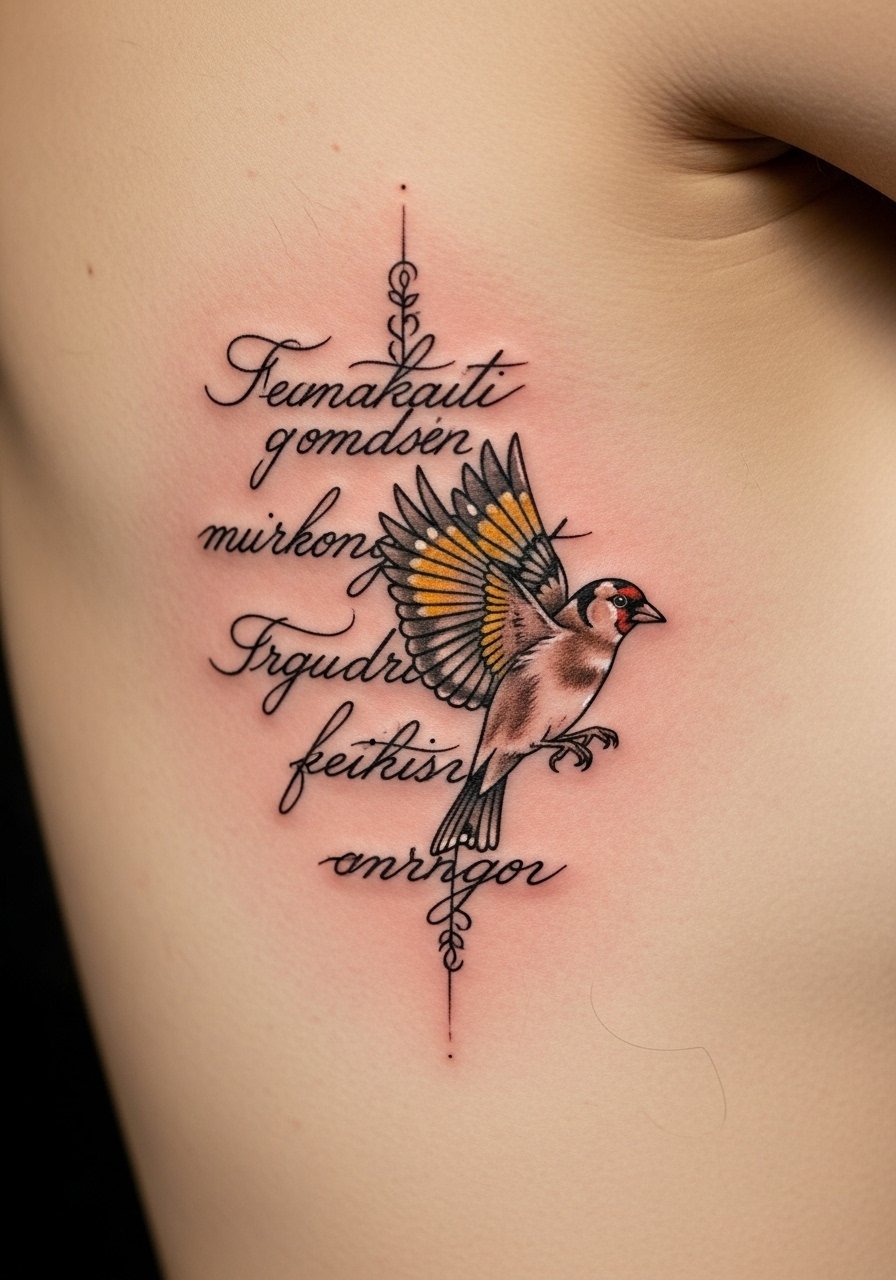
Stacked lines of tiny script can form a substring of your story, punctuated by a goldfinch to add hope and brightness. Rib line gives a personal place for private mantras. Because of sensitivity, plan sessions and use an uncrowded artist schedule.
Style & Design Details
- Tattoo style: micro-script + small illustrative bird
- Recommended size: 2–5 inches stacked vertically along the rib line
- Best placements: rib line, side torso, hip — private and elongating
- Color vs. blackwork: Mostly black for script; small color accents on the bird are optional
- Design elements: stacked tiny type, micro-goldfinch with color patch, spacing for breathing room, slight italic script
- Longevity note: Thin script may blur; thicker microletters are more durable
- Who it suits: Poetic types, memorial seekers, people who prefer private placements
Finding the Right Artist
Choose artists who photograph micro-script on similar skin tones. Ask about font scaling and whether they’ll print multiple stencil options to preview spacing. Apprentices may do micro-text under supervision.
Aftercare & Healing Tips
Rib placements need gentle clothing and adherence to aftercare. Use Hustle Butter or a thin unscented lotion after the wrap comes off. Wait 8–12 weeks before judging final line crispness.
- Mid-Back Mandala Bird (Dark Academia Flair)
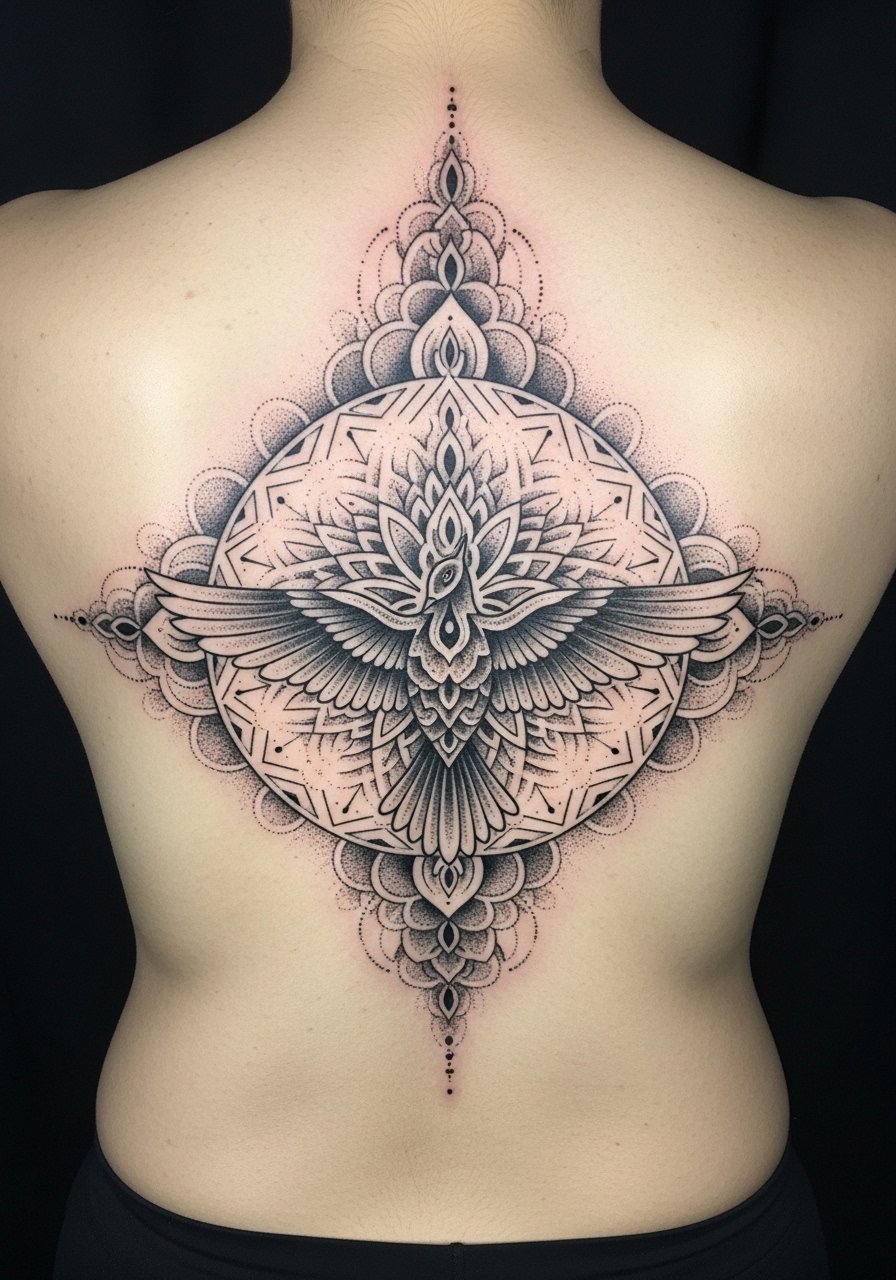
Combining a bird with mandala geometry gives this piece ritualistic presence and structure. Centered on the mid-back it carries dark academia aesthetics — thoughtful, moody, and grounded. Expect multiple sessions for a detailed symmetrical piece.
Style & Design Details
- Tattoo style: mandala + blackwork/ornamental
- Recommended size: 5–10 inches centered on mid-back or between shoulder blades
- Best placements: mid-back, upper back, between scapulae — balanced and visible under certain clothing
- Color vs. blackwork: Blackwork and dotwork keep the mandala clean and contrasty
- Design elements: centered bird motif, repeating mandala rings, stipple shading, lace-like transitions, precise symmetry
- Longevity note: Symmetry reads well as it ages; keep moisturized and sun-protected for crisp contrast
- Who it suits: Students of literature, dark academia aesthetic lovers, people wanting a contemplative large piece
Finding the Right Artist
Look for artists who specialize in dotwork and symmetry. Ask how they ensure perfect mirroring and whether they use stencils or freehand geometry. Avoid artists without strong mandala portfolios.
Aftercare & Healing Tips
Large pieces can be wrapped in stages; follow artist instructions. Use gentle fragrance-free soap and an unscented lotion like Aveeno. Protect with SPF once fully healed.
- Tiny Hummingbird with Micro-Flowers on Rib
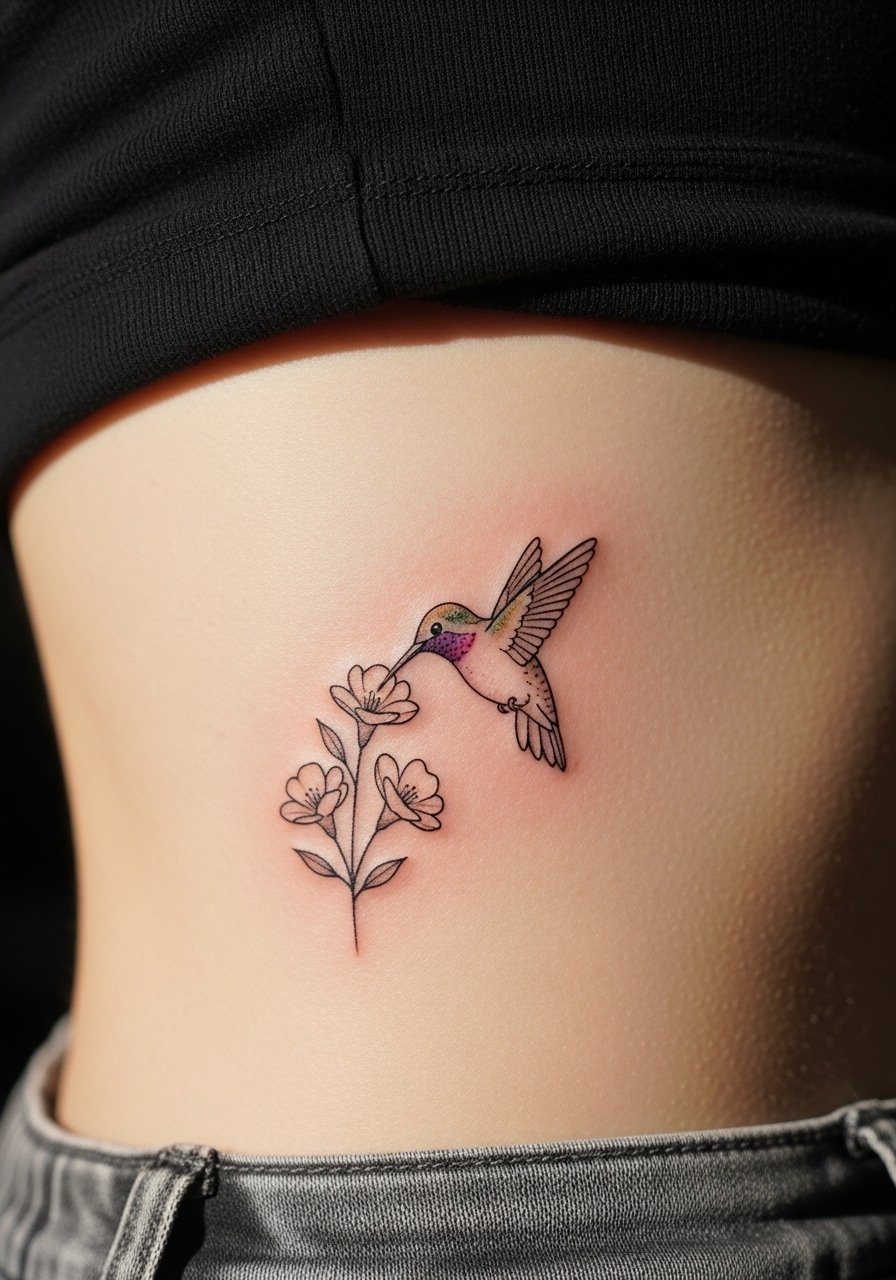
A hummingbird symbolizes endurance through effort and is an elegant micro tattoo choice. Because ribs are sensitive, it's meaningful and personal. Keep the size small to reduce session time and healing complexity.
Style & Design Details
- Tattoo style: fine-line illustrative with micro-color accents
- Recommended size: 1–2.5 inches (tiny and delicate)
- Best placements: rib, side torso, underboob — private spaces with curved anatomy
- Color vs. blackwork: Tiny color pops on wings or flowers add whimsy; keep lines black for longevity
- Design elements: motion lines, tiny nectar drop, micro-flower cluster, thin feather strokes, subtle gray shading
- Longevity note: Small colors fade faster; expect refreshers in a few years
- Who it suits: Lovers of delicate detail, secret symbolism, and floral pairings
Finding the Right Artist
Find artists with steady handwork in micro-illustration. Ask to see healed rib shots and how they plan for curved placement. Avoid artists inexperienced with chest/rib micro tattoos.
Aftercare & Healing Tips
Use gentle compress-free clothing and apply Hustle Butter sparingly. Avoid heavy exercise that stretches the torso for the first two weeks.
- "Never Give Up Tattoo with Birds" Ring of Flight Around Wrist (Bold Line)
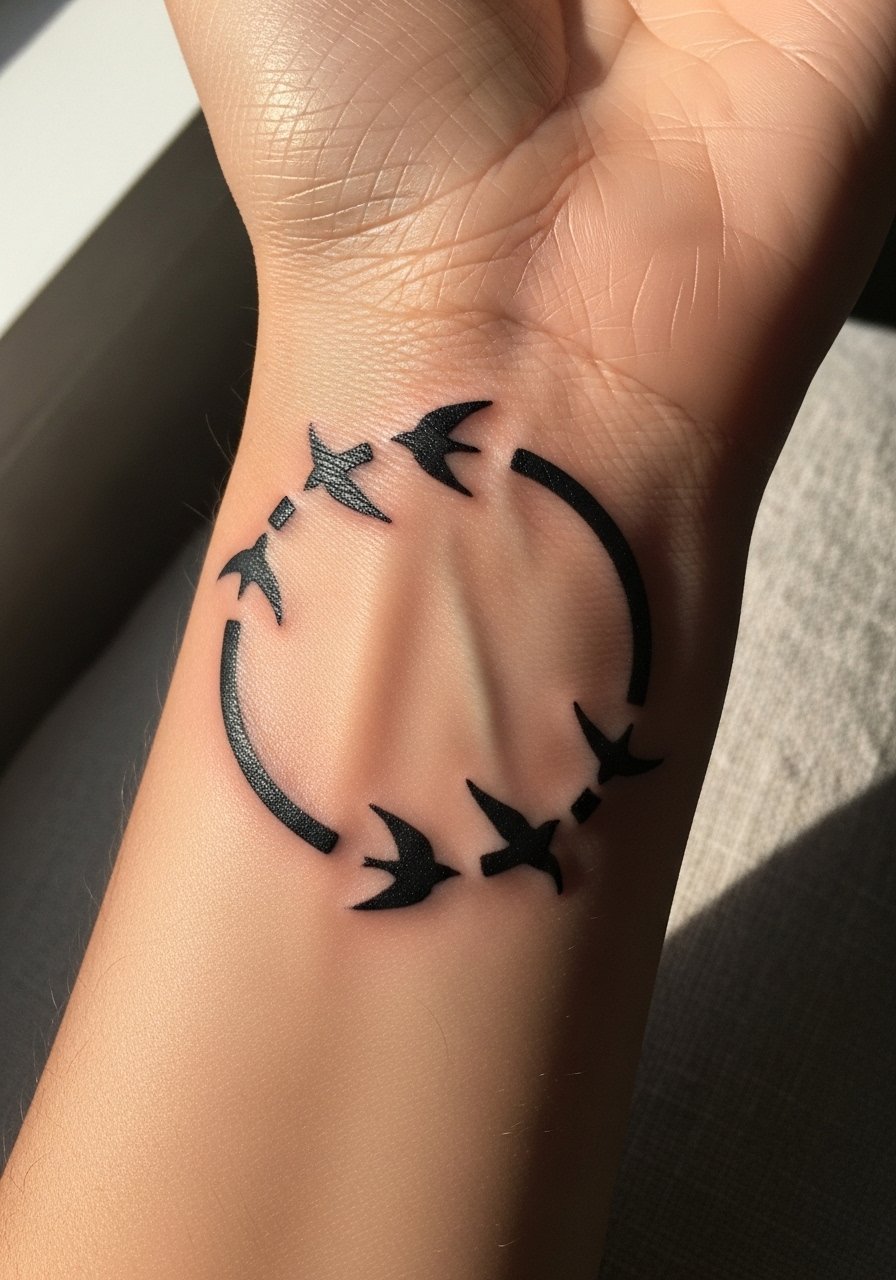
A wrist ring that looks like birds are breaking free is a literal wearable mantra — the circle suggests perseverance while the birds suggest movement and escape. It’s a visible, strong statement. Bold lines handle daily wear better on the wrist.
Style & Design Details
- Tattoo style: bold line / minimalist silhouette ring
- Recommended size: full wrist band or partial wrap (1–2 inches width)
- Best placements: wrist, forearm cuff, lower arm — everyday visibility
- Color vs. blackwork: Blackwork recommended for durability under constant exposure
- Design elements: thick bandline, silhouette birds, intermittent negative space, slight tapering at join
- Longevity note: Bands can blur at edges; thicker lines age more predictably than micro-lines
- Who it suits: People wanting a daily visible reminder and durable design
Finding the Right Artist
Choose artists who have healed wrist or band tattoos in their portfolios. Ask about how they counteract skin movement and compression from watches. Avoid artists unfamiliar with bandwork.
Aftercare & Healing Tips
Wrist bands are exposed — use a Saniderm wrap for the first days if recommended. Wash lightly and use After Inked during peeling. Apply SPF 50 stick when outdoors.
- Neo-Japanese Crane with Wind Bars on Thigh
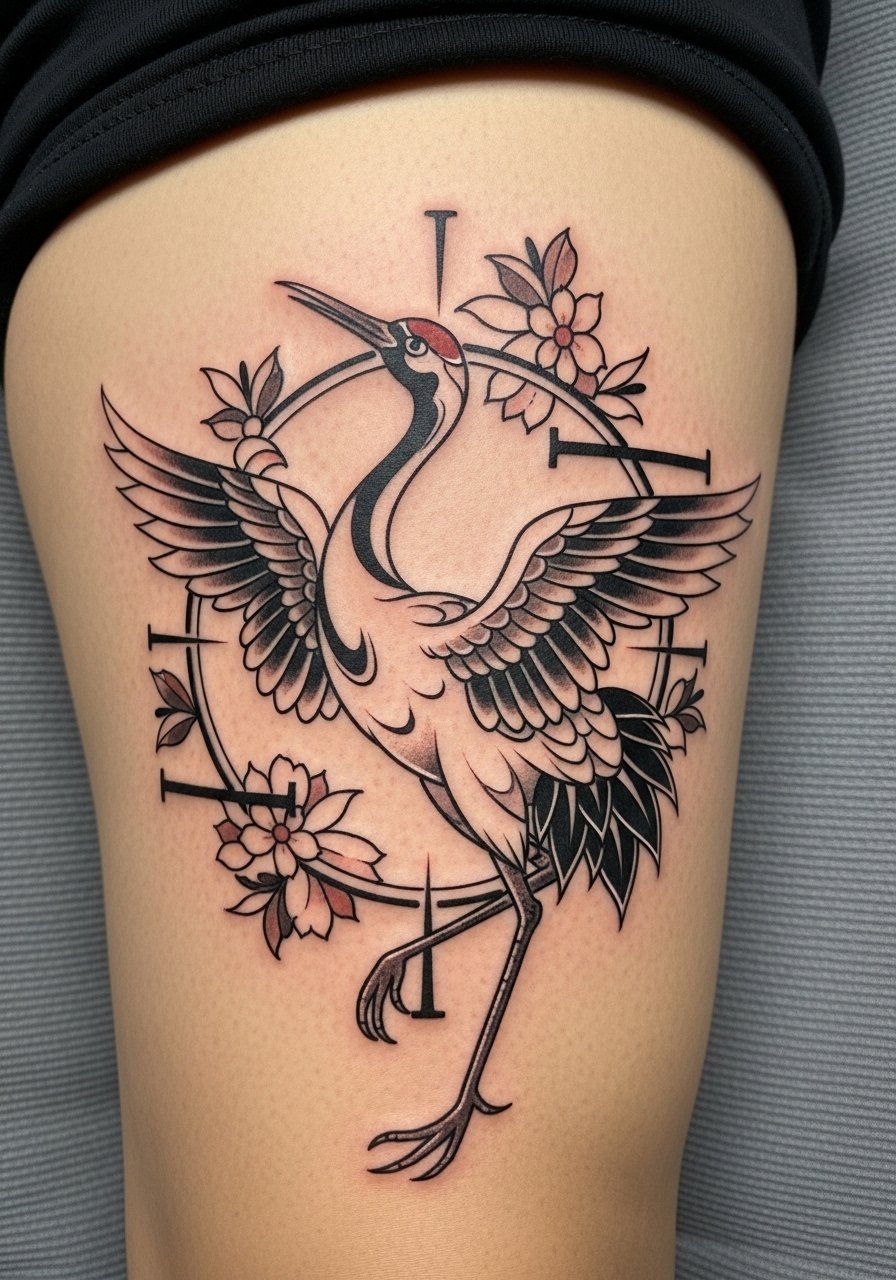
Neo-Japanese cranes are ceremonial and convey longevity and perseverance. Placed on the thigh, the piece can be large and dramatic while staying private. Bold compositions and wind bars play beautifully with thigh curves.
Style & Design Details
- Tattoo style: neo-Japanese / traditional Japanese-influenced
- Recommended size: medium to large (6–10 inches) on thigh
- Best placements: upper thigh, hip, outer thigh — allows sweeping motion and privacy
- Color vs. blackwork: Deep blacks with muted color palettes (red, indigo) suit the aesthetic
- Design elements: stylized crane pose, wind bars, chrysanthemums or waves, thick outlines, layered scale textures
- Longevity note: Strong outlines hold well; color needs sun protection when exposed
- Who it suits: Fans of Japanese aesthetics, people wanting mythic symbolism
Finding the Right Artist
Find artists trained in Japanese or neo-Japanese compositions. Ask about line thickness choices and how they’ll balance the crane against wind bars. Avoid artists without experience handling large organic flow.
Aftercare & Healing Tips
Thighs are less exposed but can rub against clothing. Use a second-skin if recommended and apply a gentle lotion like Aveeno Fragrance Free after peeling.
- Wrist Semicolon with Tiny Bird (Recovery Tribute)
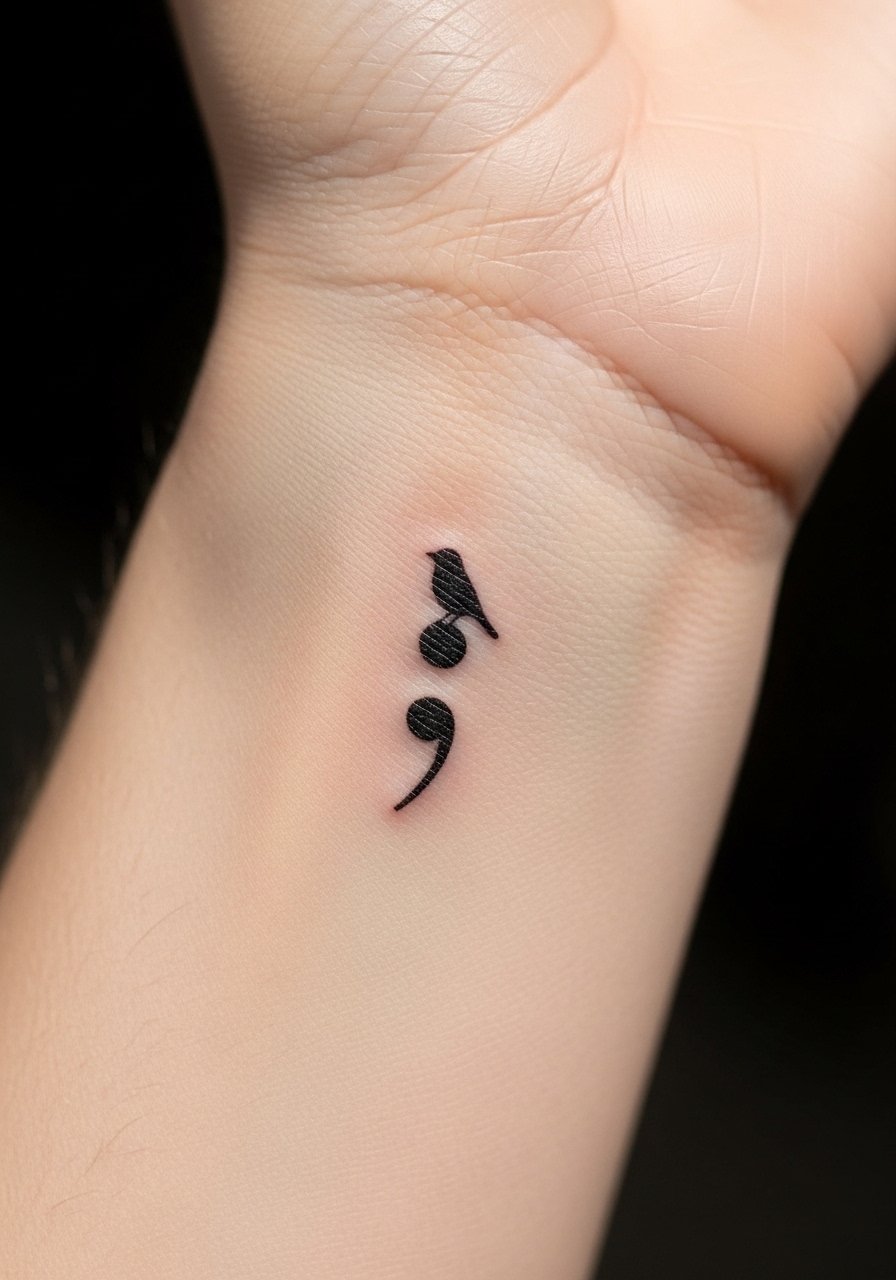
Pairing a semicolon and a bird creates a compact recovery tribute: the semicolon for continuation, the bird for forward motion. It’s small but emotionally significant and works for very visible placement like the wrist.
Style & Design Details
- Tattoo style: minimalist symbol + silhouette
- Recommended size: 0.5–1 inch (small and symbolic)
- Best placements: inner wrist, forearm, behind ear — visible and meaningful
- Color vs. blackwork: Black silhouette keeps the symbol clear and timeless
- Design elements: semicolon dot as bird perch, tiny bird silhouette, micro-stippling optional
- Longevity note: Small symbols heal predictably but can blur slightly; touch-ups can restore crispness
- Who it suits: People in recovery, those wanting a daily visible sign of perseverance
Finding the Right Artist
Look for crisp small-symbol work and healed photos. Ask about how they’ll place the semicolon for readable orientation. Avoid artists without steady small-symbol examples.
Aftercare & Healing Tips
Inner wrist is exposed; clean twice a day with mild soap and apply Hustle Butter sparingly. Avoid jewelry that rubs the area until healed.
- Sleeve of Migratory Birds (Gradient Blackwork)
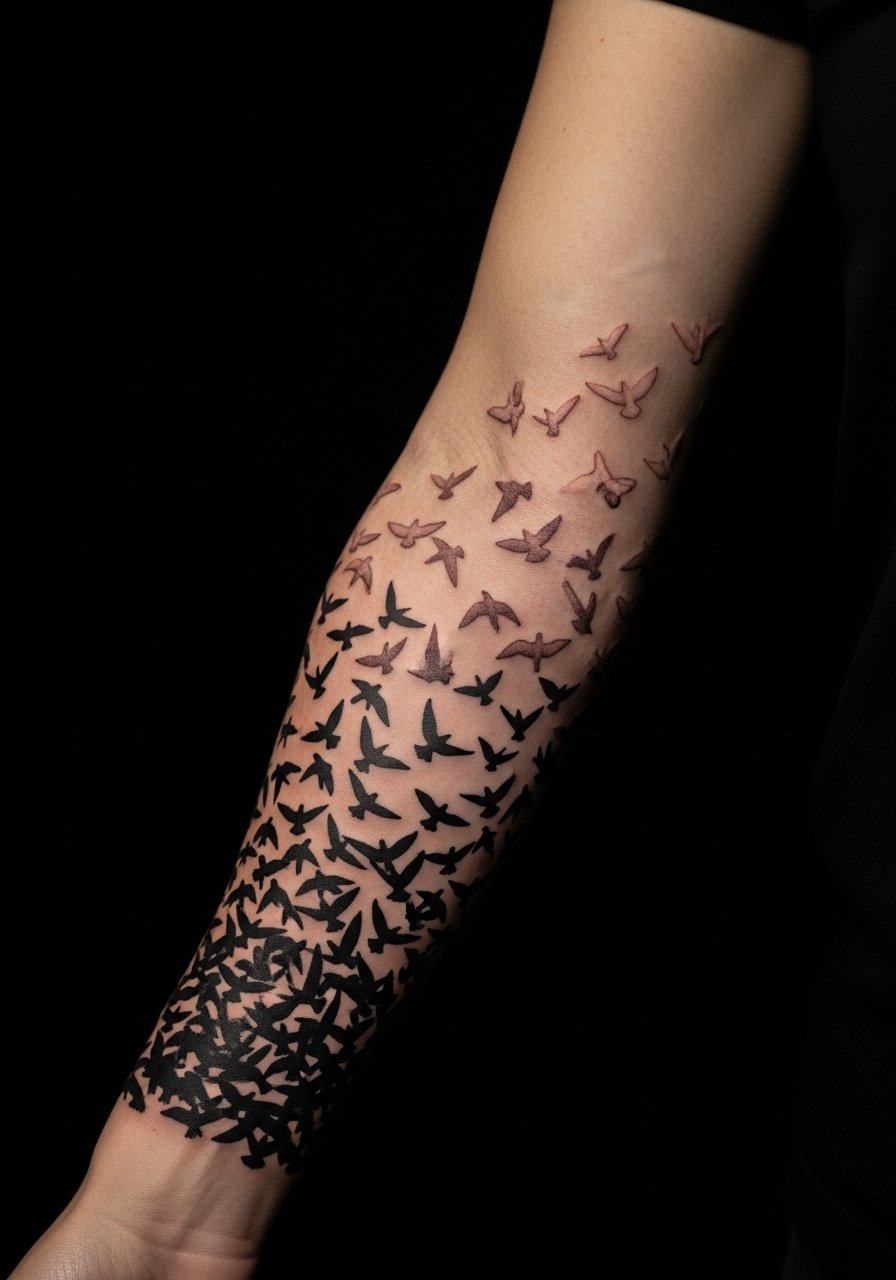
A sleeve of migratory birds reads like movement over time. The gradient effect — from dense silhouettes to airy outlines — communicates progress and endurance. This is for collectors who want a visible, evolving statement.
Style & Design Details
- Tattoo style: blackwork gradient / illustrative composition
- Recommended size: full or half sleeve (8–14 inches coverage)
- Best placements: full arm sleeve, upper arm, shoulder to wrist — expansive visual storytelling
- Color vs. blackwork: Pure blackwork gradient creates strong visual impact and longevity
- Design elements: silhouette density gradient, overlapping flight layers, thin motion strokes, negative-space air pockets
- Longevity note: Heavy black holds well but may scab; proper aftercare preserves saturation
- Who it suits: Serious collectors, endurance symbolism seekers
Finding the Right Artist
Pick artists known for seamless gradient blackwork and consistent healed photos across sleeves. Ask about session planning and long-term fading expectations. Avoid anyone without graduated blackwork examples.
Aftercare & Healing Tips
Large blackwork needs staged healing care — Saniderm can help early on. Clean with fragrance-free soap and use a recommended balm like Tattoo Goo. Protect with SPF 50 in the long run.
- Fine-Line Mockingbird with Sheet-Music Accent
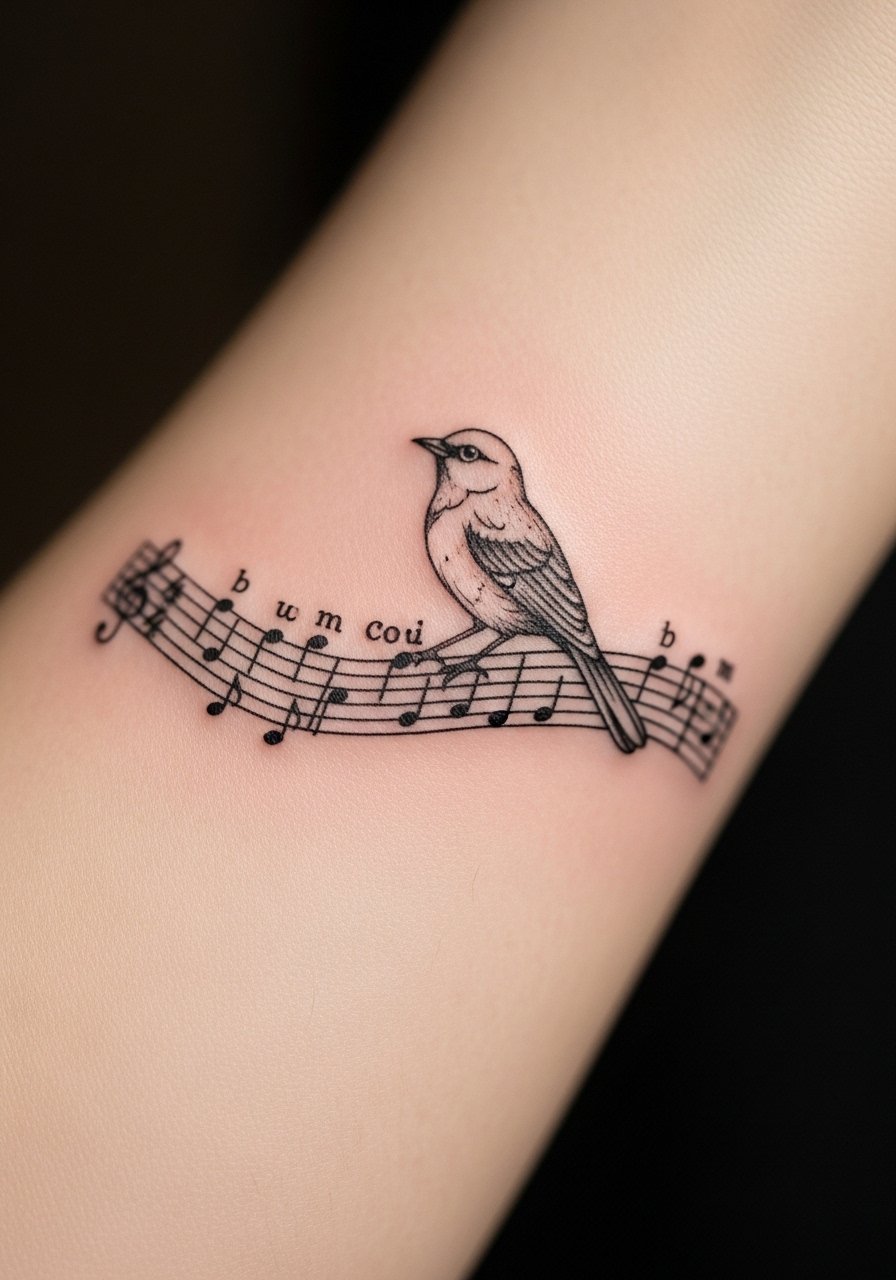
If music helped you persevere, combine a singing bird with a tiny staff of sheet music. It’s poetic and personal, and the fine-line bird complements micro musical notation. Keep it slightly larger than the smallest micro to preserve note clarity.
Style & Design Details
- Tattoo style: fine-line illustrative with micro-symbols
- Recommended size: 2–4 inches on the forearm or clavicle region
- Best placements: forearm, clavicle, outer arm — visible and melodic
- Color vs. blackwork: Black fine lines keep musical notation legible
- Design elements: note staff, tiny clef and notes, perched bird with beak open, micro dot accents
- Longevity note: Micro-notes may blur if too small; scale carefully
- Who it suits: Musicians, songwriters, people whose recovery involved music
Finding the Right Artist
Seek artists with steady micro-line portfolios and healed photos showing musical notation retention. Ask how they’ll scale notes for longevity.
Aftercare & Healing Tips
Use a Saniderm initial wrap if possible and then gently moisturize with After Inked. Avoid heavy friction from clothing or bags.
- Tiny Penguin Pair Near Ankle (Playful Perseverance)
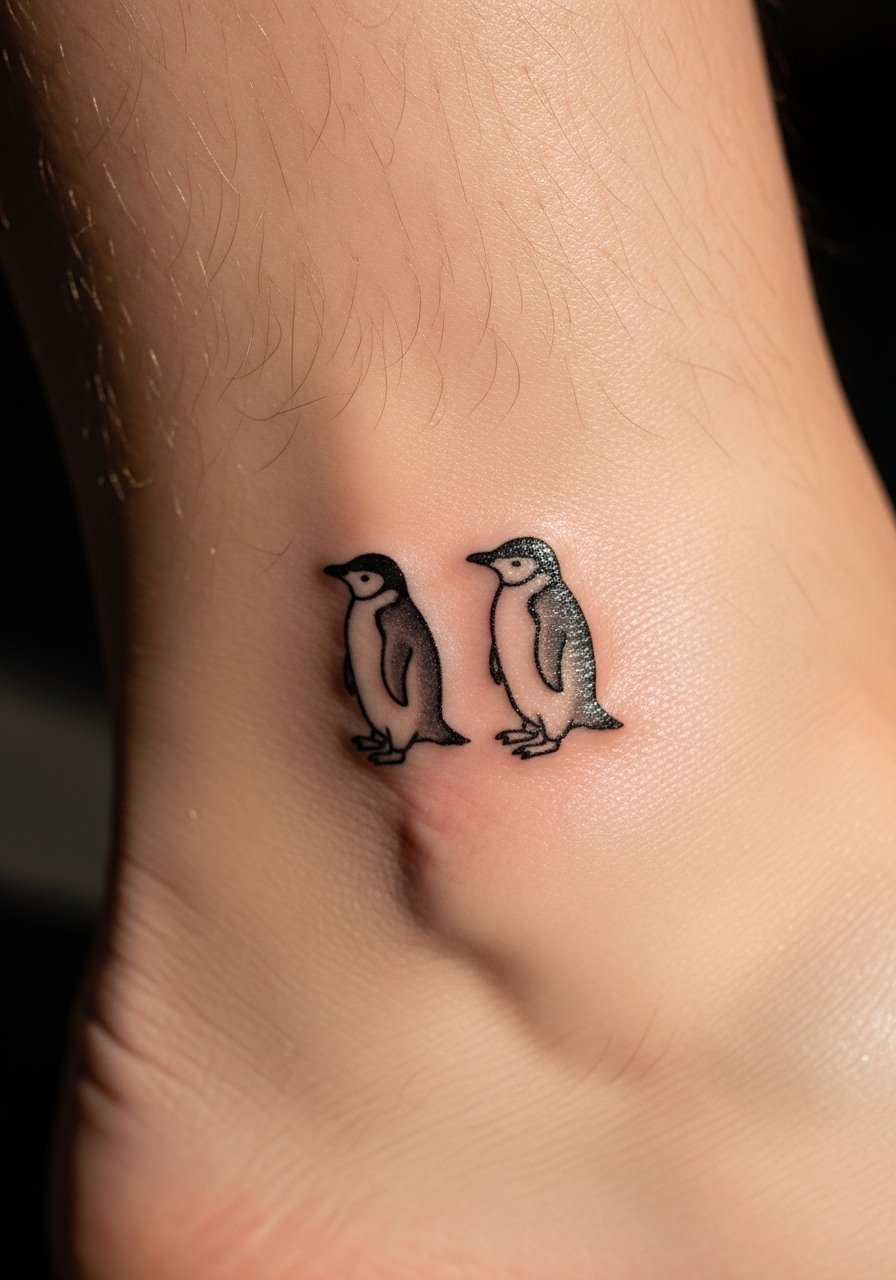
Penguins may not fly, but a paired penguin tattoo can symbolize perseverance through companionship. A little playful and sweet, this works on ankles or heels for a touch of humor mixed with meaning.
Style & Design Details
- Tattoo style: illustrative micro-animal
- Recommended size: 0.5–1.5 inches per penguin
- Best placements: ankle, heel, behind the ankle — whimsical and subtle
- Color vs. blackwork: Black and soft gray fills look great and last relatively well
- Design elements: waddling posture, tiny beak detail, simple belly fill, slight flipper motion lines
- Longevity note: Ankle locations need touch-ups more often due to friction
- Who it suits: People who like playful symbols and relationship-based reminders
Finding the Right Artist
Find illustrators who do micro-animal work and ask for healed photos on similar placements. Avoid artists who don’t regularly tattoo extremities.
Aftercare & Healing Tips
Avoid tight footwear for the first week and use Hustle Butter or Tattoo Goo lightly while peeling.
- Back-of-Neck Sparrow and Lettering Bar
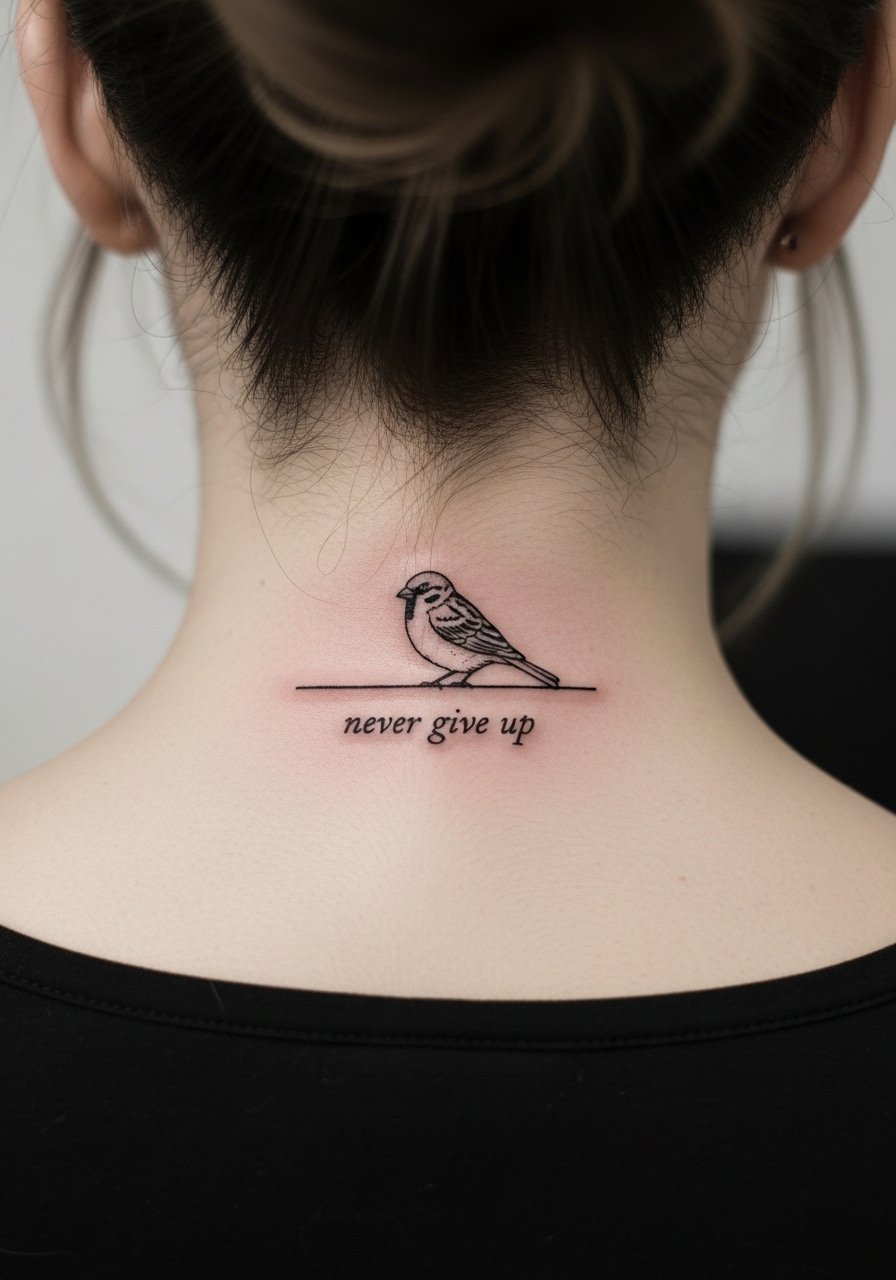
A sparrow on a bar at the nape of the neck is a private yet often-visible reminder when your hair’s up. The horizontal bar anchors the design and works with collars and necklines. Great if you want something you can choose to reveal.
Style & Design Details
- Tattoo style: fine-line illustrative with micro-script
- Recommended size: 1.5–3 inches across the nape
- Best placements: back of neck, upper spine, hairline — subtle reveal possibilities
- Color vs. blackwork: Black lines recommended for clarity against hair and sun exposure
- Design elements: perched sparrow, slim bar anchor, tiny script beneath, subtle feather texture
- Longevity note: Hair-covered spots can heal well but need SPF when exposed
- Who it suits: People who wear hair up often, prefer slightly hidden placements
Finding the Right Artist
Choose artists experienced with neck placement and fine-line work. Ask how they handle stencil placement with hairlines. Avoid artists unfamiliar with hairline or nape tattoos.
Aftercare & Healing Tips
Keep hair away from the area while healing and use an unscented lotion like Aveeno. If scabbing occurs, resist picking to protect linework.
- Single-Needle Finch with Seed Pod (Minimal Memorial)
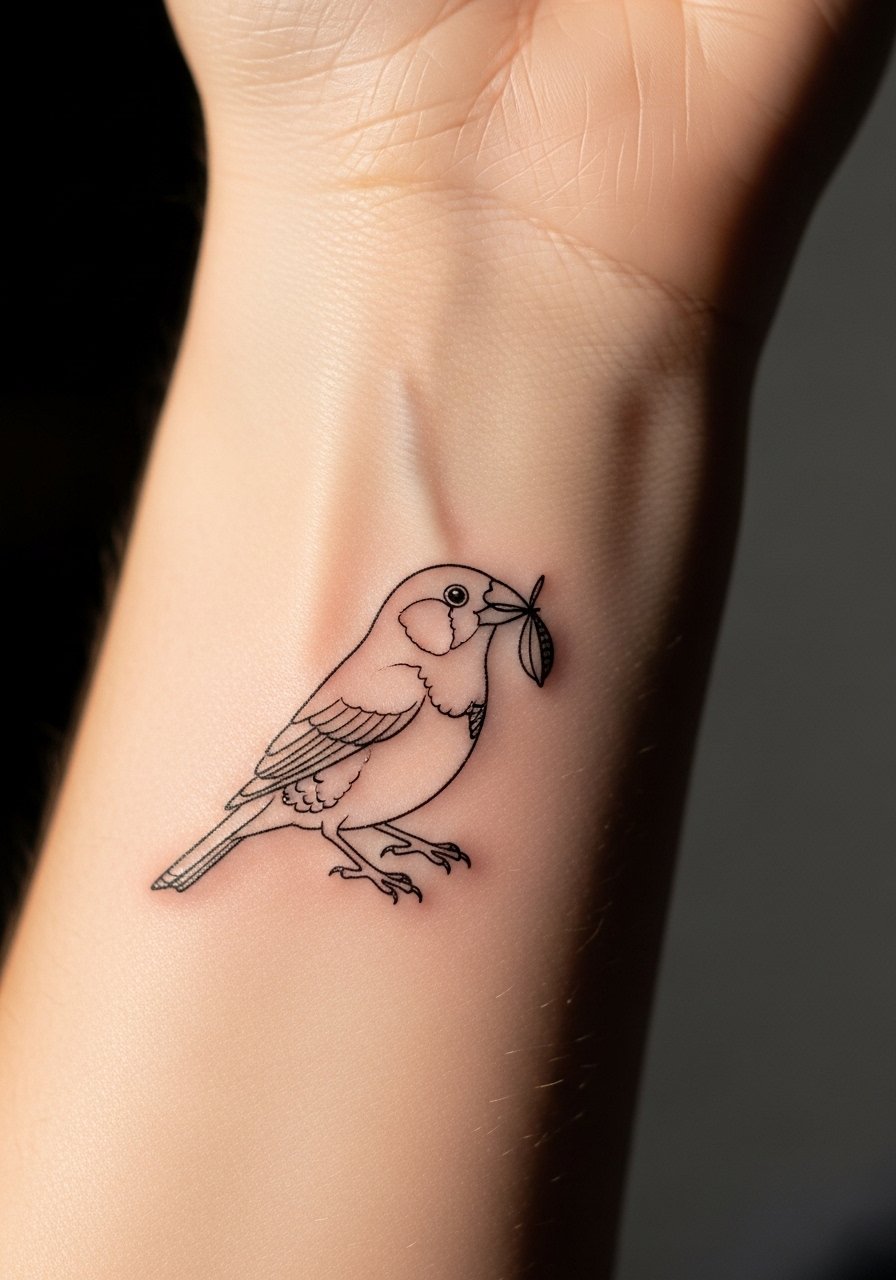
A finch with a seed pod can signify small steps toward growth — an understated memorial or personal marker. Single-needle detail communicates delicacy and intention. This is subtle and intimate.
Style & Design Details
- Tattoo style: single-needle minimalist illustrative
- Recommended size: 1–2 inches for clarity
- Best placements: inner wrist, behind ear, ankle — gentle and personal spaces
- Color vs. blackwork: Black single-needle holds clarity if properly executed and not too shallow or deep
- Design elements: ultra-fine feather strokes, seed pod detail, slight motion line, negative-space highlights
- Longevity note: Single-needle requires careful artist selection and may need touch-ups to maintain crispness
- Who it suits: Minimalists, memorial tattoos, those preferring tiny symbolic imagery
Finding the Right Artist
Prioritize artists with strong single-needle portfolios and healed close-up photos. Ask about needle gauge and experience with micro-feathering. Avoid artists who haven’t shown long-term healed single-needle results.
Aftercare & Healing Tips
Single-needle work benefits from minimal friction; use a Saniderm if recommended and a thin layer of After Inked during peeling.
- Winged Key with Small Flying Bird (Metaphor for Freedom)
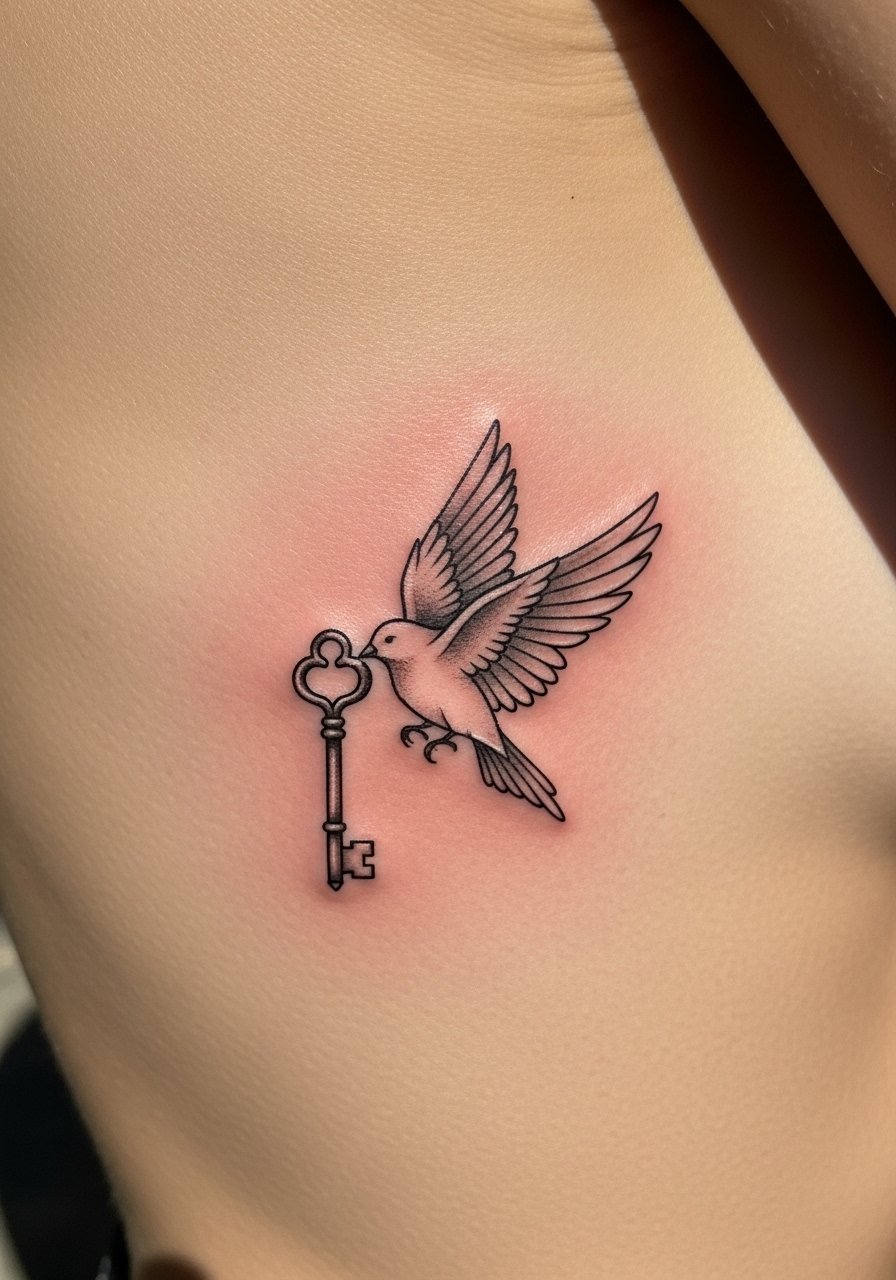
A winged key suggests unlocking possibilities and then flying away with them — a poetic never give up tattoo with birds. It’s symbolic and works in narrow vertical placements like the ribs or side torso.
Style & Design Details
- Tattoo style: illustrative/fine-line with subtle shading
- Recommended size: 2–4 inches vertically aligned
- Best placements: side torso, ribcage, lower sternum — slender vertical spaces
- Color vs. blackwork: Black and gray keep it classic and legible
- Design elements: ornate key teeth, wing-to-bird transition, soft gray shading, micro-dot details
- Longevity note: Vertical placements age predictably; shading may soften slightly over years
- Who it suits: Spiritual or metaphorical symbolism lovers, people who like vertical compositions
Finding the Right Artist
Find illustrators with experience in fusion designs (objects + animals). Ask how they’ll balance detail and negative space. Avoid artists who over-congest small vertical tattoos.
Aftercare & Healing Tips
Rib/side placements need careful clothing choices. Use a thin layer of Hustle Butter post-wrap and avoid tight bras or waistbands that press on the area.
- Micro Realistic Baby Swan on Chest Pocket
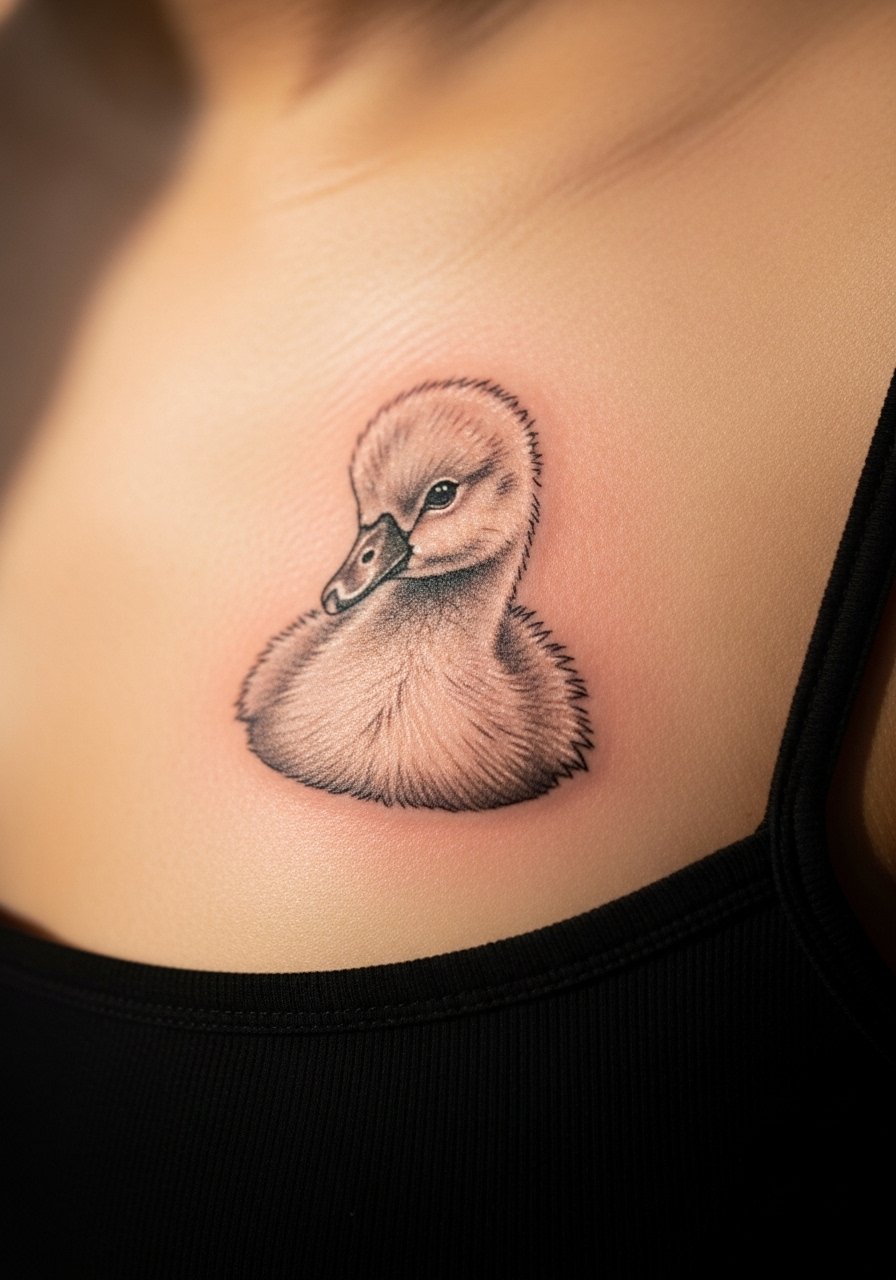
A baby swan near the heart is intimate and gentle — a small reminder that strength grows from vulnerability. Micro-realism requires an artist who photographs their healed work well.
Style & Design Details
- Tattoo style: micro-realism/black and gray
- Recommended size: 1–2 inches near chest pocket area
- Best placements: upper chest, near heart, sternum — emotionally weighted locations
- Color vs. blackwork: Black and gray for realism and subtlety
- Design elements: feather texture, soft eye detail, faint shadowing under the body, micro-negative-space highlights
- Longevity note: Micro-realism needs touch-ups if pigment spreads slightly; careful scale helps longevity
- Who it suits: Quiet romantics, people wanting a visible heart-placement reminder
Finding the Right Artist
Pick an artist whose micro-realism portfolio includes small animal pieces and healed photos. Ask about needle selection and pigment choices. Avoid artists without small realistic pieces.
Aftercare & Healing Tips
Chest scab care matters — keep area dust-free and moisturized with After Inked. Sleep on your back if possible for the first few nights to reduce friction.
- Tiny Wing Outline Over Finger Knuckle
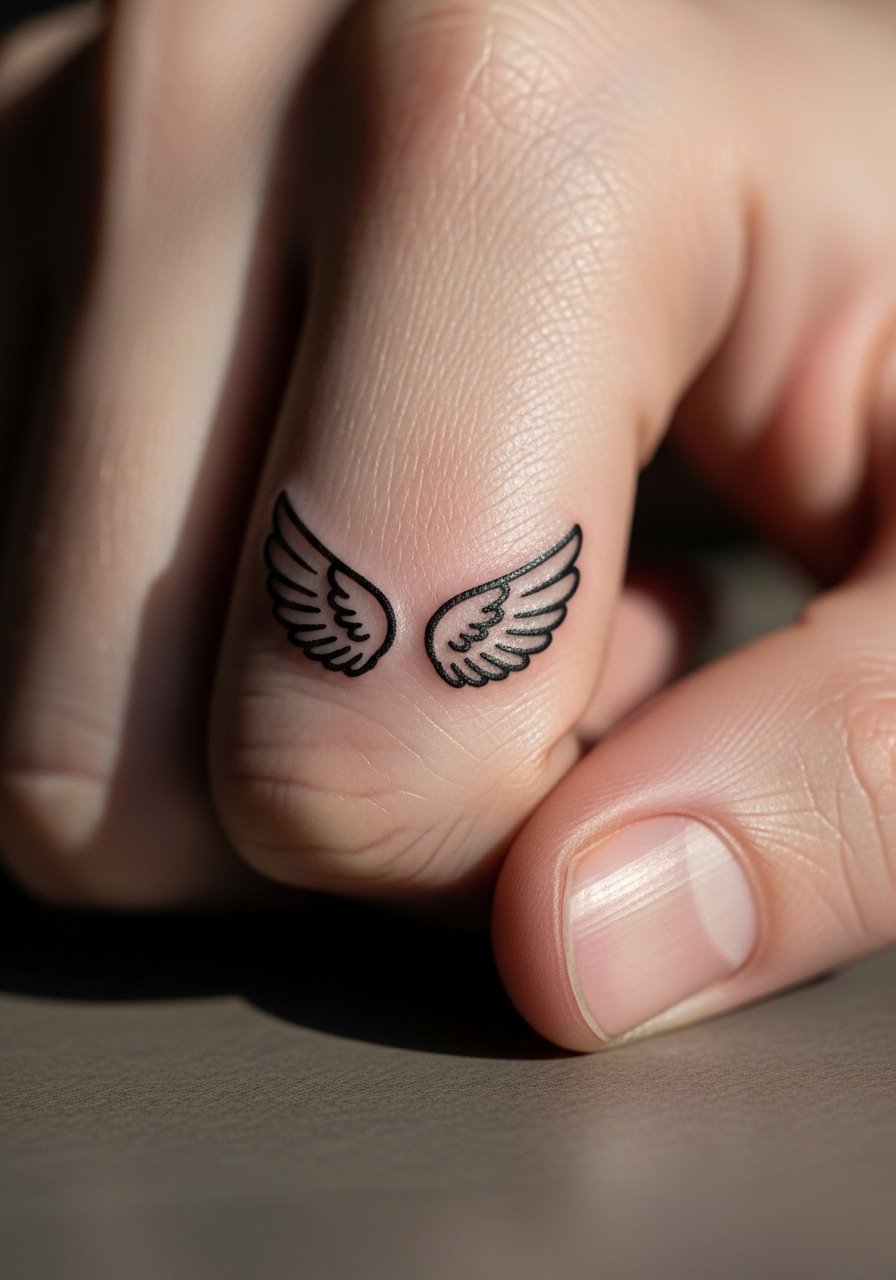
A single wing spanning a knuckle is subtle, modern, and speaks to a steady, visible reminder. Knuckle tattoos are very exposed; pick thicker lines for durability and expect maintenance.
Style & Design Details
- Tattoo style: minimalist outline
- Recommended size: small band across knuckle (1–2 inches)
- Best placements: knuckle, side of finger, top of hand — high visibility and high wear
- Color vs. blackwork: Solid blackline ensures the best longevity for knuckles
- Design elements: open wing outline, slight feather notch, tapered ends for comfort over joints
- Longevity note: Expect annual touch-ups due to friction and frequent washing
- Who it suits: People comfortable with visible hands and maintenance
Finding the Right Artist
Seek artists with hand and knuckle experience. Ask about touch-up policies and how they'll space lines to avoid blowouts. Avoid artists who don't specialize in extremity work.
Aftercare & Healing Tips
Hands need careful washing; use a fragrance-free gentle soap and a light application of Hustle Butter after peeling. Plan for touch-ups in months rather than years.
- Lyrical Flight Across Sternum (Script + Birds)
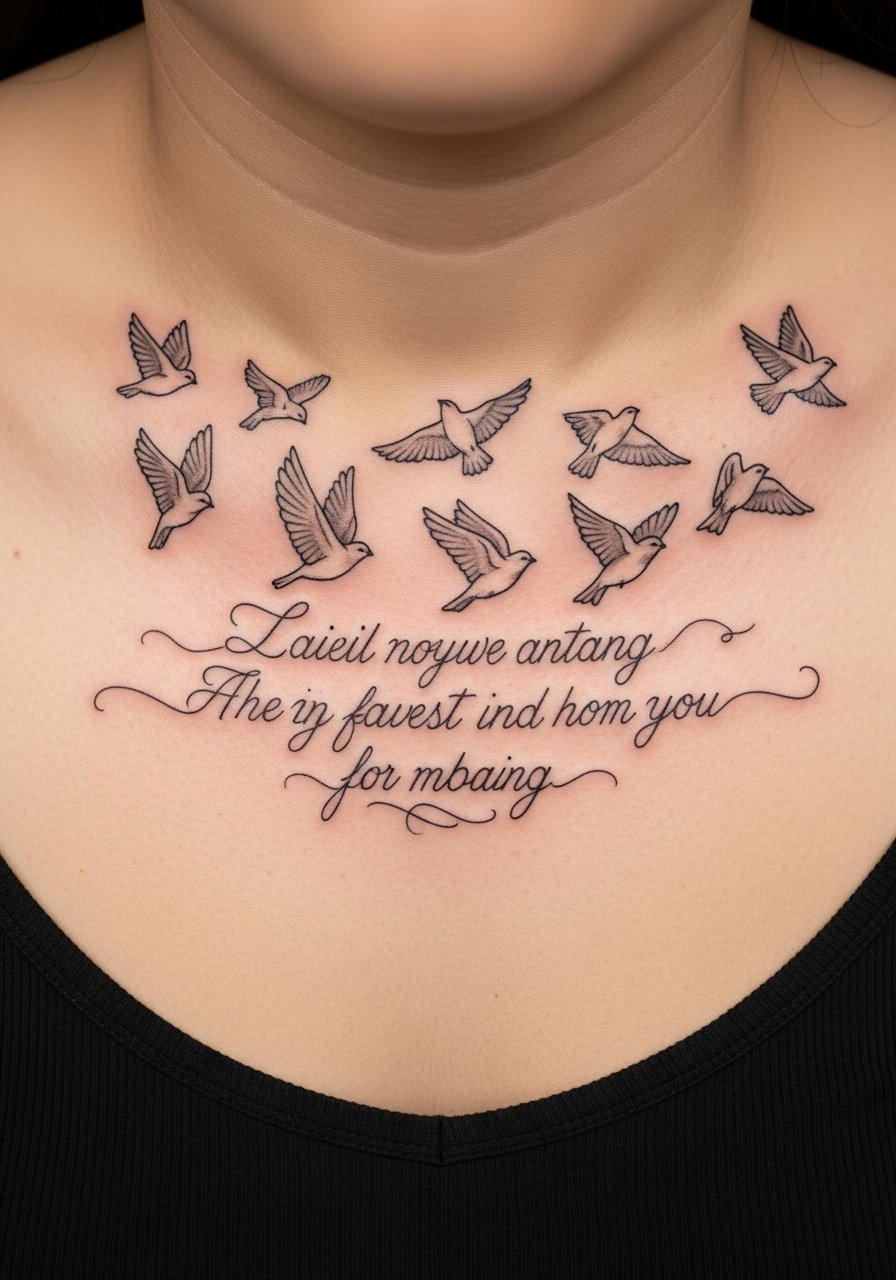
Pair a short lyric with birds rising over the sternum for a theatrical, chest-centered reminder. The sternum is bold and visible in certain clothing — good for people who want their mantra presented with drama.
Style & Design Details
- Tattoo style: script + fine-line bird illustration
- Recommended size: 4–6 inches across the sternum area
- Best placements: sternum, upper chest, cleavage area — visually striking locations
- Color vs. blackwork: Black script with fine gray bird shading for subtle contrast
- Design elements: flowing italic script, rising birds, thin shadowing, slight micro-dot accents for depth
- Longevity note: Chest skin can stretch; choose slightly bolder script for durability
- Who it suits: Dramatic fashion lovers, people who enjoy visible chest pieces
Finding the Right Artist
Choose artists comfortable with chest typography and micro-illustrations; ask how they'll adjust for sternum curvature. Avoid artists without chest script samples.
Aftercare & Healing Tips
Sternum can be sensitive to clothing; wear loose tops during healing. Clean gently and use Tattoo Goo or Hustle Butter sparingly during peeling.
- Migration Map: Tiny Birds Along Rib Curve (Travel & Resilience)
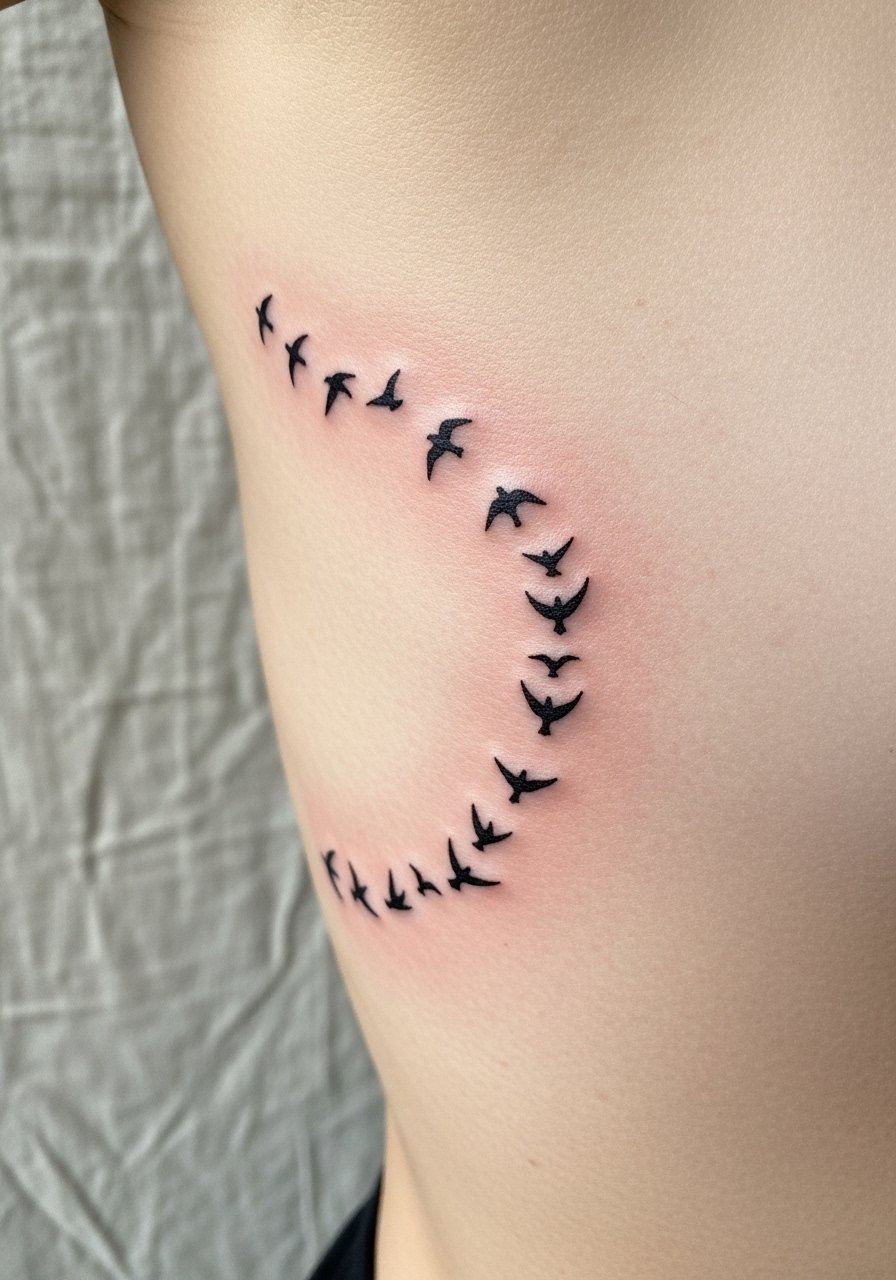
A migration map of tiny birds along your ribs suggests a life of forward movement despite obstacles. It’s a good final piece in this list if you want a travel or process-oriented reminder to never give up.
Style & Design Details
- Tattoo style: minimalist illustrative with motion sequencing
- Recommended size: 3–6 inches following rib curve
- Best placements: rib curve, side waist, hip — suits natural body lines
- Color vs. blackwork: Blackwork for long-term readability; tiny size allows subtlety
- Design elements: graduated bird sizes for depth, slight motion trails, negative-space intervals, gentle curve mapping to ribs
- Longevity note: Rib tattoos age predictably; micro birds may need future refreshes depending on skin elasticity
- Who it suits: Travelers, people valuing life as a path, those who want a quiet but narrative piece
Finding the Right Artist
Seek artists with experience mapping designs to body curves. Ask to see healed rib sequences and how they ensure even spacing. Avoid artists who force straight-line compositions onto curved anatomy.
Aftercare & Healing Tips
Keep clothing loose and clean; use a thin layer of After Inked or Hustle Butter as directed. Wait 6–8 weeks before judging final spacing and line weight.
I loved putting together this range of never give up tattoo with birds ideas — from whisper-quiet single-needle scripts to dramatic neo-traditional panels. Pin the styles you love and bring the ones that pull at you to your consult; showing your artist clear references speeds the design process and helps them understand your intent.
Honestly, having a ready aftercare kit (I keep Hustle Butter Deluxe and a Saniderm roll on hand) is one of the best prep moves you can make. Which design resonated most — a tiny wrist sparrow, a phoenix on the ribs, or a migration map along the side? Pin this and tag a friend who's booking a session.