Sitting in a consultation, scrolling late at night, or finally booking that appointment—you know the feeling when a design has been stuck in your head. Picking a small Japanese tattoo for women is about more than one pretty image. It's choosing symbolism, a style that fits your life, and a placement that feels right every day.
This guide gathers 20 simple, feminine Japanese tattoo ideas that balance elegance with cultural meaning. You’ll find fine-line sakura sprigs, tiny kanji with deep personal notes, delicate ukiyo-e-inspired motifs, and minimalist symbols rooted in Japanese tradition. Each idea includes a photo prompt, style breakdown, placement suggestions, and realistic aftercare tips.
Prep and calm your nerves with a numbing cream like Zensa topical anesthetic cream if you’re sensitive. And have a quality second-skin option like Saniderm wound care bandage rolls ready to protect your new ink the first few days.
- Tiny Sakura Sprig on the Inner Wrist
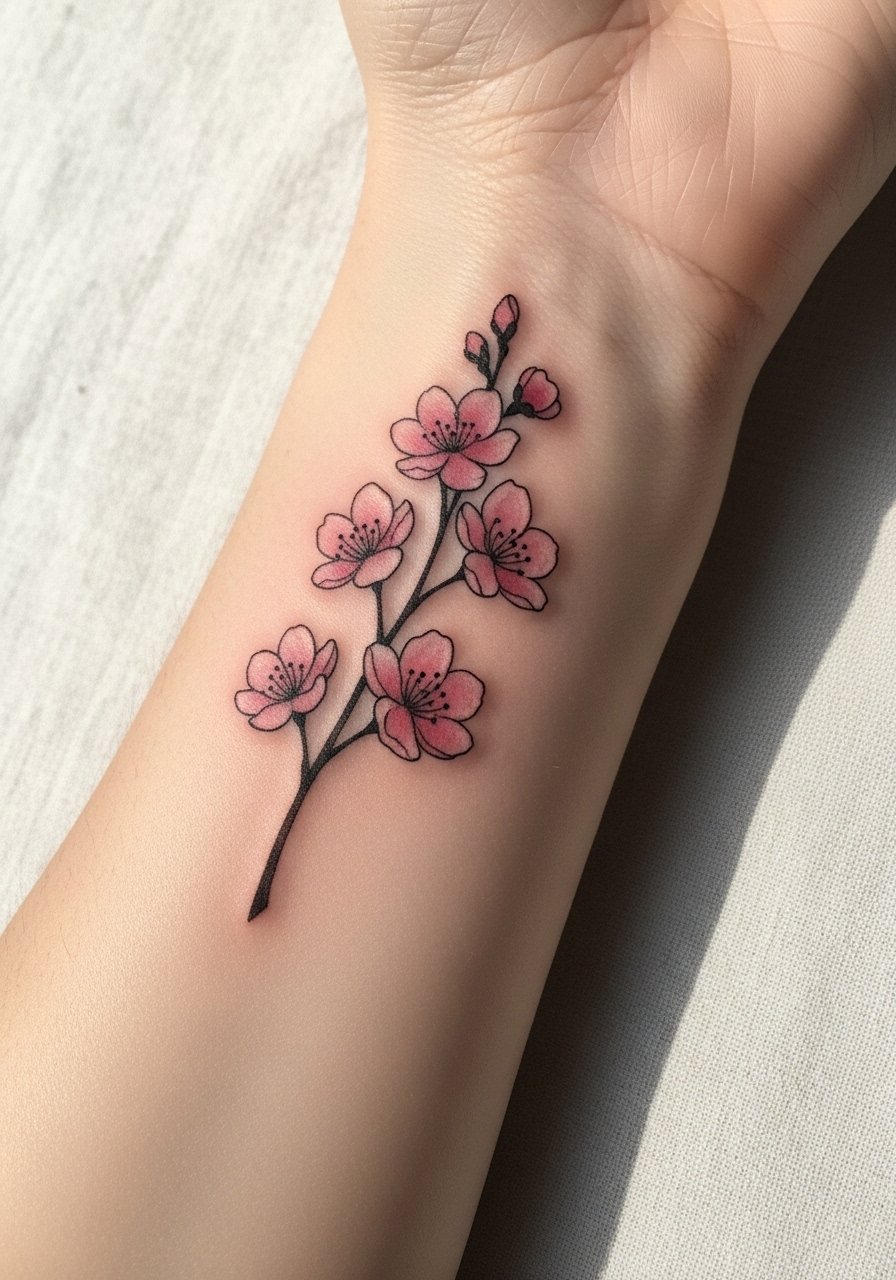
A single sakura sprig reads soft and intimate. It’s compact but full of symbolism—renewal, fleeting beauty, mindful living. Designed in delicate single-needle linework with a whisper of color, this piece catches light and ages gently on thin skin. People who like minimalist, cottagecore, or feminine aesthetics will gravitate toward it.
Style & Design Details
- Tattoo style: fine line with light watercolor wash
- Recommended size: 1–2 inches (wrist-friendly)
- Best placements: inner wrist (visible), forearm inner side (discreet), behind the ear (tiny alternative)
- Color vs. blackwork: soft pink accents enhance sakura without overpowering fine lines
- Design elements: single-needle linework, tiny five-petal blossoms, thin branch, micro-stipple shading, subtle negative space
- Longevity note: fine lines can blur over years; sun accelerates fading
- Who it suits: first-timers, romantics, anyone wanting gentle symbolism
Finding the Right Artist
Look for portfolios with healed fine-line florals and soft color washes. Ask how they scale single-needle details for your wrist width. Red flags: heavy-handed linework or lack of healed photos. An experienced fine-line artist is best; avoid apprentices for single-needle unless supervised. Search Instagram tags like #finelinetattoo and check local shop walk-ins. A small sketchbook or Procreate on iPad mockup helps you preview placement.
Aftercare & Healing Tips
Leave the Saniderm-type wrap on for 2–4 days to protect delicate lines. Clean twice daily with a fragrance-free soap like Dr. Bronner's unscented castile soap and pat dry. Switch to a thin layer of unscented lotion (Lubriderm works well) during peeling. Expect mild scabbing days 3–7; no picking. Apply SPF 50 when exposed to sun to prevent line fading. If lines lighten at 6–12 months, a micro touch-up can restore crispness.
- Small Japanese Tattoo for Women: Mini Koi with Waves on the Ankle
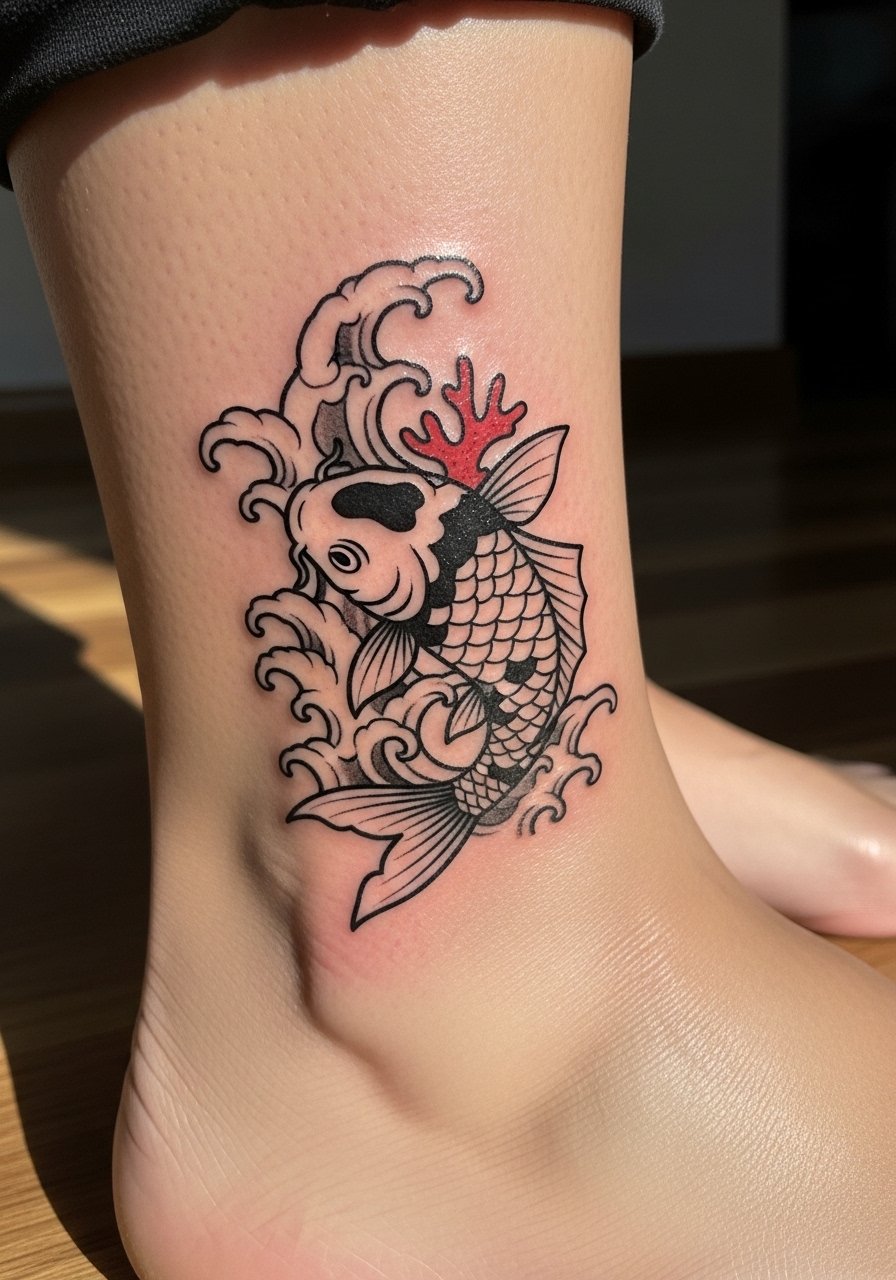
A miniature koi with simplified waves is compact storytelling. Koi symbolize perseverance and transformation. This version uses neo-traditional line weight for longevity, so it stays readable in a small size. It reads feminine when inked with a soft coral or gold accent and suits someone who wants meaningful symbolism without a large commitment.
Style & Design Details
- Tattoo style: neo-traditional mini with bold outlines
- Recommended size: 1.5–2.5 inches (ankle-friendly)
- Best placements: outer ankle, lower calf, behind the ankle bone
- Color vs. blackwork: black outlines with one accent color (coral/gold) preserves clarity
- Design elements: simplified koi silhouette, stylized wave curl, negative-space bubbles, minimal scales, clean outline
- Longevity note: bold outlines age well on active areas; friction from socks may fade color
- Who it suits: those who want symbolic work with wearable everyday visibility
Finding the Right Artist
Seek portfolios showing small neo-traditional aquatic motifs. Ask how they simplify detail so the koi reads at ankle scale. Avoid artists who only do oversized pieces. Apprentices may handle this if they’ve shown clean small outlines. Use tags like #neoTradTattoo or #minitattoo on Instagram for nearby artists.
Aftercare & Healing Tips
Keep the area clean and elevated when possible to reduce swelling. A breathable wrap like Saniderm bandage helps on the first night. Wash gently with fragrance-free soap and apply a thin layer of Hustle Butter Deluxe tattoo aftercare balm during peeling. Avoid tight socks until the color settles. Long-term, use a tattoo-specific SPF stick when wearing sandals.
- Small Japanese Tattoo for Women: Single Kanji with Serif Accent on the Collarbone
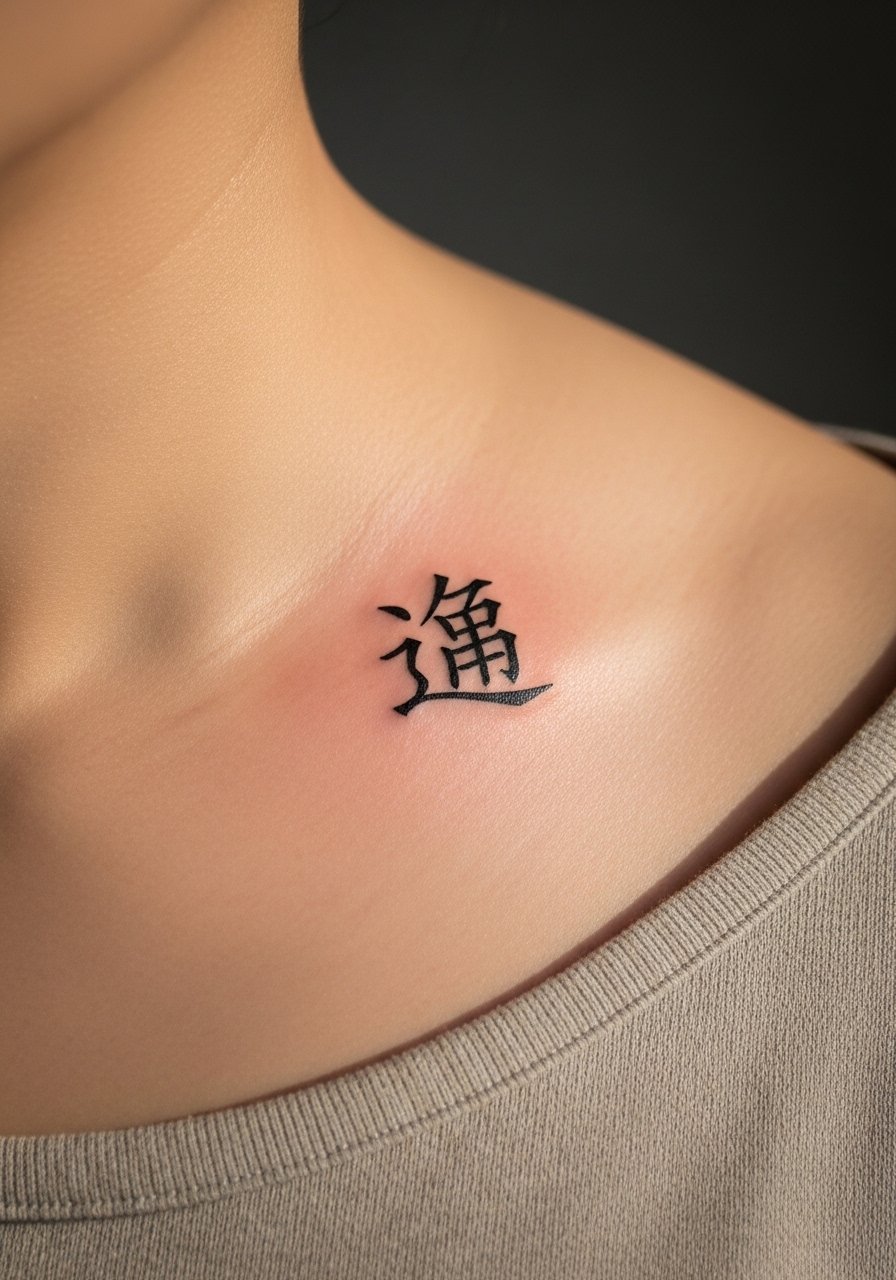
A single kanji can be quiet but powerful. Whether it’s "愛" (love) or "夢" (dream), a tiny kanji near the collarbone reads intimate and personal. This placement sits flat on the bone for crisp edges. Choose a kanji with precise meaning and confirm translation with your artist or a native speaker.
Style & Design Details
- Tattoo style: blackwork fine script
- Recommended size: 0.8–1.5 inches
- Best placements: collarbone, inner wrist, behind the ear
- Color vs. blackwork: pure black for crispness and meaning clarity
- Design elements: bold kanji strokes, micro-serif balancing strokes, clean negative space, slight brushstroke texture optional
- Longevity note: solid black holds long; tiny strokes near bone can blow out if too thin
- Who it suits: minimalists, sentimental collectors, travelers
Finding the Right Artist
Pick an artist experienced with kanji or Asian calligraphic forms. Bring printed references and a verified translation. Ask how they handle stroke thickness to avoid blowout. Avoid shops that copy meaning without verification. Look on Tattoodo or Instagram for artists specializing in micro-script tattoos.
Aftercare & Healing Tips
Collarbone tattoos scab quickly due to clothing rub. Keep the area wrapped with breathable film for 24 hours then follow gentle wash and thin lubricant routine. Use a fragrance-free lotion (Aveeno or Lubriderm) and avoid necklaces during healing. Expect the darkest ink to settle fully by 4–6 weeks. Consider a touch-up after 2–3 months if strokes soften.
- Mini Sumi-E Bamboo Sprig on the Rib (Side)
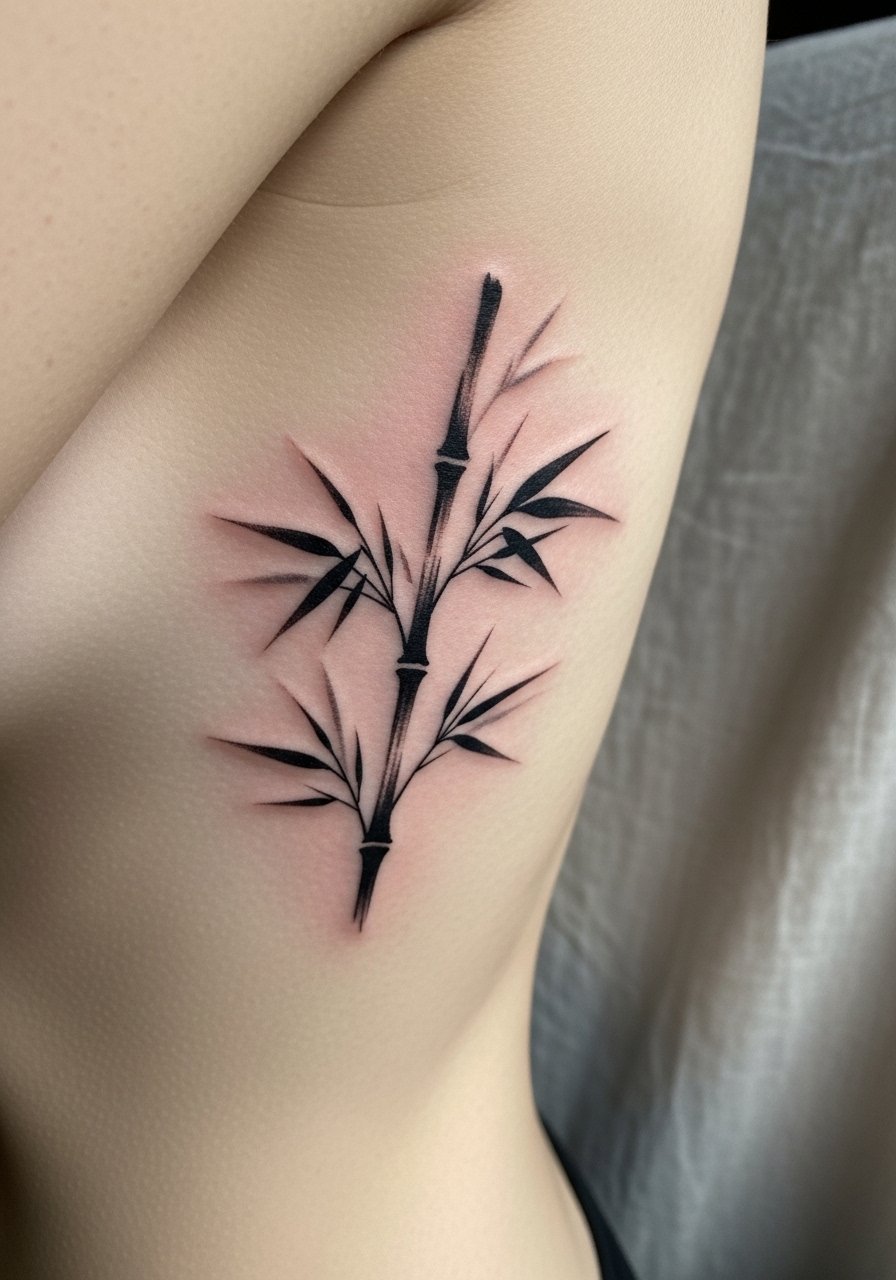
Sumi-e brushwork shrinks beautifully into small forms. A tiny bamboo sprig evokes resilience, flexibility, and quiet strength. On the ribcage it's an intimate piece that moves with breath. The brushstroke texture gives the look of painted ink, which is elegant and distinctly Japanese in aesthetic.
Style & Design Details
- Tattoo style: sumi-e / brushstroke minimalism
- Recommended size: 2–3 inches for visible brush texture
- Best placements: rib side, upper back near scapula, along the hip bone
- Color vs. blackwork: rich black with light gray wash for brush gradients
- Design elements: variable-width brush strokes, negative space leaves, soft gray shading, organic flow following body contour
- Longevity note: thicker brush strokes age nicely; the thin tails may require future refreshes
- Who it suits: contemplative clients, dark academia or minimalist tastes
Finding the Right Artist
Look for artists who post sumi-e or brushwork tattoos and healed photos. Ask how they mimic brush texture with tattoo machines. Avoid artists with only rigid linework portfolios. An experienced artist, not an apprentice, is best for this style. Use hashtags like #sumietattoo to find specialists.
Aftercare & Healing Tips
Rib tattoos can sting more and take longer to settle. Use a numbing cream like EMLA topical anesthetic only if agreed with your artist. Wrap with Saniderm for the first 48 hours, then wash gently twice daily. Dress in soft, loose clothing to prevent scabs rubbing. Sumi styles benefit from conservative touch-ups after 3 months if washout occurs.
- Petite Crane Outline Behind the Ear
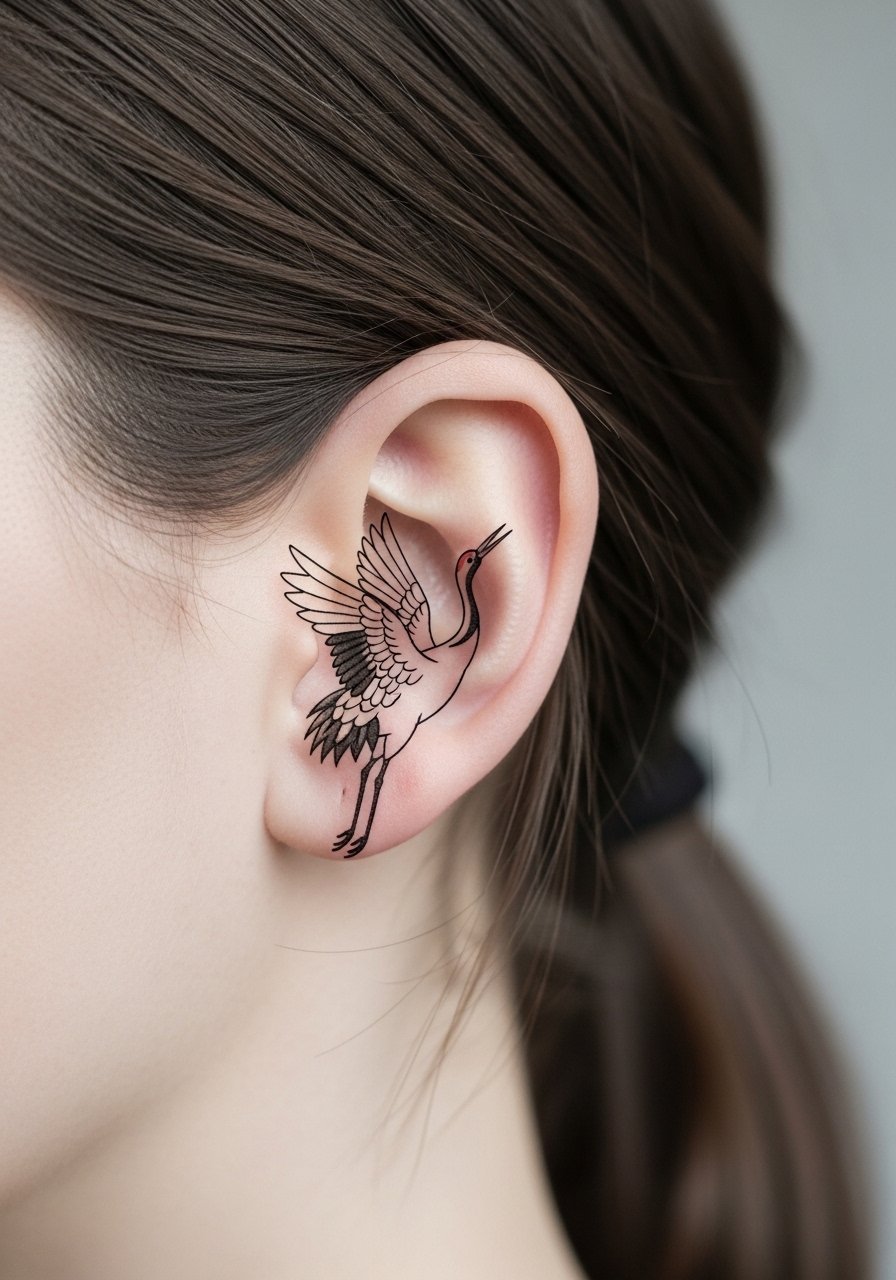
A crane behind the ear whispers of longevity and good fortune. This outline-only approach is airy and almost like jewelry. It's a small commitment with a big cultural nod—perfect for collectors who want a subtle accent with deep meaning.
Style & Design Details
- Tattoo style: single-needle outline / minimalist
- Recommended size: 0.5–1 inch
- Best placements: behind the ear, nape of neck, behind the ankle bone
- Color vs. blackwork: single black line for timelessness
- Design elements: continuous line, minimal beak detail, slight wing curve, negative space body cavity, tiny dot accent
- Longevity note: single-needle lines can blur; keep the design bold enough to last
- Who it suits: subtle stylists, first-timers, those who prefer hidden pieces
Finding the Right Artist
Find artists with delicate ear/back-of-neck portfolios and healed shots. Ask about needle grouping (single-needle vs. three-round) and how they prevent blowout. Apprentices can sometimes handle this under guidance, but prefer someone experienced with micro outline work.
Aftercare & Healing Tips
Behind-the-ear placements are prone to sweat and hair oils. Clean gently with fragrance-free soap and avoid hair products near the site. A thin layer of Hustle Butter Deluxe during peeling helps. Avoid sleeping on that side for the first week.
- Mini Enso Circle on the Forearm — Zen Simplicity
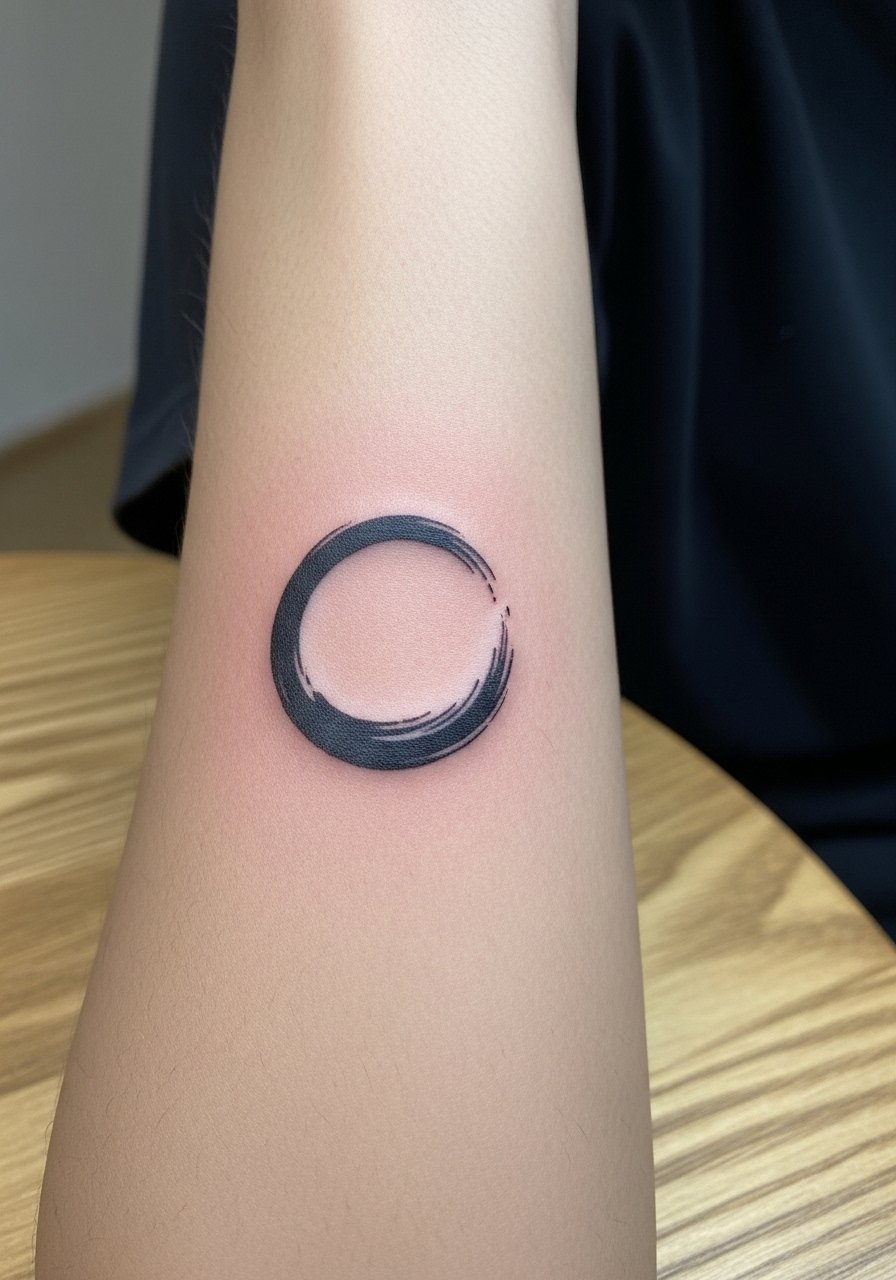
The enso circle captures an entire philosophy in one shape—imperfection, presence, and the moment of creation. As a small forearm piece it reads modern and spiritual. The brushstroke texture should feel natural, not forced, so it looks like a painted mark on skin.
Style & Design Details
- Tattoo style: brushstroke / minimalist blackwork
- Recommended size: 1–2 inches
- Best placements: inner forearm, upper arm, center of the back of the neck
- Color vs. blackwork: solid black with textured edge for brush look
- Design elements: intentional gap, variable stroke width, matte black fill, slight grainy edges, negative space highlight
- Longevity note: bold fills hold longer, thin tapered ends may soften over time
- Who it suits: meditators, minimalists, modern aesthetics
Finding the Right Artist
Search for artists comfortable mimicking brush tools with needle shading. Ask for healed photos of similar enso marks. Avoid artists who only do rigid tattoos without texture. A mid- to senior-level artist is ideal.
Aftercare & Healing Tips
Forearm enso tattoos are exposed; keep out of sun during healing. Use Saniderm wrap initially if your artist approves. Clean twice daily, moisturize with an unscented lotion, and apply SPF 50 once healed to prevent flattening of texture.
- Tiny Maples (Momiji) Cluster on the Ankle
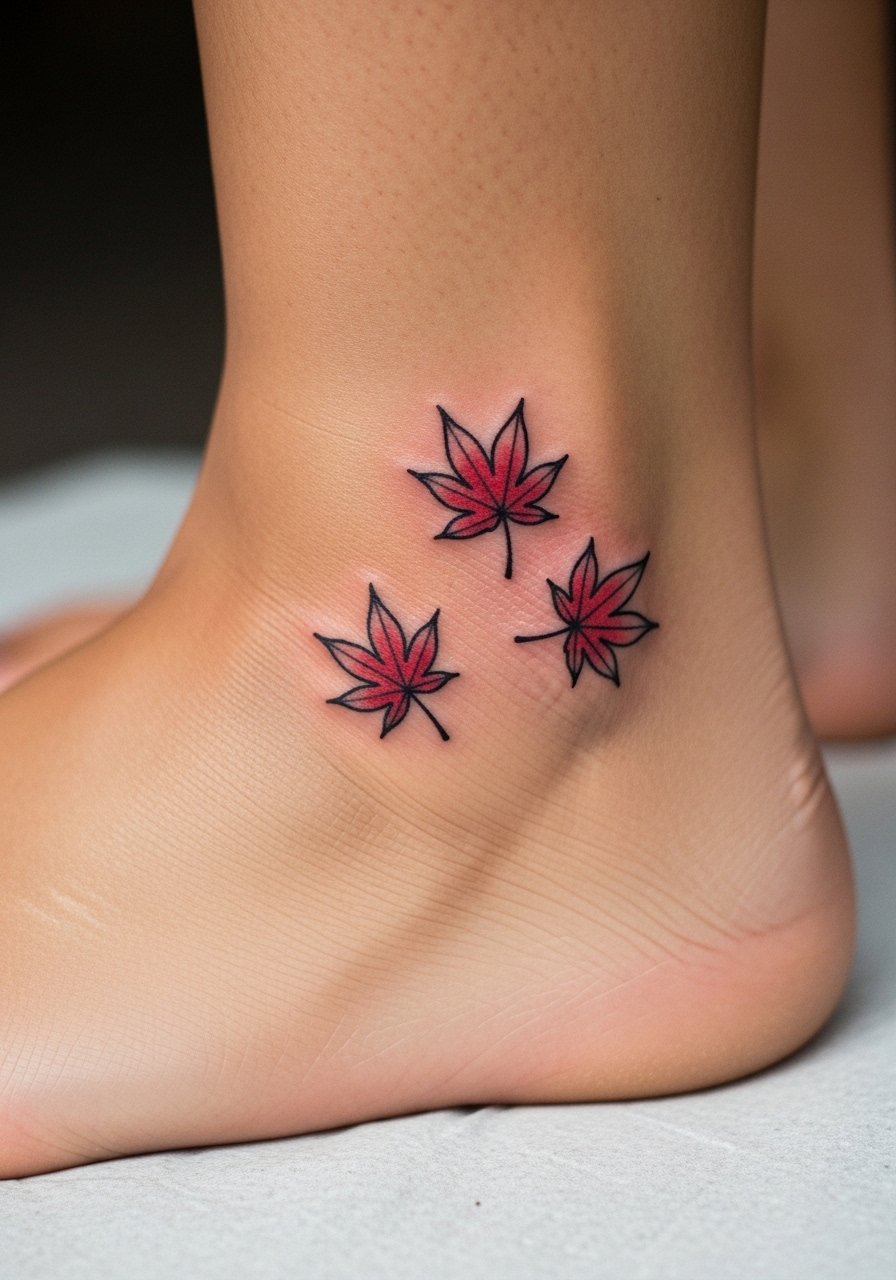
Maple leaves bring autumnal romance and a reminder of change. A small cluster near the ankle looks like nature’s confetti. The combination of crisp outlines and a gentle red wash reads feminine and seasonal.
Style & Design Details
- Tattoo style: fine line with micro-color wash
- Recommended size: 1–2 inches total cluster
- Best placements: outer ankle, top of foot, lower calf
- Color vs. blackwork: black outline with muted red/orange wash for longevity
- Design elements: tiny lobed leaf shapes, thin stem detail, micro-stipple shading, soft watercolor edge
- Longevity note: color on feet/ankles fades faster due to friction; touch-ups likely
- Who it suits: seasonal romantics, nature lovers, collectors of tiny botanicals
Finding the Right Artist
Pick a tattooer with fine-line botanical work and healed color photos. Ask how they plan for foot/ankle friction and if they’ll boost contrast for longevity. Avoid artists who avoid color saturation in small pieces.
Aftercare & Healing Tips
Keep footwear off if possible for the first week. Saniderm on the ankle can be helpful to limit shoe friction. Clean with fragrance-free soap, moisturize with After Inked tattoo lotion during peeling, and apply a tattoo sunscreen stick once healed to protect reds.
- Minimal Mt. Fuji Silhouette on the Rib Cage
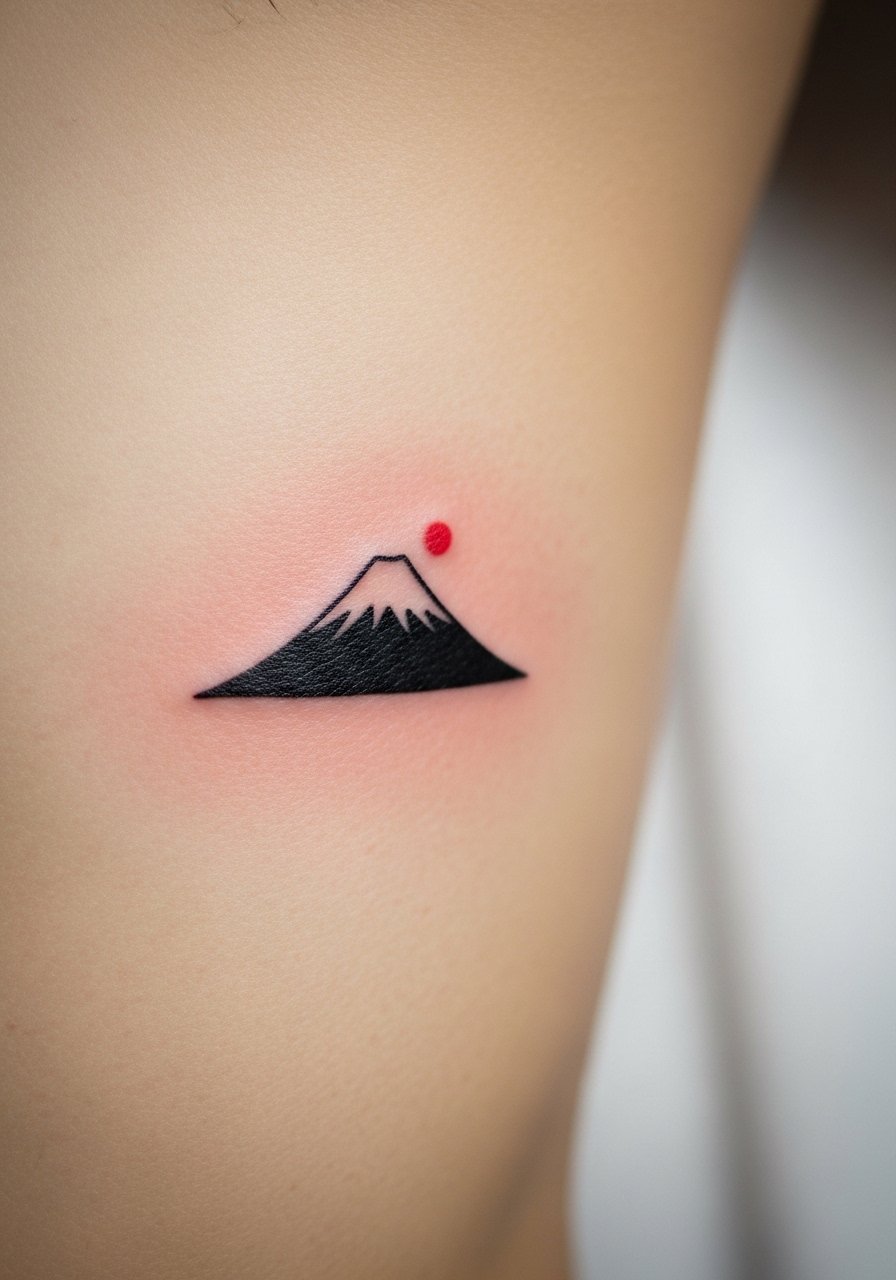
Mt. Fuji is an iconic motif rendered simply here as a silhouette plus a small red sun. It reads like a quiet travel memory or a love for Japan. On the rib it’s intimate and slightly hidden, revealing itself with movement.
Style & Design Details
- Tattoo style: minimalist blackwork with single-color accent
- Recommended size: 1.5–2.5 inches
- Best placements: rib cage, under-boob side, upper hip
- Color vs. blackwork: black silhouette with a single red sun accent for contrast
- Design elements: solid black cone, thin snowcap negative space, tiny red sun, crisp horizon line, negative-space clouds optional
- Longevity note: bold shape survives years; red accent may need occasional refresh
- Who it suits: travelers, collectors of iconic symbols, those wanting a tucked-away piece
Finding the Right Artist
You want someone who can produce clean solids and crisp tiny color dots. Ask to see healed solid silhouettes. An experienced artist is preferable, especially for rib placement.
Aftercare & Healing Tips
Rib tattoos can be tender. Use a numbing cream like Ebanel topical anesthetic if it eases you and your artist approves. Keep clothing soft and loose. After initial wrapping, use a fragrance-free soap and Hustle Butter lightly during peeling.
- Tiny Origami Crane on the Finger Side
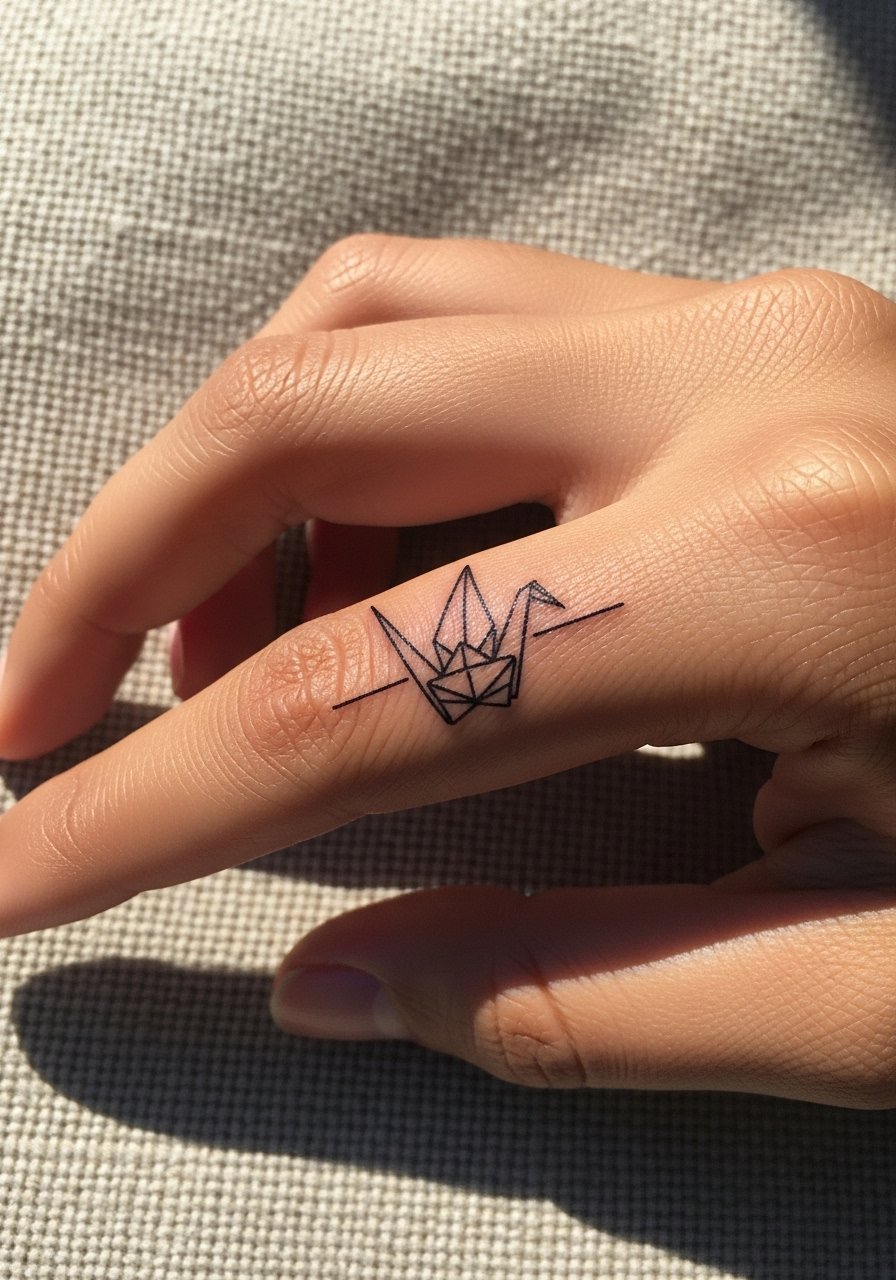
Origami cranes are delicate and portable. A side-of-finger placement reads like a secret adornment. Because finger tattoos fade faster, simplified bold lines help the crane last longer without losing its shape.
Style & Design Details
- Tattoo style: minimal geometric single-needle
- Recommended size: 0.6–1 inch
- Best placements: finger side, knuckle crescent, inner finger near webbing
- Color vs. blackwork: single black outline recommended for durability
- Design elements: geometric folds, clean angles, negative-space wings, compact silhouette, tiny accent dot
- Longevity note: finger tattoos fade and blur faster due to constant use and washing
- Who it suits: everyday minimalists, craft lovers, those who accept maintenance
Finding the Right Artist
Select an artist experienced with finger placement; ask for healed finger photos. Discuss line thickness to avoid blowout. Apprentices rarely have the finger-specific experience needed.
Aftercare & Healing Tips
Expect faster fading; plan for touch-ups after 6–12 months. Keep hands out of harsh chemicals during healing and use unscented lotion sparingly. Temporary testing with an Inkbox kit can help you preview the spot.
- Little Noh Mask Outline on the Upper Arm
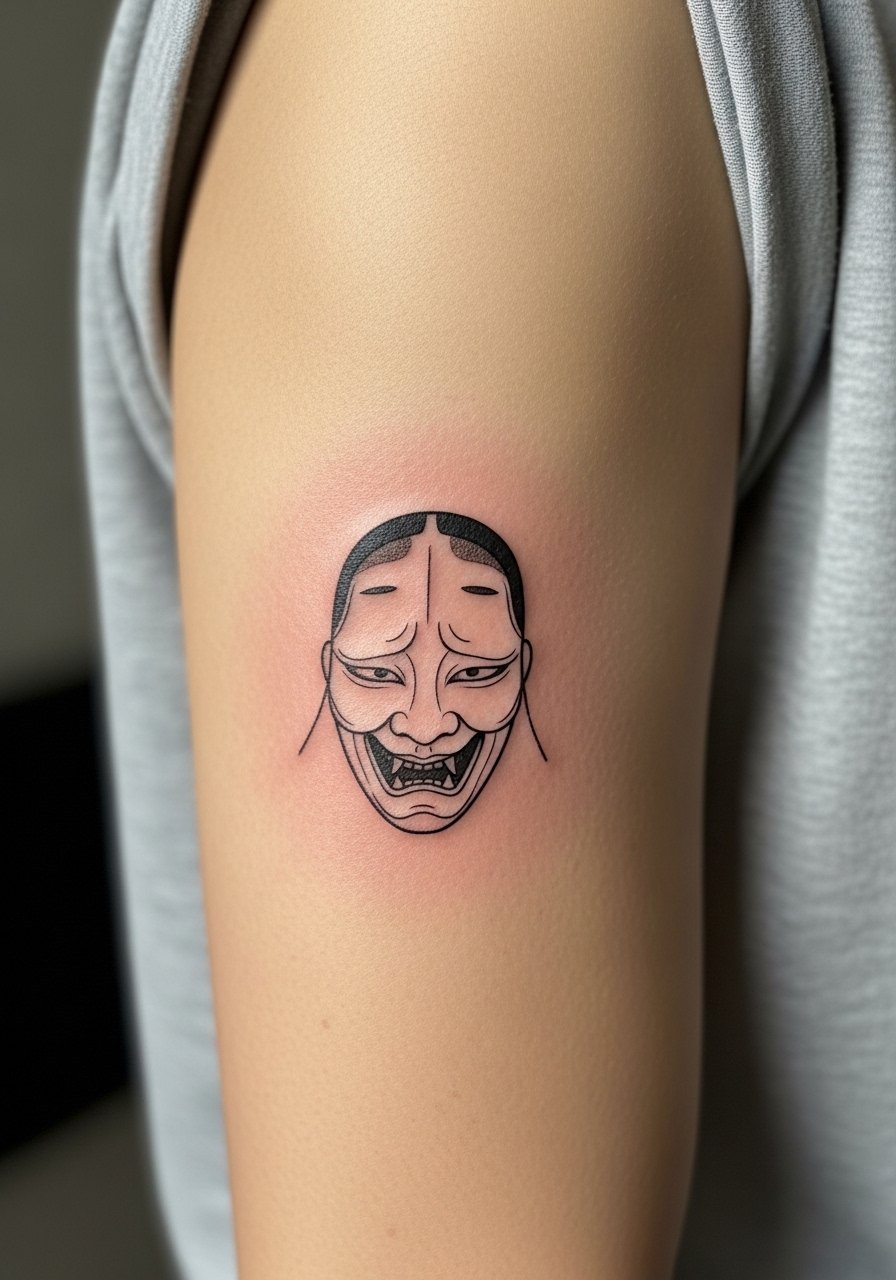
A tiny Noh mask nods to theater, mystery, and layered emotions. Rendered as an outline, it’s elegant rather than theatrical. Upper arm placement keeps it wearable and easy to show or hide.
Style & Design Details
- Tattoo style: illustrative minimal outline
- Recommended size: 1–1.5 inches
- Best placements: outer upper arm, inner bicep, shoulder cap
- Color vs. blackwork: black outline to preserve subtle facial lines
- Design elements: simplified mask contours, slight expression lines, micro-stipple for shadow, negative-space eye slits, subtle forehead pattern
- Longevity note: line clarity lasts with moderate touch-ups as needed
- Who it suits: theater lovers, literary aesthetics, fans of Japanese arts
Finding the Right Artist
Choose an artist who understands facial line work and stylized masks. Request healed outline shots and ask how they’ll space lines to prevent merging. An experienced illustrative artist works best.
Aftercare & Healing Tips
Upper arm pieces are low-risk for friction. Standard wash and thin unscented lotion routine is fine. Use SPF 50 on exposed arms to preserve contrast. Consider Hustle Butter for the moisturizing phase.
- Micro Zen Garden Stone Stack on the Ankle Bone
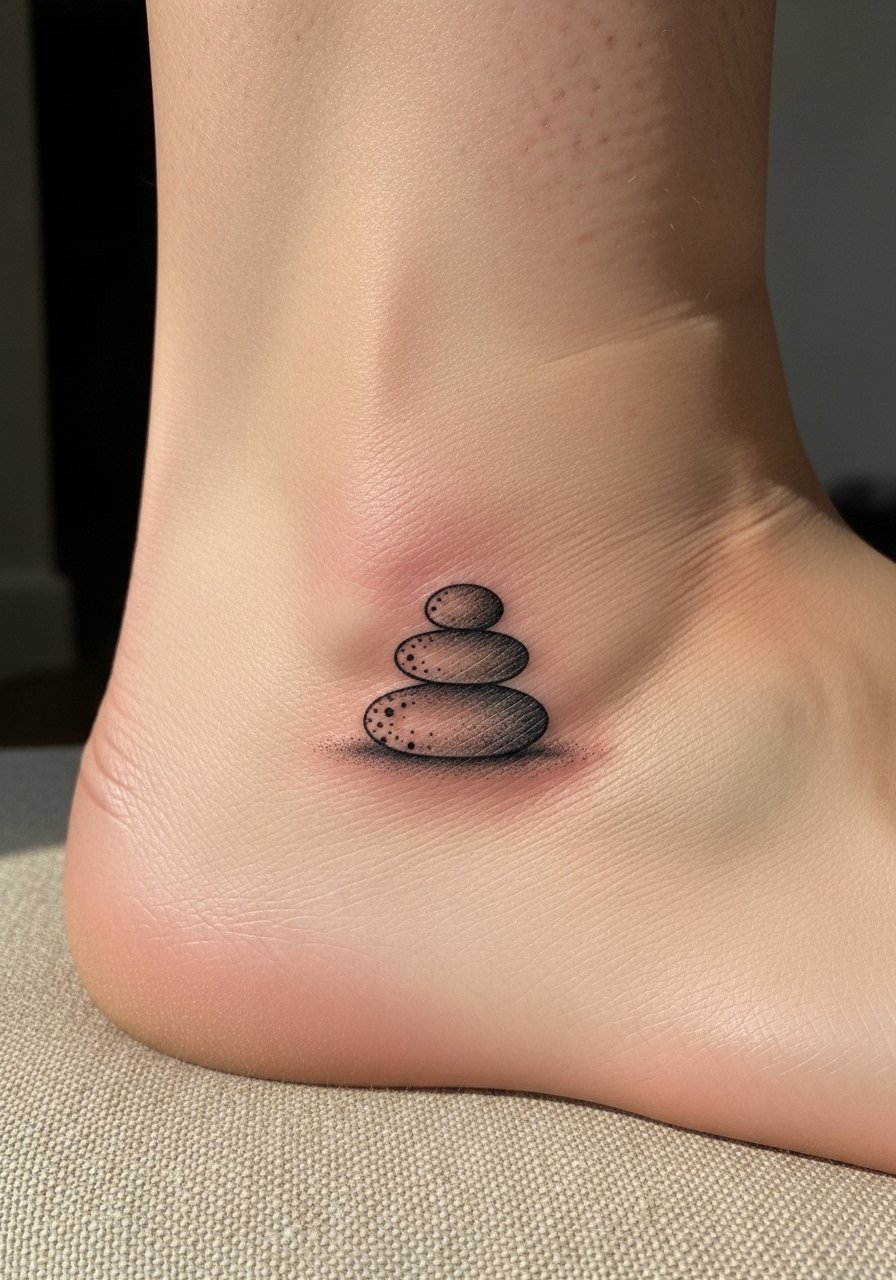
A minimalist stone stack represents balance and calm. Tiny dotwork and minimal shading make it feel meditative. It’s a quiet piece that pairs well with cottagecore or minimalist wardrobes.
Style & Design Details
- Tattoo style: micro dotwork / minimalist blackwork
- Recommended size: 0.8–1.5 inches
- Best placements: inner ankle, top of foot, base of thumb
- Color vs. blackwork: black dotwork for subtle texture
- Design elements: stacked rounded stones, micro-stipple shading, small ground line, tiny moss dot clusters, gentle shadowing
- Longevity note: dotwork holds well if dots are spaced and slightly bolder than ultra-micro dots
- Who it suits: meditators, tiny tattoo collectors, minimalists
Finding the Right Artist
Find portfolios rich in micro dotwork and minimal stone compositions. Ask about dot spacing and how they ensure healing clarity. A practiced micro-artist is recommended.
Aftercare & Healing Tips
Protect from shoe friction and clean twice daily. Apply a small amount of Hustle Butter when peeling starts. Keep an SPF stick handy for foot/ankle exposure later.
- Small Sakura Branch with Tiny Gold Leaf Accent on the Finger Joint
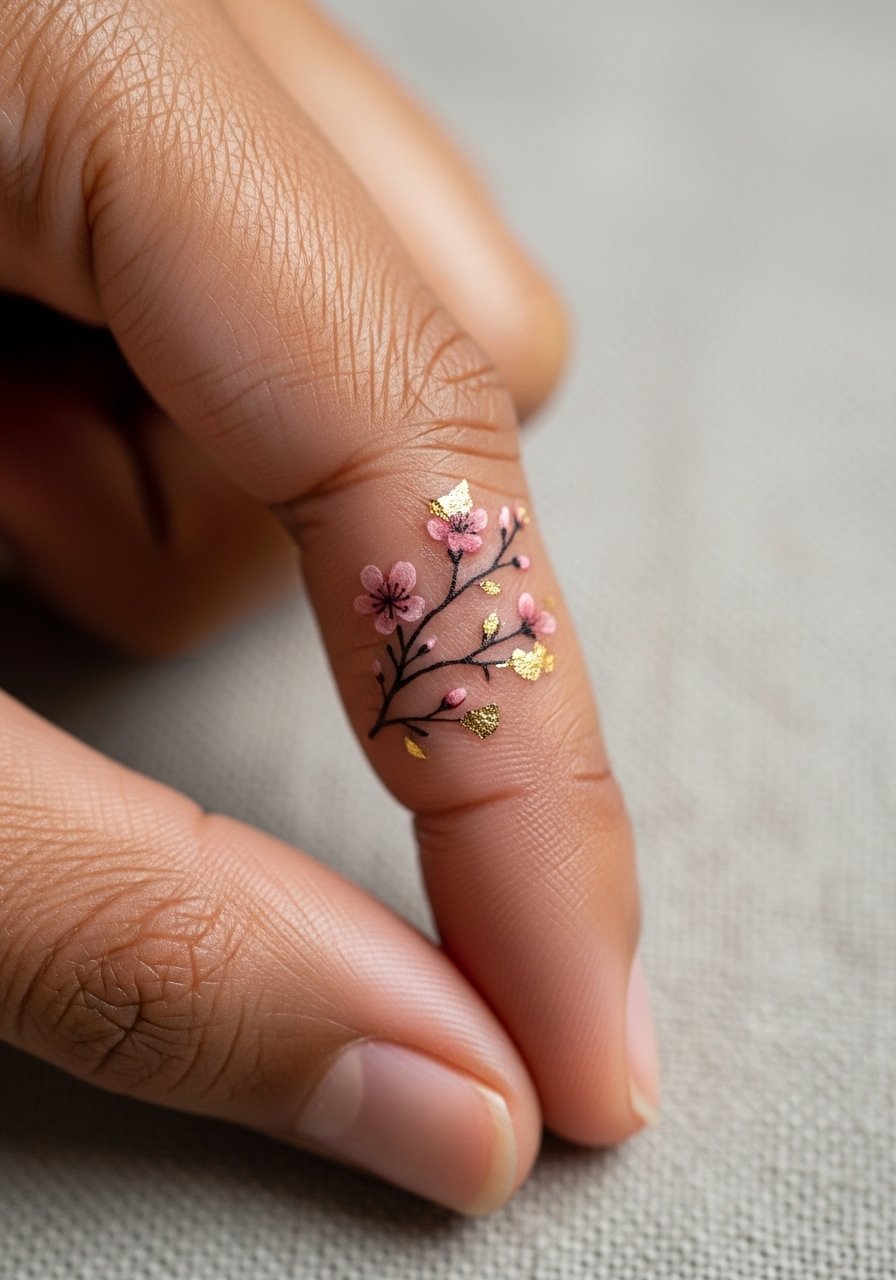
Wrapping a sakura branch near a finger joint looks like botanical jewelry. The tiny gold leaf pinpoints add a subtle luxe touch. Joint placements move with motion, so ensure the design has strong anchor points.
Style & Design Details
- Tattoo style: fine line + micro-color accents
- Recommended size: 0.6–1.2 inches circumference
- Best placements: finger joint wrap, ring finger top, knuckle side
- Color vs. blackwork: black line with small metallic gold ink or tattoo-safe yellow accent
- Design elements: thin branch, tiny five-petal flowers, micro gold dots, negative space between petals, tapering stems
- Longevity note: joints are high-movement areas; touch-ups likely after 6–12 months
- Who it suits: jewelry-lovers, floral minimalists, hands-on creatives
Finding the Right Artist
This requires an artist experienced with skin movement areas. Ask about line thickness and curvature to reduce distortion. Avoid anyone who hasn’t shown healed joint tattoos.
Aftercare & Healing Tips
Expect slower healing on joints. Avoid bending the finger excessively in the first week. Clean gently, then apply After Inked lotion sparingly. Plan for a possible touch-up after the first season.
- Tiny Sukajan Tiger Face on the Calf
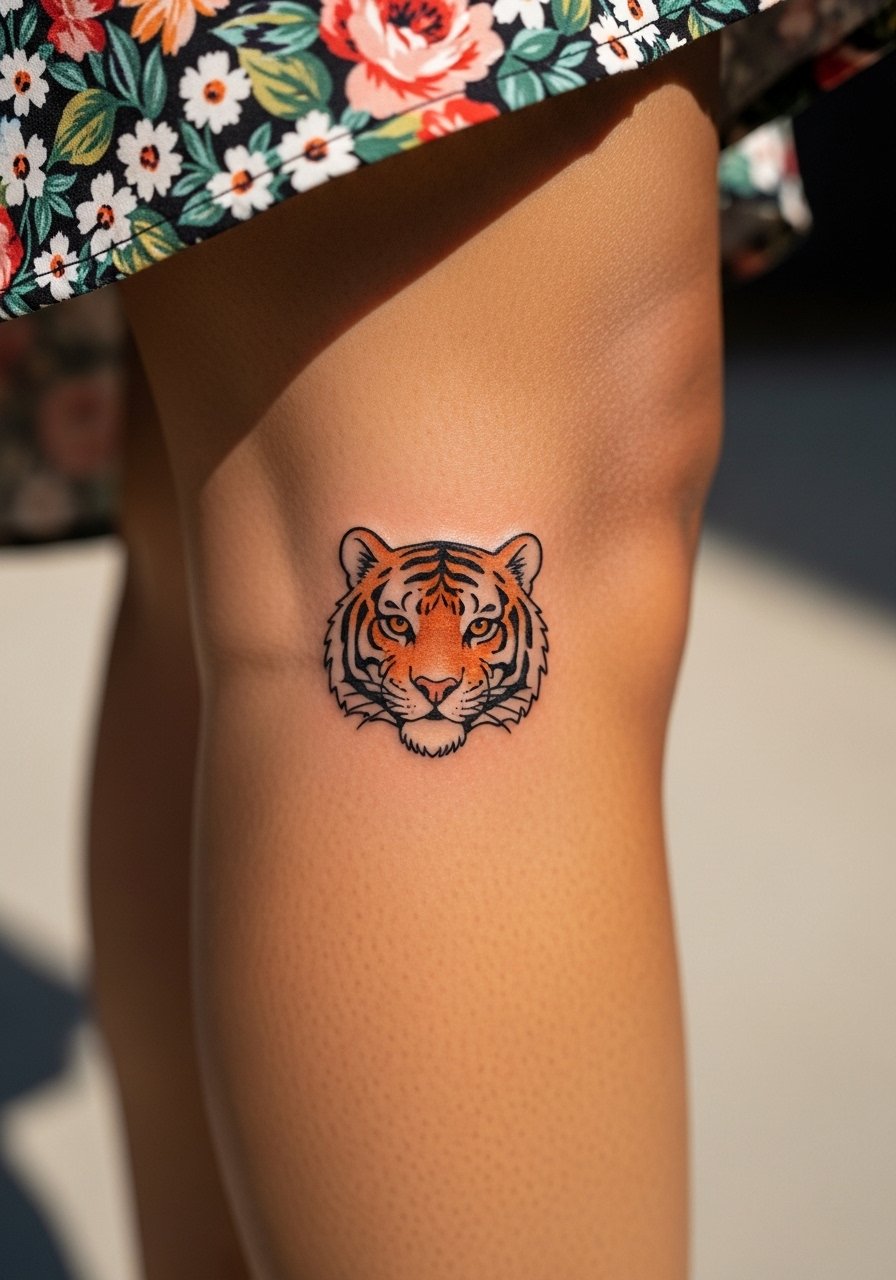
A mini sukajan tiger face channels vintage jacket motifs in a pared-down way. It’s fierce yet small—good for someone who wants a little edge with strong Japanese roots.
Style & Design Details
- Tattoo style: mini illustrative / neo-Japanese
- Recommended size: 1–2 inches
- Best placements: outer calf, upper arm, thigh side
- Color vs. blackwork: black outline with muted orange and cream accents for character
- Design elements: stylized eyes, whisker lines, minimal stripe texture, tiny shaded nose, negative-space teeth
- Longevity note: bold parts hold well; small shaded fills may need refreshes if frequently exposed
- Who it suits: vintage lovers, collectors of Japanese pop motifs, those wanting a compact statement
Finding the Right Artist
Look for artists who do neo-Japanese miniatures and show healed color. Ask about saturation strategy for small color fields. A mid-level artist with neo-Japanese examples is ideal.
Aftercare & Healing Tips
Calf pieces are forgiving but can itch during healing. Keep legs elevated if swollen. Use fragrance-free soap and Hustle Butter or Lubriderm during peeling. Apply SPF when wearing shorts later.
- Tiny Tsuru (Paper Crane) with Thread on the Shoulder Blade
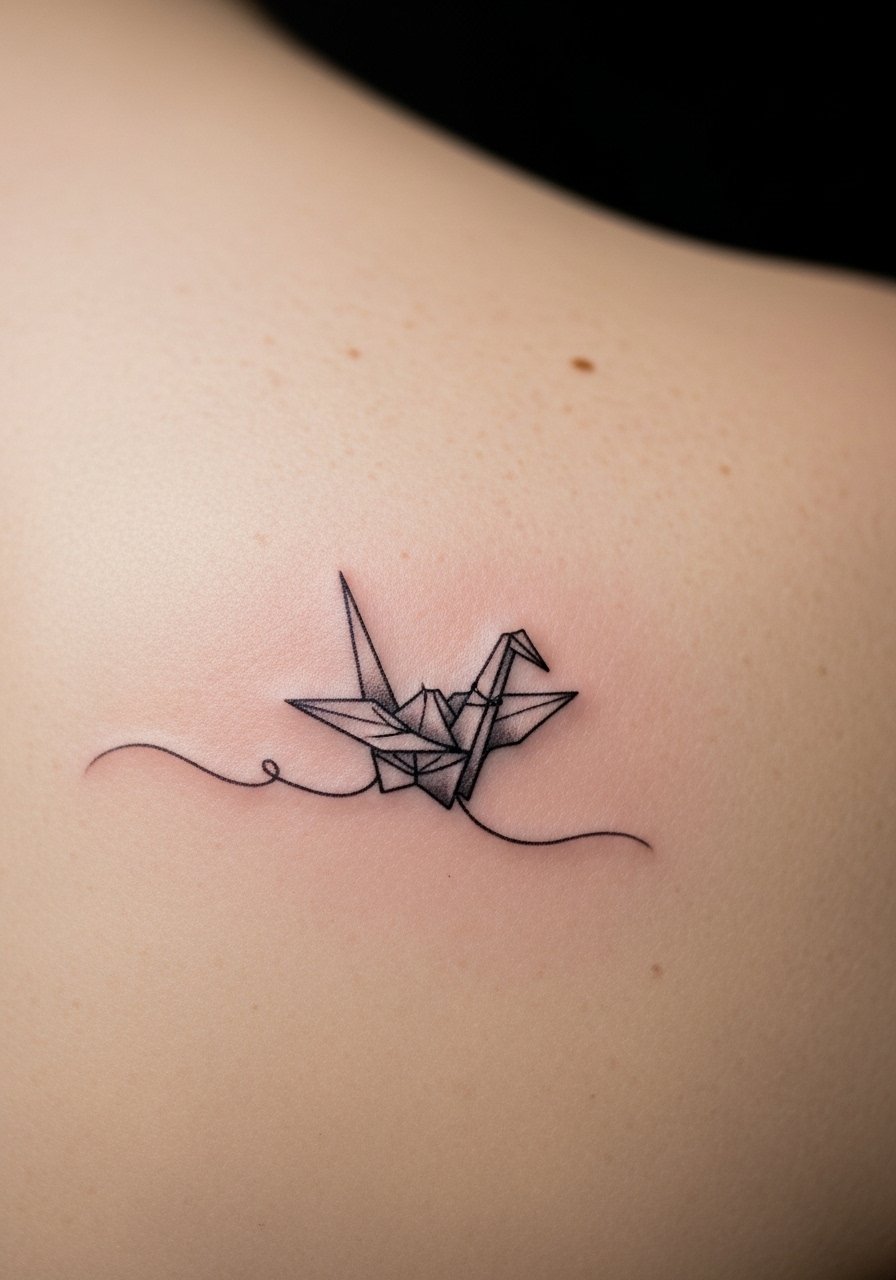
A small tsuru with a trailing thread evokes wishes and gentle movement. On the shoulder blade it has room to breathe and becomes a private emblem unless you choose to show it.
Style & Design Details
- Tattoo style: single-needle illustrative
- Recommended size: 1–1.8 inches
- Best placements: shoulder blade, upper back, clavicle end
- Color vs. blackwork: black with faint gray for subtle folding illusion
- Design elements: crisp geometric folds, thin trailing thread, micro-shadow under wings, tiny anchor dot where thread ties
- Longevity note: single-needle holds well on back skin; less prone to friction
- Who it suits: wish-makers, fans of origami symbolism, those wanting an elegant back accent
Finding the Right Artist
Choose an artist with geometric origami tattoos and healed photos. Ask about negative-space fold definition. Mid-level to experienced artists are best.
Aftercare & Healing Tips
Back pieces usually heal well. Avoid backpacks or tight straps during initial healing. Clean, moisturize with an unscented lotion, and sleep on fresh sheets. After healing, use SPF when exposed.
- Micro Daruma Doll on the Ribcage Side
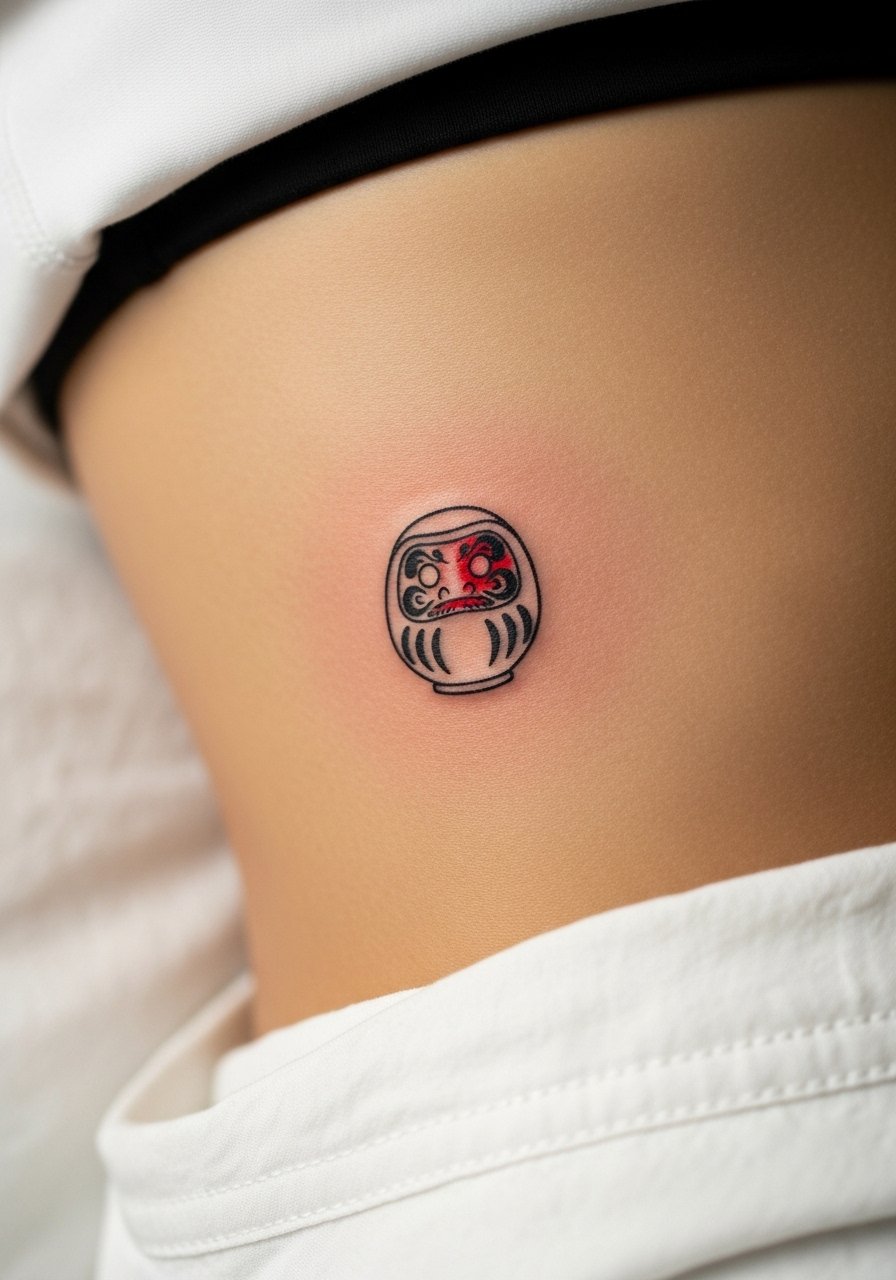
A small daruma doll carries goal-setting energy—paint one eye for a wish, the other when it's fulfilled. As a micro piece on the rib, it’s symbolic and intentionally private.
Style & Design Details
- Tattoo style: micro illustrative with single-color fill
- Recommended size: 1–1.5 inches
- Best placements: rib side, side of hip, under-breast edge
- Color vs. blackwork: black outline with a single red fill for the face area
- Design elements: rounded daruma shape, simple eye dot, curved eyebrows, minimal facial lines, small wish space
- Longevity note: solid red retains color but may need touch-ups due to placement movement
- Who it suits: goal-setters, fans of Japanese folk traditions, people wanting ritual symbolism
Finding the Right Artist
Find someone who’s comfortable with tiny cultural icons and solid small color fills. Ask about how red ages and their touch-up policies. An experienced artist decreases risk of uneven fill.
Aftercare & Healing Tips
Rib movement means gentle care. Use Saniderm lightly if recommended. Clean, apply thin unscented lotion, and avoid heavy exercise that strains the area for the first week. Touch-ups often occur after 8–12 weeks if color lightens.
- Small Wabi-Sabi Brushstroke Accent on the Forearm
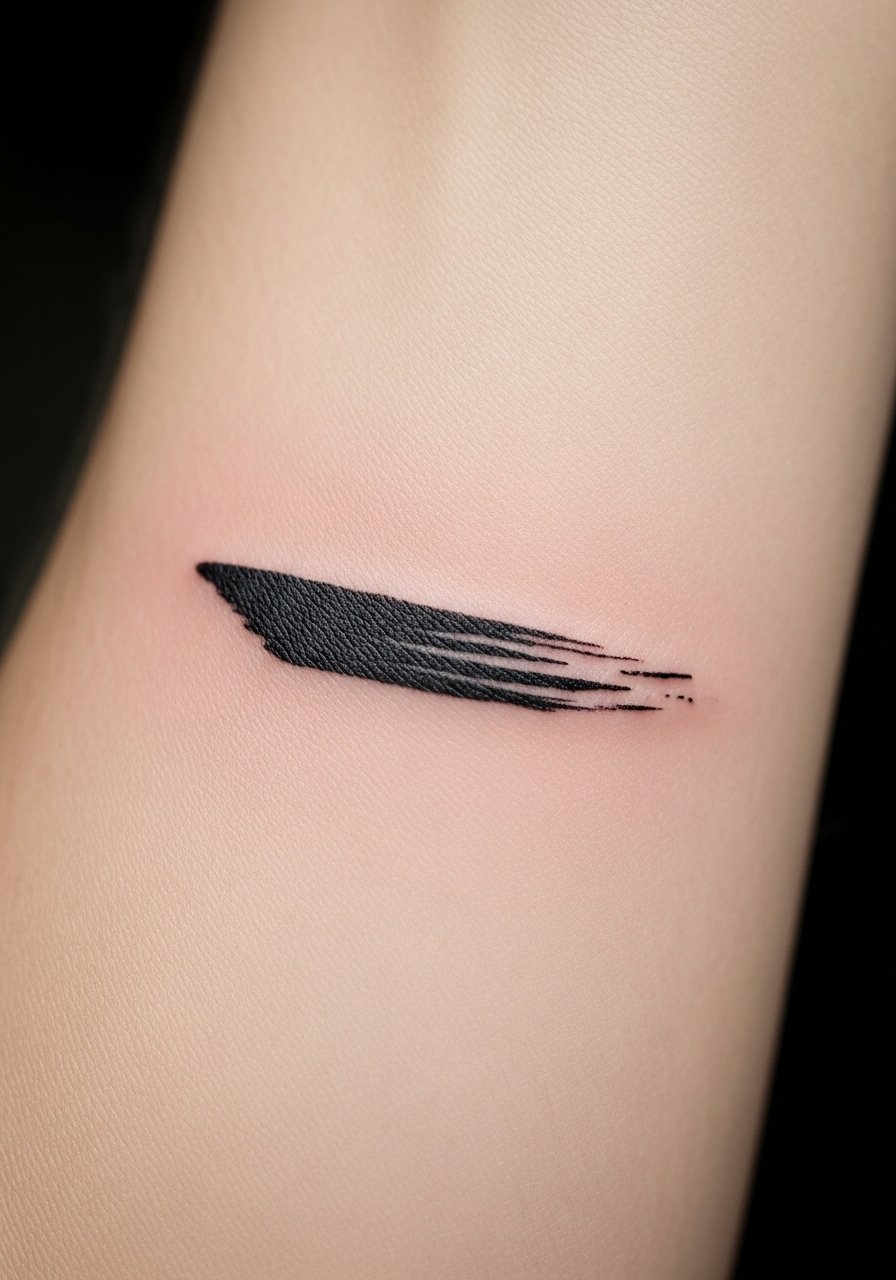
A single imperfect brushstroke embraces the wabi-sabi philosophy—beauty in imperfection. It’s abstract, wearable, and pairs with other tiny tattoos or stands alone as a personal icon.
Style & Design Details
- Tattoo style: abstract brushstroke / blackwork
- Recommended size: 1–2 inches lengthwise
- Best placements: forearm, side of wrist, upper arm
- Color vs. blackwork: deep black with grainy edges for brush feel
- Design elements: tapering stroke, textured grain, intentional gap, slight bleed edges, negative-space highlights
- Longevity note: bolder strokes last longer; textured edges may smooth with time
- Who it suits: artists, philosophers, fans of minimal abstraction
Finding the Right Artist
Pick artists who reproduce brush marks convincingly. Ask for healed texture shots. Experienced illustrative artists who do sumi or brushwork are ideal.
Aftercare & Healing Tips
Forearm pieces should be kept out of sun and moisturized lightly. Use Saniderm if you prefer an occlusive first night. Apply SPF regularly post-heal.
- Tiny Komainu (Guardian Dog) Silhouette on the Ankle
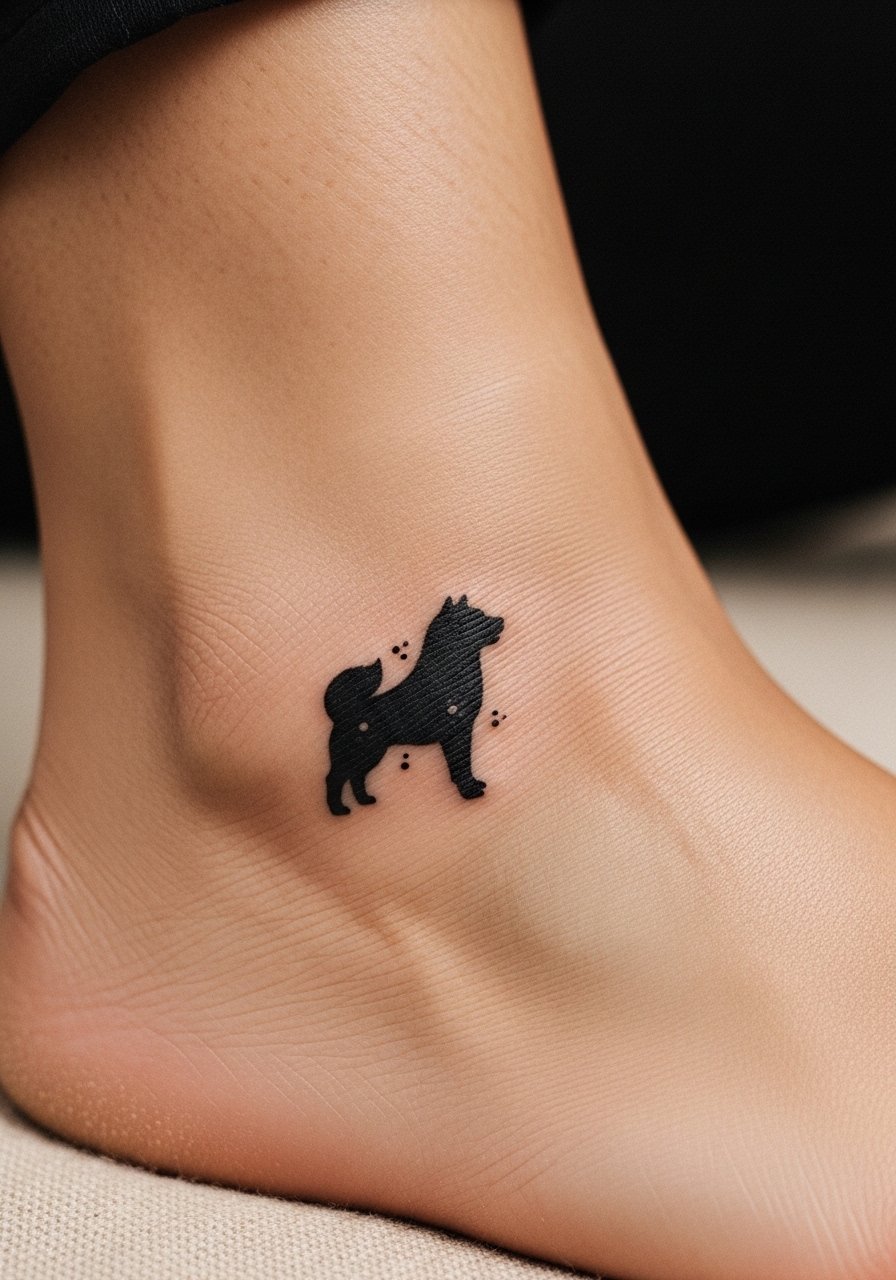
A komainu silhouette channels protection and shrine guardianship. Miniaturized as a silhouette, it’s symbolic without the busy detail of larger shrine pieces.
Style & Design Details
- Tattoo style: minimal silhouette / blackwork
- Recommended size: 1–1.5 inches
- Best placements: ankle, behind the calf, inner wrist
- Color vs. blackwork: solid black silhouette for timeless contrast
- Design elements: curled tail silhouette, paw base, tiny dot eyes, negative-space mouth, small mane texture
- Longevity note: silhouettes age well if ink is saturated properly
- Who it suits: spiritual protectors, shrine-culture enthusiasts, subtle statement seekers
Finding the Right Artist
Seek portfolios with small animal silhouettes and solid fills. Ask about ink saturation strategy for tiny blacks. Mid-level artists with solid fill experience are ideal.
Aftercare & Healing Tips
Ankle protection is key—avoid tight socks for a week. Clean, moisturize with After Inked, and limit friction while healing. Solid blacks often need less frequent touch-ups.
- Tiny Ume (Plum) Blossom on the Thigh Inner Side
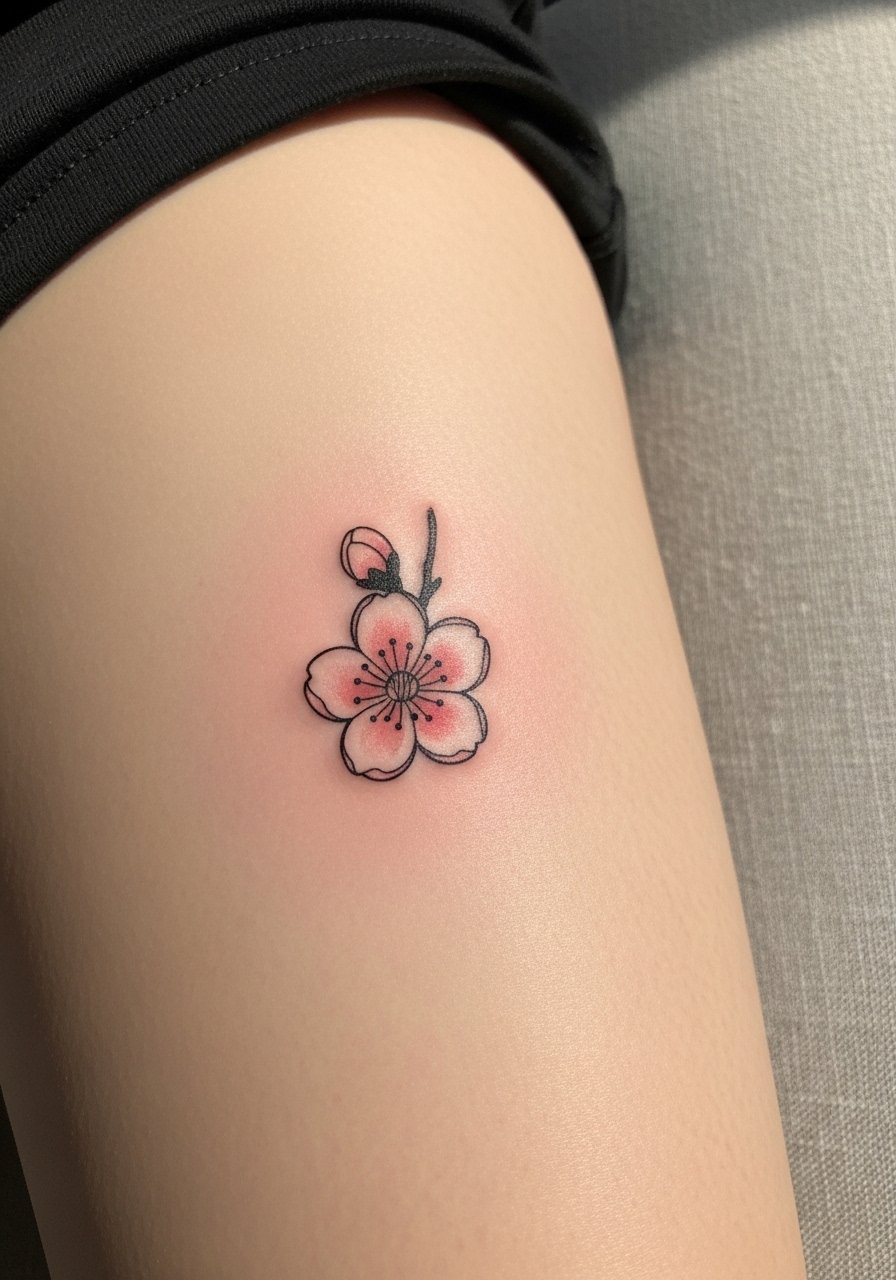
Ume blossoms signal perseverance and early spring. On the inner thigh they stay private and sensual. The design works well as a small standalone or as part of a later floral set.
Style & Design Details
- Tattoo style: fine line floral with soft color
- Recommended size: 1–2 inches
- Best placements: inner thigh, hip crease, lower rib side
- Color vs. blackwork: fine black outline with a faint pink wash for petals
- Design elements: five tiny petals, slight stamen dots, negative-space center, fine stem, optional leaf sprout
- Longevity note: skin-on-thigh is forgiving; color holds well if saturated properly
- Who it suits: private romantics, floral collectors, lovers of seasonal motifs
Finding the Right Artist
Choose an artist with healed floral pieces showing soft color on similar skin tones. Ask about layering light pinks to avoid premature fading. A mid-level artist with floral expertise is a great fit.
Aftercare & Healing Tips
Thigh healing is usually comfortable. Keep underwear soft, avoid tight jeans for the first week, and apply fragrance-free lotion as peeling starts. Use sunscreen on the area when it’s exposed later.
- Tiny Hannya Mask Half-Face on the Wrist Side
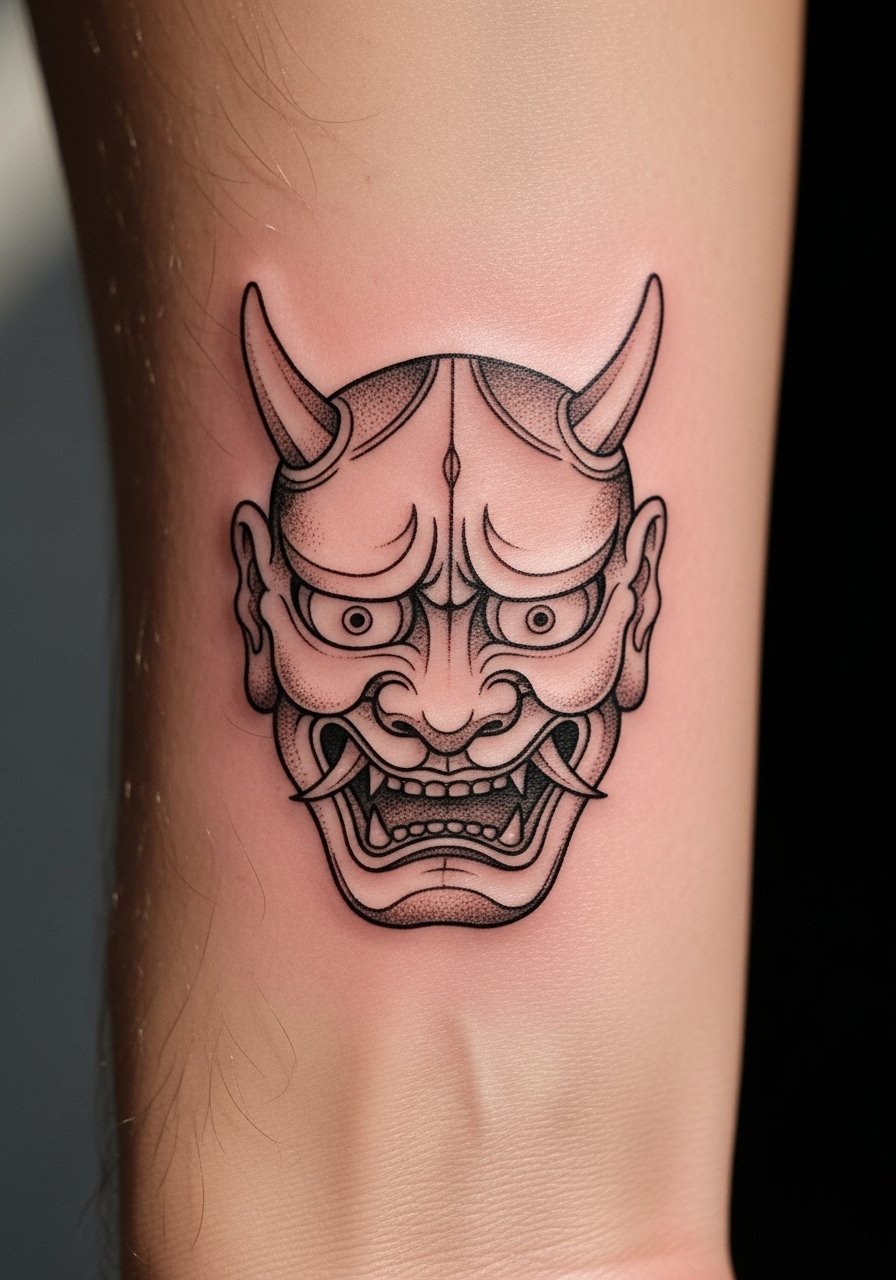
The hannya mask carries layered emotion—jealousy, pain, and transformation. A half-face on the wrist side hints at complexity and is a striking small statement when you want a piece with edge and cultural depth.
Style & Design Details
- Tattoo style: micro illustrative / blackwork
- Recommended size: 1–1.5 inches
- Best placements: inner wrist side, forearm inner edge, behind ear for tiny variant
- Color vs. blackwork: blackwork with micro-shading for expression
- Design elements: horn detail, one fierce eye, half-mouth curl, micro-stipple shading, subtle crease lines
- Longevity note: small facial details require careful sizing to avoid blurring
- Who it suits: narrative collectors, gothic or dark-academia fans, people who like bold symbolism
Finding the Right Artist
Pick a tattooer experienced in mythological faces and micro-expression work. Healed photos are essential. Ask how they prevent tiny lines from merging over time. Experienced artists are recommended.
Aftercare & Healing Tips
Inner wrist placements see lots of movement and sun. Saniderm can protect initial healing. Clean, moisturize lightly, and avoid bracelets rubbing the area. Expect potential touch-ups after 6–12 months.
- Minimal Japanese Wave Band Around the Wrist
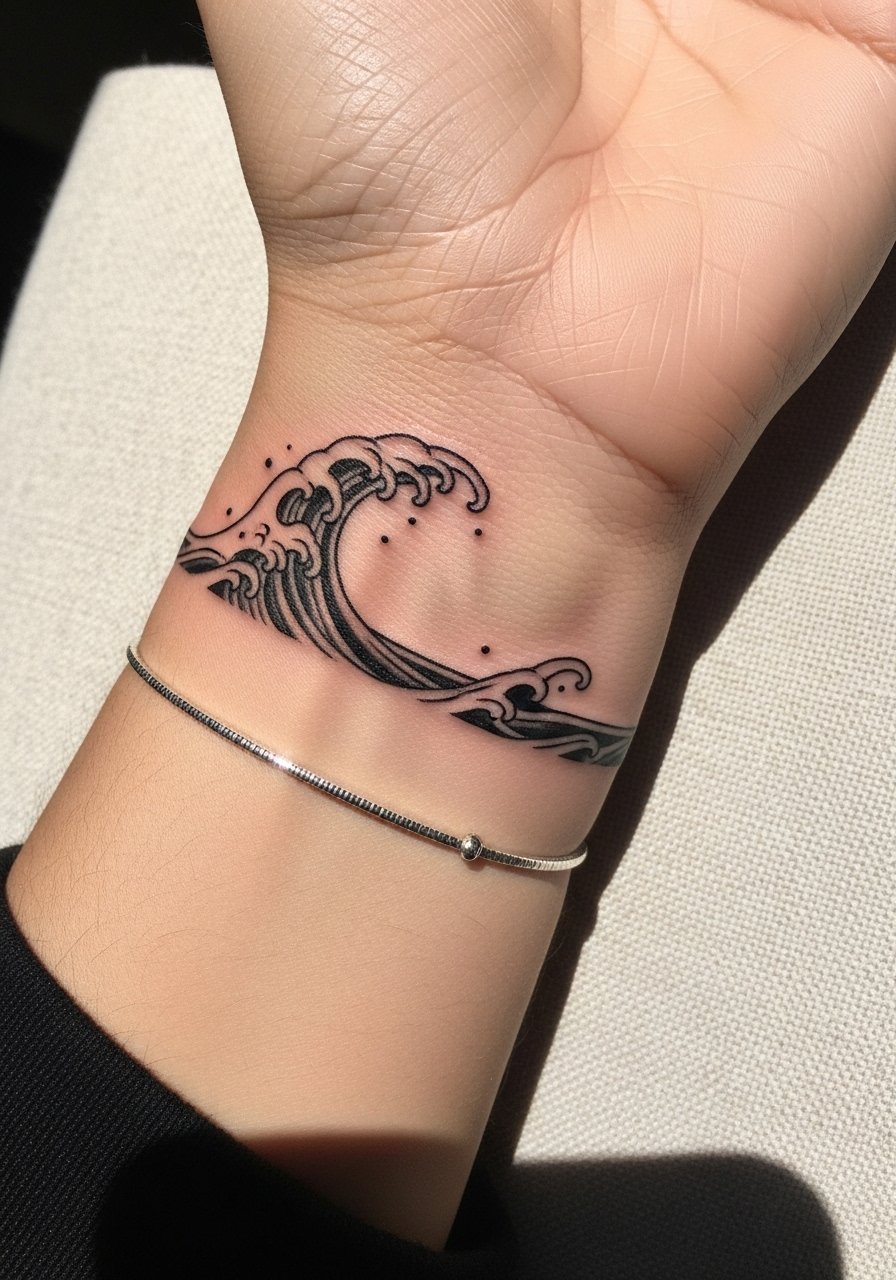
A tiny wave band wraps your wrist in motion and calm. It’s a subtle homage to traditional Japanese seigaiha motifs and reads like symbolic jewelry. The band format feels modern and wearable.
Style & Design Details
- Tattoo style: minimal repeating pattern / blackwork
- Recommended size: wrist circumference (pattern height 0.4–0.8 inches)
- Best placements: wrist band, anklet band, around upper arm
- Color vs. blackwork: classic black for clarity and contrast
- Design elements: repeating wave arches, tiny highlights in negative space, consistent spacing, small anchor dot or break in pattern for uniqueness
- Longevity note: bands on high-movement spots risk softening; slightly bolder lines help longevity
- Who it suits: pattern lovers, fans of subtle jewelry-tattoos, those who want an everyday piece
Finding the Right Artist
Seek artists with clean repeating pattern work and healed band images. Discuss exact circumference and how the pattern meets under the wrist. Mid-level artists with steady hand control are ideal.
Aftercare & Healing Tips
Band tattoos can be prone to rubbing from watches. Keep any jewelry off during healing. Clean twice daily and use unscented lotion. After healing, protect the band from prolonged sun to avoid uneven fade.
Final thoughts
You now have 20 approachable, feminine Japanese designs to consider—ranging from micro calligraphy to small sumi-e marks, symbolic animals, and botanical touches. Save the ideas that resonate and bring your favorites to your consultation. Pin this article if a friend needs inspiration, or use an Inkbox temporary kit to test placement before booking.
Honestly, having a small aftercare kit ready—Saniderm, a fragrance-free soap like Dr. Bronner's unscented, and Hustle Butter Deluxe—takes so much stress out of healing. Which small Japanese tattoo for women in this list calls to you most, and where would you place it?