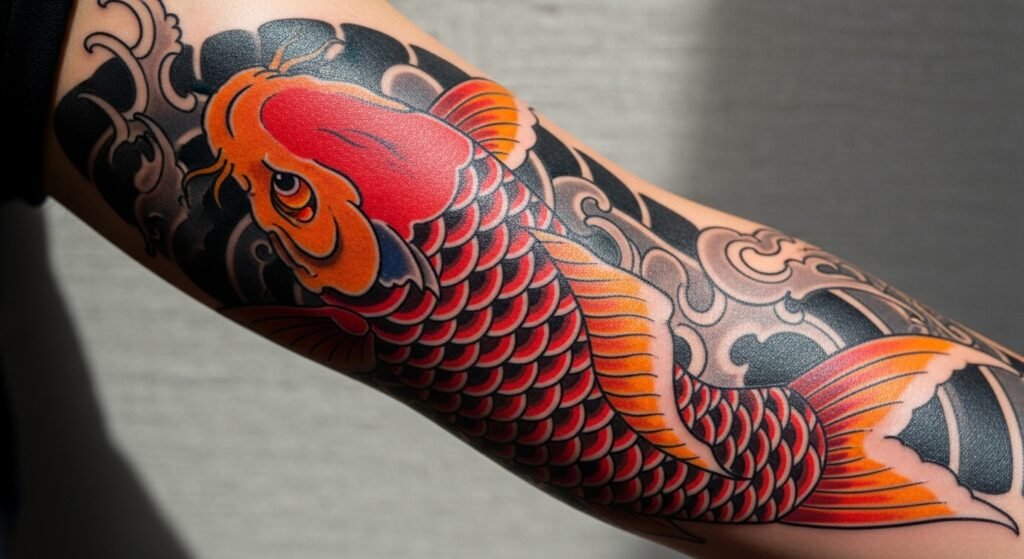
Sitting in a consultation, scrolling for inspo at midnight, or finally committing to that koi you've imagined — the moment before booking is both electric and full of questions. Japanese traditional koi fish tattoos are perfect for that decision: they blend bold color, centuries-old symbolism, and a visual flow that works with your body. Whether you're drawn to the classic black-and-grey carp swimming upstream or a neo-traditional, jewel-toned koi spiraling into a sleeve, this list will help you find a look that fits your story.
Inside you'll get 26 bold Japanese traditional koi fish tattoo ideas with clear style breakdowns, placement suggestions, artist tips, and realistic aftercare guidance. I also mention tried-and-true products people actually use — like Saniderm second skin bandage for early protection and a gentle, unscented lotion like Lubriderm fragrance-free lotion for peeling phase moisture. Pin the ideas you love, bring them to your consult, and let this guide help translate koi symbolism into a piece that ages with grace.
- Upstream Red Koi — Classic Japanese Powerpiece
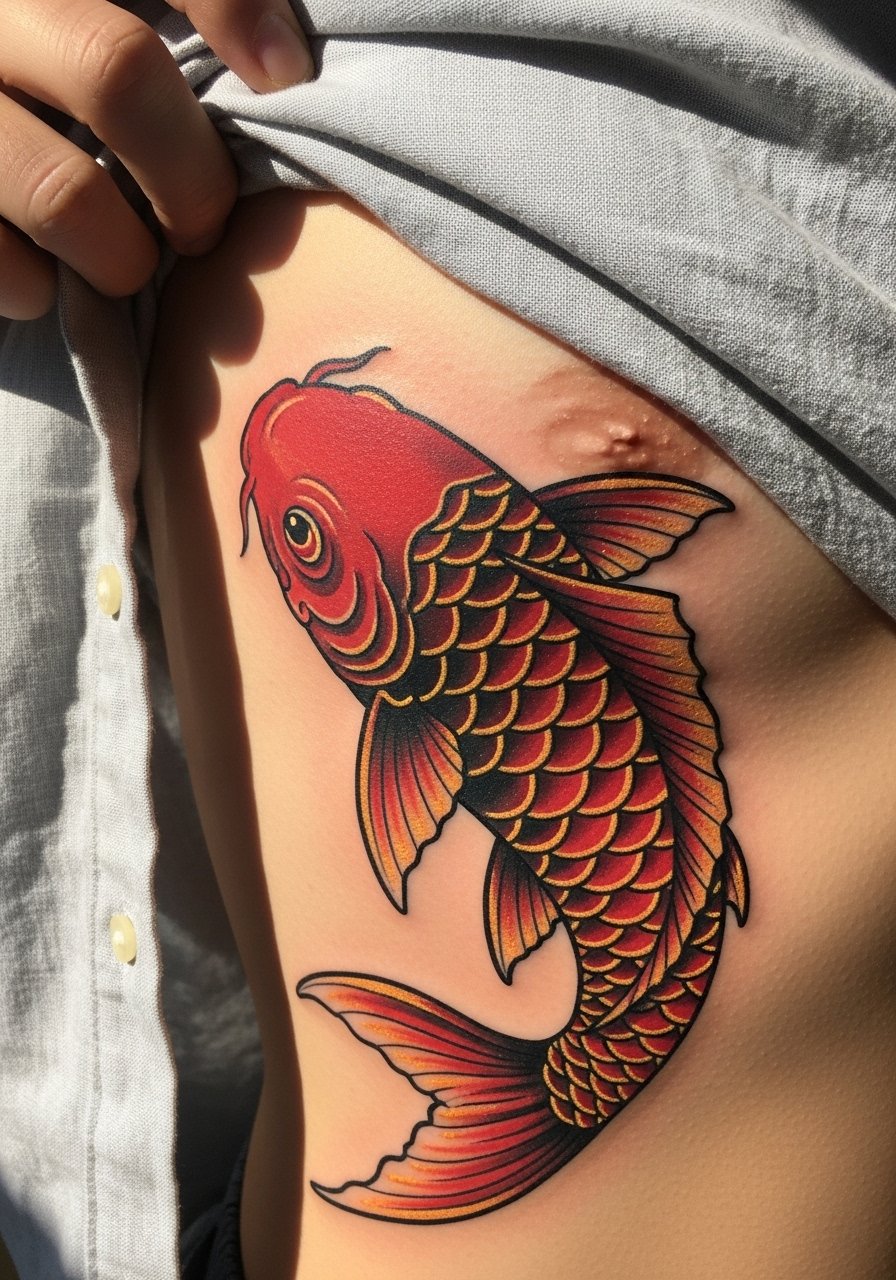
This classic red koi swimming upstream is all about strength and resilience. It’s rendered in traditional Japanese bold lines with saturated reds and deep blacks, a dramatic ribcage or side placement that reads like a story. People who want symbolic pieces or memorial tattoos love this design because the koi’s motion implies pushing through hardship. The sharp outlines and solid color blocks catch light beautifully as the skin heals.
Style & Design Details
- Tattoo style: Japanese traditional / Irezumi
- Recommended size: palm-sized to large rib panel (6–12 inches)
- Best placements: ribcage, full side, upper thigh — natural curves enhance flow
- Color vs. blackwork: strong color blocks (reds, burnt orange, black)
- Design elements: bold outlines, flattened perspective, water waves, maple leaves, scale pattern shading, kumadori-style eyebrow lines
- Longevity note: color holds well with proper SPF; saturated reds may require occasional refresh
- Who it suits: those wanting bold symbolism, medium to larger canvases, collectors
Finding the Right Artist
Look for portfolios heavy in traditional Japanese work. Ask about their experience with large color fills and how they scale details for ribs. Red flags: artists lacking Japanese anatomy flow or who avoid showing healed photos. Apprentices can handle small elements, but ribs are best with an experienced artist. Search Instagram tags like #irezumi, #japanesetattoo, or use Tattoodo to find specialists.
Aftercare & Healing Tips
Keep the initial bandage on per your artist; I usually remove the wrap after 3–6 hours then use a breathable Saniderm second skin bandage for 24–72 hours for this placement. Wash gently twice daily with fragrance-free soap and switch to Lubriderm fragrance-free lotion in the peeling phase. Expect swelling first 48–72 hours and flaking by week 1–2; avoid tight waistbands that rub the rib area. Touch-ups often happen after 8–12 weeks for color settling.
- Black-and-Grey Ascending Koi — Subtle Strength
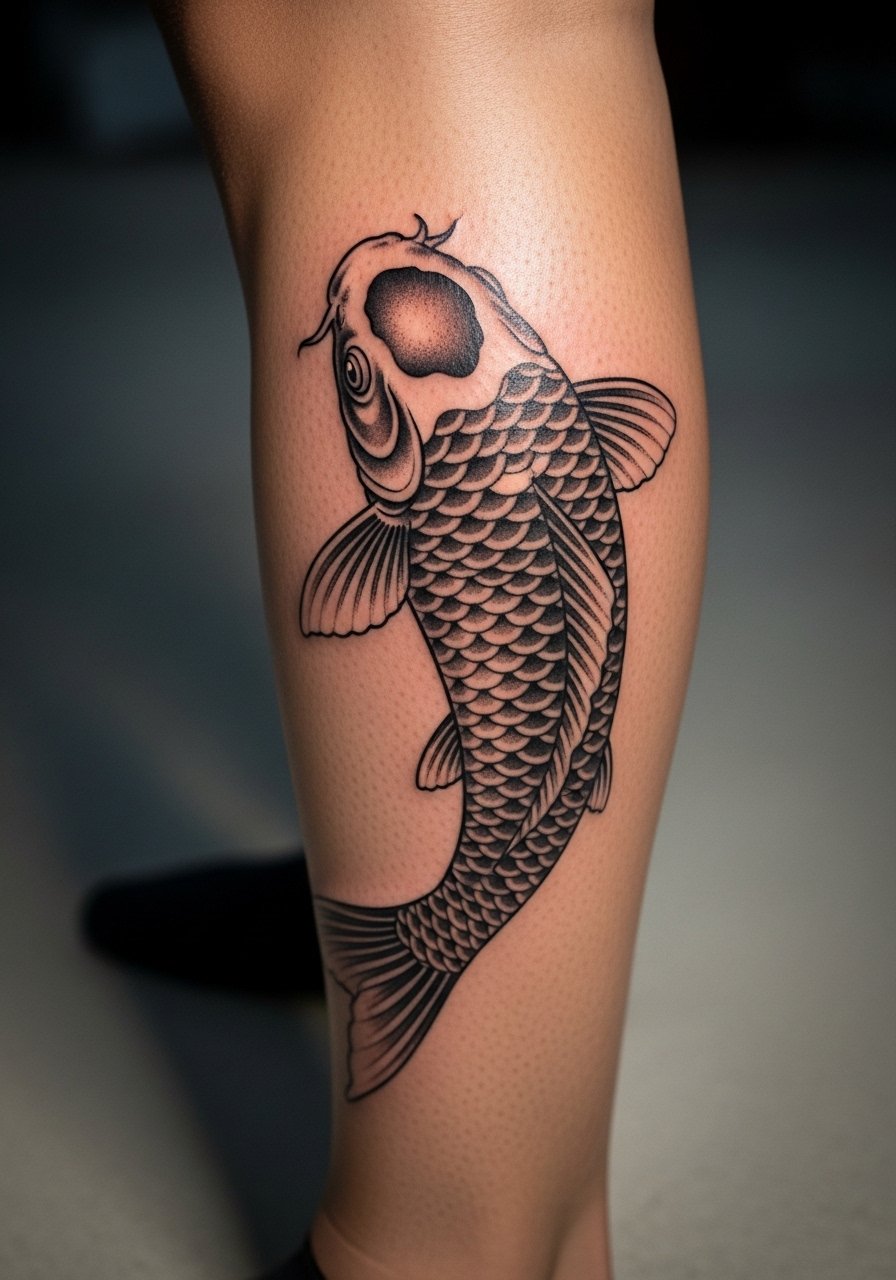
If you love the symbolism but prefer a muted palette, a black-and-grey koi offers the same narrative without neon color. This piece uses smooth gradient shading and dotwork for scales and water, creating a cinematic, tattooed photograph look. It feels timeless and suits workplaces with stricter ink tolerance.
Style & Design Details
- Tattoo style: black-and-grey illustrative / realism hybrid
- Recommended size: 4–8 inches (calf-friendly)
- Best placements: outer calf, forearm, upper back — places that allow vertical flow
- Color vs. blackwork: black-and-grey to preserve subtlety
- Design elements: single-needle detail, gradient washes, stipple scales, negative-space water highlights, soft contrast
- Longevity note: black ages best; single-needle highlights can soften and need touch-ups sooner
- Who it suits: professionals, lovers of understated tattoos, first-timers wanting impactful but restrained ink
Finding the Right Artist
Choose artists who show fine-line and single-needle black-and-grey portfolios. Ask how they plan to scale tiny details (stippling vs. whip shading). Avoid artists who only do heavy blackwork if you want delicate stipple. Look for healed photos in similar placements.
Aftercare & Healing Tips
Black-and-grey heals similarly to color, but preserve contrast by keeping it moisturized with an unscented lotion like Aveeno fragrance-free lotion. Saniderm works well for single-needle pieces to prevent scabbing. Expect a touch-up at 3 months for crispness maintenance.
- Twin Koi Yin-Yang Sleeve — Balance in Motion
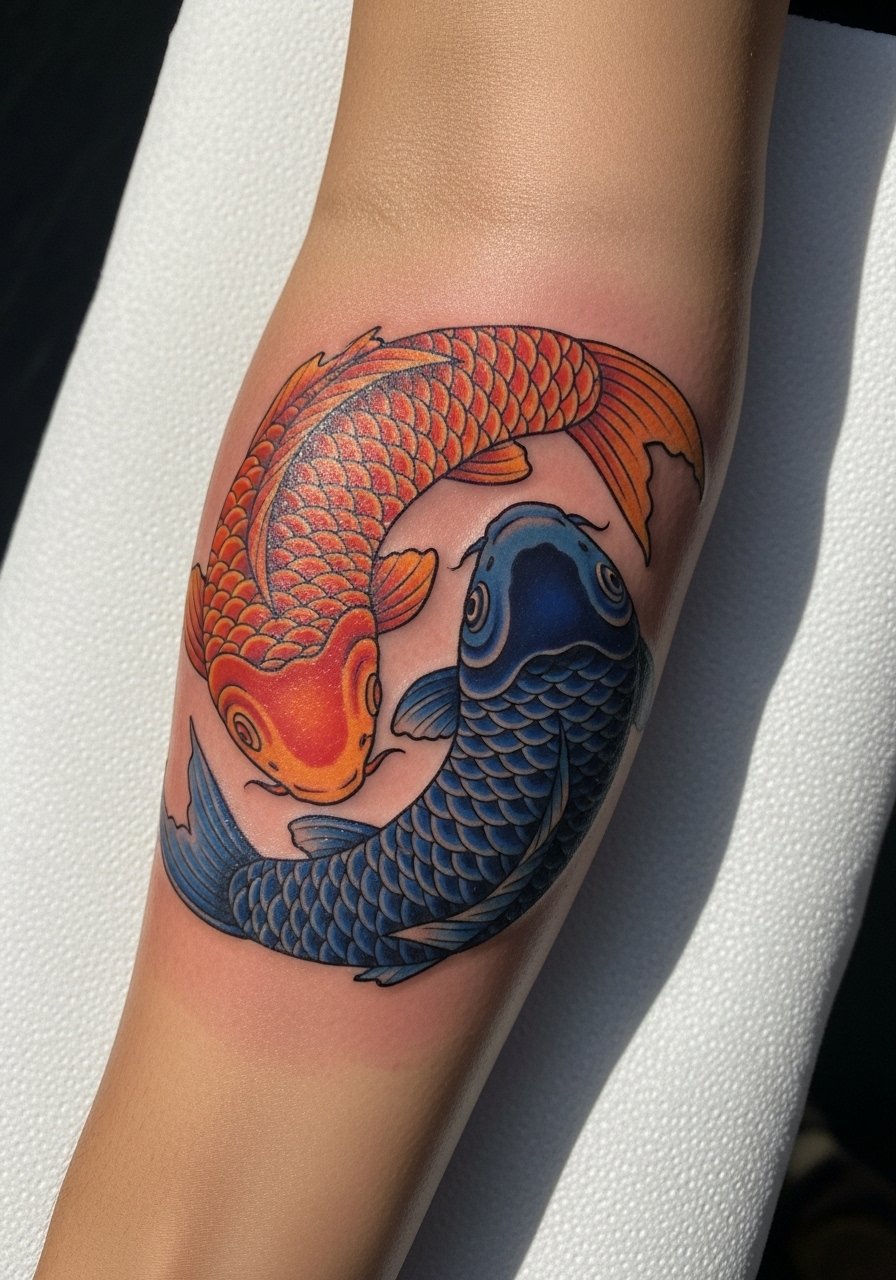
Two koi circling each other in a sleeve creates a dynamic yin-yang composition, symbolizing balance and duality. This can be done in classic Japanese color or with complementary neo-traditional hues. The sleeve format lets you add background waves, peonies, and wind bars for a layered, museum-ready look.
Style & Design Details
- Tattoo style: neo-traditional with Japanese influences
- Recommended size: quarter to half sleeve (6–10 inches)
- Best placements: forearm sleeve, half-sleeve, calf sleeve
- Color vs. blackwork: full color recommended to emphasize contrast
- Design elements: bold outlines, scale texture, florals (peony), wind bars, negative-space bubbles
- Longevity note: sleeves protect contrast in shaded areas; bright colors need SPF
- Who it suits: collectors, people wanting a bold narrative piece, those with sleeve ambitions
Finding the Right Artist
Look for artists who show cohesive sleeve pieces and can harmonize multiple elements. Ask about session planning and how they'll preserve negative-space breaks. Red flags: poor transitional backgrounds or inconsistent line weights between sessions. Use Instagram hashtags like #koi sleeve or #yinyangkoi.
Aftercare & Healing Tips
Sleeves take longer to heal; treat in sections. Keep each session wrapped and use Hustle Butter Deluxe tattoo aftercare balm during the peeling phase to keep color lively. Avoid sun for 6–8 weeks and reapply SPF 50 once healed.
- Minimalist Single-Line Koi — Modern Subtlety
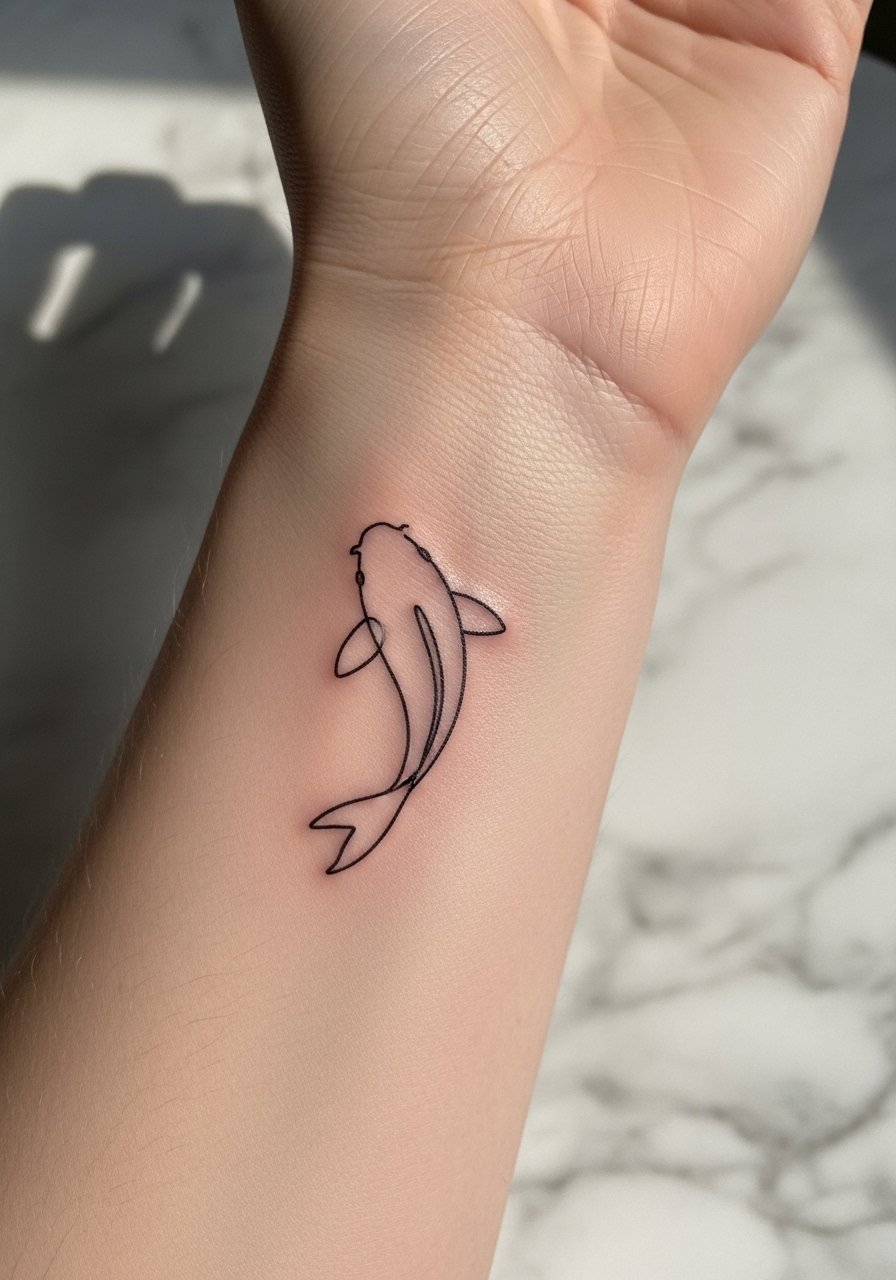
A single-line koi simplifies form into continuous motion. It reads delicate and modern yet still carries the koi’s meaning. This is perfect for first-timers or those who prefer jewelry-like ink. Because of thin lines, placement on lower forearm or wrist keeps it visible and personal.
Style & Design Details
- Tattoo style: fine line / single-line minimalist
- Recommended size: 1.5–3 inches
- Best placements: inner wrist, behind ear, ankle — intimate spots
- Color vs. blackwork: pure black linework recommended
- Design elements: continuous line, minimal scale suggestion, slight negative-space water strokes, tiny accent dotwork
- Longevity note: fine lines blur faster; expect to refresh every few years
- Who it suits: minimalists, first-timers, petite frames, fine-jewelry aesthetic
Finding the Right Artist
Choose a tattooer known for single-needle and fine-line work. Ask to see healed photos of similar single-line designs on wrists. Avoid heavy-handed artists who push thicker needles for speed. An experienced artist is preferred for crisp consistent lines.
Aftercare & Healing Tips
Keep wrapped briefly per studio protocol, then wash with mild soap. Use a thin layer of unscented lotion like Lubriderm fragrance-free lotion. Avoid friction from watches or bracelets while healing. Expect touch-ups sooner than bolder styles.
- Watercolor Koi Splash — Painterly and Fluid
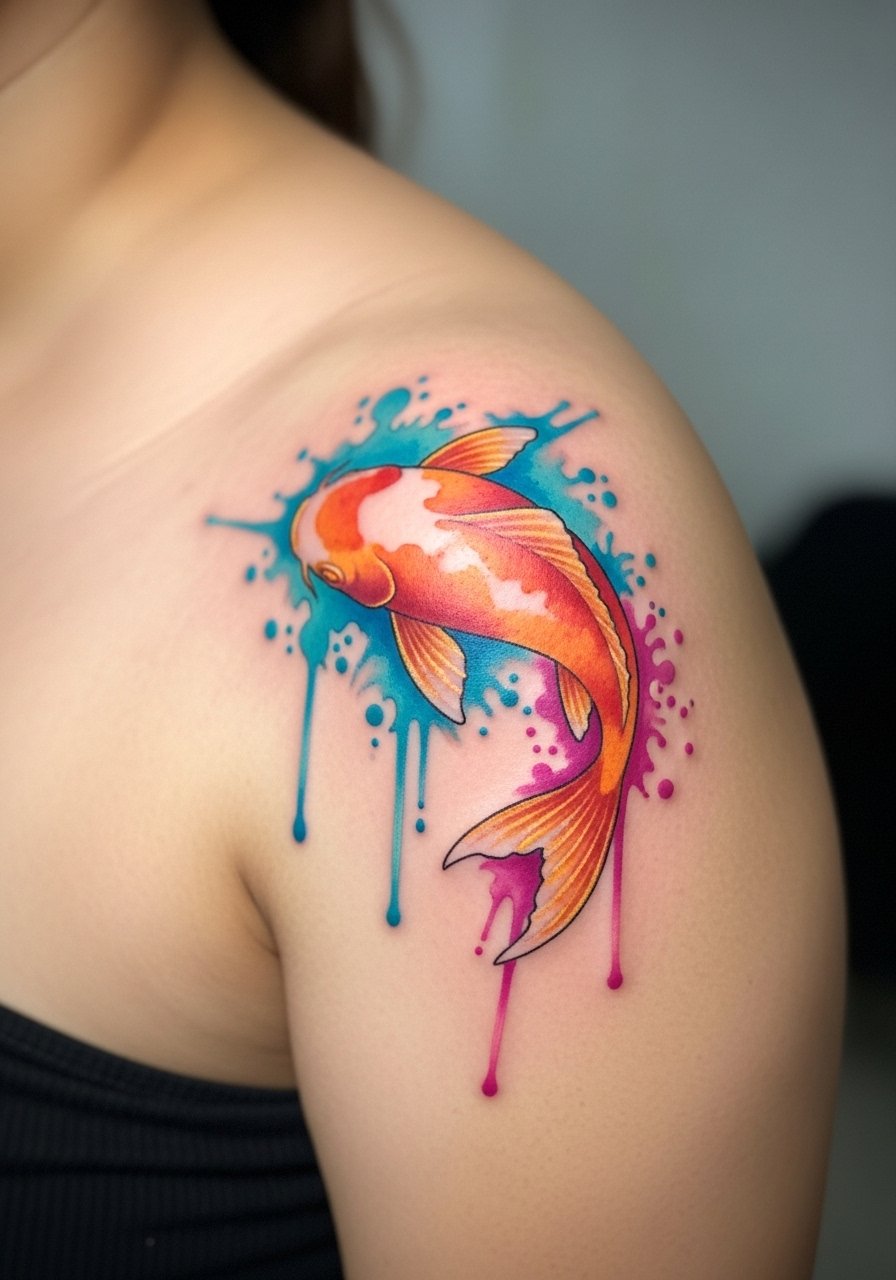
This painterly koi uses soft color bleeds and minimal outlines, giving a splashy, artistic feel. It works beautifully on shoulders or upper back where flows can breathe. Color blends mimic the movement of water and feel contemporary while honoring koi symbolism.
Style & Design Details
- Tattoo style: watercolor / illustrative
- Recommended size: 4–8 inches
- Best placements: upper shoulder, upper back, thigh — spacious areas
- Color vs. blackwork: full color with soft edge blending
- Design elements: watercolor washes, faint outlines, layered transparent colors, brushstroke textures, minimal scale detail
- Longevity note: watercolor fades faster; bright pigments need diligent SPF
- Who it suits: artistic personalities, those who want painterly tattoos, skin tones that show bright colors well
Finding the Right Artist
Pick artists who explicitly show healed watercolor pieces. Ask how they layer pigments and whether they use saturated anchors to preserve shape over time. Avoid artists who only simulate watercolor with heavy outlines unless that’s the intended aesthetic.
Aftercare & Healing Tips
Because colors are less blocky, keep the piece well-protected with a Saniderm second skin bandage initially. Use Hustle Butter Deluxe tattoo aftercare balm lightly during peeling to keep the pigments vibrant. Sun protection (SPF 50) is critical long-term.
- Golden Koi with Chrysanthemum — Wealth & Autumnal Beauty
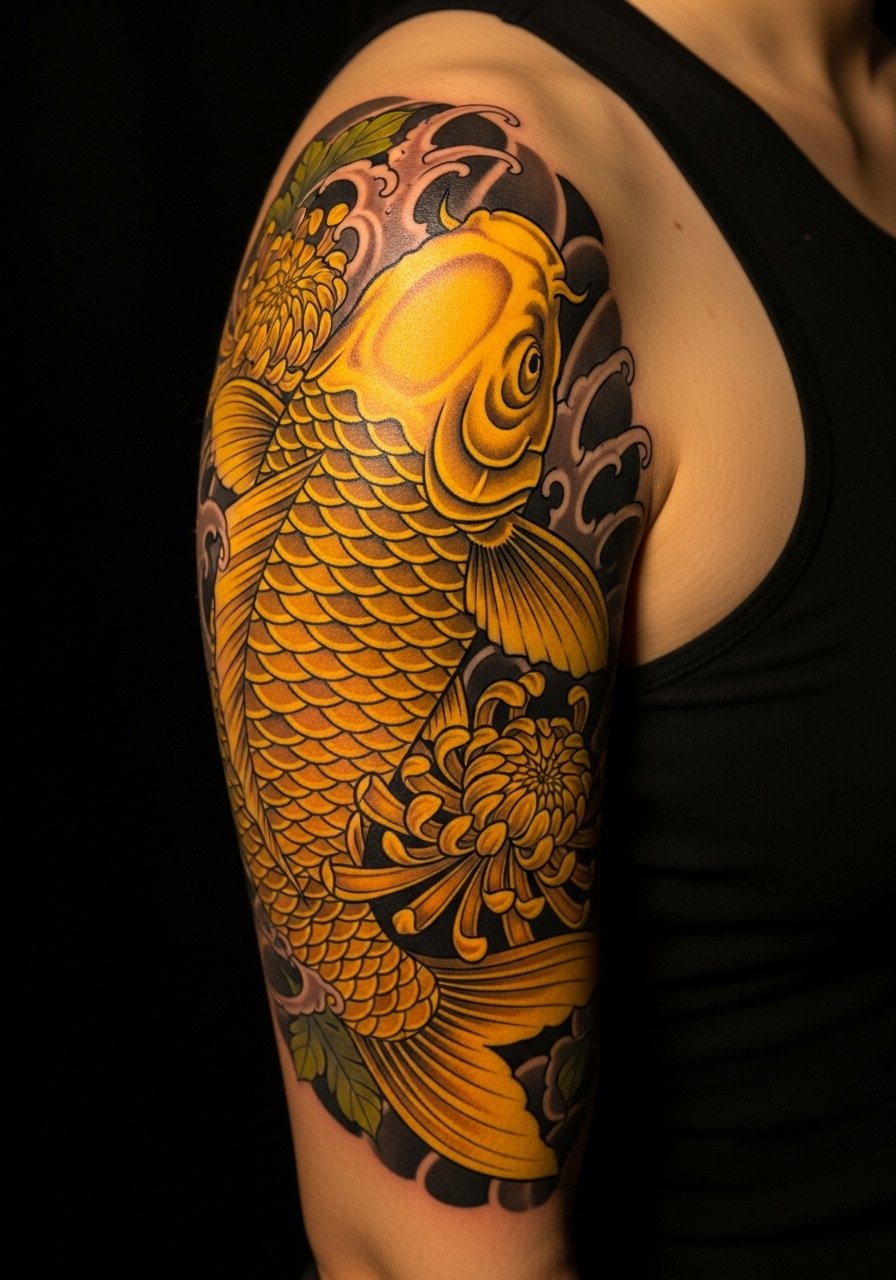
A golden koi coupled with chrysanthemums blends prosperity symbolism with autumnal charm. The gold tones contrast well against darker backgrounds and the chrysanthemum adds a refined Japanese floral motif. This one reads refined and classic.
Style & Design Details
- Tattoo style: traditional Japanese with floral illustration
- Recommended size: 5–10 inches
- Best placements: upper arm, shoulder cap, chest — visible and expandable
- Color vs. blackwork: color with metallic-like yellow/gold tones
- Design elements: chrysanthemum petals, wind bars, cloud shading, gold scale gradients, bold outline
- Longevity note: yellows can fade faster; touch-ups help maintain brilliance
- Who it suits: fans of classic motifs, those wanting symbolic prosperity hints
Finding the Right Artist
Seek artists who execute both florals and animal anatomy in the Japanese style. Ask about how they’ll balance gold tones against darker backgrounds. Avoid studios without healed color photos.
Aftercare & Healing Tips
Keep the area clean and moisturized with an unscented lotion. For gold and yellow preservation, apply SPF 50 sunscreen once healed. A second-skin like Saniderm helps during the crucial first days.
- Koi with Wave Sleeve — Full-Motion Water Composition
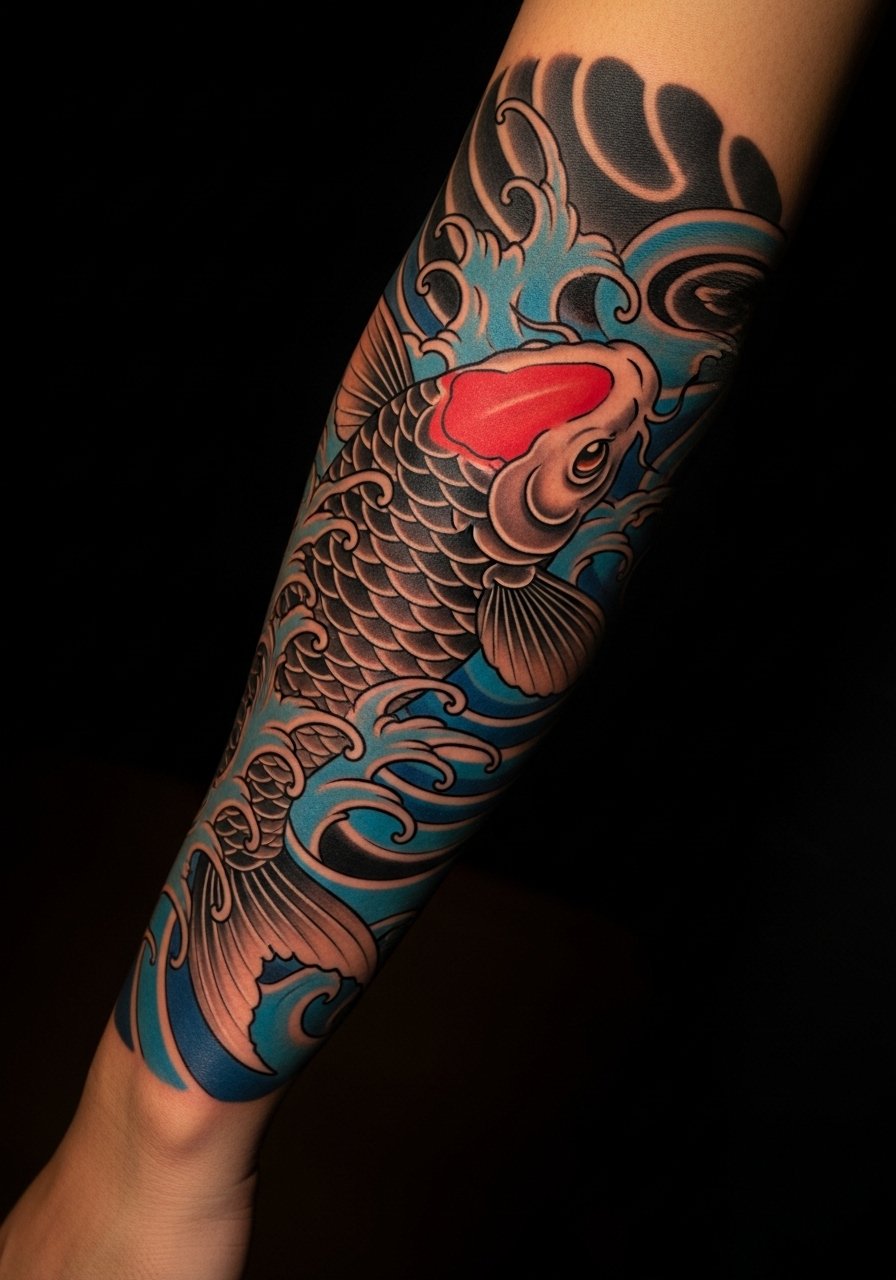
A full sleeve where waves become the design glue lets a koi move naturally across your arm. This is an immersive take on the Japanese traditional aesthetic, with bold background elements that make the koi pop.
Style & Design Details
- Tattoo style: Irezumi-inspired sleeve
- Recommended size: full or half sleeve (multi-session)
- Best placements: full sleeve, half-sleeve, leg sleeve
- Color vs. blackwork: saturated color with solid black backgrounds
- Design elements: large wave forms, negative-space highlights, peony accents, scale texture, wind bars
- Longevity note: large packed black areas help color longevity but can age with a matte look
- Who it suits: sleeve lovers, collectors, people wanting cohesive large-scale art
Finding the Right Artist
Pick someone with sleeve continuity in their portfolio. Ask about session pacing, color layering strategies, and how they handle transitions. Avoid artists who haven't completed multi-session color work.
Aftercare & Healing Tips
Large sessions mean more swelling and longer initial soreness. Keep sections wrapped and hydrated. During healing, use fragrance-free antibacterial soap and Hustle Butter Deluxe to aid flaking phases. Plan a touch-up after full healing.
- Koi and Lotus Mandala — Spiritual Focus Piece
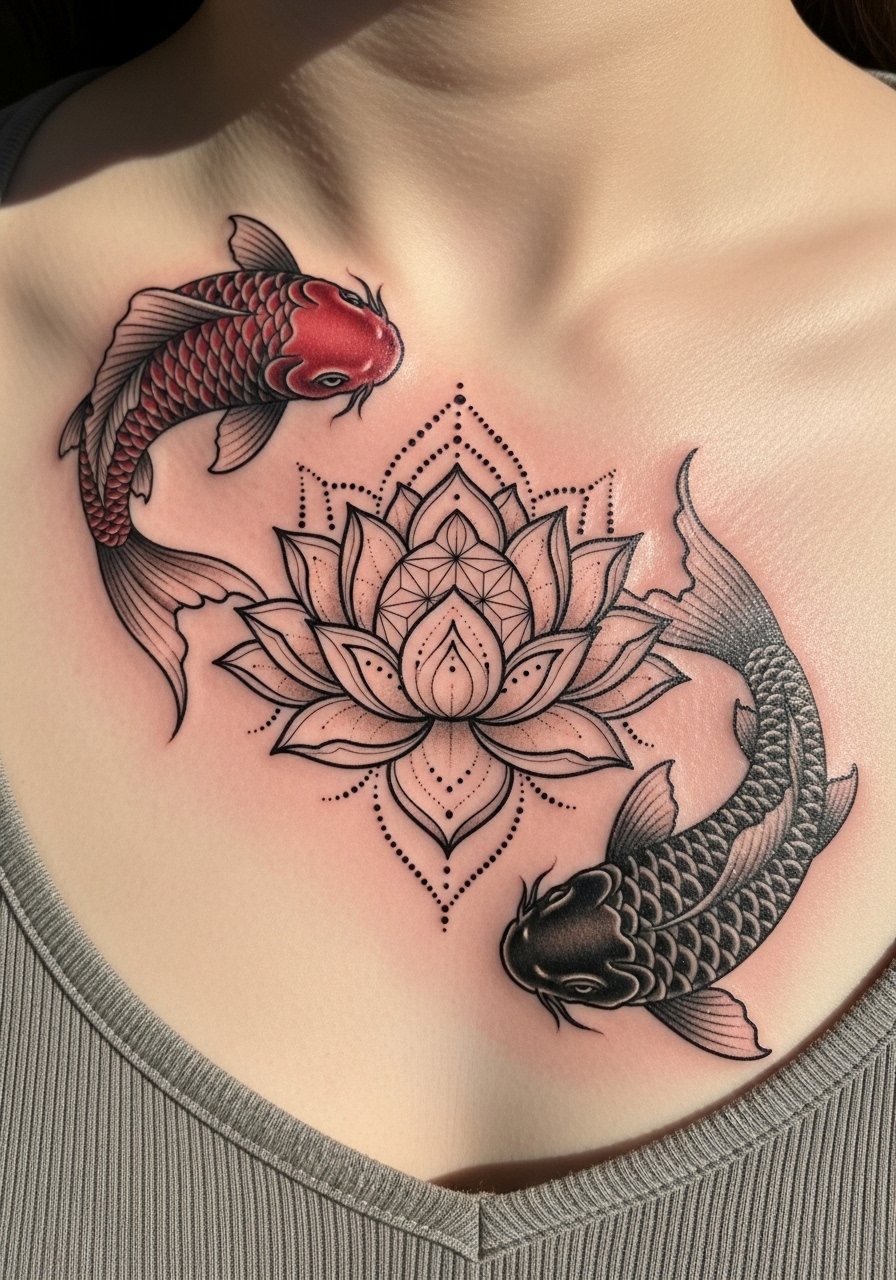
Combining a koi with a lotus mandala creates a meditative, spiritual composition. It’s a story of transformation and purity, perfect for the sternum or chest where symmetry and centrality matter.
Style & Design Details
- Tattoo style: ornamental / illustrative fusion
- Recommended size: 4–8 inches
- Best placements: sternum, chest center, upper back
- Color vs. blackwork: blackwork mandala with colorful koi accent
- Design elements: mandala dots and lines, lotus petals, koi scale texture, radial symmetry, dotwork shading
- Longevity note: mandala lines need crispness; tiny lines may need touch-ups
- Who it suits: spiritual seekers, meditation practitioners, symmetry lovers
Finding the Right Artist
Find portfolios showing both ornamental mandalas and figurative subjects. Ask how they’ll ensure symmetry and whether they freehand or stencil for chest curves. Avoid artists who don't show healed mandala work.
Aftercare & Healing Tips
Sternum placements can be tender; numbing gels like Zensa numbing cream applied per product directions can help. Use Saniderm for initial protection and an unscented lotion during peeling.
- Geometric Koi Frame — Modern Structure Meets Tradition
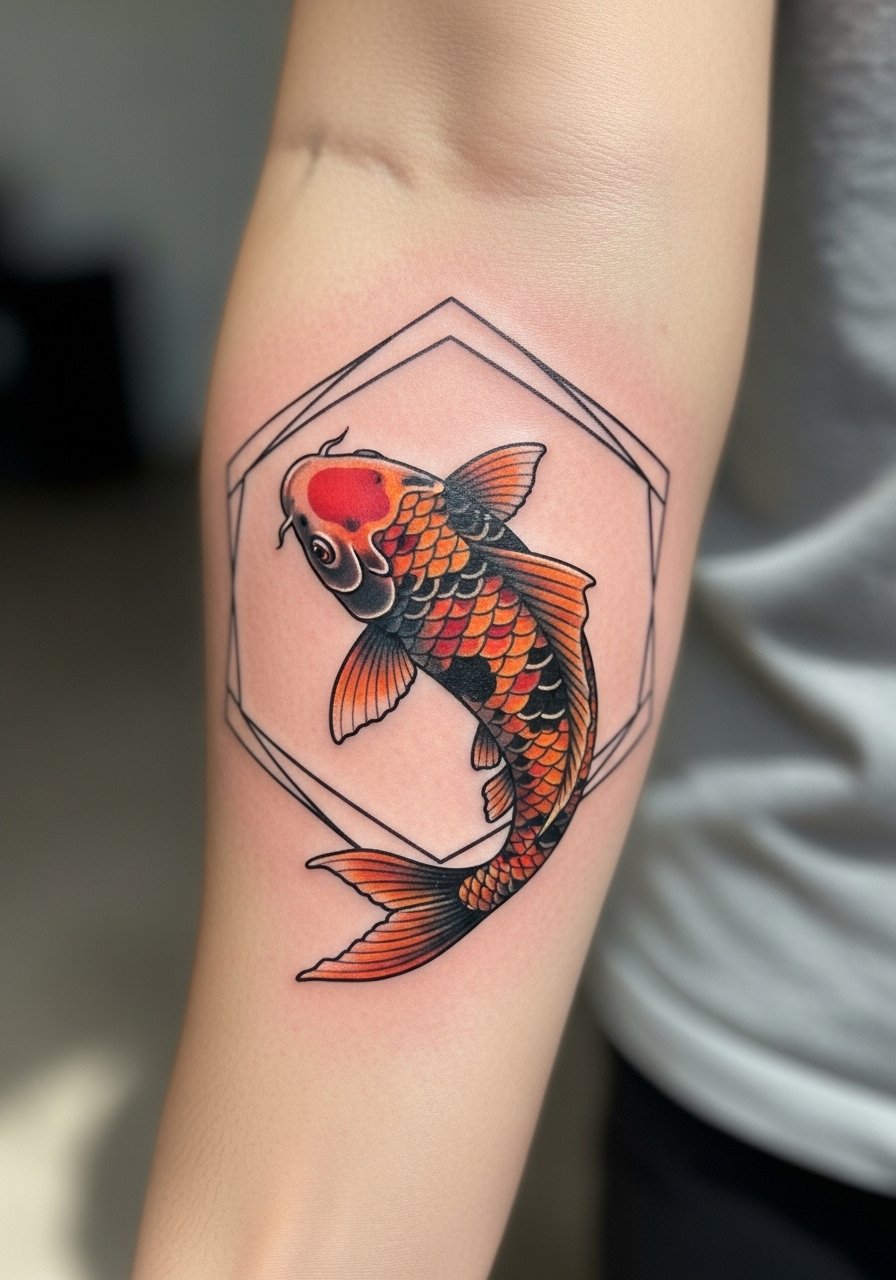
Framing a koi inside geometric shapes gives a modern architectural twist. This is for those who love clean edges and contemporary design but still want the koi narrative.
Style & Design Details
- Tattoo style: geometric + illustrative
- Recommended size: 3–6 inches
- Best placements: inner forearm, upper arm, calf
- Color vs. blackwork: black frames with colored internal koi recommended
- Design elements: geometric frames, precision linework, color blocking, negative-space borders, subtle scale texture
- Longevity note: geometric lines must stay sharp; thicker frames age better
- Who it suits: modernists, minimal-geometry fans, design professionals
Finding the Right Artist
Pick someone who does precise geometry and clean color fills. Ask if they use rulers or freehand and request healed shots of similar work. Avoid artists with wobbly lines in portfolios.
Aftercare & Healing Tips
Keep lines dry initially and use a thin layer of fragrance-free lotion like Aveeno fragrance-free lotion to avoid smudging during peeling. Expect a touch-up after 2–3 months if lines soften.
- Koi with Peony Backpiece — Regal and Textured
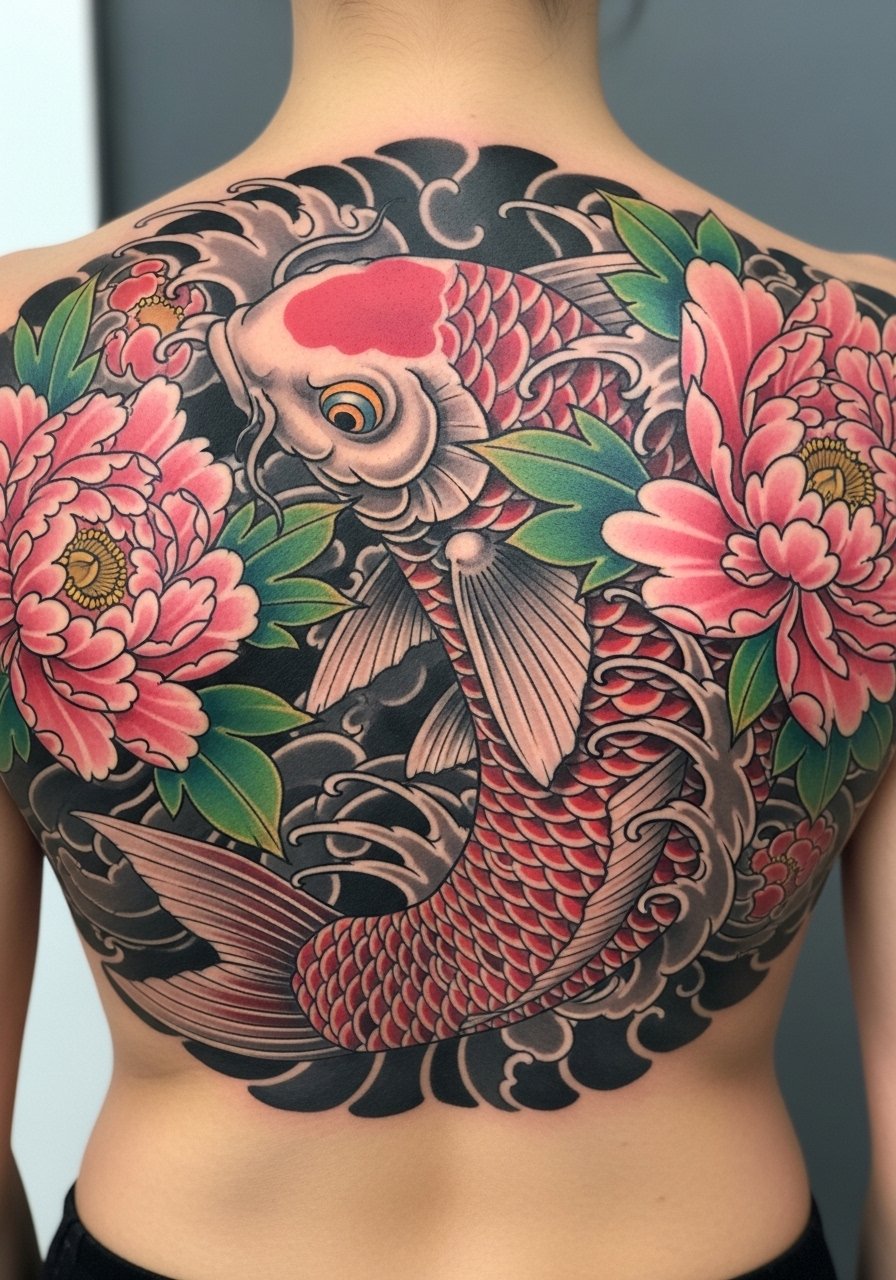
Large peonies add depth and elegance to a koi backpiece. This combination reads classic Japanese and creates a floral-rich narrative that ages beautifully with skin texture.
Style & Design Details
- Tattoo style: traditional Japanese backpiece
- Recommended size: large back area, 10–18 inches
- Best placements: upper back, full back
- Color vs. blackwork: saturated colors with deep blacks for contrasts
- Design elements: peony clusters, cloud and wave backgrounds, dramatic scale patterns, bold outlines
- Longevity note: large motifs age well; color refreshes every few years preserve vibrancy
- Who it suits: those wanting a showpiece, fans of floral motifs, collectors
Finding the Right Artist
Look for artists with completed backpieces in their portfolio. Ask about the number of sessions and color layering method. Avoid artists without experience in large multi-session color continuity.
Aftercare & Healing Tips
Backpieces need staged aftercare; keep clothing loose and avoid heavy backpacks during healing. Use Saniderm patches on high-friction spots if needed, and apply Hustle Butter Deluxe during peeling.
- Neon Koi Pop — Electric Contemporary Vibe
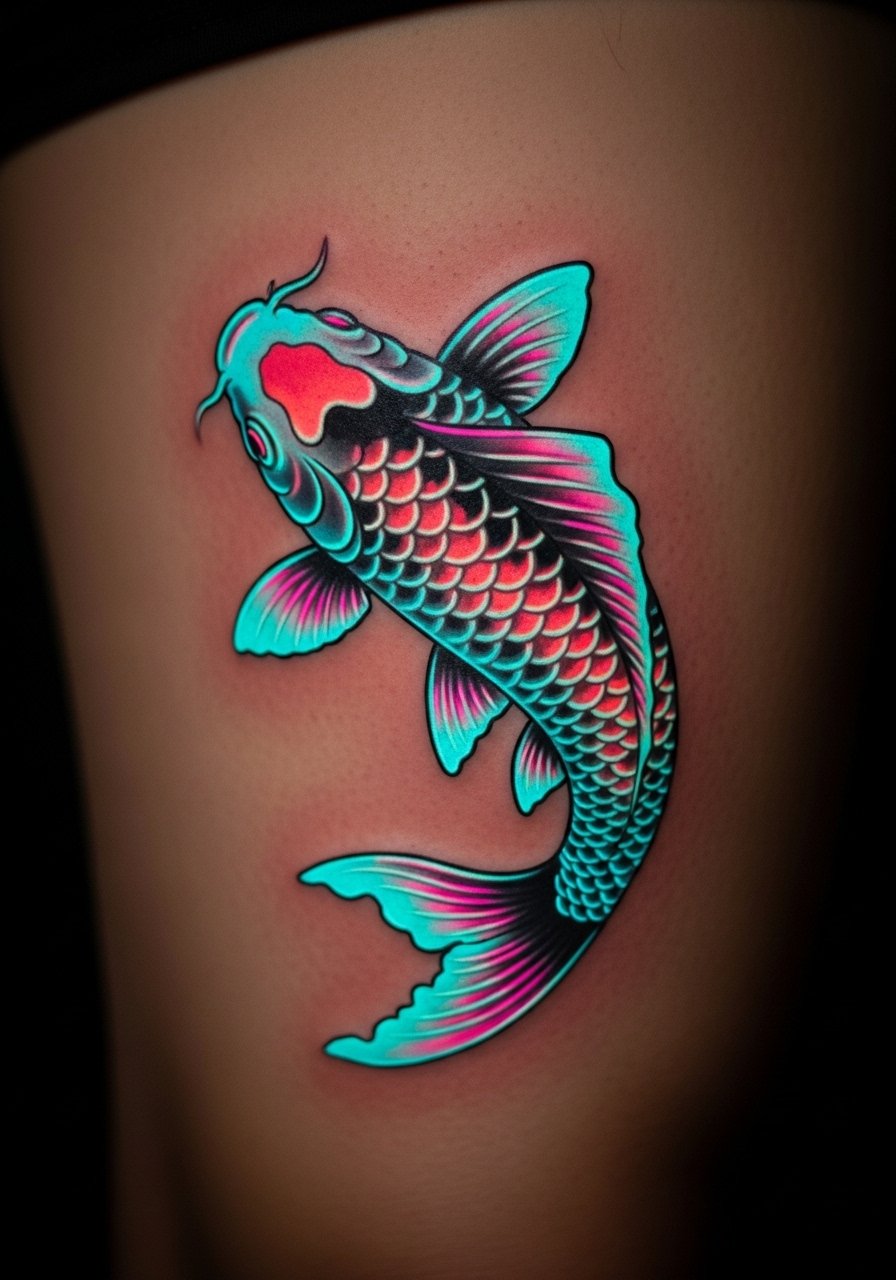
For bold trend-forward folks, neon koi use modern pigments that pop under daylight. This eye-catching choice leans playful and bold, ideal for thigh or upper arm where it can breathe.
Style & Design Details
- Tattoo style: neo-traditional with neon palette
- Recommended size: 4–10 inches
- Best placements: thigh, outer arm, back of shoulder
- Color vs. blackwork: high-saturation colors and neon highlights
- Design elements: color gradients, ink-splatter style accents, thick shadowing, playful scale highlights
- Longevity note: neon pigments fade faster; SPF and touch-ups are crucial
- Who it suits: trendsetters, creative professionals, those confident in bright color
Finding the Right Artist
Find artists experienced with bright pigments and who show healed neon pieces. Ask about pigment brands and their long-term experiences. Avoid artists who only post fresh ink photos without healed shots.
Aftercare & Healing Tips
Neon inks need extra sun protection. Use SPF 50 tattoo-specific sunscreen once healed and moisturize with After Inked Tattoo Brightening Balm to preserve saturation.
- Portrait Koi — Realistic Texture Overlaid with Koi Imagery
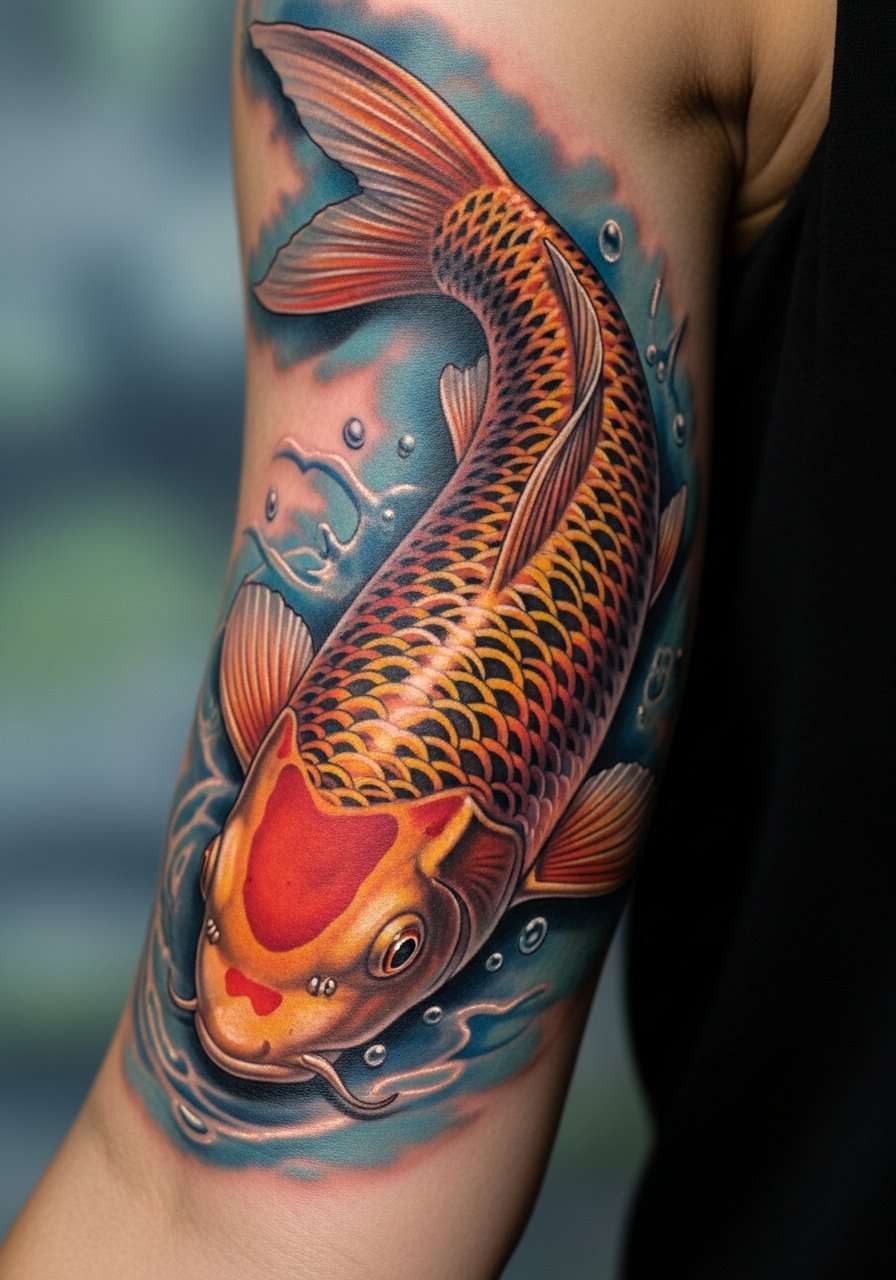
A portrait-style koi focuses on lifelike texture and reflective scales. This realistic approach reads like an underwater photograph and pairs beautifully with soft background elements.
Style & Design Details
- Tattoo style: realism / illustrative
- Recommended size: 5–12 inches
- Best placements: bicep, thigh, back
- Color vs. blackwork: full-color realism with metallic ink suggestions
- Design elements: hyper-real scales, reflective highlights, subtle water ripples, micro-shading
- Longevity note: realism requires touch-ups to maintain highlights; black anchors help preserve contrast
- Who it suits: realism collectors, those wanting photographic detail
Finding the Right Artist
Seek realism artists with aquatic subject experience. Ask about reference photos, layer-building technique, and how they render metallic sheens. Avoid artists without healed realism examples.
Aftercare & Healing Tips
Keep detailing crisp by moisturizing with Hustle Butter Deluxe sparingly. Expect a 3-month follow-up for tiny highlight touch-ups.
- Small Ankle Koi — Tiny Symbol, Big Meaning
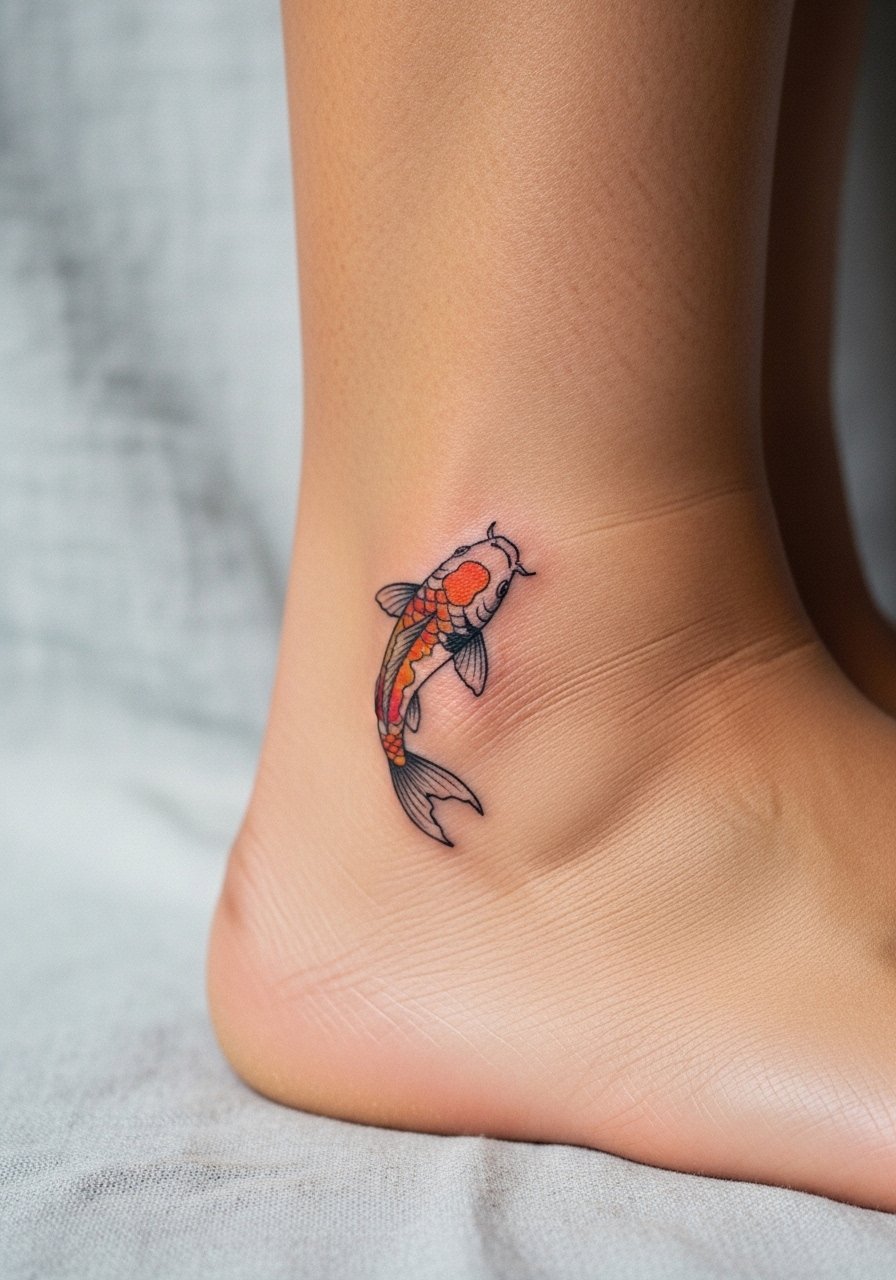
A small koi at the ankle gives a discreet nod to koi symbolism. It’s an accessible first tattoo and works well with anklets or sandals once healed.
Style & Design Details
- Tattoo style: mini illustrative
- Recommended size: 1–2 inches
- Best placements: ankle, behind ear, wrist
- Color vs. blackwork: small color accent advisable
- Design elements: simplified scale marks, tiny wave accents, minimal outline
- Longevity note: small pieces blur more quickly; plan for touch-ups
- Who it suits: first-timers, minimalists, travelers
Finding the Right Artist
Pick an artist who does quality smallwork. Ask to see healed minis and discuss needle choice. Apprentices can do small pieces under supervision.
Aftercare & Healing Tips
Ankle tattoos see friction from socks and shoes; keep them covered with breathable clothing and moisturize with Lubriderm fragrance-free lotion. Avoid tight shoes for two weeks.
- Koi with Samurai Elements — Honor & Protection
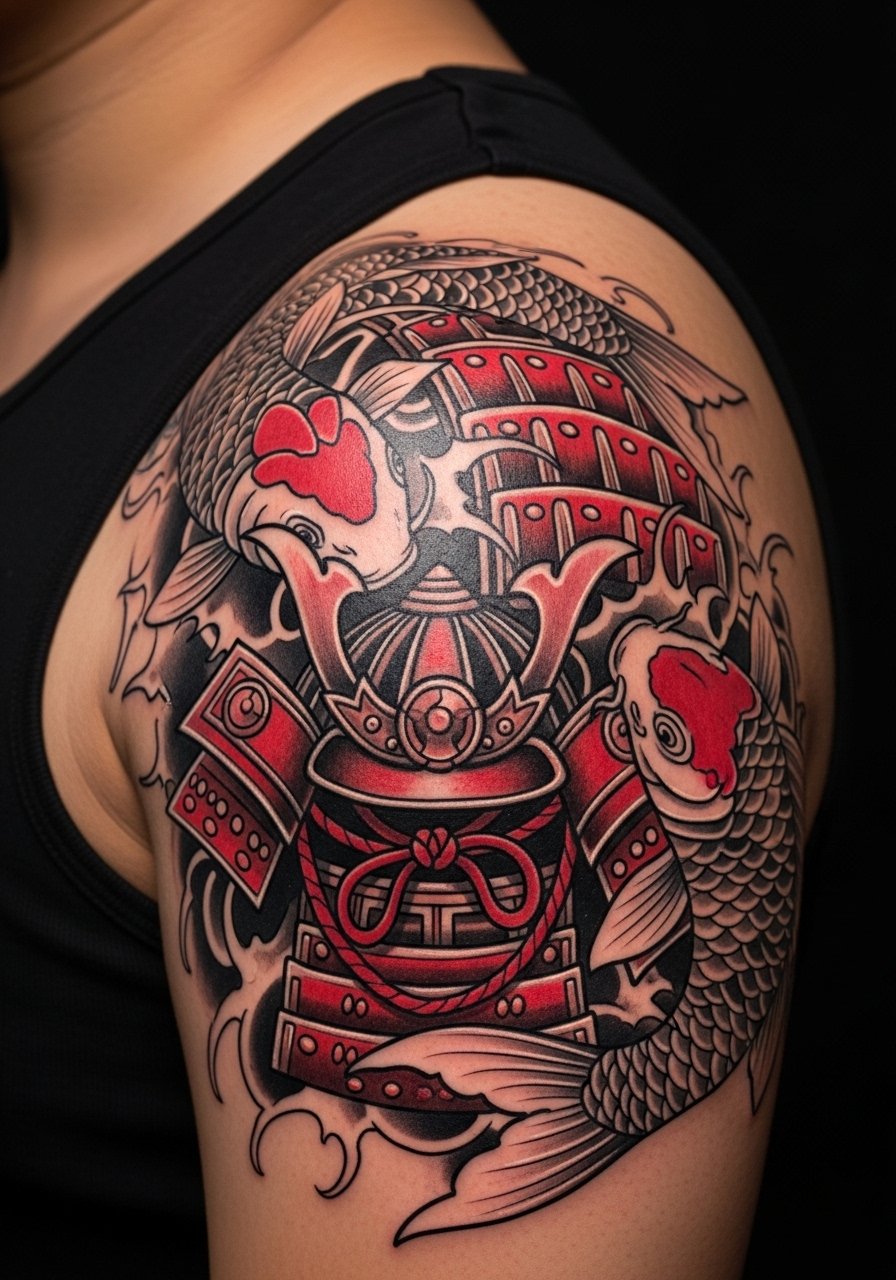
Mixing koi with samurai iconography amplifies themes of honor and perseverance. This masculine-leaning composition looks great across the shoulder or chest.
Style & Design Details
- Tattoo style: traditional Japanese fusion
- Recommended size: 6–12 inches
- Best placements: shoulder, chest, upper arm
- Color vs. blackwork: color with deep reds and blacks
- Design elements: kabuto helmet accents, banners, water movement, scale patterns
- Longevity note: bold lines age predictably; armor detail may need occasional refresh
- Who it suits: people valuing heritage motifs, fans of warrior symbolism
Finding the Right Artist
Choose artists experienced in both figurative and armor detail. Ask for healed photos of similarly complex pieces. Avoid artists who don’t practice traditional Japanese layouts.
Aftercare & Healing Tips
Upper chest/shoulder areas can rub against straps; wear loose shirts and apply Saniderm as needed where friction is likely.
14.5 Note: There are two 14s? — Sorry, numbering must be exact; continue at 15.
- Koi Spine Column — Vertical Movement & Centering
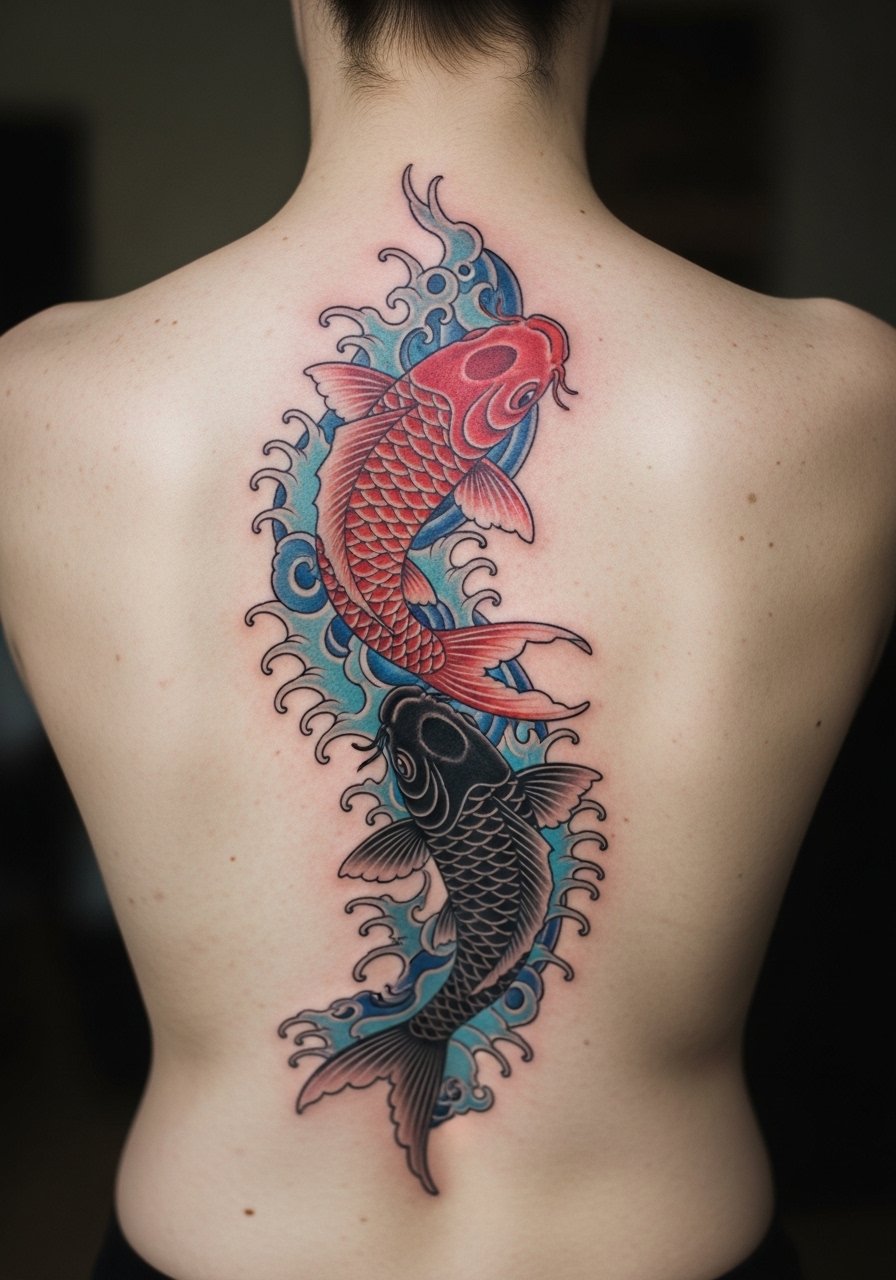
A spine placement emphasizes vertical motion and personal transformation. Koi along the spine look striking and sit close to your body’s centerline.
Style & Design Details
- Tattoo style: illustrative / Japanese influence
- Recommended size: 6–12 inches (vertical)
- Best placements: spine, along the sternum or center back
- Color vs. blackwork: color or black-and-grey both work well
- Design elements: flowing body curve, small background swirls, precise linework, scale gradation
- Longevity note: spine tattoos hold well; small details may need refresh due to movement
- Who it suits: those wanting centered symbolism, lovers of vertical compositions
Finding the Right Artist
Seek someone comfortable with spinal placements who shows healed examples. Ask how they handle pain and session length for the spine. An experienced artist is recommended.
Aftercare & Healing Tips
Spine tattoos can be painful and sweat-prone. Use Saniderm for the first 24–48 hours and switch to unscented lotion. Consider Zensa numbing cream if you have low tolerance.
- Floral Collarbone Koi — Feminine Flow
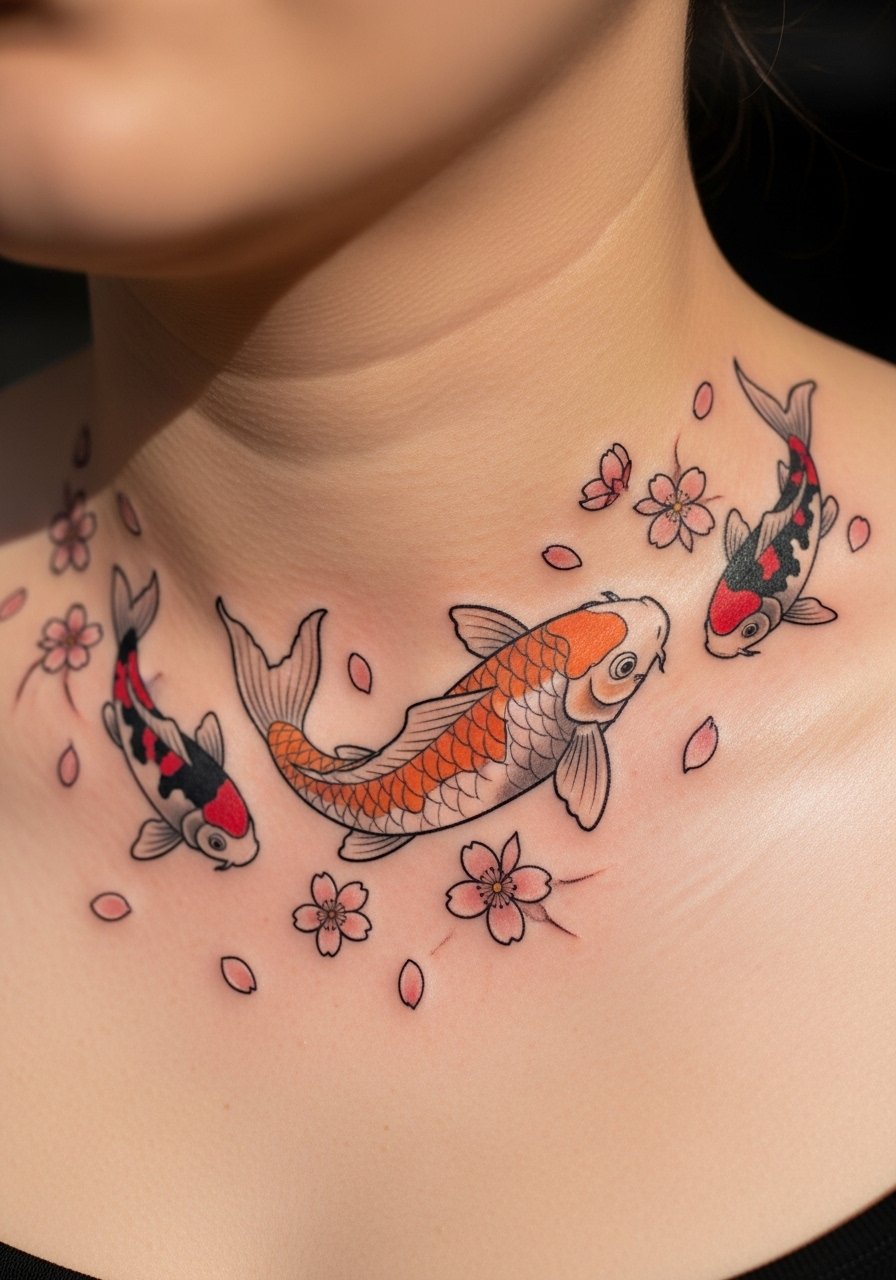
A koi across the collarbone reads delicate and feminine while still bold. Paired with cherry blossoms, it feels lyrical and wearable in both casual and formal settings.
Style & Design Details
- Tattoo style: fine-line Japanese fusion
- Recommended size: 3–7 inches
- Best placements: collarbone, clavicle line, upper chest
- Color vs. blackwork: soft pastels with muted outlines recommended
- Design elements: cherry blossom petals, thin outlines, subtle water shading, graceful curve along collarbone
- Longevity note: thin collarbone lines need care to prevent blurring
- Who it suits: feminine aesthetics, romantic tastes, visible but tasteful ink
Finding the Right Artist
Choose someone skilled at collarbone placements and delicate florals. Ask for healed photos of collarbone tattoos, because those areas stretch and need thoughtful placement.
Aftercare & Healing Tips
Wear loose necklines and avoid jewelry rubbing the area. Moisturize with Lubriderm fragrance-free lotion and avoid direct sun during healing.
- Koi with Bamboo — Resilience & Flexibility
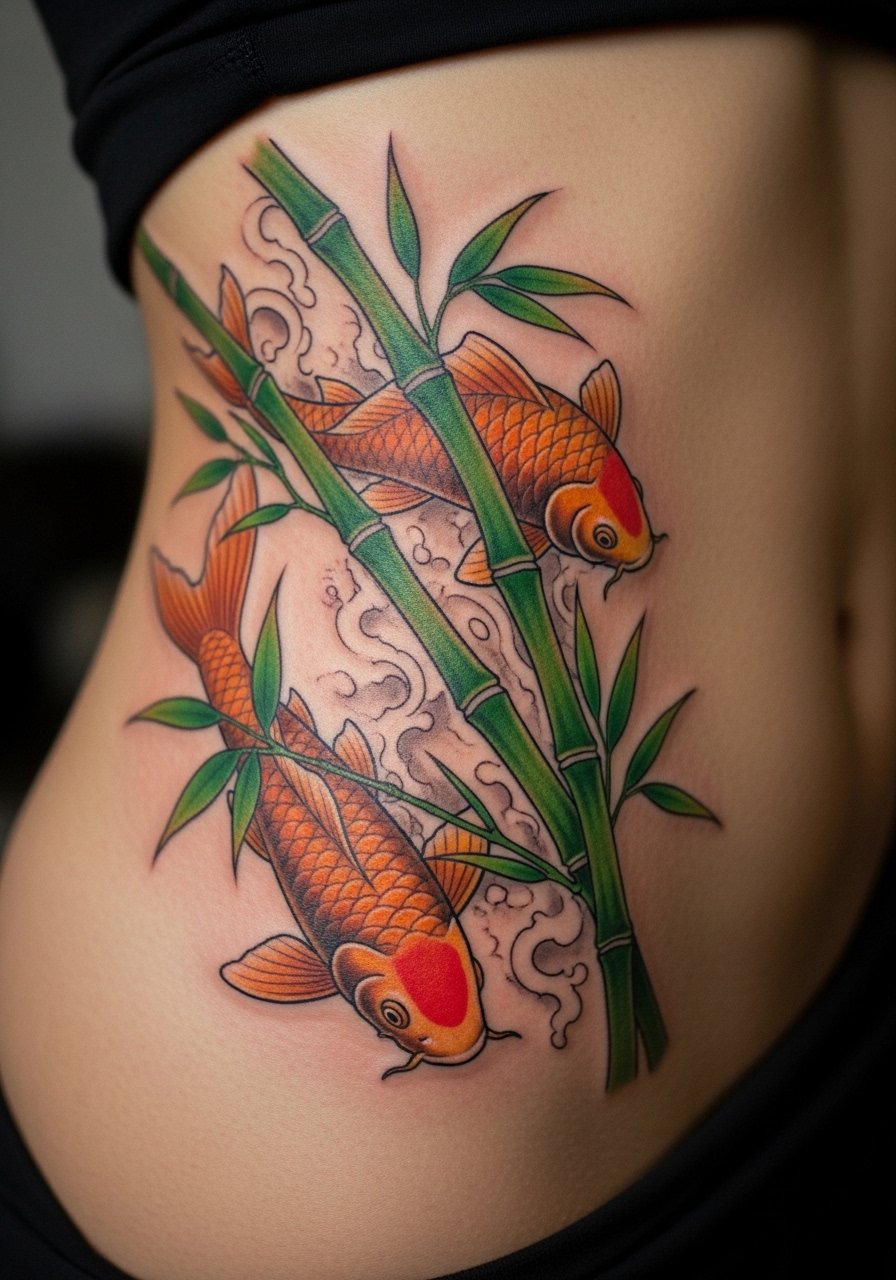
Bamboo alongside koi highlights resilience and flexibility — qualities that bend but don’t break. Sounds poetic? It is. This composition pairs organic linework with the koi's motion.
Style & Design Details
- Tattoo style: Japanese illustrative
- Recommended size: 6–12 inches
- Best placements: side rib, hip, thigh
- Color vs. blackwork: natural color palette with greens, ochres, and black accents
- Design elements: bamboo stalks, leaf linework, koi curves, subtle negative space
- Longevity note: green pigments can fade; touch-ups help
- Who it suits: nature lovers, folks wanting a balanced narrative
Finding the Right Artist
Look for portfolios combining florals and animals. Ask how they’ll arrange bamboo to follow body curves. Avoid artists who don’t plan for body movement.
Aftercare & Healing Tips
Rib/hip areas require careful clothing choices to reduce friction. Use Saniderm patches and a gentle lotion like Aveeno fragrance-free lotion in the peeling phase.
- Koi in a Lantern — Nighttime Elegance
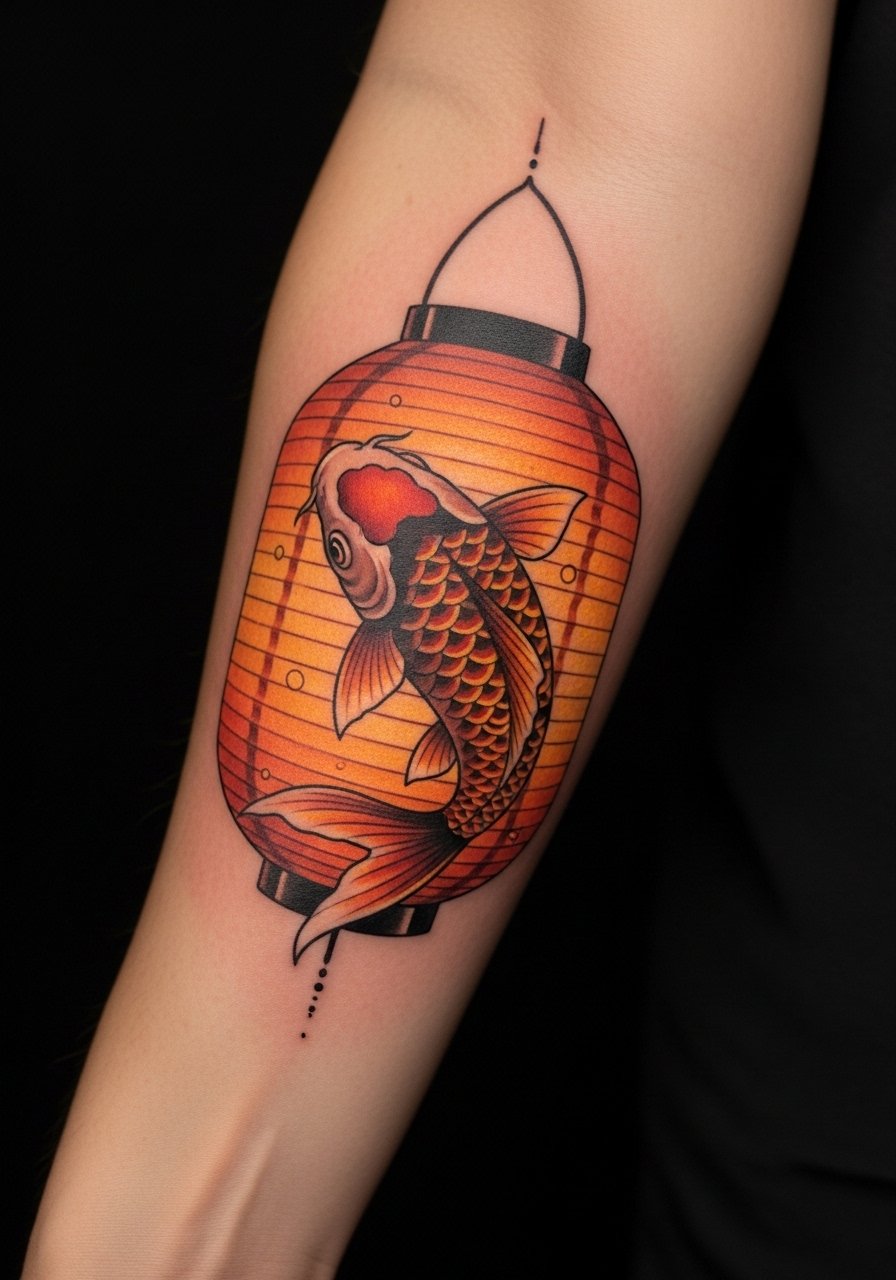
A koi framed by a lantern suggests guidance through darkness. It’s a moody, storytelling piece that pairs well with darker palettes and subtle glow effects.
Style & Design Details
- Tattoo style: illustrative / neo-traditional
- Recommended size: 4–8 inches
- Best placements: forearm, calf, upper arm
- Color vs. blackwork: warm palette with amber highlights
- Design elements: lantern frame, glowing gradients, koi curves, subtle texture on paper elements
- Longevity note: glow effects require careful touch-ups to stay luminous
- Who it suits: lovers of night motifs, narrative fans, subtle romantics
Finding the Right Artist
Pick artists who do light-source rendering and show healed gradient work. Ask for examples of glow effects on healed tattoos.
Aftercare & Healing Tips
Lantern shading relies on color saturation; use Hustle Butter Deluxe lightly to aid peeling. Sun protection is necessary to maintain subtle glows.
- Koi with Map Elements — Travel & Journey Tribute
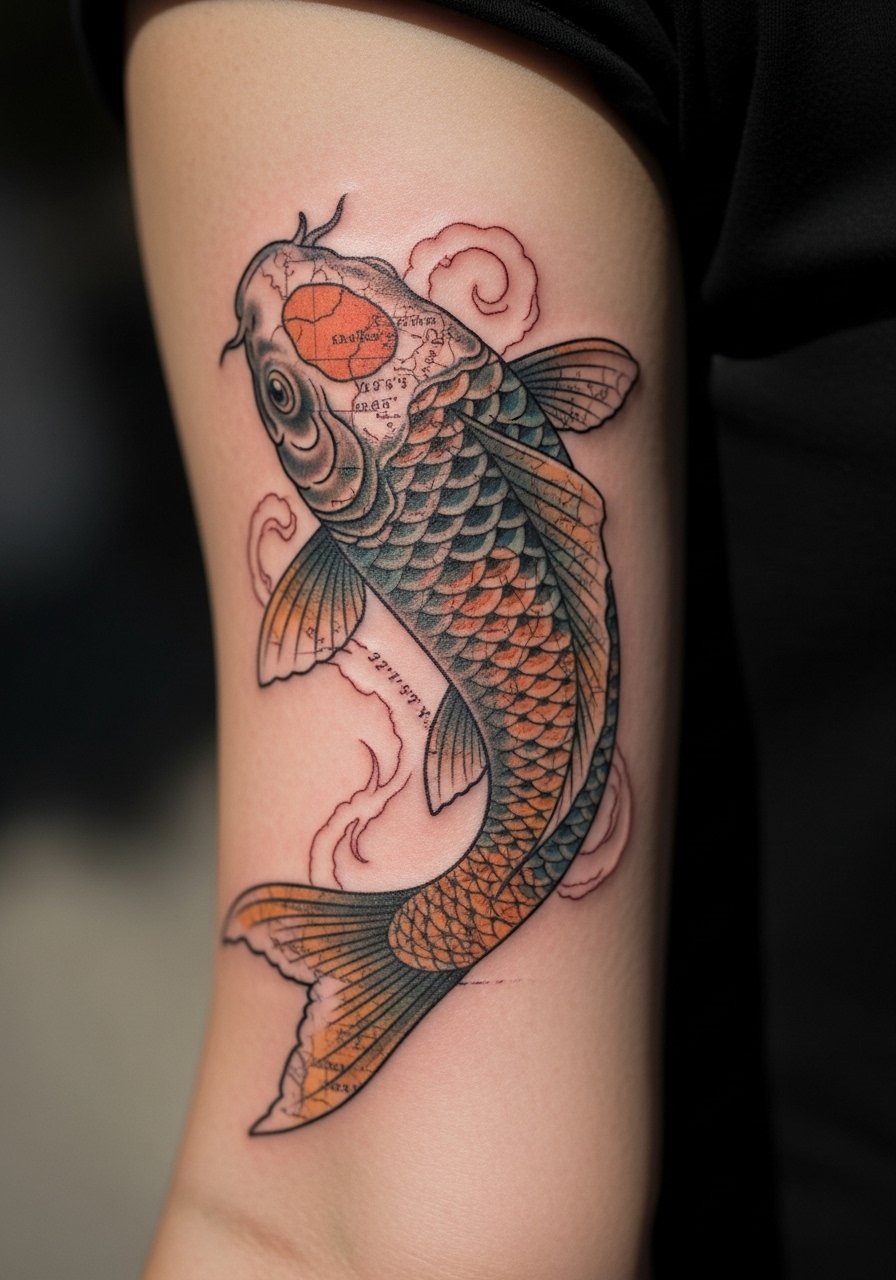
Integrating maps or coordinates tells a personal travel story. A koi paired with geographic hints says your journey — literal or emotional — shaped you.
Style & Design Details
- Tattoo style: illustrative / mixed-media
- Recommended size: 3–8 inches
- Best placements: inner bicep, rib, forearm
- Color vs. blackwork: muted color palette with black map lines
- Design elements: compass points, faint map lines, koi silhouette, small script coordinates
- Longevity note: fine map lines may soften; keep bold map anchors to retain design
- Who it suits: travelers, people commemorating a place, sentimental types
Finding the Right Artist
Find artists who combine script, micro-line, and illustrative fish work. Ask about scaling map elements to remain legible. Avoid artists without fine-line map examples.
Aftercare & Healing Tips
Micro-lines require careful protection — Saniderm is a good option. Use fragrance-free soap and moisturize with Lubriderm fragrance-free lotion.
- Blackwork Koi Silhouette — Bold & Graphic
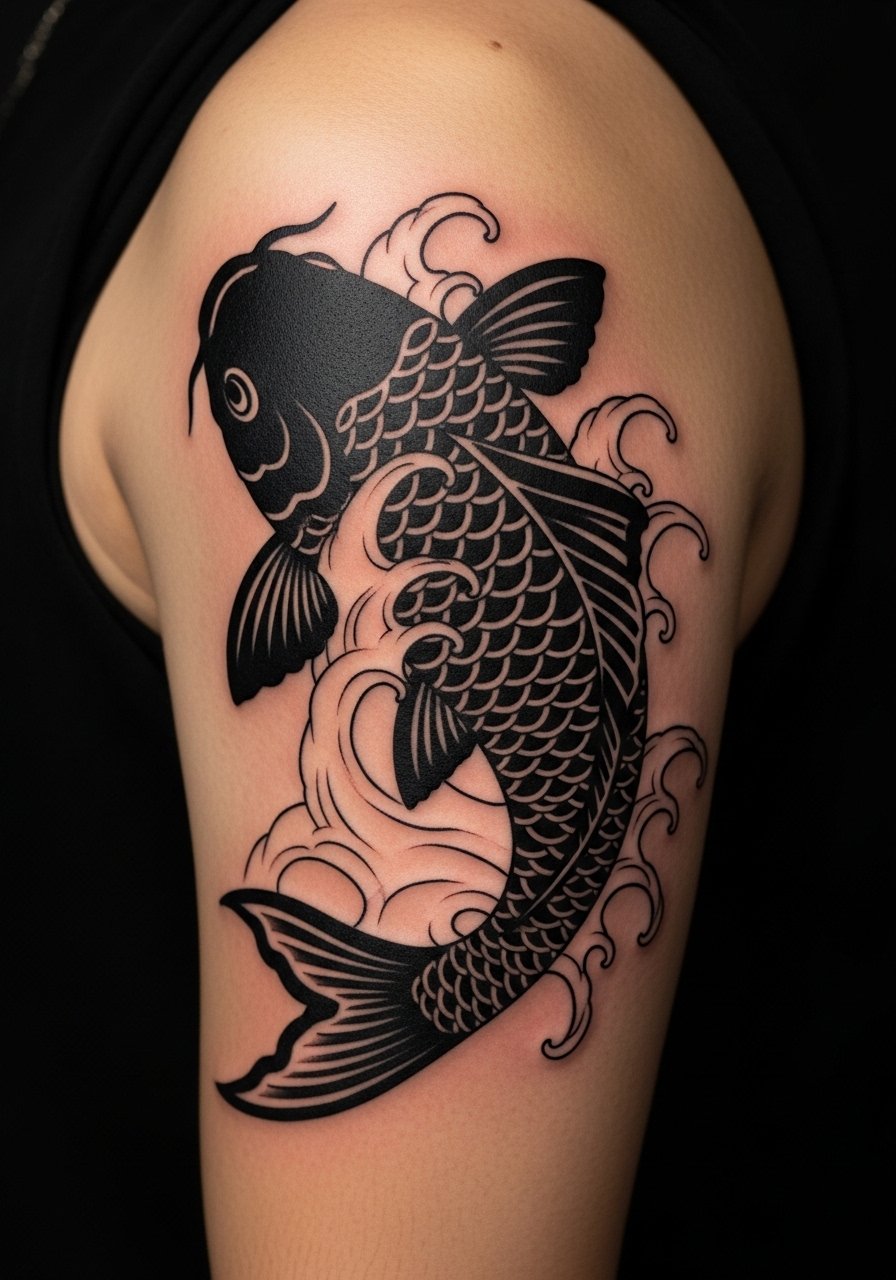
A silhouette koi in blackwork is stark, modern, and graphic. It leans heavy on composition and negative space rather than color. Ideal if you want an instantly readable statement piece.
Style & Design Details
- Tattoo style: blackwork / silhouette
- Recommended size: 4–10 inches
- Best placements: upper arm, chest, back
- Color vs. blackwork: all-black fill with negative-space detail
- Design elements: solid fills, negative-space water highlights, bold outline, textured scale suggestions (negative)
- Longevity note: solid black ages well; regular SPF prevents dulling
- Who it suits: graphic designers, lovers of stark contrast, masculine or androgynous aesthetics
Finding the Right Artist
Choose blackwork specialists with clean fill techniques. Ask how they prevent patchiness in large black areas. Avoid inexperienced artists for big filled sections.
Aftercare & Healing Tips
Large black fills can scab if not cared for. Keep the piece moisturized with Hustle Butter Deluxe and avoid heavy friction. Reapply SPF when healed.
- Koi with Script Banner — Personal Motto Ink
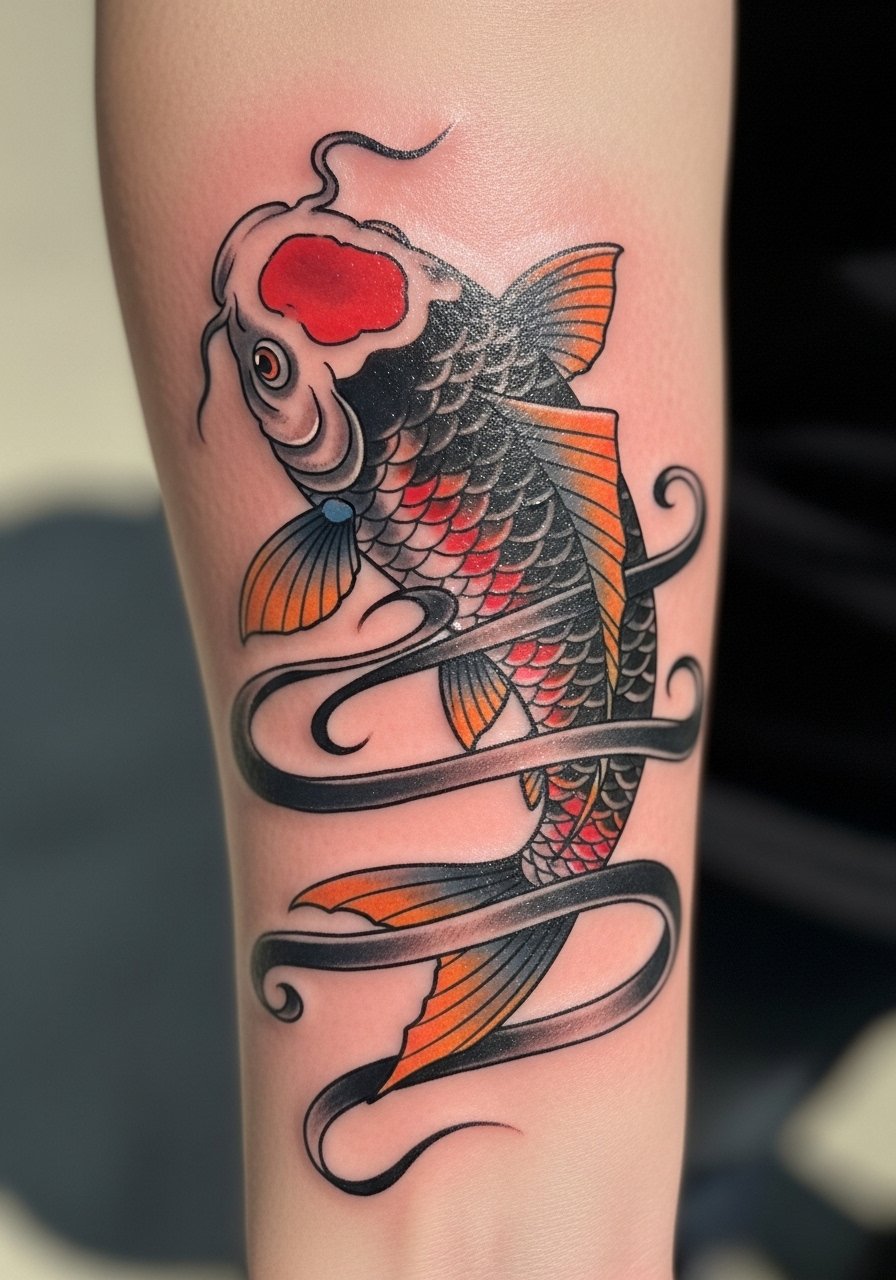
Adding a script banner lets you pair the koi with a motto, name, or date. This personalization makes an already symbolic fish even more meaningful.
Style & Design Details
- Tattoo style: traditional + script
- Recommended size: 3–7 inches
- Best placements: forearm, chest, rib
- Color vs. blackwork: color koi with black script recommended
- Design elements: banner, custom script, simple scale pattern, small wave motifs
- Longevity note: script needs space and weight to remain legible over time
- Who it suits: memorial tattoos, people wanting words paired with imagery
Finding the Right Artist
Ask artists for script samples and healed examples. Ensure letter spacing is sufficient for aging. Avoid artists who rush font layout.
Aftercare & Healing Tips
Keep the banner area flat and avoid stretching the skin. Use fragrance-free soap and Lubriderm fragrance-free lotion during peeling.
- Koi with Geisha Silhouette — Cultural Narrative Piece
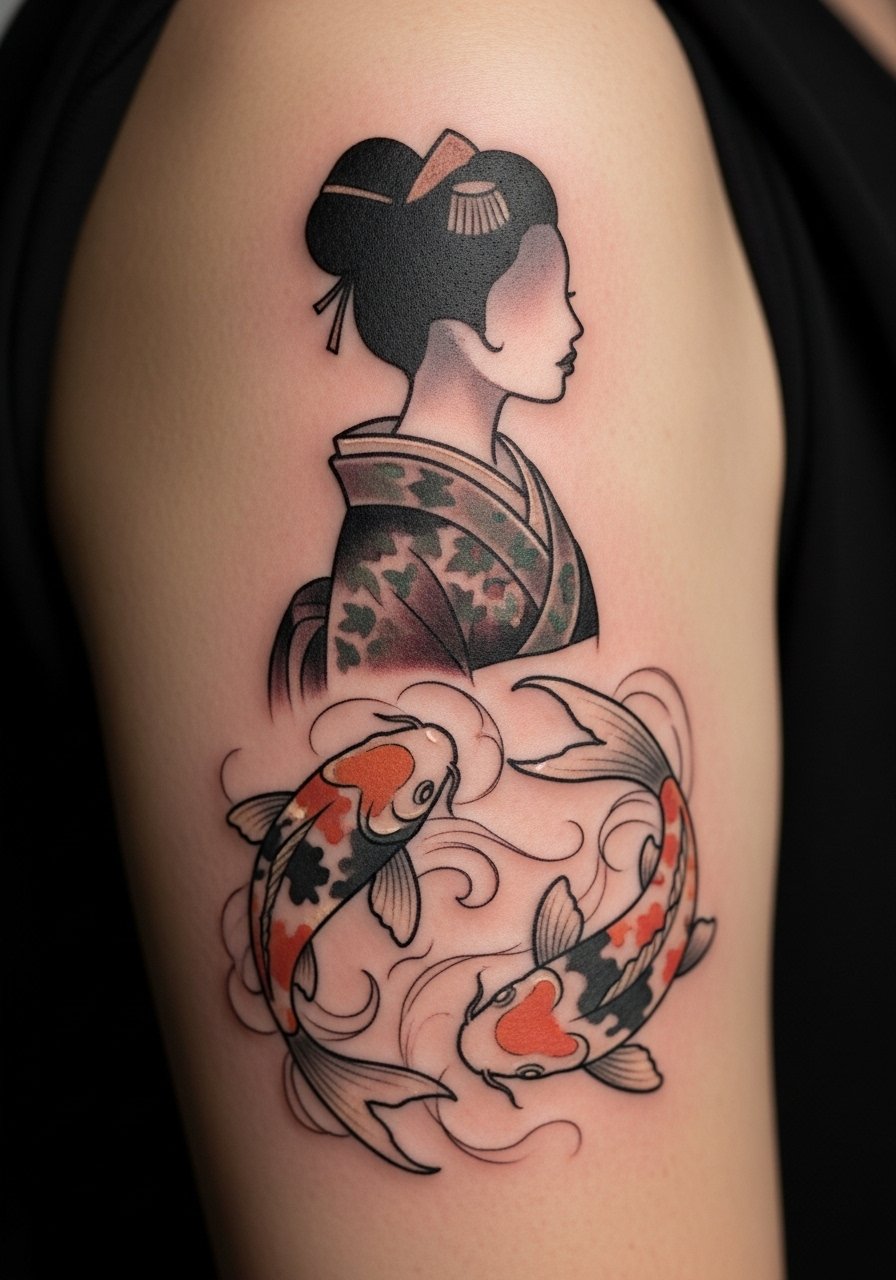
Combining a koi with a geisha silhouette creates a piece rich in cultural storytelling. It’s evocative, cinematic, and often designed with subtle contrasts.
Style & Design Details
- Tattoo style: narrative illustrative
- Recommended size: 6–10 inches
- Best placements: upper arm, thigh, back
- Color vs. blackwork: subdued color palette with strong black silhouettes
- Design elements: geisha silhouette, koi movement, patterned kimono accents, floral details
- Longevity note: silhouettes maintain form well; subtle colors might fade
- Who it suits: story-driven clients, fans of cultural compositions, dramatic aesthetics
Finding the Right Artist
Choose someone who respects cultural subjects and has portfolio examples. Ask how they'll avoid stereotypical depictions and ensure sensitivity.
Aftercare & Healing Tips
Great narrative pieces need even healing. Use Saniderm in initial phase and a gentle aftercare balm during peeling.
- Koi Skeleton — Memento Mori Koi Twist
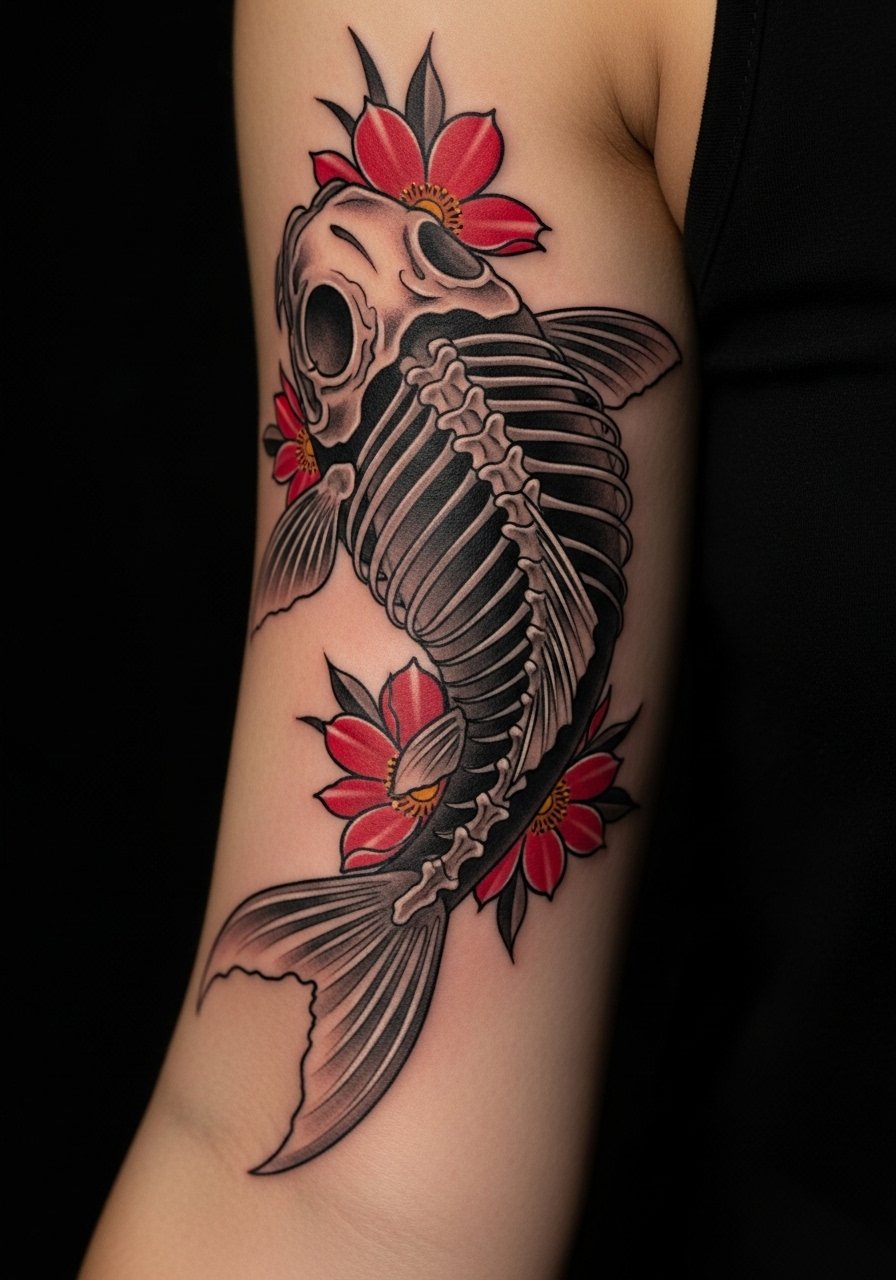
A koi skeleton juxtaposes beauty with mortality for a darker symbolic take. It’s edgy, evocative, and perfect if you like gothic or dark-academia aesthetics.
Style & Design Details
- Tattoo style: dark illustrative / neo-traditional
- Recommended size: 4–8 inches
- Best placements: forearm, calf, chest
- Color vs. blackwork: black-and-grey with selective color pops
- Design elements: skeletal structure, floral contrast, stippling, smoke/wave accents
- Longevity note: black-and-grey holds well; contrast areas with color may need refresh
- Who it suits: gothic aesthetics, darker symbolism lovers, those who appreciate contrast
Finding the Right Artist
Find artists who successfully combine anatomical detail and ornamental elements. Review healed photos for contrast retention.
Aftercare & Healing Tips
Black-and-grey skeletons do well with standard aftercare. Keep it moisturized with Hustle Butter Deluxe and avoid heavy sun exposure.
- Two-Tone Koi — Split-Color Contrast
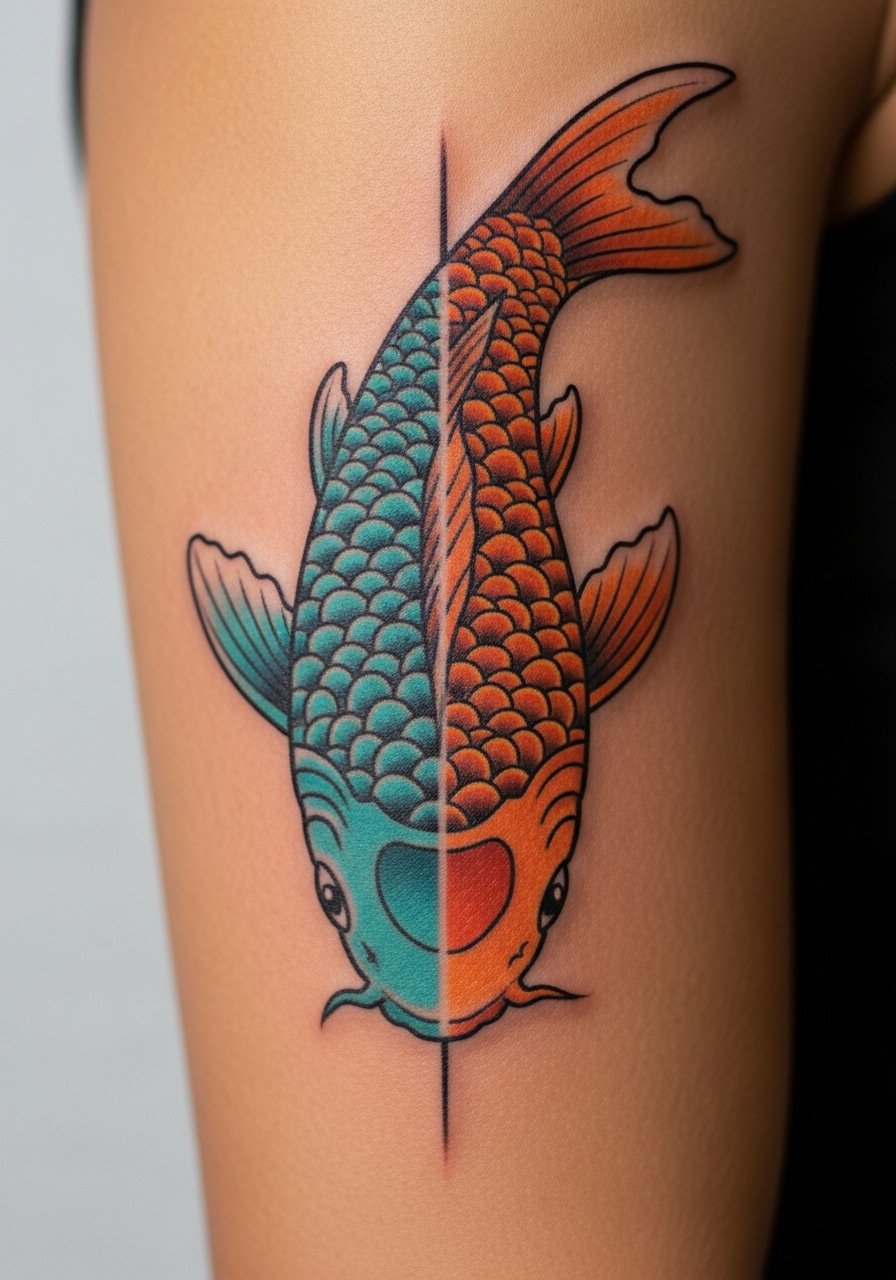
A split-color koi uses two contrasting palettes to signify duality or choices. The symmetrical paint-split look is graphic and modern.
Style & Design Details
- Tattoo style: neo-traditional / color-block
- Recommended size: 4–8 inches
- Best placements: outer arm, thigh, shoulder
- Color vs. blackwork: two contrasting color families for bold contrast
- Design elements: clean bisecting line, mirrored scale detail, negative-space highlights
- Longevity note: both palettes will fade at different rates; matched touch-ups help keep balance
- Who it suits: lovers of graphic contrast, people wanting symbolic duality
Finding the Right Artist
Choose artists who show mastery of even color fills and crisp separations. Ask about pigment brands for longevity.
Aftercare & Healing Tips
Keep both color sides equally moisturized. Use Saniderm if one side rubs more during clothing wear.
- Cosmic Koi — Celestial Colors & Starscape
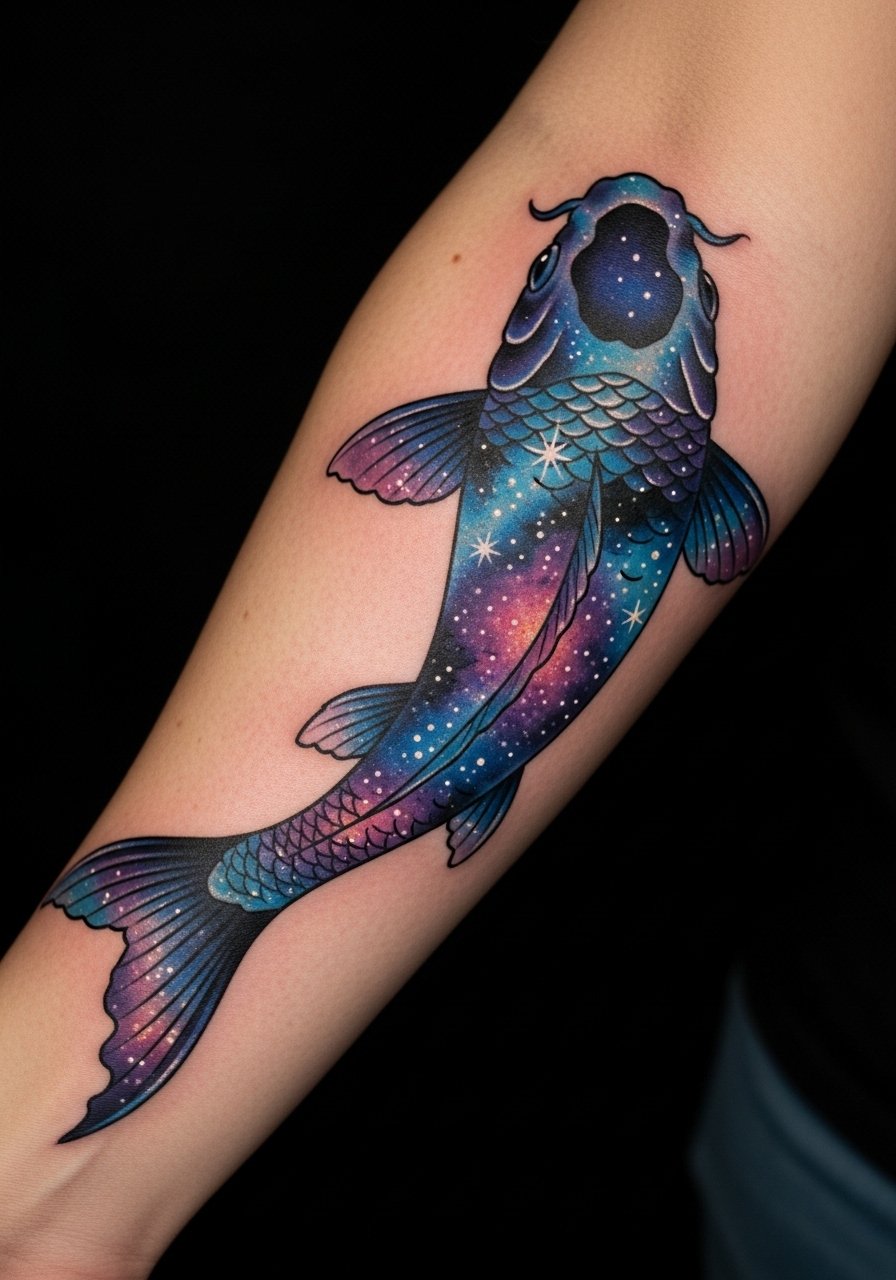
A cosmic koi uses galaxy textures inside the koi shape — deep blues, violets, and tiny white stars. It feels modern, spiritual, and otherworldly.
Style & Design Details
- Tattoo style: illustrative with cosmic fill
- Recommended size: 4–9 inches
- Best placements: forearm, thigh, back
- Color vs. blackwork: deep color gradients with white ink highlights
- Design elements: star specks (white ink), nebula-like blending, subtle outline, negative-space water sparkles
- Longevity note: white ink fades faster; starglow needs touch-ups to retain effect
- Who it suits: dreamers, astrology fans, modern romantics
Finding the Right Artist
Find artists who consistently show healed white ink highlights and deep color blending. Ask about white ink longevity and layering methods.
Aftercare & Healing Tips
White highlights need careful aftercare. Use Hustle Butter Deluxe lightly and avoid sunlight. Expect a touch-up for white ink after full healing.
- Test-Run Inkbox Koi — Try Before You Commit
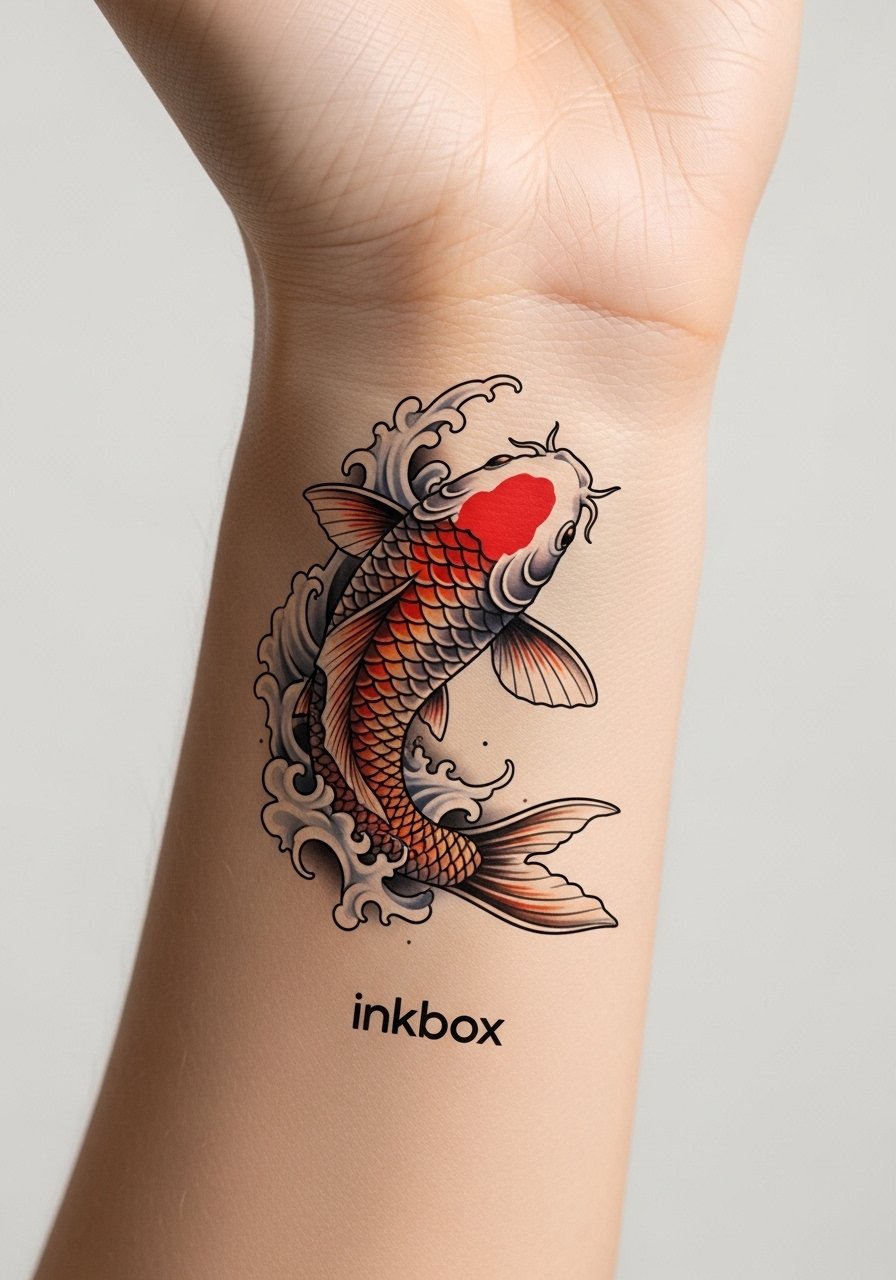
Not sure about placement or size? Try a semi-permanent ink test like Inkbox before committing. It gives you weeks of preview, so you can iron out scale, direction, and visibility.
Style & Design Details
- Tattoo style: temporary/placement testing
- Recommended size: variable — try 1–6 inches to test options
- Best placements: any placement you’re unsure about
- Color vs. blackwork: usually black or simple color tints
- Design elements: temporary scale patterns, simplified lines, customizable sizes
- Longevity note: Inkbox lasts 1–2 weeks, great for trying visibility and clothing interactions
- Who it suits: indecisive clients, first-timers, people testing workplace acceptability
Finding the Right Artist
Use temporary testing to bring to your artist as a reference. Many artists appreciate seeing how you’ll live with placement and scale.
Aftercare & Healing Tips
No aftercare needed like a real tattoo, but use this test to learn how clothing rubs and where you should avoid placing permanent ink. If you like the trial, bring the exact placement photo to your appointment. Consider purchasing an Inkbox semi-permanent tattoo kit to test.
You’ve now got 26 ways to interpret the Japanese traditional koi fish tattoo — from tiny minimalist lines to full-back masterpieces and experimental neon or cosmic spins. Save the ideas that speak to you, and bring a few favorites to your consultation so your artist can help adapt them to your body and story. If you haven’t yet, ordering a Saniderm second skin bandage and a tin of Hustle Butter Deluxe tattoo aftercare ahead of your session is a smart move — you’ll be ready the moment your appointment ends. Which koi style are you most drawn to, or what placement are you thinking about for your next piece? Pin this guide and share it with a friend who’s planning their first koi.