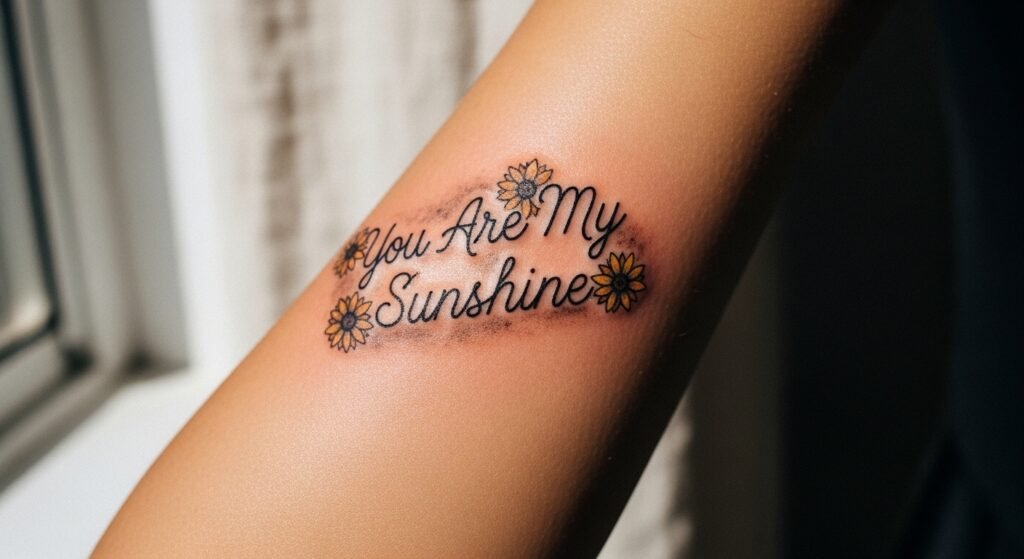
Sitting in a tattoo consultation or scrolling at 2 a.m., you can picture that little phrase inked where you feel it most. Making a "You Are My Sunshine" tattoo look vintage is about mood, texture, and how the ink sits as skin moves and ages. This guide shows exactly how to make a you are my sunshine tattoo look vintage — from lettering and florals to placement, aging hacks, and the aftercare choices that actually keep a faded look intentional, not accidental.
You’ll find four distinct ideas below — each with a styled concept, full breakdown of style, size, and placement, plus realistic notes on pain, healing, fading, and artist selection. I also drop my go-to products so you can prepare and protect your ink like someone who tattoos often. For numbing before sensitive sessions, I often recommend Zensa topical numbing cream about 45 minutes beforehand. And when you want to shield the piece during the first few days, a roll of Saniderm/Tegaderm second-skin bandage is what I reach for.
Below are four vintage-flavored "You Are My Sunshine" tattoo ideas with photo prompts you can save and bring to your consult. Each section covers the look, what to ask your artist, and precise aftercare so the vintage vibe ages how you want it to.
- Weathered Script with Tiny Sunflower Accent — how to make a you are my sunshine tattoo look vintage
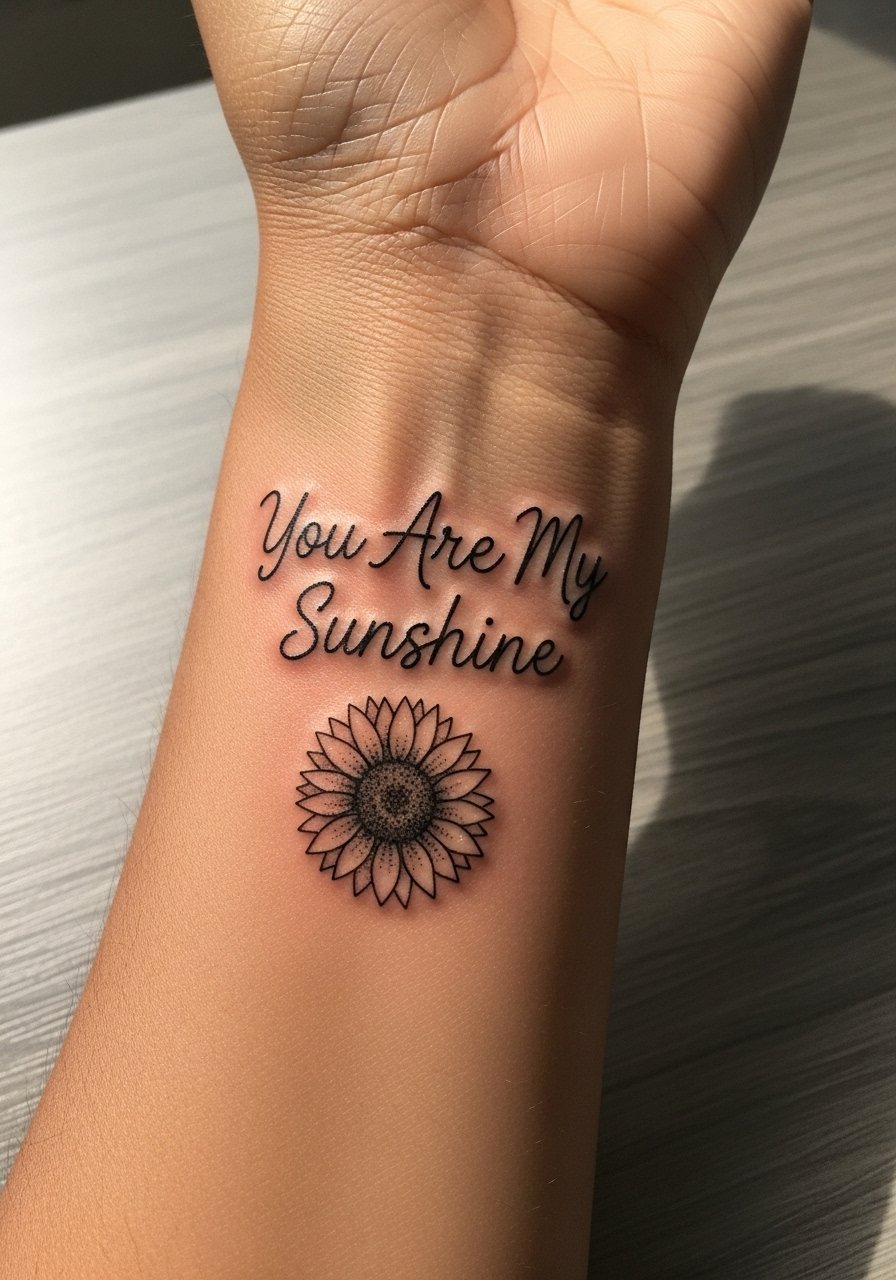
This idea leans on aged handwriting — think an old love letter with edges rubbed by years. The script is fine-line but intentionally distressed, with micro-breaks and feathered ends that mimic gentle fading. A tiny stippled sunflower sits under the last word, tying the phrase to classic vintage iconography. This design reads like a keepsake; it sits close on the skin and feels personal. First-timers and memorial tattoo seekers love this because it's readable but still subtle, and the weathered script keeps it from looking hyper-modern.
Style & Design Details
- Tattoo style: Fine-line with micro-distressing and stipple shading
- Recommended size: 2–3 inches across for wrist/inner forearm
- Best placements: inner wrist, inner forearm, behind the ear — close, intimate spots that suit small lettering
- Color vs. blackwork: Warm black/soft sepia wash recommended to achieve a vintage feel without color saturation
- Design elements:
- single-needle hairline script with intentional gaps
- micro-dot stippling on sunflower center and petals
- faint sepia wash behind letters for age
- slightly uneven baseline to mimic handwriting
- negative space highlights to keep the script airy
- Longevity note: fine-line fades faster; sepia tones hide fading gracefully but need sunscreen long-term
- Who it suits: minimalists, memorial pieces, anyone wanting an understated nostalgic look
Finding the Right Artist
Look for portfolios with delicate single-needle work and examples of intentional distressing. Ask to see healed photos — not just fresh work. Key questions: "Have you done hairline scripts that age well?" and "How would you add natural wear without making the lines sloppy?" Avoid artists who only do bold, blackwork lettering; distressing needs a steady hand and an eye for negative space. For this level, a mid-level to experienced artist is best. Browse Instagram tags like #finelinelettering, #sunscripttattoo and check sites like Tattoodo for portfolios. If you sketch your reference, using Procreate on iPad or a cheap sketchbook helps show your ideal baseline and slant.
Aftercare & Healing Tips
Leave a second-skin wrap like Saniderm on for 3–5 days to protect the fine white space while scabs form. Wash gently twice daily with an unscented antibacterial soap such as Dr. Bronner's Castile Unscented and pat dry. Once peeling begins, switch to a thin layer of a fragrance-free lotion like Lubriderm Daily Moisture Fragrance-Free to keep the skin supple. Avoid heavy creams and petroleum in the first two weeks. Plan a touch-up around 8–12 weeks if the script loses definition; fine-line often needs a light rework. Long-term, protect the area with an SPF 50 stick like tattoo sunscreen sticks SPF 50 to prevent patchy fading.
- Neo-Traditional Sunburst with Weathered Banner — how to make a you are my sunshine tattoo look vintage
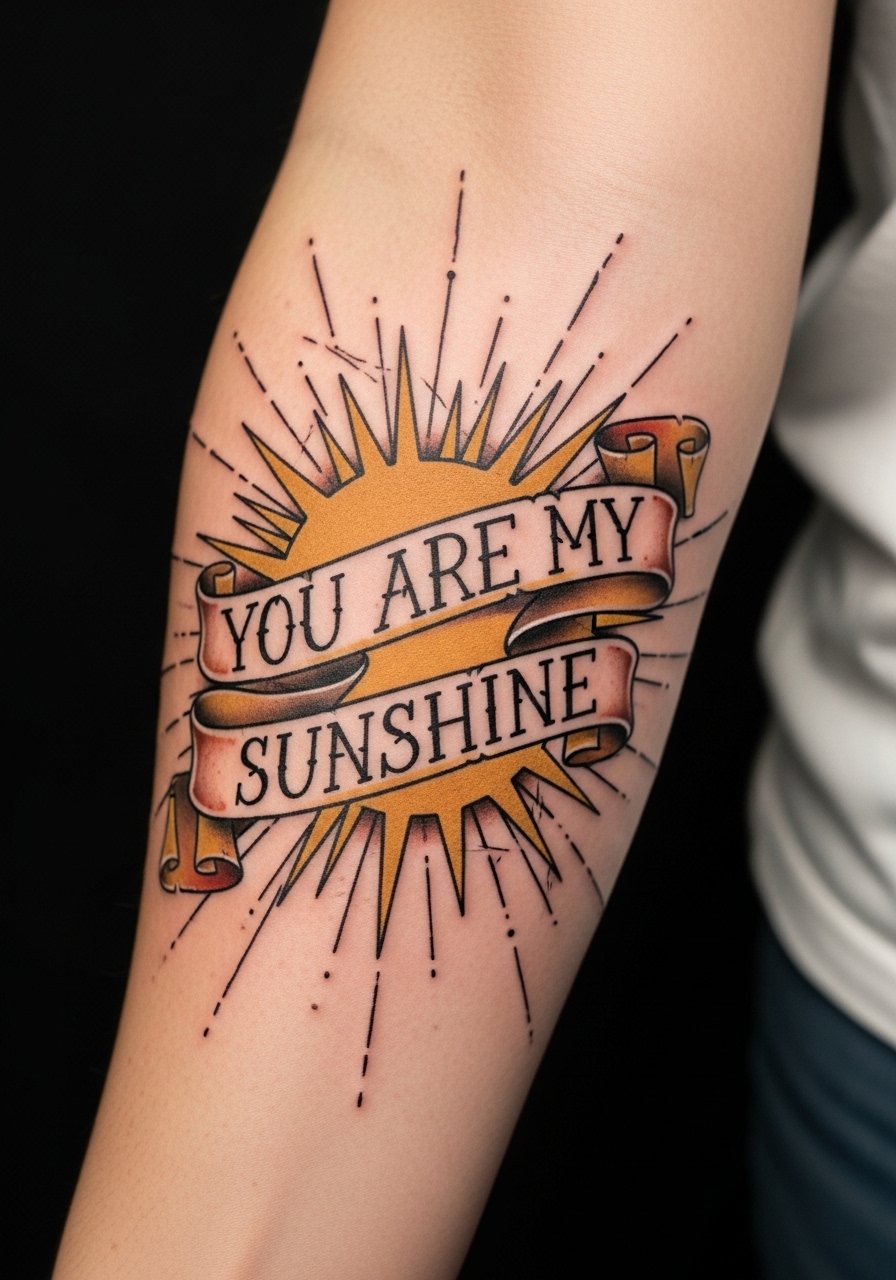
This option blends neo-traditional boldness with a worn, antique finish. The sunburst uses muted, earthy pigments (mustard, rust, olive) and a banner that looks hand-inked. Edges of the banner are given a soft, feathered finish so the piece reads like an old poster painted on linen. It’s a great option if you want something more visible but still intentionally aged. Collectors of vintage Americana and cottagecore enthusiasts gravitate toward this style.
Style & Design Details
- Tattoo style: Neo-traditional with soft edge distressing
- Recommended size: palm-sized to 4 inches for clarity of color
- Best placements: outer forearm, chest near sternum, upper thigh — places that can show or hide
- Color vs. blackwork: Muted color palette (sepia black outlines, mustard, rust) to give a retro printed look
- Design elements:
- bold but soft outlines (not harsh black)
- sunburst rays with gradient shading
- hand-drawn scroll banner with slight tears
- textured fill to mimic printing ink
- tiny decorative dots and laurel leaves as accents
- Longevity note: muted colors fade into a pleasant patina; reds and yellows may dim faster
- Who it suits: people who want a visible vintage statement with classic tattoo roots
Finding the Right Artist
Search for artists experienced in neo-traditional work who can control color saturation and edge softness. Ask for healed photos of colored banners and sunbursts. Important questions: "How do you reduce saturation so it ages vintage, not neon?" and "Can you use a diluted black outline for a softer look?" Don’t book someone whose portfolio only shows saturated bright colors. An intermediate to advanced colorist is recommended. Use Instagram tags like #neotraditionaltattoo and #vintagetattoo.
Aftercare & Healing Tips
Colored pieces need careful aftercare. Use a second-skin bandage for the first 24–48 hours if your artist recommends it, then wash with a gentle soap. For the initial two weeks, avoid vigorous exercise that causes heavy sweating on the area. Use Hustle Butter Deluxe tattoo aftercare balm sparingly once flaking begins to maintain color without suffocating the skin. If the piece gets sun, apply an SPF 50 mineral lotion when healed. Schedule a 3-month check for color settling and minor touch-ups; muted palettes often need a subtle top-up once fully settled.
- Cottagecore Watercolor Cluster with Faded Script — how to make a you are my sunshine tattoo look vintage
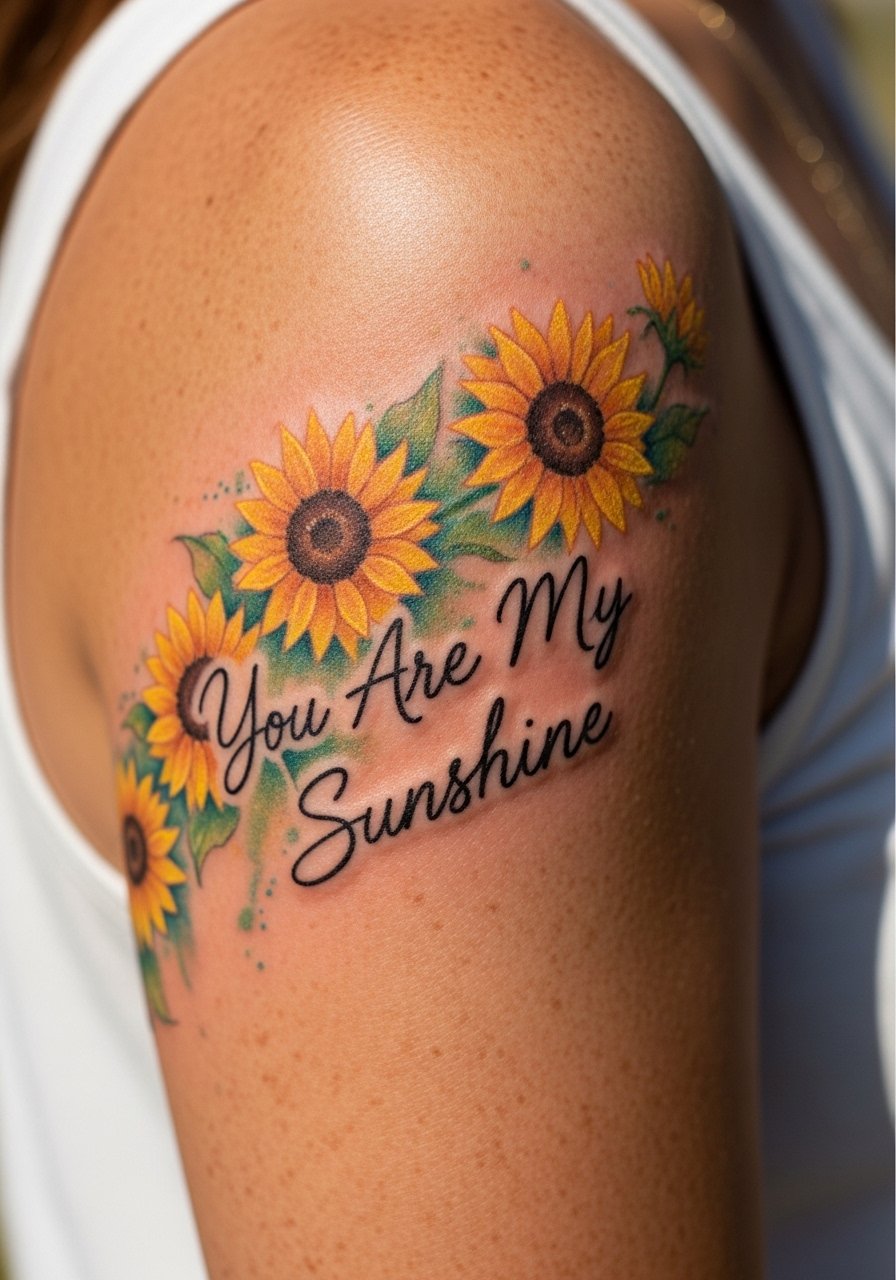
If you love cottagecore or botanical vintage prints, this idea pairs a washed watercolor floral cluster with a faded cursive line. The watercolor is applied in soft washes with windowpane-style negative gaps so the pigment looks like aged pigment on paper. The script is intentionally lighter, almost as if the ink has dulled over time. This tattoo feels like a watercolor greeting card from the past, perfect for someone who wants soft color and a sentimental vibe.
Style & Design Details
- Tattoo style: Watercolor + script with vintage wash technique
- Recommended size: 3–5 inches to allow pigment bleed and soft gradients
- Best placements: outer upper arm, ribcage, calf — areas that handle larger, soft-edged work well
- Color vs. blackwork: Soft, desaturated color palette (muted yellows, sage greens, warm sepia)
- Design elements:
- loose watercolor fills with intentional white gaps
- faded cursive lettering with low contrast
- botanical cluster: sunflowers, meadowsweet, tiny seed pods
- minimal line anchors to keep the design readable
- soft stipple grounding at edges for texture
- Longevity note: watercolor fades faster than outlines; desaturated choices age into pretty, soft tones if protected
- Who it suits: lovers of cottagecore, soft feminine aesthetics, people wanting painterly ink
Finding the Right Artist
Not every tattooist can do watercolor that reads well long-term. Look for healed work showing soft edges and controlled pigment bleeding. Ask: "How will you prevent patchy fading?" and "What pigments will you use for long-term tonal stability?" Avoid artists who use overly bright inks for watercolor. Seek out artists with portfolios tagged #watercolortattoo or who showcase botanical pieces. A mid-level to advanced colorist is best; watercolor demands layer control.
Aftercare & Healing Tips
Watercolor tattoos tend to scab less but still need protection. Use gentle cleansing and once the wrap comes off, apply thin layers of Tattoo Goo aftercare balm or After Inked tattoo lotion during peeling. Avoid long sun exposure for at least 6 weeks; once healed, always use an SPF 50 sunscreen stick to slow color loss. Touch-ups are common at the 3-month mark for watercolors because pigment sits more superficially. Carry an Inkbox semi-permanent kit if you want to test placement beforehand.
- Typewriter Letterblock with Sepia Wash — how to make a you are my sunshine tattoo look vintage
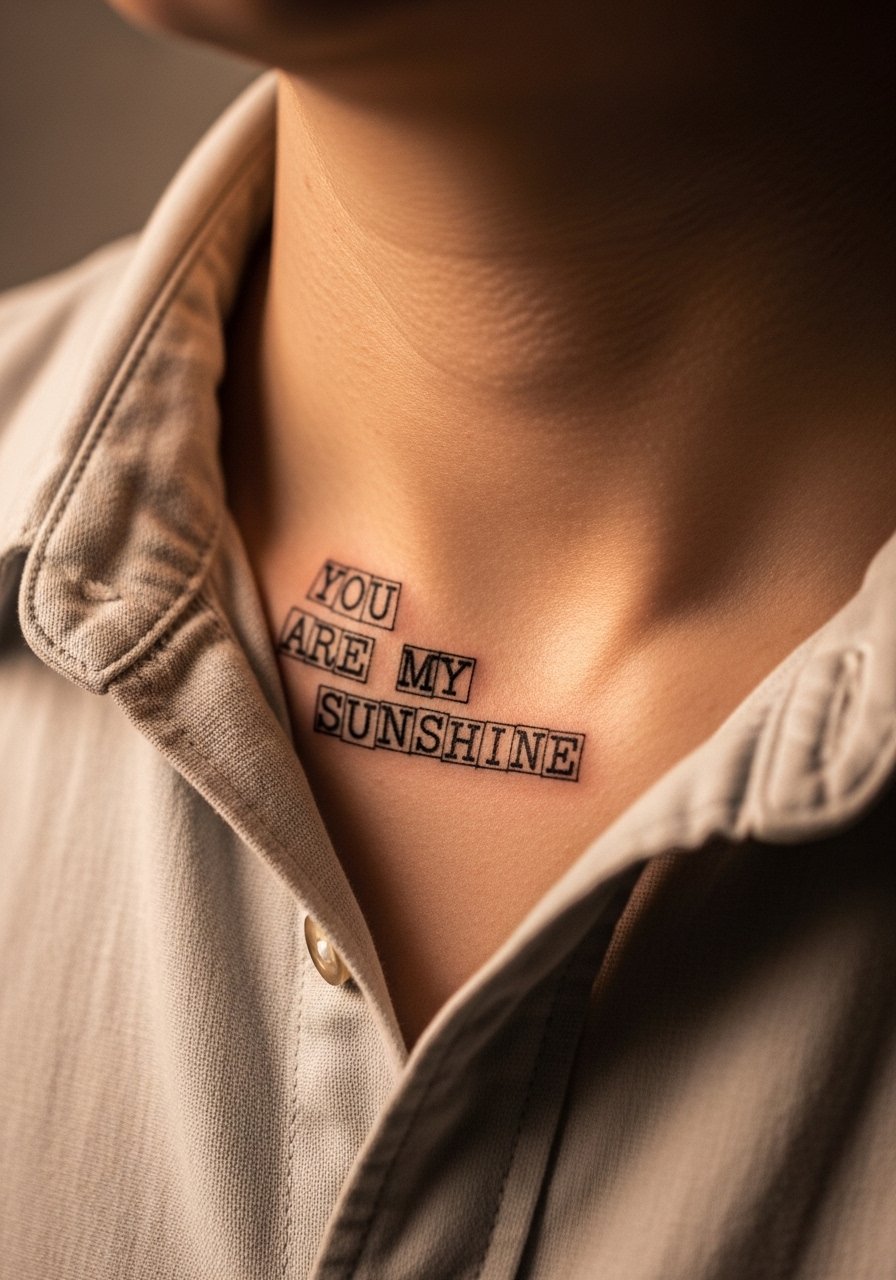
This one looks like an old label: rigid typewriter or stamped block letters with a sepia wash behind and small ink blotches that mimic age. The misaligned letters and slightly varying inking depths give the impression the text was stamped repeatedly on paper. This is a bold way to keep the phrase readable while still achieving a retro, tactile vibe. It’s great if you want graphic clarity but with that vintage disbelief.
Style & Design Details
- Tattoo style: Typewriter/letterpress with background wash
- Recommended size: 2–3.5 inches wide depending on font weight
- Best placements: collarbone, inner bicep, upper back near shoulder blade — flatter areas for crisp lettering
- Color vs. blackwork: Soft black/sepia wash to simulate aged ink
- Design elements:
- monospaced, slightly distressed font
- faint sepia watercolor wash behind letters
- micro-ink splatters and edge toner marks
- irregular baseline for that stamped feel
- optional tiny staples or tape mark illustrations for realism
- Longevity note: bold block letters hold up well; washes will fade and should be expected to soften
- Who it suits: graphic-lovers, retro fans, people who want a readable statement with a crafted look
Finding the Right Artist
You want someone who can place type cleanly and control negative space around each character. Review portfolios for crisp block-lettering and wash backgrounds. Ask: "Can you space this so each letter ages evenly?" and "How will you create the stamped look without heavy blowout?" Avoid artists without many lettering examples. An experienced lettering artist is ideal. Use tags like #letteringtattoo and #typewritertattoo to find the right person.
Aftercare & Healing Tips
Lettering tattoos heal in predictable ways, but expect the sepia wash to thin. Keep the area wrapped per the artist’s recommendation, wash gently, and use an unscented lotion once peeling starts. If you plan to wear low-cut tops exposing the collarbone, be extra careful with sun protection while healed. For the wash, minor touch-ups at 3–6 months may be necessary to maintain even tone. I lean on a gentle product like Hustle Butter Deluxe for color work and SPF 50 tattoo sunscreen stick for daily protection.
Which inks and brands help achieve vintage fading?
- Ask your artist about using diluted black inks (10–50% black) or brown/sepia-black mixes instead of pure carbon black. That creates softer wear.
- For color washes, request muted tattoo inks (rusty orange, desaturated yellow) — they age to soft patina.
- Brands many pros use: Eternal Ink, Intenze (for vintage-friendly colors), and Dynamic for soft blacks. Ask your artist what they prefer; experienced colorists will know which pigments hold better for a faded aesthetic.
Pain and placement considerations
- Inner wrist, ribcage, and behind the ear are more painful than outer forearm or thigh.
- Fine-line scripts and single-needle work on ribs and foot can feel sharper but quicker.
- If pain is a concern, a topical like EMLA numbing cream or Zensa numbing cream applied per instructions can help, especially for longer sessions.
Testing placement and temporary checks
- Use tattoo placement stencil paper or try an Inkbox semi-permanent tattoo kit to test how the phrase looks with movement. It’s an easy way to see whether the vintage placement reads right when you move.
Artist selection quick checklist
- Look for healed photos and similar aging effects, not just fresh swatches.
- Ask about healed results and touch-up policies.
- Red flag: only fresh photos, overly saturated palettes, or no lettering examples.
- Good to book a short consult to align on size and baseline; bring references and your preferred Procreate or printed mockup.
Final healing and long-term care
- First week: keep covered per artist instructions, clean gently, and avoid soaking.
- Weeks 2–4: peeling and itching — do not pick. Use unscented lotion.
- Month 2–3: color settling and touch-up window.
- Ongoing: daily SPF 50 for any exposed vintage-style ink, and occasional moisturizing with After Inked or Lubriderm keeps tones even.
- Avoid heavy exfoliation and chemical peels over tattoos.
Thanks for sticking with this guide — you now have four distinct ways to make a you are my sunshine tattoo look vintage, whether you want a whisper of script on your wrist or a bold typewriter collarbone statement. Save this post and bring the images to your consultation so you and your artist can fine-tune size, placement, and that just-right patina. Which idea fits your style — the weathered script, neo-traditional sunburst, watercolor cottagecore, or typewriter stamp? If you’re prepping for an appointment, I usually grab a roll of Saniderm and a tube of Hustle Butter Deluxe before I sit — having them on hand makes the first week way less stressful. Pin this to save for later or share with a friend planning their own vintage ink.