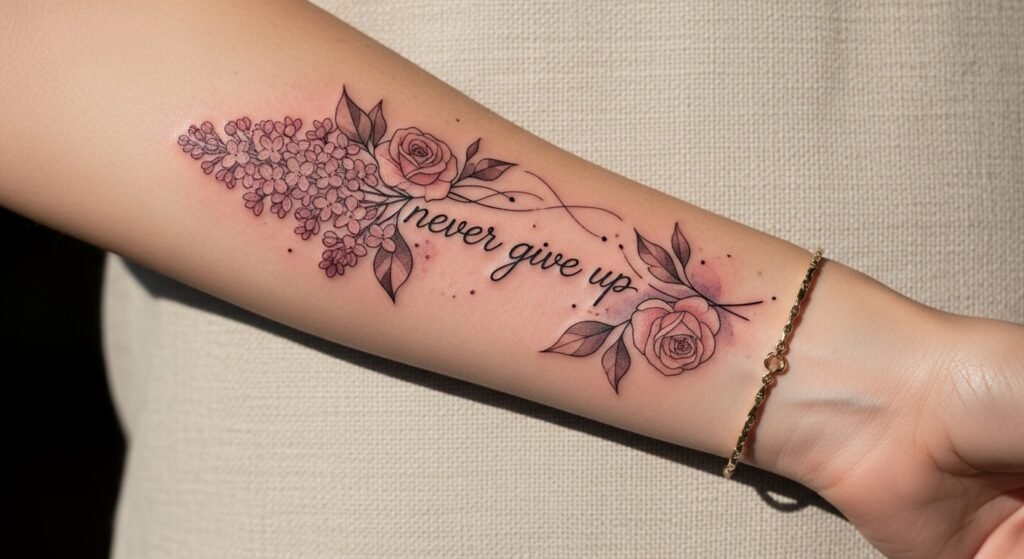
Sitting in a tattoo consult at midnight, you scroll through pages of floral designs trying to catch that exact mood—strong but soft, literal but symbolic. A never give up tattoo with flowers can say resilience without shouting it; the blooms soften the message and add a personal chapter to your skin story.
Below you'll find 25 creative, wearable ideas that pair "never give up" energy with floral symbolism. Each idea includes a photo prompt, what makes the design work, exact style and size recommendations, placement tips, realistic pain and healing notes, plus artist guidance. I also mention prep and aftercare gear I use, like Zensa numbing cream for sensitive placements and leaving a second-skin wrap like Saniderm on for 3–5 days. Pin the ideas you love and bring them to your consult—these concepts are ready to be customized.
- Script "Never Give Up" Wrapped in Single Rose
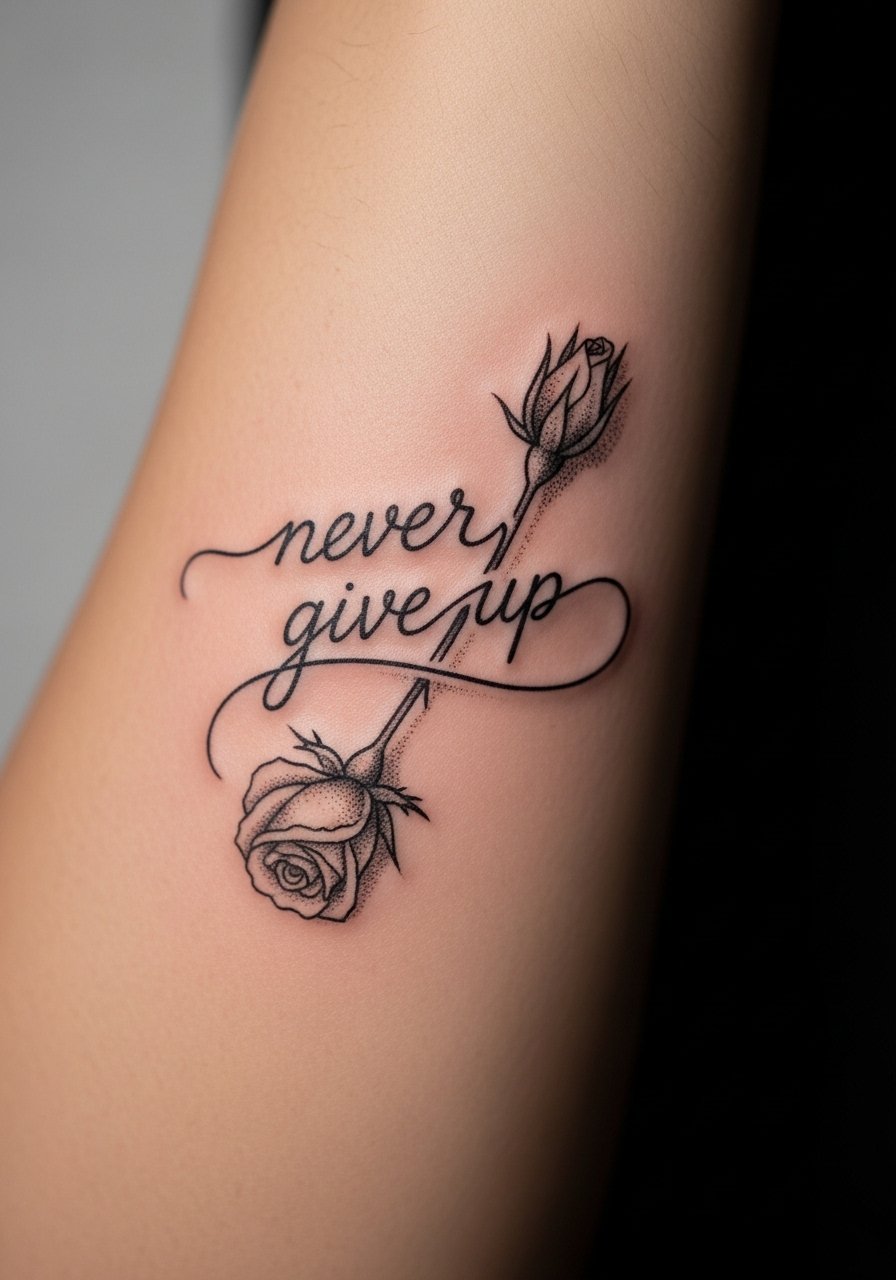
A single-rose pairing makes the phrase intimate and timeless. The line script sits like a whisper along the stem, softening the message with a floral metaphor for resilience after pruning. This is a perfect choice for first-timers or anyone who wants something discreet but meaningful.
Style & Design Details
- Tattoo style: fine line, single-needle script with realistic rose shading
- Recommended size: 2–3 inches (small forearm or inner wrist)
- Best placements: inner forearm, inner wrist, rib-side for privacy
- Color vs. blackwork: Blackwork with muted red or burgundy for the rose
- Design elements: single-needle script, light stippling, micro-shading in petals, thin stem, negative-space highlights
- Longevity note: Fine-line text can blur over a decade if placed on high-friction spots
- Who it suits: minimalists, memorial seekers, first-timers
Finding the Right Artist
Look for portfolios showing crisp single-needle lettering and botanical realism. Ask about needle size, script spacing, and whether they scale the rose to sit with your wrist bones. Avoid artists who over-thicken lettering in photos. Apprentices can do this well if supervised; prefer someone with proven fine-line floral work. Browse Instagram tags like #finelinetattoo and platforms like Tattoodo.
Aftercare & Healing Tips
Wrap with Saniderm for 24–72 hours if artist recommends. Wash gently twice daily with Dr. Bronner’s unscented soap. Once peeling starts, use a thin layer of Lubriderm fragrance-free lotion. Expect mild tenderness days 1–3; full settle by 4–6 weeks. Touch-ups common for micro-script after 6–12 months.
- Wildflower Wreath Around Bold Script
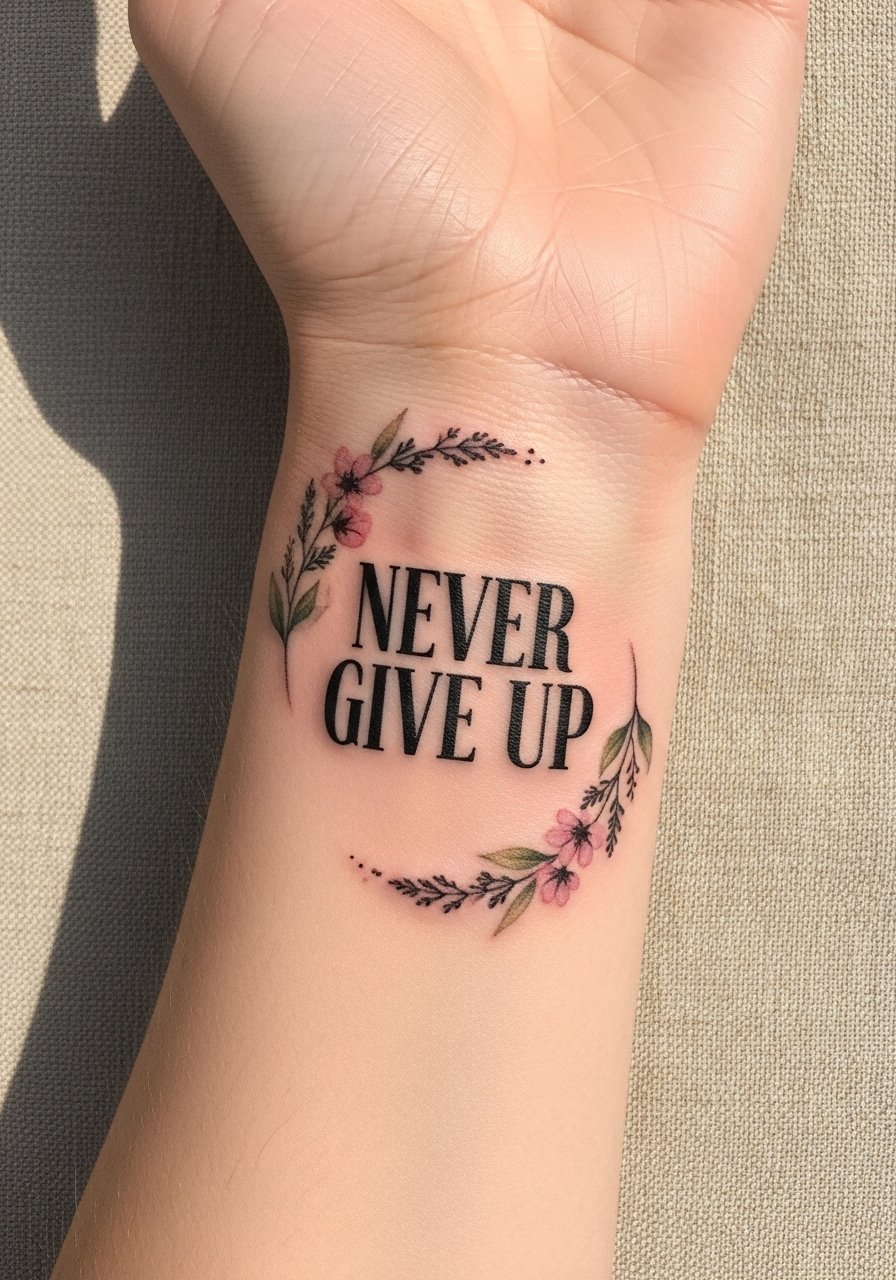
A wreath of wildflowers creates circular strength—no end, only continuity. Pair the wreath with bolder, condensed script for contrast so the message reads clearly among painterly petals. This design feels cottagecore and hopeful at the same time.
Style & Design Details
- Tattoo style: watercolor floral + bold script
- Recommended size: palm-sized (3–4 inches)
- Best placements: wrist, upper chest (over heart), ankle
- Color vs. blackwork: Soft watercolor blooms with black serif lettering
- Design elements: loose watercolor fills, crisp serif text, tiny seed pods, light splatter effects, thin outline around wreath
- Longevity note: Watercolor fades faster—bright colors need SPF protection
- Who it suits: cottagecore fans, people who want artful, feminine pieces
Finding the Right Artist
Pick someone comfortable with watercolor tattoos; their portfolio should show controlled bleeding and color layering. Ask how they avoid blowout with watercolor and what pigments they use. Avoid artists who only do solid blackwork. A mid-career artist with watercolor experience is best.
Aftercare & Healing Tips
Use a breathable wrap or Saniderm for initial protection, then gentle washing with Dr. Bronner’s unscented soap. Once healed, protect color with an SPF 50 tattoo sunscreen stick whenever outdoors. Expect softer edges after a few years; plan for color refreshes if you want pops to remain vivid.
- Minimalist Stem + Tiny Script Below Collarbone
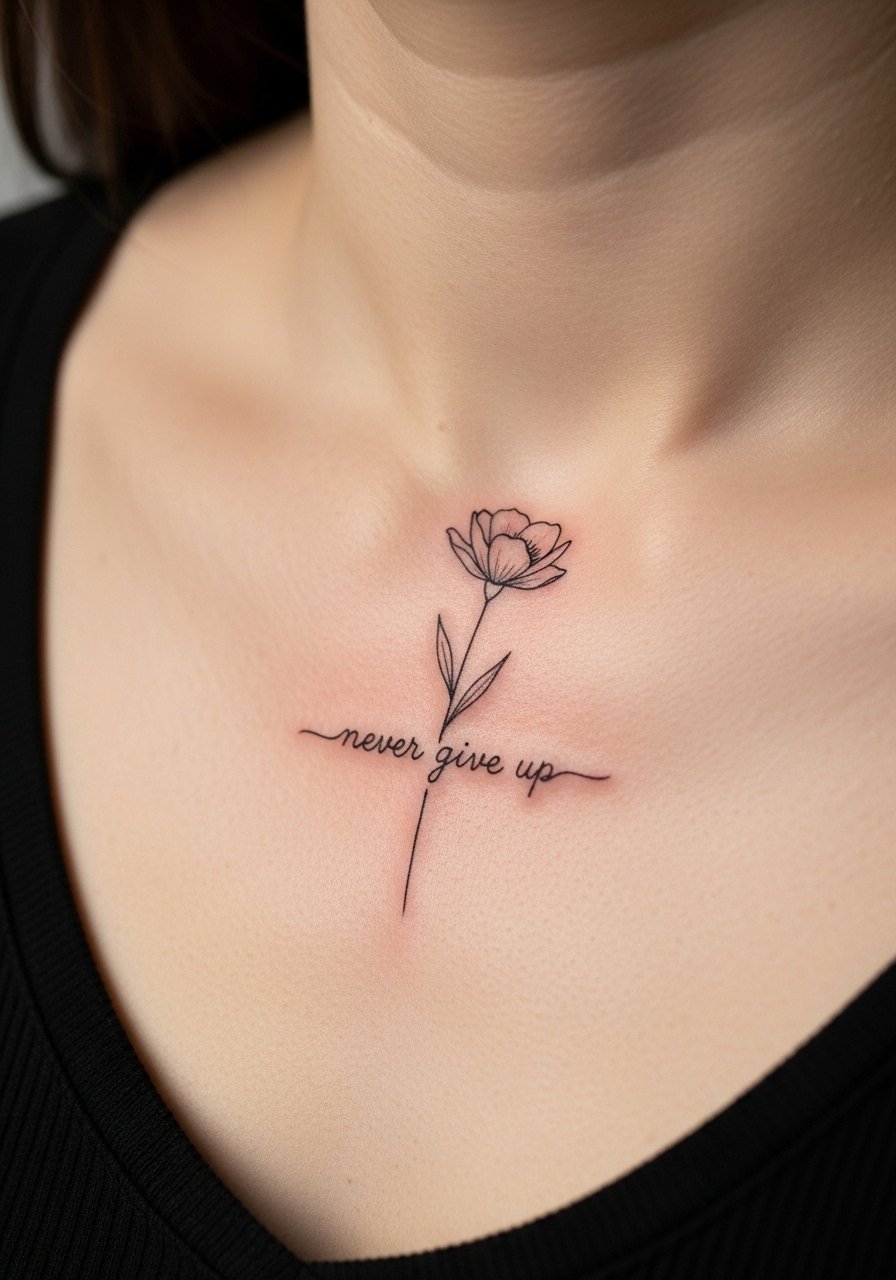
Subtle and elegant, this placement reads like a private mantra. The tiny script under a single stem keeps the composition quiet but potent. Collarbone pieces catch the eye when you wear open necklines.
Style & Design Details
- Tattoo style: minimalist, thin-line botanical with micro-script
- Recommended size: 1.5–2.5 inches
- Best placements: collarbone, upper chest, behind clavicle for discreet display
- Color vs. blackwork: Fine blackwork keeps the piece crisp
- Design elements: micro-script, thin stem, single blossom, negative-space petal veins, delicate anchor dot
- Longevity note: Areas with less friction hold fine lines longer
- Who it suits: discrete romantics, office workers, first-timers
Finding the Right Artist
Look for artists who show stable micro-script and placement near bony landmarks. Ask how they'll space lettering with clavicle curvature. Avoid if the artist lacks macro-to-micro portfolio examples. An experienced fine-line artist is preferred.
Aftercare & Healing Tips
Because of proximity to clothing, keep this covered for the first 48 hours with a sterile wrap. Use Hustle Butter Deluxe lightly during peeling. Avoid chafing from necklaces; expect full settle by 6 weeks.
- Bold Blackwork Peony with Block Lettering
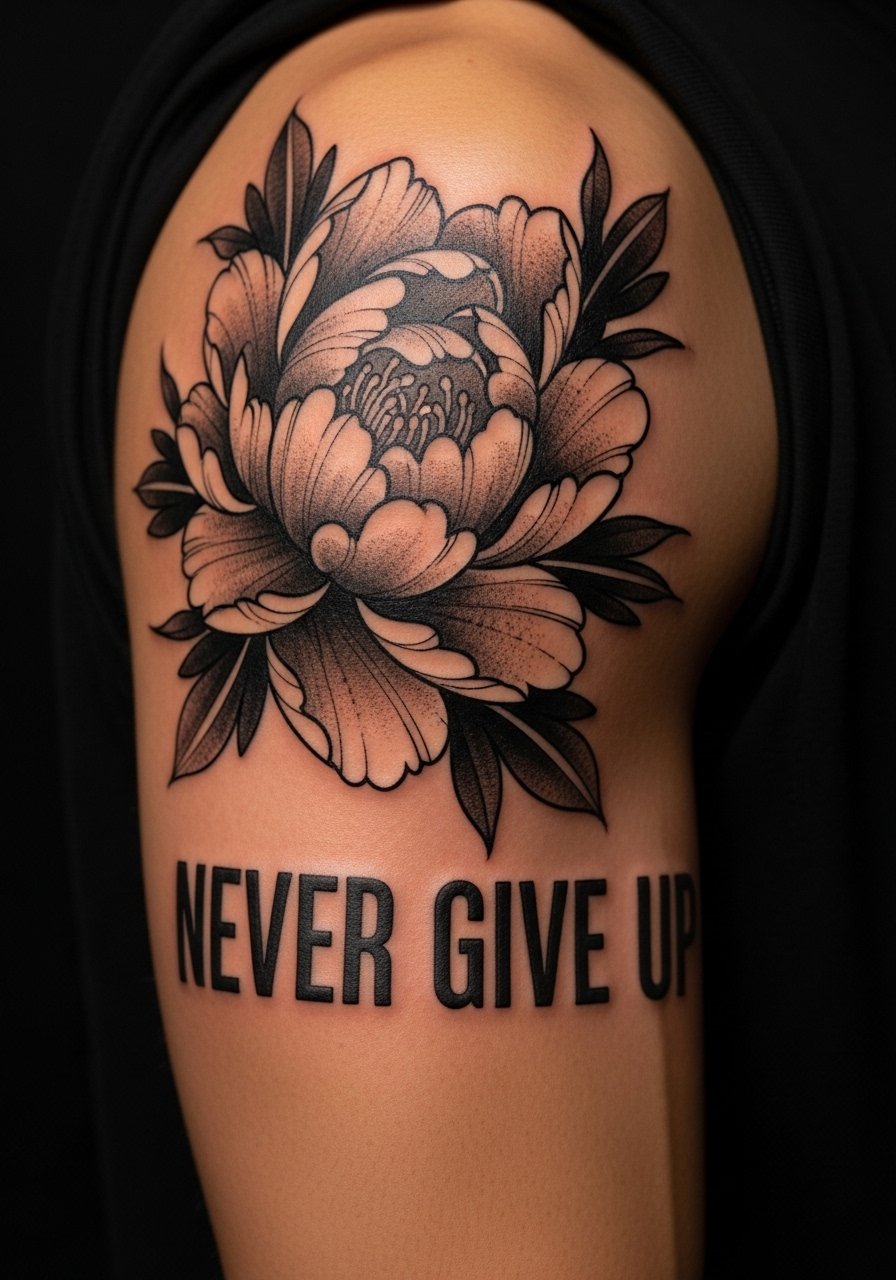
If you want a confident, graphic statement, pair a heavy black peony with strong block letters. Blackwork stands up to time, and the peony symbolizes honor and recovery—an empowering pairing.
Style & Design Details
- Tattoo style: blackwork, bold botanical with sans-serif capitals
- Recommended size: palm-sized to half-sleeve
- Best placements: upper arm, shoulder blade, outer thigh
- Color vs. blackwork: All-black for longevity and contrast
- Design elements: solid black fills, negative-space petals, thick sans-serif text, bold outlines, ornamental dotwork
- Longevity note: Blackwork maintains contrast for years if moisturized and not sunburned
- Who it suits: bold personalities, collectors of statement pieces
Finding the Right Artist
Find portfolios heavy on blackwork and strong compositions. Ask about ink saturation techniques and how they avoid patchy fills. Avoid artists inexperienced with large solid fills. A seasoned blackworker is ideal.
Aftercare & Healing Tips
Large blackwork areas can feel warmer during healing—use a Saniderm wrap if recommended. Switch to Tattoo Goo or Hustle Butter to keep the skin supple. Keep out of direct sun and apply SPF 50 sunscreen after fully healed.
- Script Hidden in Peony Petals (Inner Bicep Secret)
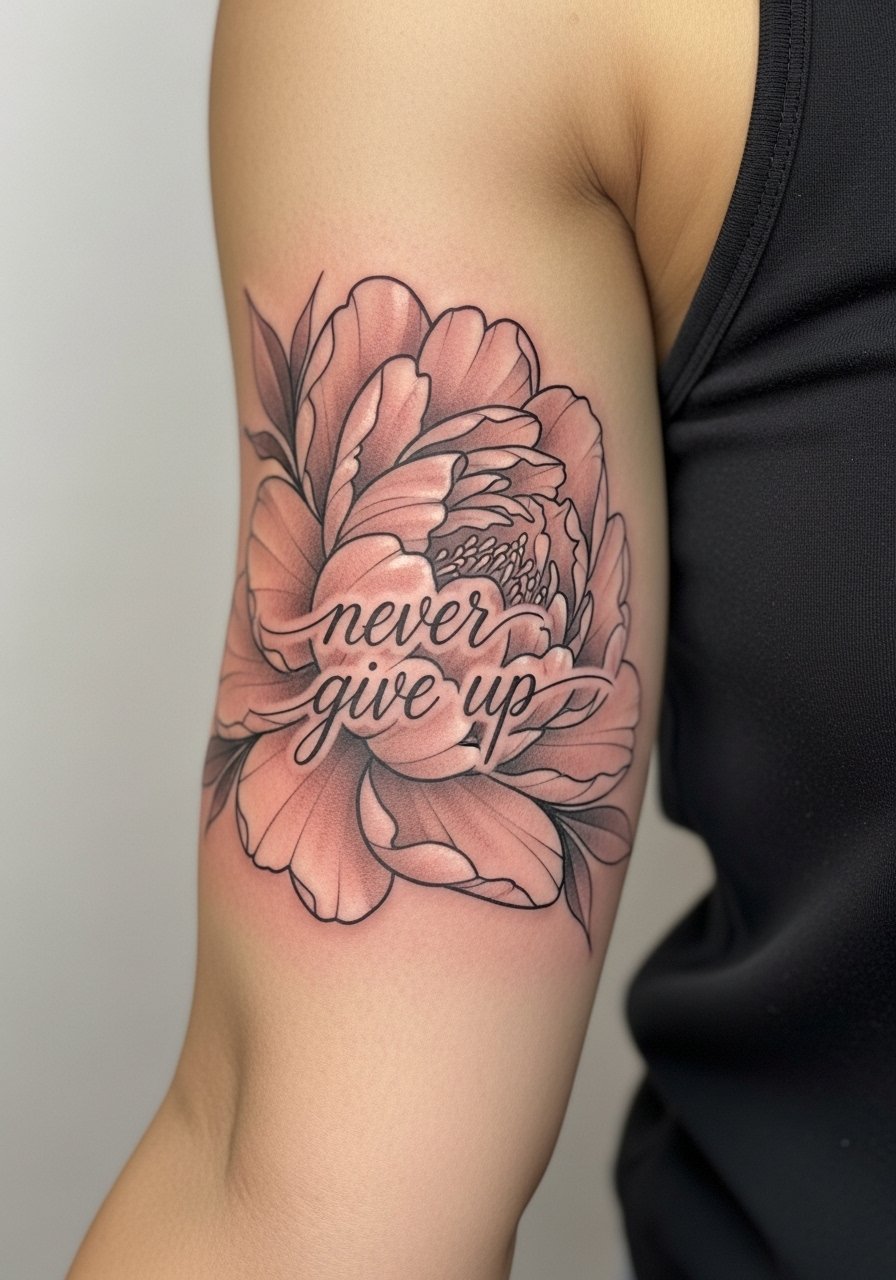
Tucking the words inside petals makes the phrase feel protected—like your secret bravery. The inner bicep gives a private canvas that reveals itself when you want.
Style & Design Details
- Tattoo style: illustrative realism, medium shading
- Recommended size: 3–5 inches
- Best placements: inner bicep, inner thigh, rib area
- Color vs. blackwork: muted colors or grayscale for depth
- Design elements: layered petals, hidden cursive, soft gradation shading, subtle white highlights
- Longevity note: Inner bicep holds shading well; friction from clothing can affect edges
- Who it suits: people wanting private symbolism, memorial pieces
Finding the Right Artist
Choose someone experienced in botanical realism and readable script. Ask for mock-ups to ensure the script won't get lost in detail. Avoid artists who can't show layered petal work. Mid-to-senior-level tattooists recommended.
Aftercare & Healing Tips
Inner bicep areas sweat more—clean carefully and consider shorter Saniderm duration. Use unscented Lubriderm during peeling. Schedule touch-ups after 3–6 months if shading settles more than expected.
- Sunflower Stem Forming the Words
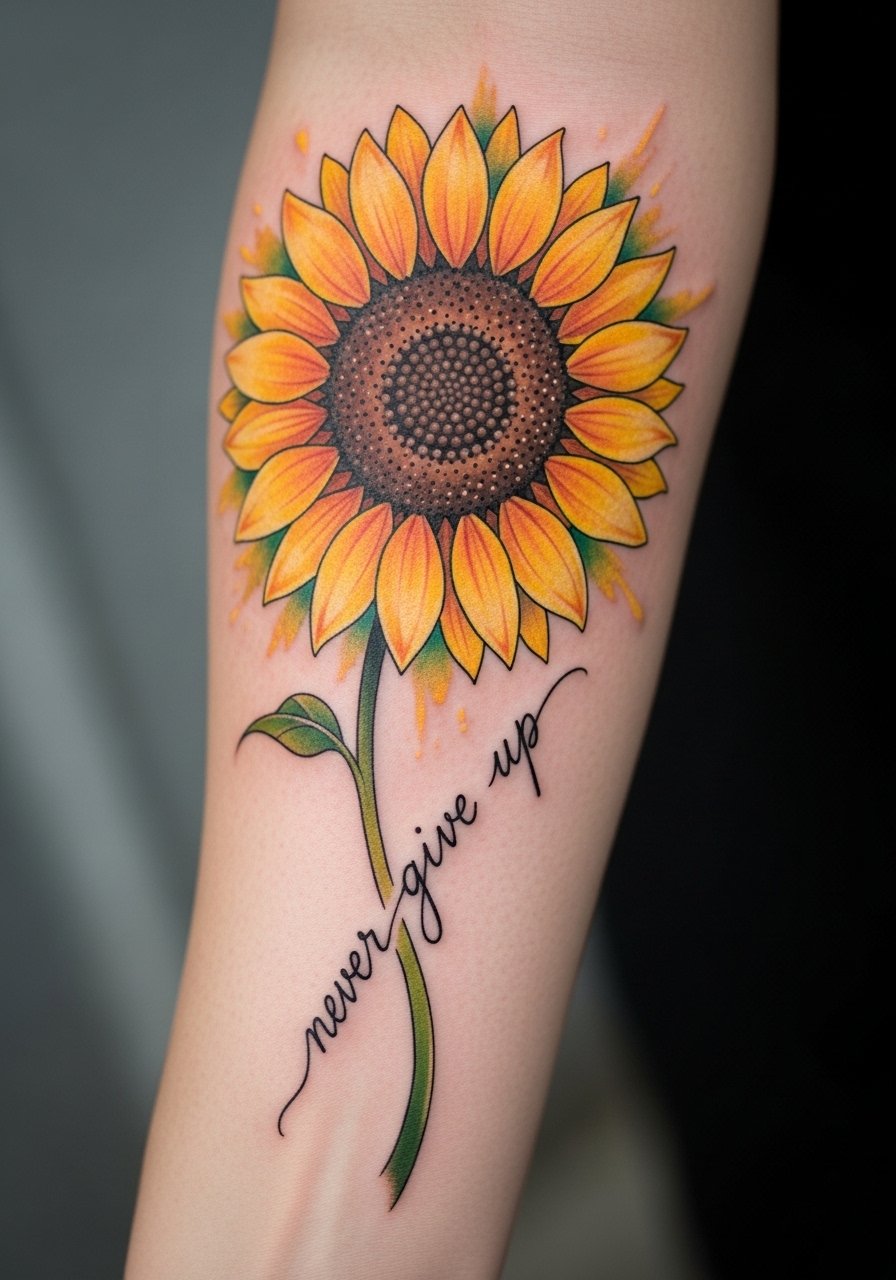
Sunflowers literally turn toward light—great symbolism for perseverance. When the stem morphs into script, the phrase becomes part of the plant's growth.
Style & Design Details
- Tattoo style: illustrative + watercolor accents
- Recommended size: 3–5 inches (forearm length)
- Best placements: forearm, calf, rib-side vertical
- Color vs. blackwork: Yellow sunflower with black script; bright accents
- Design elements: bold disk center stippling, delicate petiole lines, watercolor petal translucency, flowing script stem
- Longevity note: Bright yellows fade faster—SPF helps
- Who it suits: optimistic personalities, botanical collectors
Finding the Right Artist
Look for illustrators who can balance bold and painterly elements. Ask about yellow pigment selection and how they layer. Avoid artists who haven't shown color longevity. A watercolor-capable artist with botanical examples is ideal.
Aftercare & Healing Tips
Use Saniderm initially if your artist suggests. Once healed, use a color-safe product like After Inked lotion and protect with SPF 50 sunscreen. Plan color refreshes in 2–4 years for yellow vibrancy.
- Tiny "never give up tattoo with flowers" on the Side of the Finger
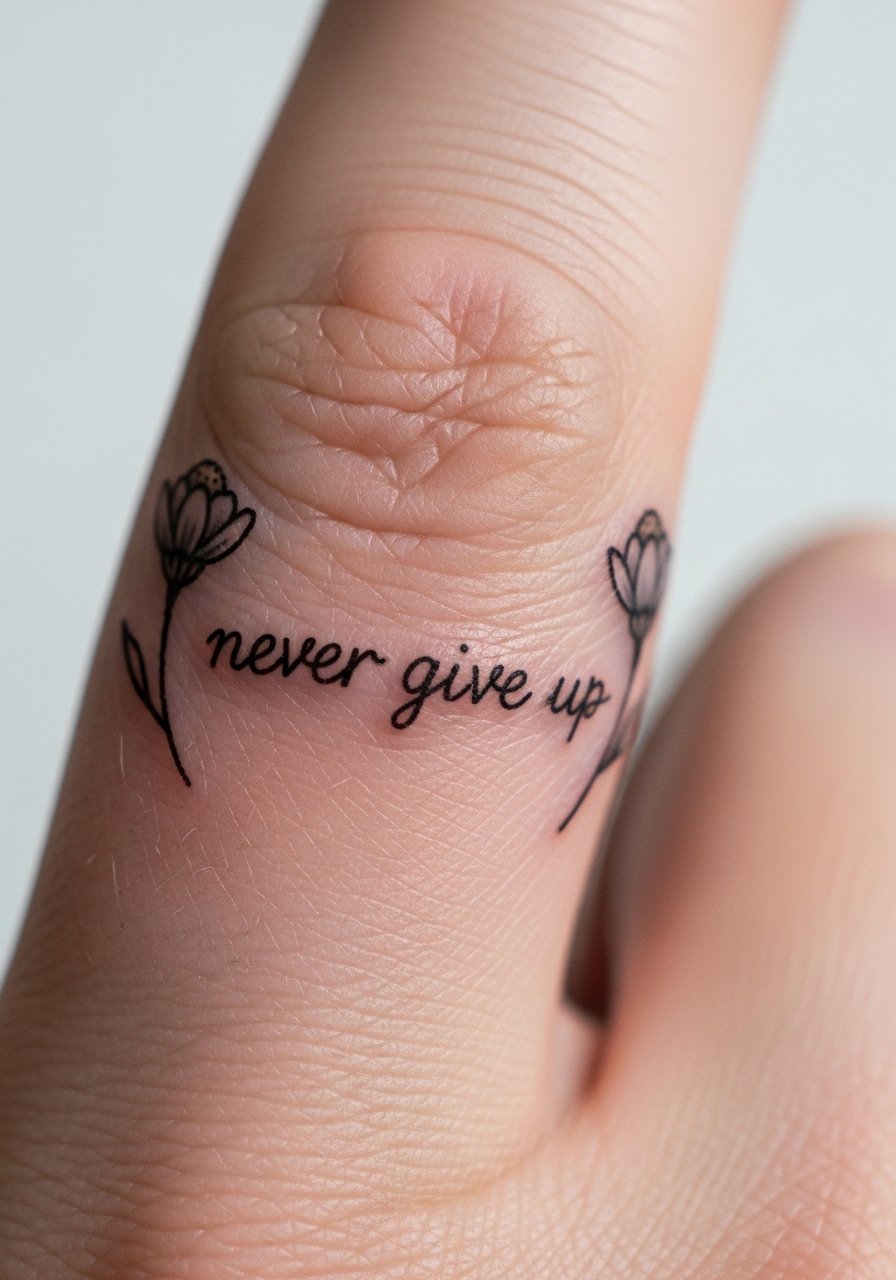
Fingers are intimate and visible. A micro floral phrase on the finger reads like a secret code. This option puts the keyword literally into a tiny, everyday reminder.
Style & Design Details
- Tattoo style: micro-lettering + mini botanical
- Recommended size: under 1 inch
- Best placements: side of finger, ring finger band, side of thumb
- Color vs. blackwork: Black micro-ink preferred for simplicity
- Design elements: micro script, tiny bud marks, minimal shading, precise line weight
- Longevity note: Finger tattoos fade fastest; expect annual touch-ups
- Who it suits: someone OK with maintenance; sentimental wearers
Finding the Right Artist
Only book an artist who showcases crisp finger work. Ask about their touch-up policy—many artists include one small refresh. Avoid shops that discourage finger tattoos outright. Experienced micro artists are necessary.
Aftercare & Healing Tips
Keep fingers dry and clean; avoid submerging in water for long periods during healing. Apply thin layers of Hustle Butter. Expect to need touch-ups sooner than other placements and protect from sun.
- Vintage Botanical Flash with Banner Script
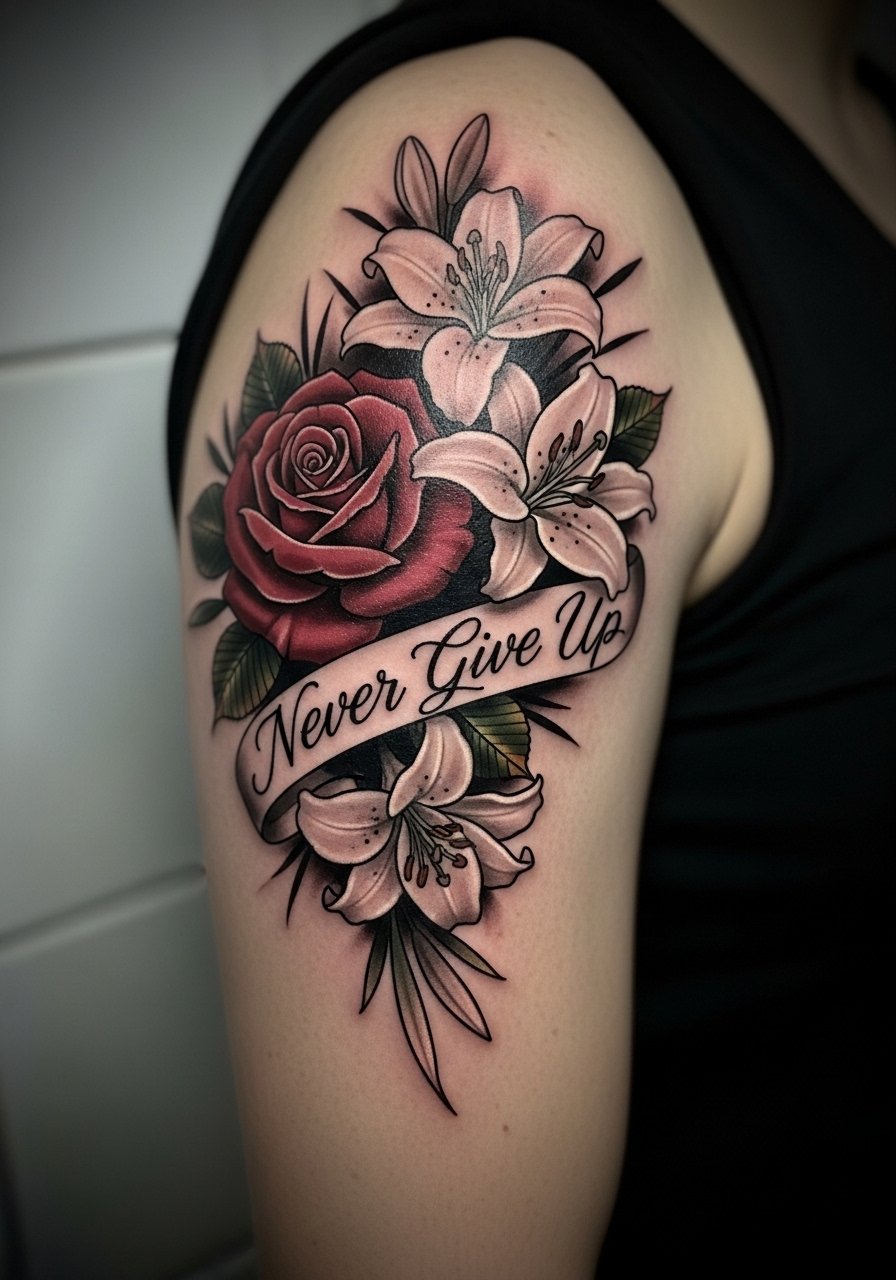
Old-school flash lines combine bravado with floral softness. A bannered phrase feels classic, like something from sailor tattoos but with a modern floral twist.
Style & Design Details
- Tattoo style: neo-traditional / flash
- Recommended size: palm-sized to upper-arm piece
- Best placements: bicep, calf, shoulder
- Color vs. blackwork: Rich jewel tones with bold black outlines
- Design elements: bold outlines, saturated fills, decorative banner, ornamental shading, dot highlights
- Longevity note: Neo-traditional ages predictably with bold lines holding well
- Who it suits: lovers of vintage aesthetics, collectors
Finding the Right Artist
Look for artists with neo-traditional portfolios showing clean outlines and rich color saturation. Ask about color fastness and touch-up timelines. Avoid artists who only do subtle fine-line work. Mid-to-experienced color artists are best.
Aftercare & Healing Tips
Keep color bright by using Saniderm if artist recommends, then switch to an unscented lotion like After Inked. Avoid saltwater until fully healed and use sunscreen on exposed areas thereafter.
- Lotus Rising with Script at Base of Thumb
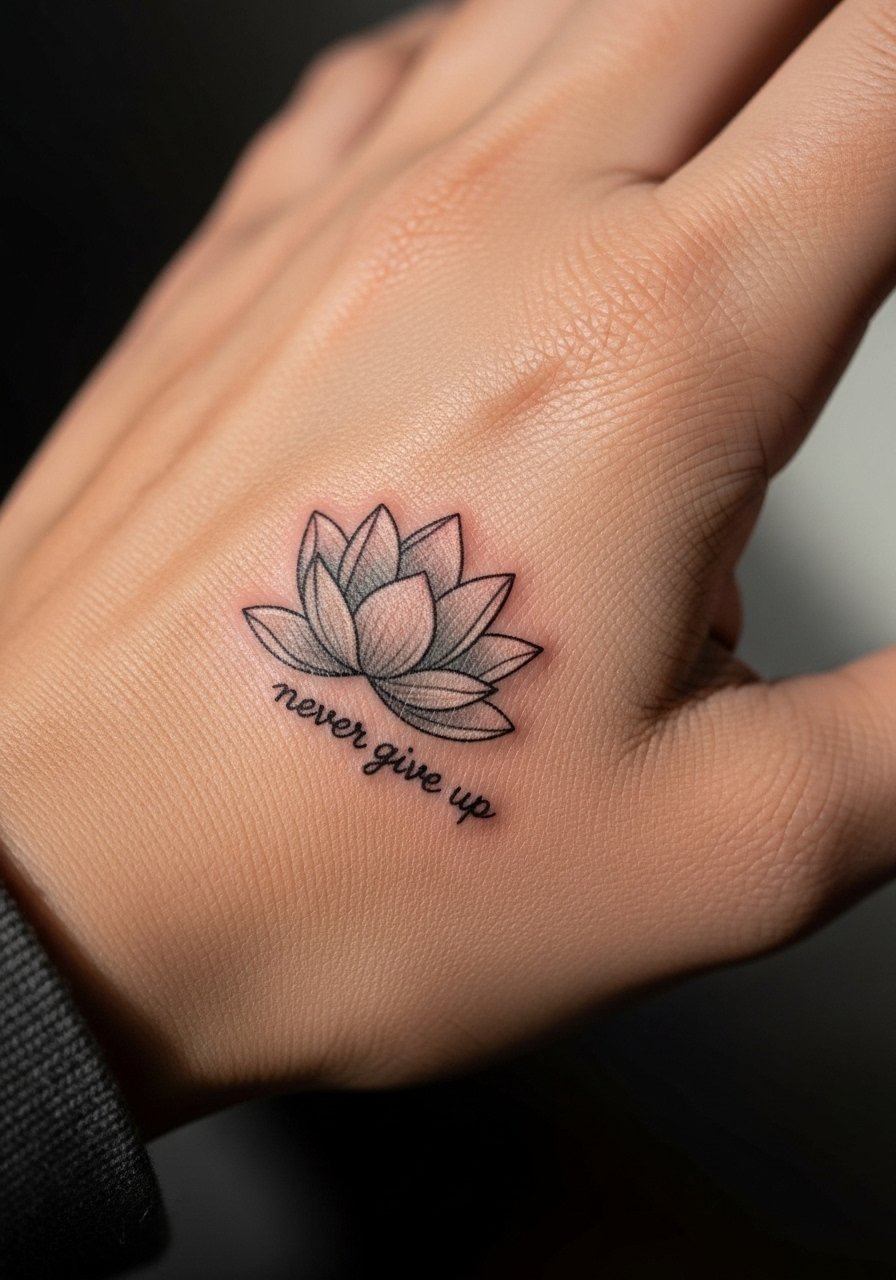
The lotus grows through mud to bloom—powerful resilience imagery. Placing the script at the base ties personal growth to the blossom.
Style & Design Details
- Tattoo style: minimal illustrative, slight neo-traditional shading
- Recommended size: 1.5–2.5 inches
- Best placements: base of thumb, inner wrist, behind ear for peeks
- Color vs. blackwork: Soft pastel or grayscale depending on subtlety wanted
- Design elements: layered petals, light shadowing, small serif or cursive script, thin anchoring lines
- Longevity note: Hands and near-thumb areas fade faster due to use
- Who it suits: spiritual-leaning, recovery-focused individuals
Finding the Right Artist
Choose someone with fine hand tattoos and lotus examples. Ask how they stencil to sit with hand movement. Avoid artists without hand-tattoo experience. A mid-career artist who understands hand movement is ideal.
Aftercare & Healing Tips
Hand tattoos require extra care—avoid heavy hand washing, wear gloves for cleaning tasks, and expect touch-ups. Use Hustle Butter and apply SPF when outside.
- Single-Ankle Stem with Tiny Dandelion Seeds and Script
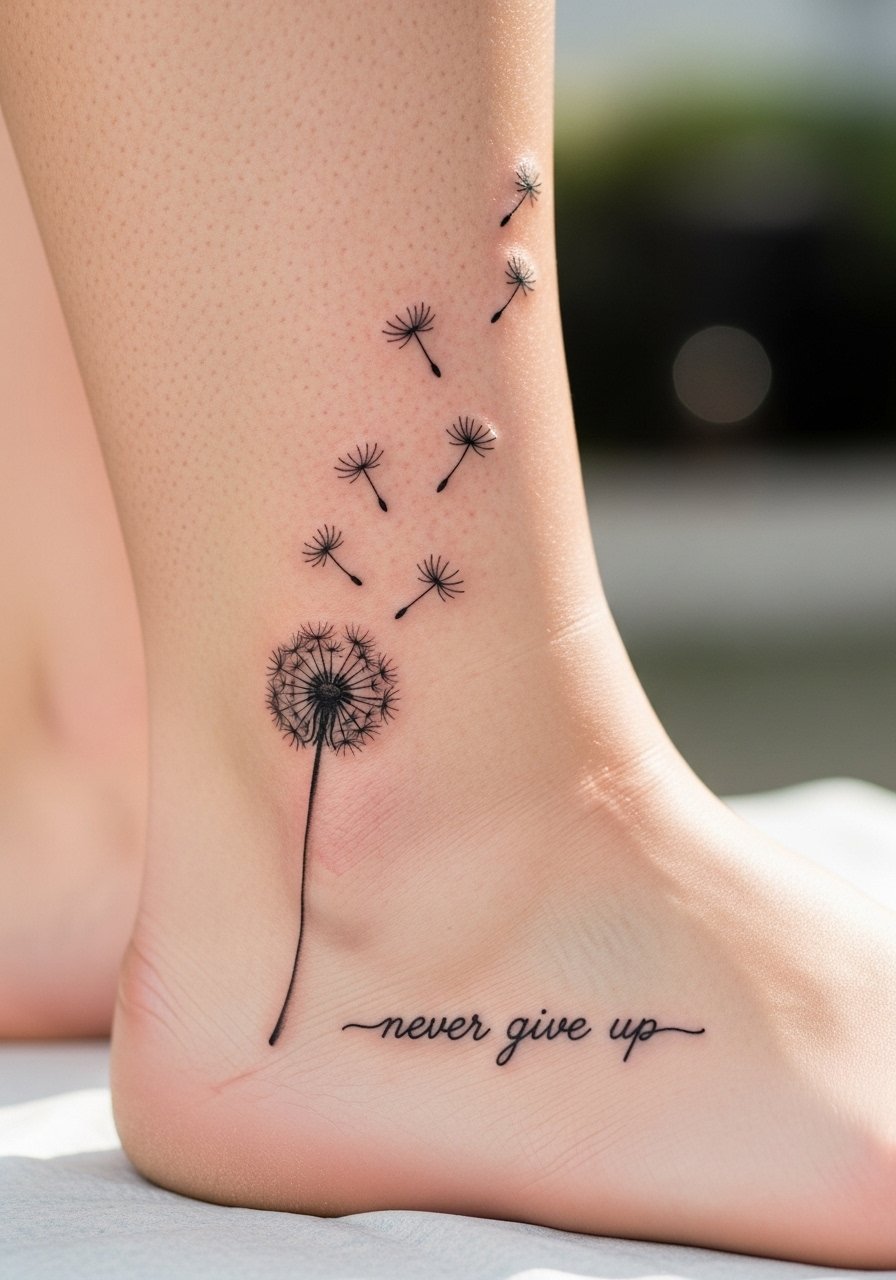
Dandelion seeds drifting represent wishes and resilience. The scattered seeds paired with a small script make this both playful and steadfast.
Style & Design Details
- Tattoo style: delicate illustrative, airy linework
- Recommended size: 2–3 inches
- Best placements: inner ankle, side of foot, low calf
- Color vs. blackwork: Blackwork for longevity; single-color yellow accent optional
- Design elements: seed stippling, airy negative space, flowing script, thin stem
- Longevity note: Feet and ankles can fade or blur due to friction
- Who it suits: travelers, soft-spoken romantics, anyone who likes movement in design
Finding the Right Artist
Look for artists with airy, breathable compositions. Ask about how they plan to avoid blowout on thin skin near ankle bones. Avoid inexperienced foot tattooers. Mid-career artists with fine-line portfolios preferred.
Aftercare & Healing Tips
Limit sock or shoe friction during healing; keep area elevated and dry. Wash with Dr. Bronner’s unscented soap and moisturize with Lubriderm. Expect possible touch-ups.
- Rose Thorn Linework Climbing the Spine
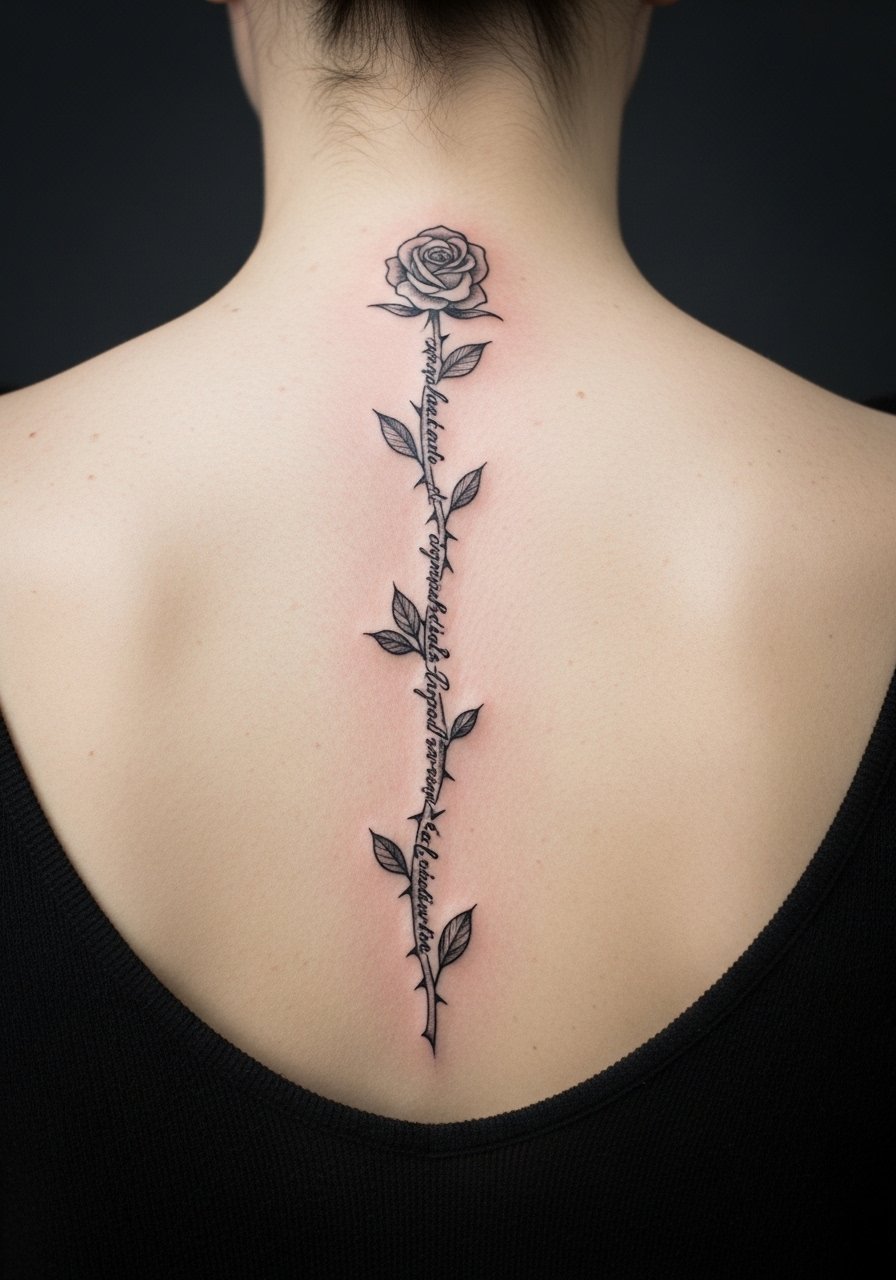
A climbing thorned rose is a strong metaphor: pain and beauty interlaced. Placing it along the spine creates a dramatic silhouette.
Style & Design Details
- Tattoo style: linework + illustrative shading
- Recommended size: 6–10 inches vertical
- Best placements: along spine, center back, sternum
- Color vs. blackwork: Black and gray with optional red highlights
- Design elements: thorn detail, layered rose buds, thin script interwoven, subtle stippling
- Longevity note: Spine tattoos hold linework well but can be painful to heal
- Who it suits: people wanting a statement piece with symbolic weight
Finding the Right Artist
Search for artists comfortable with long vertical compositions and spinal placement. Discuss movement with posture; ask how the design will sit while upright. Avoid artists who avoid long-line work. Experienced placement specialists recommended.
Aftercare & Healing Tips
Spine work is sensitive—use Saniderm if your artist suggests, otherwise a clean wrap and gentle showers. Expect soreness and recommend EMLA or Zensa numbing cream pre-session for nervous clients. Moisturize carefully and apply SPF after healed.
- Vintage Script "never give up tattoo with flowers" Over Heart with Violet Sprays
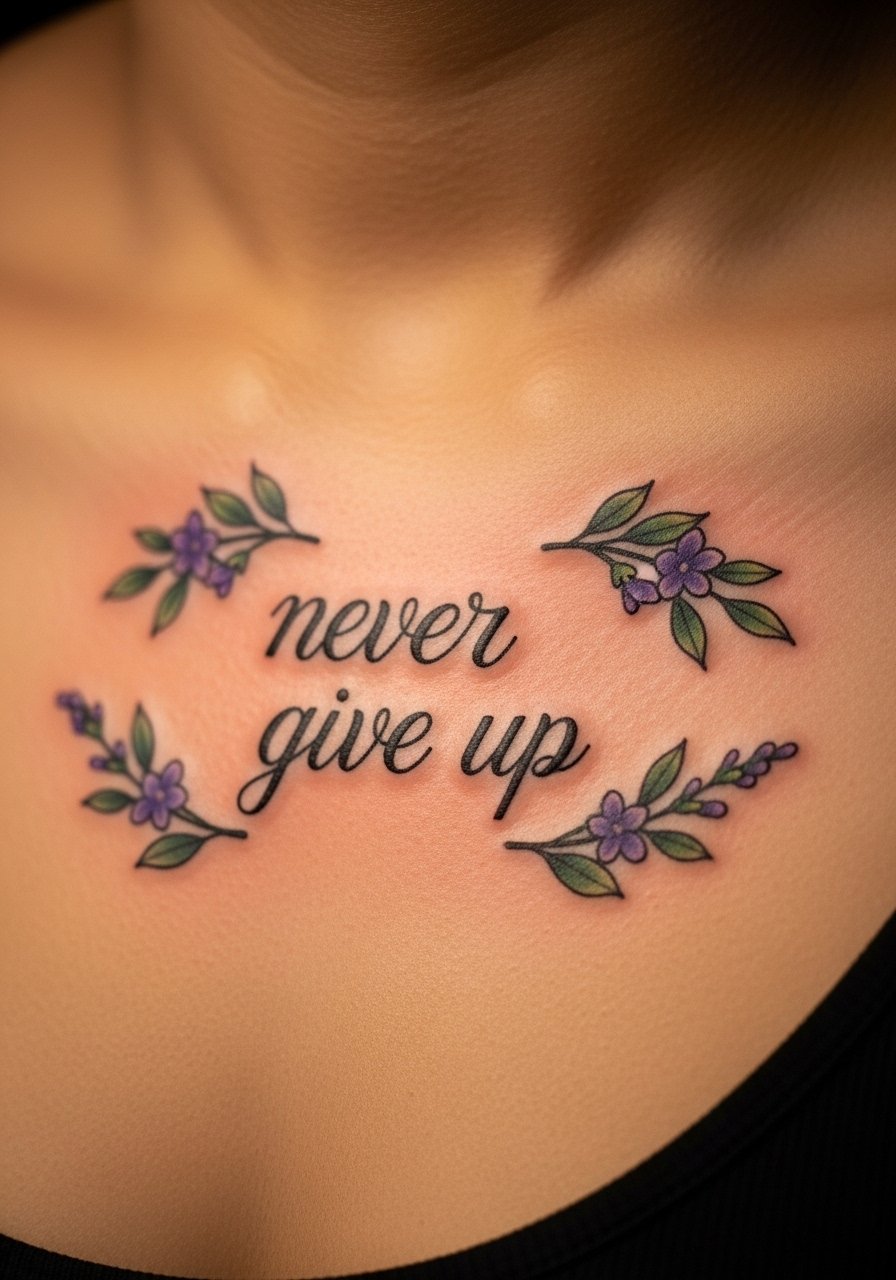
Placing a never give up tattoo with flowers over the heart turns words into a vow you carry. Violets symbolize fidelity and healing—gentle but persistent.
Style & Design Details
- Tattoo style: script + botanical accent
- Recommended size: 3–4 inches centered over left chest
- Best placements: over heart, upper chest, sternum
- Color vs. blackwork: Soft purple accents with black script
- Design elements: italic script, tiny violet clusters, fine-stem connectors, light stippling
- Longevity note: Chest skin is stable; piece ages predictably
- Who it suits: sentimental people, those marking recovery or love
Finding the Right Artist
Pick an artist proficient in clean italic scripts and small florals. Ask about needle choice for chest skin. Avoid someone who rushes composition—bring references. Experienced script artists recommended.
Aftercare & Healing Tips
Chest area can be tender—wear loose shirts and keep sleeping positions in mind. Use a second-skin wrap if needed and follow with unscented lotion like After Inked. Avoid heavy exercise until scabs settle.
- Botanical Mandala with Hidden Phrase
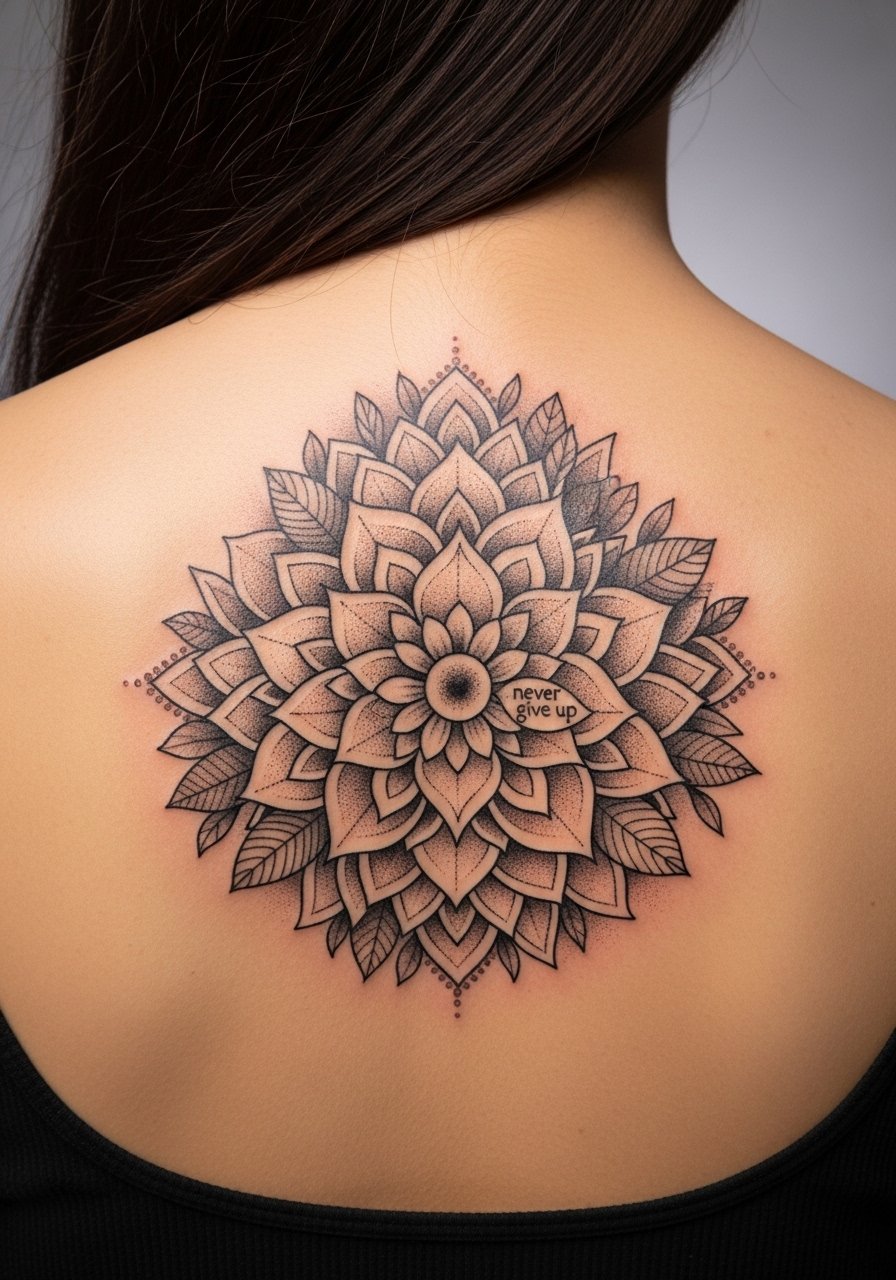
Combining mandala geometry with florals provides balance and a hidden mantra. Embedding "never give up" in a petal makes it both decorative and deeply personal.
Style & Design Details
- Tattoo style: dotwork/ornamental + illustrative
- Recommended size: 4–7 inches
- Best placements: upper back, center back, shoulder blade
- Color vs. blackwork: Blackwork with dot shading for texture
- Design elements: concentric petals, micro-script hidden in outline, stipple gradients, negative-space mandala breaks
- Longevity note: Dotwork holds well; crispness depends on needle spacing
- Who it suits: meditators, symmetry lovers, collectors of detailed work
Finding the Right Artist
Seek a dotwork specialist with ornamental portfolios. Ask about needle configuration and how they plan negative-space elements. Avoid artists without pattern work in their feed. A detailed-oriented artist is needed.
Aftercare & Healing Tips
Large dotted areas can scab lightly—use Saniderm if artist suggests then an unscented lotion. Keep out of sun and expect the best settle by 6–8 weeks. Consider a light touch-up if micro-script softens.
- Thistle + Script for Toughness and Bloom
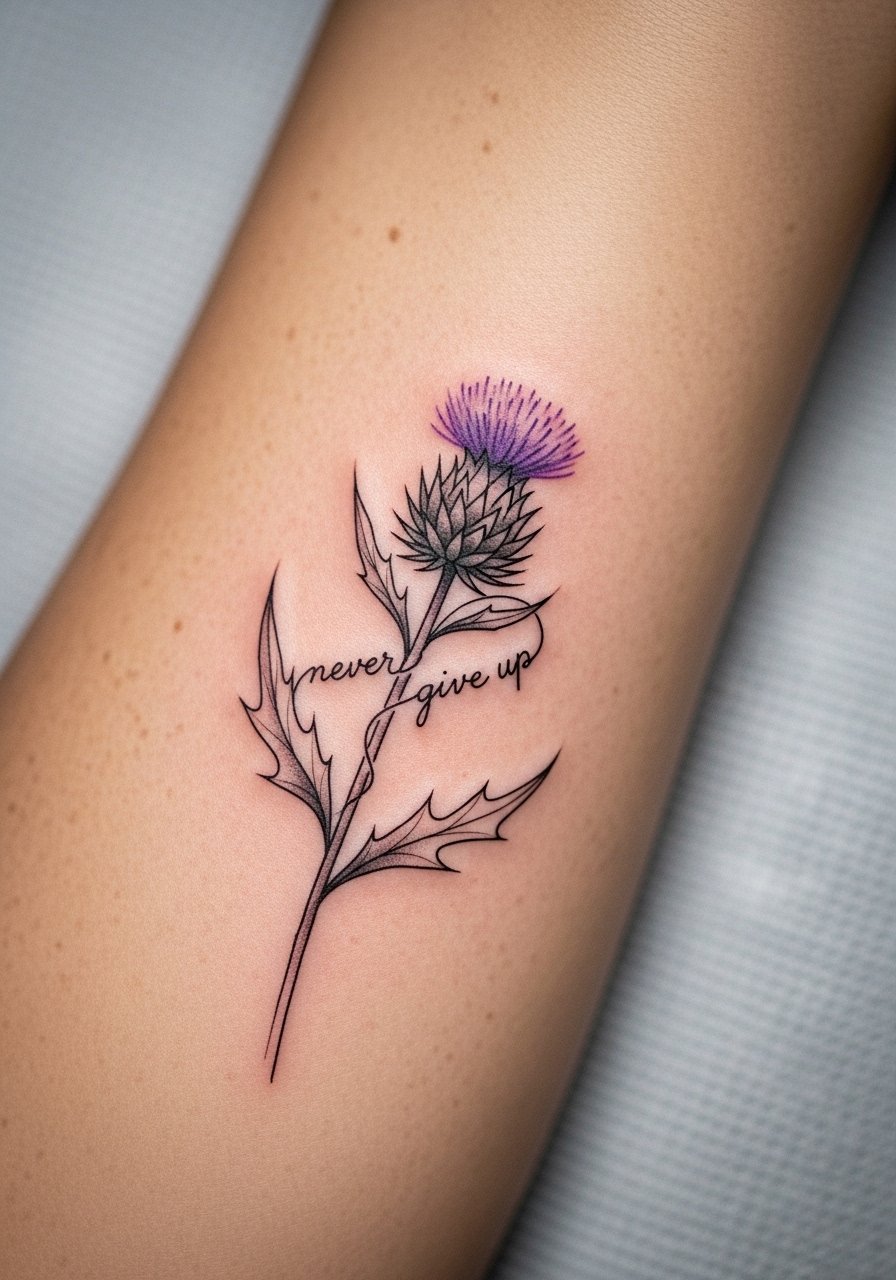
Thistles are protective and persistent—perfect if your resilience felt earned. The spiky silhouette paired with a soft script balances grit and grace.
Style & Design Details
- Tattoo style: illustrative fine-line, slight color
- Recommended size: 3–4 inches
- Best placements: forearm, side rib, lower leg
- Color vs. blackwork: muted purple accents with black outline
- Design elements: spiky leaves, bristled head detail, flowing cursive script, shadow stippling
- Longevity note: Fine-line plus small color needs SPF to retain hue
- Who it suits: people who want a tougher botanical symbol
Finding the Right Artist
Find botanical illustrators who can render texture. Ask how they'll keep spikes crisp without over-saturating. Avoid artists unfamiliar with micro-texture work.
Aftercare & Healing Tips
Use an unscented soap and light layer of Hustle Butter to preserve fine texture. Protect from sun once healed.
- Wild Rose and Bee with Tiny Script
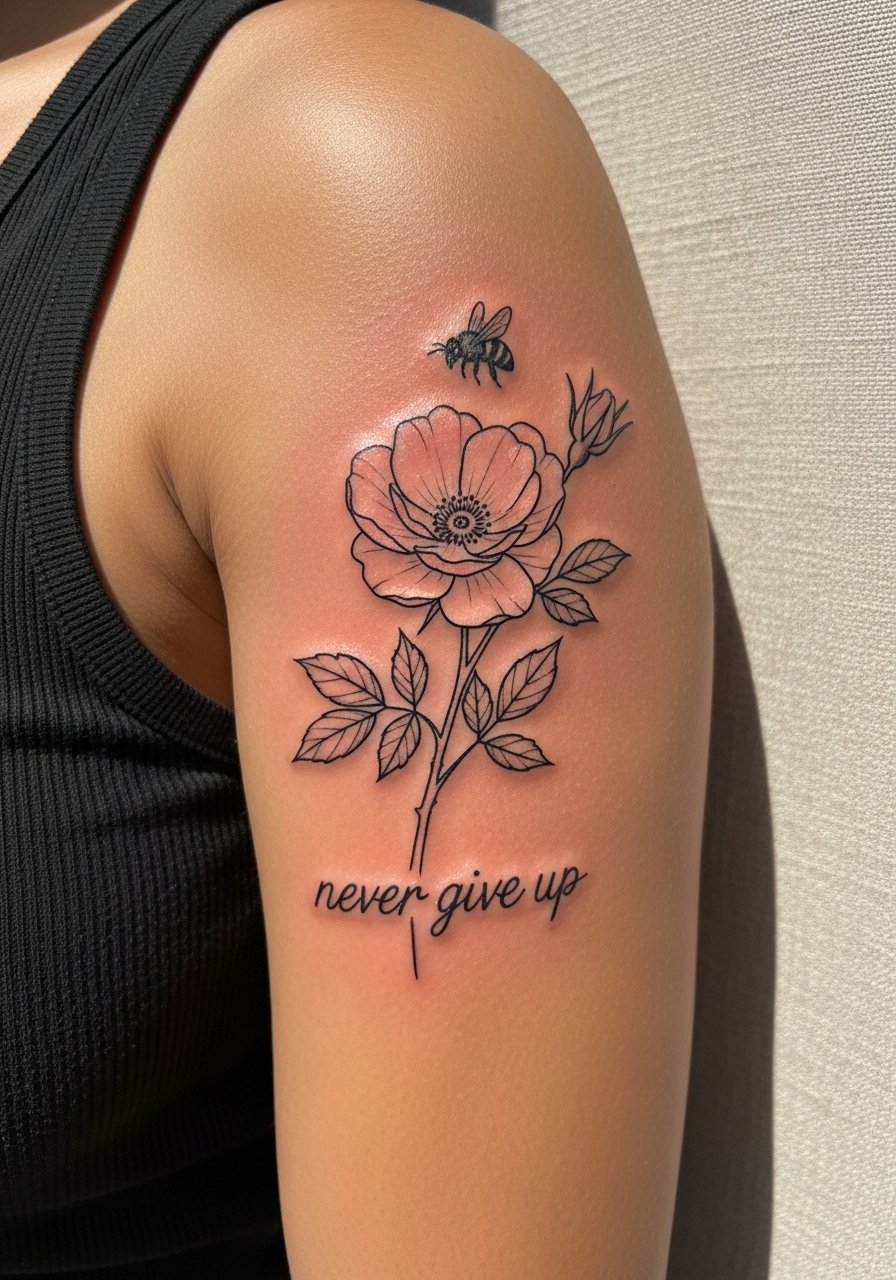
A bee with a wild rose signals diligence and reward. The pairing reflects daily persistence—a gentle visual motto.
Style & Design Details
- Tattoo style: illustrative with micro realism
- Recommended size: 3–4 inches
- Best placements: upper arm, shoulder, ribcage
- Color vs. blackwork: Soft pink washes and black line work
- Design elements: wing linework, petal texture, small italic script, fine dot shading
- Longevity note: Small color fades first; bees in thin-line can need touch-up
- Who it suits: industrious spirits, nature lovers, recovery markers
Finding the Right Artist
Choose someone who does insect and flower realism. Ask for close-up photos of healed work. Avoid artists inexperienced with insect anatomy.
Aftercare & Healing Tips
Keep insect wings crisp by minimizing friction. Use After Inked and consider a color-safe sunscreen.
- Broken Stem Repaired with Stitch Script
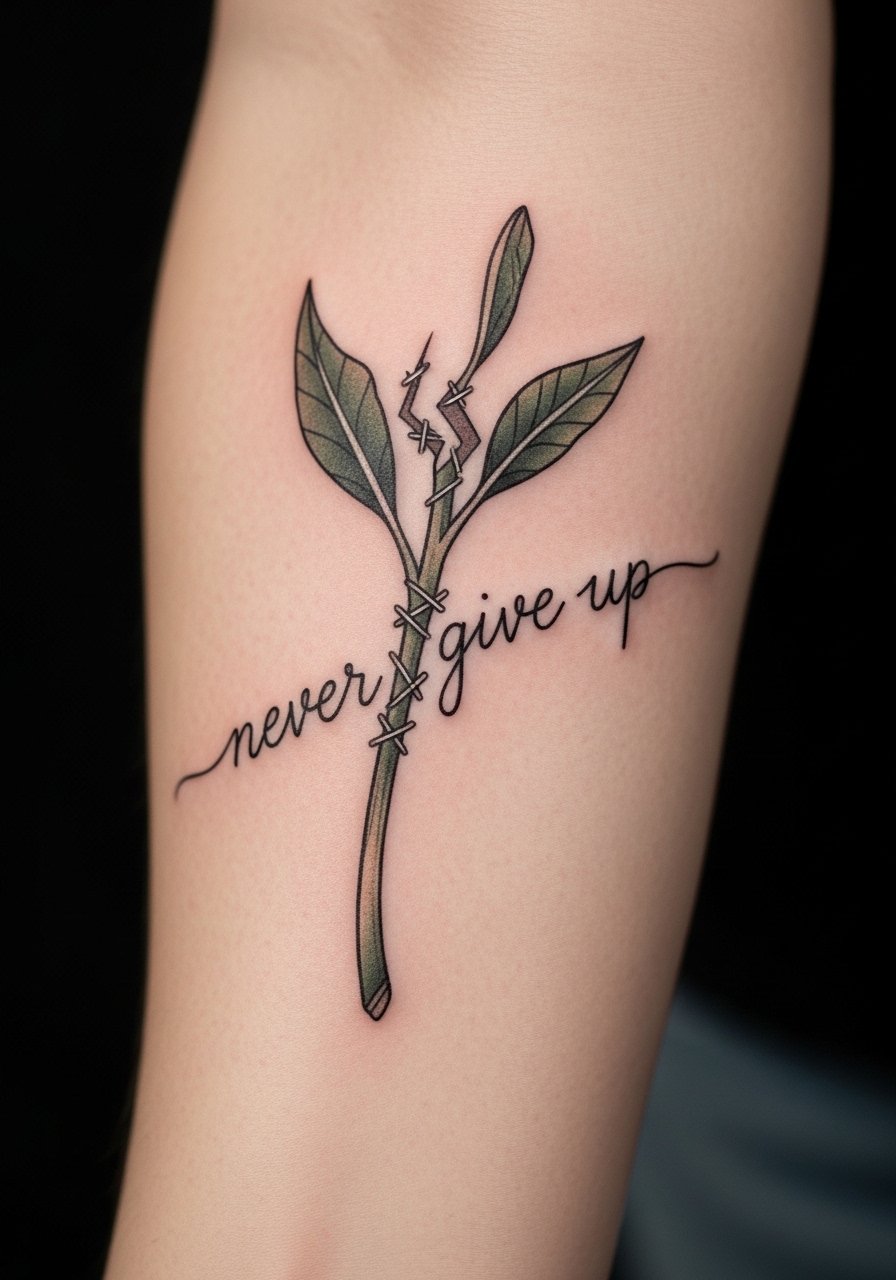
A mended stem says you've been damaged but you kept growing. Stitch marks introduce a tactile metaphor for healing.
Style & Design Details
- Tattoo style: illustrative + conceptual
- Recommended size: 3–5 inches
- Best placements: forearm, outer calf, behind shoulder
- Color vs. blackwork: Black stem with green leaf accents
- Design elements: stitch marks, slight scarring effect, cursive script, subtle shadowing
- Longevity note: Conceptional elements show well; stitches are simple lines that might need refresh
- Who it suits: trauma survivors, recovery advocates
Finding the Right Artist
Pick someone comfortable with symbolic, slightly conceptual tattoos. Ask about line crispness for "stitch" marks. Avoid artists who don't do subtle texture.
Aftercare & Healing Tips
Treat like a regular healing tattoo; keep it clean with Dr. Bronner’s unscented soap and moisturize. Consider touch-ups for stitch clarity.
- Ivy Wreath Lettering Around Upper Arm
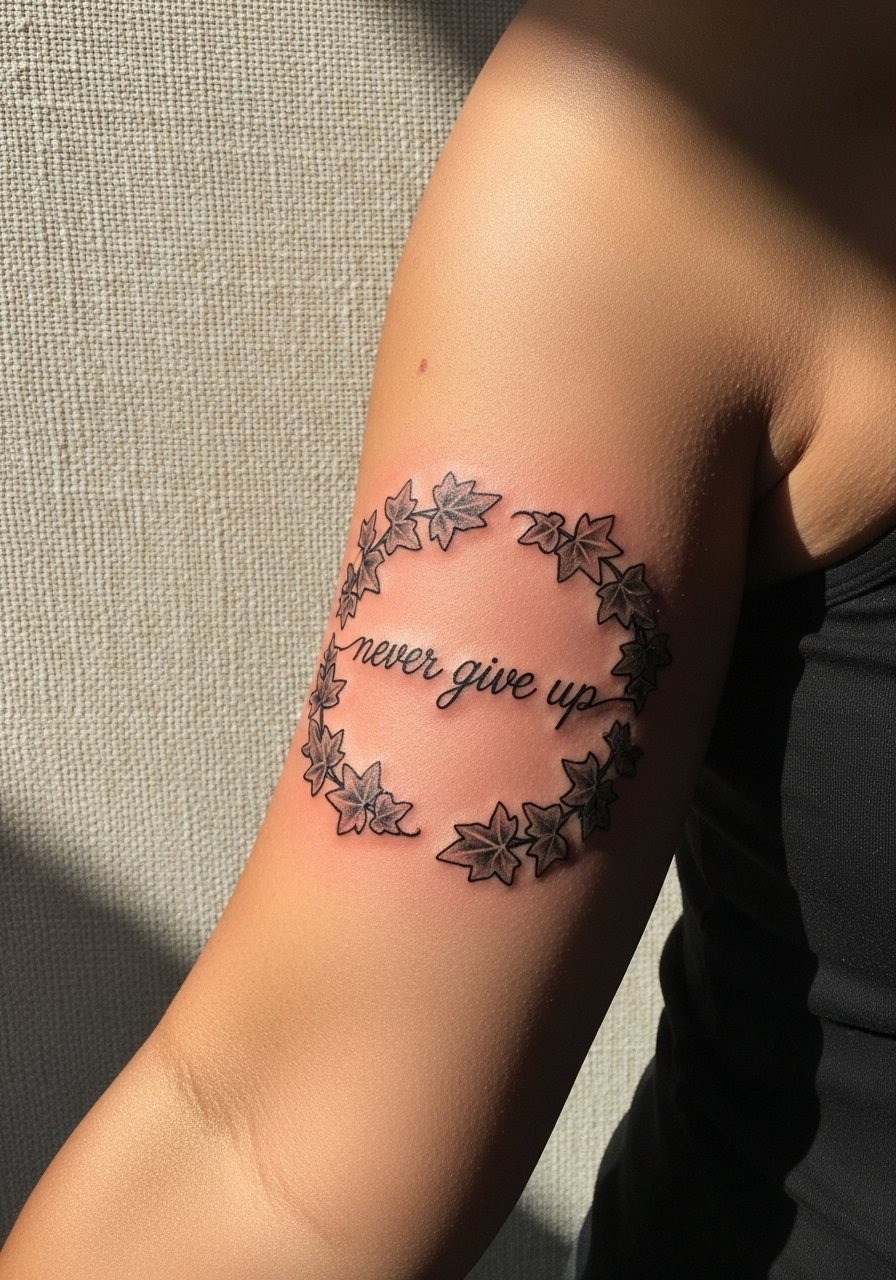
Ivy clings and persists—an excellent symbol for steady survival. An arm band wreath is decorative and meaningful.
Style & Design Details
- Tattoo style: botanical band, clean linework
- Recommended size: wrap around the arm, 1–2 inches tall
- Best placements: upper arm, mid-forearm, calf band
- Color vs. blackwork: Black or muted green for the ivy
- Design elements: repeating leaf motifs, thin connecting lines, centered script, symmetry emphasis
- Longevity note: Bands endure but may need periodic refinements
- Who it suits: fashion-forward wearers, lovers of continuous motifs
Finding the Right Artist
Look for artists who have done band work; ask how they handle the natural taper of the arm. Avoid artists unfamiliar with wrap designs.
Aftercare & Healing Tips
Avoid tight sleeves during healing. Keep area moisturized and protected from sun. Use Saniderm if recommended.
- Floral Anchor with Nautical Script
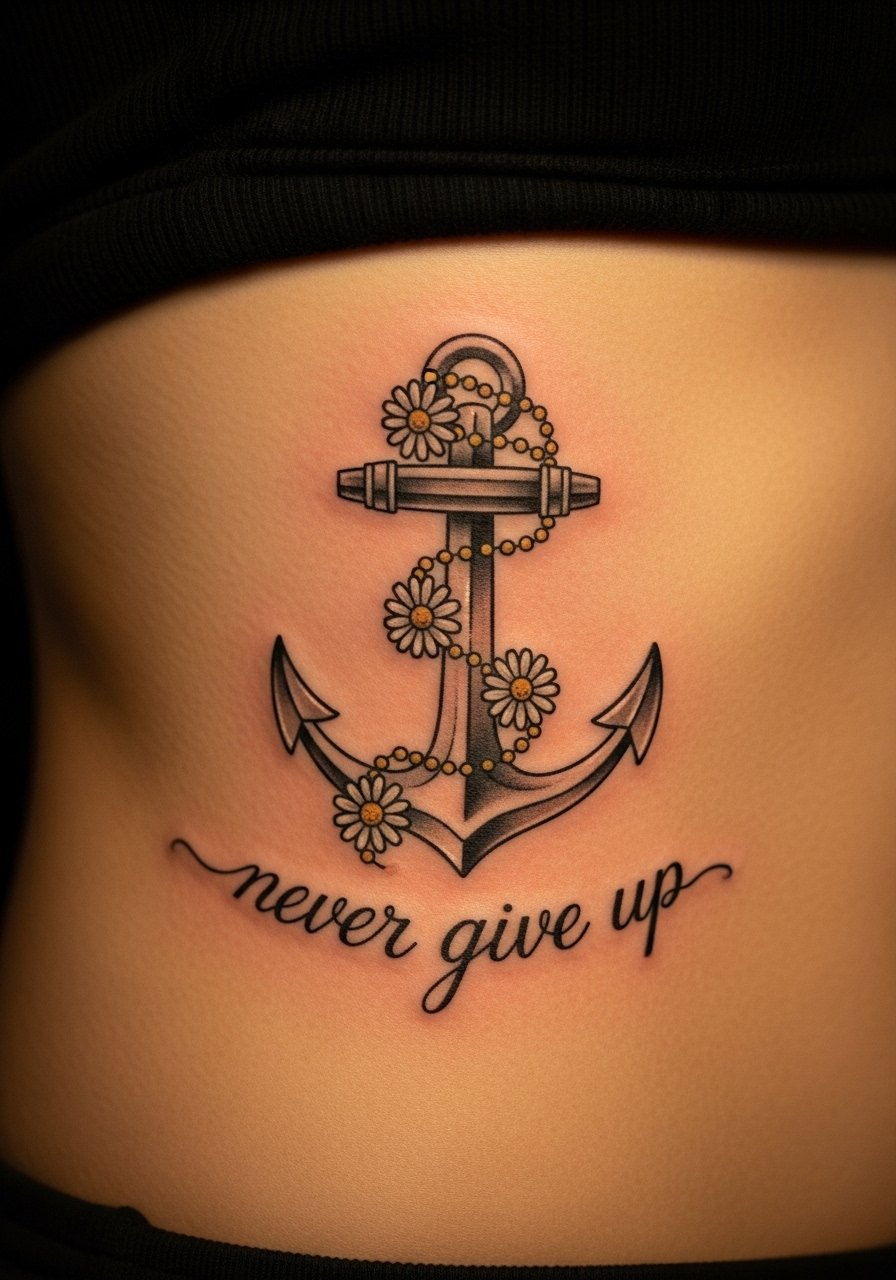
Anchor imagery grounds resilience. When wrapped with flowers, it suggests steadiness that also blossoms.
Style & Design Details
- Tattoo style: illustrative nautical + floral
- Recommended size: 3–5 inches
- Best placements: rib, side torso, upper thigh
- Color vs. blackwork: Black anchor with colored daisies for contrast
- Design elements: anchor shading, rope texture, daisy clusters, vintage script
- Longevity note: Rib tattoos can be tender, but age well visually
- Who it suits: sailors, grounded souls, those marking stability
Finding the Right Artist
Seek an artist comfortable with nautical shading and small florals. Ask about rib movement and skin stretching. Avoid artists who rush ribline work.
Aftercare & Healing Tips
Rib areas need comfortable clothing during healing and gentle washing. Use a numbing cream like EMLA pre-session if anxious. Moisturize and plan for 6-week recovery.
- Vine Lettering Along the Side Rib
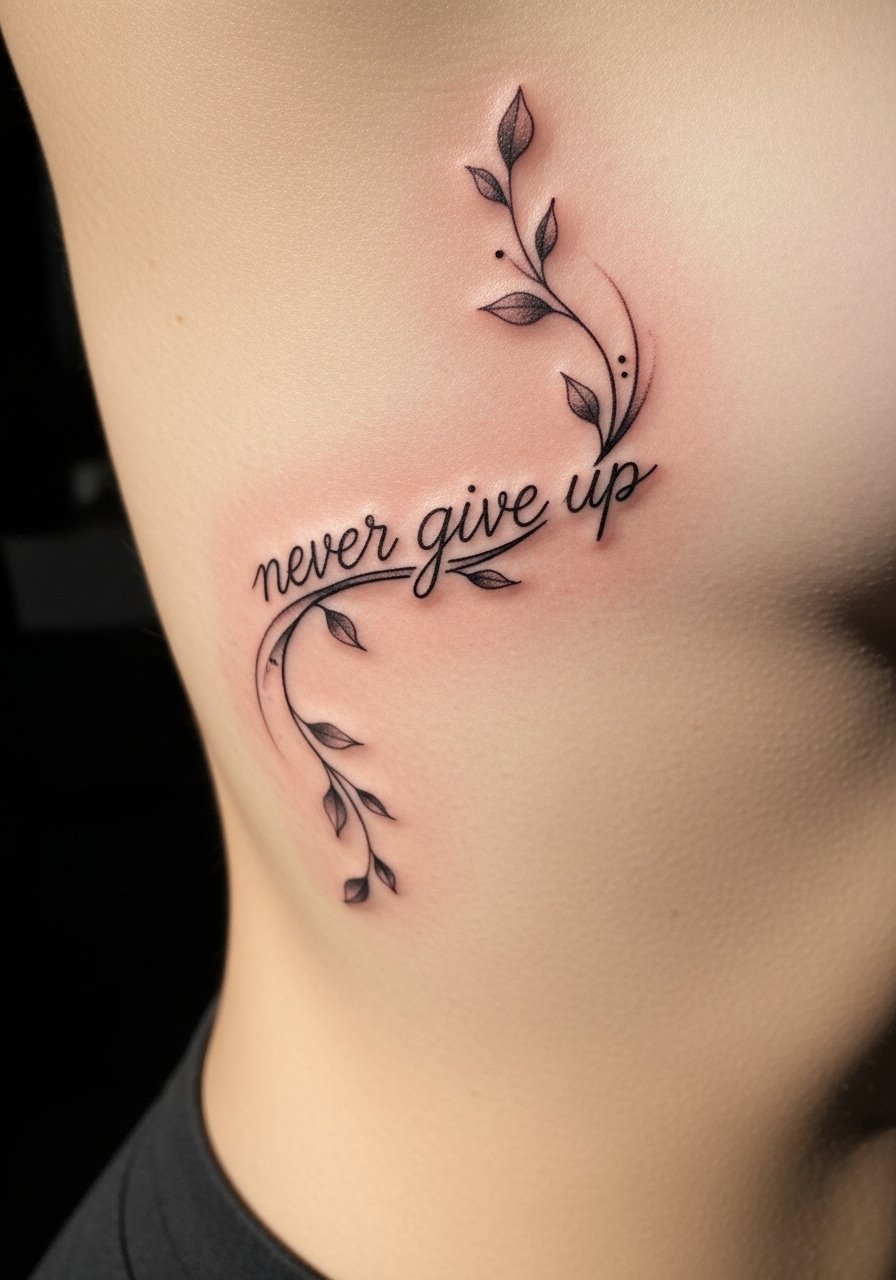
When the lettering itself forms a vine, the message becomes part of the plant's growth. The rib's curve enhances the flow.
Style & Design Details
- Tattoo style: lettering-as-design, flowing illustrative
- Recommended size: 6–8 inches long
- Best placements: side rib, flank, hip curve
- Color vs. blackwork: Grayscale or muted green for the vine
- Design elements: integrated letters, tiny leaves, shading to suggest depth, consistent thin-line weight
- Longevity note: Rib lines keep crispness but require careful scaling
- Who it suits: poetic types, those wanting a sweeping piece
Finding the Right Artist
Find someone who can merge typography and botanical elements. Ask for stencils to ensure lettering read. Avoid artists who specialize only in block fonts.
Aftercare & Healing Tips
Rib areas bruise and swell; expect sensitivity. Wear loose clothing and use unscented lotion like Lubriderm. Keep heels and activities light for two weeks.
- Peony Compass with Hidden Script
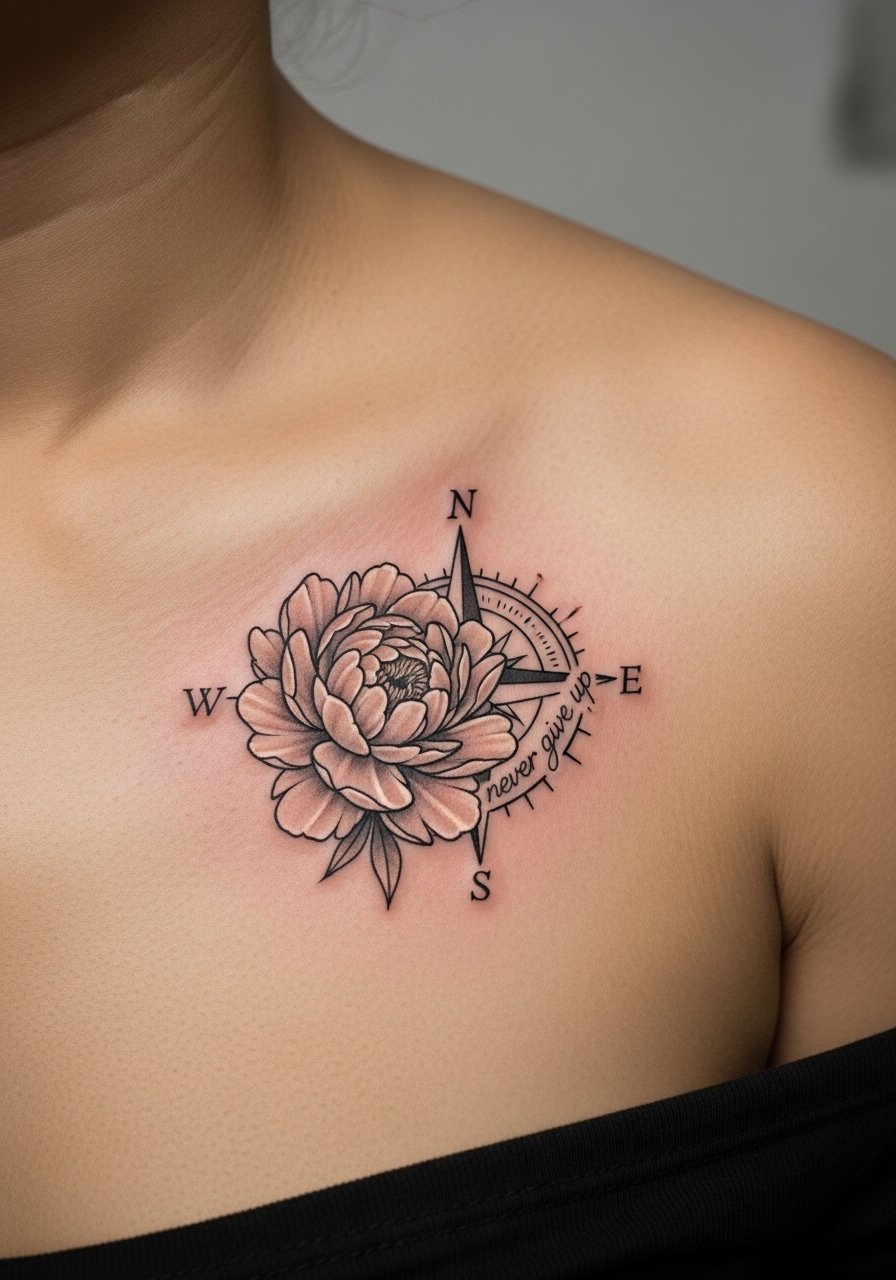
A compass indicates direction; a peony brings beauty. Hiding your mantra in the compass line makes it both navigational and personal.
Style & Design Details
- Tattoo style: illustrative + geometric
- Recommended size: 3–5 inches
- Best placements: upper chest, shoulder, sternum
- Color vs. blackwork: grayscale with optional soft color in the peony
- Design elements: compass points, layered petals, hidden script line, fine dotwork
- Longevity note: geometric lines need consistent needle work to stay crisp
- Who it suits: travelers, people marking a turning point
Finding the Right Artist
Choose someone who balances geometry and organic shapes. Ask about line thickness for compass points. Avoid artists who separate geometry and florals in portfolios.
Aftercare & Healing Tips
Keep geometric lines taut during healing—Saniderm if requested and After Inked afterward. Expect a touch-up in 1–2 years for perfecting angles.
- Botanical Sleeve Accent with Cursive Band
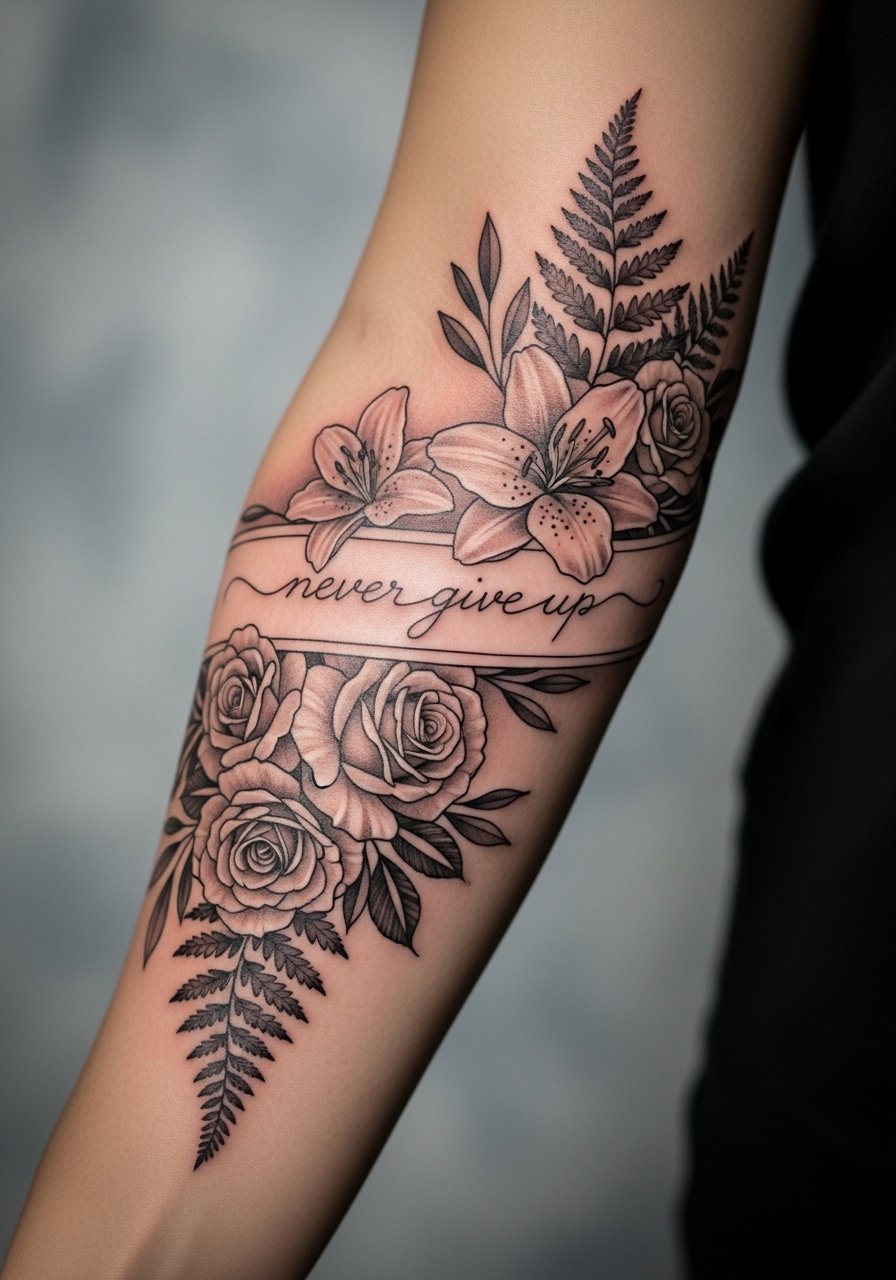
A sleeve accent turns the phrase into part of a larger narrative—each bloom represents a chapter. This option is for someone building a story over time.
Style & Design Details
- Tattoo style: illustrative sleeve, modular pieces
- Recommended size: wrap around forearm or quarter sleeve
- Best placements: forearm, upper arm sleeve continuation
- Color vs. blackwork: Mix of color and blackwork for layering
- Design elements: cluster nodes, flowing cursive band, negative space breaks, layered shading
- Longevity note: More coverage equals more longevity for contrast
- Who it suits: collectors, those committed to larger projects
Finding the Right Artist
Work with an artist who plans long-term projects and shows sleeve cohesion. Ask about future expansion and touch-up policies. Avoid someone without piece continuity experience.
Aftercare & Healing Tips
Large areas heal in patches—follow artist instructions for block healing. Use Hustle Butter and Saniderm as directed. Keep moisturized and protected.
- Botanical Barcode with Tiny Script Hidden
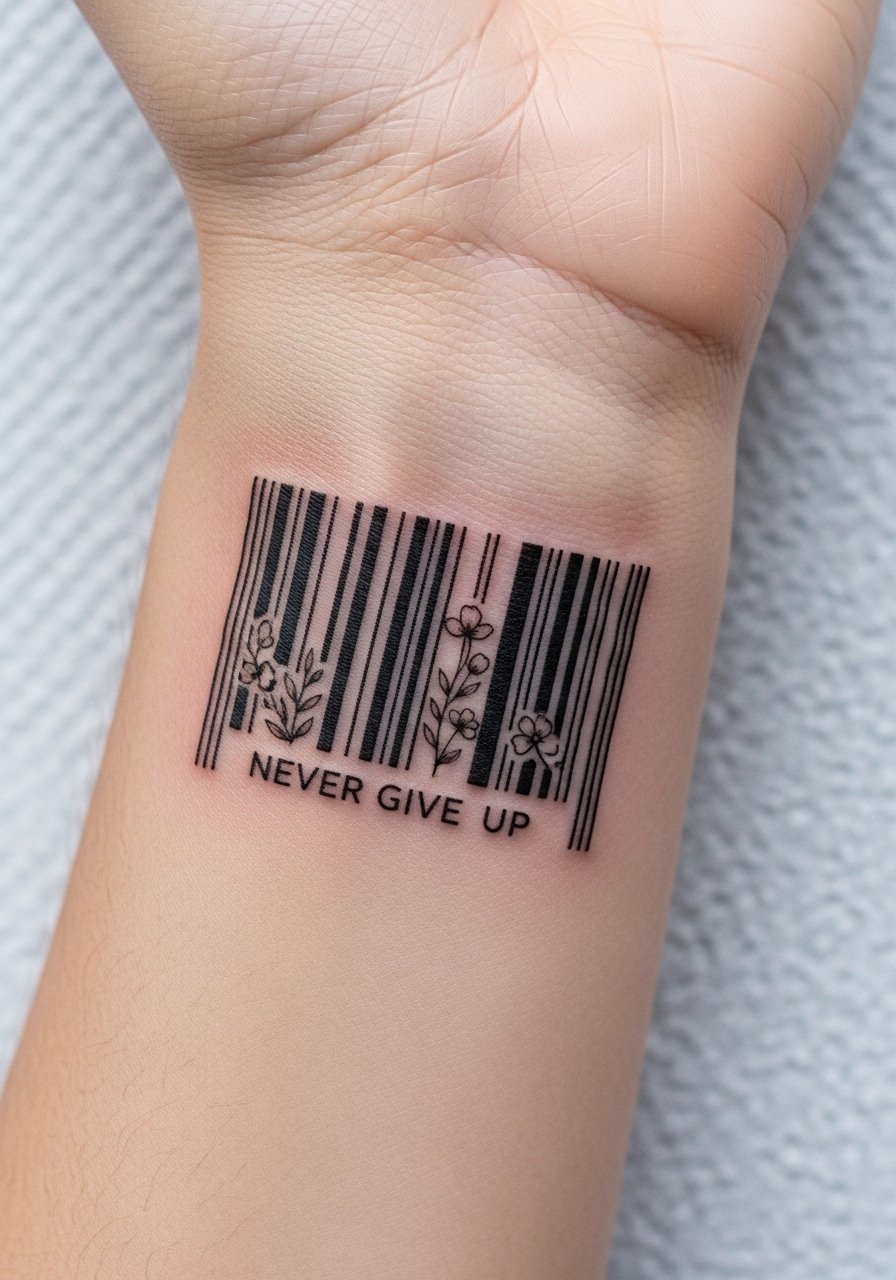
This clever, modern design reads minimal from afar but reveals detail up close—a private reminder encoded into style.
Style & Design Details
- Tattoo style: modern minimalism / micro-illustration
- Recommended size: 1–2.5 inches tall
- Best placements: side wrist, inner forearm, upper ankle
- Color vs. blackwork: Blackwork for crispness
- Design elements: barcode lines, hidden floral breaks, micro-script inclusion, tight negative space
- Longevity note: Crisp lines needed—expect touch-ups if lines blur
- Who it suits: design-minded folks, subtle statement lovers
Finding the Right Artist
Choose someone with steady linework and micro-detail. Ask to see healed photos of line-heavy tattoos. Avoid rookies for this precision work.
Aftercare & Healing Tips
Keep bandaged briefly, wash with unscented soap, and avoid friction from watches or bracelets. Use After Inked for moisture.
- Healed Wreath Over Scar Tissue
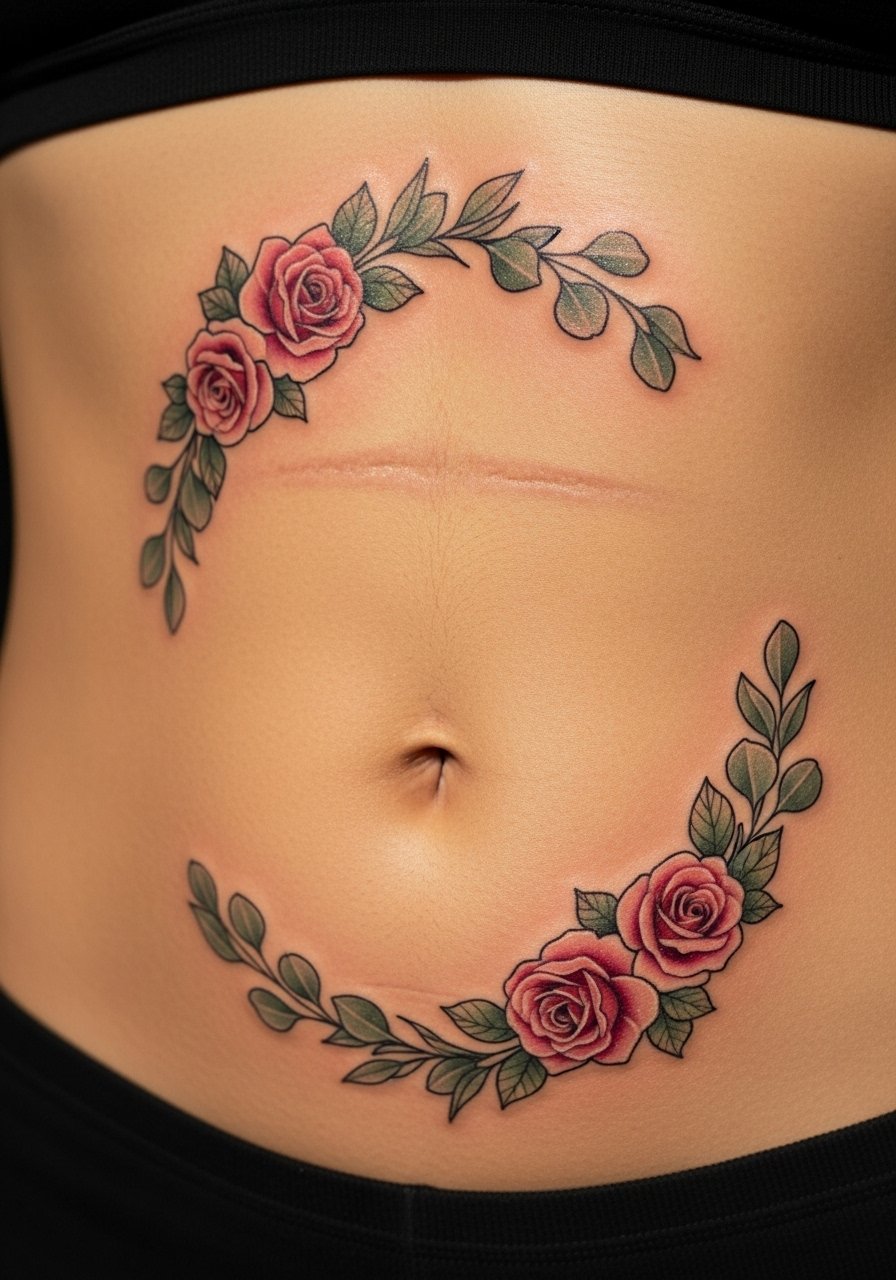
A floral wreath can be an empowering way to reclaim scarred skin. Choosing blooms that suit scar contours helps normalize texture.
Style & Design Details
- Tattoo style: cover-up botanical, adaptive linework
- Recommended size: depends on scar; often 4+ inches
- Best placements: over scars on abdomen, chest, thigh
- Color vs. blackwork: Mixed tones often useful for cover-up; black outlines to mask discoloration
- Design elements: thicker petals over dense scar, eucalyptus leaves, layered shading, negative-space masking
- Longevity note: Scar tissue accepts ink differently; shading may change over time
- Who it suits: those reclaiming bodies, survivors
Finding the Right Artist
Find an artist experienced in scar cover-ups; they should discuss ink uptake and staging. Ask for examples of healed cover-ups. Avoid artists lacking cover-up experience. A senior artist recommended.
Aftercare & Healing Tips
Scar areas need gentle care—keep out of sun and use a silicone-based scar product only after healing if advised. Follow artist aftercare closely and consider multiple sessions for depth. Use Hustle Butter for moisturization during healing.
- Moonflower Crescent with Tiny Script Along Curve
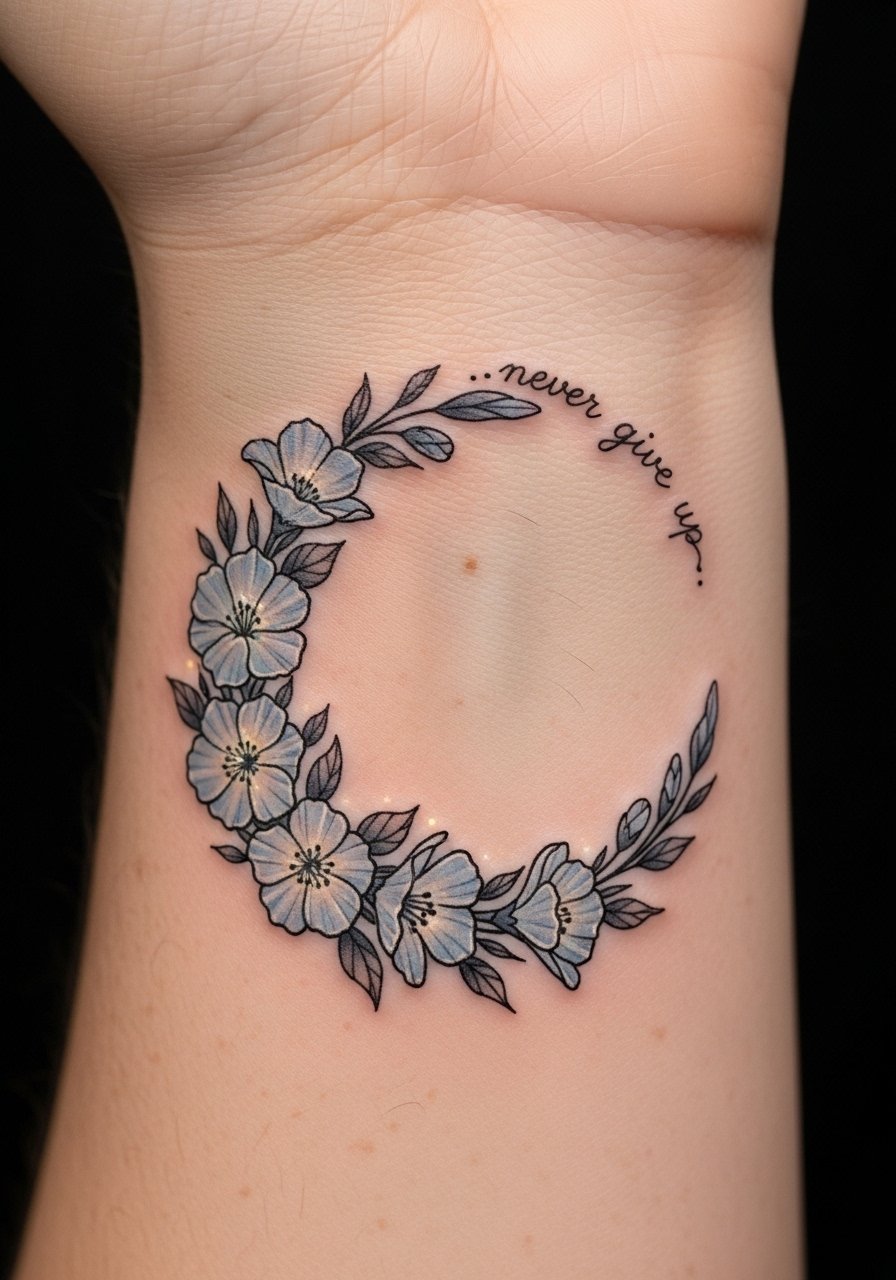
Moonflowers bloom at night—perfect for those who've found light in darkness. The crescent shape adds a dreamy architectural form.
Style & Design Details
- Tattoo style: botanical crescent + fine script
- Recommended size: 3–4 inches arc
- Best placements: forearm curve, collarbone arch, rib arc
- Color vs. blackwork: Cool blue-gray tones with black accents
- Design elements: crescent arrangement, tiny cursive, petal layering, subtle highlights
- Longevity note: Cool pigments may fade; black accents help silhouette
- Who it suits: night-owls, romantic dreamers, recovery-night metaphors
Finding the Right Artist
Find someone who composes crescent pieces in portfolios. Ask how they'll orient on your body curve. Avoid artists unfamiliar with arcs.
Aftercare & Healing Tips
Keep the arc free from tight straps and fabrics. Use Saniderm and then a fragrance-free lotion. Protect with SPF when exposed.
- Garden Gate Scene with Script Pathway
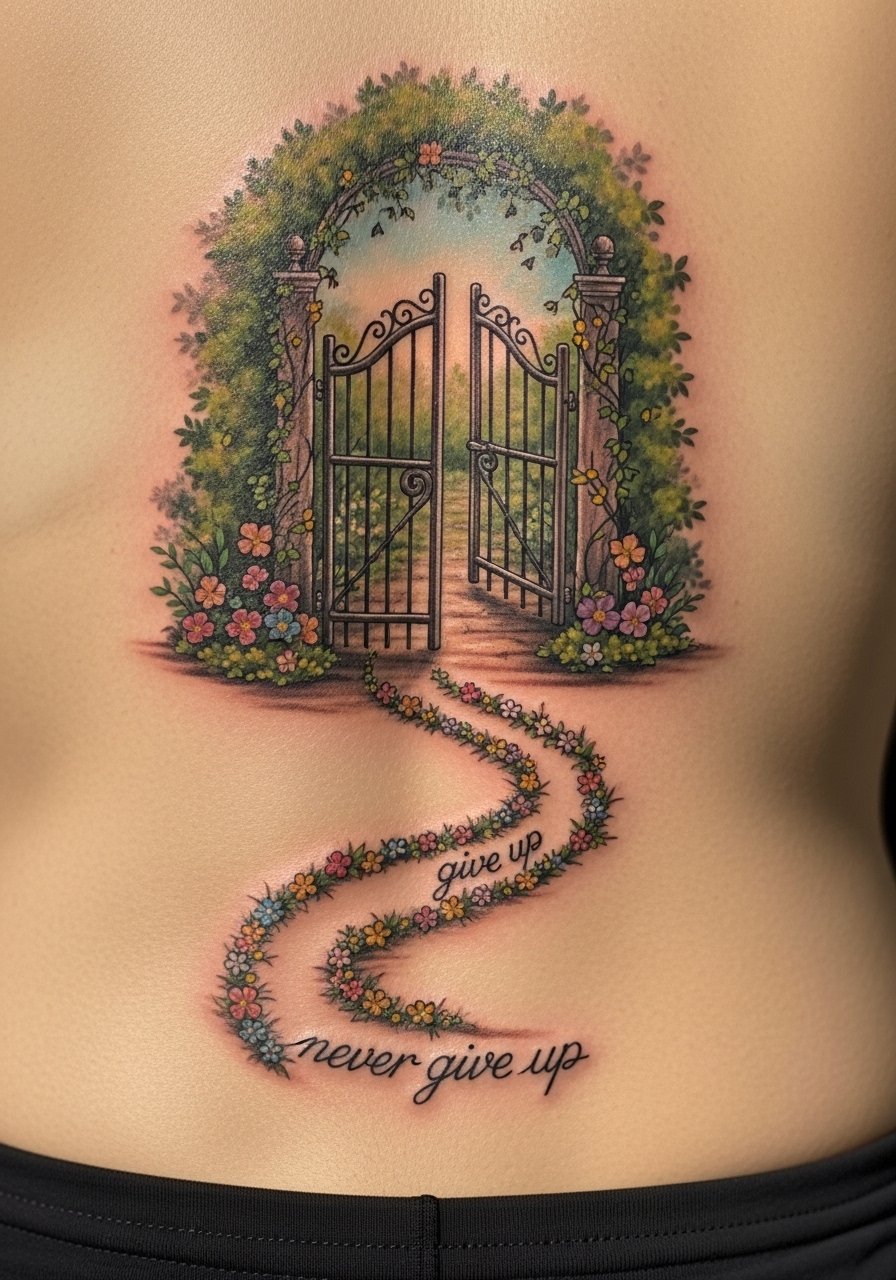
A garden gate suggests invitation and ongoing journey. Forming "never give up" into the path makes the message part of the journey itself.
Style & Design Details
- Tattoo style: scene-based illustrative
- Recommended size: 4–7 inches landscape
- Best placements: lower back, hip, thigh
- Color vs. blackwork: Muted garden palette with black details
- Design elements: gate lines, path made of floral motifs, perspective shading, flowing script integration
- Longevity note: Scenes hold well if designed for body curvature
- Who it suits: storytellers, people who want a narrative piece
Finding the Right Artist
Choose an artist who composes scenes and landscapes in tattoo form. Ask for perspective sketches and how the gate will sit on your body curve. Avoid artists with only small-flower samples.
Aftercare & Healing Tips
Large scenes need layered healing care—clean gently, use Saniderm per artist guidance, and follow with unscented lotion. Protect from sun to preserve subtle colors.
Which style resonates most with you? Pin the ideas that call out to you and bring a handful to your consult. Booking with the right artist and having a small kit ready—Saniderm, Hustle Butter Deluxe, and a gentle soap like Dr. Bronner’s unscented—will make the process smoother. Which placement are you leaning toward, and which floral meaning matters most? Pin it, save it, and bring it to your appointment—you’ll thank yourself later for the prep.