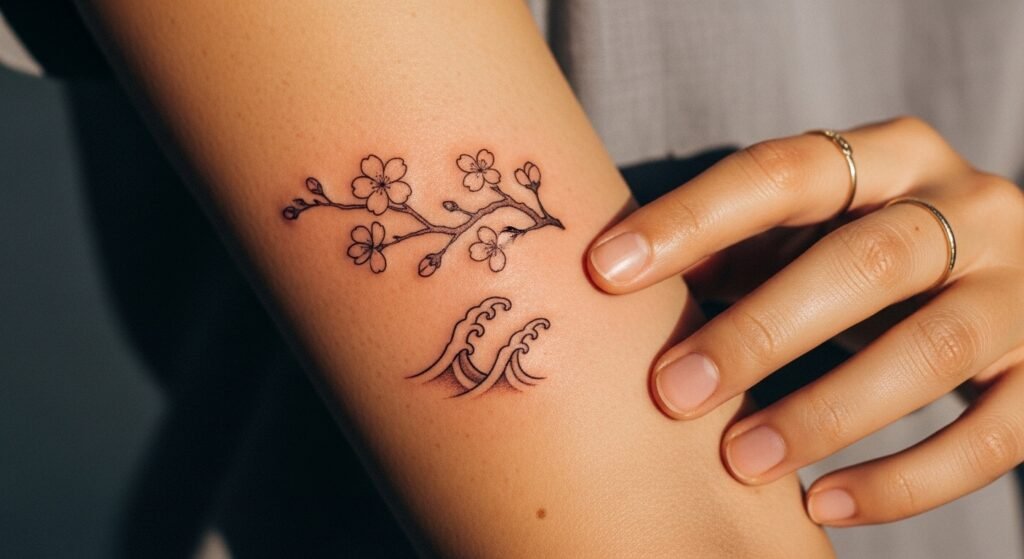
You’re sitting in a consultation at midnight, scrolling for inspiration, or finally booking that appointment you’ve been thinking about for years. Small Japanese tattoo placement ideas are perfect when you want something meaningful, delicate, and wearable every day. This guide collects 30 tiny Japanese-inspired placements that flatter all body types, show off fine detail, and help you pick the right spot for gentle linework or bold blackwork.
You’ll find placements for first-timers and collectors, plus style breakdowns, what to ask your artist, and realistic healing tips. I’ll also drop my favorite prep and aftercare picks—like using a numbing cream for sensitive rib placements or keeping fresh ink protected with Saniderm after the session. Pack this list in your notes and pin the designs you love most.
Read on for 30 small Japanese tattoo placement ideas with clear guidance on placement, style, artist selection, and healing.
1. Tiny Koi Head on Inner Wrist
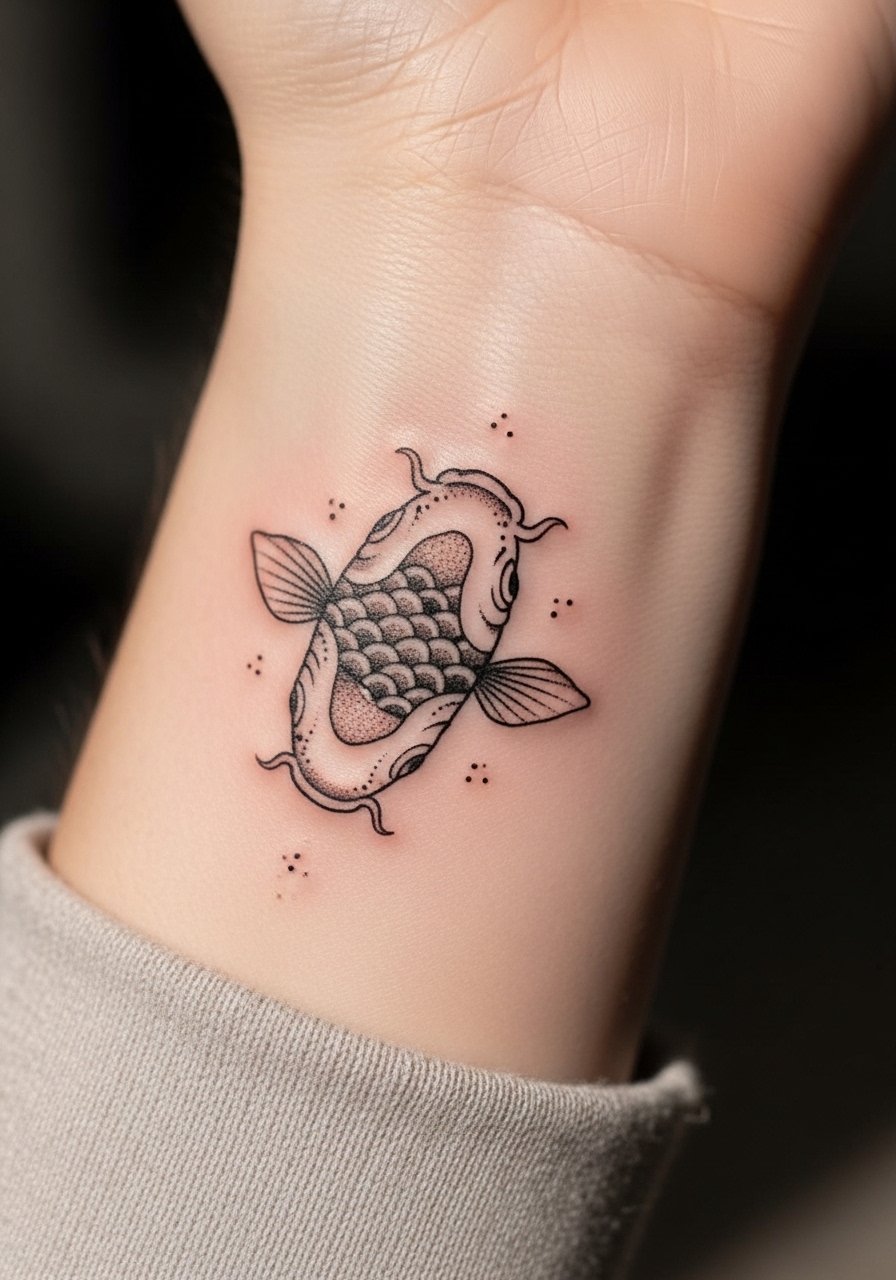
A koi head reduced to a graceful curve and dot-shaded scales reads both symbolic and subtle on the inner wrist. This version keeps the form compact—around 1.5–2 inches—so the migration of detail is minimal and it peeks from under sleeves. If you worry about wrist pain, try applying Zensa numbing cream an hour before the session.
Style & Design Details
- Tattoo style: Fine line with micro stippling
- Recommended size: 1–2 inches
- Best placement(s): inner wrist, lateral ankle, behind ear—areas that fit linear curves
- Color vs. blackwork: Blackwork for longevity; tiny color fills can fade faster
- Design elements: single-needle outline, tiny stipple scales, minimal negative space, micro waves, thin black dot highlights
- Longevity note: fine single-needle lines can blur on wrists—avoid hairline lines under 0.5 mm
- Who it suits: minimalists, first-timers, people who want symbolic ink without commitment
Finding the Right Artist
Look for portfolios with healed close-ups of single-needle micro tattoos. Ask how they scale Japanese motifs down without losing form. Avoid artists who only show heavily saturated neo-traditional work for fine line pieces. An experienced artist is preferred over an apprentice for crisp micro dots. Try searching Instagram tags like #finelinetattoo and #microjapanese.
Aftercare & Healing Tips
Leave the initial Saniderm or Tegaderm wrap on as your artist recommends—often 24–48 hours for wrist work. Wash gently twice a day with a fragrance-free soap like Dr. Bronner’s unscented castile. Follow with a thin layer of unscented lotion such as Lubriderm during peeling.
2. Mini Sakura Cluster on the Collarbone
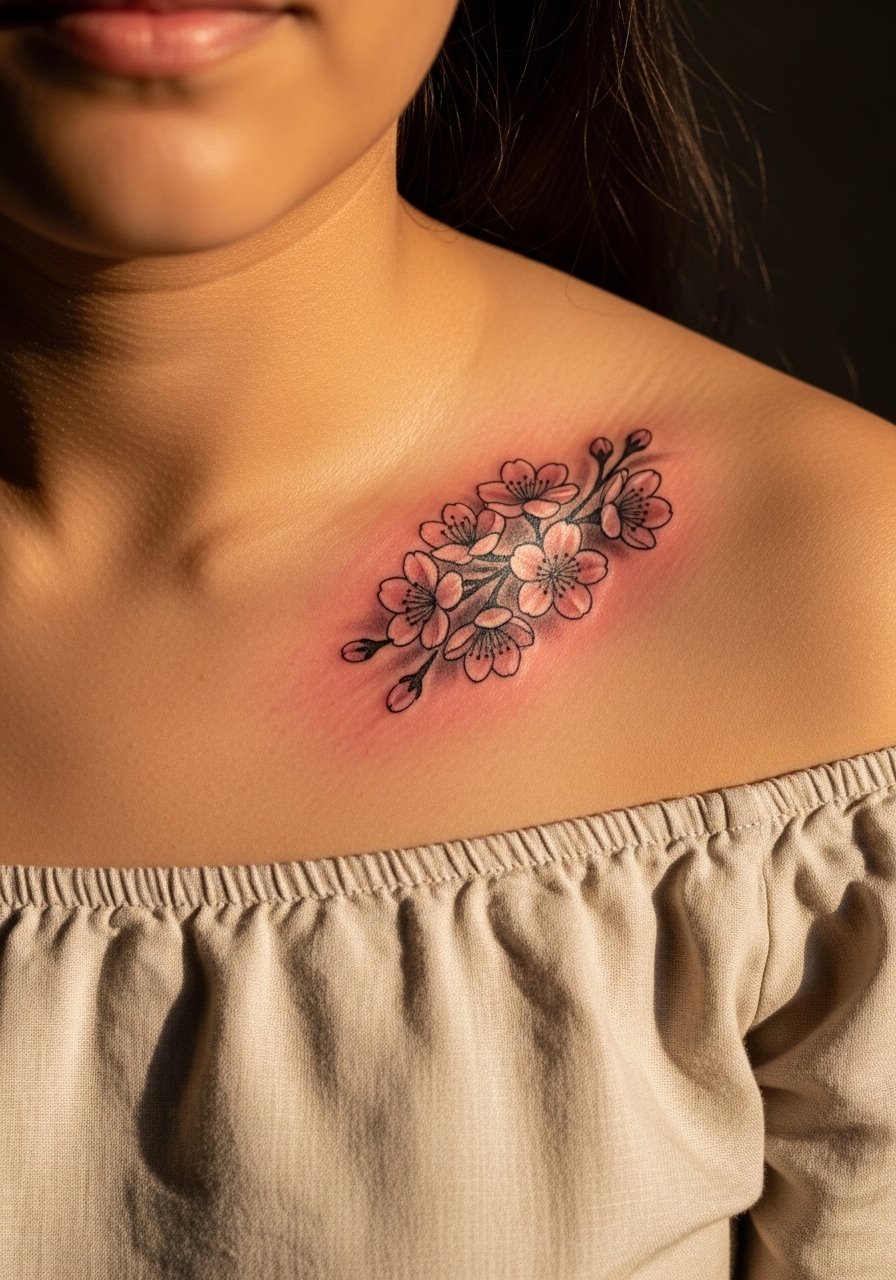
A tiny sakura cluster along the collarbone reads poetic and feminine. It curves with the bone, so it flatters most chest shapes without dominating the neckline. For color retention, ask for slightly bolder outlines and healed color samples from the artist. If the collarbone placement worries you, consider a topical numbing cream like EMLA.
Style & Design Details
- Tattoo style: Watercolor-illustrative with fine outlines
- Recommended size: 2–3 inches
- Best placement(s): collarbone, sternum edge, upper shoulder—shows with open necklines
- Color vs. blackwork: soft pinks + diluted gray wash for petals; black outlines for longevity
- Design elements: petal clusters, thin branch, micro stipple centers, negative-space highlights, light wash shading
- Longevity note: pastel pink fades faster; plan touch-ups or richer pigments
- Who it suits: cottagecore fans, romantics, chest placements newcomers
Finding the Right Artist
Book an artist who posts healed photos of watercolor and pastel work. Ask about pigment brands and how they layer color for long-term saturation. Avoid artists who don't photograph healed results. Local shop walk-ins can work for small pieces; for color, pick someone experienced in watercolor techniques.
Aftercare & Healing Tips
Keep sun exposure minimal—collarbones get sunlight often, which bleaches pastels. Use Saniderm for the first 24–48 hours if recommended, then wash gently and apply a thin unscented lotion. For long-term color care, use an SPF 50 tattoo sunscreen stick on exposed days.
3. Mini Hokusai Wave Behind the Ear
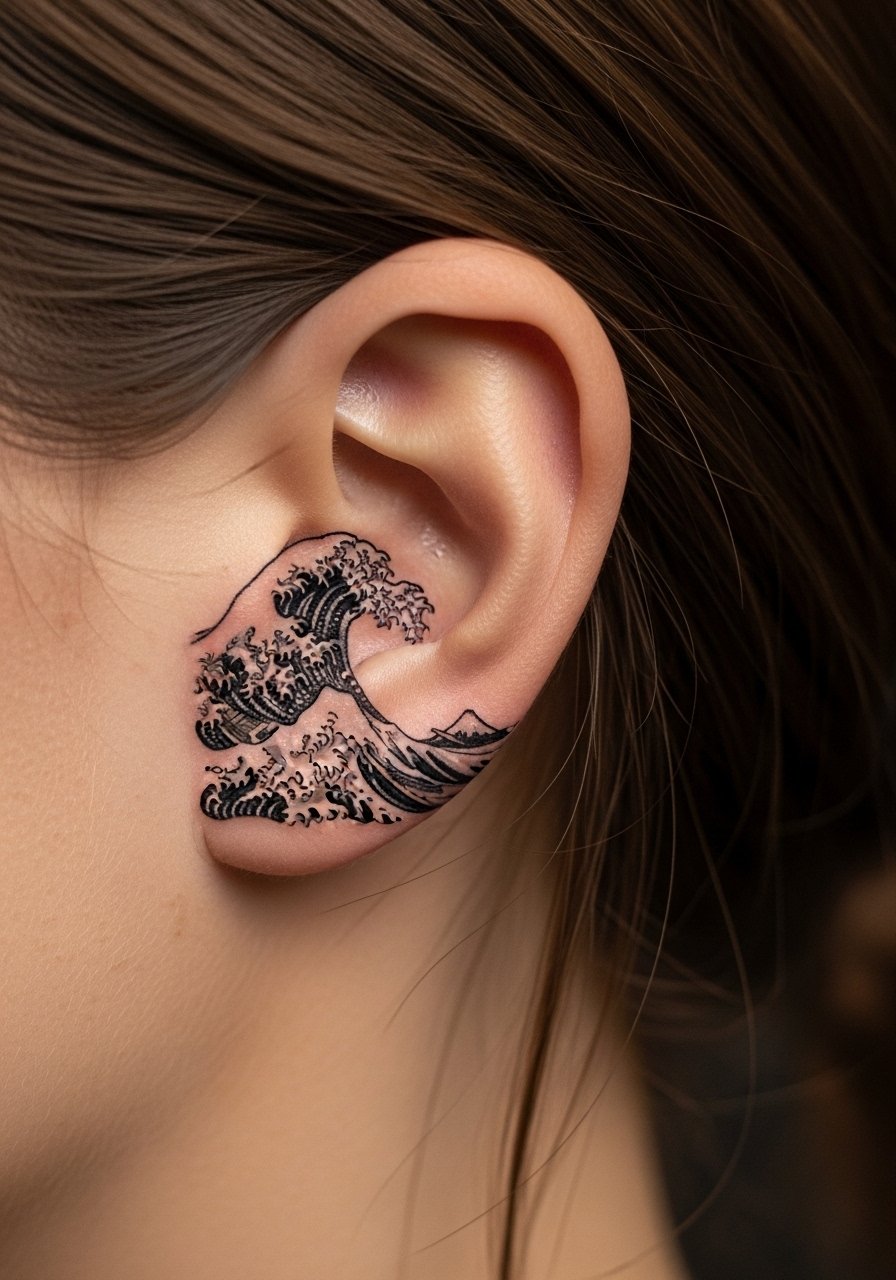
A micro Hokusai-inspired wave behind the ear is a tiny nod to classic Ukiyo-e. It’s a smart choice if you want Japanese iconography without an obvious front-and-center piece. Ink this in dense black for contrast against skin. For delicate placements behind the ear, a tiny roll of Saniderm can protect the area overnight.
Style & Design Details
- Tattoo style: Illustrative blackwork
- Recommended size: 0.75–1.5 inches
- Best placement(s): behind ear, nape, mastoid area—discreet and flattens to skin
- Color vs. blackwork: solid black holds best for small details
- Design elements: bold curl line, negative space foam dots, micro line texture, crescent crest, tiny motion lines
- Longevity note: small blackwork behind ear ages well if ink depth is consistent
- Who it suits: subtlety lovers, office workers, people who prefer hidden placements
Finding the Right Artist
Seek artists comfortable with tiny blackwork and show healed photos in high detail. Ask about needle configurations they use for tiny bold lines. Avoid someone who uses heavy hand pressure or deep pokes for micro line; that causes blowouts.
Aftercare & Healing Tips
The spot can be prone to friction from hair—keep it clean and dry and apply a thin layer of unscented lotion when the wrap comes off. Avoid sleeping on that side for the first week and use gentle shampoo products. Reapply a tattoo balm like Hustle Butter Deluxe tattoo aftercare balm once peeling starts.
4. Tiny Daruma on the Rib Side (Low-Profile)
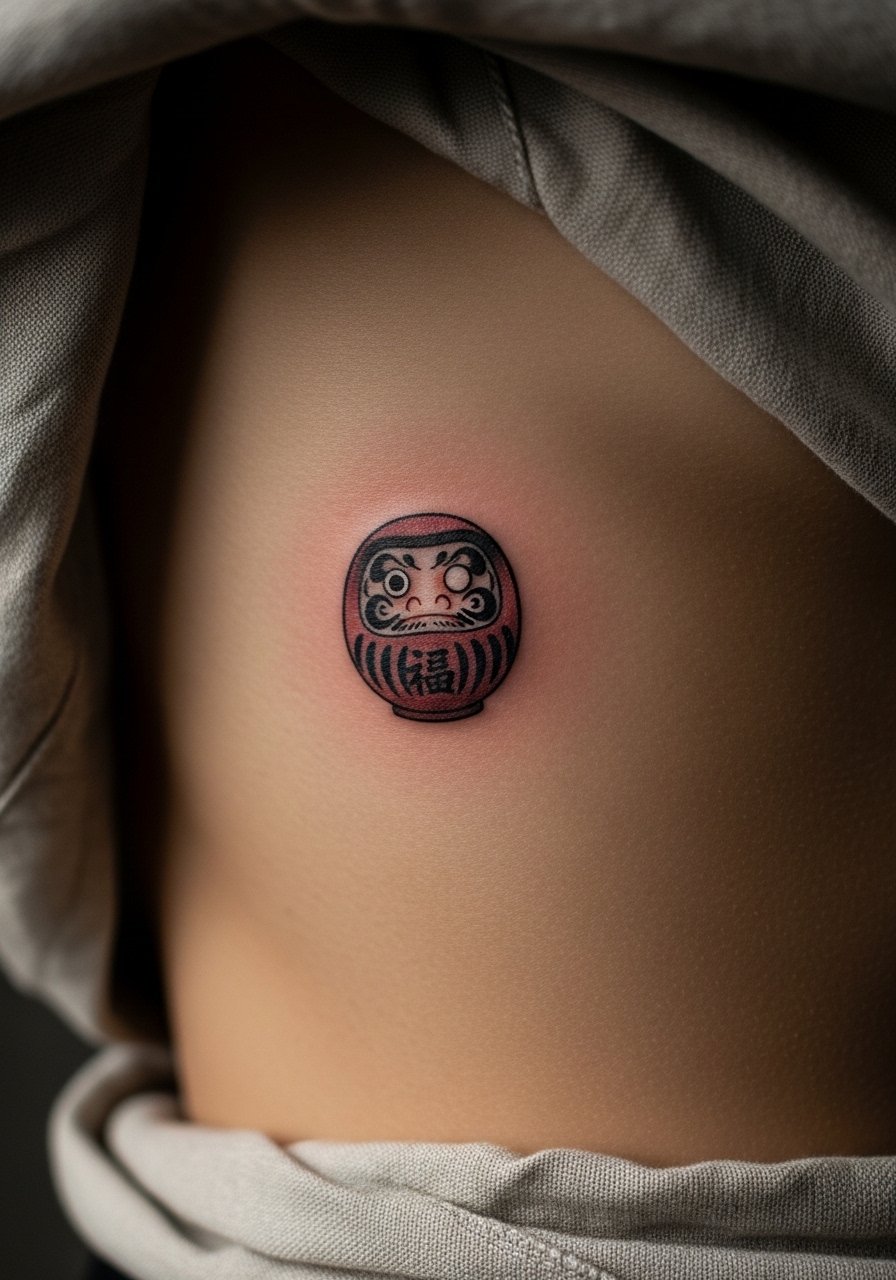
A small Daruma on the lower rib side is a quiet way to carry intention. Because ribs move and stretch, keep the design compact and slightly bolder to avoid blown edges. For sensitive ribs, apply Emla numbing cream before the session to ease pain.
Style & Design Details
- Tattoo style: Neo-traditional mini with bold outline
- Recommended size: 1.5–2.5 inches
- Best placement(s): lower rib, upper hip, lateral torso—curves naturally with the body
- Color vs. blackwork: small red accents can pop, but black outlines stabilize the form
- Design elements: thick outline, minimal facial features, soft red fill, tiny kanji or dot stars, negative-space highlights
- Longevity note: torso skin holds pigment well if depth is correct
- Who it suits: people who want symbolic ink but prefer it concealed
Finding the Right Artist
Look for artists who show small neo-traditional work on curved areas. Ask how they adjust stencil sizing for skin movement and breathing during the session. Apprentices can do simple dotwork, but experienced artists better manage rib pain and placement.
Aftercare & Healing Tips
Ribs rub against clothing—opt for loose tops after your session. Keep wrapped as recommended and avoid strenuous bending for the first week. Use fragrance-free soap and a non-comedogenic lotion like Aveeno fragrance-free.
5. Small Japanese tattoo placement ideas: Mini Tori Gate on Finger
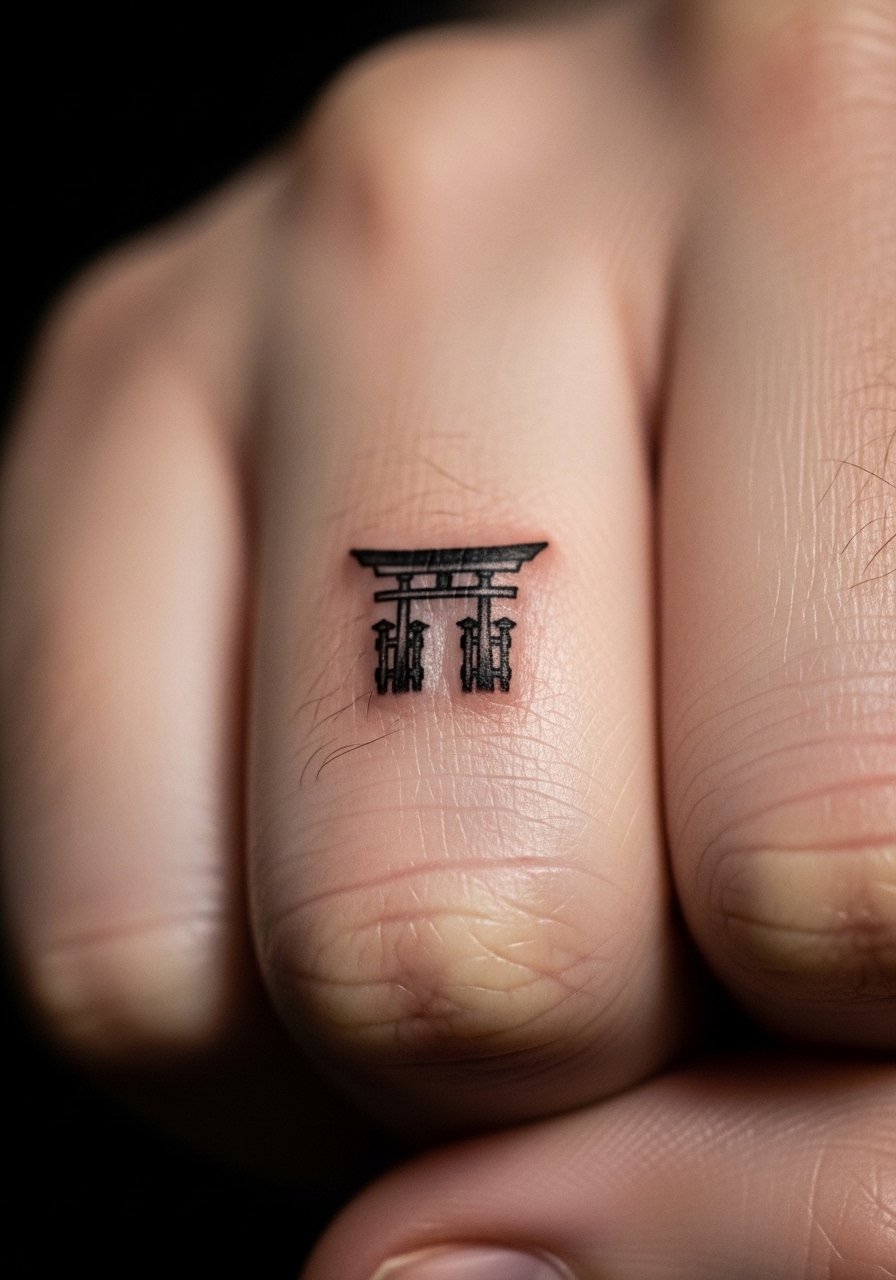
Finger tattoos are inherently bold despite their size. A tiny tori gate on the finger uses vertical lines and negative space to read clean even as the skin naturally ages. Fingers are touch-up territory—expect maintenance. I recommend testing a semi-permanent look with an Inkbox kit before committing.
Style & Design Details
- Tattoo style: Micro blackwork
- Recommended size: 0.5–1 inch
- Best placement(s): side of index finger, along the pinky, or thumb pad edge
- Color vs. blackwork: Black only for crisp edges
- Design elements: two slender posts, tiny cross-bar, micro negative-space door, subtle dot anchors
- Longevity note: fingers fade faster—bold, simplified designs re-ink better
- Who it suits: trend-forward, people okay with yearly touch-ups
Finding the Right Artist
Choose an artist experienced with finger work—look for healed photos demonstrating solid retention. Ask about ink brand and depth for finger skin. Avoid studios that recommend hairline detail on fingers.
Aftercare & Healing Tips
Avoid soaking hands for the first week. Use Saniderm selectively; many artists prefer open care for fingers to avoid trapped moisture. Keep cream light—Lubriderm works well during peeling.
6. Little Fox Mask on the Upper Arm
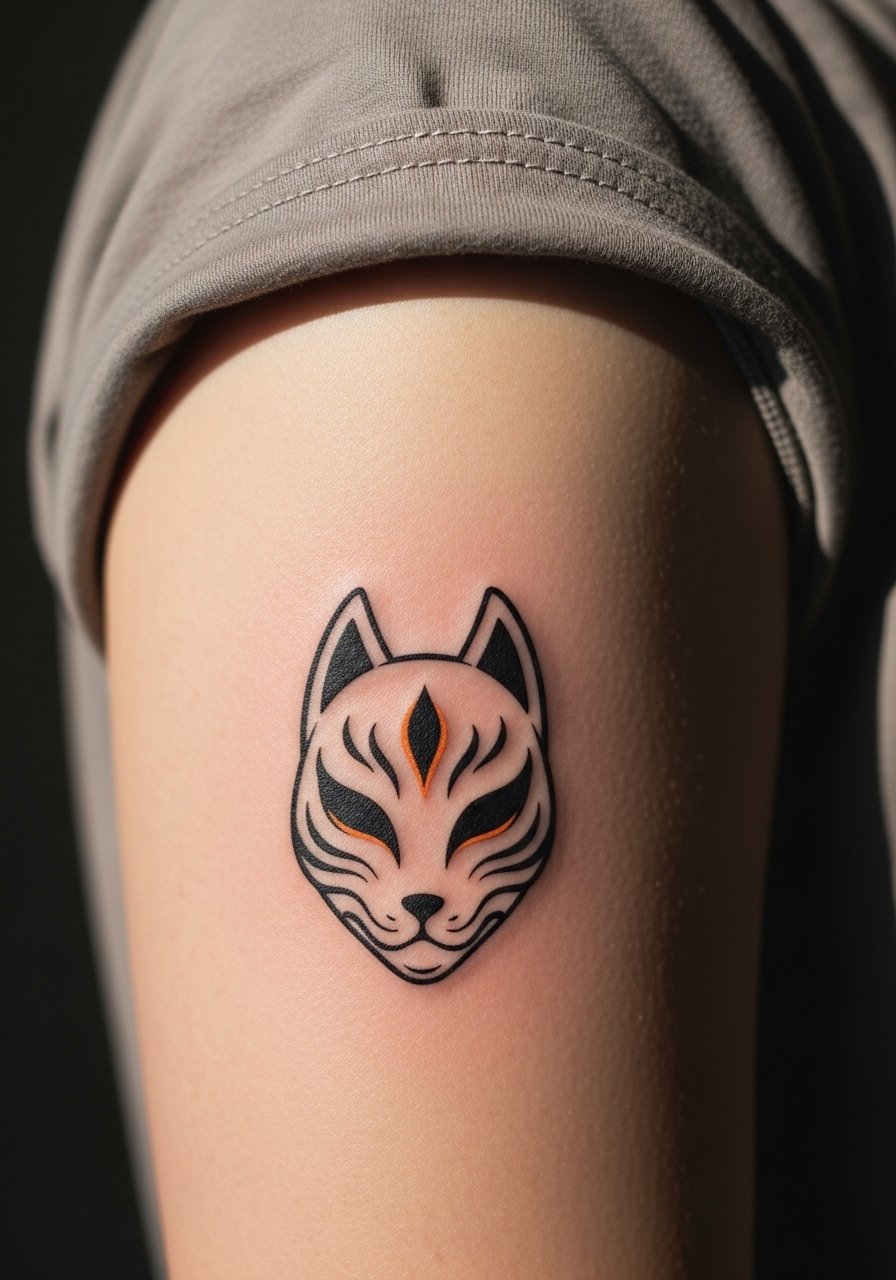
A kitsune mask captures folklore and mischief in a compact motif. Placed on the upper arm, it’s visible when you want it to be and hides under sleeves easily. Solid outlines and slightly denser pigment help the small mask remain readable over time. For design testing, sketch it on placement with stencil transfer paper.
Style & Design Details
- Tattoo style: Neo-Japanese mini with illustrative shading
- Recommended size: 1.5–3 inches
- Best placement(s): upper arm, tricep area, outer calf—areas with steady flesh
- Color vs. blackwork: muted orange accents plus black linework hold well
- Design elements: mask outline, thin whisker lines, micro dot eyes, small kanji accents, shadow wash under chin
- Longevity note: upper arm tolerates touch-ups easily
- Who it suits: collectors, folklore lovers, sleeve-starters
Finding the Right Artist
Look for artists with neo-Japanese portfolios and healed color samples. Ask what pigments they use for oranges and how they layer on small areas. An established artist is recommended for successful color saturation.
Aftercare & Healing Tips
Keep the arm protected from sun while healing. Use a fragrance-free soap and apply Hustle Butter Deluxe tattoo aftercare balm for the first weeks to maintain suppleness.
7. Tiny Crane on the Ankle
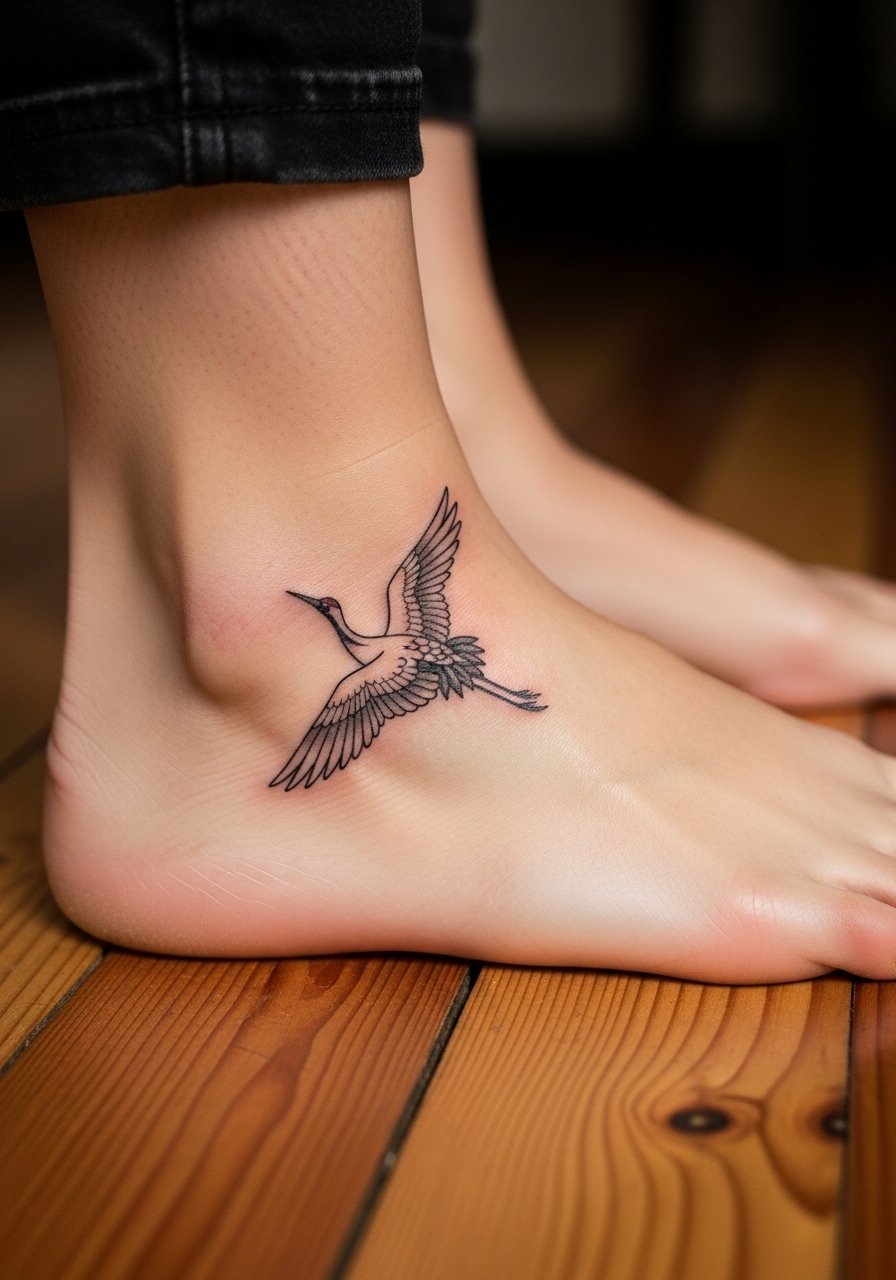
A crane in flight is classic and graceful on the ankle. Its upward motion elongates the leg visually and suits petite compositions. Because the ankle can catch scuffs, keep the artwork simple and slightly bolder to avoid premature fading.
Style & Design Details
- Tattoo style: Fine line illustrative
- Recommended size: 1–2 inches
- Best placement(s): outer ankle, inner ankle, Achilles curve
- Color vs. blackwork: black and soft gray wash recommended
- Design elements: long neck line, micro feather detail, slight negative-space highlights, tiny motion lines
- Longevity note: ankle sees lots of abrasion—bold outlines work better
- Who it suits: travelers, minimalists, nature lovers
Finding the Right Artist
Inspect artists’ healed ankle tattoos—texture matters. Ask about needle choice for feather detail. An experienced fineliner is ideal.
Aftercare & Healing Tips
Avoid tight socks and boots for two weeks. Wash gently and apply an unscented lotion like Aveeno fragrance-free to prevent scratching during peeling.
8. Petite Wave Band on the Forearm
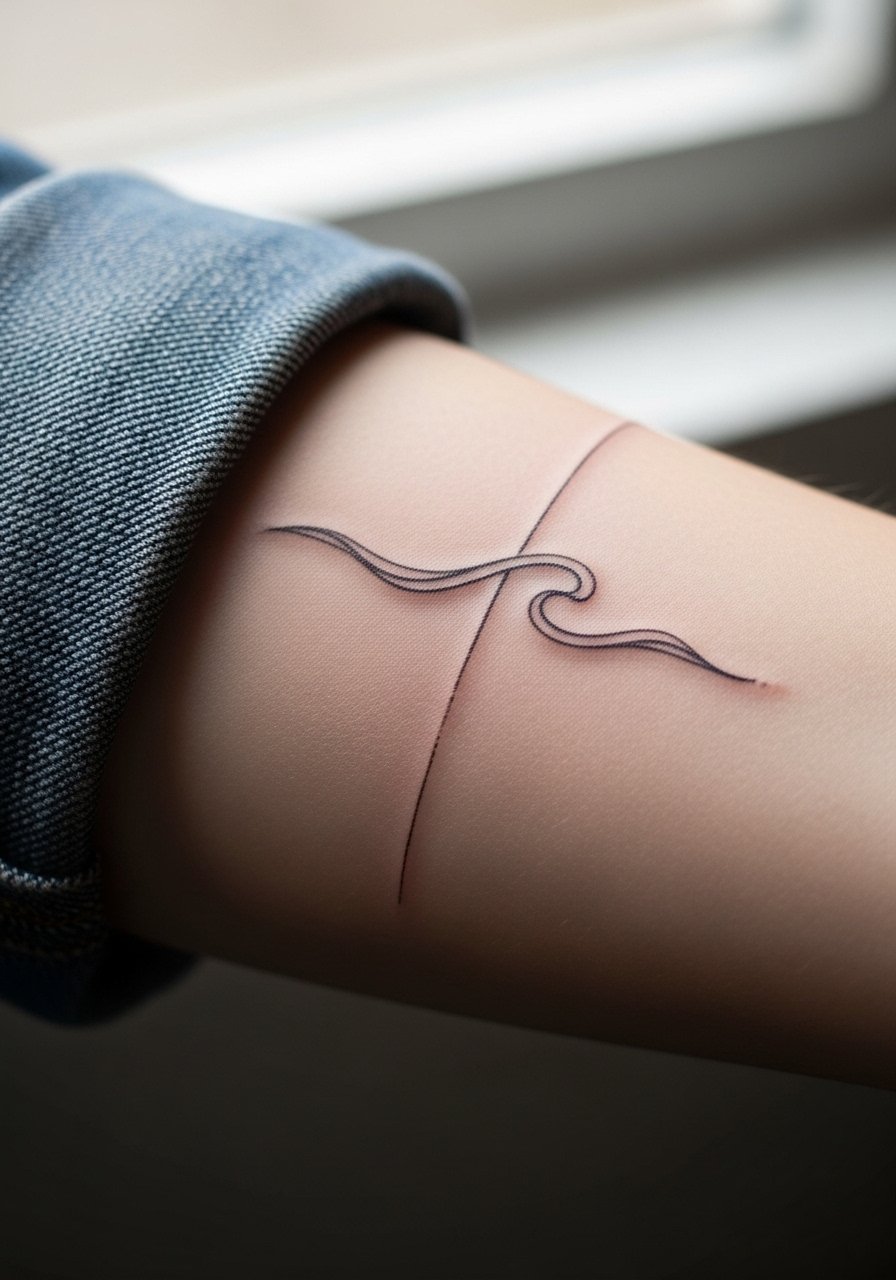
A repeating micro wave band wraps the forearm like a subtle bracelet. It’s a tasteful nod to maritime Ukiyo-e motifs without committing to a full sleeve. For continuous bands, get a stencil checked on the arm while you’re sitting to ensure symmetry.
Style & Design Details
- Tattoo style: Minimalist blackwork
- Recommended size: 0.25–0.5 inch tall per wave, band length varies
- Best placement(s): inner forearm band, wrist band, upper arm
- Color vs. blackwork: black only for crisp repeatability
- Design elements: repeating crest line, negative-space troughs, equal spacing, micro anchor dots
- Longevity note: bands can migrate; slightly thicker lines resist blur
- Who it suits: symmetry lovers, accessory minimalist fans
Finding the Right Artist
Choose someone who has done bands or fine bracelets before—ask for heel-shot photos showing even spacing. Avoid rookies who rush stencils.
Aftercare & Healing Tips
Bands can peel into uneven edges—keep moisturizing and avoid picking. SPF on exposed bands prevents early fading.
9. Petite Mount Fuji on the Back of the Neck
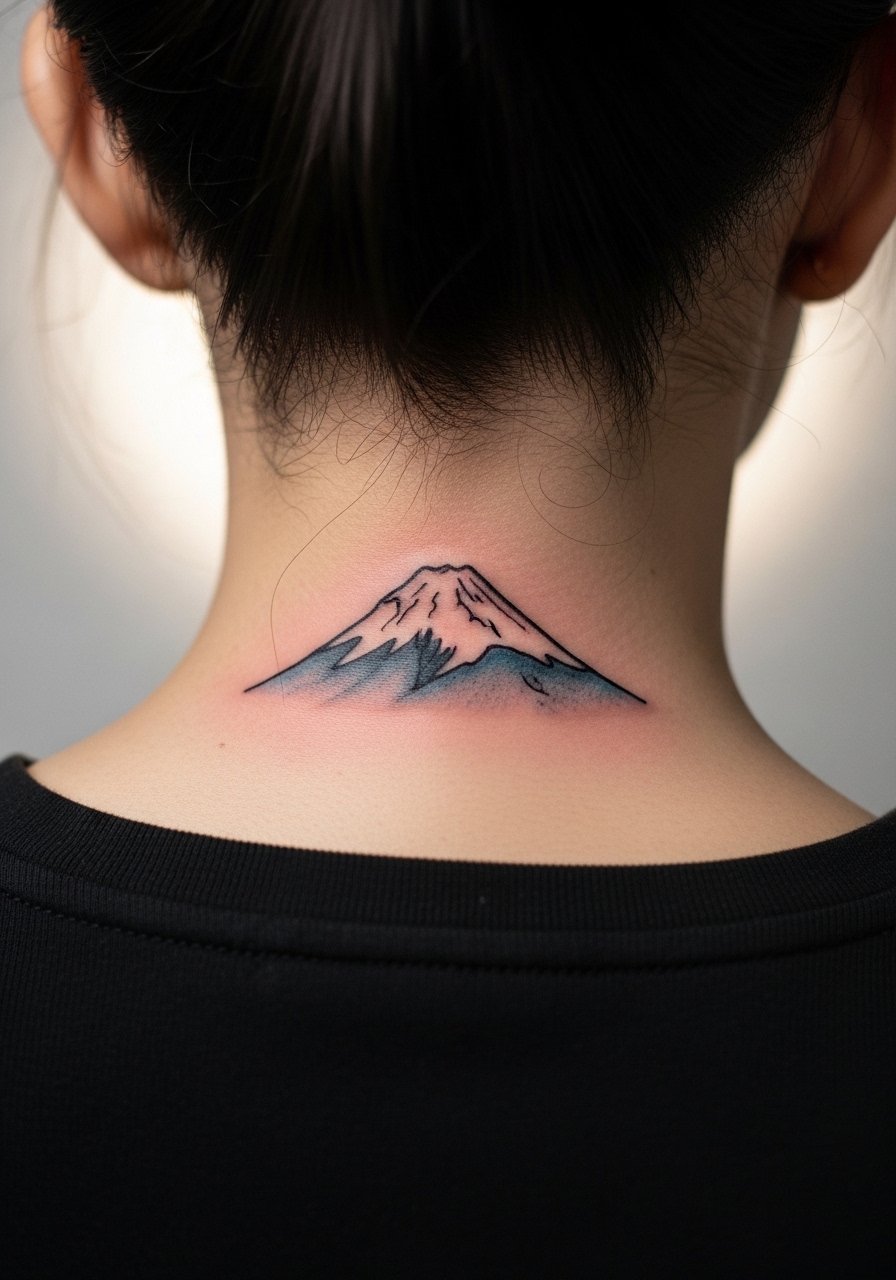
Mount Fuji rendered minimally on the nape reads balanced and classic. It sits under hair for privacy but shows when you tie your hair up. For line clarity, request a slightly bolder outline to withstand the neck’s movement.
Style & Design Details
- Tattoo style: Illustrative minimal
- Recommended size: 1–1.5 inches
- Best placement(s): nape, lower neck, upper back
- Color vs. blackwork: subtle blue-gray wash complements black lines
- Design elements: triangular peak, light snowcap highlight, tiny cloud motifs, micro stippling
- Longevity note: neck skin moves—depth consistency is essential
- Who it suits: travelers, those with clean workplace policies, small-scale collectors
Finding the Right Artist
Look for artists with healed neck or nape pictures. Ask about needle depth for moving skin. Avoid artists who suggest hairline micro detail in this spot.
Aftercare & Healing Tips
Keep hair away from the area for the first week. Use a gentle soap and apply a light balm as needed. If you want extra protection while sleeping, a soft silk scarf can reduce friction.
10. Small Japanese tattoo placement ideas: Mini Hinomaru (Rising Sun) on Sternum
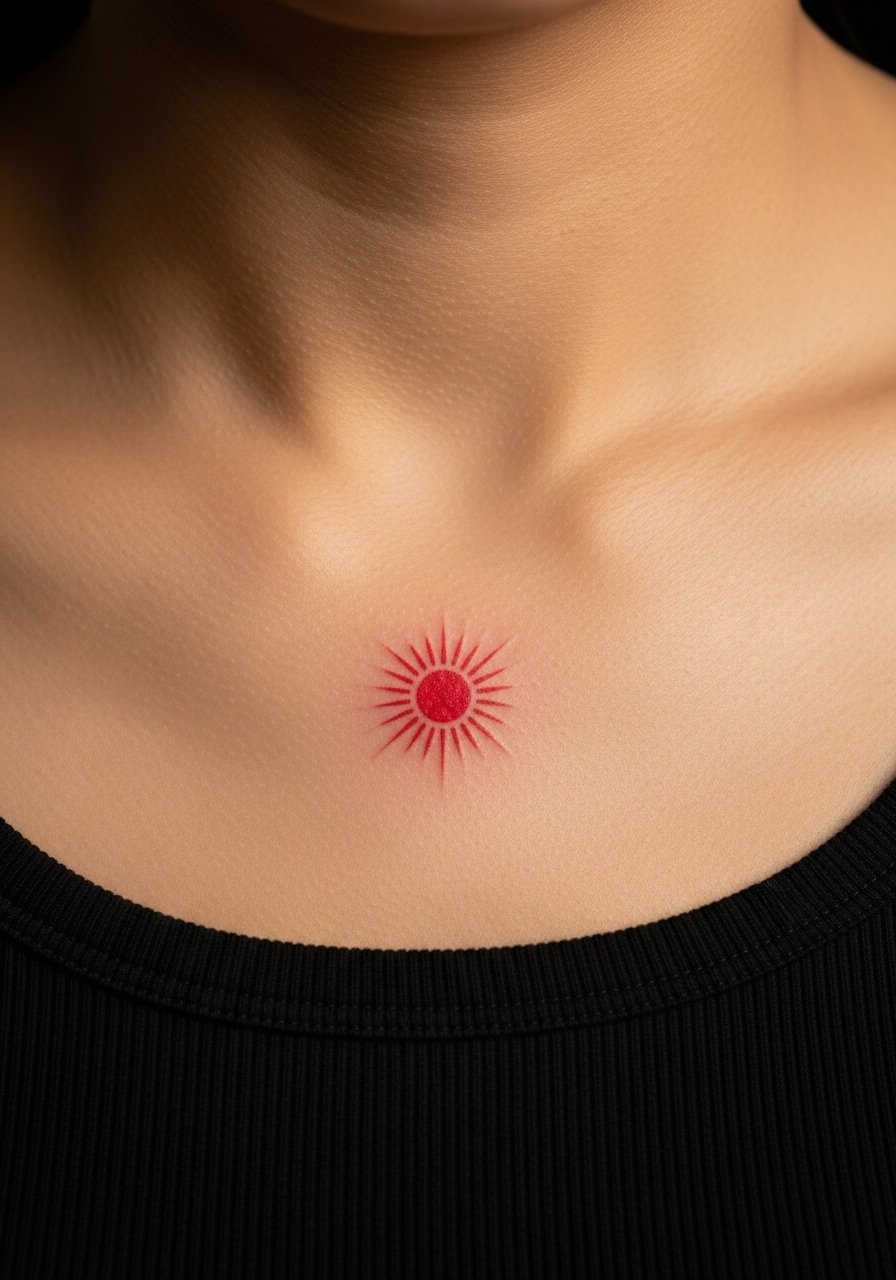
A tiny Hinomaru on the sternum is geometric, symmetrical, and reads strong despite small scale. This placement can be sensitive—use a numbing cream like EMLA if pain is a concern.
Style & Design Details
- Tattoo style: Geometric blackwork with slight color
- Recommended size: 1–2 inches
- Best placement(s): sternum center, upper chest, between clavicles
- Color vs. blackwork: small red dot center with thin black rays holds meaning and contrast
- Design elements: central circle, radiating fine lines, tiny negative-space separators, micro dot ring
- Longevity note: chest skin is stable but sun exposure can fade color
- Who it suits: symmetry lovers, people wanting cultural nods in small form
Finding the Right Artist
Search portfolios for small geometric chest tattoos. Ask about color mixing for that tiny red center and how they prevent bleeding into rays.
Aftercare & Healing Tips
Sternum sweat/friction requires attention—wear breathable fabrics and follow washing instructions closely. Apply Hustle Butter Deluxe after the wrap phase for comfort.
11. Micro Paper Crane Behind the Collarbone
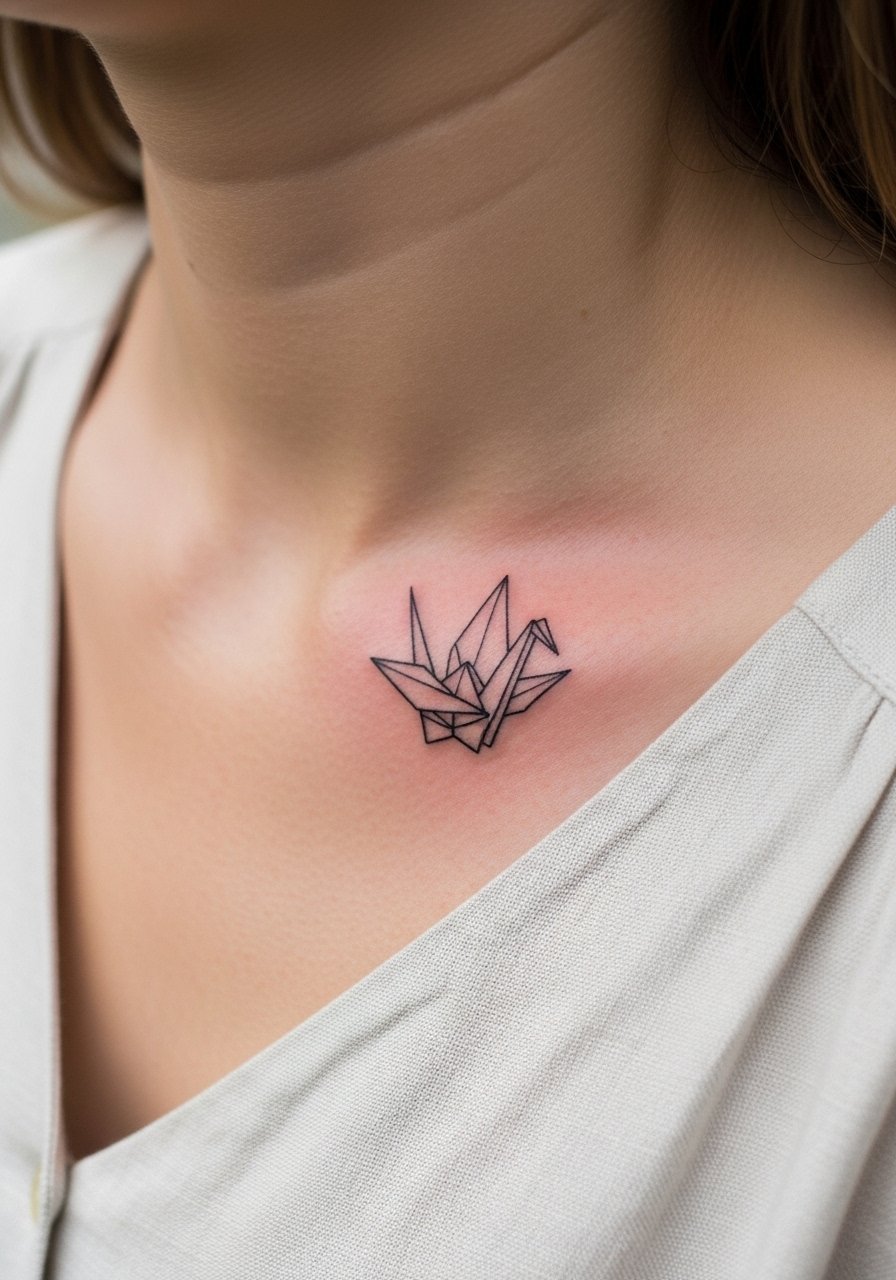
An origami crane just above the collarbone blends origami aesthetics with Japanese symbolism. It’s poetic, sits flat on the bone ridge, and pairs well with jewelry. For exact placement, use tattoo stencil transfer paper to test how it looks under clothing.
Style & Design Details
- Tattoo style: Minimal geometric linework
- Recommended size: 1–1.75 inches
- Best placement(s): collarbone edge, clavicle, upper chest
- Color vs. blackwork: black line ensures longevity
- Design elements: crisp straight folds, tiny shadow lines, negative-space wings, balanced symmetry
- Longevity note: black geometric holds well; thin lines under 0.5mm risk blur
- Who it suits: minimalist romantics, stationery lovers, first-timers
Finding the Right Artist
Book a fineline artist skilled with geometric crispness. Ask to see healed line images and the needle group they use.
Aftercare & Healing Tips
Collarbones get sun—use SPF 50 on healed work. During healing, avoid necklaces that can snag and clean gently with fragrance-free soap.
12. Small Carp Stream on the Side Rib (Flowing Upwards)
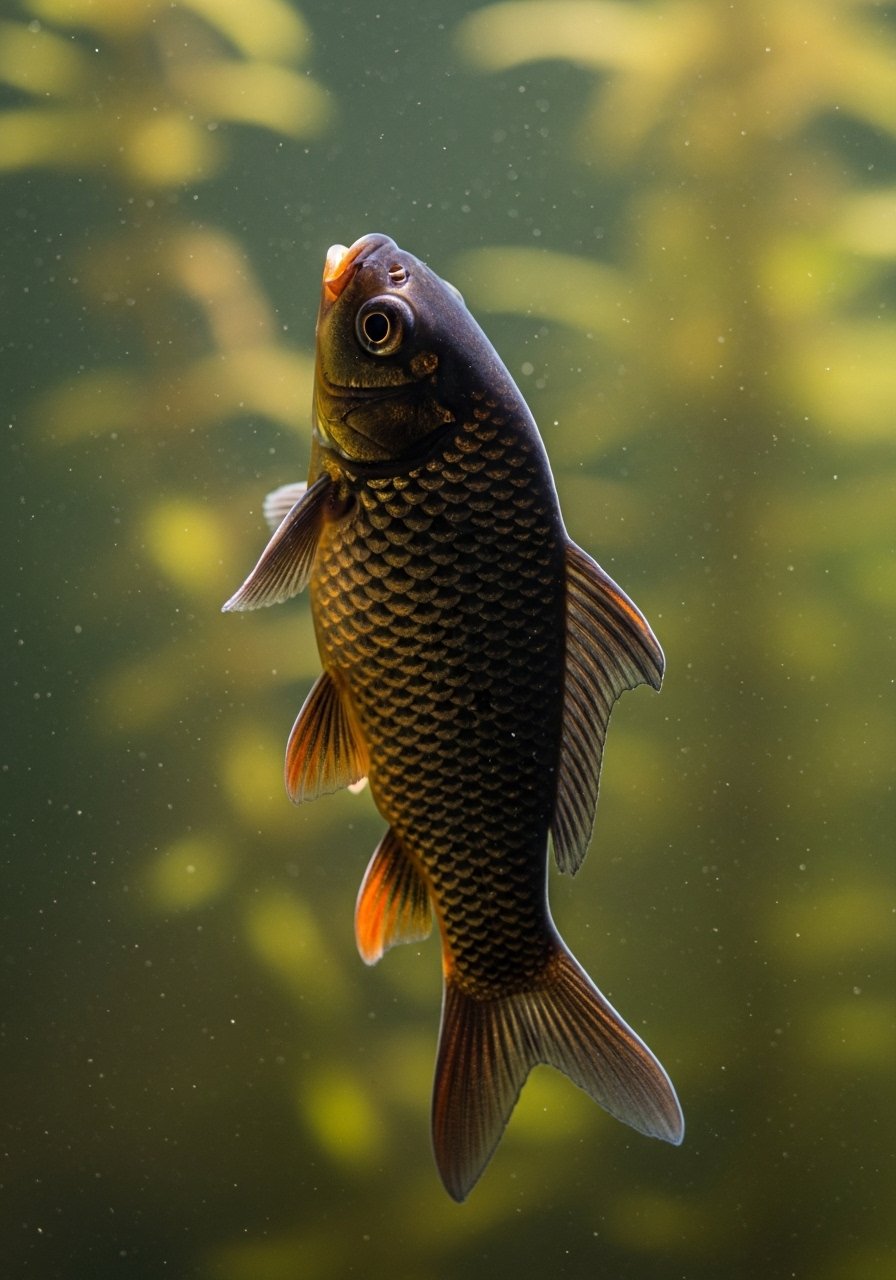
A tiny carp designed to swim along the rib creates motion and flatters curves. Make it slightly less detailed than a full carp to preserve long-term legibility. Numbing cream helps for longer rib sessions.
Style & Design Details
- Tattoo style: Mini illustrative with slight neo-Japanese influence
- Recommended size: 2–3 inches (longer, narrow shape)
- Best placement(s): side rib, waistline, lateral hip
- Color vs. blackwork: muted orange accents with black outline
- Design elements: flowing body curve, simplified scales, waterlines, micro splashes, small kanji optional
- Longevity note: long narrow pieces on ribs age predictably if depth consistent
- Who it suits: people who want motion, fans of koi symbolism
Finding the Right Artist
Look for artists who photograph tattoo flow on torsos. Ask about session breaks and stencil testing while breathing. Experienced artists are better for rib scaling.
Aftercare & Healing Tips
Rib tattoos need loose clothing during healing. Keep it dry and apply a thin unscented lotion. For long-term contrast, avoid tan lines and sun exposure.
13. Little Geisha Silhouette on the Calf
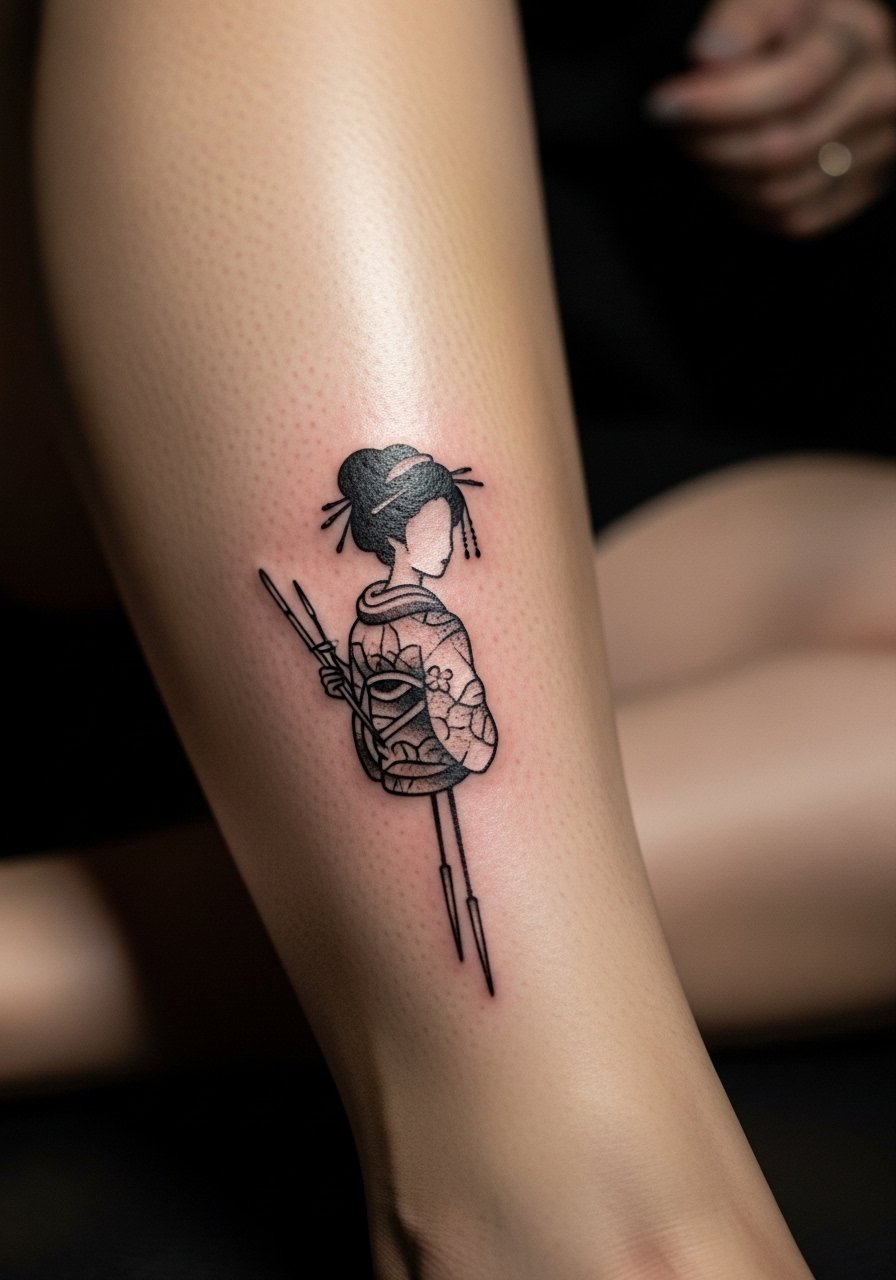
A tiny geisha silhouette on the outer calf reads cinematic and elegant. The calf gives enough canvas for slightly more intricate negative-space work without overwhelming the shape.
Style & Design Details
- Tattoo style: Blackwork silhouette
- Recommended size: 1.5–3 inches
- Best placement(s): outer calf, upper thigh, lower leg
- Color vs. blackwork: full black silhouette with thin negative-space hairpin details
- Design elements: kimono fold suggestion, hair bun silhouette, tiny hairpin lines, subtle stance posture
- Longevity note: bold silhouettes hold well; fine internal lines may need touch-ups
- Who it suits: art-lovers, those who want visible leg art without a full sleeve
Finding the Right Artist
Search portfolios for silhouette work and healed photos on legs. Ask about compression during sitting to keep stance proportions accurate.
Aftercare & Healing Tips
Leg tattoos are convenient to protect. Avoid long hot baths initially and use non-scented lotion. For sun protection later, use an SPF stick when shorts season returns.
14. Tiny Bamboo Sprig on the Inner Arm
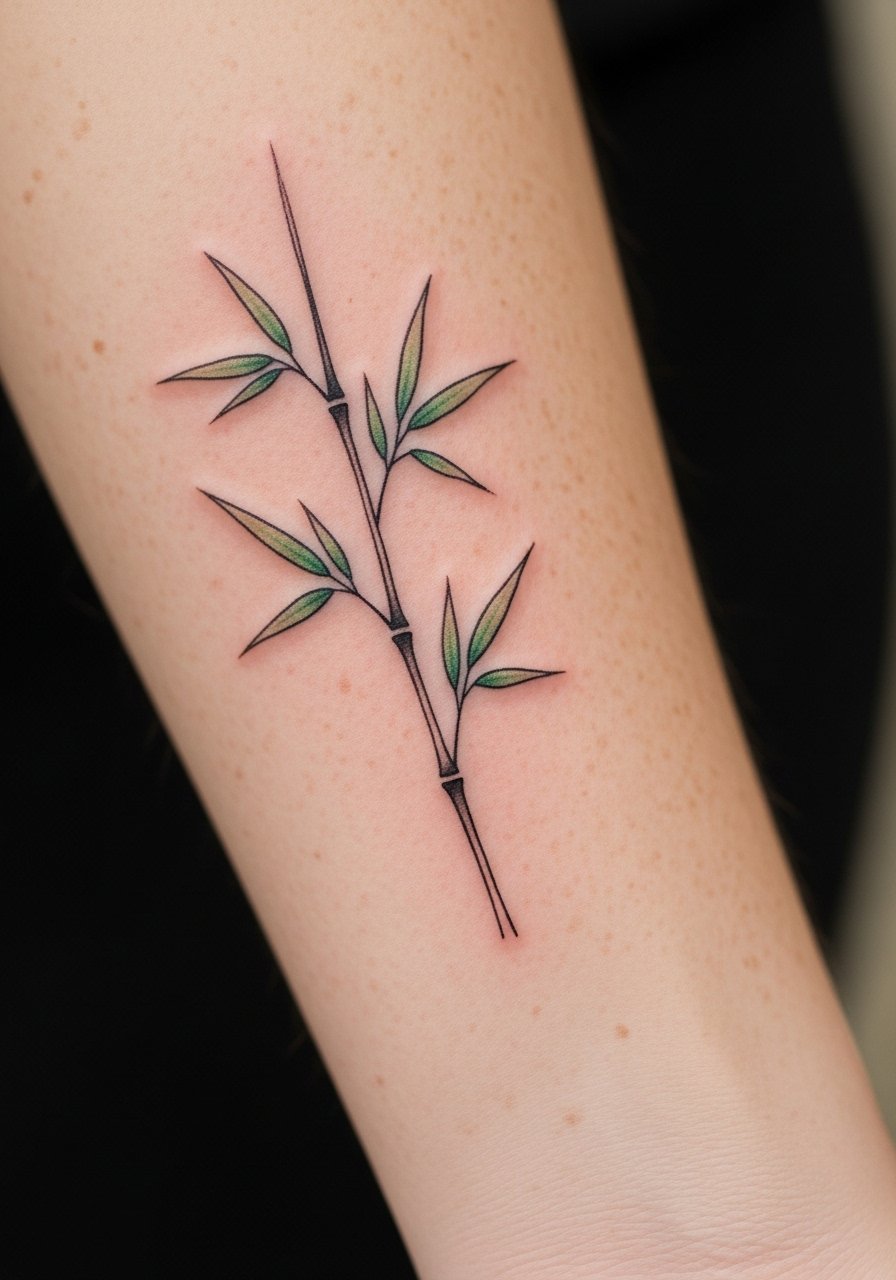
A slim bamboo sprig is flexible to place and flatters slender and broader arms alike. The vertical line elongates the forearm and works well as a standalone piece or future fill.
Style & Design Details
- Tattoo style: Fine line botanical
- Recommended size: 2–3 inches (length)
- Best placement(s): inner forearm, side of rib, behind calf
- Color vs. blackwork: black + light green wash for naturalism
- Design elements: segmented stalks, tiny leaf clusters, micro stipple joints, subtle shading
- Longevity note: botanical fine line can blur if too thin—aim for medium-fine lines
- Who it suits: plant lovers, quiet aesthetic fans, people who want a vertical accent
Finding the Right Artist
Find artists with botanical linework portfolios. Ask for healed photos and needle gauge preferences. An experienced fineliner is ideal.
Aftercare & Healing Tips
Forearm exposure requires sun care. After the wrap phase, keep a thin layer of fragrance-free lotion—Lubriderm is gentle during peeling.
15. Micro Samurai Helmet (Kabuto) on the Chest
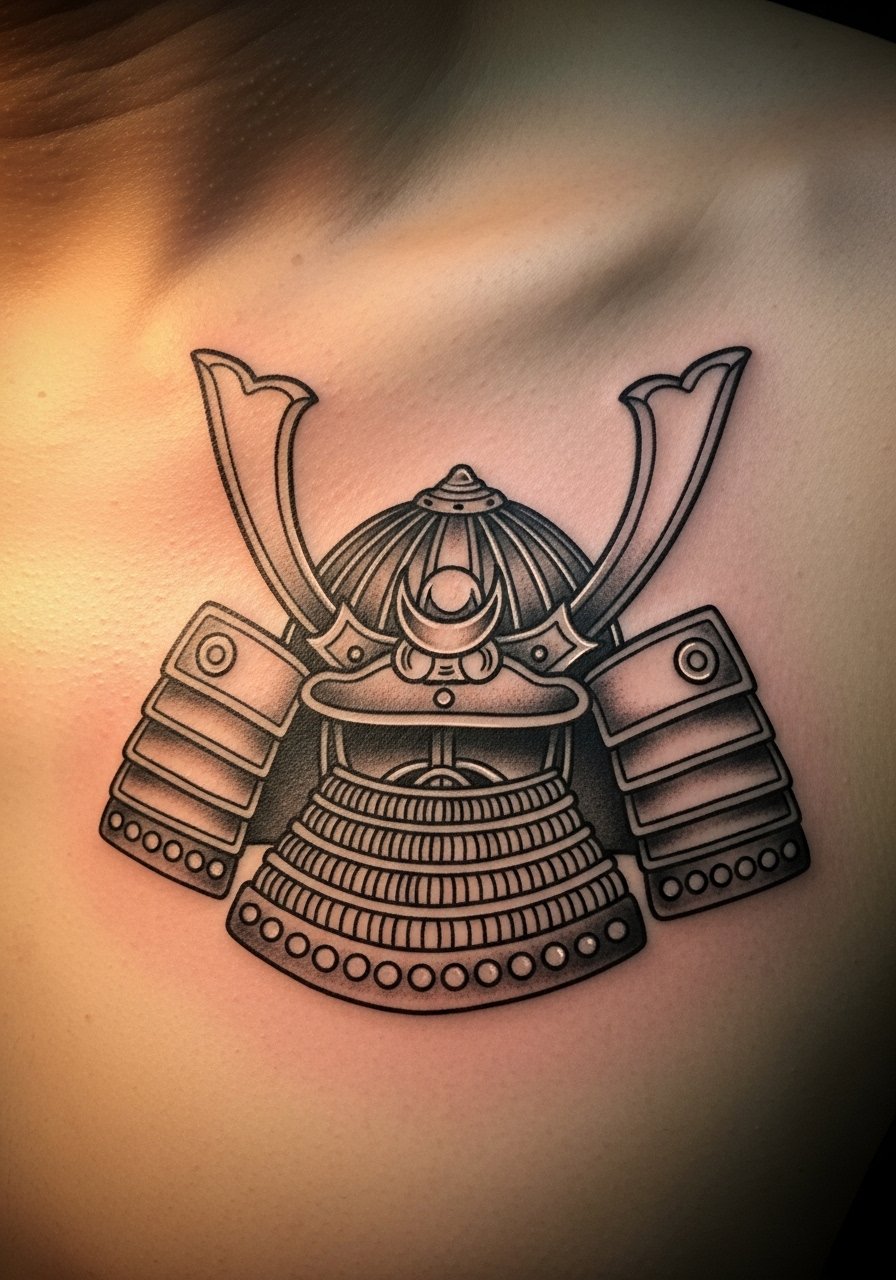
A tiny samurai helmet on the chest is bold in symbolism yet delicate in size. The chest provides stable skin, so the design can include a few more internal shapes while staying readable.
Style & Design Details
- Tattoo style: Illustrative blackwork with graywash
- Recommended size: 1.5–2.5 inches
- Best placement(s): center chest, sternum, upper chest near collarbone
- Color vs. blackwork: black with gray shading for depth
- Design elements: helmet crest, tiny rivets, decorative horns, subtle floral backing
- Longevity note: chest tattoos hold well; touch-up window usually after 6–12 months if needed
- Who it suits: history buffs, collectors, those who want cultural iconography
Finding the Right Artist
Seek tattooers experienced with small illustrative details and armor motifs. Ask about shading technique and how it holds once healed.
Aftercare & Healing Tips
Avoid tight necklaces and friction. Use Saniderm per artist instructions and switch to a gentle unscented lotion after the second-skin comes off.
16. Tiny Bonsai Tree on the Wrist Crease
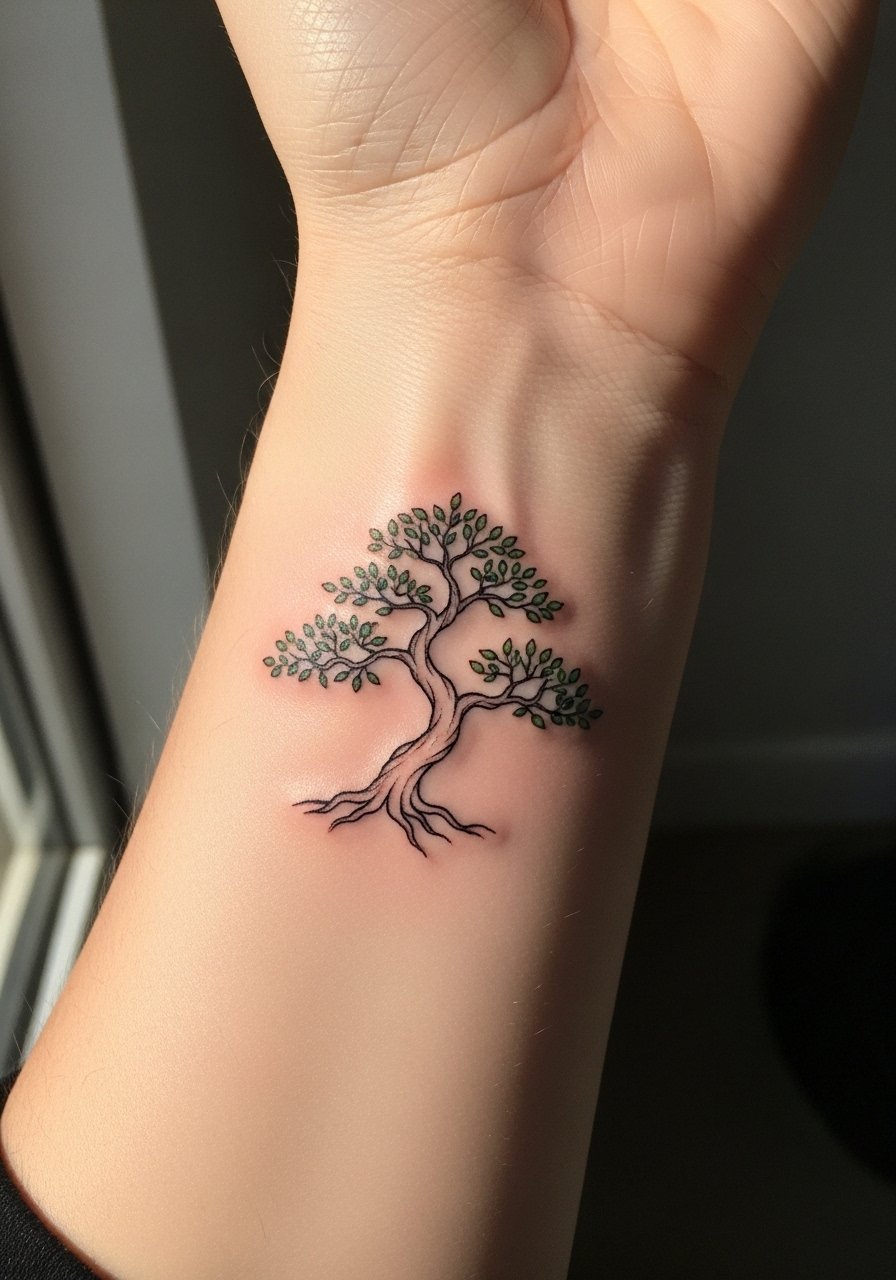
A tiny bonsai tree placed in the wrist crease feels intimate and symbolic of patience. Keep the trunk slightly thicker to avoid disappearing into wrist folds.
Style & Design Details
- Tattoo style: Fine line botanical with micro color
- Recommended size: 1–1.5 inches
- Best placement(s): inner wrist, forearm near wrist, just above thumb
- Color vs. blackwork: black trunk with soft green foliage wash
- Design elements: compact trunk, stylized canopy, tiny pot suggestion, micro roots, negative space sky
- Longevity note: wrist lines and sun exposure can impact longevity
- Who it suits: mindful, patient personalities, small-scale gardeners
Finding the Right Artist
Look for tiny botanical tattoos with well-defined healed trunks. Ask about pigment placement near joints.
Aftercare & Healing Tips
Wrist placement benefits from light moisturizing and avoiding bracelets during healing. A thin layer of Hustle Butter Deluxe helps soothe irritation.
17. Small Japanese tattoo placement ideas: Tiny Lantern on the Side Finger
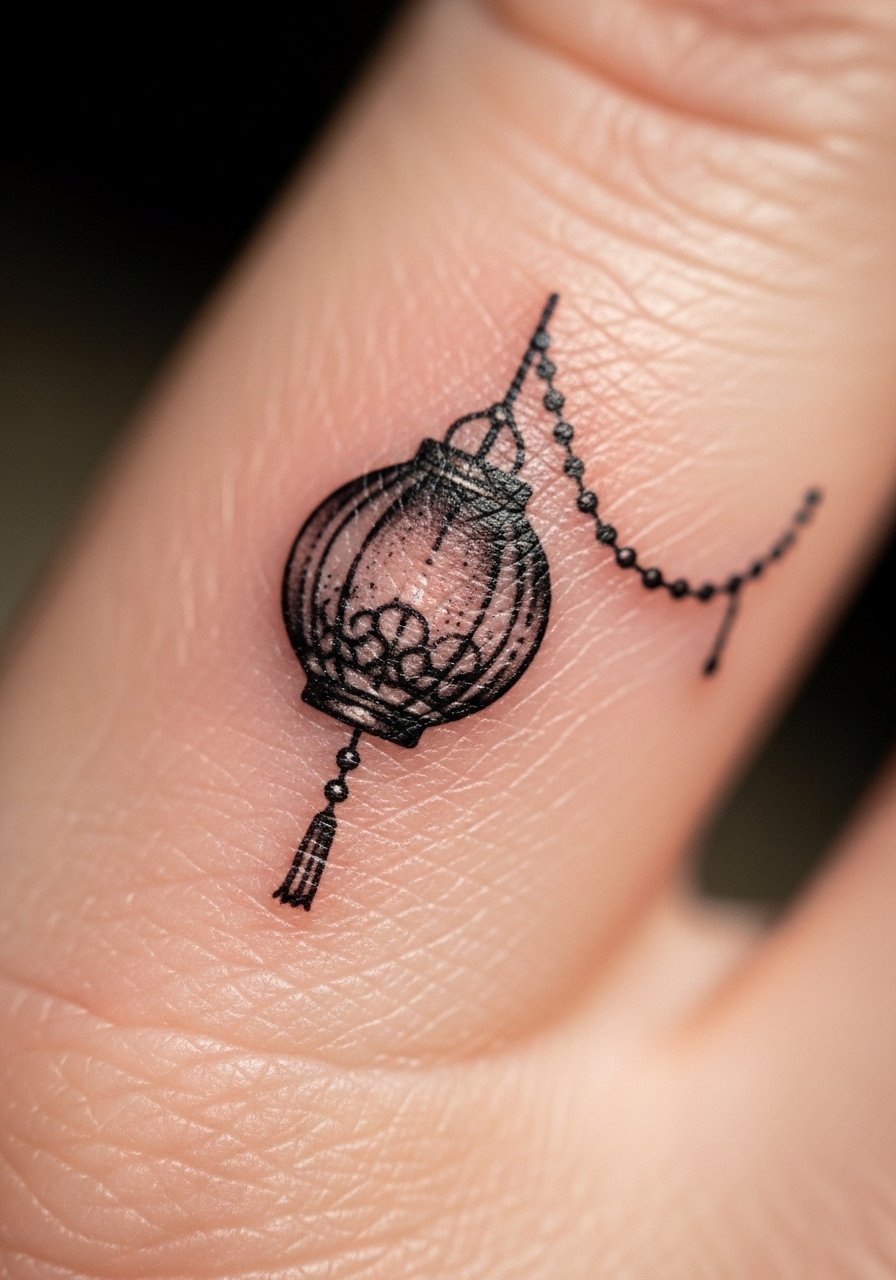
A tiny lantern on the finger edge reads as a secret token of evening walks or festival nights. Expect touch-ups—finger ink fades faster, but the placement is charming.
Style & Design Details
- Tattoo style: Micro blackwork with minimal shading
- Recommended size: 0.5–1 inch
- Best placement(s): side finger, base of finger, small gap between knuckles
- Color vs. blackwork: simple blackwork best for longevity
- Design elements: lantern body, thin chain, micro glow lines, tiny tassel
- Longevity note: finger skin is high-maintenance—simplified forms re-ink better
- Who it suits: festival lovers, people who like discrete jewelry-like tattoos
Finding the Right Artist
Select an artist who photographs healed finger tattoos. Ask about depth and whether they recommend yearly touch-ups.
Aftercare & Healing Tips
Keep hands dry and avoid harsh sanitizers while healing. Use a thin unscented lotion and avoid friction from rings for two weeks.
18. Micro Oni Mask on the Shoulder Blade
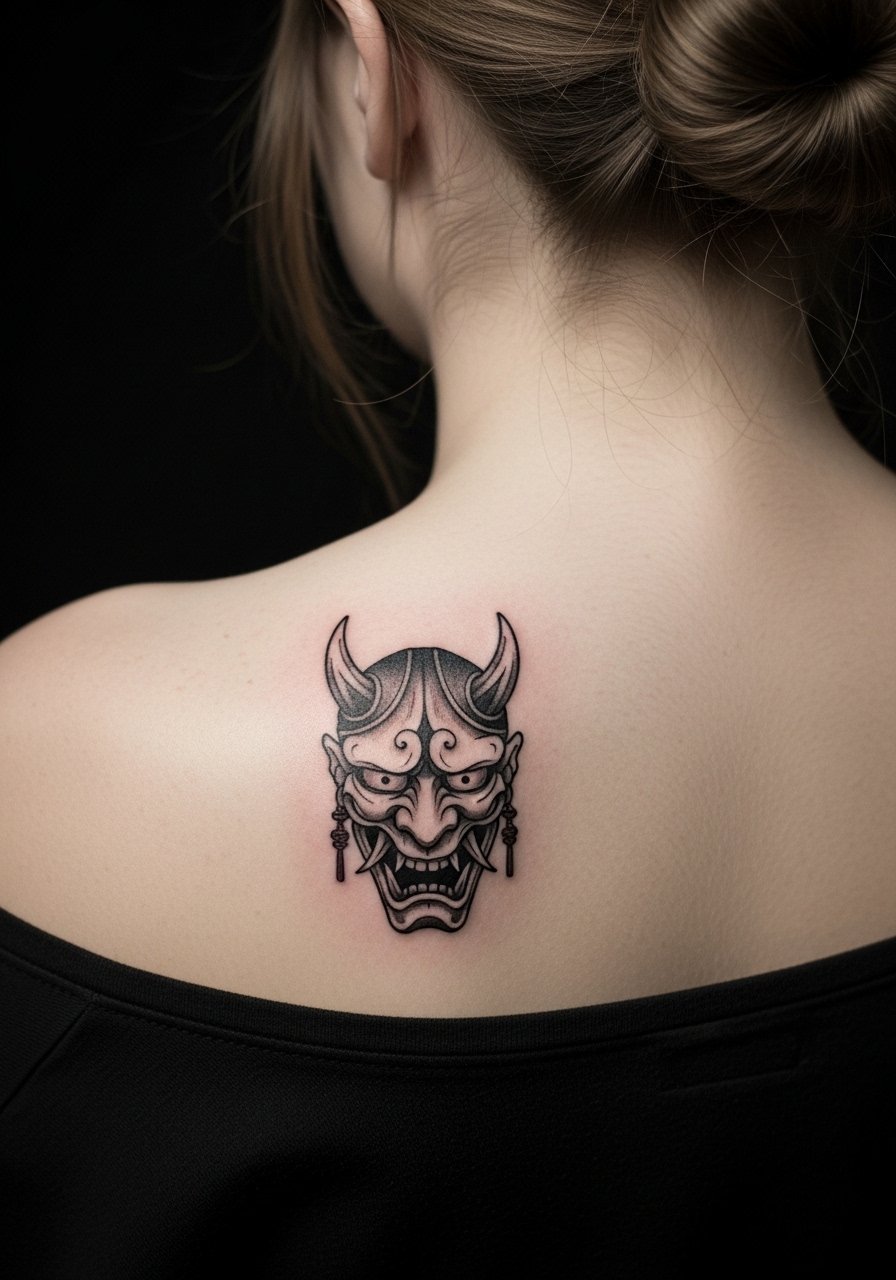
An Oni mask on the shoulder blade looks dramatic but stays small and wearable. The shoulder blade offers a flat area for detail without constant friction.
Style & Design Details
- Tattoo style: Neo-Japanese micro
- Recommended size: 1.5–2.5 inches
- Best placement(s): shoulder blade, upper back, scapula edge
- Color vs. blackwork: black with deep red accents for the eyes or tongue
- Design elements: horn silhouette, fierce brow lines, micro teeth, subtle shadowing
- Longevity note: back skin is stable; bold pigment lasts well
- Who it suits: collectors, those who appreciate folklore motifs
Finding the Right Artist
Find someone who shows tiny neo-Japanese masks and healed photos on back skin. Ask about pain and aftercare for scapula placements.
Aftercare & Healing Tips
Wear loose tops to avoid rubbing. Use gentle soap and a thin layer of balm during peeling. For sun protection later, use SPF 50.
19. Petite Wave + Cherry Blossom Wrap on Ankle
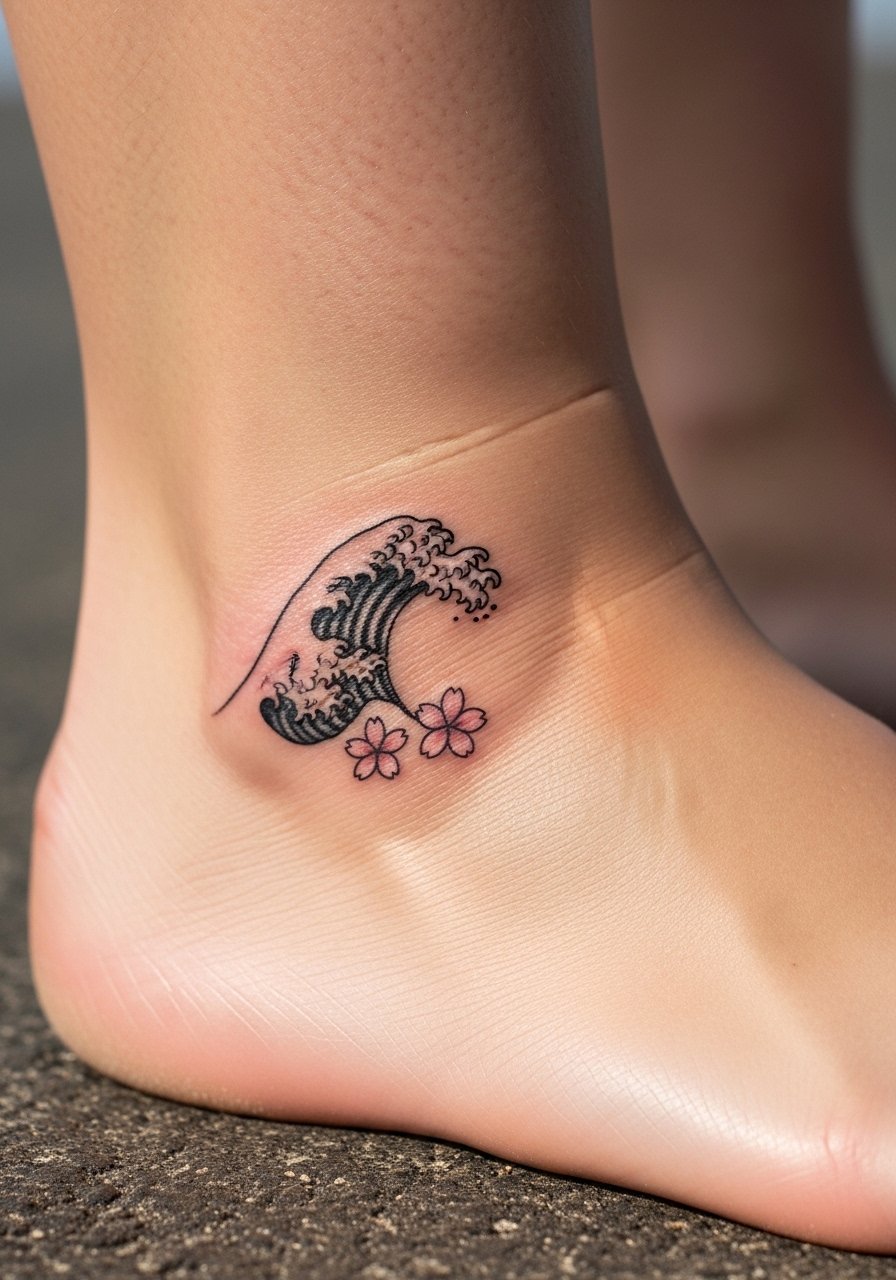
Combining a micro wave and two sakura blooms creates a balanced piece that hugs the ankle. It’s small but visually layered, perfect for someone who likes story in mini form.
Style & Design Details
- Tattoo style: Illustrative combo (blackwork + color)
- Recommended size: 1.25–2 inches
- Best placement(s): around ankle bone, inner ankle, top of foot
- Color vs. blackwork: black wave with soft pink blossoms
- Design elements: crest line, blossom petals, tiny stamen dots, negative-space foam
- Longevity note: ankle abrasion necessitates slightly thicker lines
- Who it suits: mixed-aesthetic lovers, cute but meaningful placements
Finding the Right Artist
Ask to see healed mixed-color combos on ankles. Confirm pigment types used for pinks.
Aftercare & Healing Tips
Avoid tight footwear and socks that rub on the tattoo. Keep it moist with an unscented lotion and stay out of prolonged boot wear for two weeks.
20. Mini Tsuru (Crane) on the Rib Cage
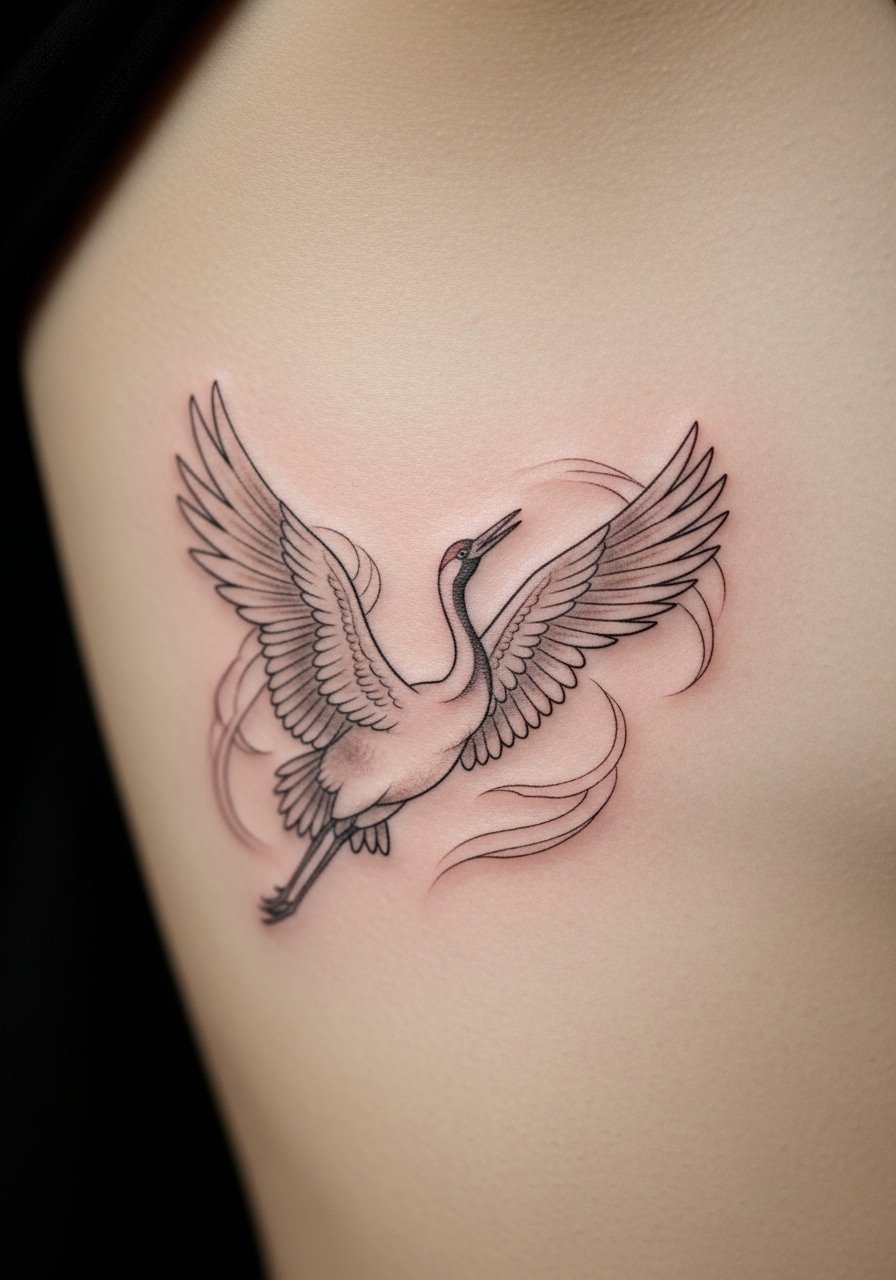
A tsuru on the rib cage reads elegant and symbolic. Its upward flight can angle with rib curves, creating subtle motion. Ribs are sensitive; plan for breaks and consider a numbing cream if needed.
Style & Design Details
- Tattoo style: Fine line illustrative
- Recommended size: 1.5–3 inches
- Best placement(s): side rib, under-breast edge, lateral torso
- Color vs. blackwork: black + light gray wash for wing shading
- Design elements: long wing lines, slender neck, tiny feather details, negative-space highlights
- Longevity note: ribs hold pigment well; fine lines on moving skin require proper depth
- Who it suits: symbolic collectors, those who appreciate long elegant lines
Finding the Right Artist
Choose an artist with experience on torsos and ask to see healed rib tattoos. Ask about their preferred needle for feather detail.
Aftercare & Healing Tips
Wear loose clothing and avoid tight sports bras. Keep the area clean and apply lotion sparingly during peeling. Saniderm can be useful for larger wrap sessions.
21. Tiny Ikebana Stem on the Side of the Neck
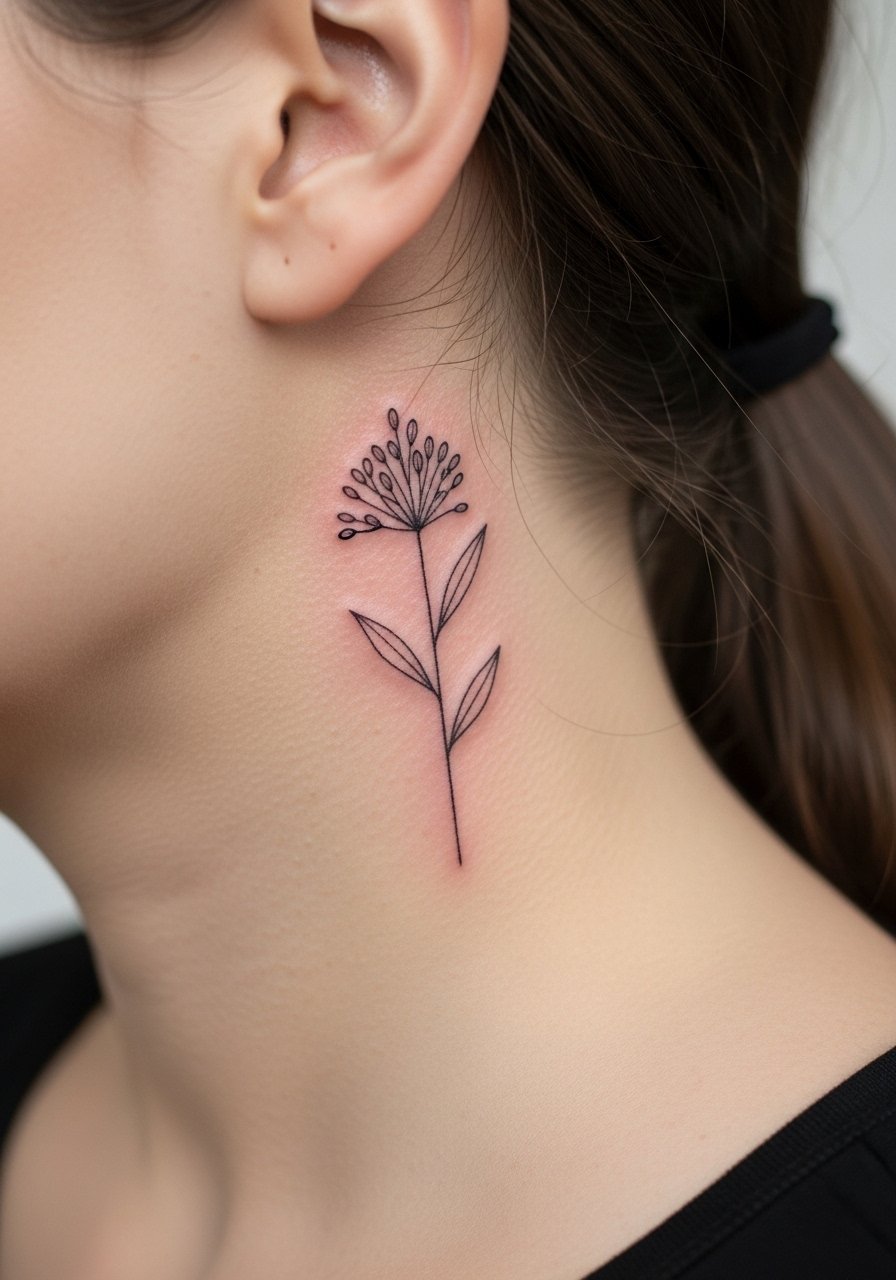
An Ikebana stem on the neck feels sculptural and refined. Because the neck moves a lot, opt for slightly bolder single lines to resist softening.
Style & Design Details
- Tattoo style: Fine line botanical
- Recommended size: 1–1.5 inches
- Best placement(s): lateral neck, behind ear, nape edge
- Color vs. blackwork: black line is recommended
- Design elements: single stem, asymmetrical leaf placement, subtle negative-space shapes
- Longevity note: neck lines can soften; thicker single lines hold better
- Who it suits: chic minimalists, people who enjoy nontraditional neck placements
Finding the Right Artist
Find someone who posts healed neck botanical work. Ask about stencil positioning while the head is in various angles.
Aftercare & Healing Tips
Minimize necklaces and scarves while healing. Use fragrance-free soap and a light balm as directed.
22. Small Carp Scale Band on the Wrist
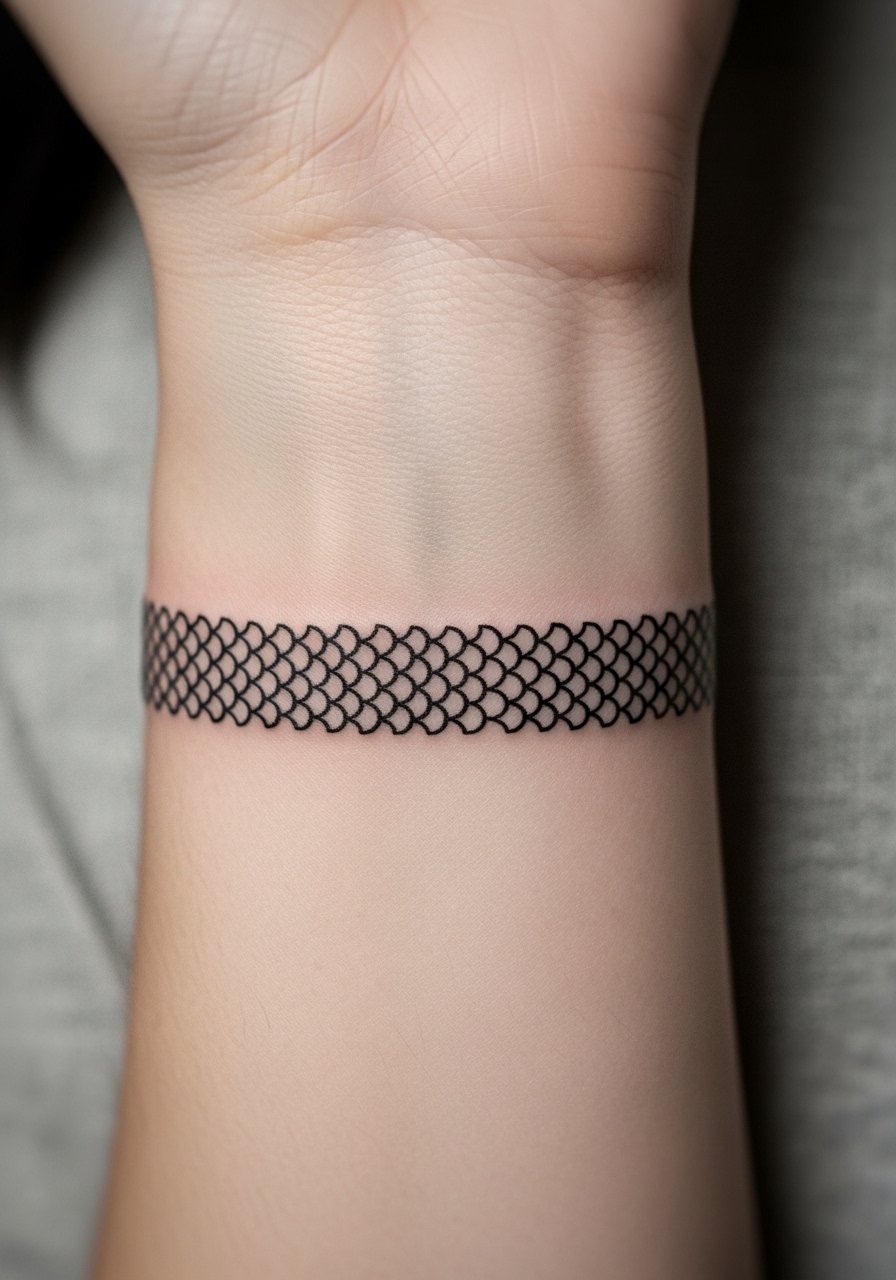
A repeating micro carp-scale band acts like a tactile bracelet. This decorative motif works around wrists or ankles and pairs well with watches.
Style & Design Details
- Tattoo style: Patterned micro blackwork
- Recommended size: band height 0.25–0.5 inch, circumference variable
- Best placement(s): wrist band, ankle band, upper arm band
- Color vs. blackwork: black pattern for clarity
- Design elements: repeating semi-circle scales, thin dividers, tiny accent dots
- Longevity note: pattern can blur if lines are hairline—aim for solid micro lines
- Who it suits: pattern lovers, accessory minimalists, those who like symmetry
Finding the Right Artist
Choose someone with repetitive pattern experience—ask to see healed band photos. Discuss spacing and equalization.
Aftercare & Healing Tips
Bands require even healing—apply light lotion as needed and avoid constricting straps while healing.
23. Mini Lotus on the Thumb Webbing
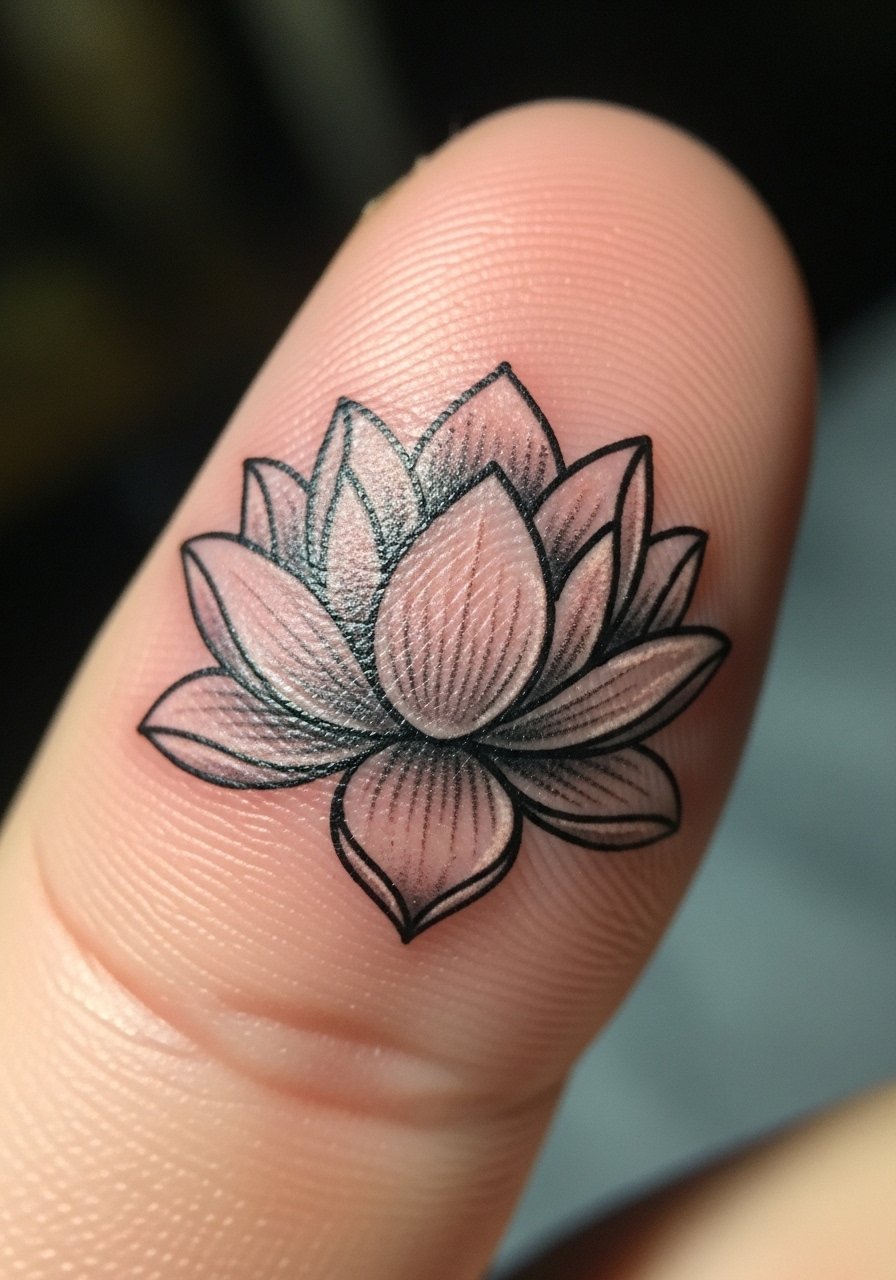
The thumb webbing is intimate and discreet; a tiny lotus here is meditative and almost private. The skin here flexes—keep the design compact and slightly bolder.
Style & Design Details
- Tattoo style: Microscopic floral blackwork
- Recommended size: 0.5–1 inch
- Best placement(s): thumb web, side of hand, base of thumb
- Color vs. blackwork: blackwork recommended
- Design elements: layered petals, tiny central stamen, negative-space petal veins
- Longevity note: highly mobile area—expect fading; simplified shapes re-ink better
- Who it suits: tactile people, those who like private spots
Finding the Right Artist
Seek artists who show healed hand tattoos. Ask about sanitation and touch-up expectations.
Aftercare & Healing Tips
Hands need careful aftercare—avoid soaking and harsh sanitizers for a week. Apply a thin layer of unscented lotion to prevent cracking.
24. Tiny Wave Crest on the Collar of the Wrist
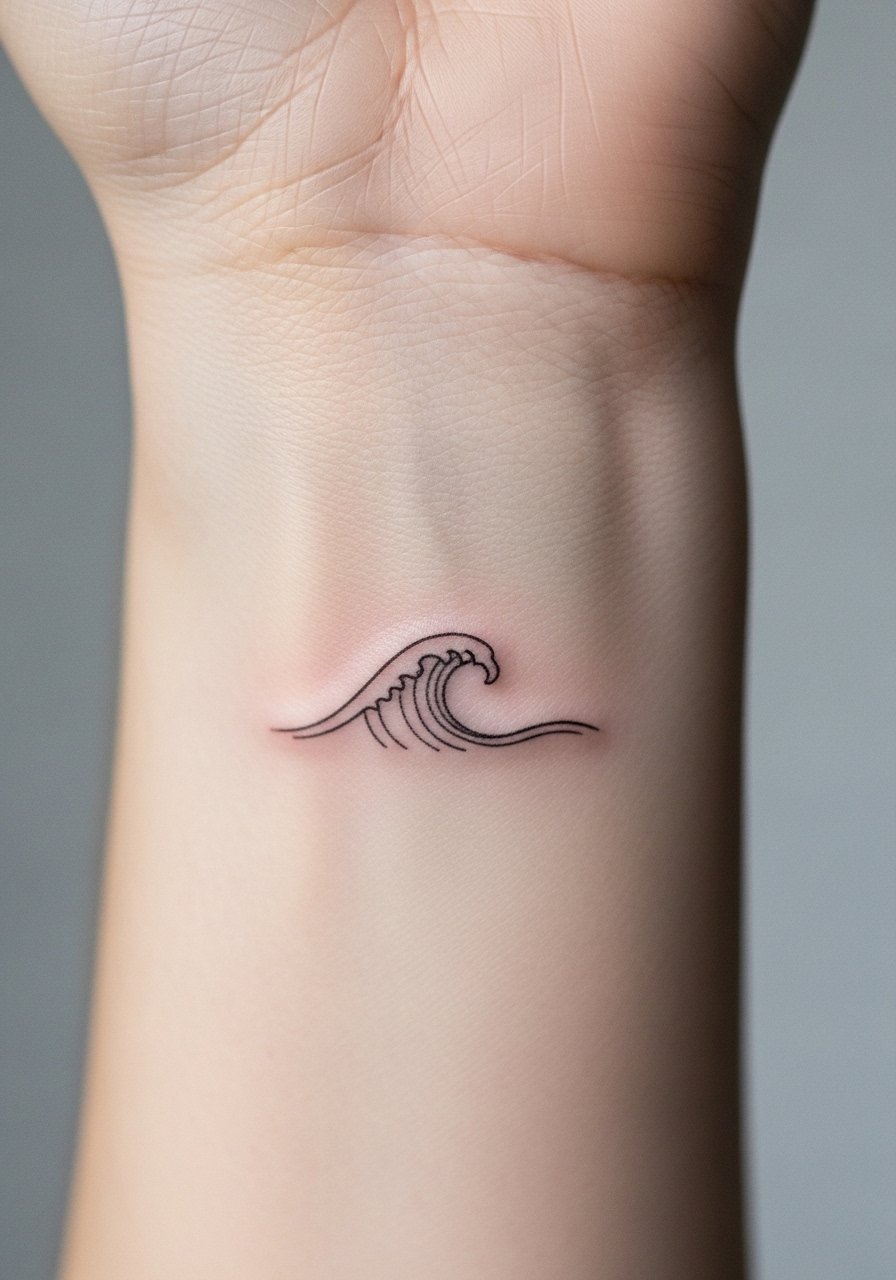
A single wave crest at the inner wrist is tiny but evocative. Its curve follows the wrist's natural fold and looks elegant with a watch or bracelet above it.
Style & Design Details
- Tattoo style: Minimal blackwork
- Recommended size: 0.5–1 inches
- Best placement(s): inner wrist collar, behind wrist, outer wrist
- Color vs. blackwork: black recommended for durability
- Design elements: curved crest line, negative-space foam pocket, tiny motion dashes
- Longevity note: wrist placement needs simple, sturdy lines to avoid early blur
- Who it suits: ocean lovers, subtle statement fans
Finding the Right Artist
Choose an artist with crisp small wrist tattoos shown healed. Ask them to show close-ups of past wrist pieces.
Aftercare & Healing Tips
Avoid friction from watchbands and bracelets for the first two weeks and use a gentle soap to avoid irritation.
25. Micro Pagoda on the Side Rib Near the Waist
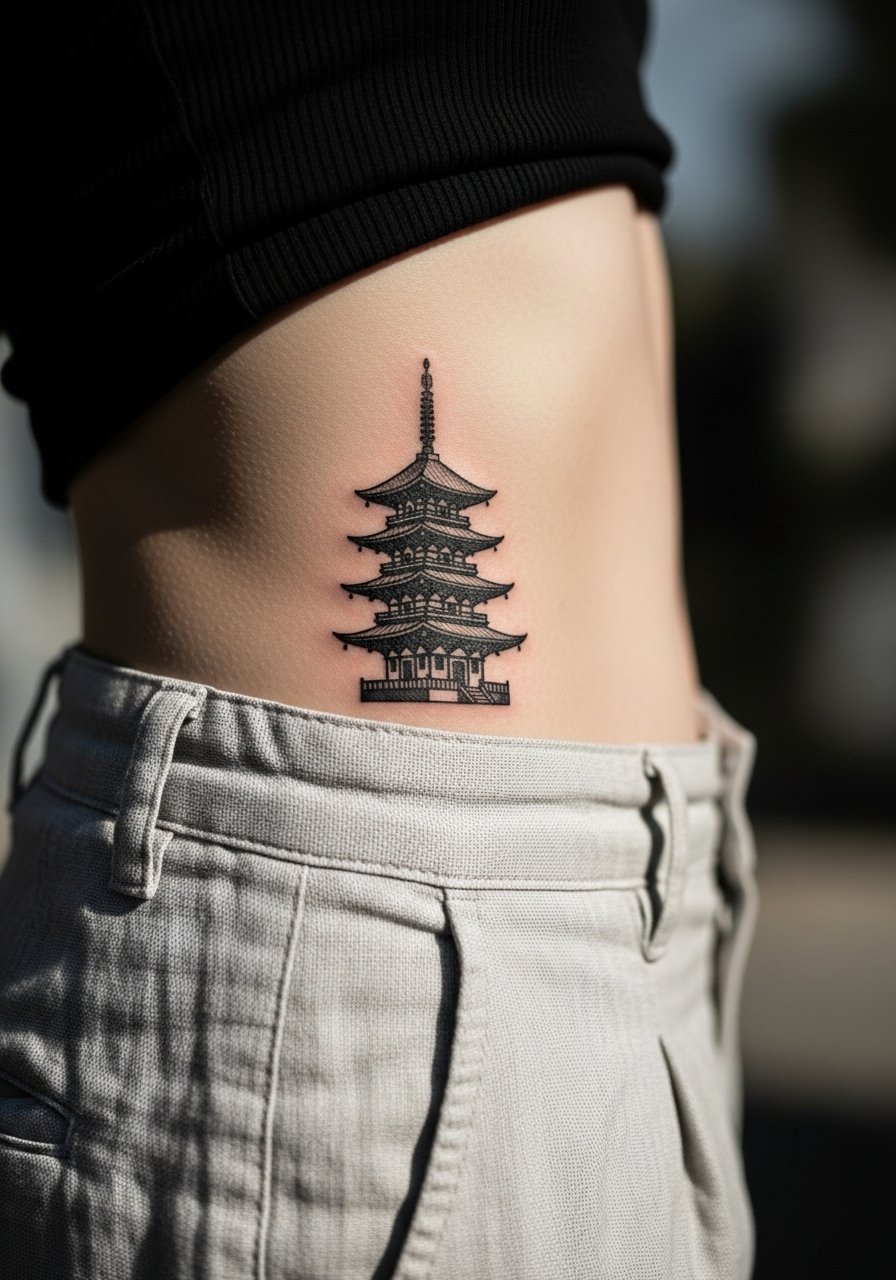
A tiny pagoda near the waist reads like a secret landmark. Its stacked structure requires clean straight lines—avoid hairline separation between levels.
Style & Design Details
- Tattoo style: Architectural blackwork
- Recommended size: 1–2 inches
- Best placement(s): side rib near waist, hip bone, lower back lateral
- Color vs. blackwork: black only for crispness
- Design elements: tiered roofs, slight eaves, tiny pillar lines, minimal windows
- Longevity note: torso skin is stable—structure holds well with good line depth
- Who it suits: travelers, architecture fans, those who like hidden art
Finding the Right Artist
Book an artist who does architectural minis and show healed pieces with clear tiers. Ask about needle group for straight lines.
Aftercare & Healing Tips
Avoid tight waistbands and belts for a week. Keep the area clean and moisturized with fragrance-free lotion.
26. Tiny Bamboo Ring at the Base of the Thumb
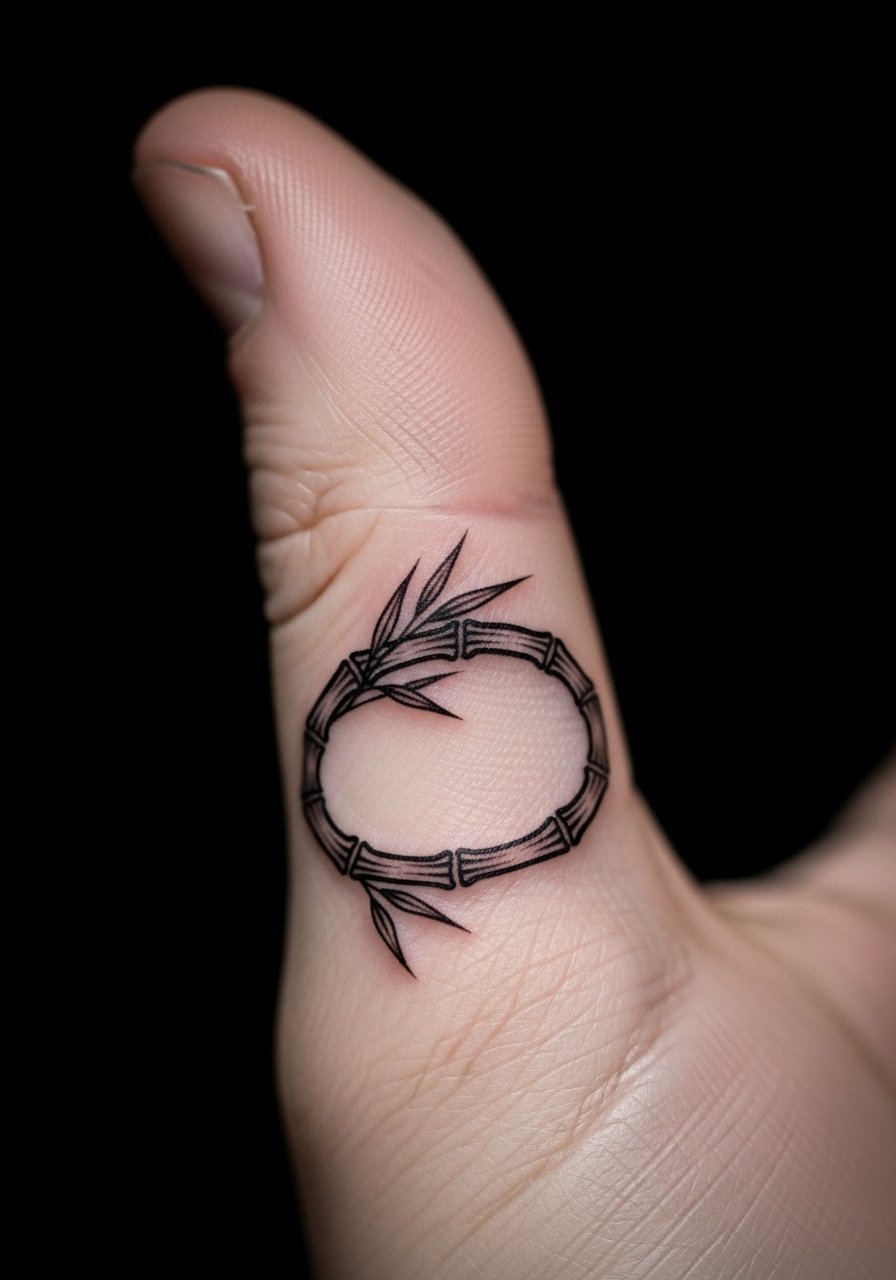
A bamboo ring around the thumb base reads like subtle jewelry. The circular placement mirrors a ring and feels natural.
Style & Design Details
- Tattoo style: Patterned fine line
- Recommended size: ring thickness 0.2–0.4 inch
- Best placement(s): thumb base, ring finger base, small toe
- Color vs. blackwork: black pattern recommended
- Design elements: segmented bamboo nodes, thin joint lines, micro shading between nodes
- Longevity note: finger/hand placements need maintenance, simplified segments work best
- Who it suits: jewelry-lovers, those who want symbolic bands
Finding the Right Artist
Pick an artist experienced with circular placements and hand skin. Ask about expected touch-ups.
Aftercare & Healing Tips
Avoid ring friction and soaking. Keep it moisturized and expect to return for touch-ups within a year.
27. Micro Cherry Blossom Petal Trail on the Shoulder
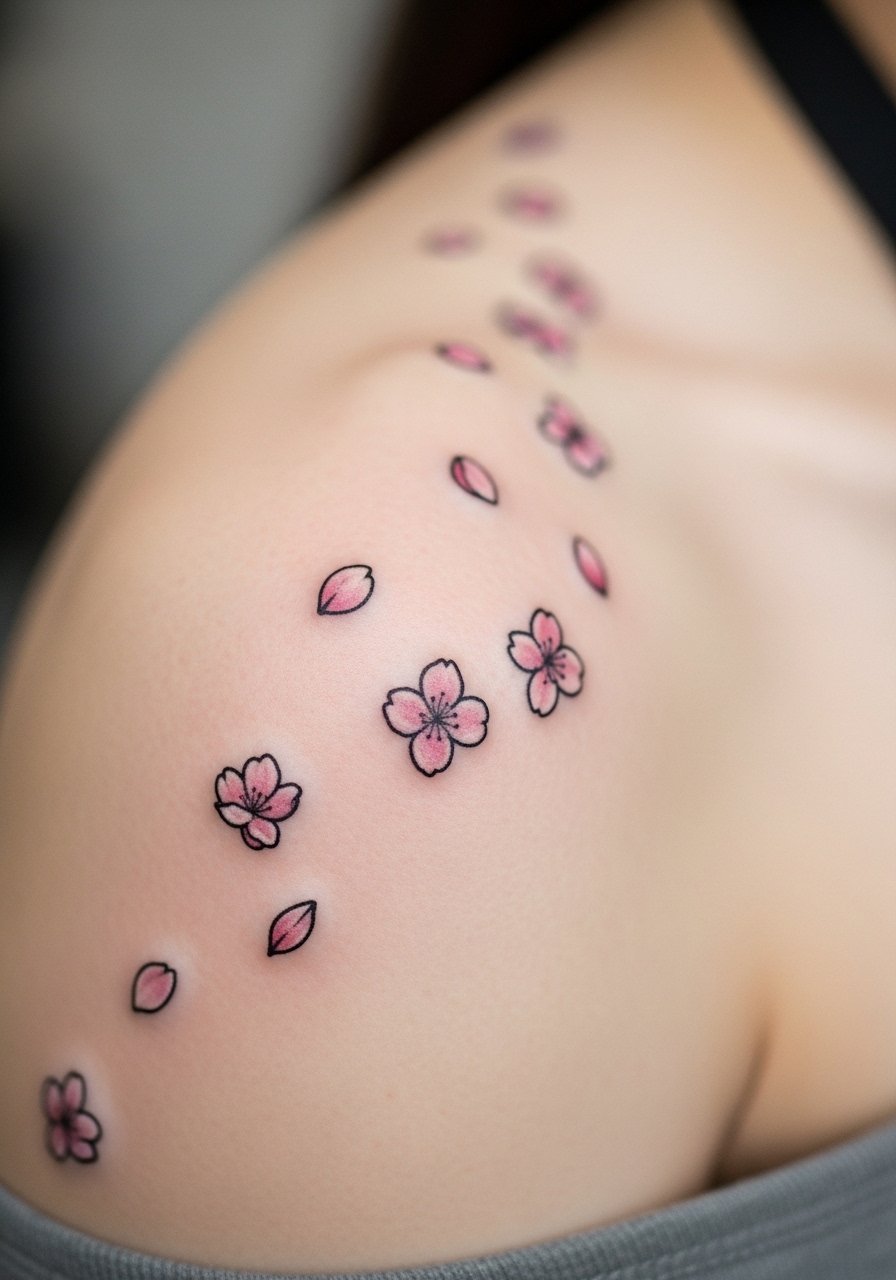
A trail of single petals creates movement and is easy to scale. It flatters shoulders of all sizes and works with curves.
Style & Design Details
- Tattoo style: Fine-line floral with light color
- Recommended size: each petal 0.25–0.75 inch
- Best placement(s): shoulder, upper back, clavicle scatter
- Color vs. blackwork: soft pinks with black outline for contrast
- Design elements: single petals, tiny stamen dots, scattered negative space, varying petal sizes
- Longevity note: small color petals may fade—solid outlines help
- Who it suits: romantic aesthetes, subtle floral fans
Finding the Right Artist
Look for healed petal scatters and ask about pigment saturation for pinks. An artist experienced in small color is best.
Aftercare & Healing Tips
Avoid tight straps that can rub during healing and use sunscreen on healed petals to keep color. Apply an SPF stick when wearing sleeveless outfits.
28. Tiny Sword (Katana) on the Rib Edge
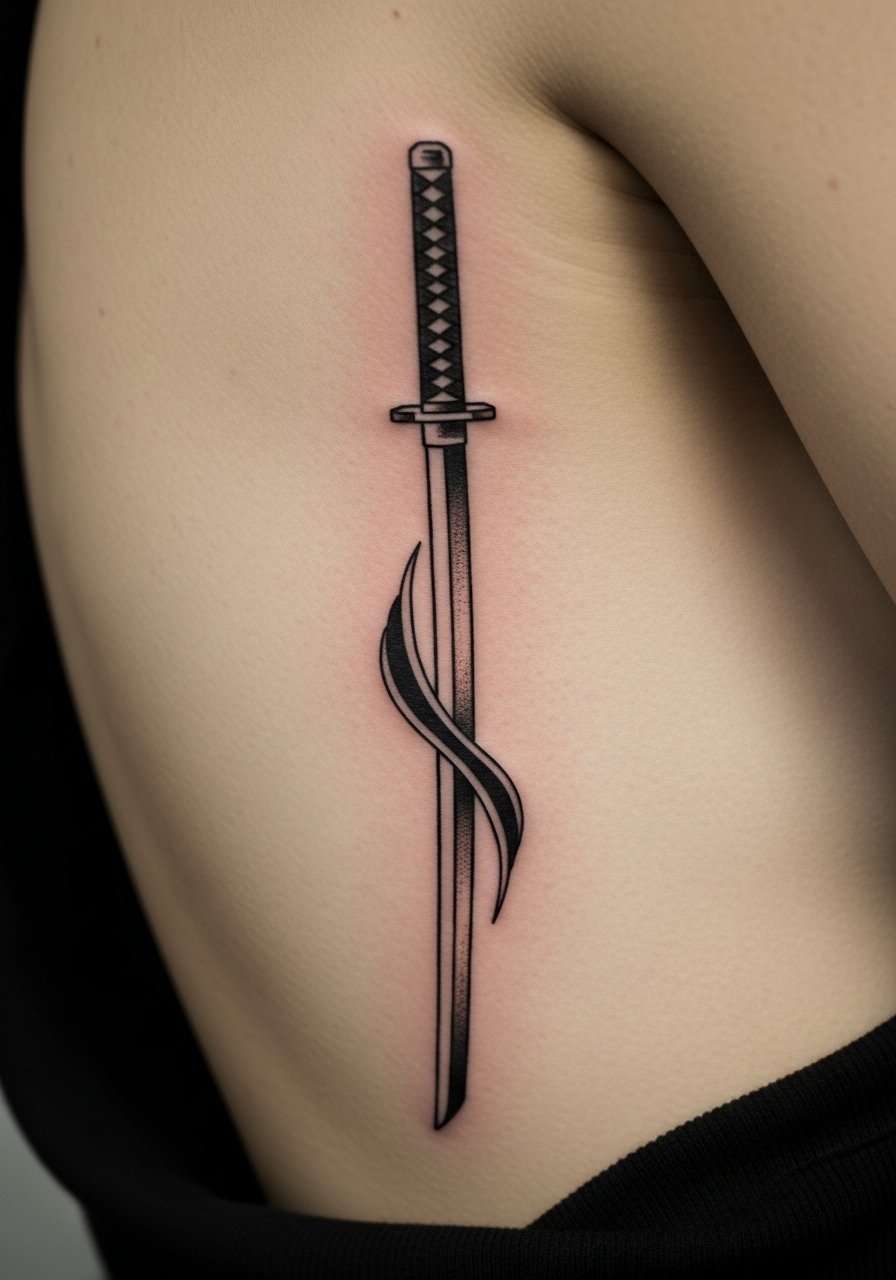
A slim katana along the rib edge reads dramatic and refined. Vertical placement flatters torso lines and suits people who want a narrow, symbolic blade.
Style & Design Details
- Tattoo style: Minimal illustrative blackwork
- Recommended size: 2–3 inches length
- Best placement(s): rib edge, lateral torso, upper thigh
- Color vs. blackwork: black with tiny gray handle shading
- Design elements: slim blade line, small tsuba (guard), micro handle wrap, slight blade shimmer lines
- Longevity note: long thin pieces need consistent depth to stay crisp
- Who it suits: martial arts lovers, Japanese culture fans, minimalists
Finding the Right Artist
Book an artist with experience on torso lines and ask how they keep long thin lines from softening. Avoid rushed sessions.
Aftercare & Healing Tips
Wear loose clothing and avoid heavy lifting. Keep the area moisturized and shielded from sun while healing.
29. Mini Chrysanthemum on the Inner Bicep
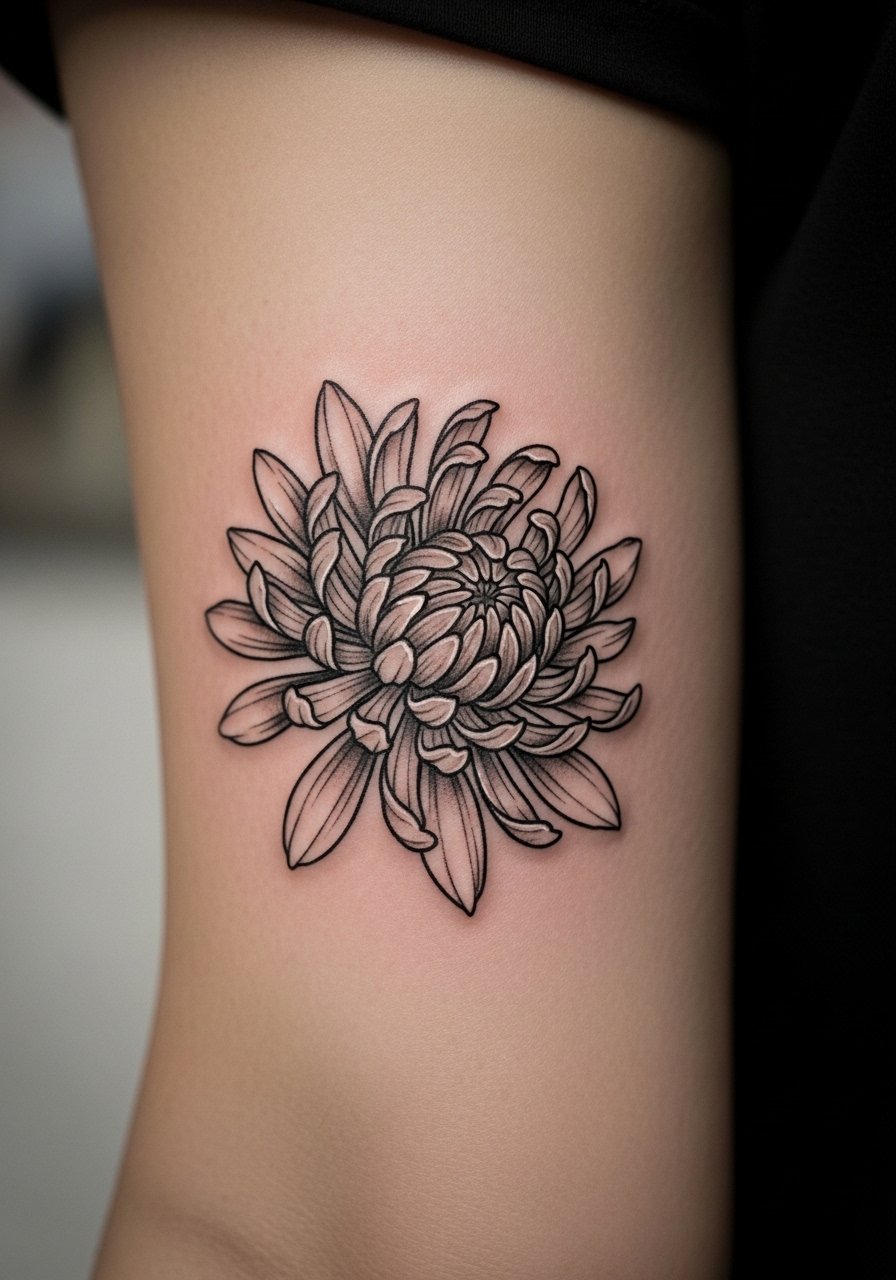
A mini chrysanthemum on the inner bicep looks classic and sits where you can reveal it or keep it private. The soft curvature of the bicep complements the flower’s roundness.
Style & Design Details
- Tattoo style: Illustrative blackwork floral
- Recommended size: 1.5–2.5 inches
- Best placement(s): inner bicep, upper arm, side of forearm
- Color vs. blackwork: black with gray wash for petals
- Design elements: layered petal rings, micro vein lines, central stamen dotting, slight shadowing
- Longevity note: inner arm skin is stable—detail holds if depth is right
- Who it suits: traditional lovers, floral collectors, those who like soft hidden spots
Finding the Right Artist
Search for artists with floral compositions and healed inner-arm pieces. Ask about needle selection for petal layering.
Aftercare & Healing Tips
Avoid hugging tight fabrics and excessive friction. Use a gentle soap and a light layer of unscented lotion during the peeling stage.
30. Tiny Ramen Bowl (Cute Micro) on the Wrist
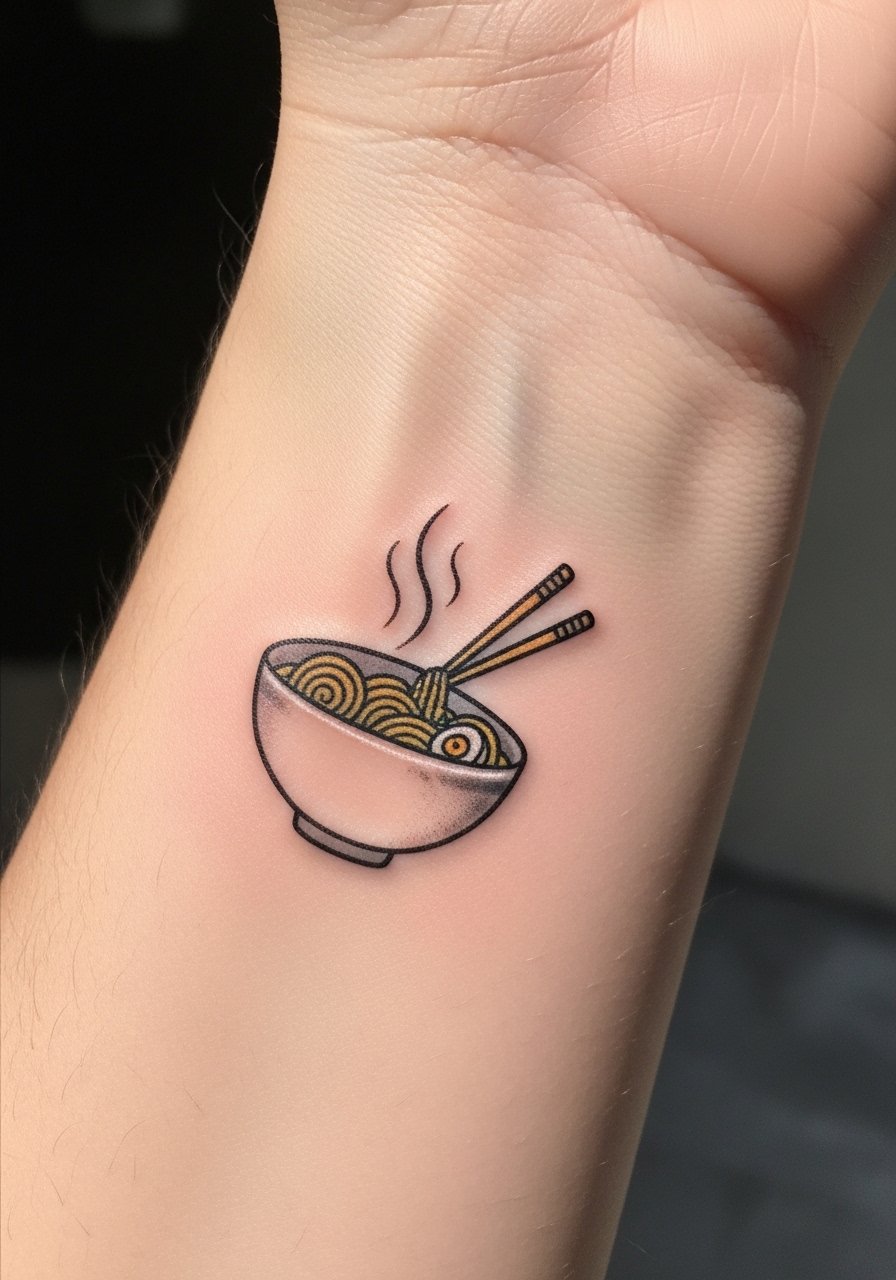
A micro ramen bowl on the wrist is playful and distinctly Japanese in charm. It’s a conversation starter and tiny enough to remain whimsical.
Style & Design Details
- Tattoo style: Illustrative micro with color accents
- Recommended size: 0.75–1.25 inches
- Best placement(s): inner wrist, behind ear, ankle
- Color vs. blackwork: black with warm yellow broth and red bowl accents
- Design elements: bowl rim, micro chopsticks, steam curl lines, tiny noodle loops, negative-space highlights
- Longevity note: color on wrists may fade—bold pigment keeps it readable
- Who it suits: food lovers, playful style fans, small-scale collectors
Finding the Right Artist
Pick an artist who does tiny illustrative food tattoos and show healed color photos. Ask about pigment selection for yellows and reds.
Aftercare & Healing Tips
Hands and wrists require gentle care—avoid scrubbing and use fragrance-free soap. Apply a thin unscented lotion while peeling.
You made it to the end—and now you have 30 small Japanese tattoo placement ideas to tear through, pin, or bring to your consultation. These placements span subtle and secret spots to visible yet delicate areas, and they work across body shapes and skin tones. Save the ones that speak to you and show them to your artist; they’ll help you size and place the design so it flatters your body and ages gracefully.
Honestly, grabbing a roll of Saniderm second-skin bandages before your appointment is one of the smartest moves—having it ready saves stress the second your artist finishes. Which small Japanese tattoo placement ideas here feel like you? Pin this and share with the friend who’s booking a session next.