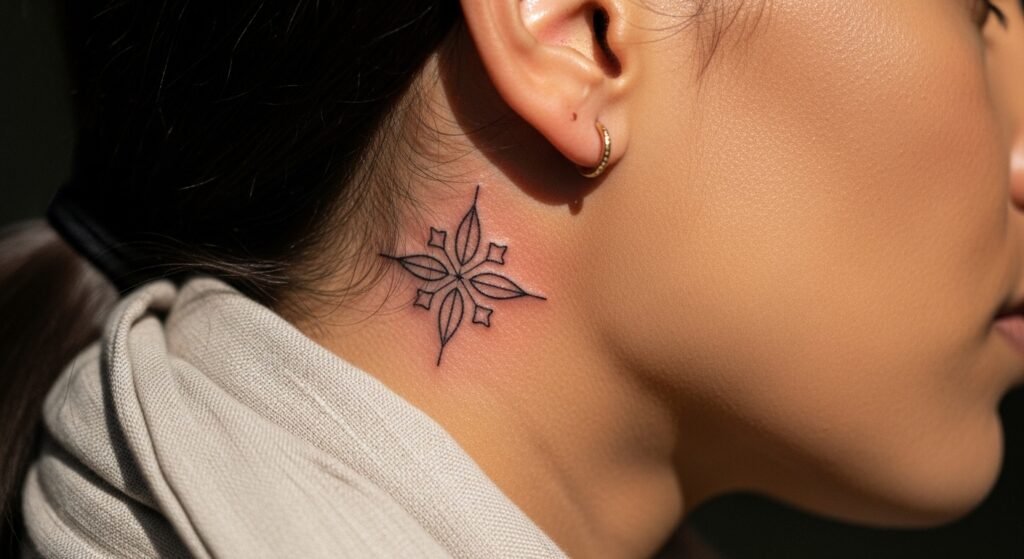
You’re scrolling at midnight, saving tiny ear ideas, and suddenly the “yes” feeling lands — that whisper-quiet tattoo tucked behind the ear that shows up only when you want it to. A small Japanese tattoo behind ear is perfect when you want meaning, subtlety, and timeless style all in one tiny canvas.
This list holds 22 small Japanese tattoo behind ear ideas that lean delicate and low-key, from fine-line sakura sprigs to miniature koi and Hokusai-inspired wavelets. Each idea includes a photo prompt, what the design looks like, recommended sizes and placements, pain and healing notes, plus practical aftercare tips.
If you’re nervous about pain, try a numbing cream like Zensa topical anesthetic cream applied per directions before your appointment. After the session, keeping the area protected with a second-skin bandage such as Saniderm tattoo bandage roll for the first few days helps reduce scabbing and keeps lines crisp. Save the ideas you love and bring a few to your consult — your artist will help scale these to tuck perfectly behind the ear.
- Tiny Koi with Stylized Wave
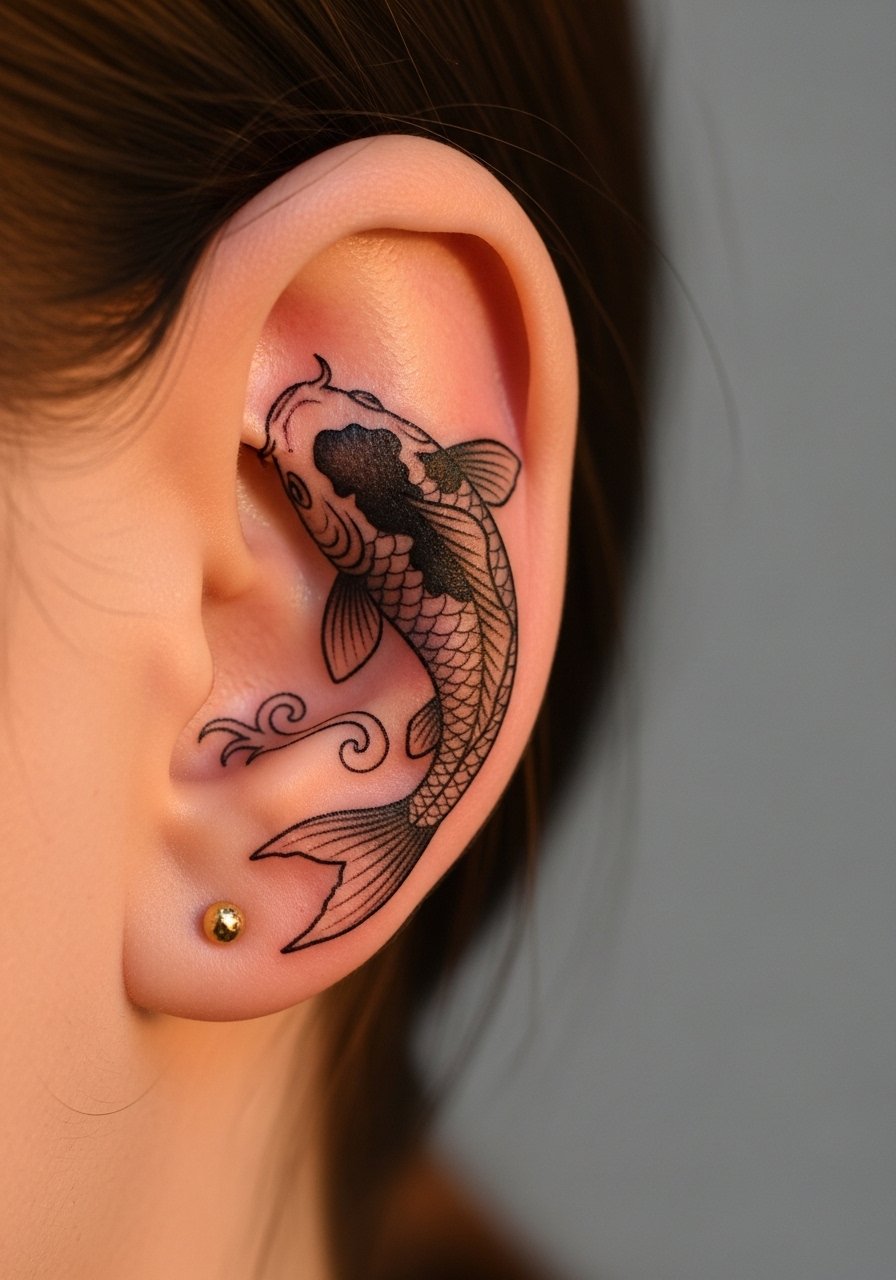
This miniature koi design pairs classic Japanese symbolism — perseverance and luck — with a modern fine-line aesthetic. Kept around 1–1.5 inches, the koi reads as an elegant accent behind the ear instead of a full statement. The linework is single-needle with tiny stipple shading for scale texture, and a touch of muted orange or red can add warmth without overpowering the placement. People who want personal meaning in a discreet spot adore this option; it sits almost like a charm on the skin and glints under hair.
Style & Design Details
- Tattoo style: fine line with micro-stippling
- Recommended size: 1–1.5 inches
- Best placement(s): behind the ear (mastoid area), upper nape, behind hairline — hides under hair but peeks out
- Color vs. blackwork: soft color accent (muted orange/red) or black-and-gray; color fades faster near hairline
- Design elements: single-needle linework, tiny stippling for scales, negative-space highlights, curved wave line, small dot highlights
- Longevity note: fine color will need SPF upkeep; black single-needle lines can blur over many years if not touched up
- Who it suits: first-timers, minimalists, someone who wants cultural symbolism in a subtle placement
Finding the Right Artist
Look for portfolios with micro-koi or small animal work and crisp single-needle lines. Ask how they handle small-scale color saturation near hair-bearing skin. Red flags: heavy-handed linework, artists without micro-line examples, or quoted times that feel rushed. For this detail, a skilled line specialist (not an apprentice) is best. Check Instagram tags like #finelinetattoo and Tattoodo galleries for micro-koi references. If you sketch, try Procreate on iPad or a small sketchbook to show proportions.
Aftercare & Healing Tips
Leave the Saniderm or Tegaderm second-skin bandage on for 2–4 days to lock out bacteria and reduce peeling. Wash gently with a fragrance-free antibacterial soap like Dr. Bronner's unscented castile soap twice daily, pat dry, and apply a thin layer of Hustle Butter Deluxe tattoo aftercare balm during the peeling phase. Expect light scabbing and mild itch days 3–8; avoid scratching. Touch-ups are common for tiny color dots after 3–6 months if pigment settles unevenly. Use SPF 50 stick when exposed.
- Single Sakura Branch in Fine Line
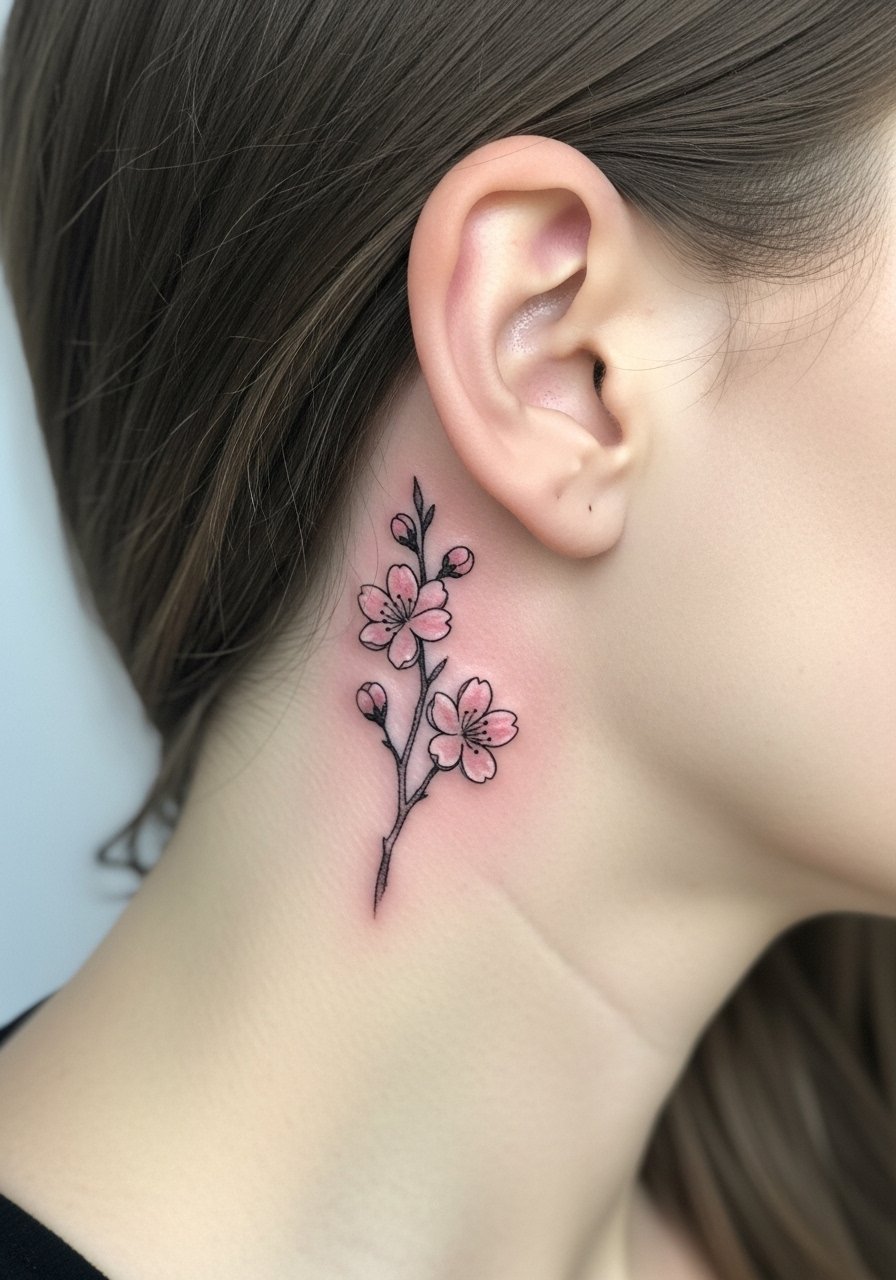
A single sakura branch is both poetic and quietly elegant. The petals can be rendered in whisper-thin line and minuscule pink washes or kept monochrome for longevity. It follows the curve of the mastoid bone, so the placement naturally flatters the jawline and hairline. This is perfect for sentimental tattoos—memorials, rebirth, or seasonal reminders—that stay intimate.
Style & Design Details
- Tattoo style: fine line / minimalist botanical
- Recommended size: 0.8–1.5 inches
- Best placement(s): right behind ear, along ear curve, upper behind-ear lobe
- Color vs. blackwork: tiny pink blush on petals recommended but optional
- Design elements: single-needle stems, micro petal wash, thin branch silhouette, tiny bud dots
- Longevity note: pale pink may fade; black stems hold longest
- Who it suits: sentimental minimalists, floral fans, first-timers
Finding the Right Artist
Seek artists with botanical fine-line portfolios who can render small blossoms without thickening lines. Ask for healed photos of similar-size floral work. Avoid artists whose smallest samples are still palm-sized designs. An experienced fineline artist is ideal; apprentices may struggle with steady tiny petal detail. Look on Instagram with #botanicaltattoo and check shop galleries.
Aftercare & Healing Tips
Keep the area clean and avoid hair products touching the fresh tattoo for the first week. Use Saniderm tattoo bandage roll initially, then switch to a thin unscented lotion like Aveeno Daily Moisturizing Lotion fragrance-free. Expect delicate flaking; don't over-moisturize. For pale pink touch-ups, wait 8–12 weeks once fully settled. SPF 50 sunscreen stick preserves petal color long-term.
- Mini Hokusai Wavelet (Micro Wave)
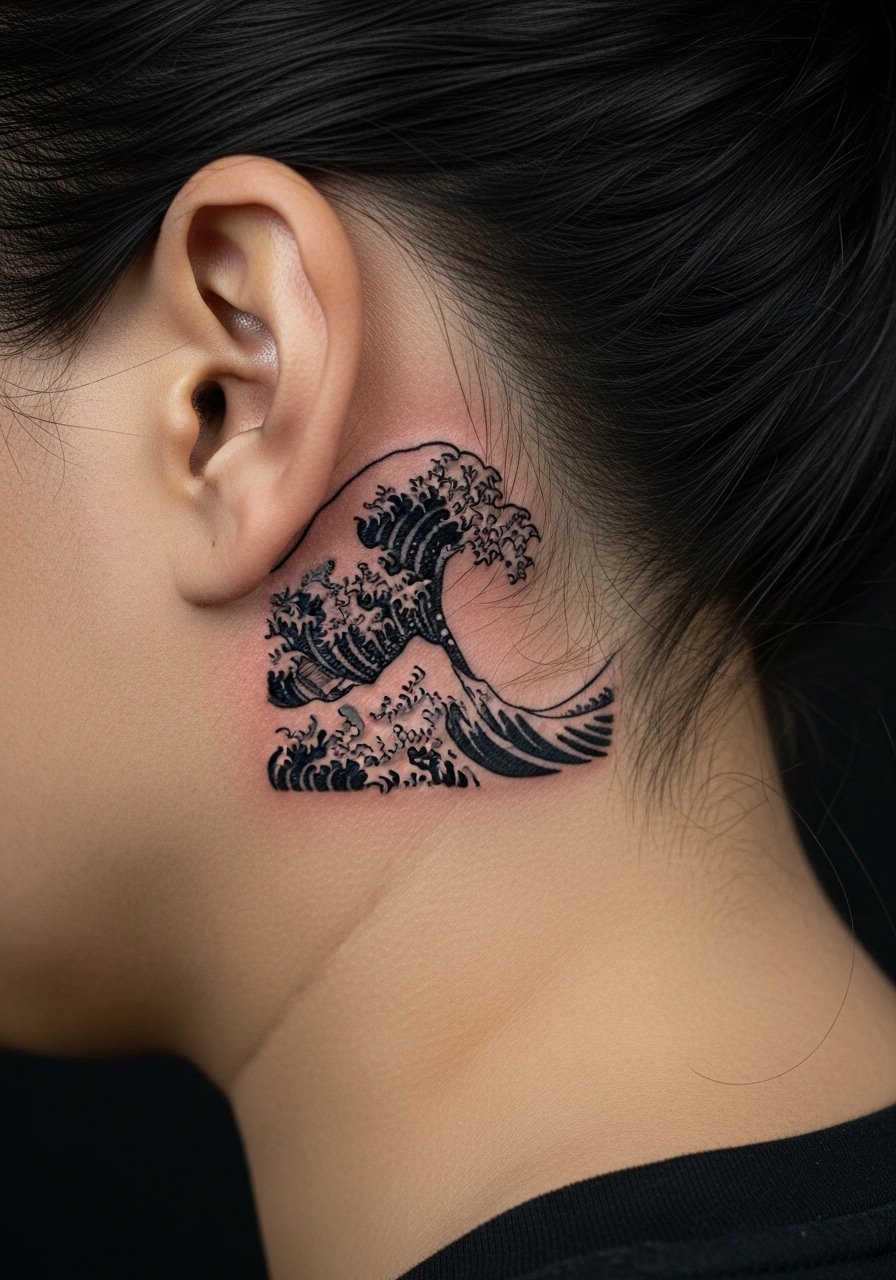
A tiny Hokusai wave is graphic and iconic while remaining surprisingly subtle when scaled down. It reads like a neat black accent tucked behind the ear and suits someone who loves art history and clean shapes. The bold linework resists early blur better than single-needle micro-lines, so it’s a good pick if you want crisp, long-lasting contrast.
Style & Design Details
- Tattoo style: blackwork with illustrative Japanese influence
- Recommended size: 0.8–1.2 inches
- Best placement(s): behind ear curve, above mastoid
- Color vs. blackwork: solid black recommended for longevity
- Design elements: bold contour lines, negative-space foam, tiny curl detail, small stipple shadow
- Longevity note: blackwork holds up well; thicker lines mean less touch-up
- Who it suits: graphic lovers, longevity-focused clients, collectors
Finding the Right Artist
Look for artists who do small illustrative blackwork and can show crisp negative-space handling. Ask how they scale classic prints to micro sizes. Avoid artists who only do large blackwork; micro blackwork requires precise control. Instagram tags: #blackworktattoo and #microtattoo.
Aftercare & Healing Tips
A thicker black line may scab more noticeably; use a second-skin bandage for 48–72 hours and a fragrance-free soap for cleansing. Apply a small amount of Tattoo Goo ointment in the early healing days if recommended by your artist, then switch to lotion. Keep out of sun; black saturates faster when protected by SPF 50 afterward.
- Tiny Kitsune Mask Outline
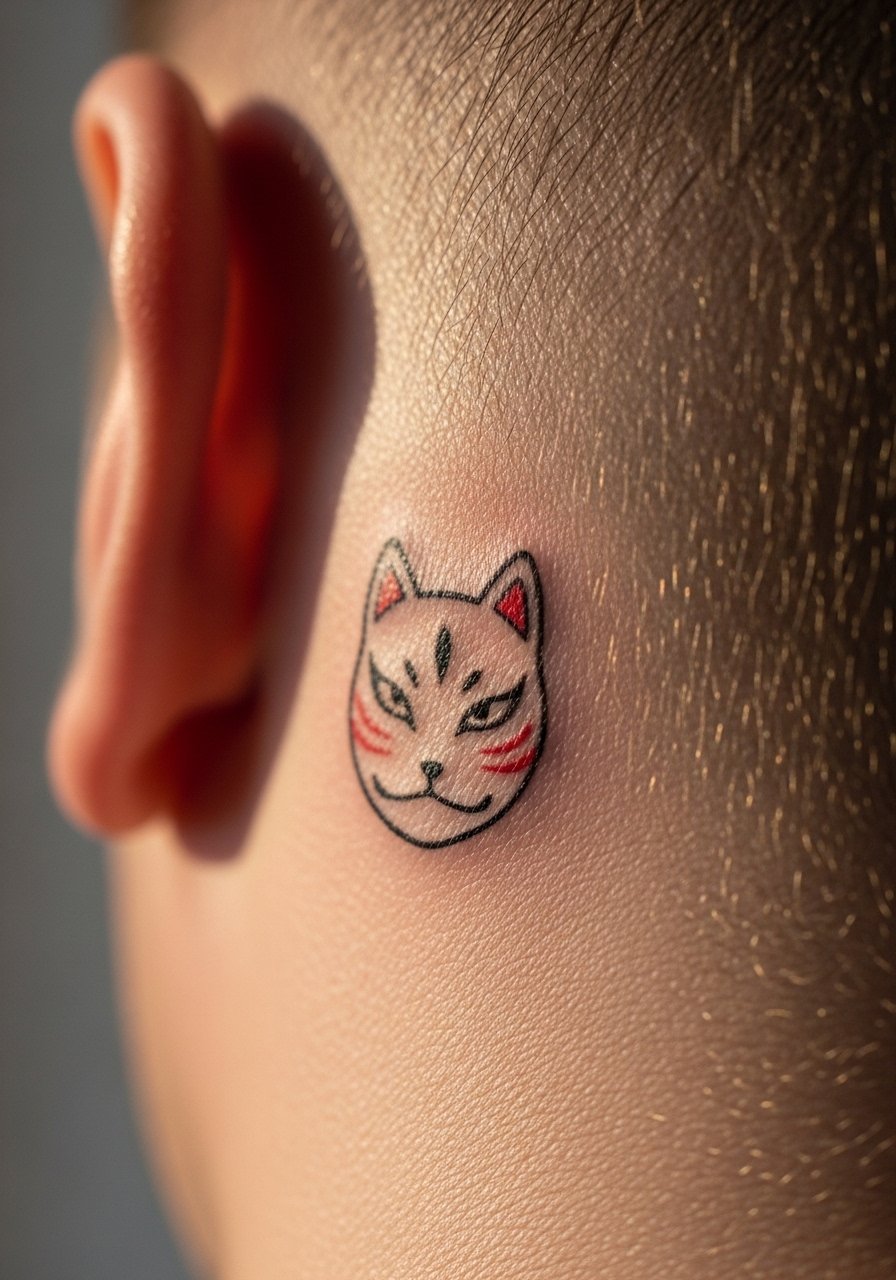
A kitsune mask captures myth, mischief, and transformation. When simplified into an outline with two tiny red cheek dots, it’s playful but restrained. This design works great as a hidden personal talisman or as a matching friend or sibling tattoo. It makes a subtle cultural nod without being overly elaborate.
Style & Design Details
- Tattoo style: illustrative minimal with micro-color accents
- Recommended size: 0.7–1.2 inches
- Best placement(s): behind ear lobule, slightly tucked under hairline
- Color vs. blackwork: black outline with tiny red accents looks balanced
- Design elements: thin contour lines, pin-dot red cheeks, negative-space eyes, small whisker dots
- Longevity note: small red points may need touch-ups; outlines hold better
- Who it suits: myth-lovers, matching tattoos, whimsical minimalists
Finding the Right Artist
Seek artists comfortable with tiny illustrative faces and micro color dots. Ask to see healed small-face tattoos. Don’t book someone who lacks micro-shading examples. An experienced fineline or illustrative artist is best. Search #microillustrationtattoo or #kitsunetattoo.
Aftercare & Healing Tips
Tiny colored dots can migrate or fade — consider a follow-up touch-up at 8–12 weeks. Use a gentle wash, Saniderm for the first 2–3 days, and then an unscented lotion like Lubriderm daily moisturizing lotion fragrance-free. Avoid sleeping on the side for the first week to reduce friction.
- Mini Torii Gate Silhouette
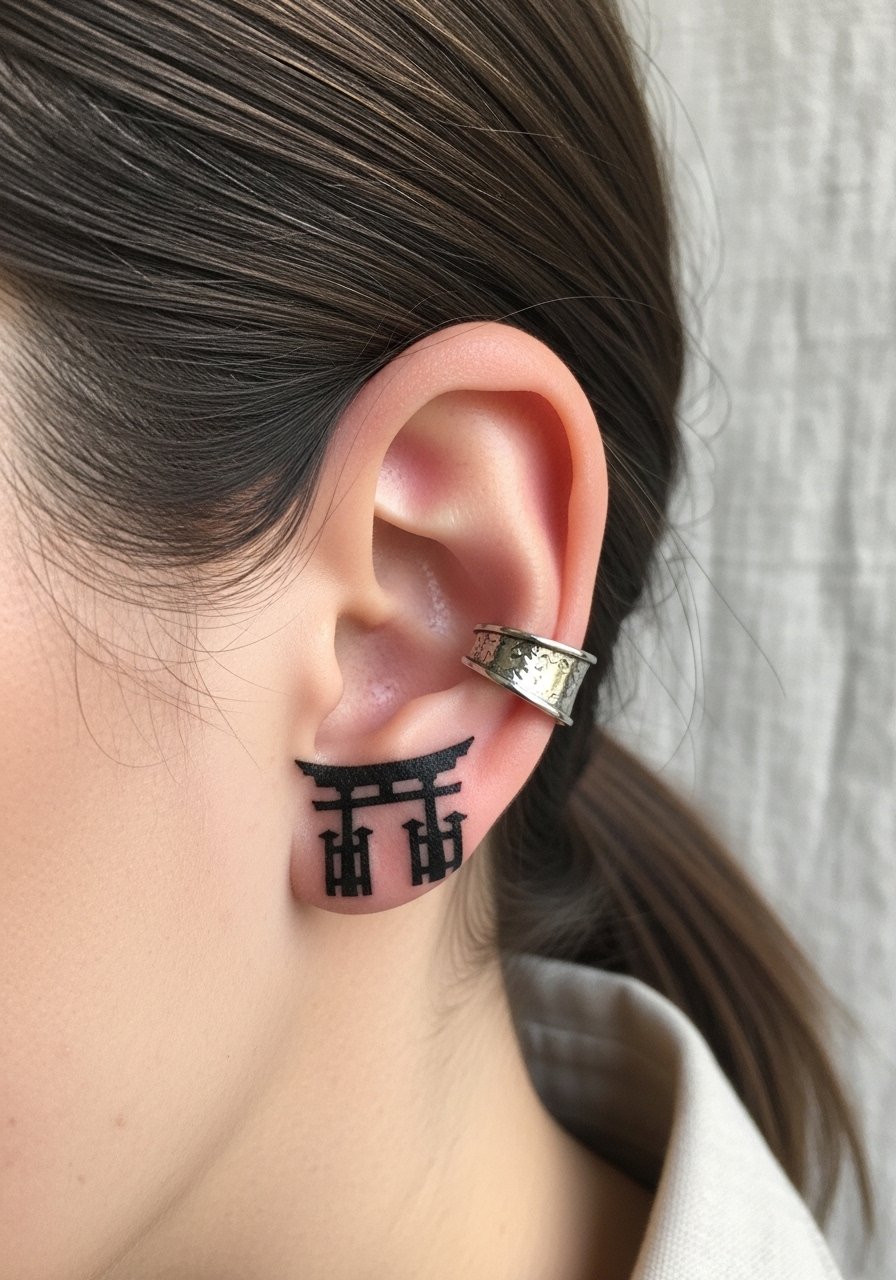
A tiny torii gate distills tradition into a tidy symbol of transition and threshold. As a silhouette, it’s architectural and graphic — a good pick if you prefer symbolic shapes over illustrative detail. It sits cleanly behind the ear, matching modern Japanese aesthetic trends.
Style & Design Details
- Tattoo style: minimal silhouette / graphic
- Recommended size: 0.6–1.2 inches
- Best placement(s): directly behind ear, near hairline
- Color vs. blackwork: pure black is suggested for sharp contrast
- Design elements: bold top lintel, simple pillars, negative space beneath gate, thin base line
- Longevity note: silhouettes age well if lines are bold enough
- Who it suits: architectural minimalists, travelers, people wanting symbolic tattoos
Finding the Right Artist
Look for artists experienced with tiny silhouettes and geometric balance. Ask about line thickness recommendations to avoid future blowout. Avoid artists who lack small-scaled architectural examples. Tattoo shops with illustrative portfolios will have suitable artists.
Aftercare & Healing Tips
Because the torii relies on crisp edges, avoid heavy scabbing by keeping the area clean and hydrated. Use Saniderm initially, then a thin layer of Hustle Butter or tattoo-specific lotion. Wait at least 8 weeks before showing it off to sunlight; then protect with SPF 50.
- Micro Chrysanthemum Capsule
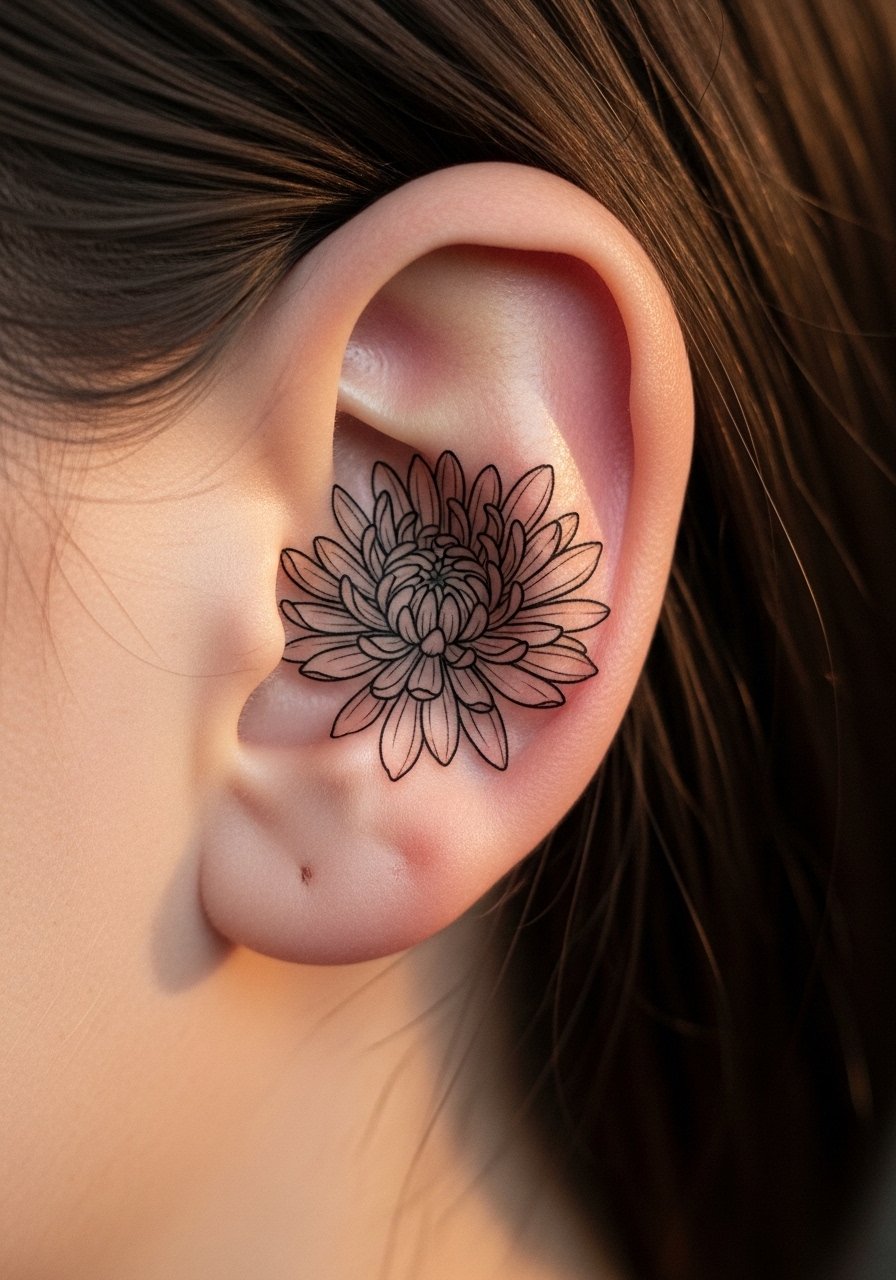
Chrysanthemums symbolize longevity and refinement in Japanese motifs. A compact chrysanthemum rendered in nested fine lines looks like a tiny floral button on skin. The layered petals create subtle depth while keeping the overall footprint tiny and tasteful.
Style & Design Details
- Tattoo style: fine line botanical
- Recommended size: 0.8–1.4 inches
- Best placement(s): directly behind ear, just under hairline
- Color vs. blackwork: monochrome black holds detail best; subtle yellow can be added
- Design elements: concentric petal lines, small center dots, micro-stippling for depth, negative space highlights
- Longevity note: dense fine lines require SPF care to avoid softening
- Who it suits: floral fans, classic aesthetic, collectors of small motifs
Finding the Right Artist
Choose artists with detailed floral micro work in their portfolio. Ask for healed photos of chrysanthemum or similar layered blooms. An apprentice may struggle with petal layering, so prioritize experienced fineline artists. Use Instagram tags like #botanicalmicro.
Aftercare & Healing Tips
Expect delicate peeling; keep it lightly moisturized with Hustle Butter Deluxe once the initial bandage comes off. Avoid hair spritzes or perfumes near the area during healing. A touch-up at 3 months might be necessary for evenly layered petals.
- Tiny Bamboo Sprig with Negative Space
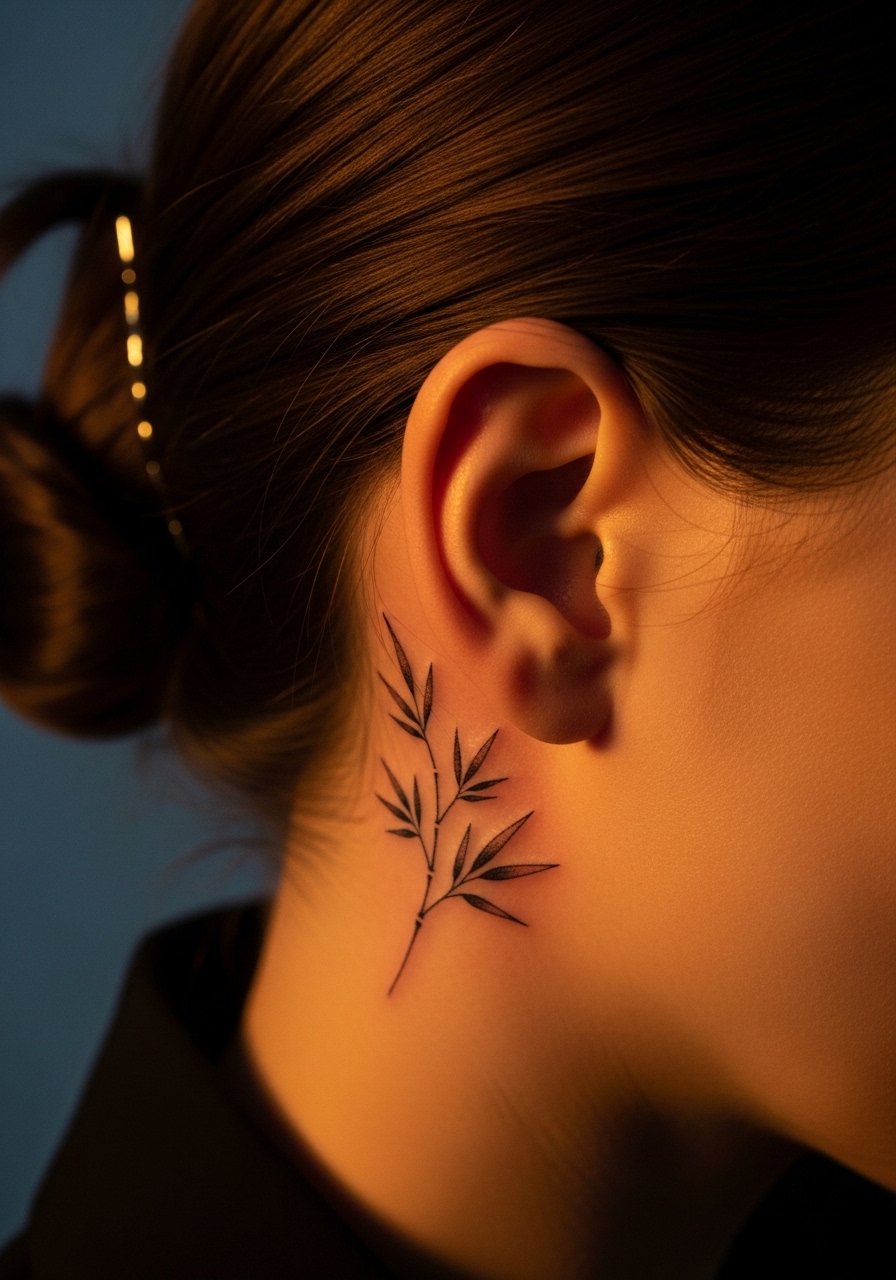
Bamboo stands for resilience and flexibility. A tiny sprig with open segments feels airy and modern, echoing popular cottagecore and minimalist aesthetics. It flows with the curve behind the ear and reads like a faint natural accent.
Style & Design Details
- Tattoo style: minimal botanical / linework
- Recommended size: 0.8–1.6 inches (vertical)
- Best placement(s): behind ear along mastoid, behind jawline
- Color vs. blackwork: black line recommended; light green wash possible but fades faster
- Design elements: thin segmented stalks, tiny leaves, open negative-space nodes, micro-dot accents
- Longevity note: vertical fine lines are prone to softening over time; thicker main line helps longevity
- Who it suits: nature lovers, understated aesthetic fans, second-timers
Finding the Right Artist
Find artists with precise vertical line control and micro-botanical examples. Ask about ideal line thickness for a vertical design. Avoid artists who over-shade micro-botanical designs. Portfolios on Instagram under #microbotanical help.
Aftercare & Healing Tips
Bamboo’s verticality makes friction with hair likely; sleep on the opposite side and keep hair tucked for the first week. Use unscented soap and a thin film of Lubriderm fragrance-free lotion during peeling. Touch-ups may be needed in 6–12 months if lines blur.
- Origami Crane Outline
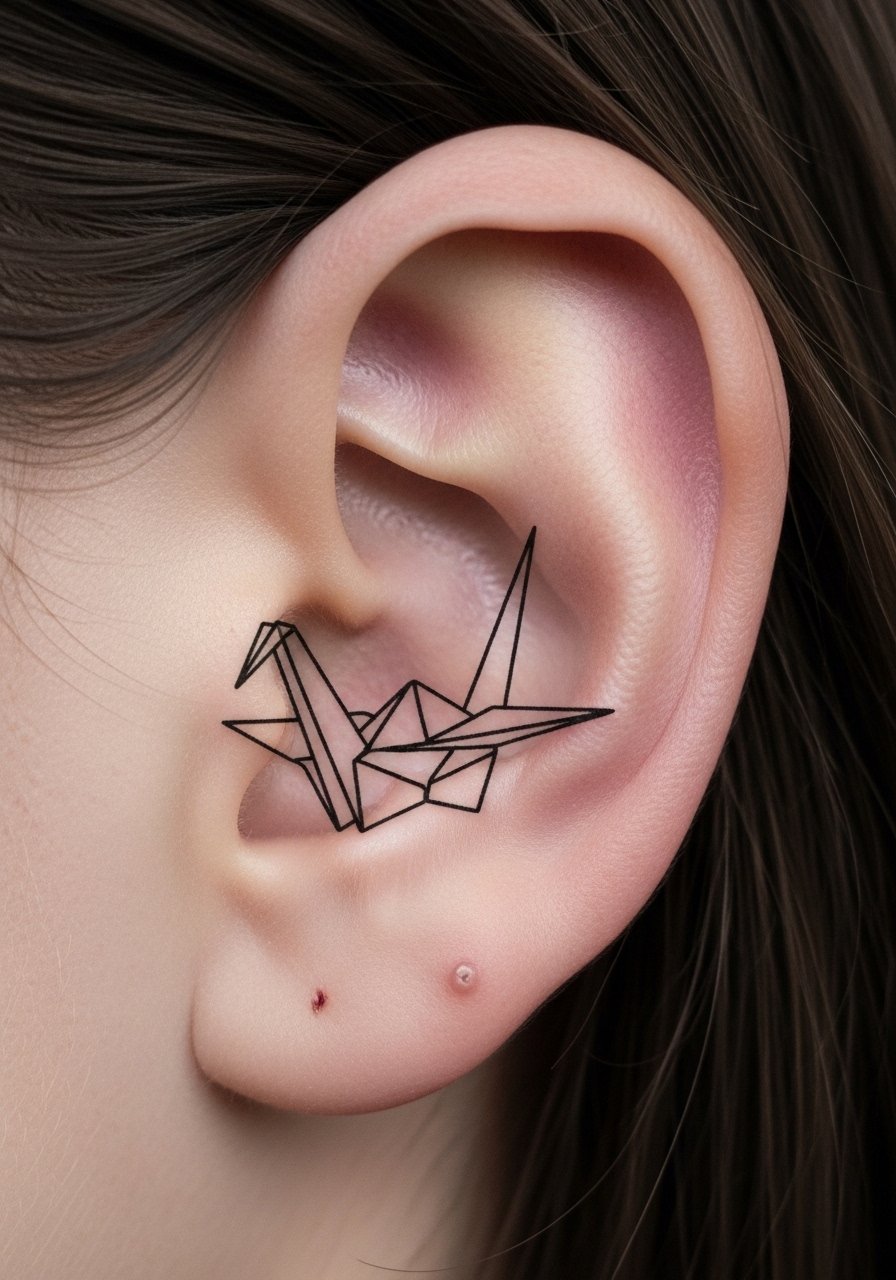
An origami crane symbolizes hope and wishes. Reduced to crisp geometric folds, it reads modern and delicate tucked behind the ear. The angular lines contrast nicely with the organic shape of the ear.
Style & Design Details
- Tattoo style: geometric minimal
- Recommended size: 0.7–1.2 inches
- Best placement(s): behind ear lobule or upper mastoid
- Color vs. blackwork: black outline recommended; soft gray wash inside folds optional
- Design elements: folded-line edges, tiny negative-space highlights, crisp points, small anchor dot
- Longevity note: outlines hold well; sharp points may soften and need touch-up later
- Who it suits: geometric fans, travelers, symbol-minded minimalists
Finding the Right Artist
Pick someone who does tiny geometric pieces with straight-line control. Ask for healed images of other geometric micro tattoos and their recommended needle grouping to maintain point crispness. Avoid artists who fill in small shapes heavily.
Aftercare & Healing Tips
Keep sharp points protected from friction and pressure during healing. If you want to test placement first, try an Inkbox temporary kit to see how the crane sits behind your ear. Aftercare follows the usual gentle wash and unscented lotion routine.
- Micro Dragon Curve (Minimal)
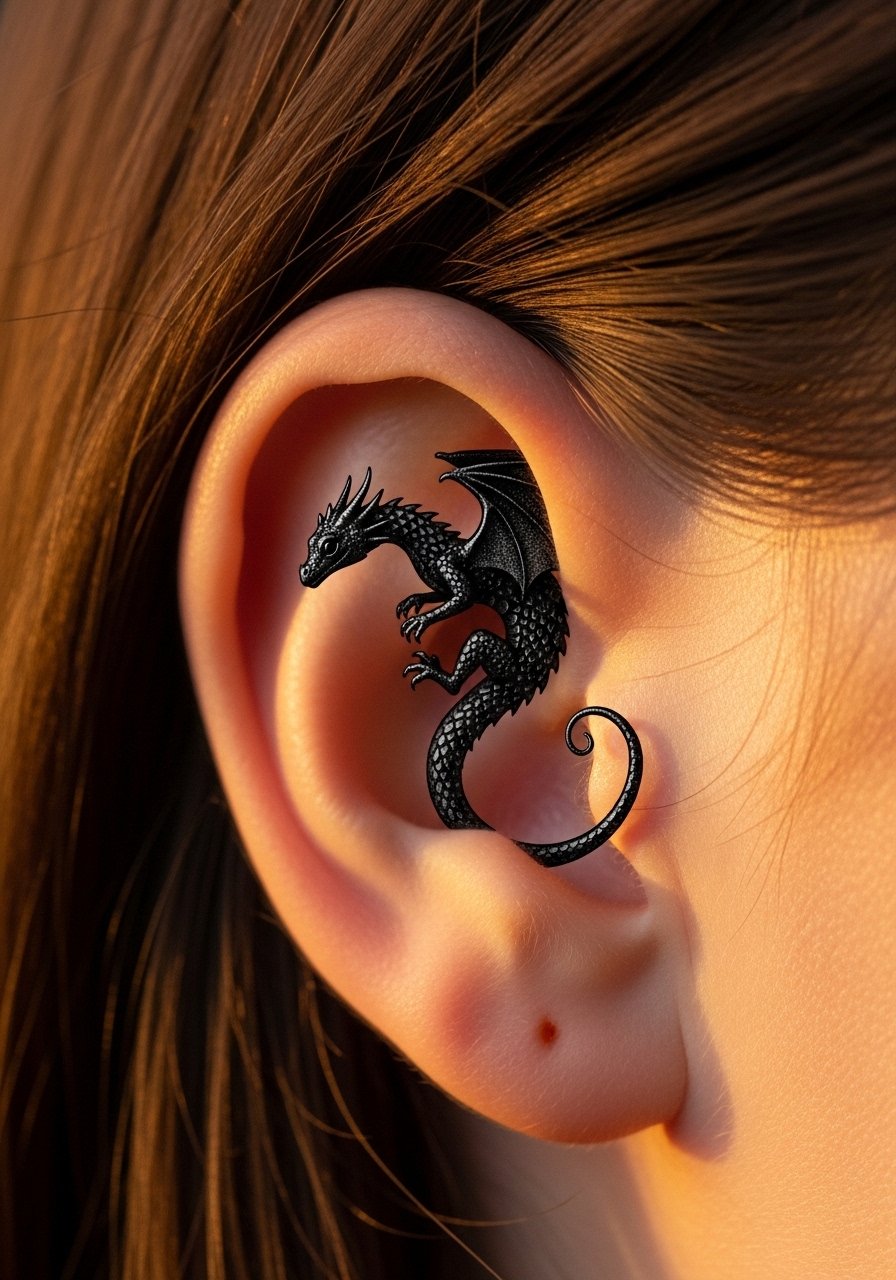
A micro dragon curve wraps neatly behind the ear and gives mythic energy in a compact form. Kept minimal, it reads more like a swoop than a full creature, so it’s bold without shouting.
Style & Design Details
- Tattoo style: mini illustrative with micro-stippling
- Recommended size: 1–1.5 inches (curved)
- Best placement(s): curve behind ear ridge, tucked near hairline
- Color vs. blackwork: blackwork with tiny white or negative highlights
- Design elements: curved body line, micro scales, tiny claws or whisker lines, subtle shading
- Longevity note: curved lines soften; thicker main line improves lifespan
- Who it suits: fantasy fans, collectors wanting small symbolic animals
Finding the Right Artist
Artists who do tiny illustrative animals or mythical figures are ideal. Ask to see healed micro-creature work. Avoid artists who only do large fantasy pieces. Check portfolios under #microdragon or #mythicaltattoo.
Aftercare & Healing Tips
Curved tattoos on mobile skin can scab where hair rubs; keep hair away and use Saniderm in the first days to reduce friction. A thin application of Hustle Butter after bandage removal helps maintain the micro-detail.
- Small Daruma Doll Capsule
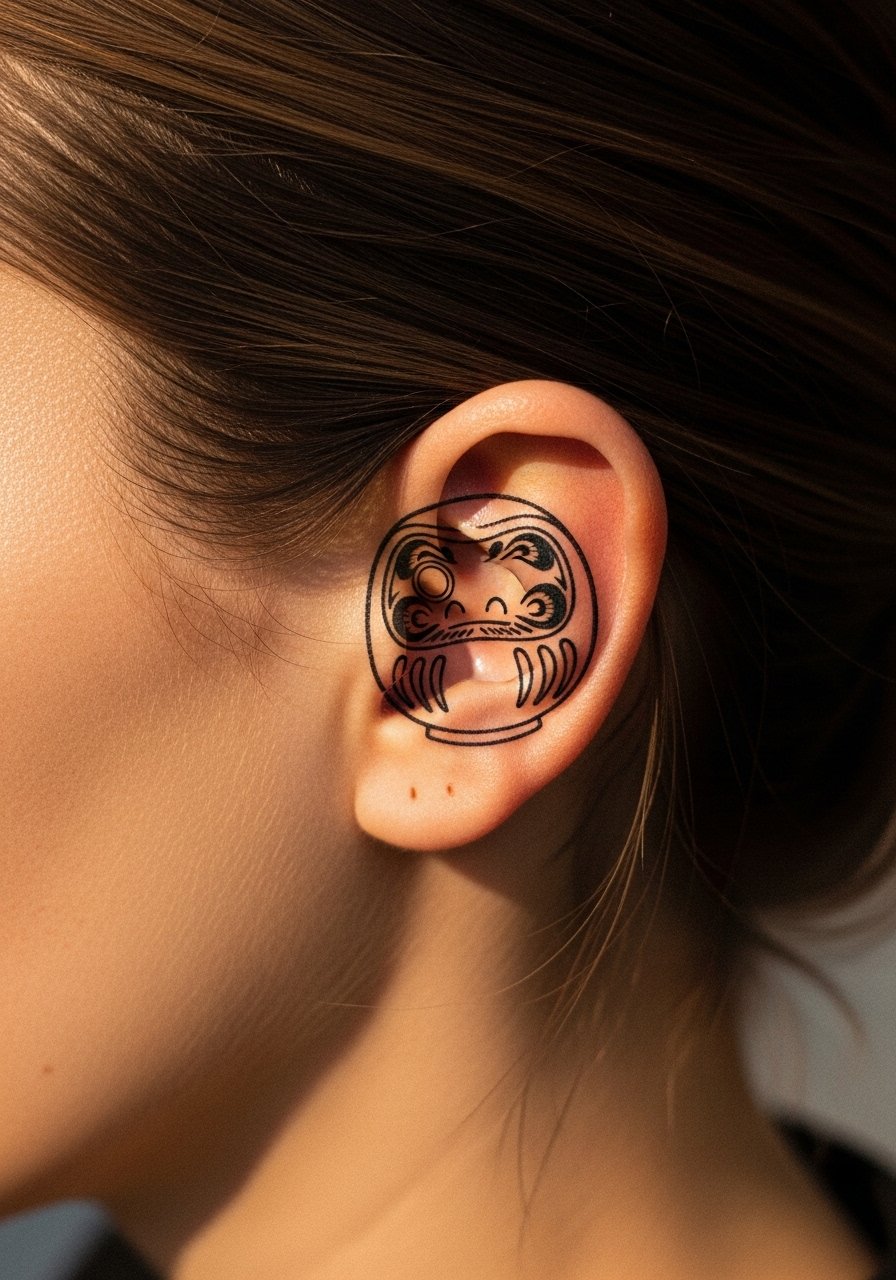
A tiny daruma is compact and full of intention. Rendered as a small capsule with one painted eye (for wish-making), it’s a whimsical and meaningful behind-ear option that feels like a lucky charm.
Style & Design Details
- Tattoo style: symbolic minimal
- Recommended size: 0.6–1.2 inches
- Best placement(s): tucked behind ear lobe or upper mastoid
- Color vs. blackwork: black outline; red fill optional for cultural color
- Design elements: rounded shape, single-eye highlight, minimal expression lines, tiny base line
- Longevity note: small filled red may fade; black line lasts longer
- Who it suits: folks wanting compact intention-focused tattoos, minimalists
Finding the Right Artist
Look for artists who do small iconography and single-eye filled dots cleanly. Ask for healed micro-icon photos. Apprentices can do simple line icons, but ensure they have micro-line examples.
Aftercare & Healing Tips
Because the daruma is small and possibly filled, use a second-skin bandage and then keep the area moisturized with a fragrance-free lotion. For red fills, anticipate a color boost touch-up in a few months. SPF when exposed keeps the pigment vibrant.
- Tiny Moon with Kumo (Clouds)
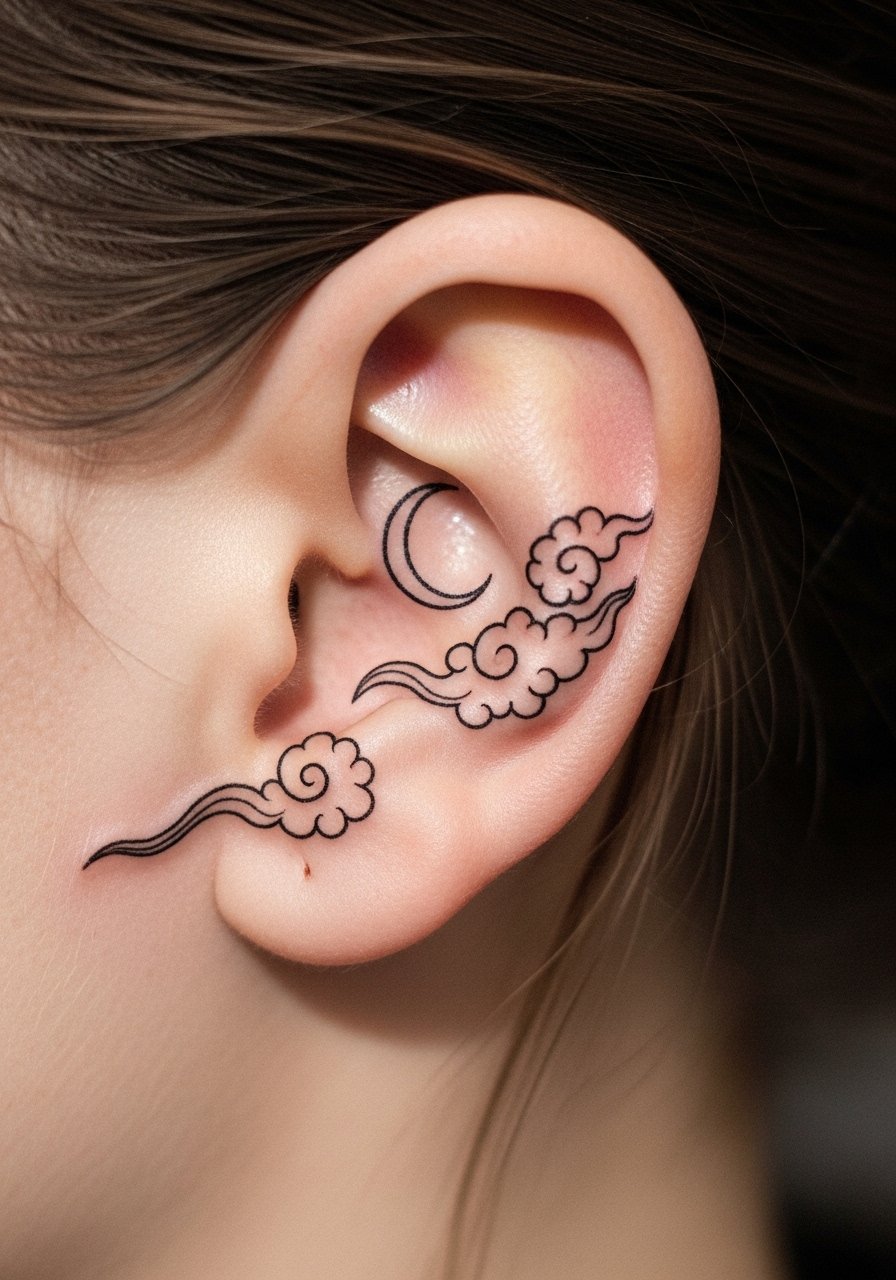
A crescent moon with wispy kumo clouds gives a dreamy, anime-adjacent vibe. It’s delicate and reads as poetic, especially at night or with hair swept back.
Style & Design Details
- Tattoo style: minimal illustrative
- Recommended size: 0.8–1.3 inches
- Best placement(s): behind ear curve, near nape
- Color vs. blackwork: blackwork; soft gray wash optional
- Design elements: crescent silhouette, stylized cloud curls, micro-dots for stars, tiny negative-space highlights
- Longevity note: small shading softens; keep bold outlines where needed
- Who it suits: dreamy aesthetics, cottagecore/dark academia crossover fans
Finding the Right Artist
Choose someone with small celestial or anime-style micro work. Bring reference images of kumo clouds and ask about how shading scales down. Avoid artists without micro-celestial examples.
Aftercare & Healing Tips
Cloud curls may scab; gentle washing and a thin layer of Lubriderm fragrance-free lotion during peeling helps. Use SPF 50 when exposed to sunlight to prevent gray shading loss.
- Minimal Maple Leaf (Momiji)
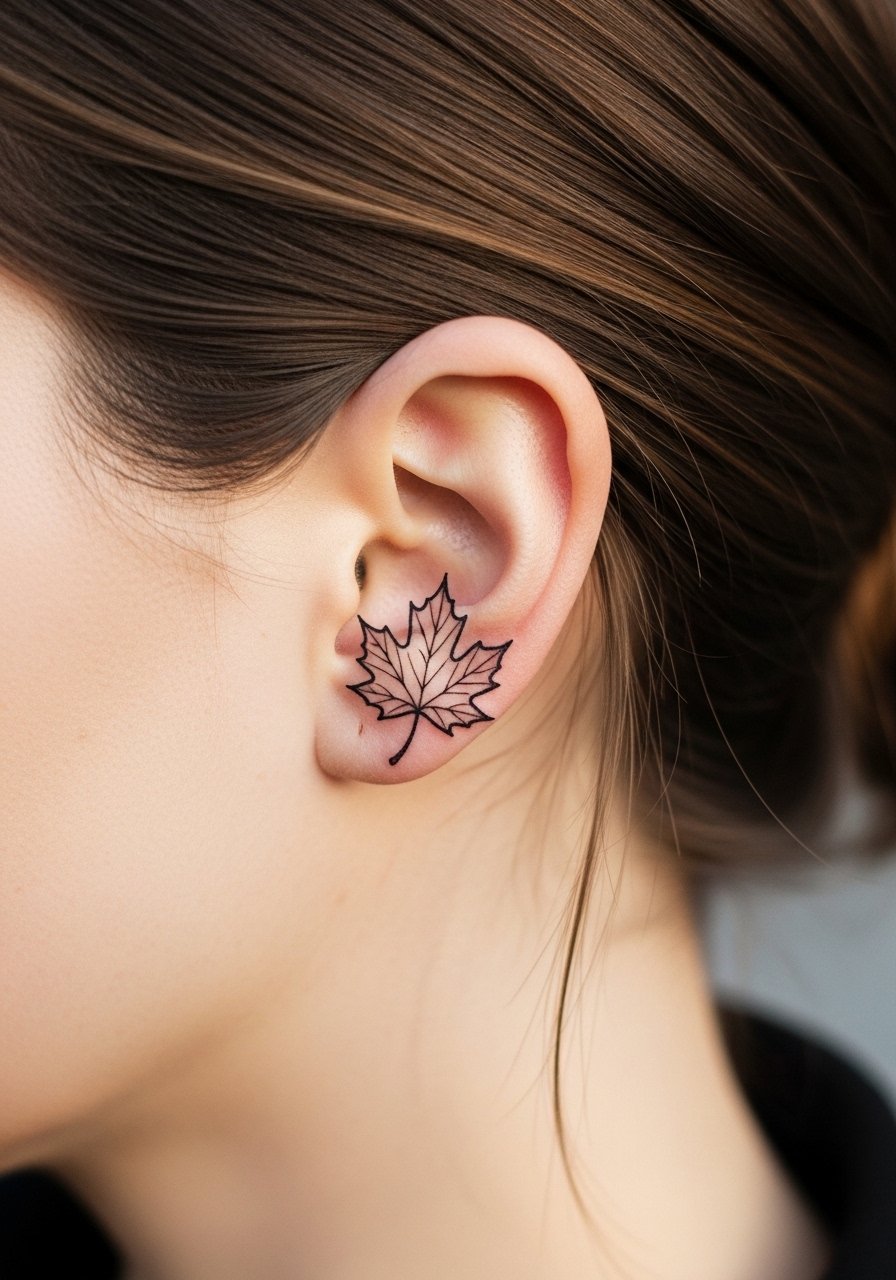
A small momiji leaf evokes seasonal change and Japanese autumn. Simple vein lines and a pointed silhouette make it recognizable even at small scale. It’s understated but has a poetic energy.
Style & Design Details
- Tattoo style: minimal botanical
- Recommended size: 0.7–1.1 inches
- Best placement(s): behind ear lobe or upper mastoid
- Color vs. blackwork: black outline; burnt orange or deep red optional
- Design elements: pointed lobes, single-needle vein lines, slight stem, negative-space highlights
- Longevity note: colored leaves may fade; black line holds shape
- Who it suits: seasonal lovers, subtle statement seekers
Finding the Right Artist
Search for artists experienced with small botanical icons. Ask for healed colored leaf examples if adding pigment. Avoid artists who over-shade small leaves into blobs.
Aftercare & Healing Tips
Colored tiny leaves need touch-ups more often. Keep protected, use Saniderm for early days, and then untinted lotion. SPF is key to preserve any red/orange tones.
- Micro Sensu (Folding Fan)
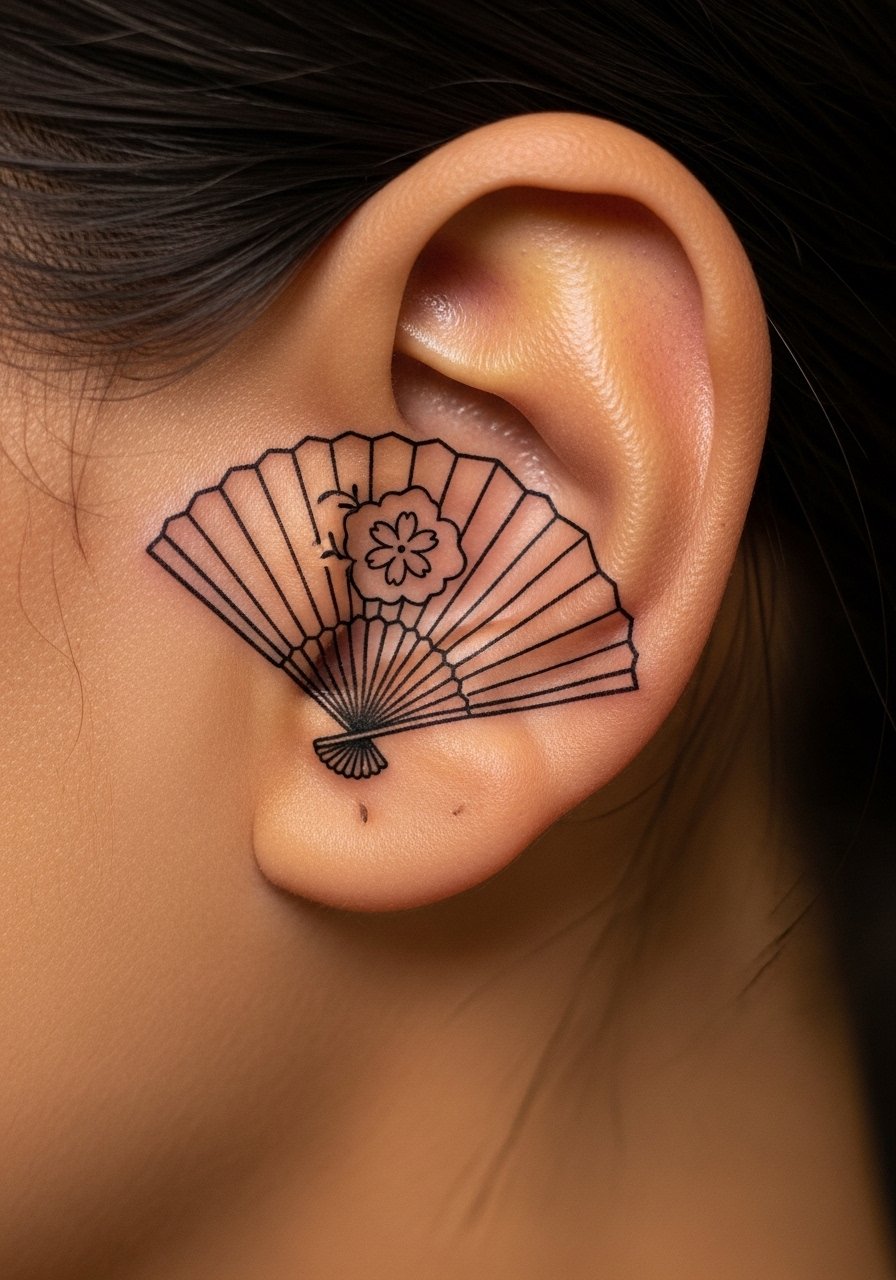
A folding fan compresses pattern and movement into a compact shape. When tattooed small, it reads like an accessory and works well for people who love Japanese textures.
Style & Design Details
- Tattoo style: illustrative minimal
- Recommended size: 0.8–1.2 inches
- Best placement(s): behind ear curve or just below hairline
- Color vs. blackwork: black lines with a tiny colored floral center optional
- Design elements: ribbed fan lines, miniature central pattern, thin handle line, negative-space highlights
- Longevity note: thin ribs can blur; slightly thicker main strokes help
- Who it suits: pattern lovers, cultural motif fans, petite tattoo collectors
Finding the Right Artist
Pick artists who do patterned micro-illustration and show healed fine-line pattern work. Ask about line spacing to avoid future bleed. An experienced fineline artist is recommended.
Aftercare & Healing Tips
Use gentle cleansing, avoid hair sprays, and moisturize lightly. If tiny color is included, plan for a possible color refresh.
- Miniature Wave & Red Sun (Hinode)
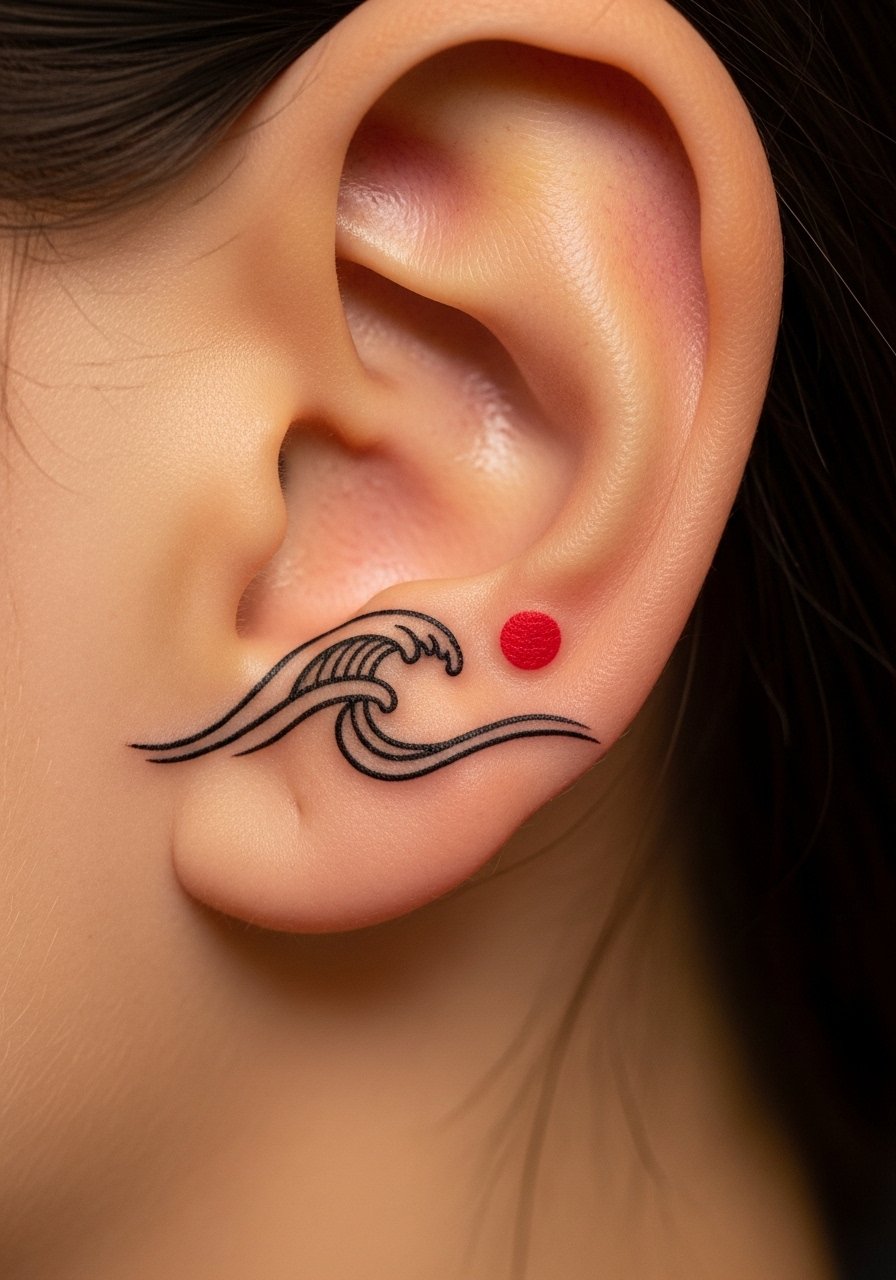
Pairing a single wave curl with a micro red sun creates an iconic Japanese composition in micro form. The red dot packs a cultural punch without being large.
Style & Design Details
- Tattoo style: minimal illustrative
- Recommended size: 0.7–1.3 inches
- Best placement(s): behind ear top edge or mastoid
- Color vs. blackwork: black wave with small red sun dot recommended
- Design elements: curved wave line, foam negative space, micro red sun, tiny dot accents
- Longevity note: red dot may fade; black holds well
- Who it suits: travel lovers, minimalists wanting a cultural motif
Finding the Right Artist
Seek artists with micro Japanese compositions and micro-color control. Ask for healed photos of micro-red dots near hairline. Avoid artists without micro-color examples.
Aftercare & Healing Tips
Protect tiny red pigment with sun protection. Use Saniderm early, then unscented lotion. Expect a small color boost touch-up might be needed after settling.
- Kanji Character (Single-Word)
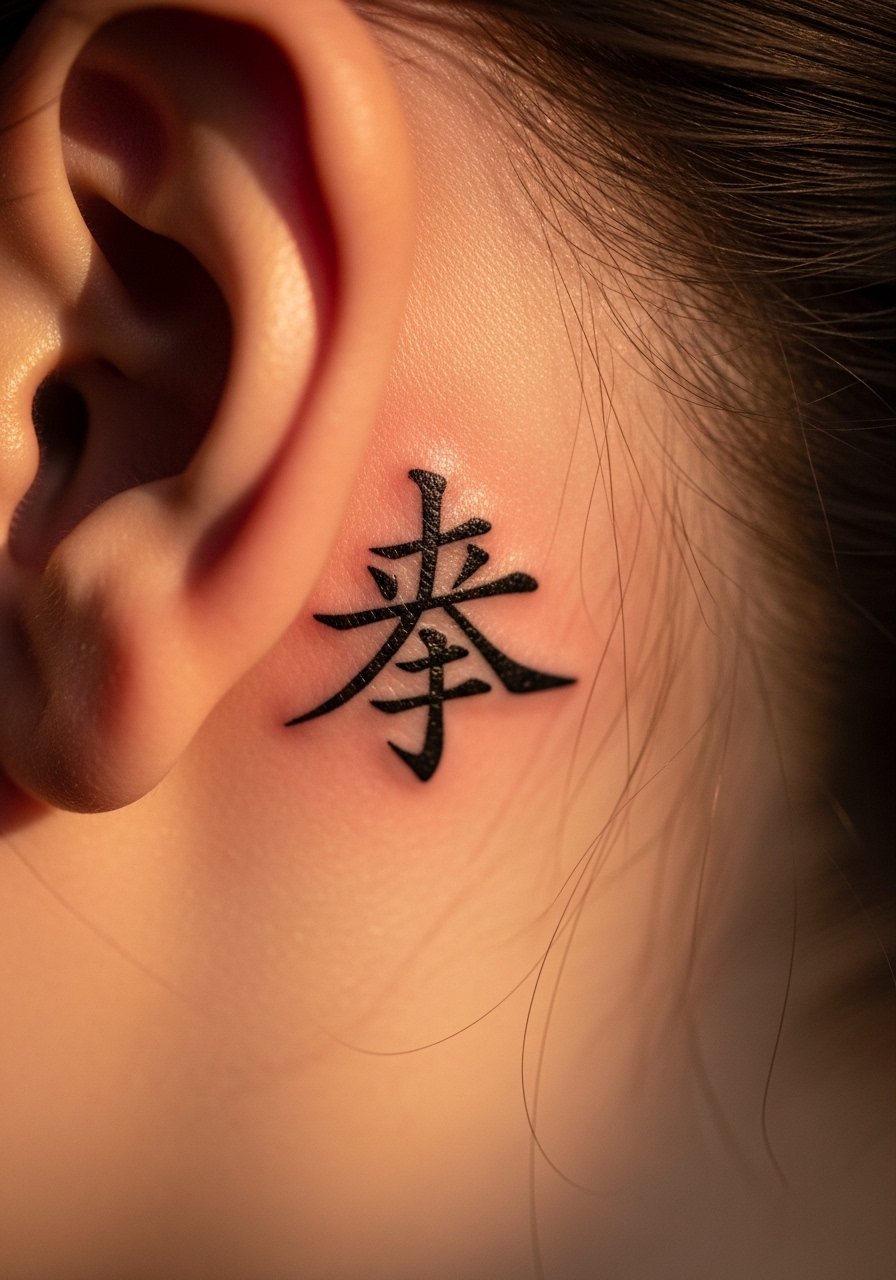
A single kanji character can be deeply personal — "hope," "strength," or "love." Keep it to a single clear character and confirm translation before inking. It makes a discreet, text-based statement tucked behind the ear.
Style & Design Details
- Tattoo style: typographic / single-character
- Recommended size: 0.6–1 inch
- Best placement(s): behind the ear center, near the mastoid
- Color vs. blackwork: blackwork only for clarity
- Design elements: clean stroke fidelity, correct calligraphy style, slight negative-space tails
- Longevity note: bold strokes survive better than hairline calligraphy
- Who it suits: those wanting a private word, literary fans, travelers
Finding the Right Artist
Bring a vetted reference and ask artists for their preferred calligraphic versions. Request healed photos of single-character work—calligraphy misrendering is a real red flag. An experienced lettering artist is ideal.
Aftercare & Healing Tips
Ensure crisp strokes by asking for slightly thicker lines than printed kanji to avoid blur. Use Saniderm early and then a fragrance-free lotion. Plan for a small touch-up if edges soften.
- Tiny Bonsai Silhouette
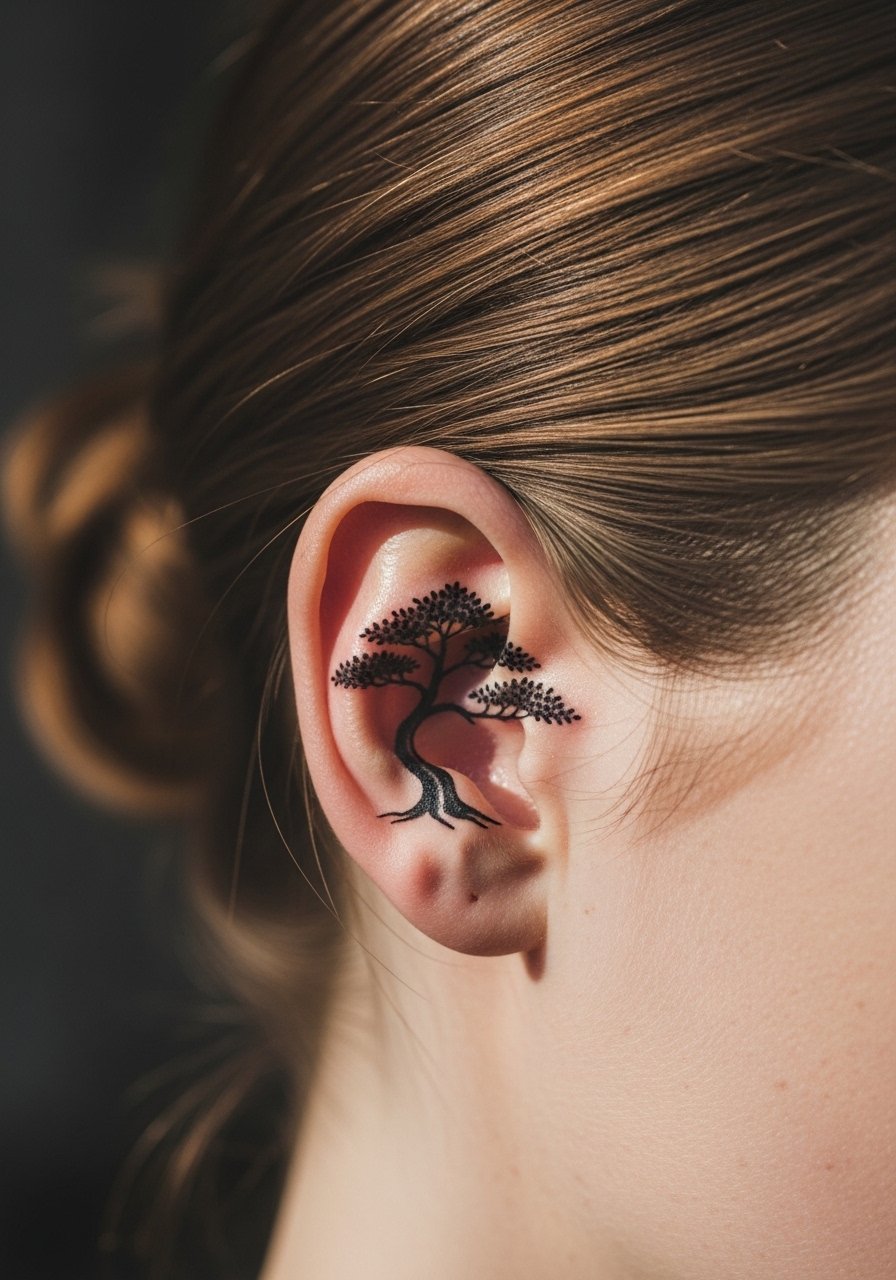
A bonsai silhouette translates the art of restraint into micro form. It’s a quiet tribute to balance and patience, rendered in small negative-space canopy dots that read texturally.
Style & Design Details
- Tattoo style: illustrative minimal
- Recommended size: 0.8–1.4 inches
- Best placement(s): behind ear, upper nape
- Color vs. blackwork: black silhouette; green wash optional
- Design elements: tiny trunk, dotted canopy, small pot line, negative-space layering
- Longevity note: dots may spread slightly; keeping dot density moderate helps
- Who it suits: zen aesthetic fans, gardening lovers, slow-living advocates
Finding the Right Artist
Look for artists who do bonsai or miniature tree work. Ask about dot density to avoid future spread. An experienced fineline artist is recommended.
Aftercare & Healing Tips
Keep it dry and avoid hair product contact. A thin unscented lotion during peeling supports dot retention. If canopy dots soften, schedule a tiny touch-up.
- Micro Paper Lantern (Chōchin)
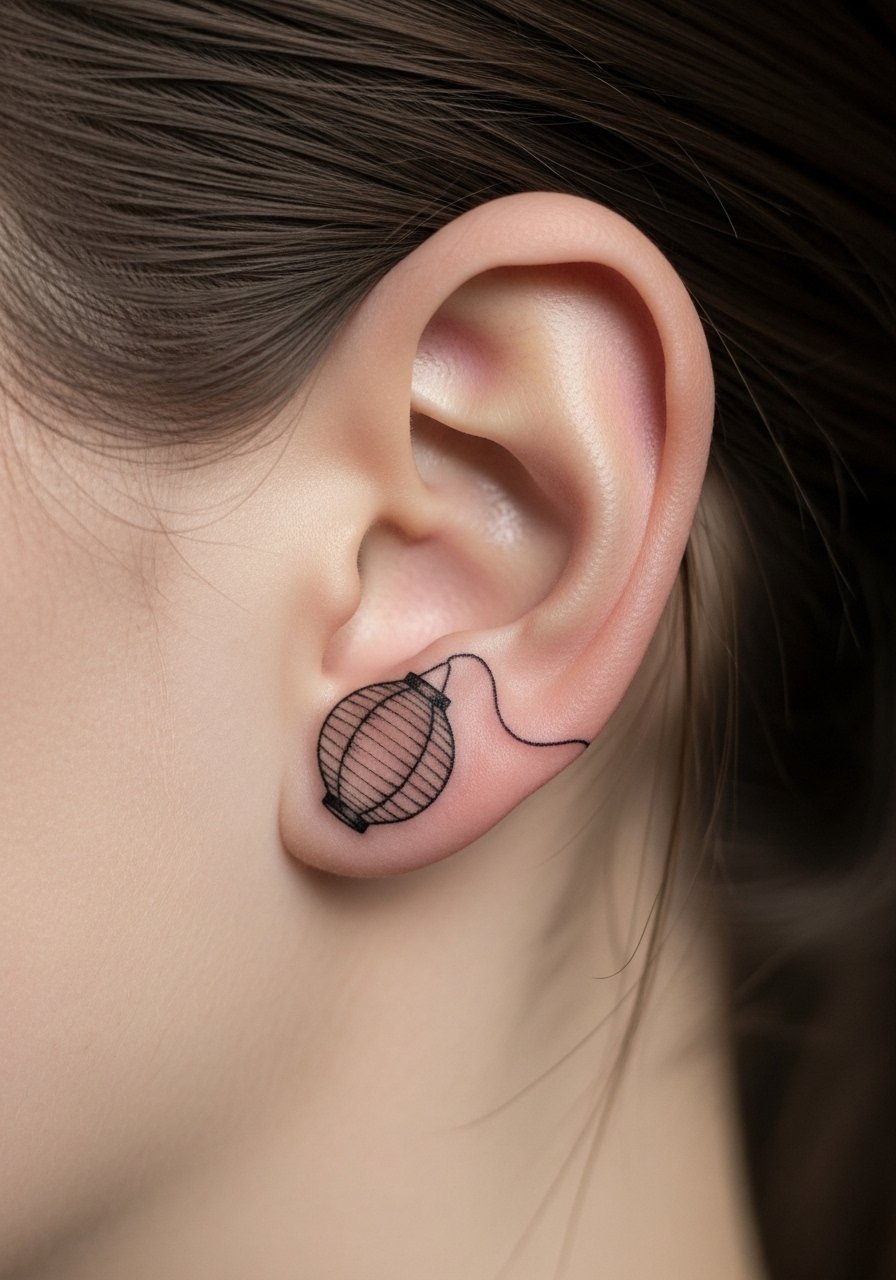
A paper lantern reads like a tiny light you can hide away. With thin slatted lines and a tiny hanging cord, it’s charming and compact.
Style & Design Details
- Tattoo style: illustrative minimal
- Recommended size: 0.6–1.2 inches
- Best placement(s): behind ear lobe, near hairline
- Color vs. blackwork: black; optional red accents or subtle shading
- Design elements: thin vertical ribs, tiny cord, micro-shadowing, negative-space ribs
- Longevity note: thin ribs may require touch-ups; slightly thicker ribs better resist blur
- Who it suits: whimsical minimalists, night-sky lovers, festival fans
Finding the Right Artist
Select artists with small ornamental micro pieces and ask for healed ribbed designs. Avoid artists who only do bold solid fills for small shapes.
Aftercare & Healing Tips
Keep hair away from the cord area to prevent snags. Saniderm early then gentle lotion like Aveeno fragrance-free works well. A minor touch-up may be needed for crisp ribs.
- Delicate Hand-Lettered Kana Initial
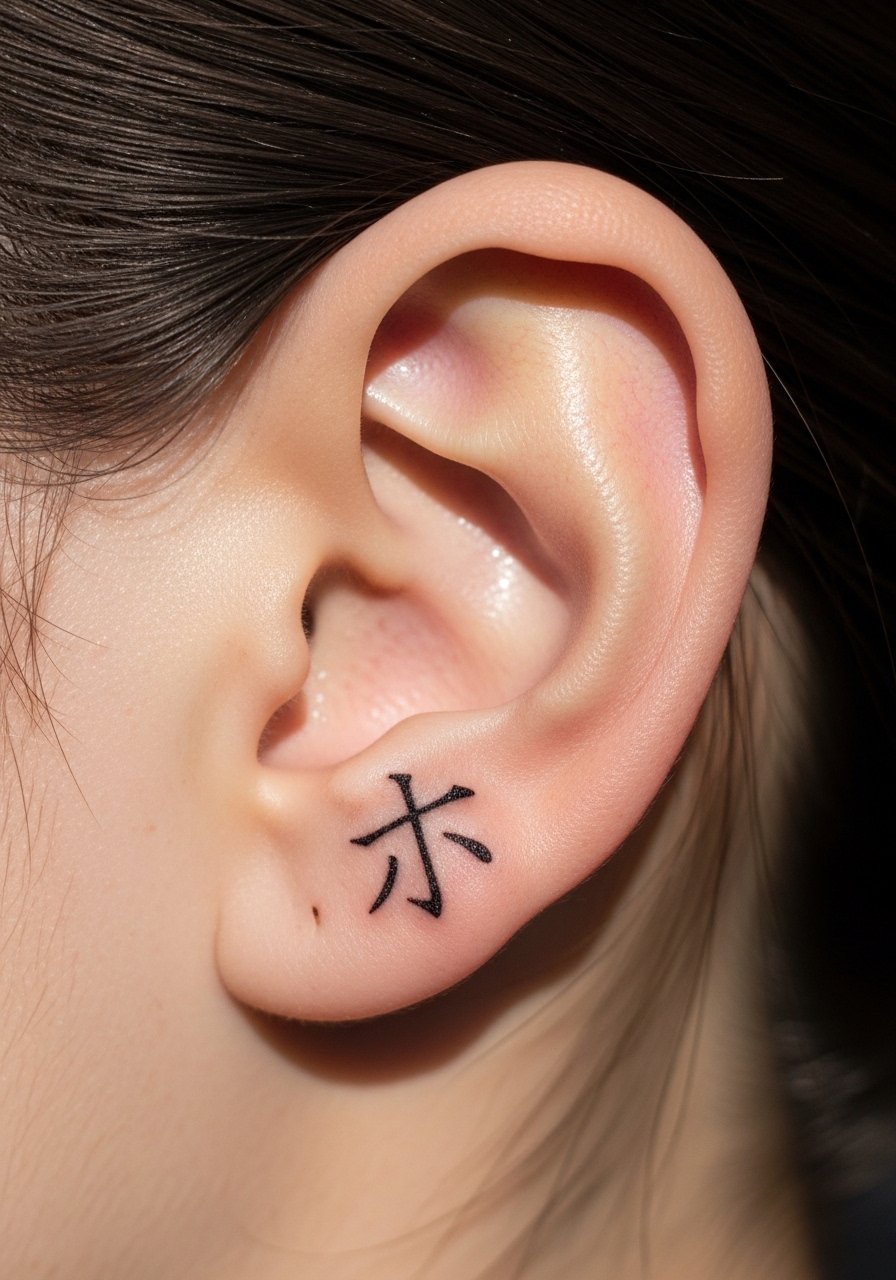
A single kana initial can be a soft, personal tattoo. Hand-lettered style keeps it bespoke rather than textbook, creating an intimate signature behind the ear.
Style & Design Details
- Tattoo style: lettering / cursive kana
- Recommended size: 0.5–1 inch
- Best placement(s): right behind ear center, tucked under hairline
- Color vs. blackwork: black lettering best for longevity
- Design elements: gentle stroke taper, tiny flourish, negative-space endings
- Longevity note: letterforms should be slightly bolder than digital print to avoid blur
- Who it suits: language lovers, those wanting discreet personal text
Finding the Right Artist
Book someone with lettering experience, especially with small non-Latin characters. Ask for examples of kana or other small scripts. Avoid artists who haven’t done small script cleanly.
Aftercare & Healing Tips
Preserve the tiny stroke detail with second-skin wrapping initially and then a thin film of unscented lotion. Touch-ups may be required if lines soften.
- Little Oni Mask Minimal
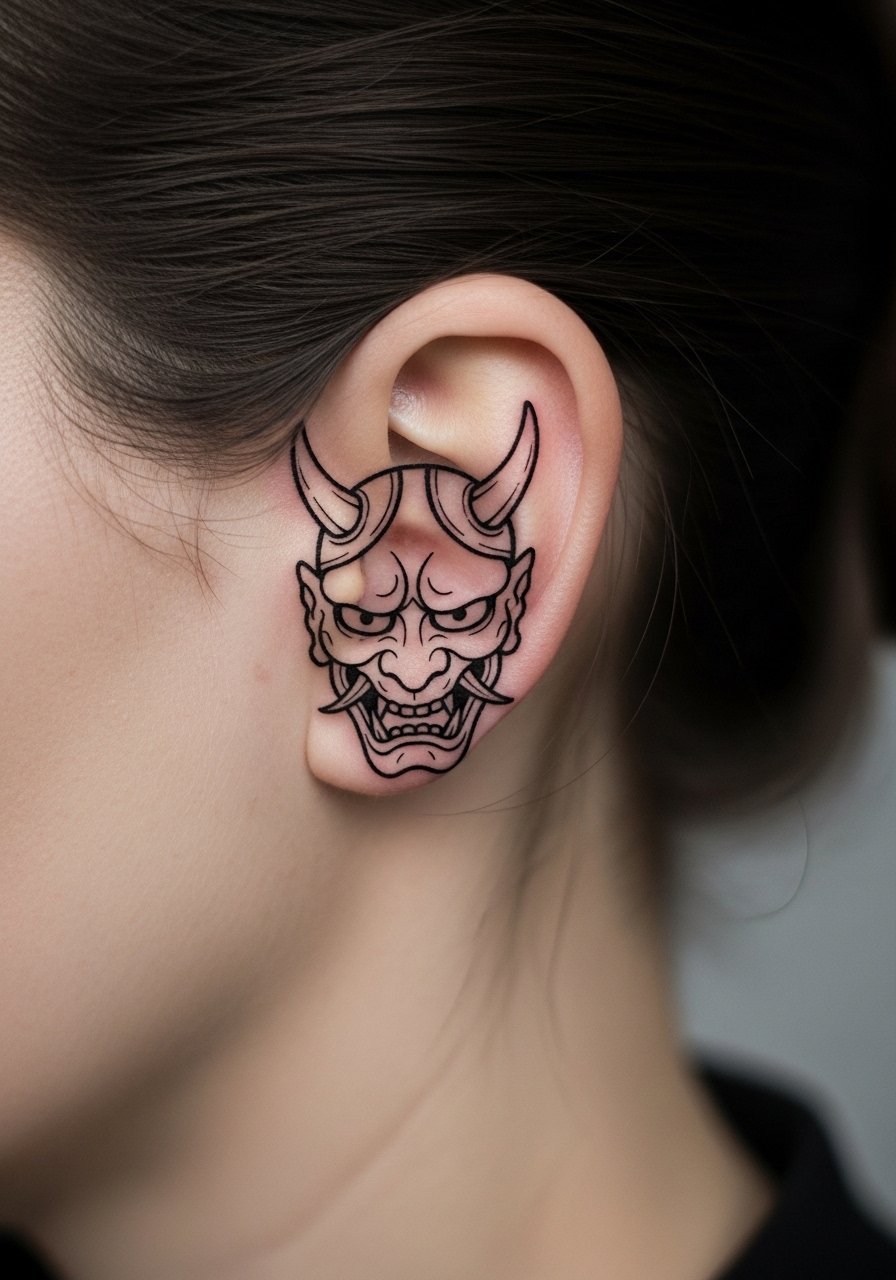
A reduced oni mask reads edgy and cultural without being overwhelming. Simplified horns and a sly grin make this an intriguing tiny piece.
Style & Design Details
- Tattoo style: minimal illustrative
- Recommended size: 0.7–1.3 inches
- Best placement(s): behind ear top edge, near mastoid
- Color vs. blackwork: blackwork recommended; red accents optional
- Design elements: horn silhouette, eye slits, minimal jawline, tiny expression lines
- Longevity note: simplified shapes last longer than tiny detailed faces
- Who it suits: bold minimalists, collectors of mythic iconography
Finding the Right Artist
Pick an artist who can reduce faces to expressive lines. Ask for healed minimal mask examples. Avoid artists who add unnecessary shading to small faces.
Aftercare & Healing Tips
Protect from hair friction and avoid sleeping on that side for the first week. Clean gently and moisturize. Consider a small touch-up if expression lines soften.
- Micro Plum Blossom Cluster (Ume)
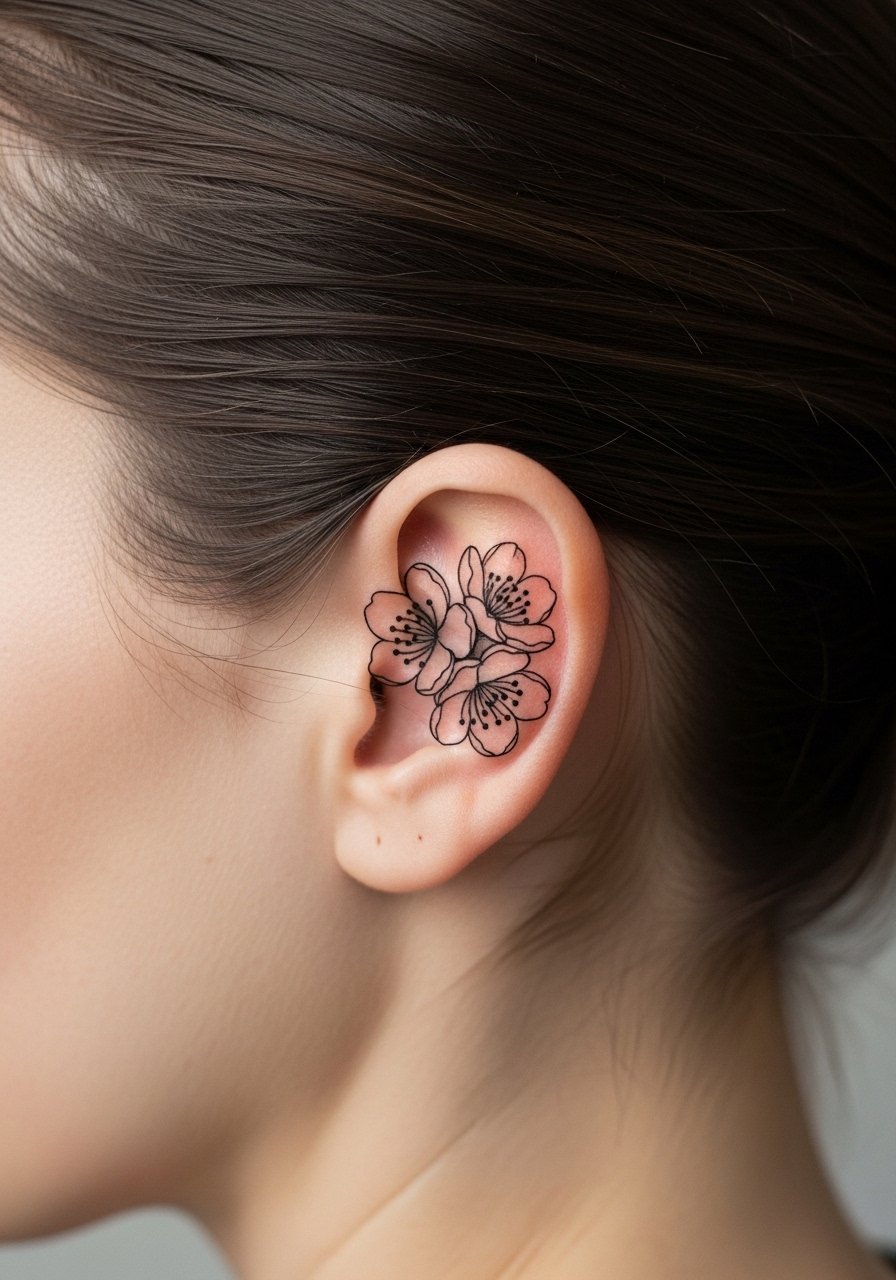
Plum blossoms symbolize resilience and early bloom. A tiny cluster of two or three flowers reads poetic and delicate behind the ear, perfect for a quiet symbolic accent.
Style & Design Details
- Tattoo style: botanical fine line
- Recommended size: 0.6–1.2 inches
- Best placement(s): behind ear lobe, mastoid
- Color vs. blackwork: blackwork with tiny pinkish dot centers optional
- Design elements: five-petaled blossoms, micro-dot centers, tiny bud lines, slight branch stub
- Longevity note: tiny centers may need touch-ups; outline persists
- Who it suits: sentimental minimalists, seasonal symbolism lovers
Finding the Right Artist
Find someone with floral micro clusters in their portfolio. Ask about petal spacing to avoid future merging. Experienced fineline artists recommended.
Aftercare & Healing Tips
Use Saniderm initially and then a fragrance-free lotion. Avoid facial products getting onto the area during healing. Expect light flaking and possible color touch-ups if used.
- Tiny Wave Crest with Brush-Stroke Style
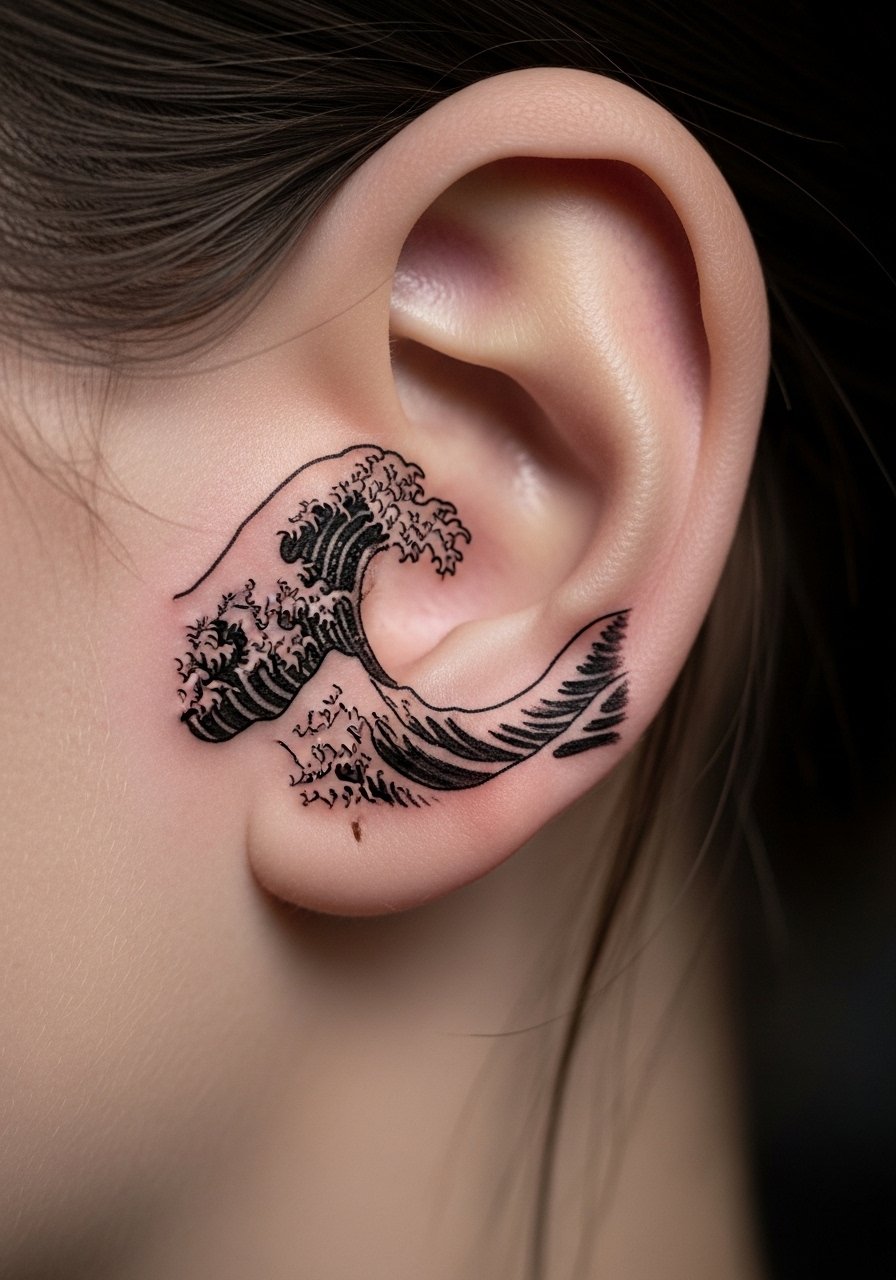
A sumi-e inspired brush-stroke wave uses strong calligraphic movement in a tiny package. It feels both artistic and minimal — like a micro ink painting pressed onto skin.
Style & Design Details
- Tattoo style: brush-stroke illustrative
- Recommended size: 0.6–1.2 inches
- Best placement(s): behind ear edge, near hairline
- Color vs. blackwork: solid black with varied stroke width
- Design elements: tapered brush stroke, feathered tail, negative-space highlight, micro splatter detail
- Longevity note: feathered edges may need touch-ups; solid black core holds
- Who it suits: artists, ink-lovers, fans of calligraphic aesthetics
Finding the Right Artist
Choose an artist versed in sumi-e or calligraphic tattooing who can mimic brush strokes precisely at small scale. Ask to see micro brush-stroke samples. Avoid artists who only replicate large brushwork.
Aftercare & Healing Tips
Feathered details benefit from gentle cleansing and a thin aftercare balm. Protect from sun and pick a touch-up if feathering softens after months.
- Tiny Folding Fan with Sakura Pattern (Mini Yukata Motif)
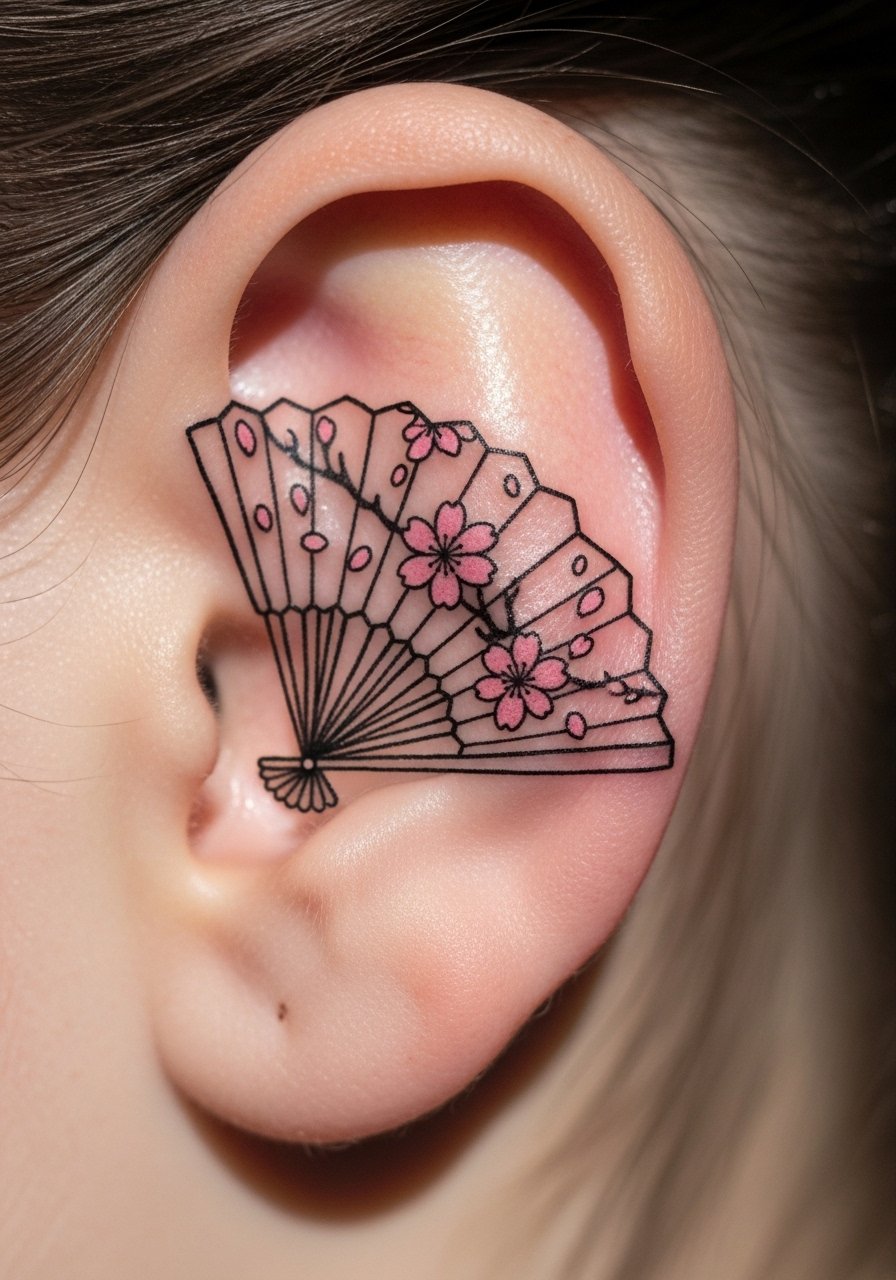
A tiny folding fan with a sakura pattern reads like a miniature textile motif — decorative and culturally resonant. It’s tiny but feels like a curated piece of a yukata pattern.
Style & Design Details
- Tattoo style: patterned minimal
- Recommended size: 0.8–1.3 inches
- Best placement(s): behind ear curve, near upper mastoid
- Color vs. blackwork: black lines with faint pink petal accents optional
- Design elements: ribbed fan lines, mini floral pattern, tiny handle, negative-space ribs
- Longevity note: patterned color needs SPF care; black pattern lines last longer
- Who it suits: pattern lovers, fans of traditional textiles, sentimental minimalists
Finding the Right Artist
Look for micro-pattern and textile-inspired portfolios. Ask about color saturation for tiny petal accents. An experienced fineline artist with pattern work is best.
Aftercare & Healing Tips
Avoid rubbing by hair; Saniderm helps during early days. Use gentle soap and Hustle Butter Deluxe or an unscented lotion through peeling. Schedule touch-ups for tiny color elements after healing.
You made it through 22 thoughtful, subtle takes on a small Japanese tattoo behind ear, from symbolic kanji and mini koi to tiny fans and brush-stroke waves. Pin the ones that call to you and bring a handful to your consult so your artist can adapt scale and flow to your ear’s unique curve. Which design feels most like you — the sakura sprig, the micro Hokusai wave, or a tiny kitsune? Share this with a friend who’s looking for the same quiet placement.
Honestly, having a small aftercare kit ready before your appointment makes the first week much easier. I keep a roll of Saniderm, a jar of Hustle Butter Deluxe, and an unscented lotion like Aveeno fragrance-free on hand for new ink — helps me relax knowing the healing basics are covered. Pin it, save it, and bring a few favorites to your consult — your artist will help make the tiny idea fit your ear perfectly.