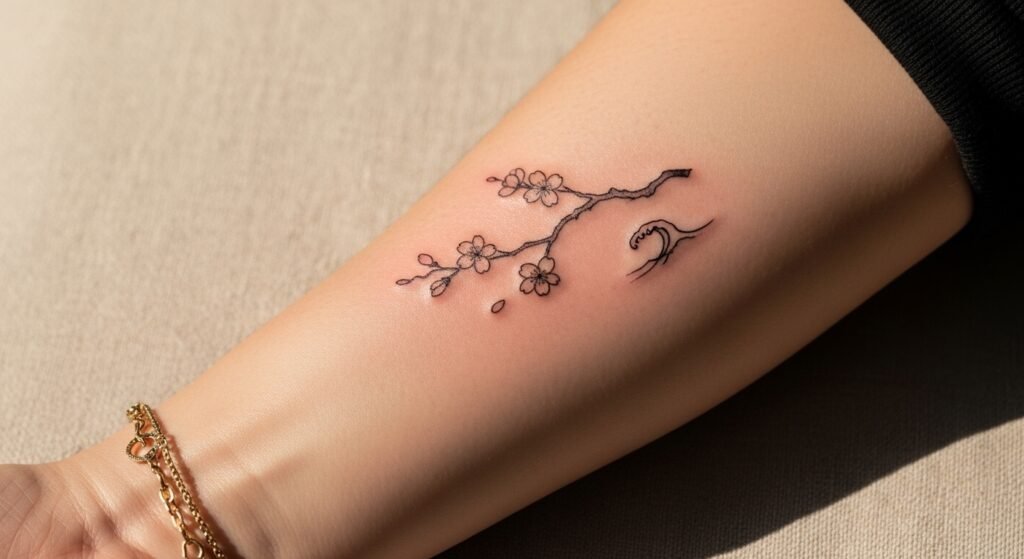
Sitting in a consultation, you scroll midnight boards hunting one perfect idea. That little spark — a single motif that feels quietly meaningful — is exactly what a small Japanese tattoo can give you. Whether you want a subtle sakura petal on your wrist, a tiny koi behind the ear, or a minimalist torii on the rib, these designs translate rich symbolism into compact, wearable art.
This list gathers 25 small Japanese tattoo ideas that are delicate, meaningful, and beautiful on nearly any placement. Each idea includes a photo prompt, a description of the design and why it works, a breakdown of styles and recommended sizes, practical artist-hunting tips, and realistic aftercare that keeps tiny details crisp. I also mention products I trust for prep and healing — like applying a numbing cream before long sessions (Zensa numbing cream) or protecting fresh ink with a second-skin wrap (Saniderm wound care bandage). Pin the ideas you love and bring them to your consultation — these designs are bite-sized but full of story.
1. Tiny Sakura Branch (Cherry Blossom)
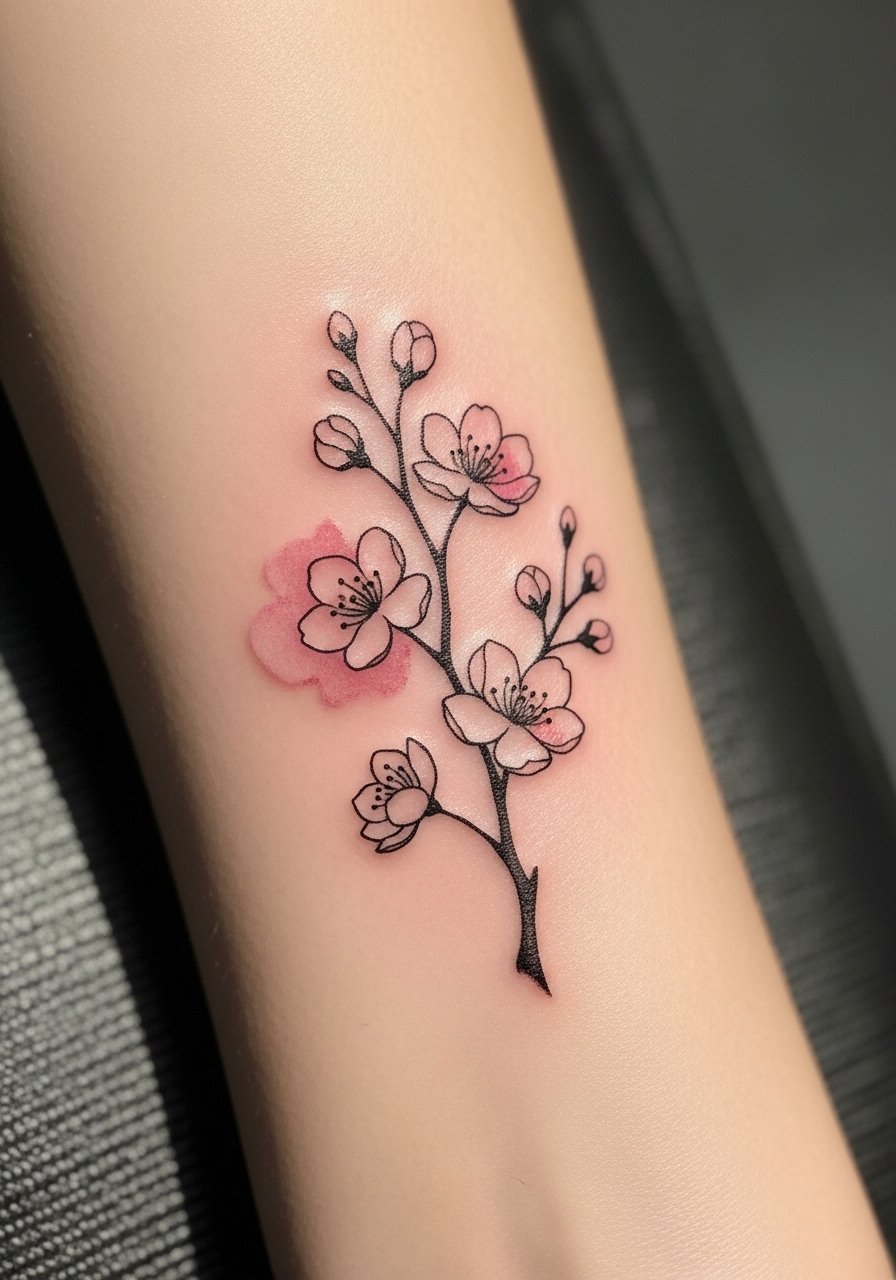
Soft, fleeting, and poetic, a small sakura branch captures impermanence and beauty. This version uses ultra-fine single-needle lines with a whisper of watercolor pink in the blossoms. It’s delicate on the skin and reads like a jewelry piece rather than bold ink. People who love minimalist, cottagecore, or sentimental pieces will adore this.
Style & Design Details
- Tattoo style: fine line with light watercolor accents
- Recommended size: 1.5–3 inches (wrist-friendly)
- Best placements: inner wrist, behind the ear, ankle — all show off small detail
- Color vs. blackwork: black single-needle outlines + soft pink wash for petals
- Design elements: single-needle stems, tiny five-petal blossoms, light wash, negative space, subtle dotwork stamens
- Longevity note: fine-line + watercolor fades faster; touch-ups may be needed at 3–5 years
- Who it suits: first-timers, romantics, pale-to-medium skin tones (will show well across tones)
Finding the Right Artist
Look for portfolios showing other single-needle floral work and healed photos. Ask about needle sizes and how they handle color washes on small pieces. Red flags: portfolios with only bold, thick-line work or no healed shots. For this subtle piece, choose an experienced artist rather than an apprentice. Search hashtags like #finelinetattoo or #sakuratattoo on Instagram.
Aftercare & Healing Tips
Leave a second-skin wrap like Saniderm for the recommended time, then wash gently with a fragrance-free soap such as Dr. Bronner's unscented castile. Switch to a light, unscented lotion (I use Lubriderm unscented) during peeling. Expect mild scabbing around fine lines; resist picking. Protect with SPF 50 once healed to slow fading.
2. Micro Koi (Minimalist Koi Fish)
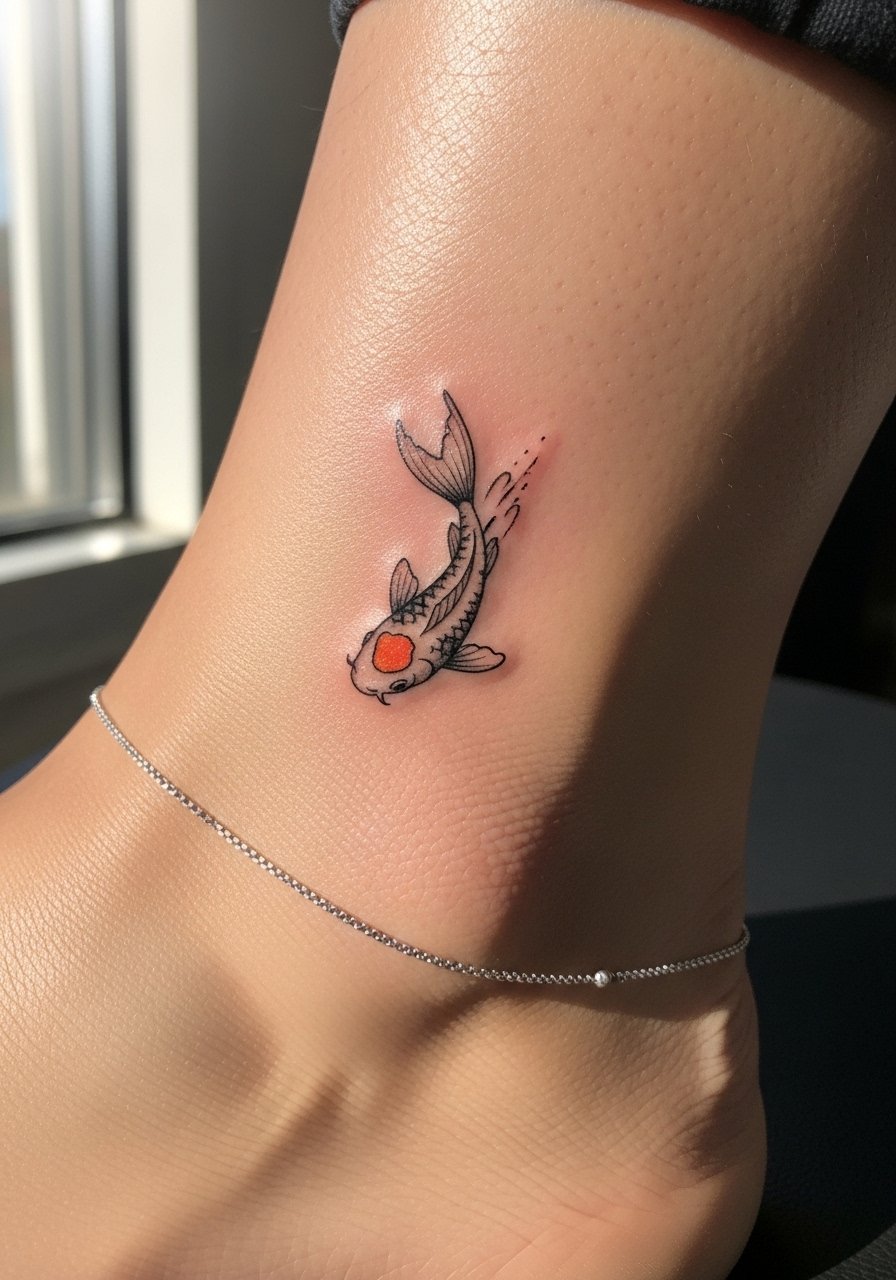
A micro koi condenses resilience and perseverance into a compact shape. This is a single-needle micro-realism koi with a small color pop, perfect when you want symbolism without scale. Its curved form fits ankles, behind-the-ear placements, and the side of the rib. Collectors also love these as matching pieces.
Style & Design Details
- Tattoo style: micro-realism / fine line with small color fill
- Recommended size: 1–2.5 inches
- Best placements: ankle, behind the ear, outer rib — follows natural curves
- Color vs. blackwork: small color accents (orange/red) to retain contrast
- Design elements: miniature scales, tiny eye detail, line flow, slight stipple shading, subtle tail sweep
- Longevity note: color on small solid areas can blur faster; keep saturated areas simple
- Who it suits: fans of Japanese symbolism, minimalists, first-timers wanting tiny meaningful ink
Finding the Right Artist
Seek artists with micro-realism examples and crisp tiny scale work. Ask about ink brands and needle groupings for micro detail. Avoid studios with inconsistent line thickness in small pieces. An experienced artist is best; micro details require steady hands. Explore portfolios on Tattoodo and Instagram tags like #microkoi.
Aftercare & Healing Tips
Small color blocks can scab slightly thicker; use gentle washing twice daily and thin layers of Hustle Butter Deluxe tattoo aftercare balm once peeling begins. Keep it out of direct sun; replace with an SPF stick (see later) after full healing. Touch-ups after 3–6 months are common for micro color saturation.
3. Tiny Tsuru Crane (Origami-Style Crane)
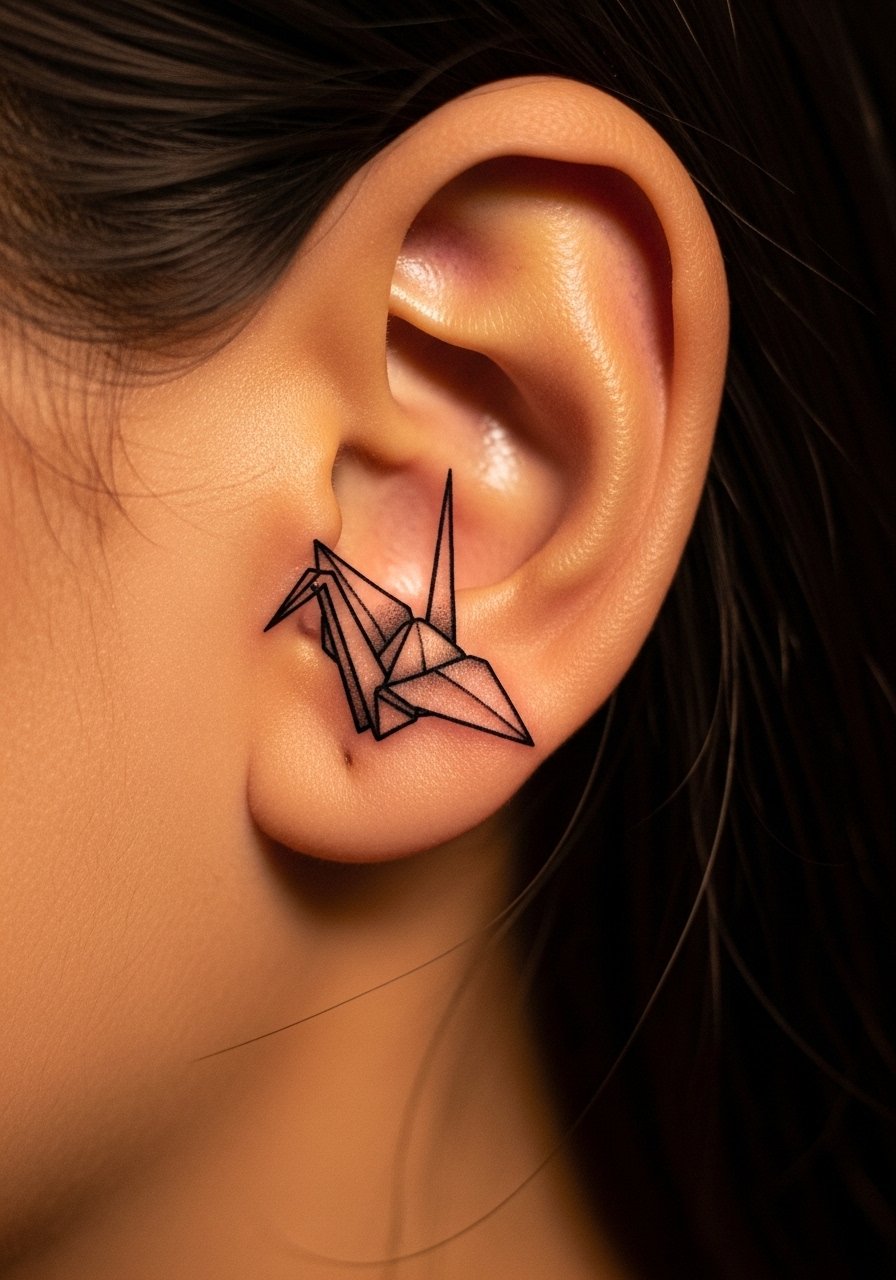
The tsuru (crane) symbolizes longevity and luck. This minimalist origami take uses crisp single-needle lines and negative space to suggest folded wings. It's quietly elegant and reads as a delicate emblem when tucked behind the ear or on the nape.
Style & Design Details
- Tattoo style: minimalist / single-needle blackwork
- Recommended size: 0.8–2 inches
- Best placements: behind the ear, nape, finger — discreet and symbolic
- Color vs. blackwork: blackwork recommended for longevity and clarity
- Design elements: geometric folds, sharp line terminations, negative-space planes, tiny dot accents, crisp edges
- Longevity note: black single-needle stays clearer longer than small color fills
- Who it suits: discreet wearers, travelers, those wanting a luck charm
Finding the Right Artist
Look for artists skilled in micro-geometric and single-needle work. Ask for healed close-ups and how they scale origami shapes without losing fold detail. Avoid artists who default to thick lines. Instagram tags: #microgeometrictattoo, #origamitattoo.
Aftercare & Healing Tips
Keep the area out of heavy friction (hair, collars) during healing. A tiny piece does well with Saniderm for 24–48 hours, then gentle soap and a thin layer of After Inked tattoo lotion to maintain suppleness. Expect minimal peeling; keep it moisturized and use SPF afterwards.
4. Mini Wave (Sumi-e Wave Accent)
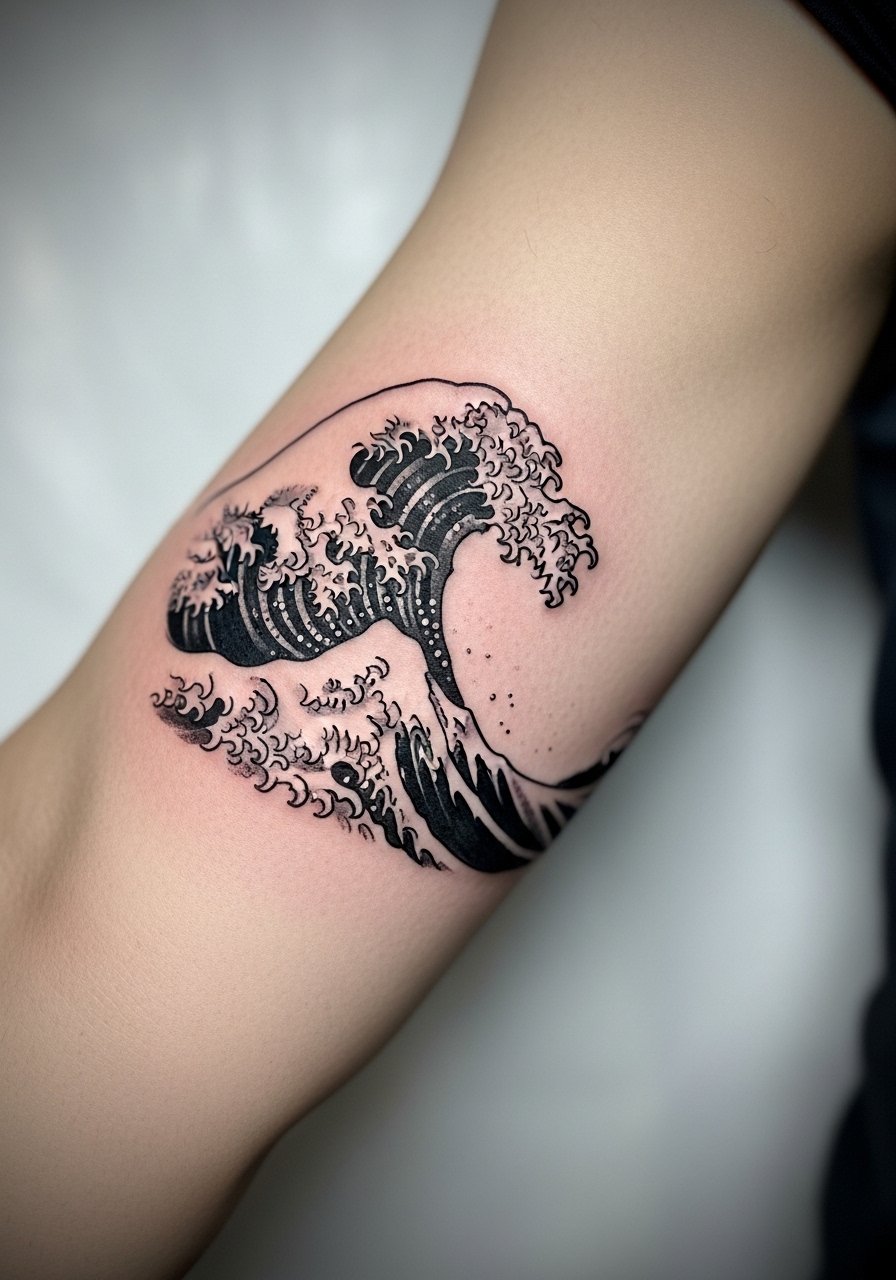
A tiny sumi-e wave channels movement and the classic Japanese wave aesthetic with a brushstroke feel. This is perfect if you want the energy of a larger ukiyo-e motif condensed into something wearable and timeless.
Style & Design Details
- Tattoo style: sumi-e / blackwash with brushstroke texture
- Recommended size: 1–3 inches
- Best placements: outer forearm, calf, side of the hand — shows motion well
- Color vs. blackwork: monochrome blackwash accentuates brush textures
- Design elements: gradient blackwash, brushstroke edges, negative splashes, stipple foam dots, flowing crest line
- Longevity note: blackwash can soften over time; SPF reduces contrast loss
- Who it suits: lovers of classic Japanese art, monochrome collectors
Finding the Right Artist
Find artists with sumi-e or brushwork tattoos in their books. Ask about dilution techniques for blackwash and how they achieve brush textures on small scales. Avoid artists who only do solid blackwork. Search #sumietattoo and #japanesewavestattoo.
Aftercare & Healing Tips
Brush-like shading can show patchiness if over-saturated during healing. Follow wrap instructions, wash with a fragrance-free soap like Dr. Bronner's unscented, and apply thin layers of an unscented lotion. Avoid soaking for two weeks.
5. Petite Bonsai Silhouette
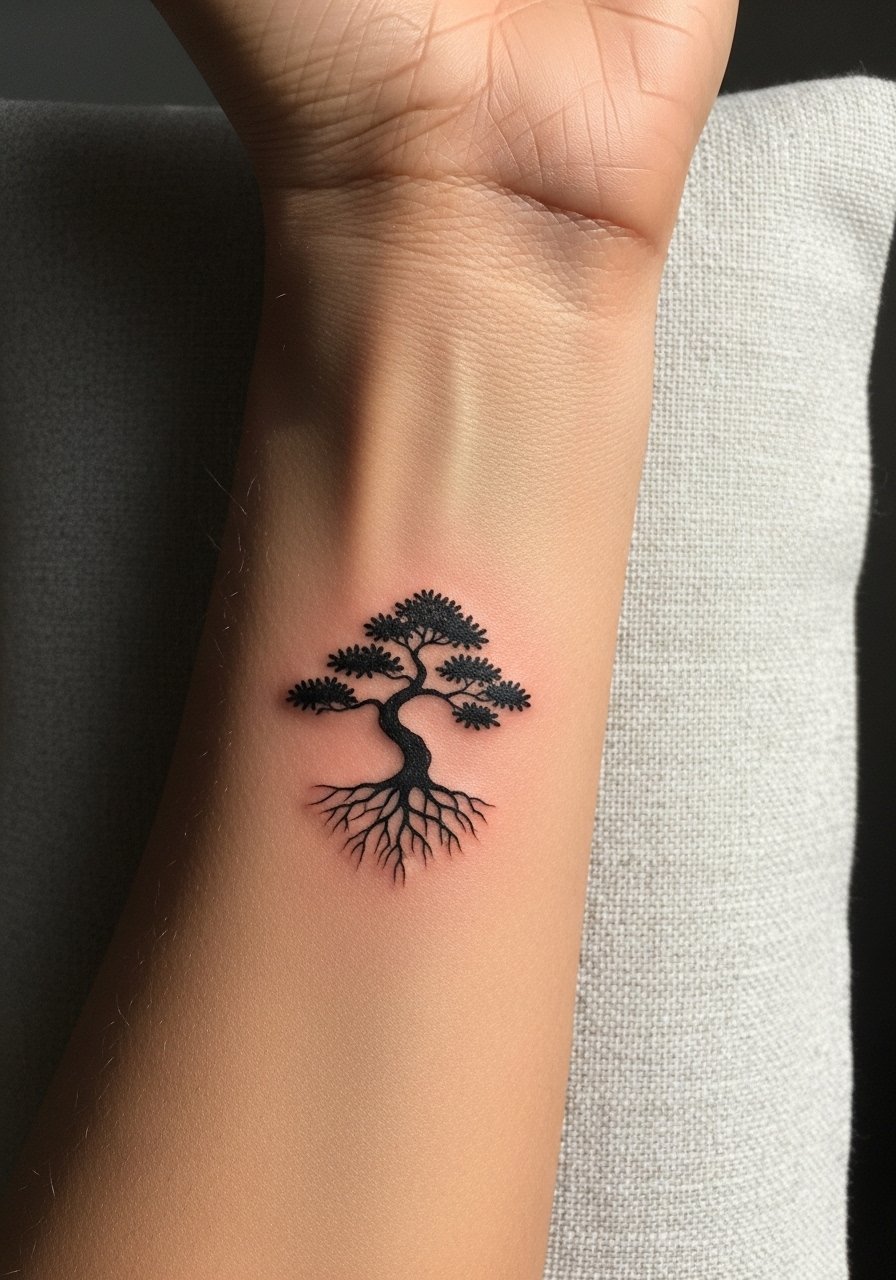
A bonsai silhouette represents balance, patience, and nature’s artistry. This tiny blackwork piece reads like a charm pendant on the skin and fits vertical placements especially well.
Style & Design Details
- Tattoo style: blackwork / micro silhouette
- Recommended size: 1–2.5 inches
- Best placements: inner wrist, side rib, ankle — vertical shapes complement natural lines
- Color vs. blackwork: pure black silhouette keeps it readable at small scale
- Design elements: mini canopy, tiny trunk, root hint, negative space, light stippling at base
- Longevity note: silhouettes age well if lines are bold enough; single-needle silhouettes can blur if too fine
- Who it suits: nature lovers, slow-lifers, minimalists
Finding the Right Artist
Choose an artist who demonstrates consistent small silhouettes and solid black fills without bleeding. Ask about line thickness recommendation for longevity. Avoid portfolios with blown-out small silhouettes. Use local shop visits and #bonsaitattoo searches.
Aftercare & Healing Tips
Solid black areas may flake; maintain thin layers of Hustle Butter Deluxe during peeling to keep the silhouette even. After healing, use a mineral SPF stick when the area is exposed.
6. Mini Hannya Mask (Subtle Dark Academia Vibe)
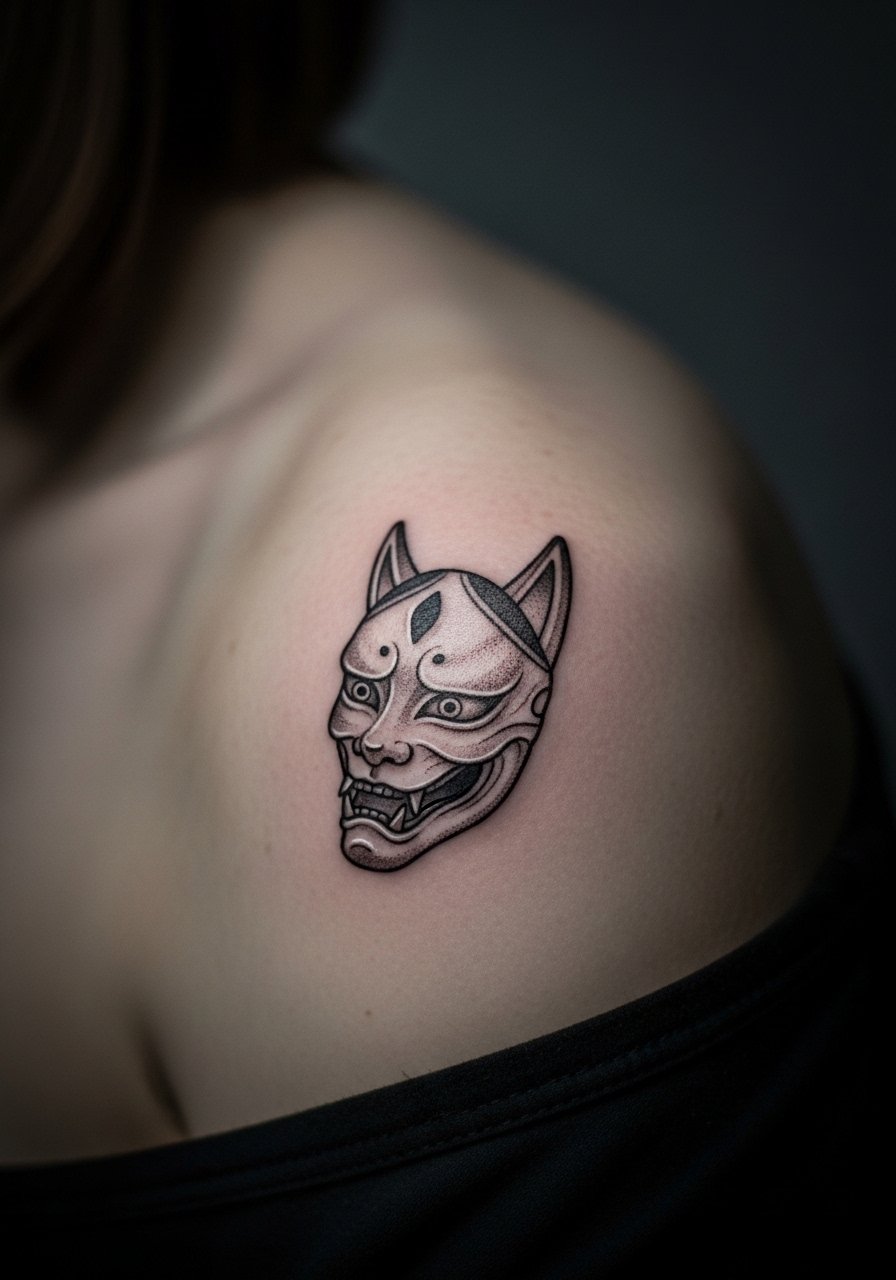
A tiny Hannya retains dramatic storytelling in a compact form. Reduced to essential lines and shading, it nods to folklore without overwhelming the placement. Great if you lean toward dark academia or neo-traditional touches.
Style & Design Details
- Tattoo style: neo-traditional micro / blackwork shading
- Recommended size: 1–2 inches
- Best placements: outer shoulder, upper arm, chest near clavicle — medium visibility
- Color vs. blackwork: monochrome for subtlety; a touch of red can emphasize eyes or mouth
- Design elements: small horns, narrowed eyes, minimal fangs, subtle greywash shading, tiny linework wrinkles
- Longevity note: micro shading may blur if too dense; choose an artist who balances contrast
- Who it suits: fans of folklore, alternative aesthetics, collectors of small narrative pieces
Finding the Right Artist
Look for artists with micro neo-traditional pieces and controlled greywash. Ask about needle groupings they’ll use for tiny shading and whether they recommend a slightly larger scale for longevity. Avoid artists who do only illustrative macro pieces.
Aftercare & Healing Tips
Use Saniderm initially to reduce friction on shoulder areas, then switch to unscented lotion. Avoid heavy backpacks or straps during healing. If color was added, schedule a touch-up at 3 months if necessary.
7. Little Maneki-Neko (Lucky Cat)
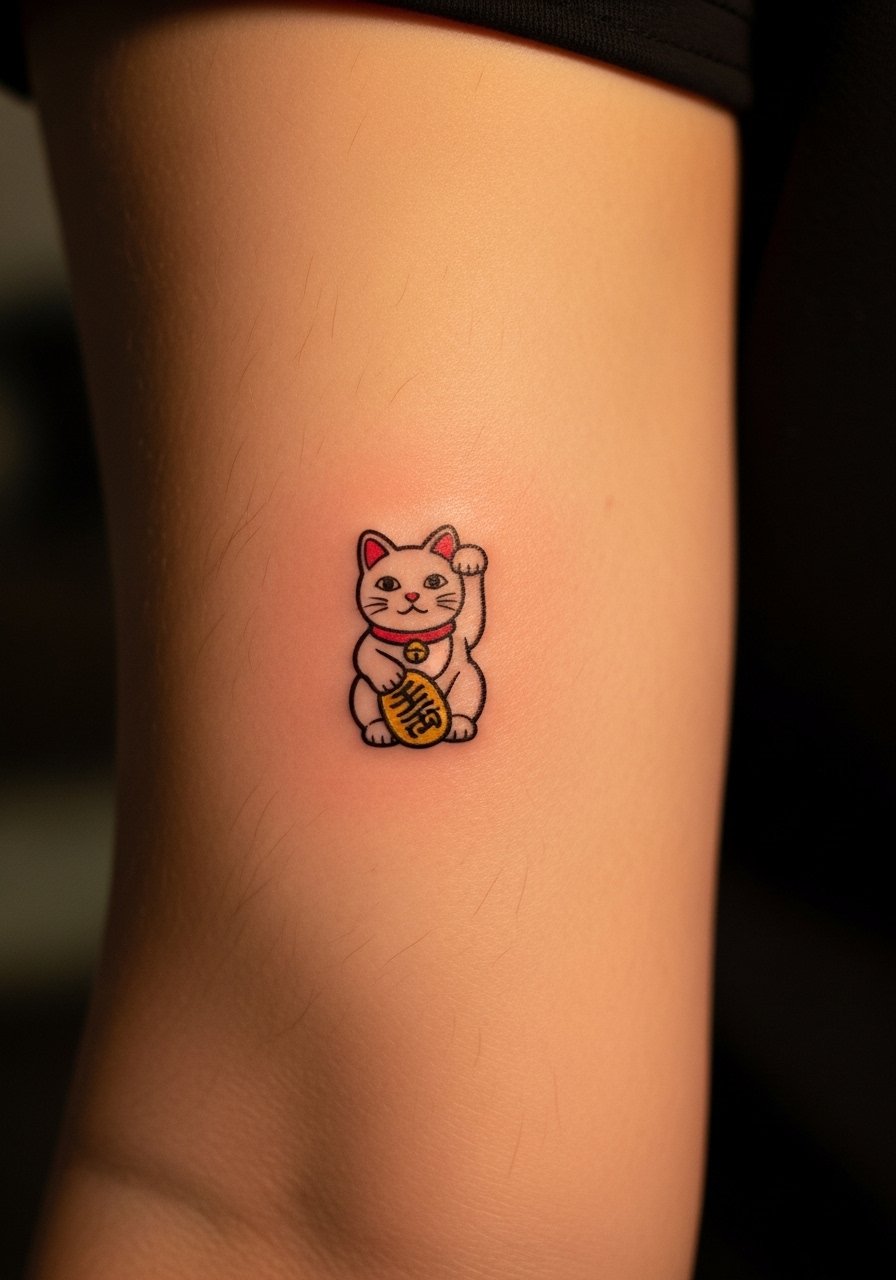
This tiny beckoning cat brings protection and luck in an adorable, compact design. Kept minimal, it reads as a playful charm rather than full traditional color. Perfect for people who want symbolism with a cute aesthetic.
Style & Design Details
- Tattoo style: illustrative micro / fine line with tiny color spots
- Recommended size: 1–1.8 inches
- Best placements: inner bicep, behind the ankle, wrist — places you can choose to show or hide
- Color vs. blackwork: small gold/red accents keep it lively while black outlines maintain clarity
- Design elements: raised paw, tiny bell, coin suggestion, minimal whiskers, dot shading
- Longevity note: colored micro details need simple shapes to avoid blurring
- Who it suits: playful personalities, those into kawaii or cultural symbols
Finding the Right Artist
Find artists used to micro illustrative work; ask for healed color close-ups. Avoid artists who lack small-color experience. Search #manekinekotattoo and local portfolios.
Aftercare & Healing Tips
Color heals best with careful sun avoidance. Use fragrance-free soap and a thin balm like Hustle Butter Deluxe while peeling. After a month, protect with an SPF 50 stick when exposed.
8. Mini Torii Gate (Spiritual Symbol)
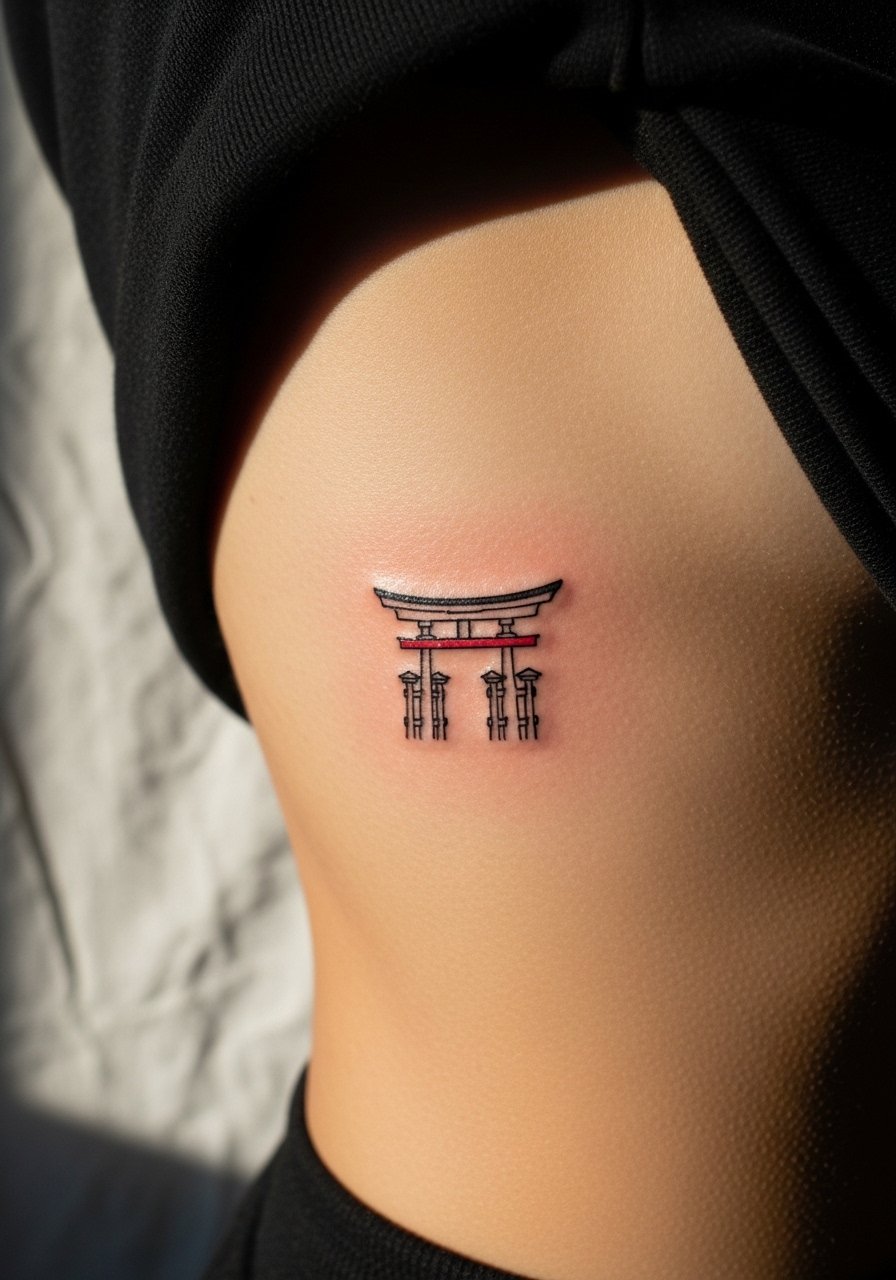
A miniature torii gate can mark personal thresholds or spiritual moments without large scale. Simplified lines and a single red crossbar make it a crisp emblem on ribs or sternum.
Style & Design Details
- Tattoo style: minimalist / linework
- Recommended size: 1–2 inches
- Best placements: side rib, sternum, inner forearm — symbolic placements near the heart or core
- Color vs. blackwork: tiny red accent adds cultural nod without overpowering lines
- Design elements: straight posts, crossbar, minimal perspective lines, tiny negative space base
- Longevity note: linework near ribs should avoid being too thin due to stretching with movement
- Who it suits: reflective personalities, spiritual seekers, minimalists
Finding the Right Artist
Choose artists with small architectural linework. Ask how they handle placement on moving skin (ribs) and if they recommend a slightly larger size for line longevity. Avoid rushed consultations.
Aftercare & Healing Tips
Rib pieces can sting longer and are prone to scabbing from clothing. Use a comfortable wrap and gentle washing; follow with fragrance-free lotion like After Inked. Wait 6–8 weeks before sun exposure.
9. Small Koi Wave Combo (Movement in a Mini)
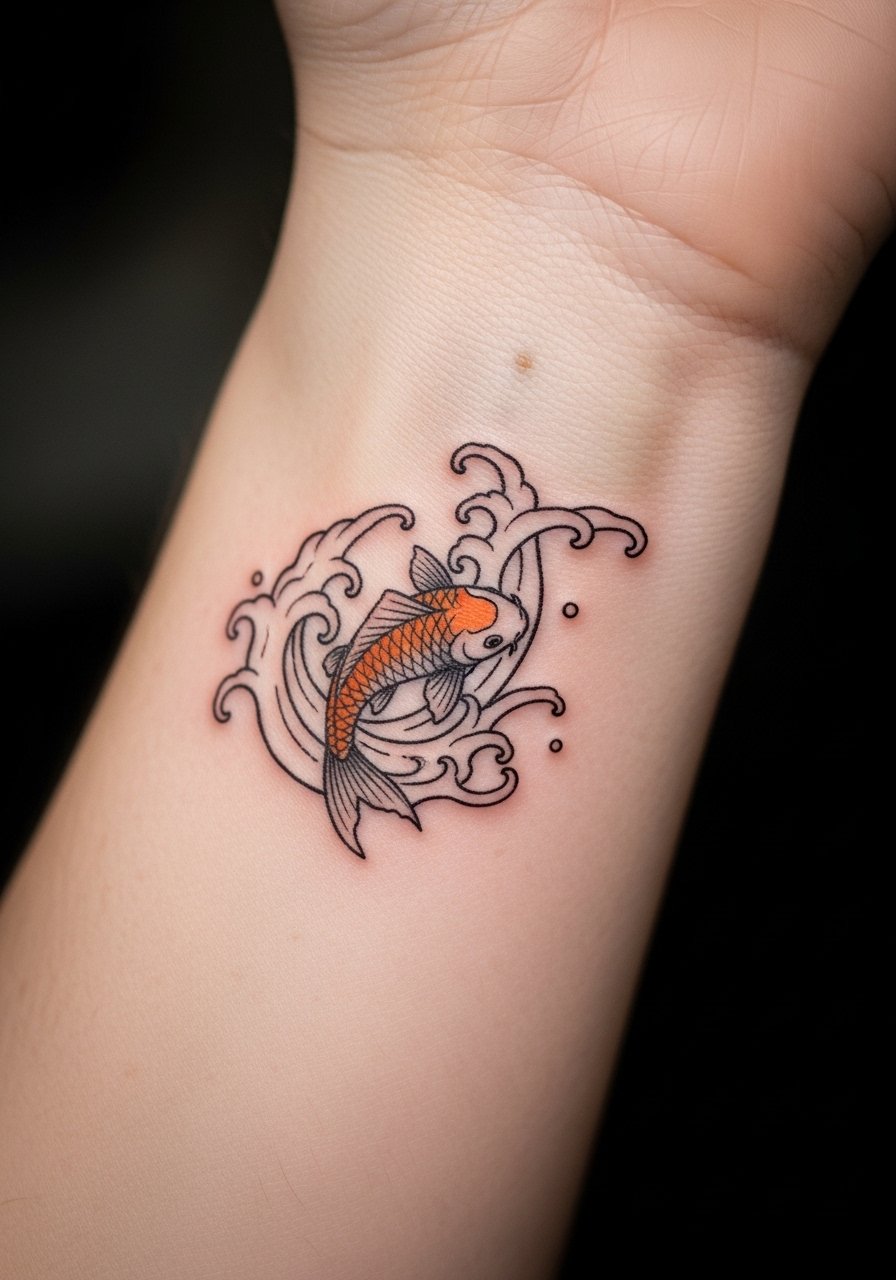
Pairing a tiny koi with a single wave gives narrative — struggle and movement compressed into a wearable icon. The composition curves around the wrist beautifully and feels energetic without being large.
Style & Design Details
- Tattoo style: illustrative micro with small color
- Recommended size: 1.5–3 inches
- Best placements: inner wrist, ankle, behind the ear — follows curves well
- Color vs. blackwork: black outlines + targeted color fills for the koi
- Design elements: flowing line wave, tiny koi scales, tail flick, water droplets, negative space foam
- Longevity note: wrists see friction and sunlight; expect faster fading than sheltered spots
- Who it suits: active wearers, symbolic collectors, aquatic lovers
Finding the Right Artist
Find artists who show clear micro fish and wave compositions. Ask for healed wrist photos and discuss how many sessions for color saturation. Avoid shops with no experience in micro aquatic pieces.
Aftercare & Healing Tips
Wrist healing needs gentle care—avoid bracelets for two weeks. Use a thin layer of Hustle Butter Deluxe after initial wrap removal, and apply SPF regularly after healing.
10. Mini Kitsune (Fox Mask Silhouette)
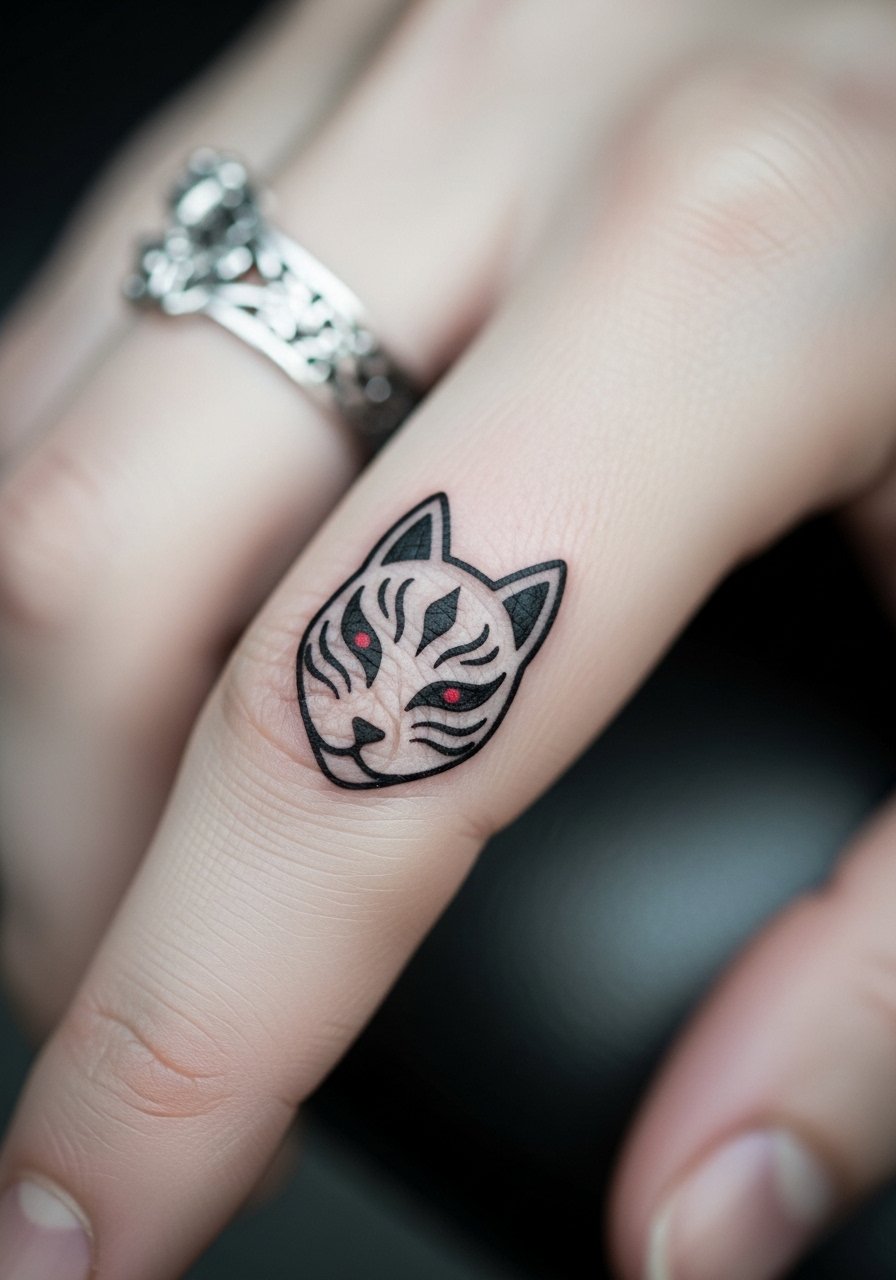
A kitsune motif can be playful, mystical, or protective depending on styling. This tiny mask silhouette with a red eye nods to folklore while keeping the piece discrete and modern.
Style & Design Details
- Tattoo style: micro blackwork with small color accent
- Recommended size: 0.5–1.2 inches (finger-friendly)
- Best placements: side of finger, behind ear, outer knuckle — small, intimate places
- Color vs. blackwork: mostly black for definition; tiny red accent for folklore nod
- Design elements: triangular ears, narrow eye slit, minimal line shadow, tiny dot accents
- Longevity note: finger tattoos fade faster and may need touch-ups every 1–3 years
- Who it suits: trend-forward, folklore fans, risk-takers happy to maintain touch-ups
Finding the Right Artist
Look for artists experienced in finger micro tattoos; ask about expected touch-up schedules and how they place ink on thin skin. An experienced hand-tattoo artist is preferable over a generalist.
Aftercare & Healing Tips
Fingers have high wear — avoid soaking, wear gloves for chores, and apply unscented lotion. Expect earlier touch-up needs; keep a small stash of Tattoo Goo aftercare products for maintenance.
11. Tiny Maple Leaf (Seasonal Japanese Aesthetic)
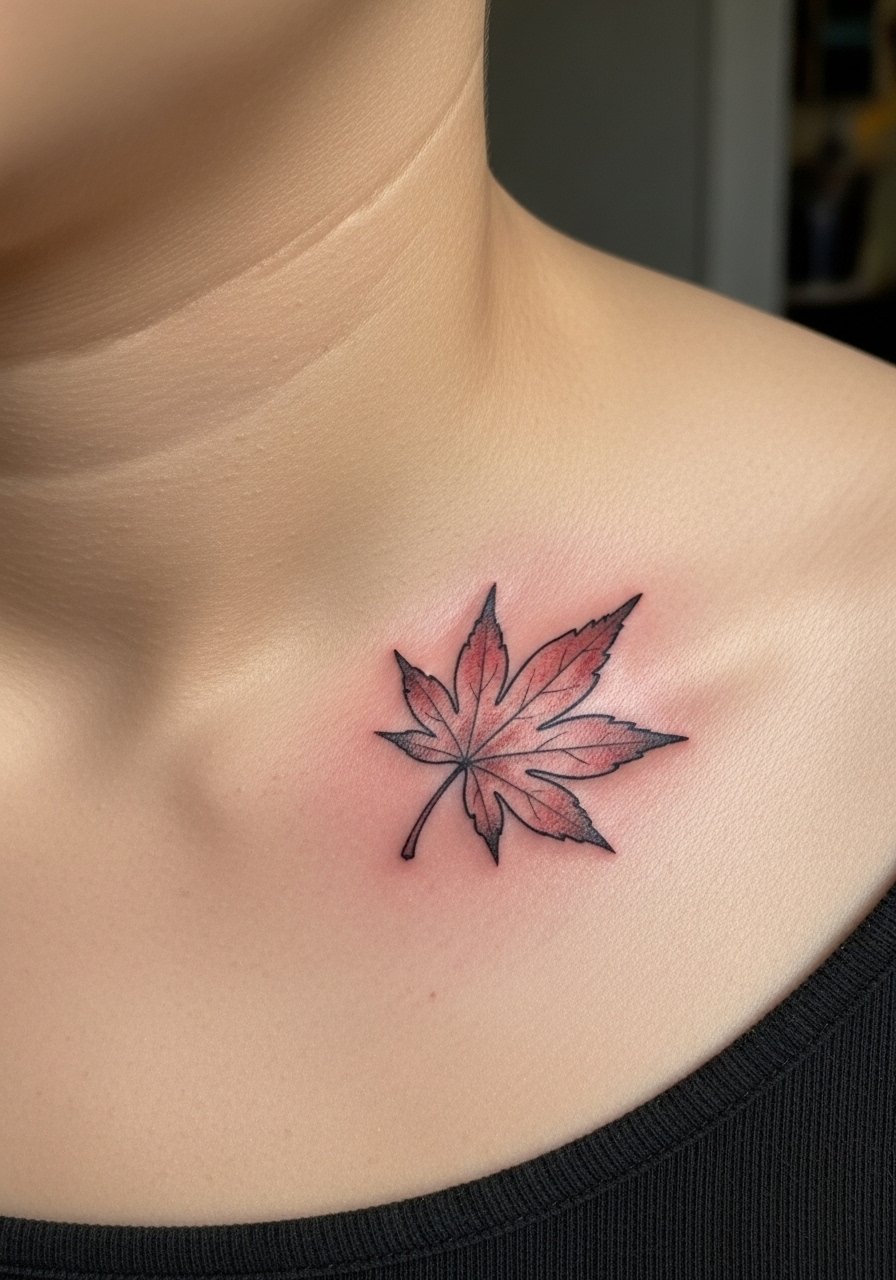
A single maple leaf captures seasonal change and quiet elegance. Reduced to a tidy outline with a small red wash, it reads as poetic and wearable on the collarbone or wrist.
Style & Design Details
- Tattoo style: fine line with light color wash
- Recommended size: 1–2 inches
- Best placements: collarbone, inner wrist, behind ankle — places that echo seasonal motion
- Color vs. blackwork: tiny red/orange wash for autumnal feel
- Design elements: serrated leaf edge, central vein, light watercolor wash, negative space highlights
- Longevity note: washes fade; keep it sheltered or use SPF regularly
- Who it suits: seasonal aesthetes, cottagecore fans, minimalists
Finding the Right Artist
Pick artists familiar with botanical micro pieces and watercolor techniques. Ask about how much saturation they’ll use and see healed photos. Avoid artists inexperienced with color washes at micro scale.
Aftercare & Healing Tips
Watercolor areas need careful moisturizing. Use a fragrance-free soap and a thin layer of Lubriderm unscented during peeling. After healed, protect with SPF.
12. Little Lotus Bloom (Symbol of Purity)
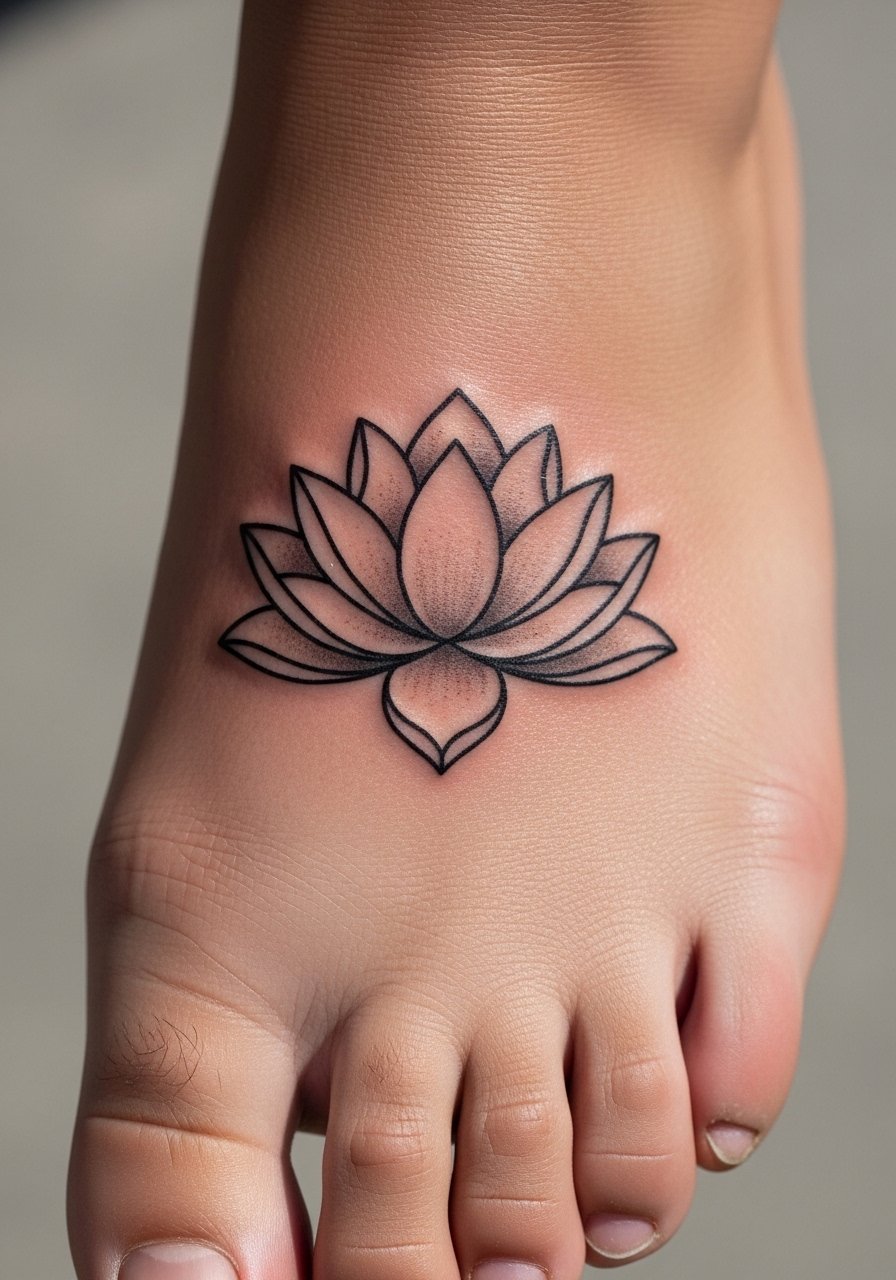
A lotus symbolizes growth and purity. A tiny line lotus on the foot or clavicle becomes a personal emblem of resilience. Its symmetry reads clean and meditative.
Style & Design Details
- Tattoo style: single-needle / minimalistic linework
- Recommended size: 1–2 inches
- Best placements: top of foot, clavicle, inner wrist — places that align with calm gestures
- Color vs. blackwork: black/greywash preferred for subtlety
- Design elements: layered petals, tiny stem, subtle greywash inside petals, negative inner lines
- Longevity note: thin lines may soften; balanced line weight helps longevity
- Who it suits: mindful folks, spiritual seekers, minimalists
Finding the Right Artist
Search for artists who do small sacred-floral tattoos. Ask about foot placement friction and recommend slightly bolder lines for the top of foot. An experienced artist is best for symmetry.
Aftercare & Healing Tips
Foot pieces endure shoe friction; consider open shoes for two weeks. Use Saniderm if recommended, but ensure dryness. Apply an unscented lotion during peeling and avoid long walks that rub the area.
13. Mini Katana Silhouette (Subtle Strength)
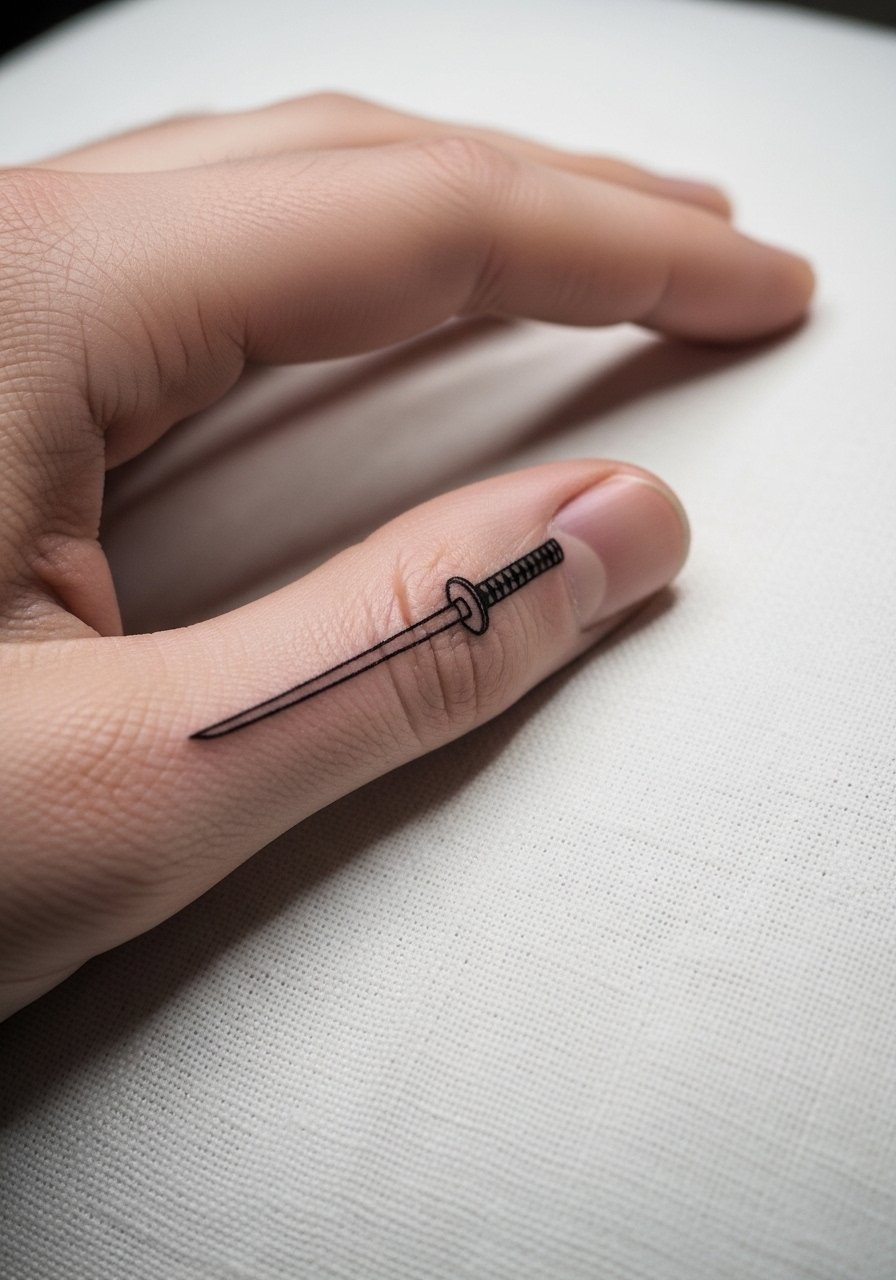
A tiny katana can stand for honor, protection, or personal resilience. Reduced to a clean silhouette, it’s a discreet, linear piece that complements slender placements.
Style & Design Details
- Tattoo style: minimalist linework
- Recommended size: 1–3 inches depending on placement
- Best placements: finger side, forearm, behind ear — follows natural lines
- Color vs. blackwork: blackwork for sharpness and longevity
- Design elements: blade line, tiny tsuba guard, subtle handle texture, negative space reflection
- Longevity note: linear silhouettes last if lines have a bit of weight; very thin lines can blur
- Who it suits: disciplined personalities, fans of martial aesthetics, minimalists
Finding the Right Artist
Seek artists showing small weapon silhouettes with consistent lines. Ask about recommended scale to avoid blowout. Avoid people who rush line tattoos.
Aftercare & Healing Tips
Linear pieces heal predictably; keep them moisturized and protected from friction. Use Saniderm as directed and then a fragrance-free lotion. Long-term, apply SPF on any exposed linear pieces.
14. Tiny Pagoda Outline
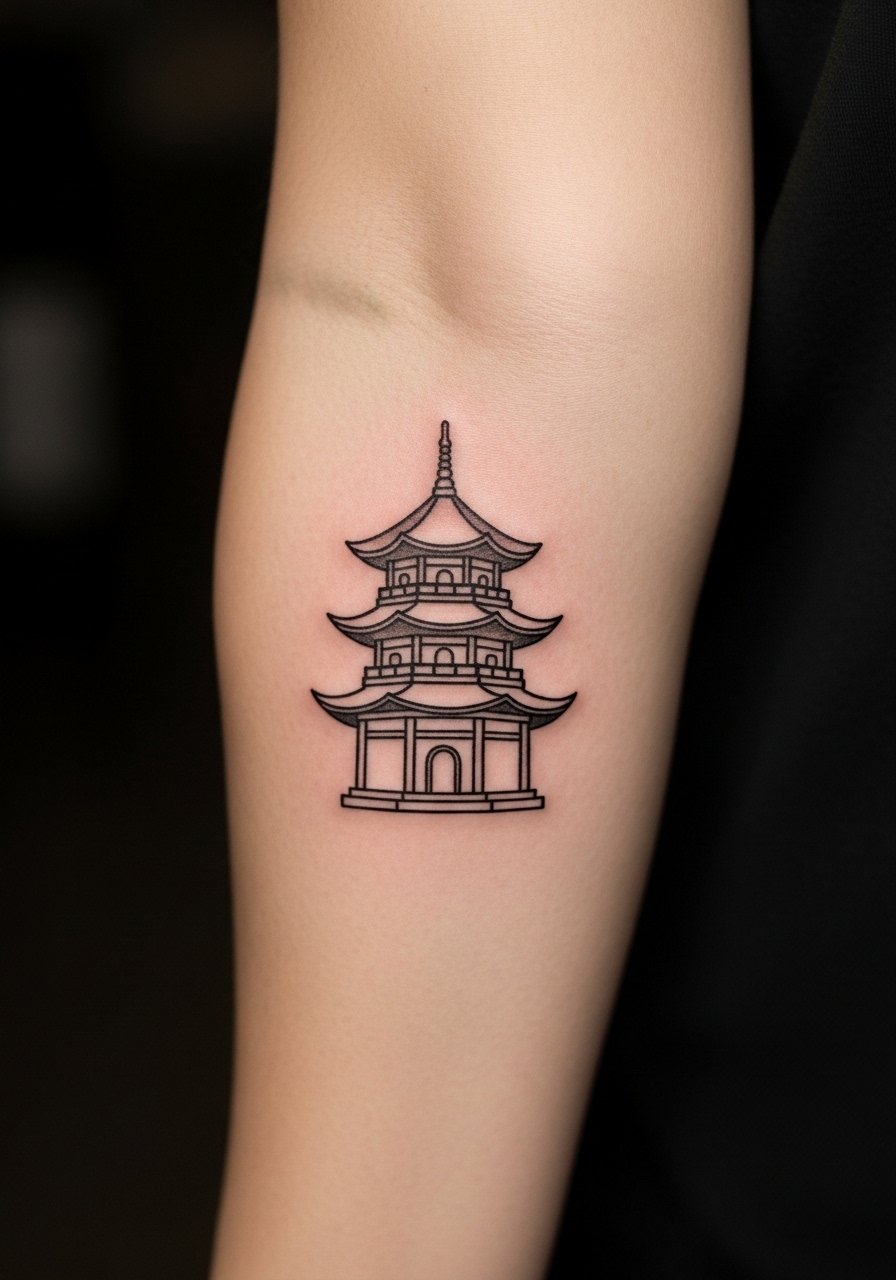
A pagoda holds quiet cultural weight and looks architectural even when shrunken down. Simple tiered roofs create recognizable shape while staying small and elegant.
Style & Design Details
- Tattoo style: architectural micro / linework
- Recommended size: 1–2.5 inches
- Best placements: inner forearm, sternum, side rib — vertical symmetry suits these spots
- Color vs. blackwork: blackwork with light grey under-eave shading
- Design elements: tiered rooflines, tiny lantern detail, minimal bracket lines, foundation base dotwork
- Longevity note: lines near torso may stretch slightly; balanced lineweight helps
- Who it suits: travelers, cultural appreciators, collectors
Finding the Right Artist
Look for healed architectural micro pieces. Ask about how they'll scale details like roof eaves. Avoid artists inexperienced in small architectural accuracy.
Aftercare & Healing Tips
Follow wrap instructions and wash twice daily. Use thin unscented lotion and avoid heavy necklaces or clothing rubbing against chest or ribs.
15. Petite Daruma Doll
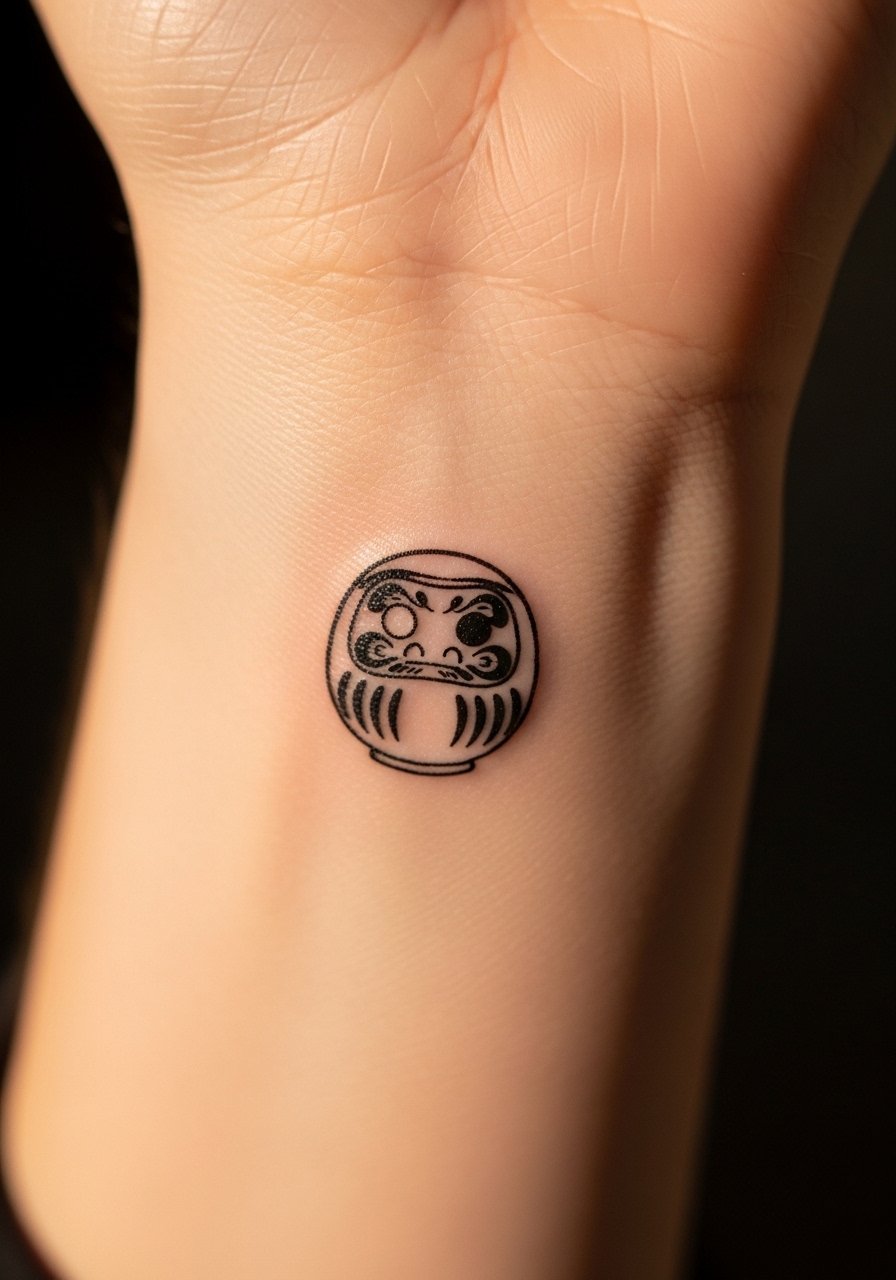
A Daruma symbolizes goal-setting and persistence. Ink one eye as a promise kept. A tiny Daruma is playful and ritualistic — a daily reminder on your wrist or ankle.
Style & Design Details
- Tattoo style: illustrative micro / fine line
- Recommended size: 0.8–1.5 inches
- Best placements: inner wrist, ankle, behind ear — easy to glance at for motivation
- Color vs. blackwork: simple red fill or single-eye black fill for symbolic act
- Design elements: round body, one filled eye, small facial marks, minimal dot shading
- Longevity note: simple shapes endure; avoid overly tiny fills that can blur
- Who it suits: goal-setters, ritual-minded folks, small-tattoo collectors
Finding the Right Artist
Find artists who do crisp circular iconography. Ask about fill density for the single-eye detail; choose slightly larger fill if you want longevity. Instagram searches like #daramutattoo can help.
Aftercare & Healing Tips
Wrist pieces need SPF after healing. During initial healing, keep it dry, wash gently, and use an unscented lotion like After Inked during the peeling phase.
16. Small Sumi Bamboo Stalk
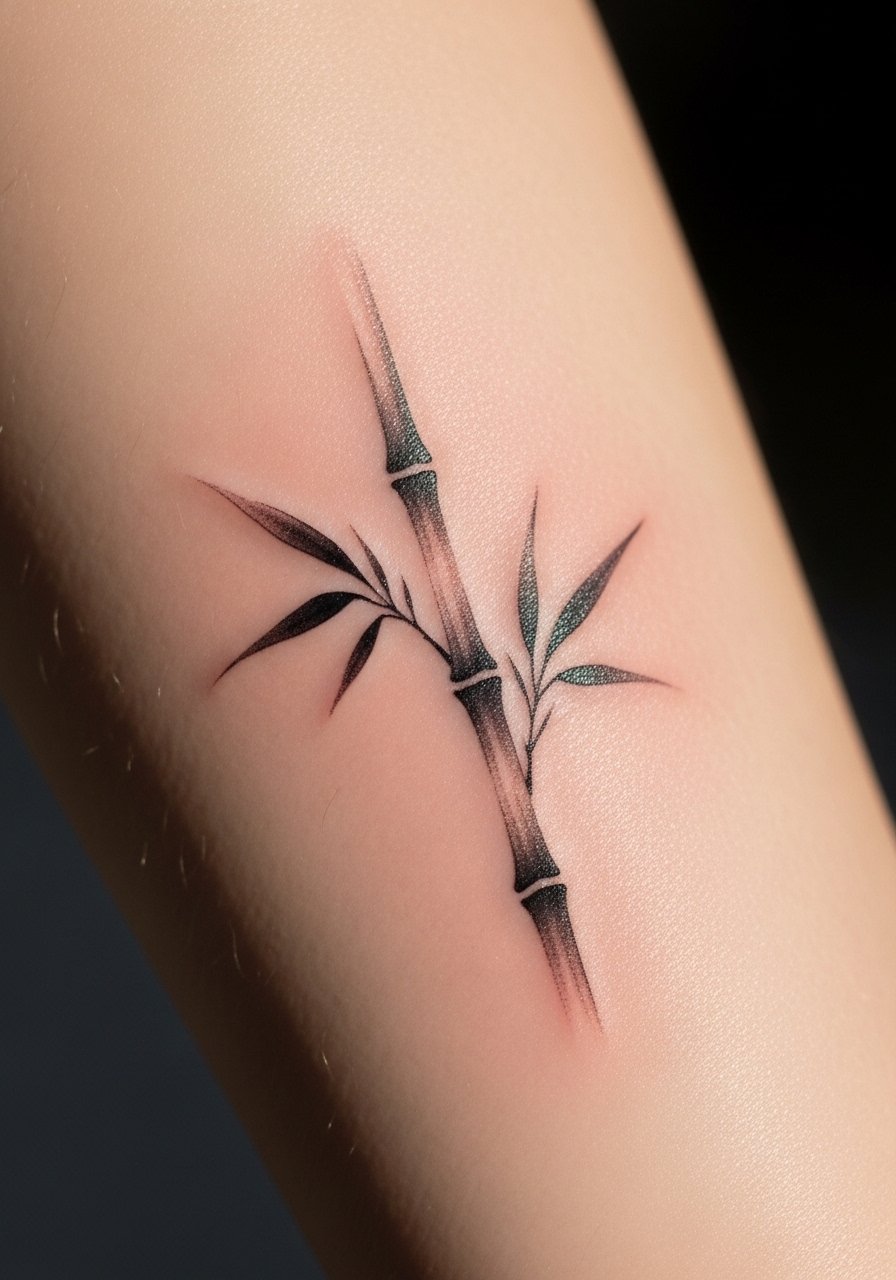
Bamboo stands for strength and flexibility. A vertical, brushy bamboo stalk uses sumi-e techniques to feel organic and free, perfect for longer narrow placements.
Style & Design Details
- Tattoo style: sumi-e / blackwash
- Recommended size: 2–3 inches (vertical)
- Best placements: outer forearm, side of calf, rib — vertical placements accentuate stalk shape
- Color vs. blackwork: monochrome for traditional look
- Design elements: segmented stalk, airy leaves, brushstroke tips, negative space nodes, subtle drip marks
- Longevity note: blackwash texture softens; SPF reduces loss of contrast
- Who it suits: lovers of contemplative imagery, sumi-e enthusiasts
Finding the Right Artist
Seek artists showing brushwork tattoos and sumi-e. Ask how they reproduce flowing brush marks on a small scale. Avoid artists who only do rigid linework.
Aftercare & Healing Tips
Keep motion light during the first week to avoid stretching lines; use gentle wash and Hustle Butter during flaking. After fully healed, protect with SPF.
17. Little Wave Band (Wrap-Around Wrist Wave)
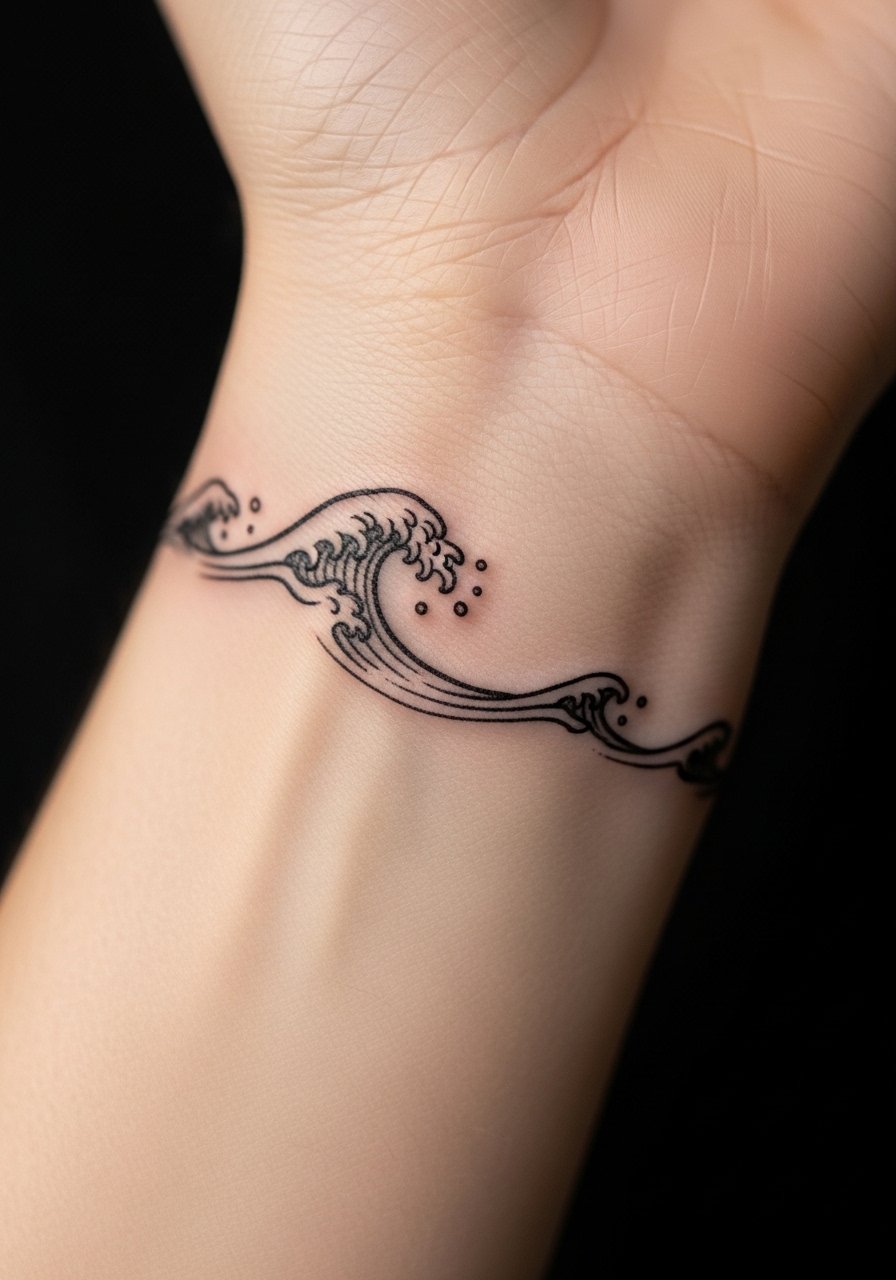
A thin wave band acts like a tattoo bracelet with Japanese sea motifs. It’s subtle and repeats modest movement around the wrist or ankle.
Style & Design Details
- Tattoo style: minimalist linework
- Recommended size: wrap to fit wrist circumference (thin band)
- Best placements: wrist, ankle, upper arm — acts as natural cuff
- Color vs. blackwork: blackwork keeps it timeless and bold enough to resist quick fading
- Design elements: repeating crest line, negative space foam, tiny droplets, thin connecting lines
- Longevity note: wrist bands see constant friction; choose slightly bolder lines for durability
- Who it suits: those who want jewelry-like tattoos, surfers, maritime lovers
Finding the Right Artist
Pick someone experienced in bands and circular placement to ensure even flow. Ask about size scaling and how they’ll wrap the composition. Avoid artists who don't practice even repetitive patterning.
Aftercare & Healing Tips
Bands can trap lint; keep clean and moisturized. Avoid bracelets and watches during healing. Use a thin layer of unscented lotion and protect with SPF after healing.
18. Tiny Moon with Kumo (Cloud)
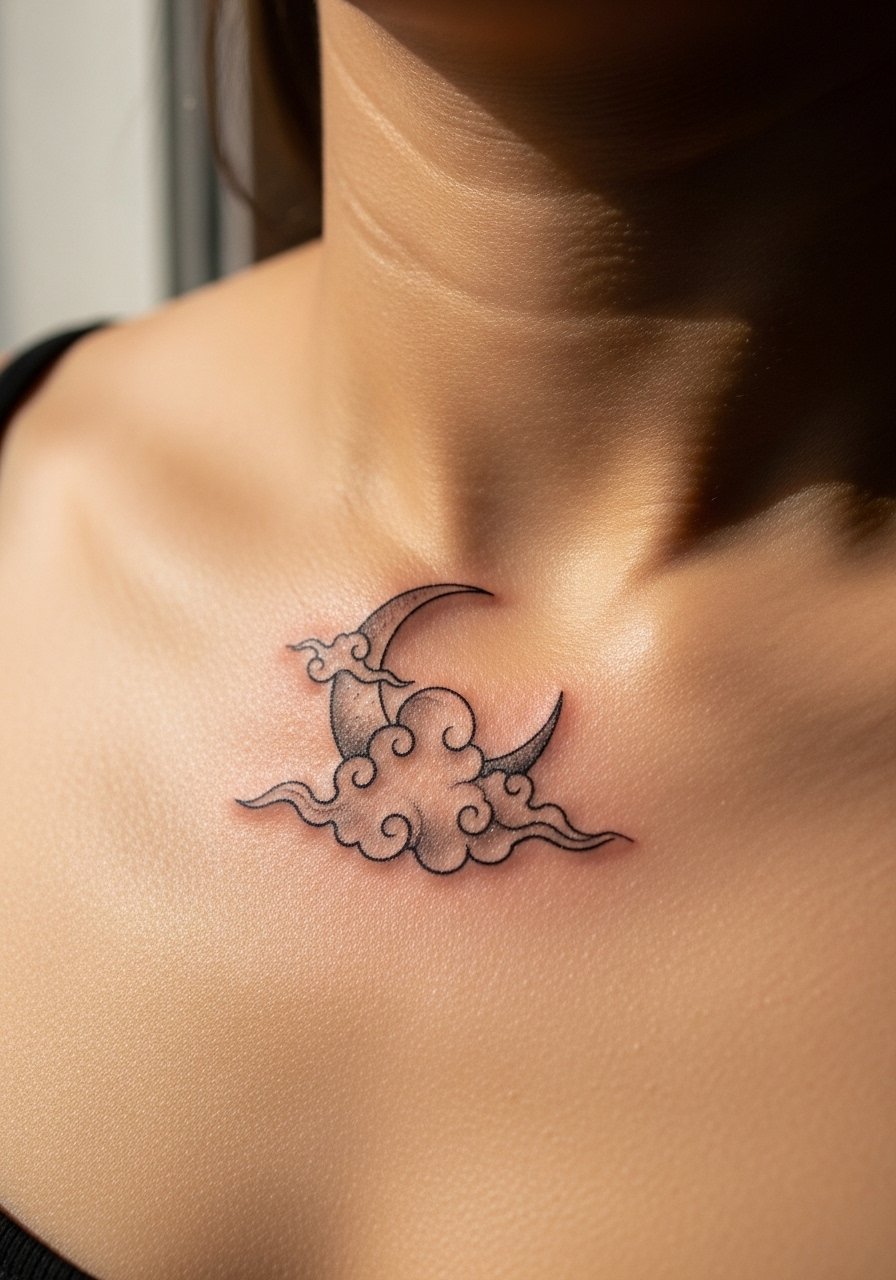
The moon paired with kumo (cloud) suggests calm nights and quiet reflection. This little celestial piece works well where you can glance at it and feel centered.
Style & Design Details
- Tattoo style: fine line + greywash
- Recommended size: 1–2 inches
- Best placements: clavicle, behind the ear, inner wrist — intimate, visible spots
- Color vs. blackwork: monochrome adds to ethereal quality
- Design elements: crescent curve, wispy clouds, tiny star dots, soft shading, negative highlights
- Longevity note: subtle greys can fade; SPF helps maintain tones
- Who it suits: night-dwellers, dreamy personalities, contemplatives
Finding the Right Artist
Seek artists who excel at micro celestial and greywash. Ask about how they prevent grey areas from pooling. Look to portfolios tagged #moonstattoo and #kumotattoo.
Aftercare & Healing Tips
Keep jewelry off clavicle area during healing. Use Saniderm briefly if your artist recommends, then a lotion like Lubriderm unscented during peeling. Apply SPF to preserve grey tones.
19. Petite Bamboo Crest (Circular Emblem)
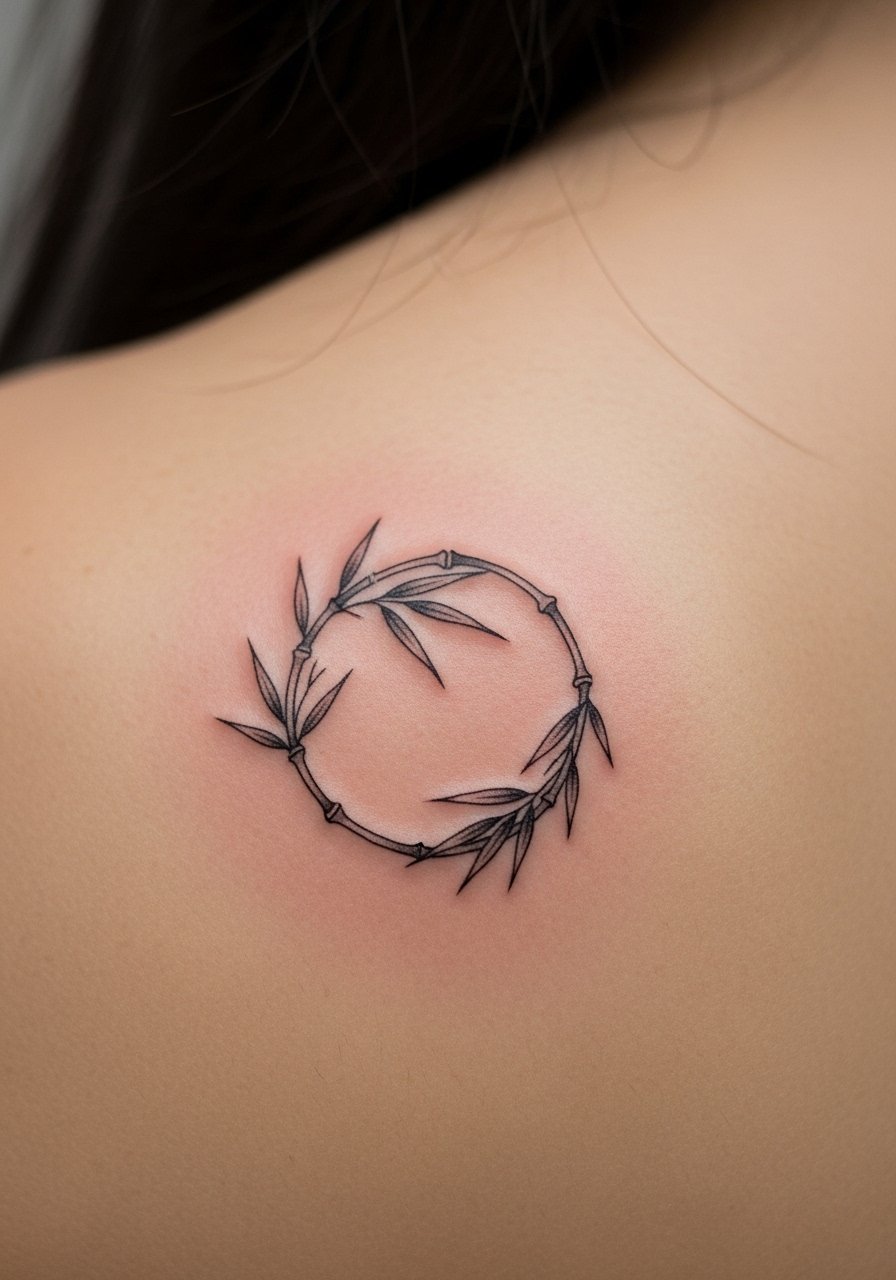
A tiny crest-style bamboo fits like a personal emblem. Circular framing makes it feel like a stamp or family crest — neat, symbolic, and subtle.
Style & Design Details
- Tattoo style: emblematic micro / fine line
- Recommended size: 1–1.8 inches
- Best placements: shoulder blade, nape, inner wrist — acts like a personal seal
- Color vs. blackwork: blackwork for strong silhouette; tiny green wash optional
- Design elements: ring border, bamboo leaves, small negative space, dotwork base, slight stem curvature
- Longevity note: emblems hold up well if ring lines have moderate weight
- Who it suits: those who like tidy personal symbols, collectors of small seals
Finding the Right Artist
Look for micro emblem work and healed rings. Ask about ring thickness to avoid future blurring. Avoid artists with uneven circular pieces.
Aftercare & Healing Tips
Back placements need gentle contact with clothing; avoid tight straps. Use fragrance-free soap and a thin layer of After Inked while peeling.
20. Tiny Scripted Kanji (One-Word)
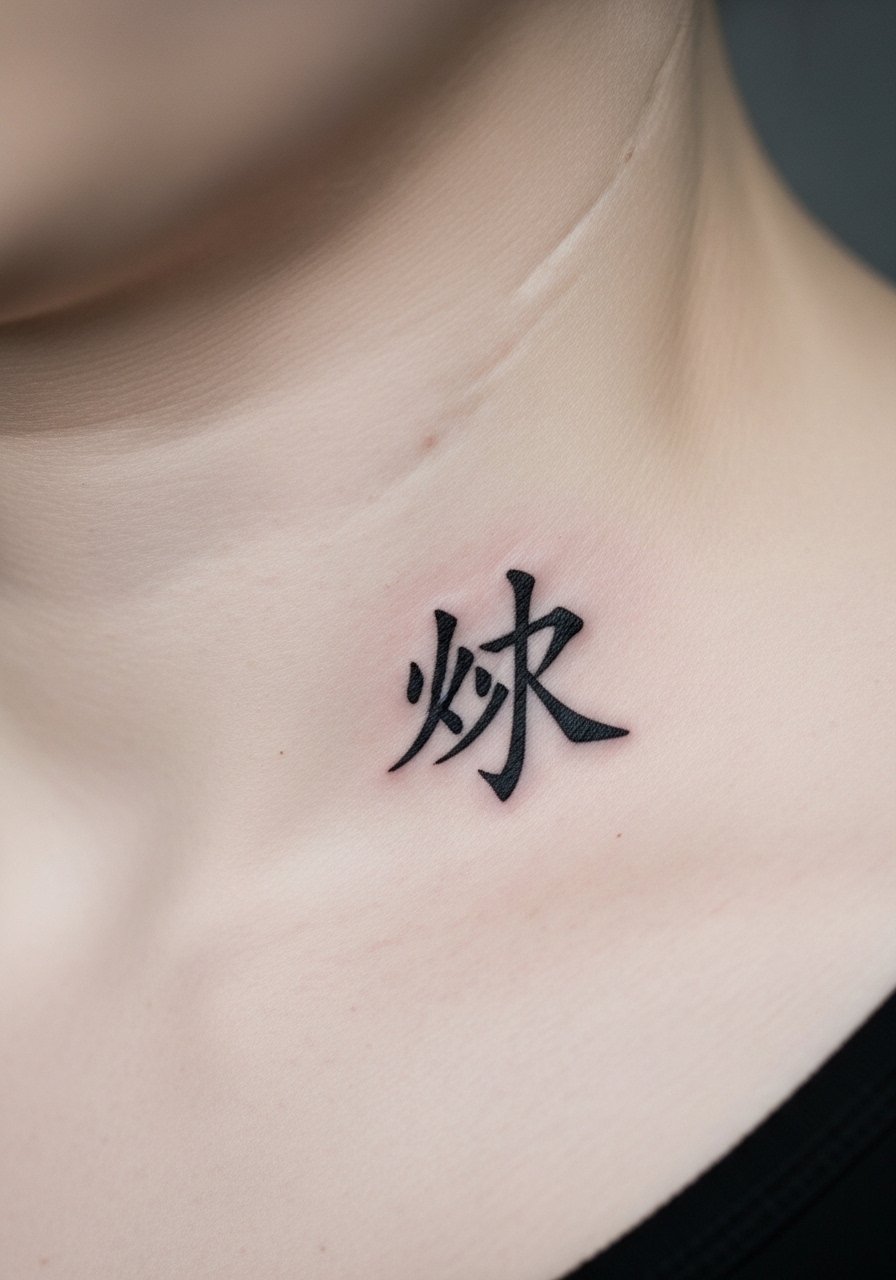
A single kanji can carry deep personal meaning when you choose one that reflects a value. Kept tiny, it becomes a private talisman on the collarbone or wrist.
Style & Design Details
- Tattoo style: fine line / script
- Recommended size: 0.6–1.5 inches
- Best placements: collarbone, inner wrist, behind ear — places you can glance at easily
- Color vs. blackwork: crisp black recommended for legibility
- Design elements: authentic kanji character, balanced stroke weight, slight calligraphic flair, negative space timing
- Longevity note: strokes must have enough thickness to avoid blotting over time
- Who it suits: language lovers, minimalists, those seeking a succinct meaning
Finding the Right Artist
Bring a vetted, accurate reference and request the artist to write the character freehand in their style. Confirm the meaning and stroke order with your artist. Avoid fast tattoos without proofing.
Aftercare & Healing Tips
Keep lines clean and moisturized. Use a thin layer of Hustle Butter Deluxe once scabbing begins. For sun-exposed placements, apply SPF after healing.
21. Small Origami Crane Neckline Accent
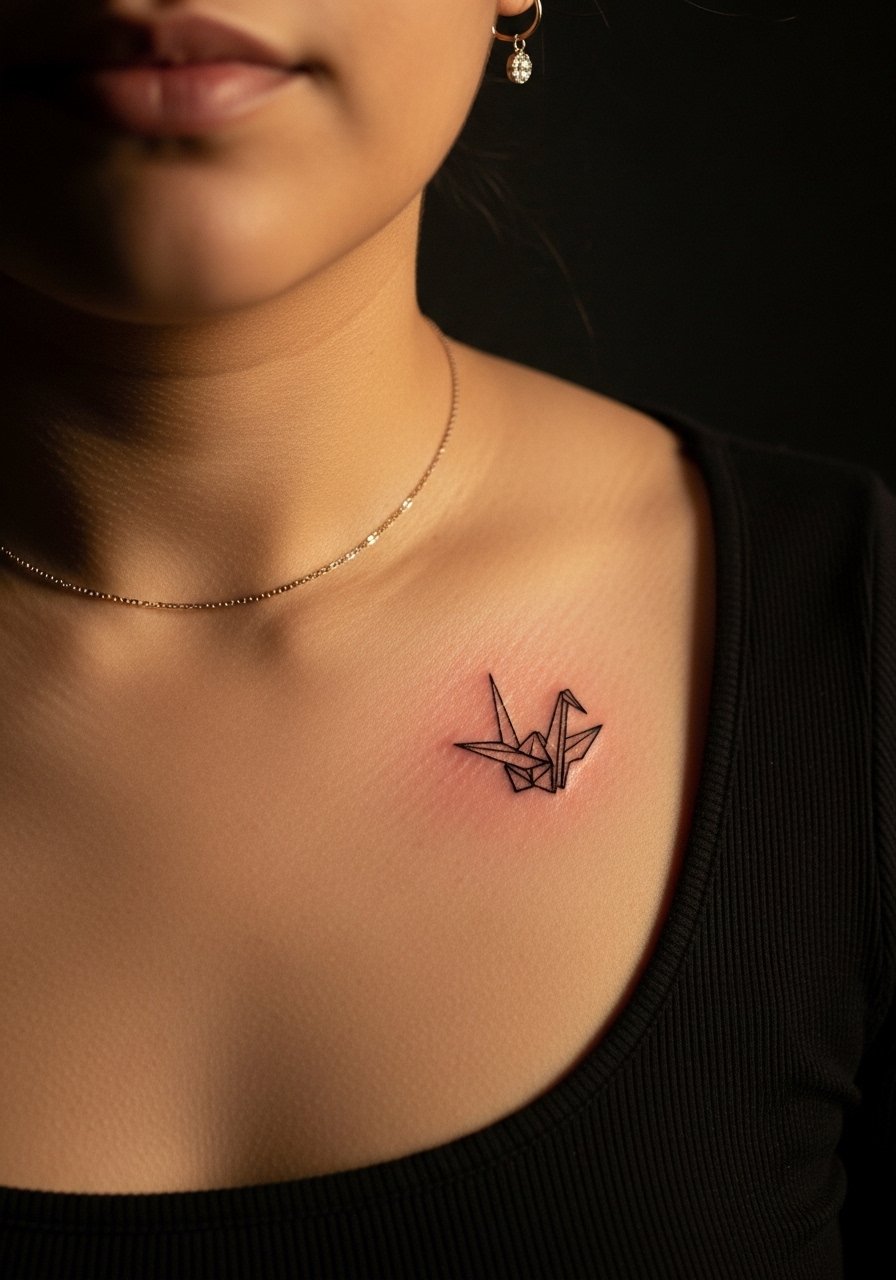
A delicate origami crane near the neckline is sweet and classy. It’s a wearable nod to tradition and lightweight enough to pair with neck jewelry.
Style & Design Details
- Tattoo style: minimalist / single-needle linework
- Recommended size: 1–1.5 inches
- Best placements: near clavicle, behind the ear, nape — shows under low necklines or hair
- Color vs. blackwork: blackwork preserves crisp folds over time
- Design elements: folded planes, tiny directional lines, negative space wings, small tail crease
- Longevity note: single-needle lines stay clear when slightly thicker than hairline
- Who it suits: understated romantics, travelers, sentimental gift recipients
Finding the Right Artist
Seek single-needle specialists. Ask for healed examples near the neck. Avoid artists who propose overly tiny hairline strokes for a visible area.
Aftercare & Healing Tips
Neck area can rub with clothing; keep garments soft and loose for two weeks. After wrap removal, apply unscented lotion and protect with SPF as needed.
22. Mini Daruma Eye Progression (Tiny Sequence)
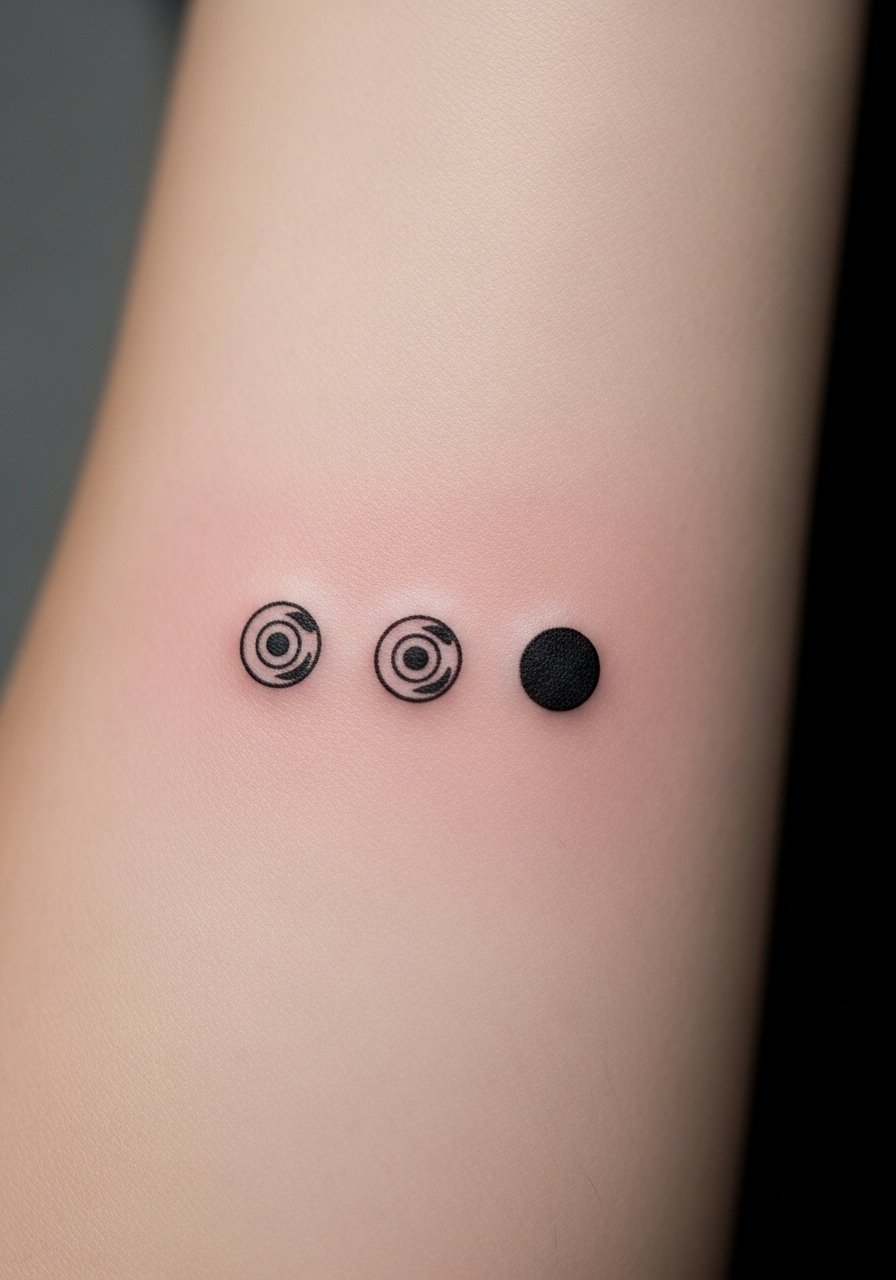
A tiny sequence showing a Daruma’s eye progression (left blank, then filled) marks steps toward goals. A small row of icons creates narrative in micro-format.
Style & Design Details
- Tattoo style: iconic micro / fine line
- Recommended size: 0.5–1.5 inches total row
- Best placements: inner forearm, ankle, behind the knee — linear zones work well
- Color vs. blackwork: blackwork or tiny red fill for emphasis
- Design elements: circular bodies, defined little eyes, minimal facial markers, tiny spacing
- Longevity note: simple shapes are maintainable; maintain line thickness for longevity
- Who it suits: goal-setters, planners, ritual-minded folks
Finding the Right Artist
Look for micro-series tattoos and ask how they’ll space multiple small icons evenly. A steady-handed artist with experience in pattern placement is ideal.
Aftercare & Healing Tips
Series heal like small dots; avoid heavy soaps and use thin balm layers during shedding. Protect with SPF long-term.
23. Petite Sumi Crane in Flight
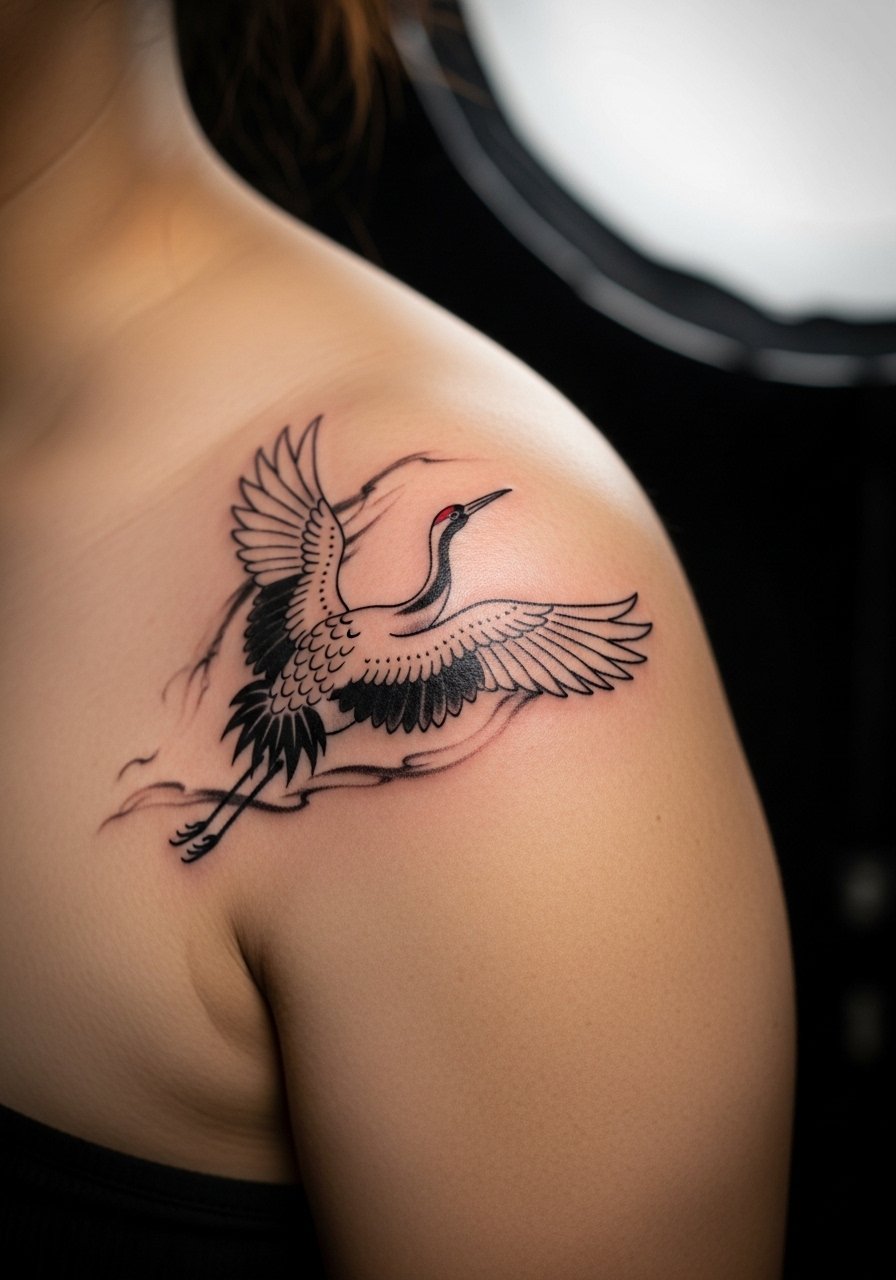
A sumi crane in flight feels expressive even at a small scale. Brushy wings and a trailing neck create movement that works well on rounded body parts.
Style & Design Details
- Tattoo style: sumi-e / blackwash
- Recommended size: 1.5–3 inches
- Best placements: shoulder, upper chest, back of neck — areas with curved planes
- Color vs. blackwork: monochrome enhances brush feel
- Design elements: sweeping wing strokes, flowing neck, negative wing highlights, slight splatter dots
- Longevity note: blackwash softens; heavier contrast at core helps preserve shape
- Who it suits: expressive, artistic personalities, sumi-e lovers
Finding the Right Artist
Look for sumi-e or brushstroke portfolios. Ask about how they control ink pooling. Avoid artists who lack experience with blackwash textures.
Aftercare & Healing Tips
Follow standard wrap instructions; keep clothing from rubbing the shoulder for a week. Use thin layers of unscented lotion during flaking and then SPF.
24. Mini Sakura Petal Trail
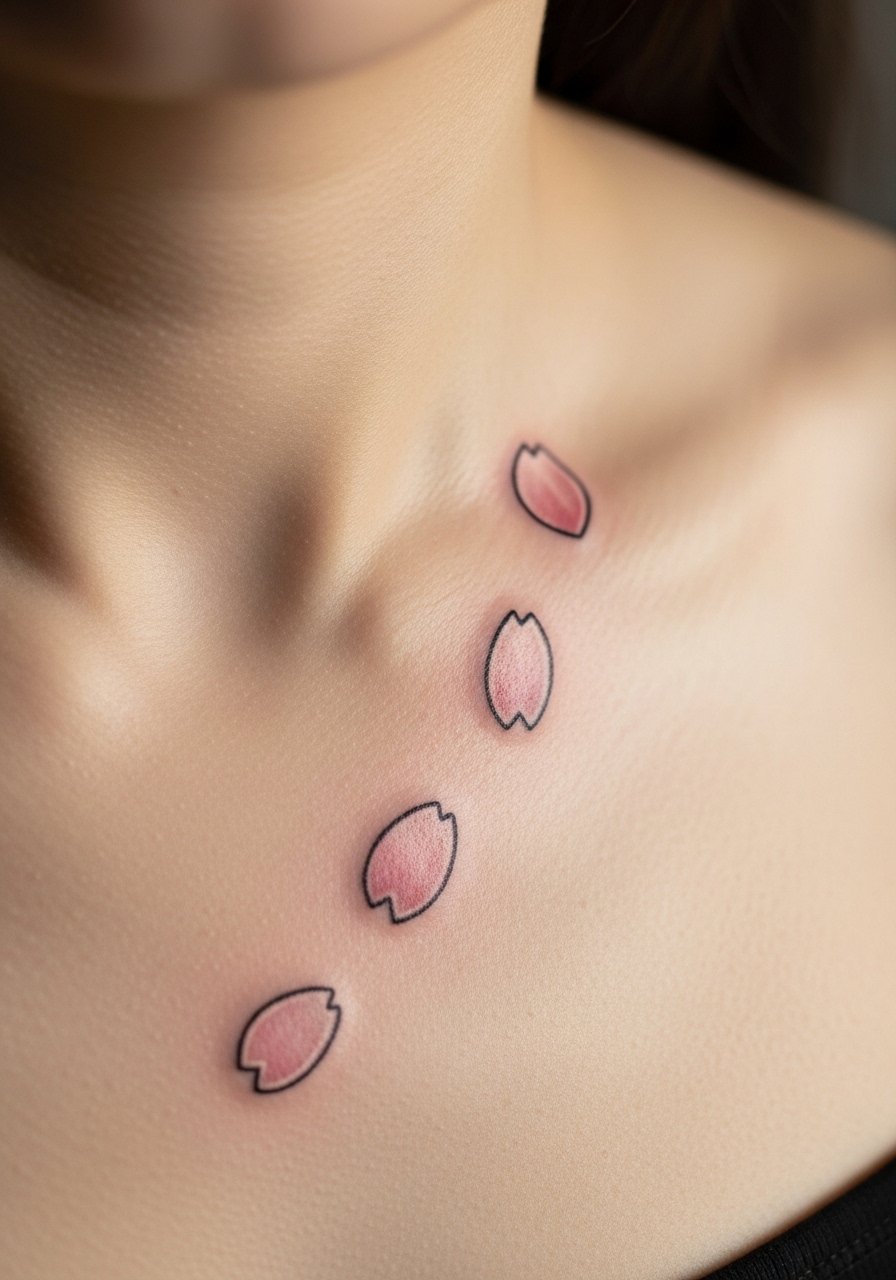
A scattering of petals reads like movement and memory. Small petal trails are perfect for collarbones, wrists, or along the spine in a delicate cascade.
Style & Design Details
- Tattoo style: fine line / micro watercolor hint
- Recommended size: each petal 0.3–0.8 inches across total 1–3 inch trail
- Best placements: collarbone, spine, inner forearm — follows natural lines elegantly
- Color vs. blackwork: tiny pink washes for petal warmth, black outlines optional
- Design elements: varied petal shapes, tiny vein lines, negative space, soft wash, gentle spacing
- Longevity note: repeated tiny color needs touch-ups; black outlines help maintain shape
- Who it suits: romantics, minimalists, lovers of delicate movement
Finding the Right Artist
Choose an artist with micro floral cascades and healed color photos. Ask about placement curvature over body contours. Avoid artists without subtle color wash experience.
Aftercare & Healing Tips
Collarbone areas need SPF protection after healing. During early stages, avoid necklaces and use a thin unscented lotion to reduce scabbing.
25. Tiny Inkbox-Style Test (Semi-Permanent Trial Before Commitment)
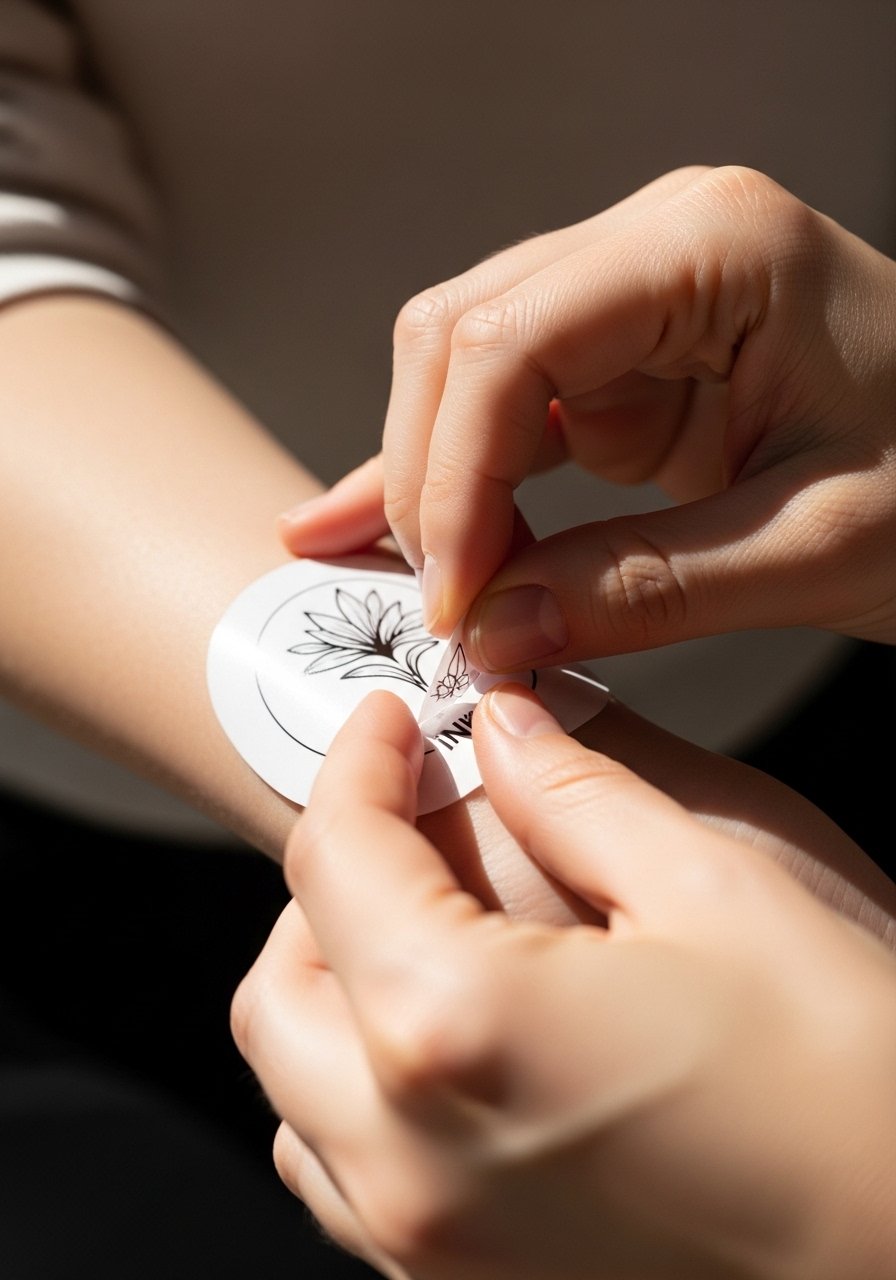
Before committing, try a semi-permanent test to confirm placement and scale. Temporary kits let you live with a small Japanese motif for weeks before booking a session.
Style & Design Details
- Tattoo style: temporary / trial to mimic chosen style (fine line, sumi-e, watercolor)
- Recommended size: match intended permanent size (1–3 inches)
- Best placements: anywhere you want to test visibility and clothing interaction
- Color vs. blackwork: test the palette you plan to commit to for realistic preview
- Design elements: use a stencil to preview composition, movement, and scale
- Longevity note: temporary tests fade in 1–2 weeks — great for decision-making
- Who it suits: uncertain buyers, first-timers, those testing careers/visibility
Finding the Right Artist / Prep
Use temporary testing with an Inkbox kit or stencil paper to show your artist exactly what you want. If you love it, bring the stencil to your appointment. Consider booking a consult and discussing needle options and scale.
Aftercare & Healing Tips
Temporary tests don’t require healing care, but they show how clothing and jewelry affect a placement. For the real tattoo, follow standard aftercare recommendations including initial Saniderm application and fragrance-free lotion.
These 25 small Japanese tattoo ideas give you a compact gallery of styles, symbols, and placements — from delicate sakura branches to micro koi and sumi-e brushwork. Save this guide, pin the images that call to you, and bring a few favorites to your consultation so your artist can tailor scale and line weight. Which idea resonates most — a tiny crane behind the ear, a wrist wave band, or a minuscule kanji near your collarbone? Tell me your top pick.
Honestly, having an aftercare plan before your appointment makes post-session life easier. My go-to recovery setup usually includes a second-skin wrap like Saniderm and a small tub of Hustle Butter Deluxe for the peeling phase. Happy planning — and don’t forget to pin this if you found a design you love.