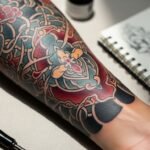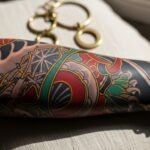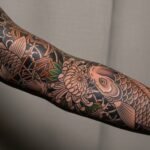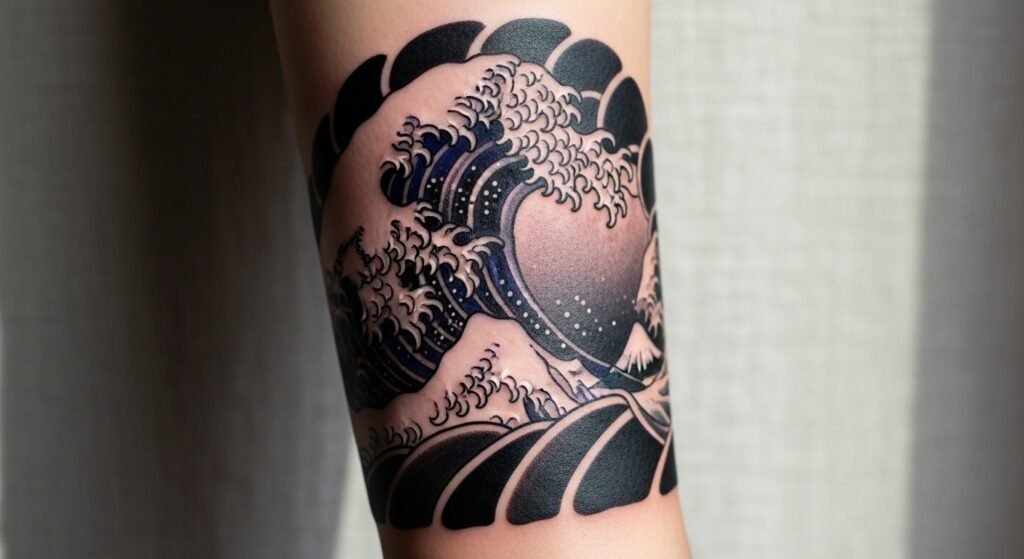
Sitting in a consultation, scrolling midnight inspo while your coffee cools, or finally booking the session you've dreamed about — the moment before you commit feels electric. If you keep landing on crashing crests and curling foam, this collection is for you. These 24 Japanese traditional wave tattoo ideas are dynamic, flowing, and made to catch motion on skin.
You’ll find designs that range from small fine-line wave accents to full-wrap sleeves, each with clear style notes, placement guidance, and real talk about pain and healing. I mention trusted products you can actually use — like Saniderm second skin bandage roll for the first few days and a numbing option such as Zensa numbing cream if you’re booking a sensitive placement. That way you walk into your appointment prepared and walk out informed about long-term care.
Flip through these wave motifs, note the styles you love (fine line, blackwork, neo-traditional, illustrative), and save the ones you want to show your artist. Each idea includes artist guidance and realistic aftercare tips so your new Japanese traditional wave tattoo looks vibrant for years.
- Delicate Single-Crest Wrist Wave
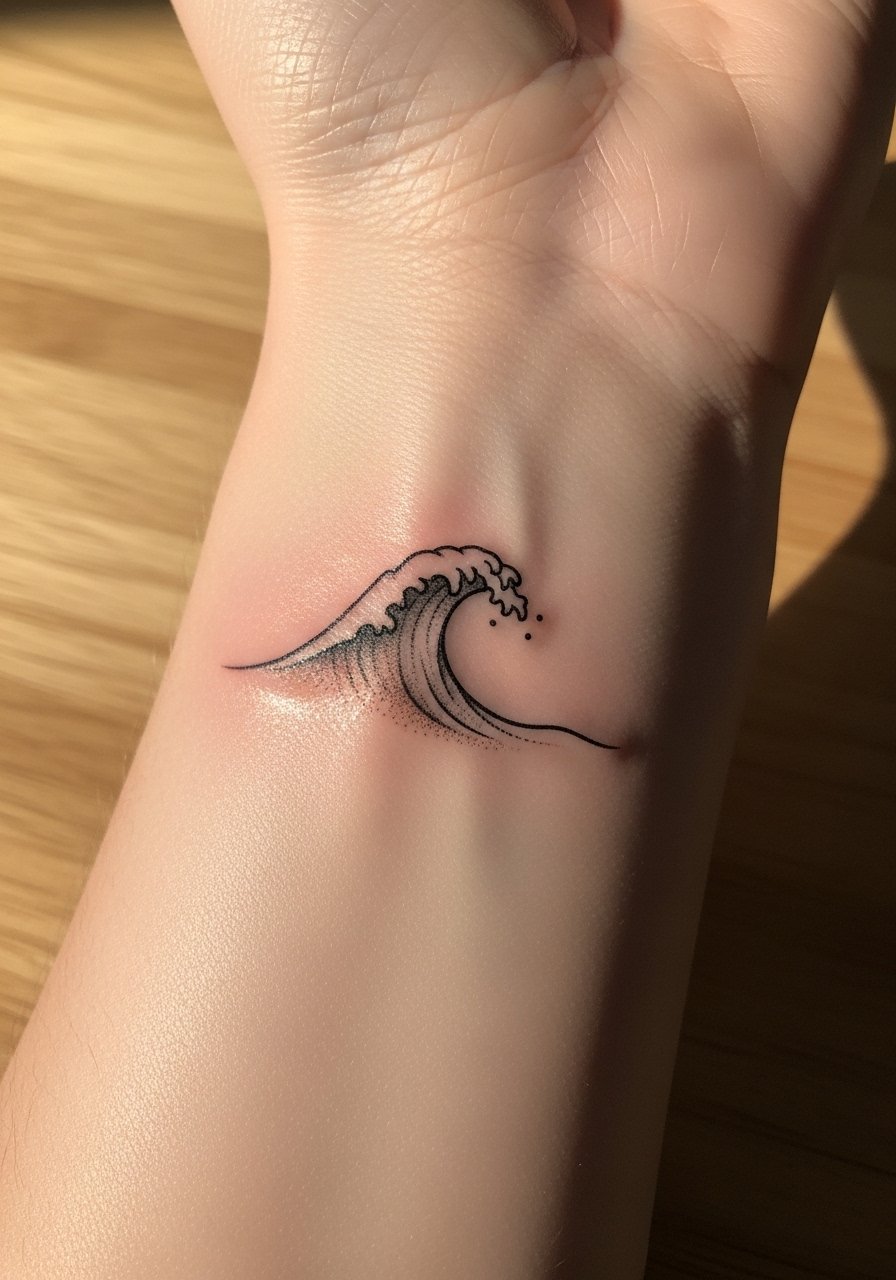
A tiny single-crest wave wraps the inner wrist like a secret symbol. It feels minimal but full of motion — a whisper of the ocean on a skin plane that moves with every gesture. This is perfect if you want a subtle nod to Japanese traditional wave tattoo motifs without a heavy commitment.
Style & Design Details
- Tattoo style: Fine line, minimal illustrative
- Recommended size: 1–2 inches
- Best placements: inner wrist (wraps well), behind ear (delicate), ankle (easy to hide)
- Color vs. blackwork: Blackwork with subtle grey wash preserves crispness on small scales
- Design elements: single-needle linework, tiny stipple shading, negative-space foam, tapered crest, micro white highlight
- Longevity note: fine line can blur if ink sits too shallow; touch-ups common after 2–5 years
- Who it suits: first-timers, minimalists, people with small wrist anatomy
Finding the Right Artist
Look for portfolios with successful micro-line or script-style pieces. Ask about needle size (single-needle vs. 3RL) and how they handle thin lines on wrists. Red flags: portfolios showing heavy blowouts on small designs or artists who rush sketch sizing. An experienced micro-line artist is preferred over an apprentice for best longevity. Browse Instagram tags like #finelinetattoo and #microtattoo for examples.
Aftercare & Healing Tips
Keep the piece covered with Saniderm second skin bandage roll for 24–48 hours for a micro piece, then wash gently with unscented soap. Apply a thin layer of Hustle Butter Deluxe tattoo aftercare balm sparingly during peeling. Avoid wrist-submersion (dishwashing, baths) for the first two weeks. Expect mild scabbing and delicate flaking; schedule a touch-up after 6–12 months if lines soften.
- Bold Sumi-Style Forearm Wave Band
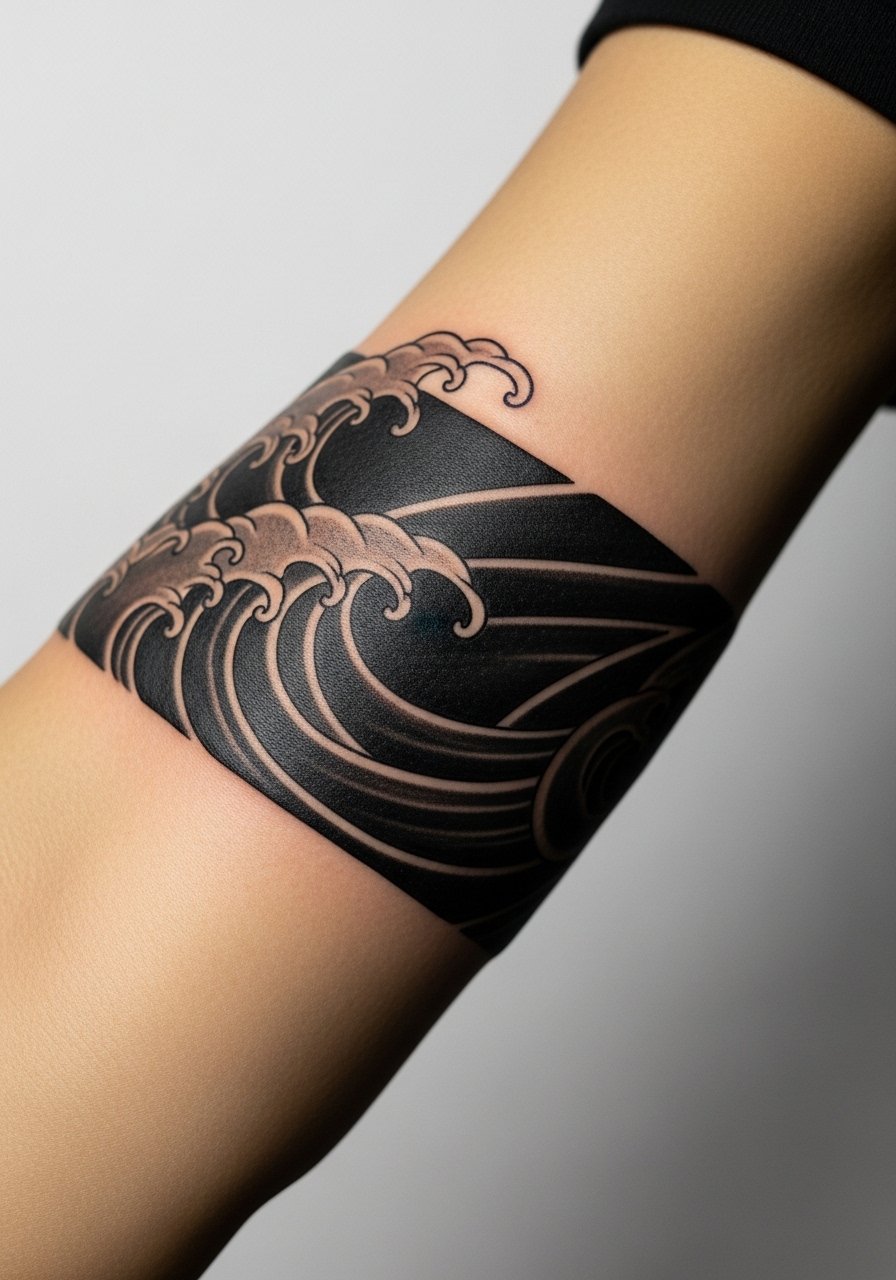
This forearm band borrows from sumi-e brushwork — thick, calligraphic strokes and dramatic negative space. It reads like motion when you rotate your arm, ideal for someone who wants a statement that still reads as wearable art.
Style & Design Details
- Tattoo style: Blackwork with sumi-influence
- Recommended size: palm-sized band (3–5 inches)
- Best placements: mid-forearm (wrap and motion), upper arm, calf
- Color vs. blackwork: solid black for lasting contrast
- Design elements: bold brush strokes, saturated black fill, feathered edges, negative-space islands, controlled blotting
- Longevity note: heavy black ages well but can show texture from skin movement; dense packing resists fading
- Who it suits: collectors, fans of graphic tattoos, those who like bold contrast
Finding the Right Artist
Search for blackwork artists who post crisp healed photos, not just fresh sessions. Ask about ink saturation technique and black ink brands they use (artists often prefer Intenze or Dynamic for depth). Avoid artists who favor only linework if you want crisp black fills. Portfolio platforms like Tattoodo and Instagram tags #blackworktattoo help you find specialists.
Aftercare & Healing Tips
For large black fills, keep initial wrap intact per your artist’s call (Saniderm option available). Wash twice daily with Dr. Bronner's unscented castile soap and pat dry. Once peeling begins, use a fragrance-free lotion such as Aveeno Daily Moisturizing Lotion to prevent cracking. Expect surface dryness around week 1–2; dense black often needs no touch-up for several years if cared for.
- Japanese Traditional Wave Tattoo Sleeve Accent with Koi
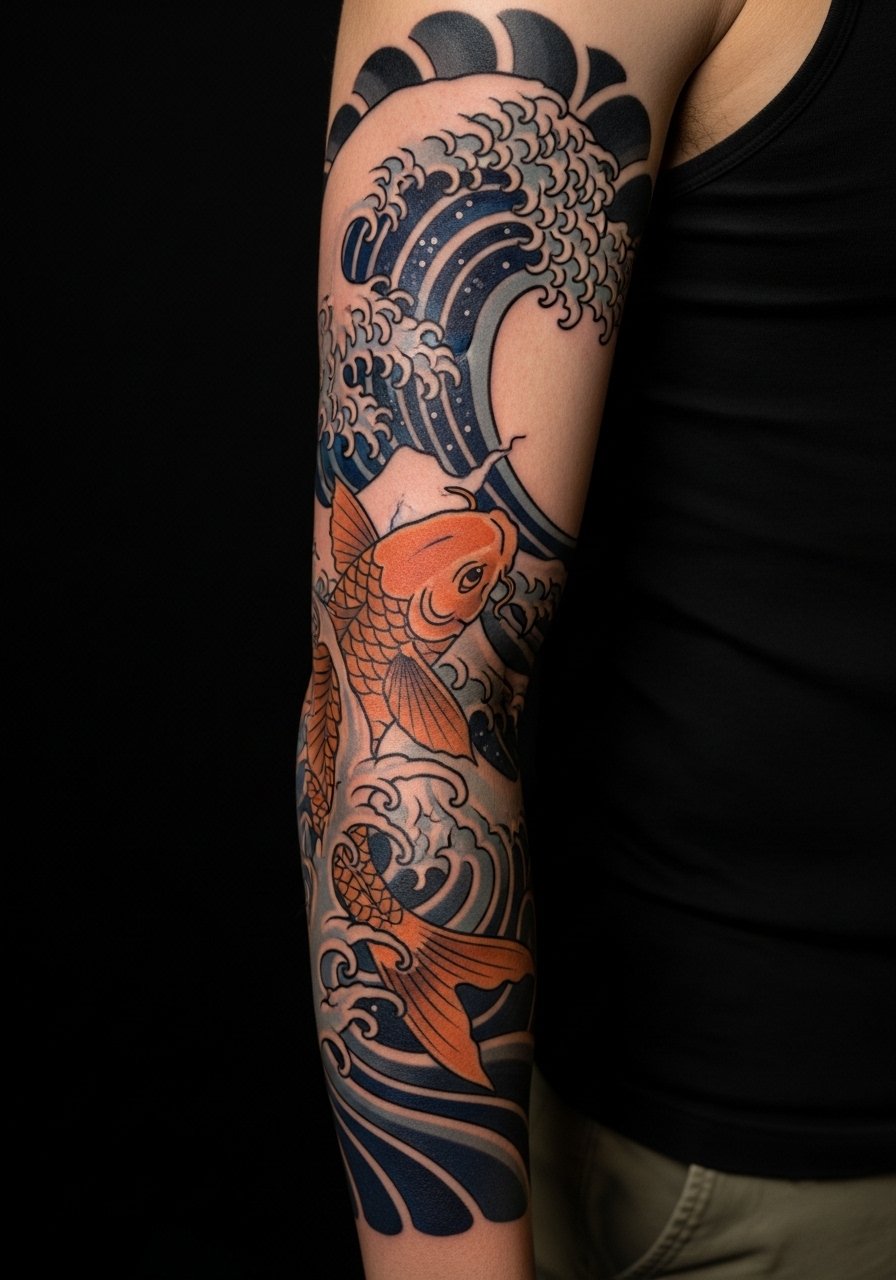
Pairing a classic wave with a koi adds narrative — struggle and perseverance moving upstream through turbulent water. This design leans into the Japanese traditional wave tattoo tradition, but modernized with subtle shading and selective color.
Style & Design Details
- Tattoo style: Neo-traditional Japanese fusion
- Recommended size: quarter to 3/4 sleeve (palm to full-arm scale)
- Best placements: upper arm to forearm transition, full sleeve, thigh wrap
- Color vs. blackwork: indigo blues for waves, warm orange for koi accents
- Design elements: bold outline, layered wave crests, koi scales, cloud motifs, negative-space foam, Japanese mask or wind bars
- Longevity note: color needs SPF protection; indigo holds better than delicate blues
- Who it suits: collectors, symbolic tattoo seekers, people who want a narrative piece
Finding the Right Artist
Look for artists with strong Japanese-style portfolios who balance bold outlines with painterly shading. Ask about scale, how they plan flow across musculature, and ink brands they use for color retention. Avoid artists unfamiliar with koi anatomy or traditional motifs. Use search tags #irezumi, #japanesetattoo, and reach out with reference images.
Aftercare & Healing Tips
Large color pieces benefit from a second-skin wrap for 48–72 hours. After that, cleanse with unscented soap and apply a thin layer of Tattoo Goo Aftercare Kit or Hustle Butter Deluxe during peeling. Avoid heavy exercise that rubs the area for two weeks. Once healed, protect color with an SPF 50 tattoo sunscreen stick.
- Minimal Negative-Space Wrist Wave Cuff
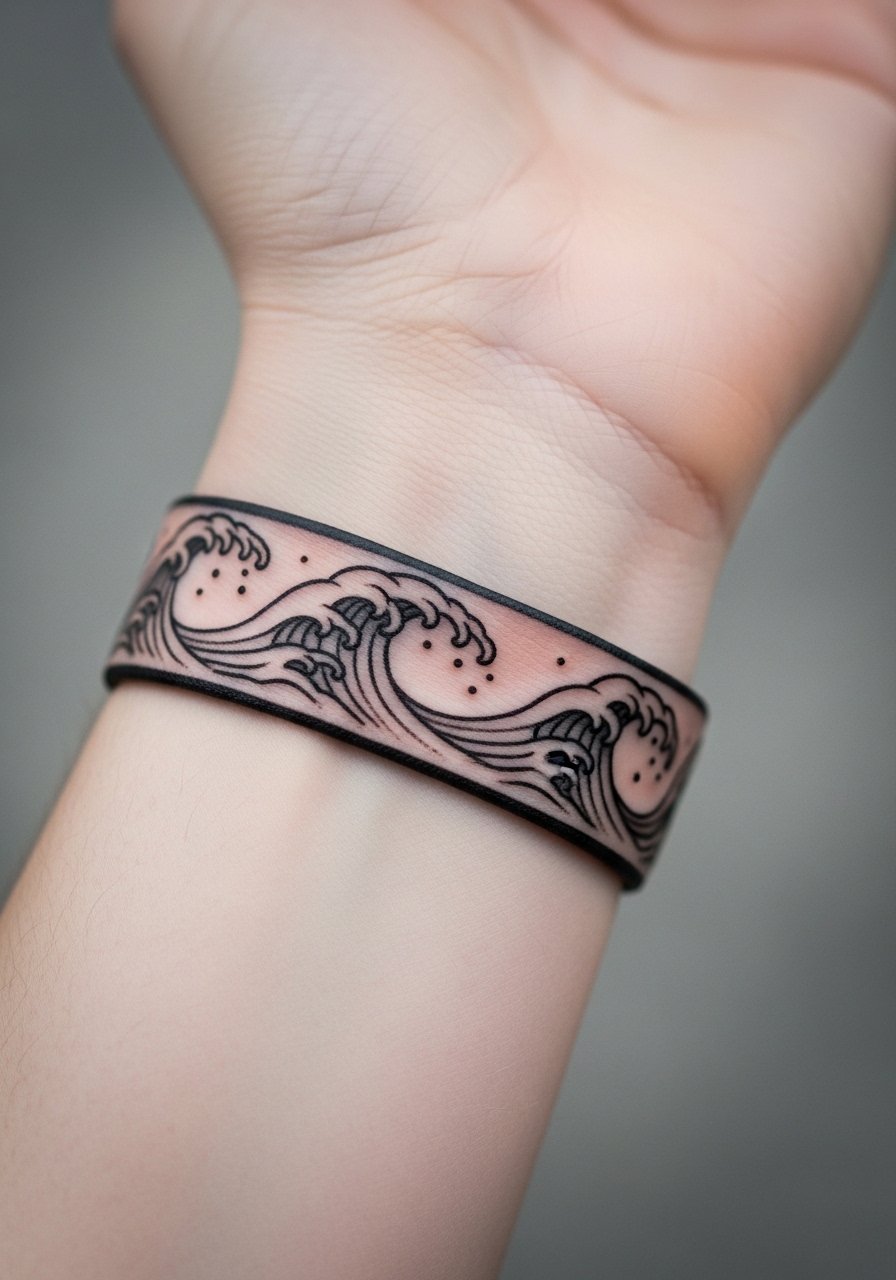
Negative-space cuffs let your skin act as part of the design, creating airy crests that read like motion even when still. This delicate cuff is modern and understated, great if you want impact without heavy ink.
Style & Design Details
- Tattoo style: Minimal illustrative with negative-space technique
- Recommended size: thin cuff, 1–2 inch height around wrist
- Best placements: wrist cuff, upper forearm, ankle
- Color vs. blackwork: primarily black outlines with skin left as highlight
- Design elements: clean outlines, open foam areas, tapered waves, single-needle precision, small dotwork accents
- Longevity note: high-detail negative space can soften; good placement avoids stretch-prone skin
- Who it suits: minimalists, fashion-forward clients, small-wrist anatomy
Finding the Right Artist
Seek artists experienced in negative-space work and single-needle control. Ask to see healed wrist cuffs specifically. Red flags: portfolios with heavy coverage but few micro negative-space pieces. A mid-experience artist with steady hands is usually fine here.
Aftercare & Healing Tips
Leave wrapper per artist preference. Clean twice daily and use a non-comedogenic lotion like Lubriderm Daily Moisture Fragrance-Free. Avoid jewelry that rubs the cuff while it peels. Touch-ups might be needed after 1–3 years to refresh crisp negative edges.
- Cresting Wave Behind-the-Ear Micro Flash
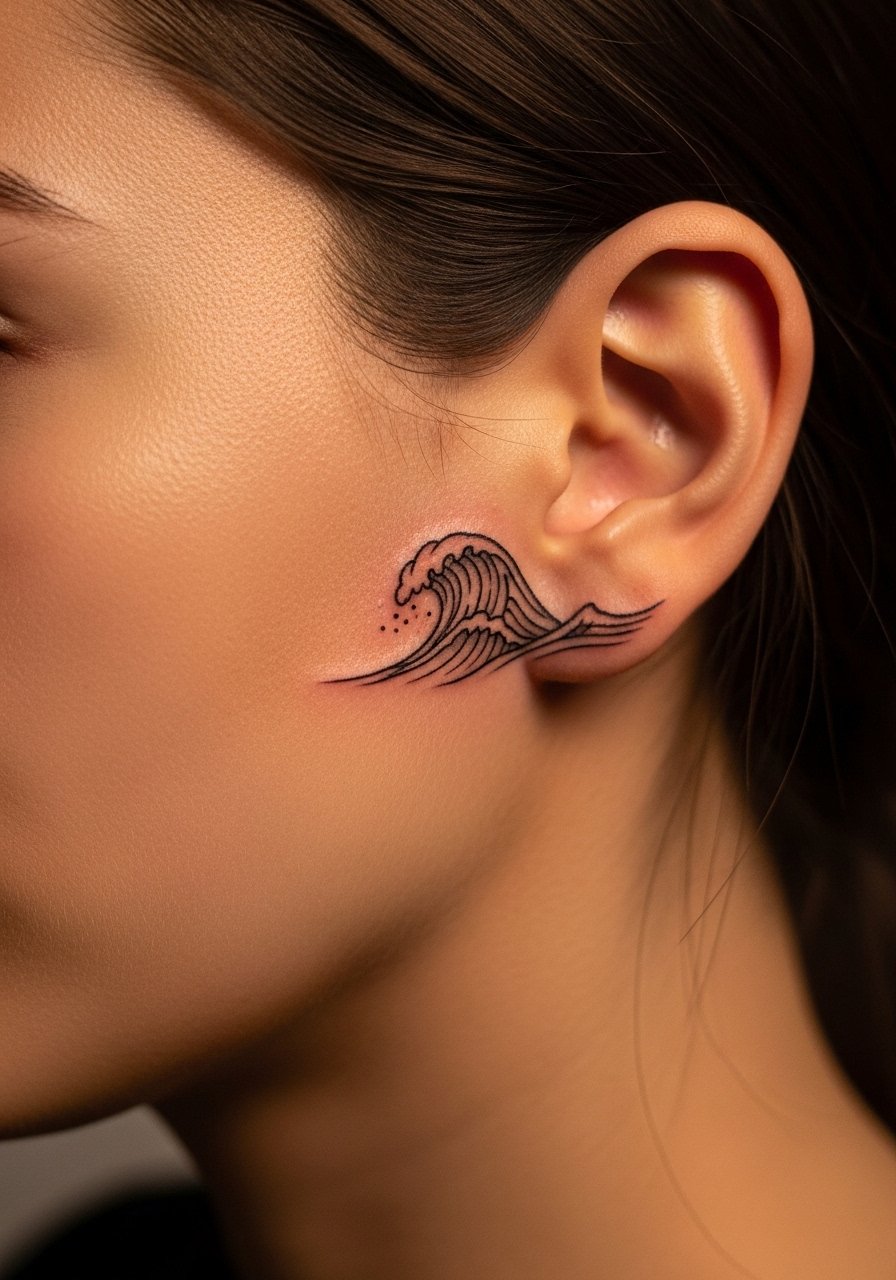
This micro placement is playful and discreet. A behind-the-ear crest moves slightly as you tilt your head, giving life to the small design. It's perfect for someone who wants a tiny Japanese traditional wave tattoo nod.
Style & Design Details
- Tattoo style: Micro illustrative
- Recommended size: under 1 inch
- Best placements: behind ear, nape of neck, behind shoulder blade
- Color vs. blackwork: black fine line with minuscule gray wash
- Design elements: single-needle outline, tiny stipple foam, minimal negative space, curved placement to follow ear anatomy
- Longevity note: micro work here resists friction but may blur; low-maintenance touch-up possible
- Who it suits: discrete taste, first-timers, festival-goers
Finding the Right Artist
Micro artists who post healed behind-ear shots are ideal. Confirm sterilization standards and ask about needle depth for micro placements. Avoid artists who use thick liners for micro work. Shortlist via local shop walk-ins or MicroTattoo hashtags.
Aftercare & Healing Tips
Small spots heal quickly but are easy to irritate. Keep clean with mild soap and apply a thin layer of After Inked Tattoo Lotion after initial wrap removal. Avoid hair products and hats that rub the area for a week. Healed micro tattoos look best with SPF protection.
- Wave and Cherry Blossom Half-Sleeve
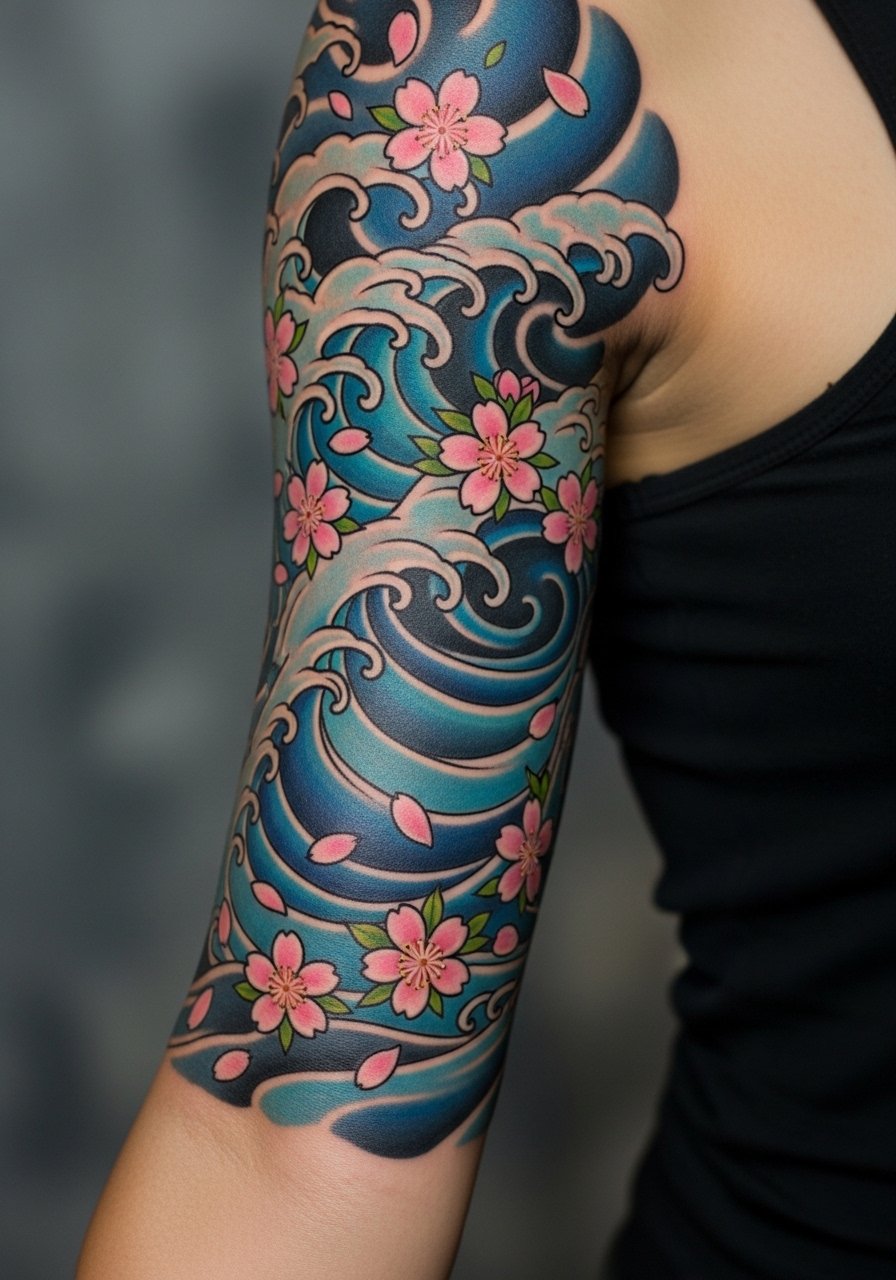
Marrying florals with waves softens the motion and adds seasonal symbolism. The blossoms contrast the water's power, producing a graceful half-sleeve with classic Japanese influence.
Style & Design Details
- Tattoo style: Japanese traditional with soft color
- Recommended size: half-sleeve (forearm to elbow or upper arm)
- Best placements: outer arm sleeve, thigh
- Color vs. blackwork: indigo waves with soft pink sakura accents
- Design elements: layered wave crests, sakura petals, wind bars, bold black outlines, subtle gradient shading
- Longevity note: pinks and pastels fade faster; use SPF and brightening balms
- Who it suits: romantic aesthetics, cottagecore fans, those who want a softer Japanese look
Finding the Right Artist
Choose an artist who balances bolder Japanese lines with delicate color washes. Ask for healed photos of color blossoms and their approach to layering color. Avoid artists who over-saturate small petals. Use Instagram tags like #sakuratattoo and #japaneseflowertattoo.
Aftercare & Healing Tips
Use a second-skin wrap for 48–72 hours for sleeves. Clean daily with unscented soap and apply fragrance-free lotion like Aveeno Daily Moisturizing Lotion. Keep the area out of direct sun for six weeks. For long-term color care, use a tattoo brightening balm occasionally.
- Blackwork Wave Shoulder Plate
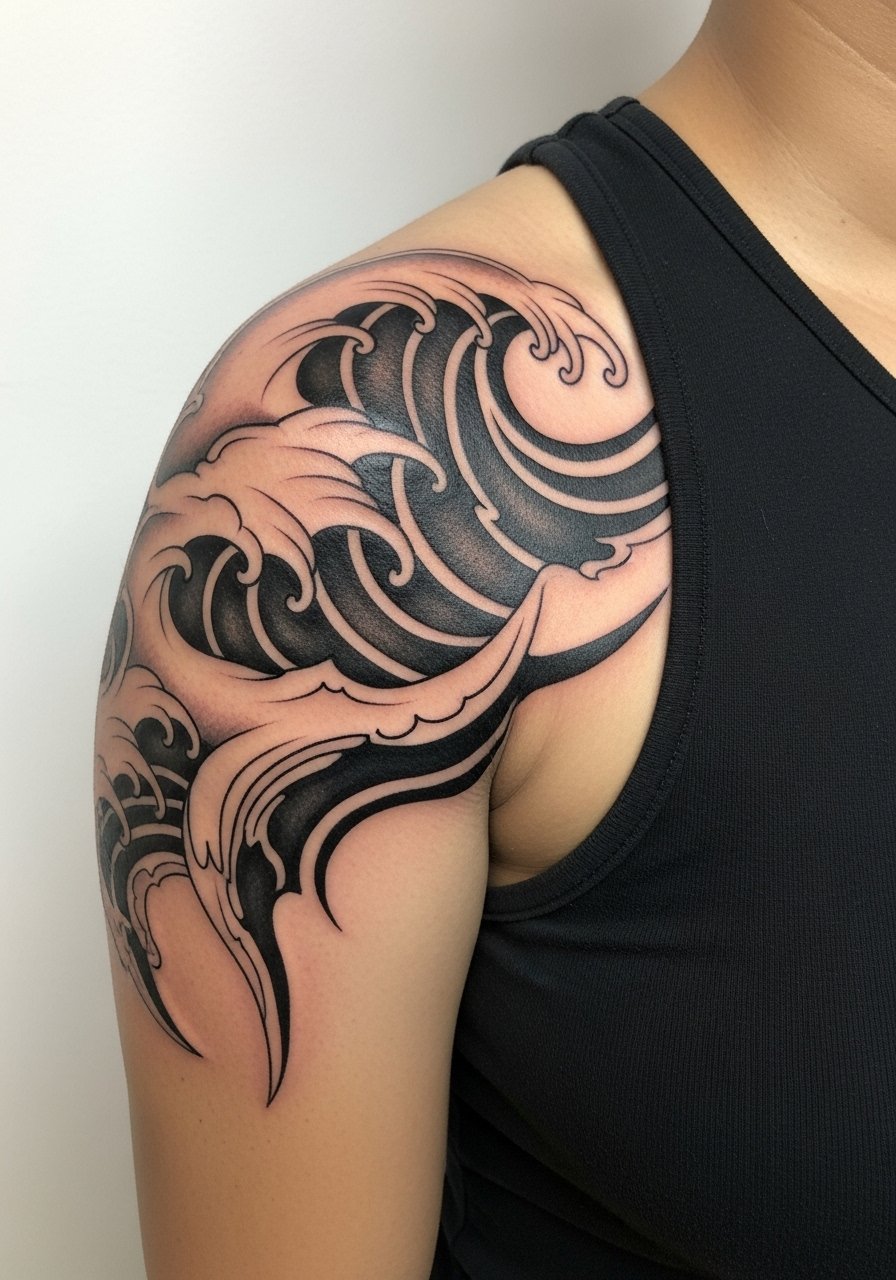
A shoulder plate gives presence and sculptural form. This abstract blackwork wave plays with silhouette, perfect for someone who wants a bold, modern take on the traditional motif.
Style & Design Details
- Tattoo style: Blackwork / geometric fusion
- Recommended size: shoulder plate (5–8 inches)
- Best placements: shoulder, upper back, chest plate
- Color vs. blackwork: solid black with intentional negative space
- Design elements: large black fills, curved negative wave cutouts, sharp edges, skin-contrast islands, bold border lines
- Longevity note: heavy black holds well; shape may distort slightly with weight changes
- Who it suits: modern aesthetic fans, dark academia leaners, confident statement wearers
Finding the Right Artist
Pick artists known for large blackwork who can fill large areas without patchiness. Ask about session count and spacing. Apprentice artists might handle portions, but ensure experienced oversight for consistent saturation. Research portfolios via #blackworkartist.
Aftercare & Healing Tips
Expect multiple sessions. Use Saniderm for large filled areas if your artist recommends it. Clean with mild soap and apply Hustle Butter Deluxe to keep dense black supple while it peels. Avoid heavy shoulder straps that may rub during healing.
- Wave Collarbone Accent with Fine Line Script
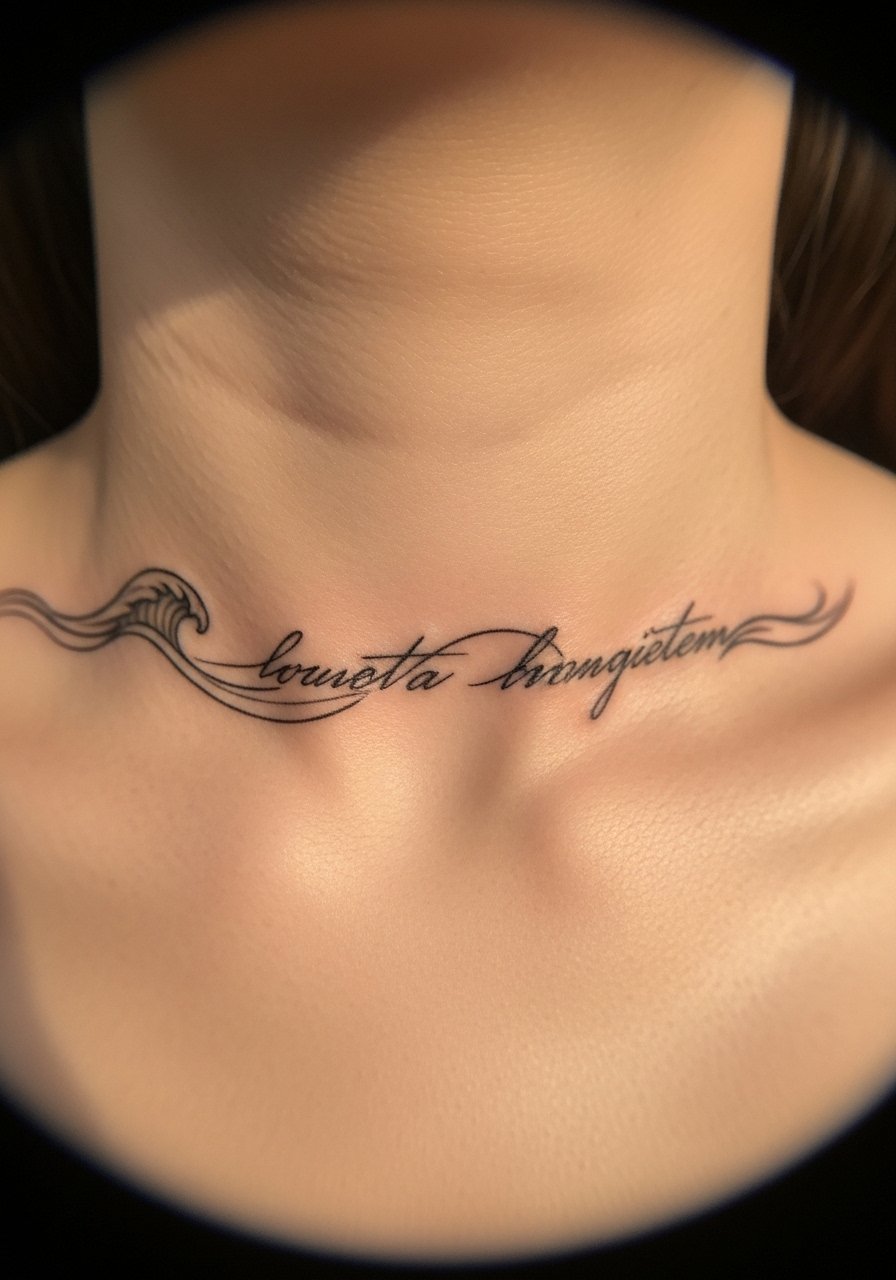
A collarbone crest paired with a date or word becomes personal art. The placement flatters the clavicle’s lines and is easy to show or conceal.
Style & Design Details
- Tattoo style: Fine line + script
- Recommended size: 2–4 inches
- Best placements: collarbone, sternum edge, upper chest
- Color vs. blackwork: black fine line with optional micro-white highlight
- Design elements: single-needle curve, tiny stipple foam, hand-lettered script, slight curve to follow collarbone
- Longevity note: chest area gets sun and friction; sunscreen prolongs crispness
- Who it suits: memorial pieces, quote lovers, romantic aesthetics
Finding the Right Artist
Select a tattooer who excels at script and small illustrative work. Ask to see healed collarbone photos since the skin is thin and placement tricky. Ensure they test lettering size on paper to ensure legibility. Avoid artists who rush lettering or use thick liners for fine script.
Aftercare & Healing Tips
Keep clean and avoid necklaces or straps that could catch. Use After Inked Tattoo Lotion after initial healing. Shield from sun during recovery and with SPF 50 once healed.
- Single-Line Continuous Wave Around Finger
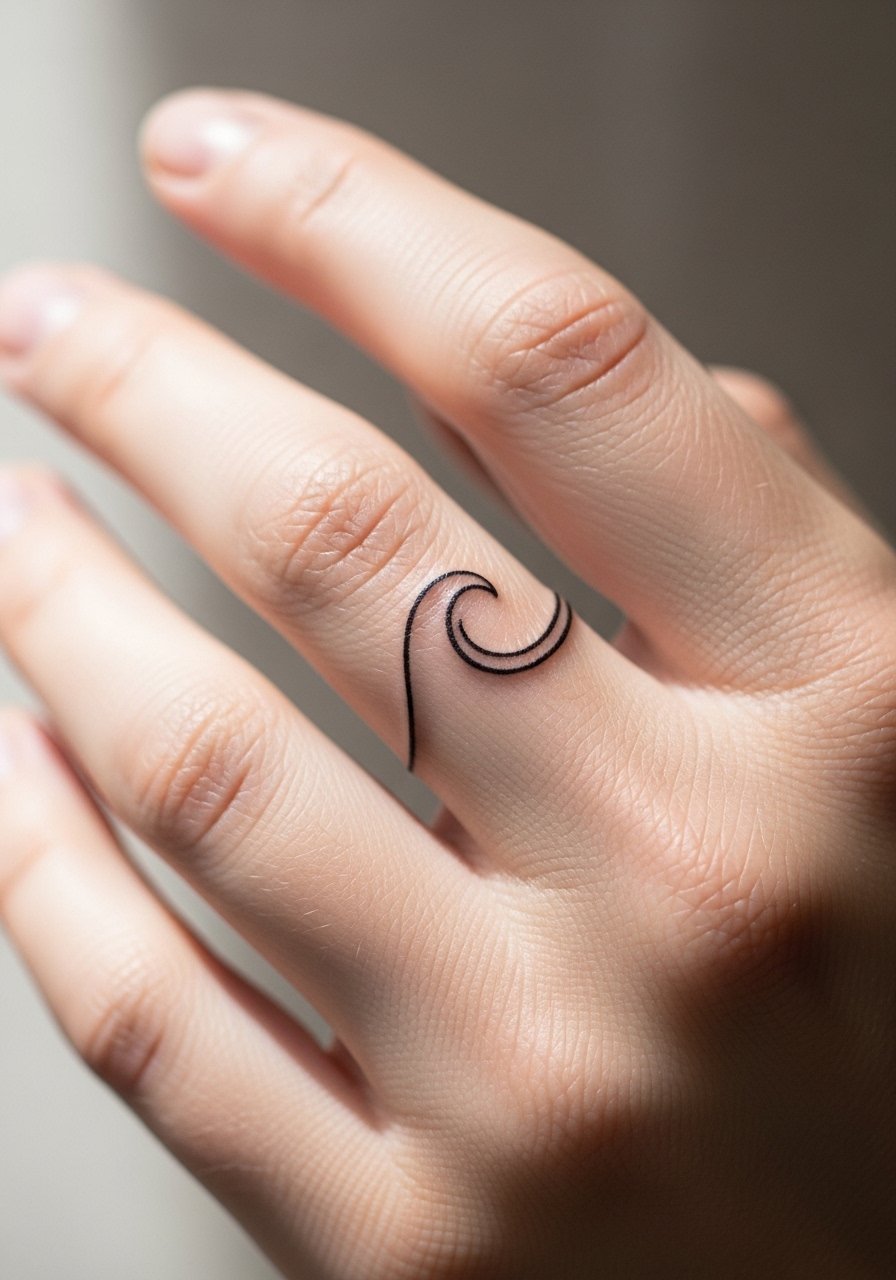
A continuous single-line wave band around a finger is subtle and charming. It hugs natural movement and feels like a personal ring.
Style & Design Details
- Tattoo style: Single-line micro
- Recommended size: band width under 0.5 inches
- Best placements: ring finger, middle finger, behind thumb
- Color vs. blackwork: black single-line
- Design elements: single continuous stroke, tiny crest points, minimal negative space
- Longevity note: finger tattoos fade faster due to constant use; expect touch-ups
- Who it suits: casual commitment-seekers, jewelry-alternative fans
Finding the Right Artist
Choose artists who post many healed finger tattoos — they’ll know how deep to place ink on tight skin. Ask about touch-up policy; many artists include one complimentary fix. Avoid studios with few micro finger examples.
Aftercare & Healing Tips
Follow strict washing and light moisturizer routine. Apply a thin layer of After Inked Tattoo Lotion and keep hands out of harsh chemicals. Expect fading and plan for a touch-up at 6–12 months.
- Wave and Mountain Neo-Minimal Back Patch
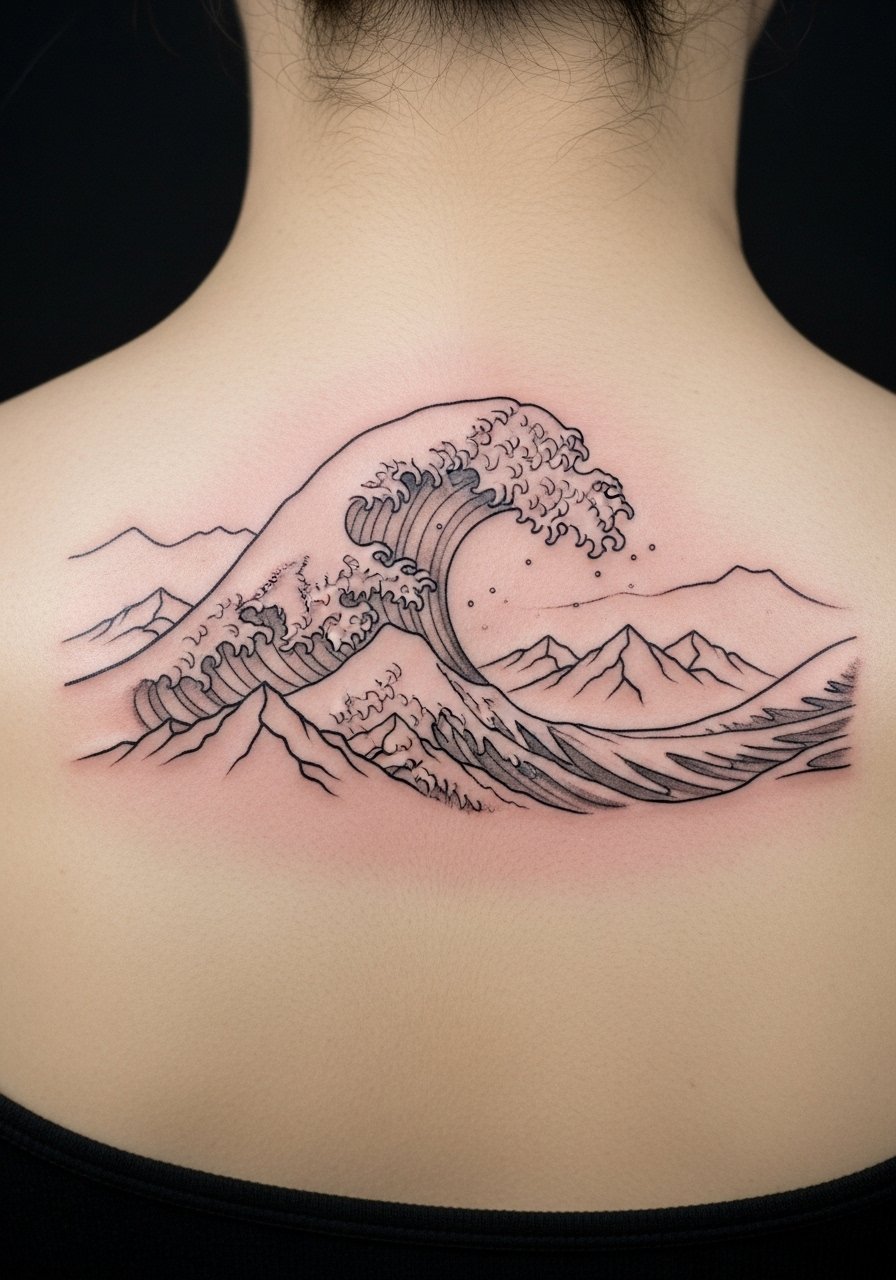
Combine wave and mountain in a compact back patch for a symbolic “earth and sea” piece. Neo-minimal lines keep it modern and wearable.
Style & Design Details
- Tattoo style: Neo-minimal / illustrative
- Recommended size: palm-to-hand-sized (3–4 inches)
- Best placements: upper back patch, between shoulder blades, lower rib area
- Color vs. blackwork: black and soft gray wash recommended
- Design elements: thin outline, subtle shading, overlapping silhouettes, negative space horizon
- Longevity note: minimal shading holds well if properly saturated
- Who it suits: nature lovers, minimalists, contemplative designs
Finding the Right Artist
Look for artists comfortable with clean geometry and balanced negative space. Ask how they plan for skin curvature. Avoid artists who over-saturate thin lines. Use portfolio tags #minimaltattoo or #neominimal to find matches.
Aftercare & Healing Tips
Keep wrapped early if large enough to produce moisture. Clean twice daily and use Lubriderm fragrance-free lotion. Avoid sun exposure for at least four weeks.
- Monochrome Japanese Traditional Wave Tattoo with Hannya Accent
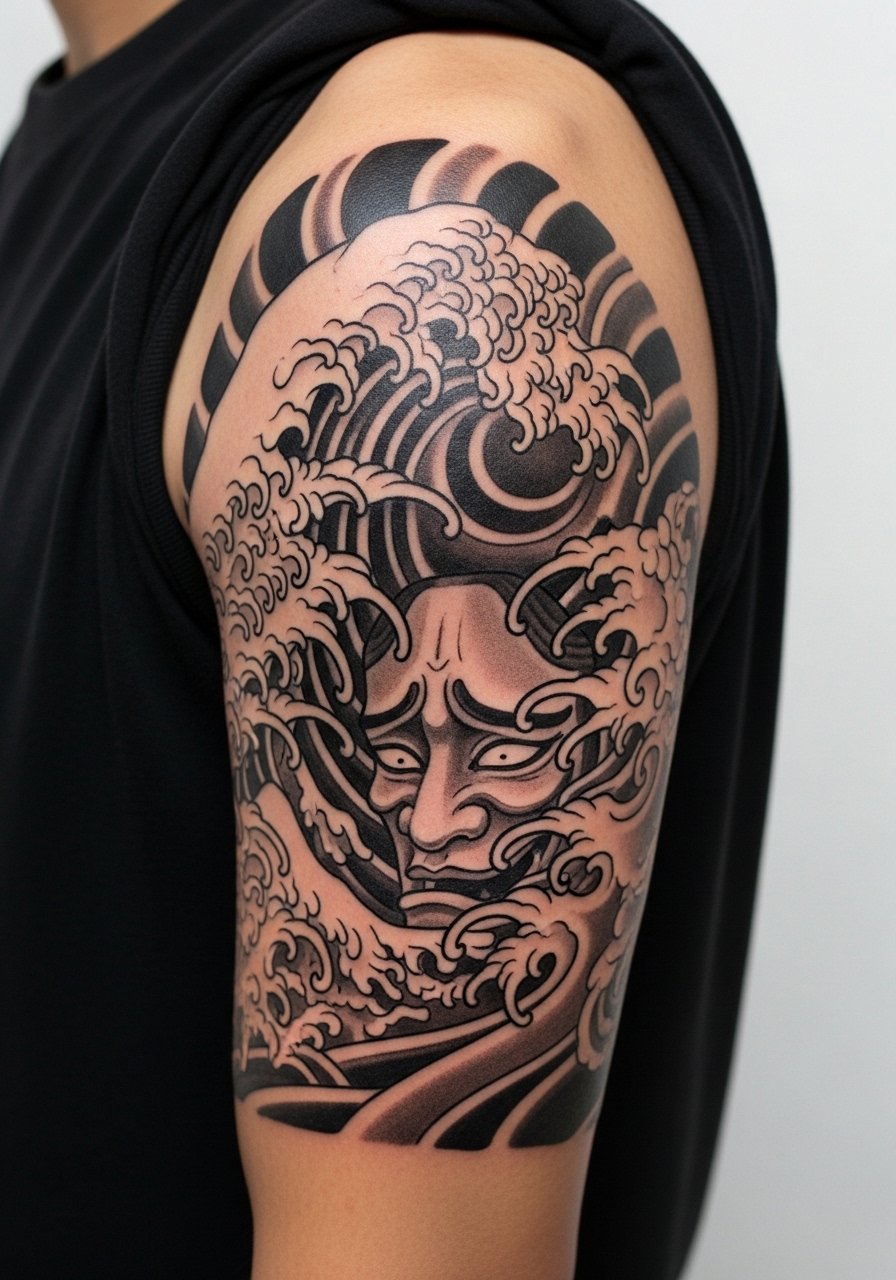
A Japanese wave paired with a Hannya mask brings drama and storytelling. This piece nods directly to the Japanese traditional wave tattoo canon while letting you play with cultural symbols.
Style & Design Details
- Tattoo style: Traditional Japanese (Irezumi-inspired)
- Recommended size: palm-sized to upper-arm scale (4–6 inches)
- Best placements: upper arm, thigh, side torso
- Color vs. blackwork: Monochrome black/gray for tonal depth
- Design elements: Hannya mask detail, layered crests, wind bars, dragon-scale hints, bold outline
- Longevity note: monochrome ages steadily with fewer color-fade concerns
- Who it suits: fans of mythology, narrative collectors, dark academia aesthetic
Finding the Right Artist
Seek artists familiar with Japanese motifs and respectful cultural use. Ask about historical reference usage and how they handle mask detailing. Avoid artists unfamiliar with Hannya symbolism or who use clichés without depth.
Aftercare & Healing Tips
Larger pieces benefit from multi-day wrap and careful moisture control. Use Tattoo Goo Aftercare Kit during peeling, and plan for a touch-up after 6–12 months if necessary. Keep covered from sunlight with SPF when exposed.
- Watercolor Wave with Subtle Blackline Anchor
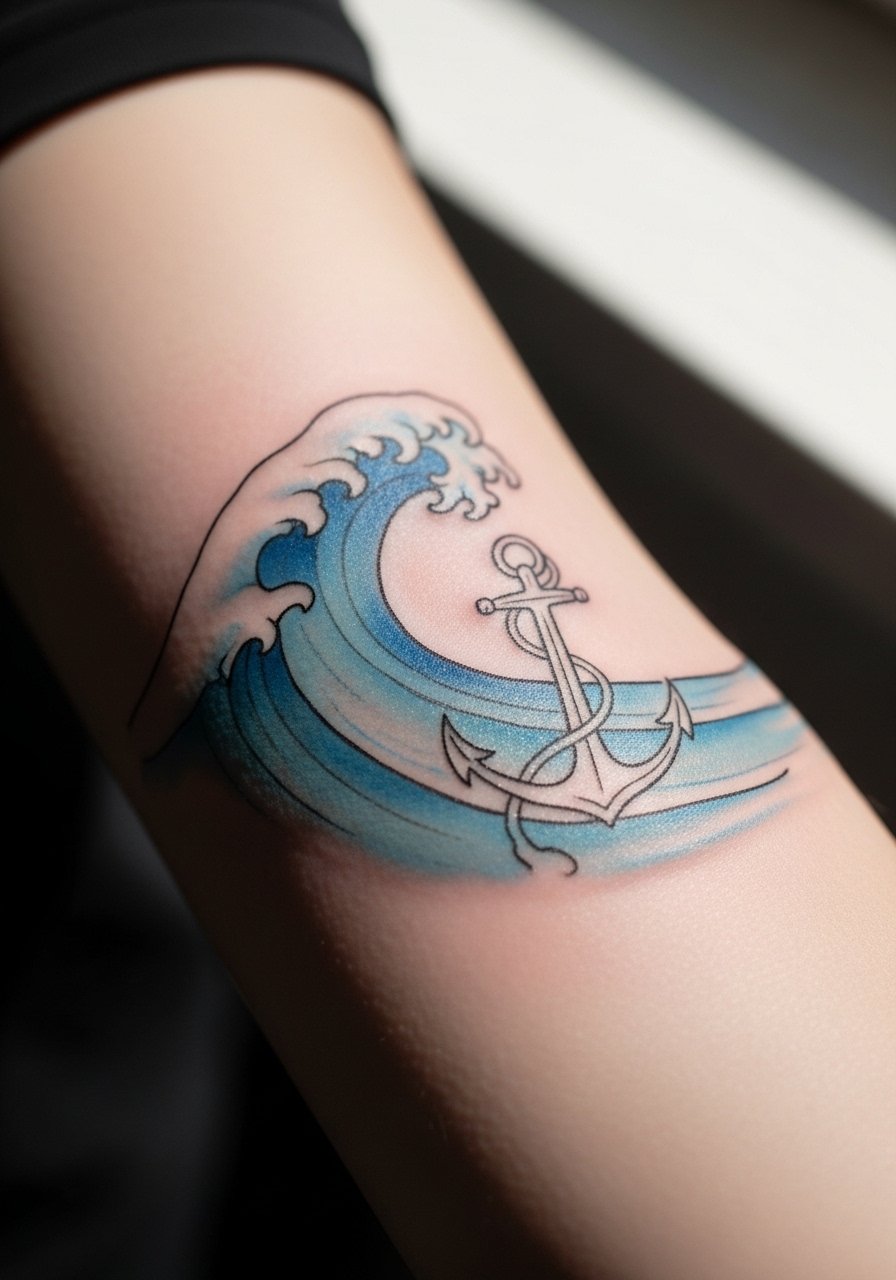
Add painterly watercolor washes to a wave with a thin blackline anchor to balance softness with structure. The result is dreamy without losing readability.
Style & Design Details
- Tattoo style: Watercolor + illustrative
- Recommended size: 3–5 inches
- Best placements: forearm, calf, ribcage
- Color vs. blackwork: blue watercolor with blackline anchor for contrast
- Design elements: splatter wash, gradient blues, thin outline, anchor motif, overlay negative space
- Longevity note: watercolor fades faster; blacklines help maintain composition
- Who it suits: cottagecore fans, colorful aesthetics, artistic collectors
Finding the Right Artist
Pick artists who showcase healed watercolor pieces and can blend color safely. Ask what pigments they use for longevity and how they plan for touch-ups. Avoid artists who rely solely on fresh-session photos for watercolor work.
Aftercare & Healing Tips
Watercolor pieces need diligent SPF after healing. Clean gently and use Aveeno fragrance-free lotion. Consider a touch-up cycle every 2–4 years to keep color lively.
- Flowing Ribcage Wave Panel
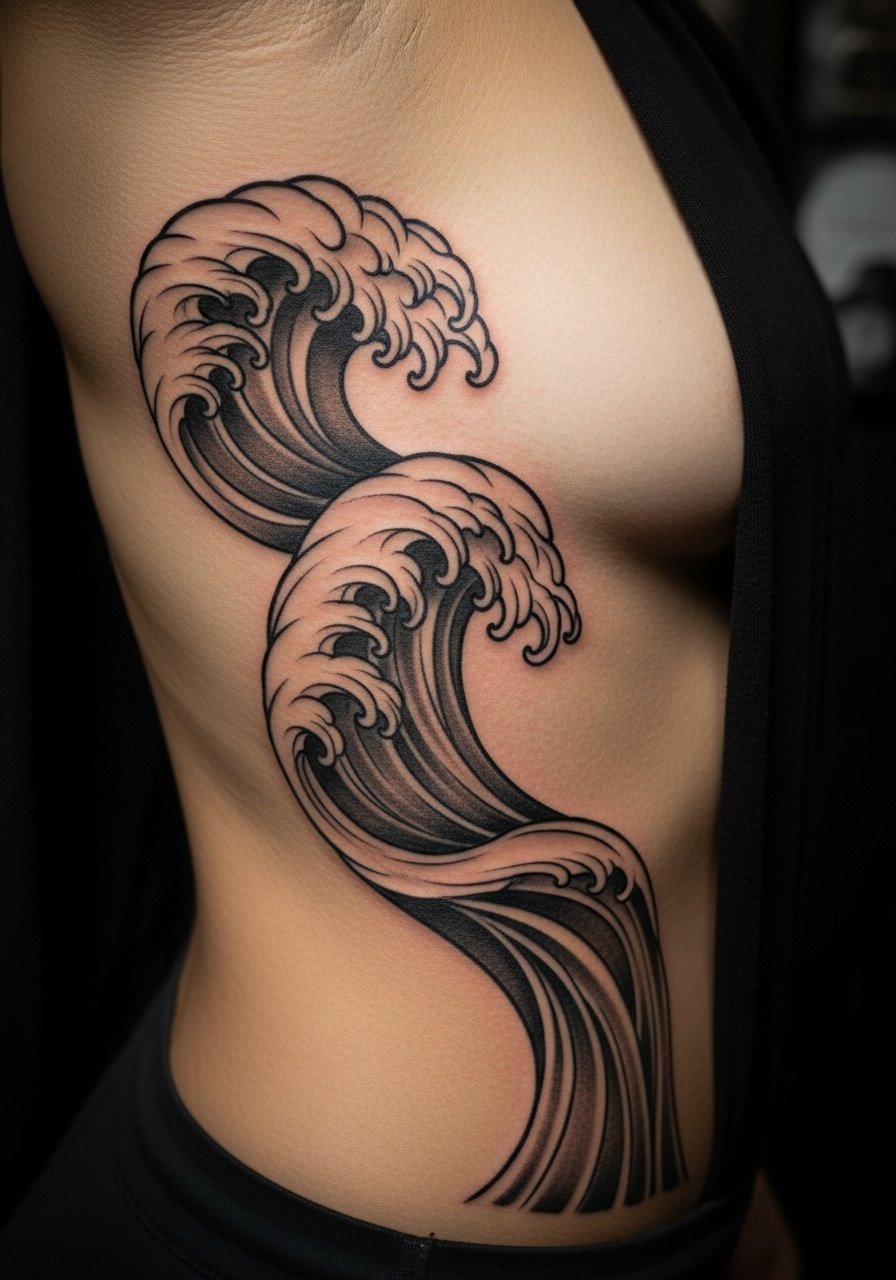
A ribcage panel rides with breath and motion — the wave looks alive as you move. This placement is intimate and bold, ideal for someone ready for a statement.
Style & Design Details
- Tattoo style: Illustrative / Japanese fusion
- Recommended size: palm to torso-length panel (4–8 inches)
- Best placements: ribcage, side torso, hip
- Color vs. blackwork: Black with tonal grey wash
- Design elements: flowing crests, ripple shading, negative-space highlights, tapered ends to contour ribs
- Longevity note: area can be sensitive to stretching; weight fluctuation affects long-term shape
- Who it suits: collectors, deep-commitment placements, memorial art seekers
Finding the Right Artist
Choose an artist comfortable with ribcage anatomy and multi-session pain management. Ask about numbing options and how they plan contouring across ribs. Avoid artists with few torso flow pieces.
Aftercare & Healing Tips
This location is painful and benefits from numbing like EMLA numbing cream if your artist permits. Keep wrapped as recommended, clean gently, and use Hustle Butter Deluxe during peeling. Avoid sleeping on the side for two weeks. Full settle 6–8 weeks.
- Wave Sleeve with Geometric Contrast
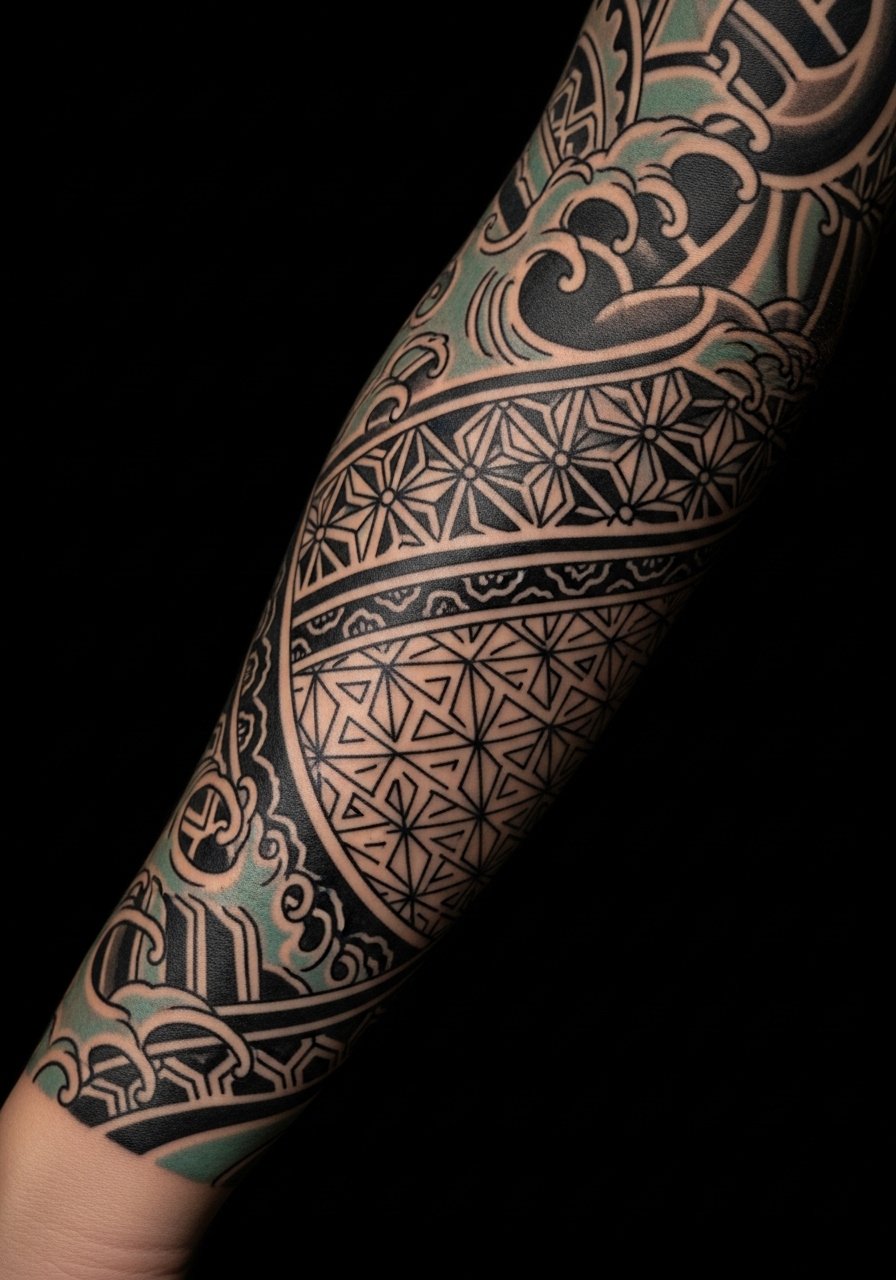
Marrying organic wave motion with geometric panels creates contrast and rhythm across the arm. This piece balances movement and structure, appealing to design lovers.
Style & Design Details
- Tattoo style: Illustrative + geometric
- Recommended size: full or quarter sleeve
- Best placements: forearm sleeve, half-sleeve
- Color vs. blackwork: black with muted teal accents
- Design elements: repeating wave crests, tessellating shapes, negative-space strips, dotwork fills, crisp linework
- Longevity note: mix of dotwork and lines ages differently; consistent aftercare helps cohesion
- Who it suits: architecture/design fans, neo-traditional collectors, monochrome lovers
Finding the Right Artist
Find artists who show both precise geometry and fluid illustrative pieces. Ask about how they transition between styles across the arm. Avoid artists who lack examples of clean dotwork geometry.
Aftercare & Healing Tips
Large sleeves need staged sessions. Use Saniderm initially if recommended and wash gently. Keep skin hydrated with Lubriderm fragrance-free lotion. For geometric edges, wait until fully healed to assess if touch-ups are needed.
- Tiny Shin Wave with Inkbox Test
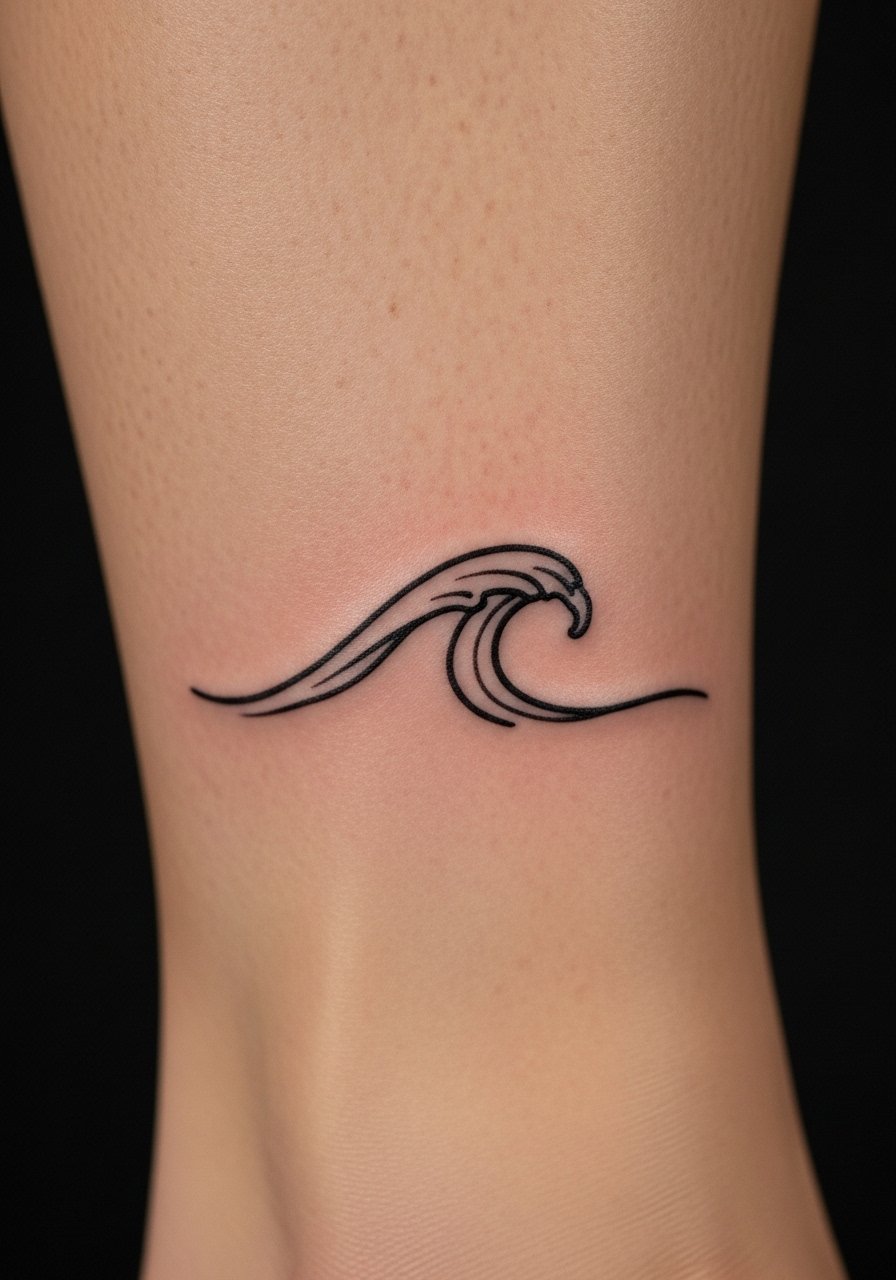
Testing a shin placement with a semi-permanent is smart. Use an Inkbox kit to preview placement and movement before committing to a tiny wave on the shin.
Style & Design Details
- Tattoo style: Micro illustrative
- Recommended size: 1–2 inches
- Best placements: shin, calf edge, Achilles small patch
- Color vs. blackwork: black single-needle
- Design elements: clean crest, tapered tail, tiny foam details
- Longevity note: leg hair and friction can affect micro clarity
- Who it suits: cautious first-timers, test-run aficionados
Finding the Right Artist
Ask for healed leg micro pieces. Use a temporary kit like Inkbox semi-permanent tattoos to test placement and size. Avoid artists who don’t provide healed examples for shin placements.
Aftercare & Healing Tips
Leg tattoos take a week to peel; clean with mild soap and apply After Inked Tattoo Lotion. Avoid tight socks or rough fabrics during early healing.
- Wave and Crane Chest Centerpiece
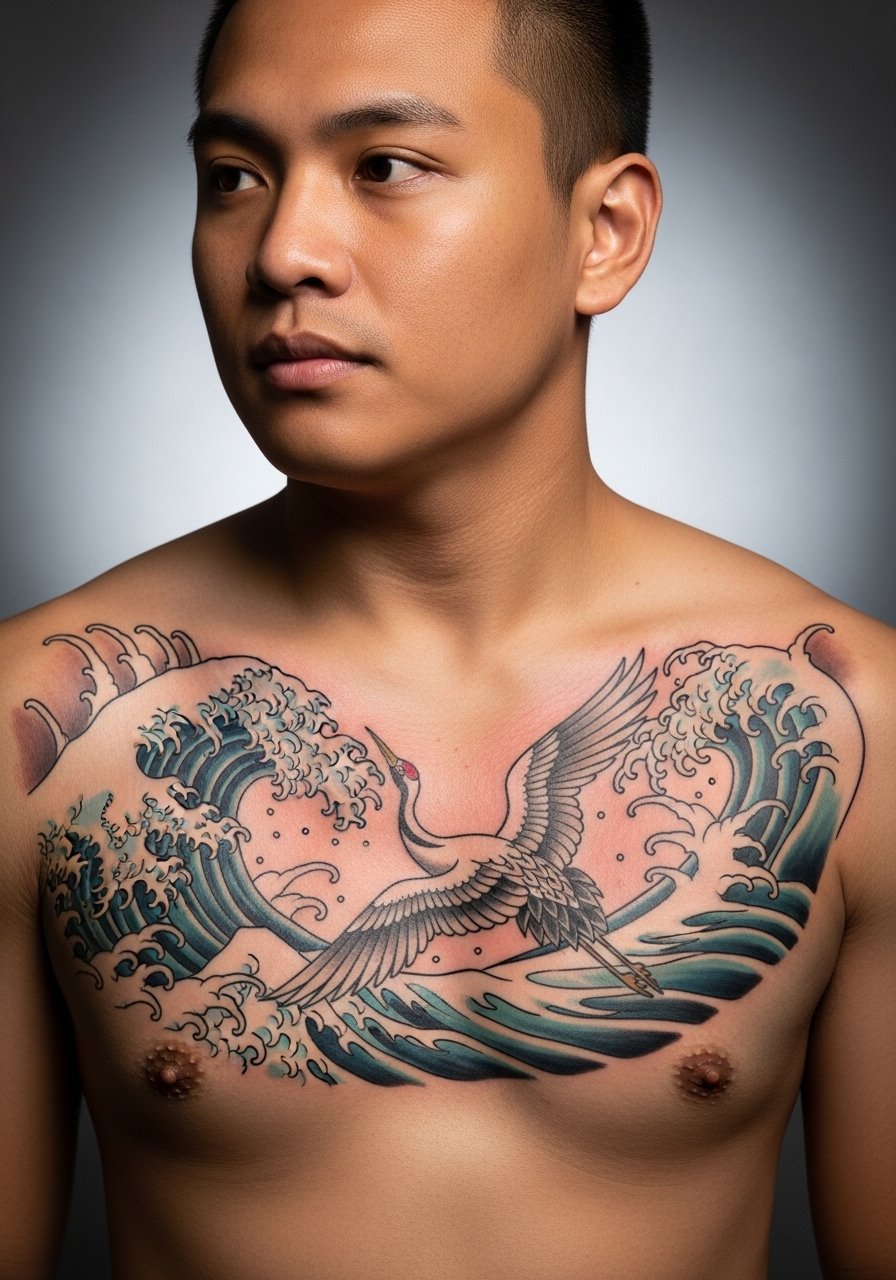
Combining crane and wave creates a centerpiece that’s both elegant and symbolic — freedom rising over turbulence. It works well centered on the chest.
Style & Design Details
- Tattoo style: Japanese traditional illustrative
- Recommended size: broad chest panel (6–10 inches)
- Best placements: chest center, sternum, upper chest
- Color vs. blackwork: black outlines + muted color accents (cream and indigo)
- Design elements: crane feathers, large cresting waves, wind bars, sakura drops
- Longevity note: chest sees sun and friction; SPF and occasional touch-ups will protect detail
- Who it suits: symbolic collectors, myth-leaning aesthetics, chest statement buyers
Finding the Right Artist
Choose someone comfortable with large symmetrical compositions and bird anatomy. Ask about session pacing and how they plan symmetry. Avoid artists inexperienced with larger chest symmetry pieces.
Aftercare & Healing Tips
Chest pieces benefit from Saniderm if advised and gentle washing. Apply Hustle Butter Deluxe throughout the peel. Avoid heavy chest-strapped clothing for two weeks.
- Japanese Traditional Wave Tattoo Anklet with Floral Detail
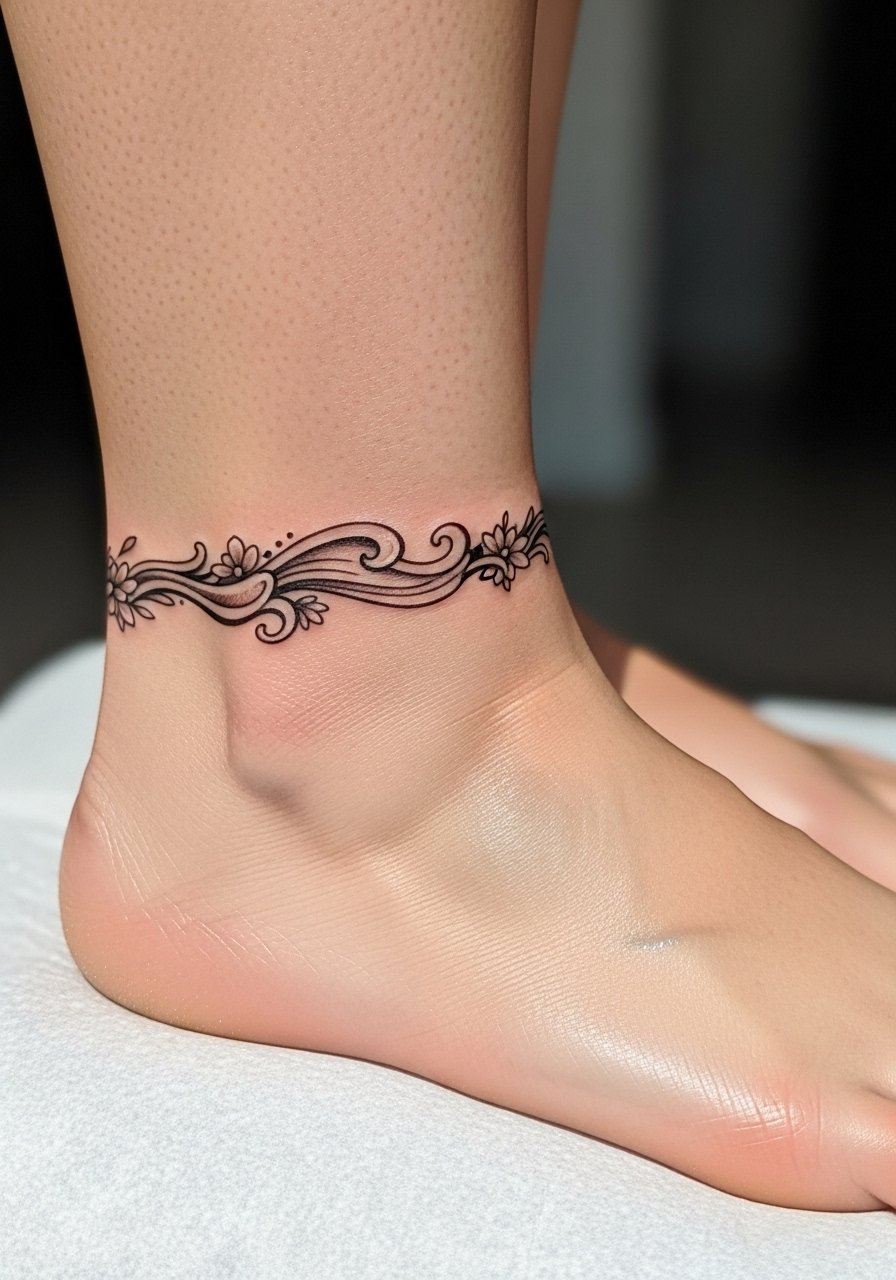
An anklet-style wave reads like jewelry and nods to classic motif placement. This clean design is a subtle way to carry a Japanese traditional wave tattoo on the lower limb.
Style & Design Details
- Tattoo style: Traditional Japanese anklet
- Recommended size: 2–4 inches wrapping around ankle
- Best placements: ankle, lower calf, wrist wrap
- Color vs. blackwork: black outlines with small color floral accents
- Design elements: continuous wave band, tiny sakura or chrysanthemum motifs, negative-space foam, tapered ends
- Longevity note: anklets are exposed to friction; expect periodic refreshes
- Who it suits: shoe-and-ankle lovers, subtle statement seekers, travelers
Finding the Right Artist
Seek healed anklet photos and ask about how they account for shoe rubbing and sock friction. An apprentice may be okay if supervised for wrap consistency.
Aftercare & Healing Tips
Keep socks loose and avoid tight footwear while healing. Use After Inked Tattoo Lotion and avoid soaking in pools for two weeks. Consider a touch-up if rubbing softens edges.
- Wave Ribband Across Collarbone (Japanese Traditional Wave Tattoo)
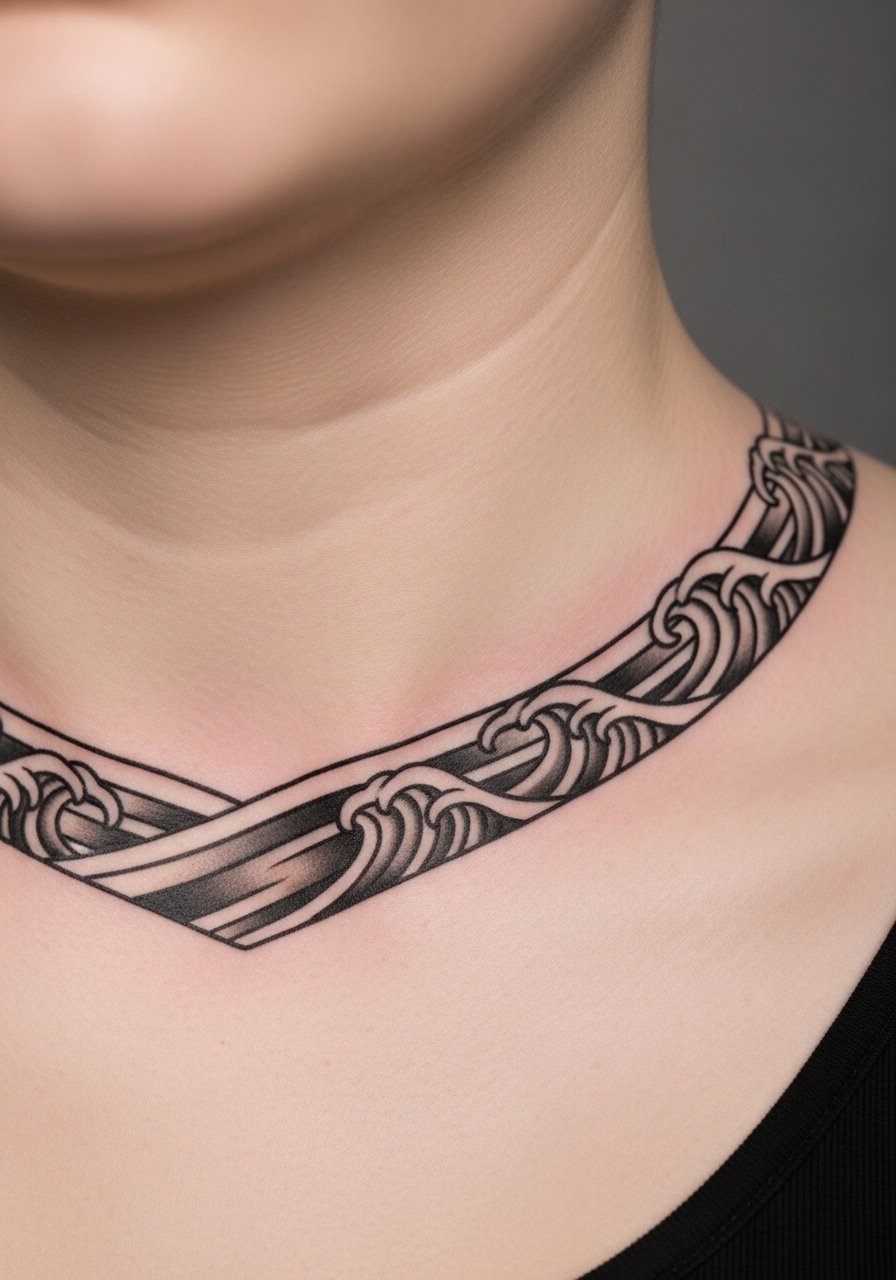
A ribband flowing across the collarbone is small but visible; it’s an elegant placement for a crisp Japanese motif. This is another clean expression of the Japanese traditional wave tattoo aesthetic.
Style & Design Details
- Tattoo style: Traditional band / illustrative
- Recommended size: 2–4 inches
- Best placements: collarbone, across sternum, upper shoulder
- Color vs. blackwork: strong blacklines with minimal gray shading
- Design elements: repeated crest motifs, negative-space foam, tapered ends, thin border line
- Longevity note: collarbone sees sun; SPF crucial for fine details
- Who it suits: chic minimalists, jewelry-alternative lovers, those who prefer upper chest visibility
Finding the Right Artist
Request healed collarbone bands and ask about line thickness to maintain continuity. Avoid artists who use overly thick liners that overpower delicate bands.
Aftercare & Healing Tips
Avoid necklaces and tight collars for two weeks. Clean gently and apply Lubriderm fragrance-free lotion. Expect slight itching around the bone; don’t pick scabs.
- Wave and Dragon Flow Around Thigh
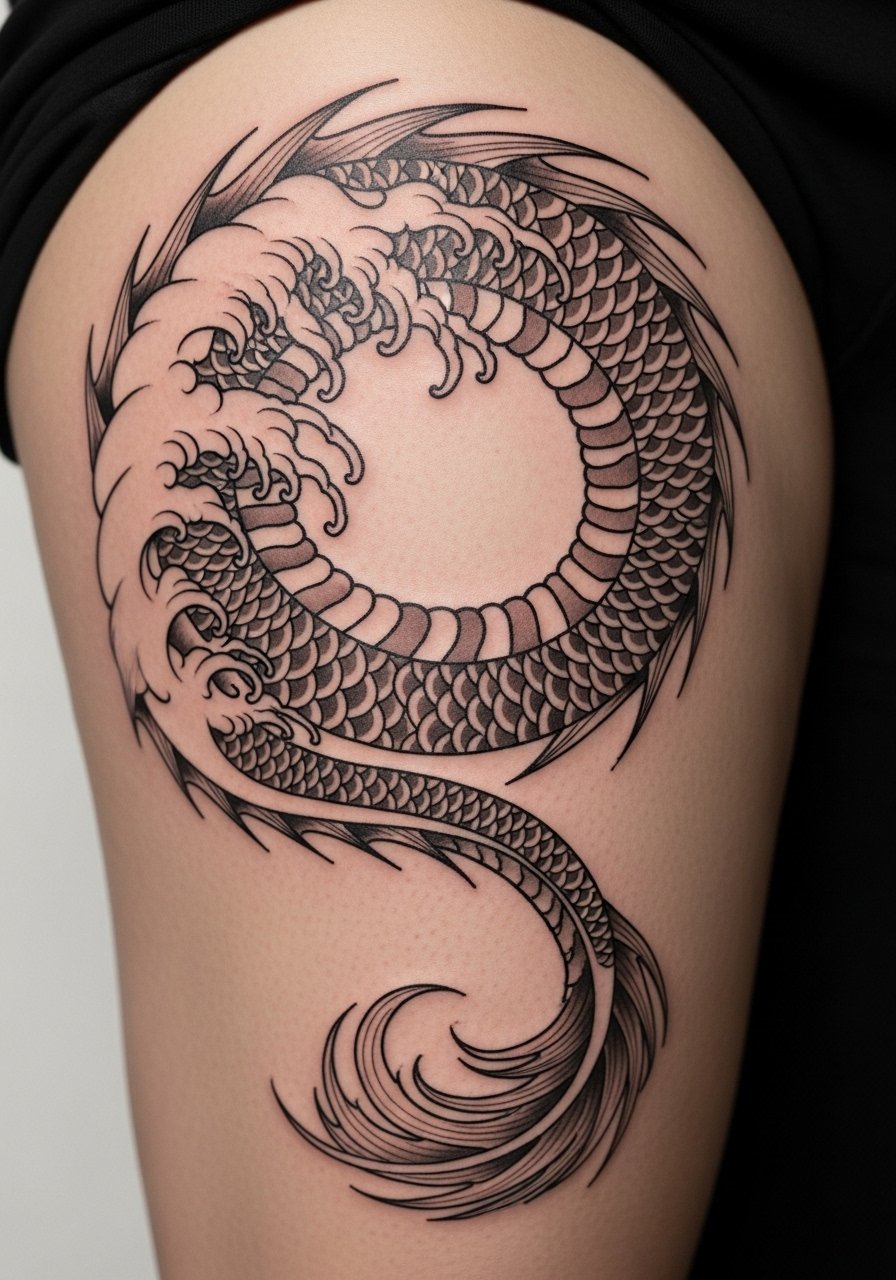
Large thigh canvases are great for storytelling. A wave morphing into a dragon creates an epic scene that moves with the leg.
Style & Design Details
- Tattoo style: Japanese epic / illustrative
- Recommended size: large thigh panel (6–12 inches)
- Best placements: outer thigh, full thigh wrap
- Color vs. blackwork: black outlines, muted color for scales and foam
- Design elements: dragon scales, massive wave crests, wind motifs, negative-space highlights
- Longevity note: thigh holds color well; occasional touch-ups may help if weight or stretch changes
- Who it suits: collectors, narrative seekers, large-composition enthusiasts
Finding the Right Artist
Pick an artist used to large narrative pieces, especially on thighs. Ask about sitting duration and stretch management. Avoid artists without large-scale composition experience.
Aftercare & Healing Tips
Large thigh pieces heal best with layered aftercare: clean, then apply Tattoo Goo Aftercare Kit during peeling. Avoid tight leggings for two weeks and moisturize with Aveeno fragrance-free lotion afterward.
- Negative-Space Wave Sternum Divider
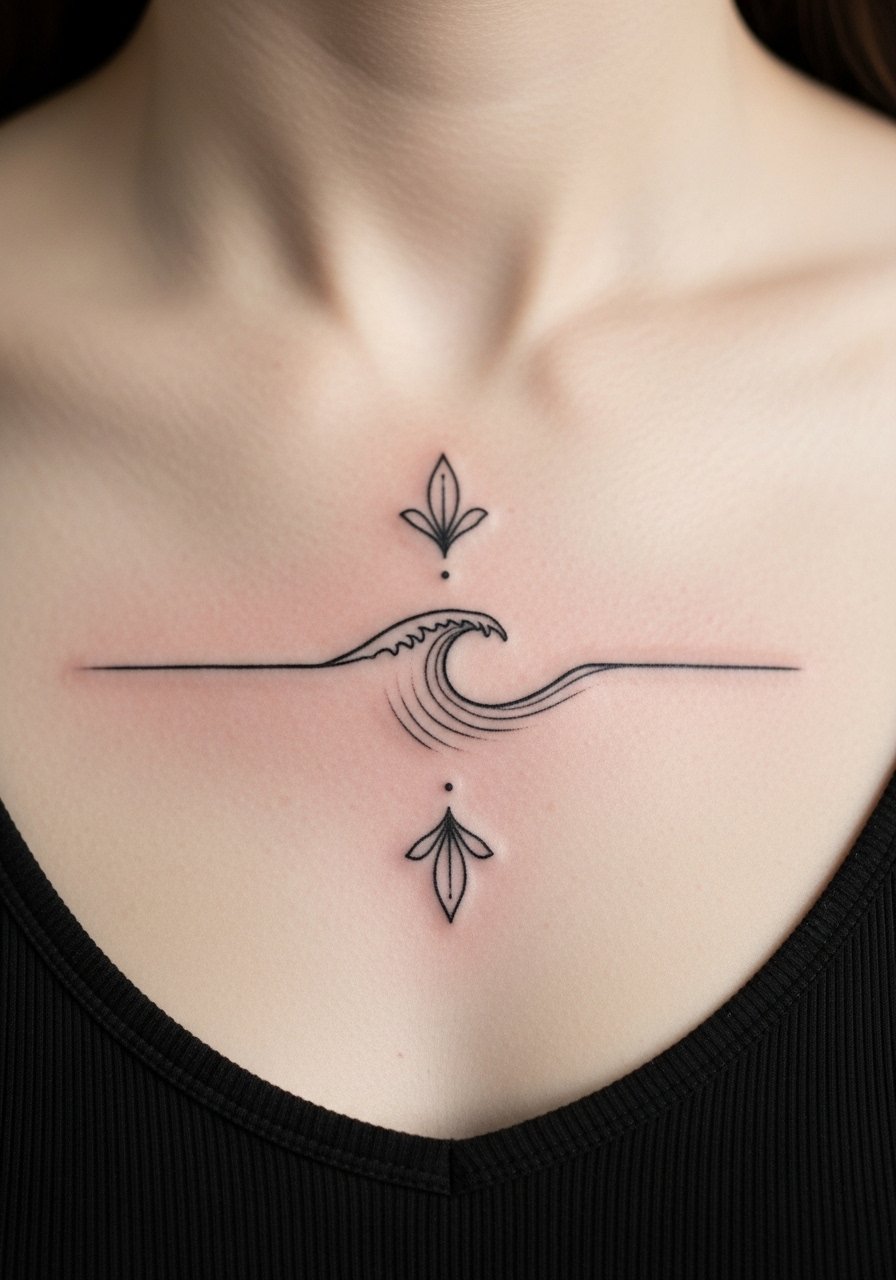
A negative-space wave across the sternum can serve as a visual divider between two chest motifs or stand alone as a central piece. It’s modern and striking.
Style & Design Details
- Tattoo style: Negative-space / fine line
- Recommended size: 3–5 inches across sternum
- Best placements: sternum, upper abdomen
- Color vs. blackwork: blackline with skin-negative areas
- Design elements: continuous negative curve, thin border, tiny foam cutouts, symmetrical balance
- Longevity note: central chest is sun-exposed; preserve with SPF
- Who it suits: symmetry lovers, fashion-aware clients, midline composition fans
Finding the Right Artist
Look for artists with symmetric midline portfolio pieces. Ask about alignment checks during stencil placement. Avoid rushed stencils or artists unwilling to mark placements carefully.
Aftercare & Healing Tips
Keep the area dry and clean; apply Hustle Butter Deluxe lightly and avoid underwire bras until healed. Full settling can take 6–8 weeks.
- Wave with Moon Phases Inner Bicep
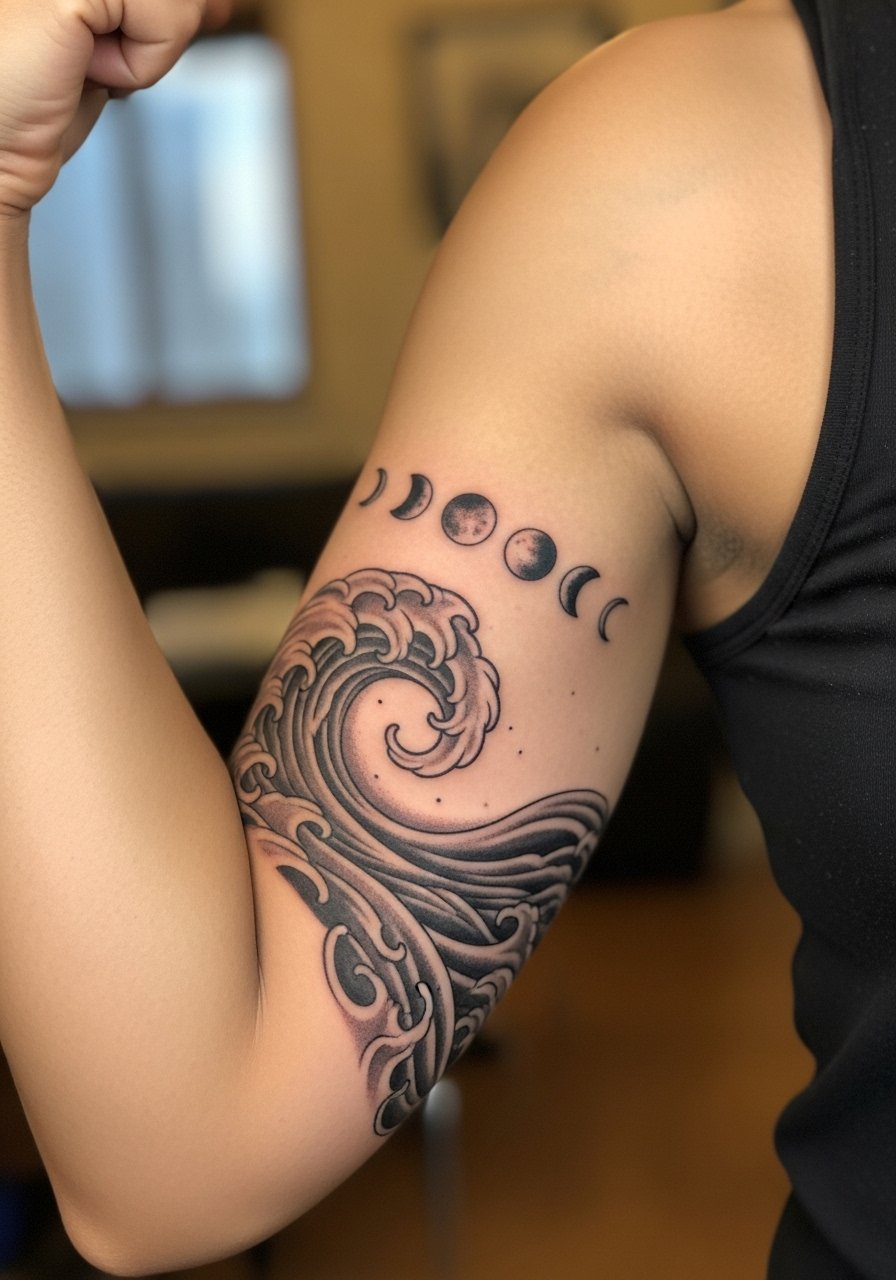
Moon phases above a wave add rhythm and a celestial angle to water motion. Inner bicep placement is intimate and looks great revealed with short sleeves.
Style & Design Details
- Tattoo style: Illustrative / symbolic
- Recommended size: 3–5 inches
- Best placements: inner bicep, upper arm, rib side
- Color vs. blackwork: blackline with gray wash for moons
- Design elements: phased moons, flowing crest, dotwork shadows, tapered ends
- Longevity note: inner bicep sees less sun and holds detail well unless rubbing from shirts
- Who it suits: astrology lovers, contemplative personalities, dark academia
Finding the Right Artist
Choose an artist who balances small celestial detail with flowing linework. Ask for healed inner arm photos. Avoid artists who over-shade moons without clean edges.
Aftercare & Healing Tips
Inner bicep heals under clothing; keep shirts loose and wash as usual. Use After Inked Tattoo Lotion to prevent dryness. Avoid heavy workouts that cause friction for a week.
- Wave Crest Behind the Knee Pocket
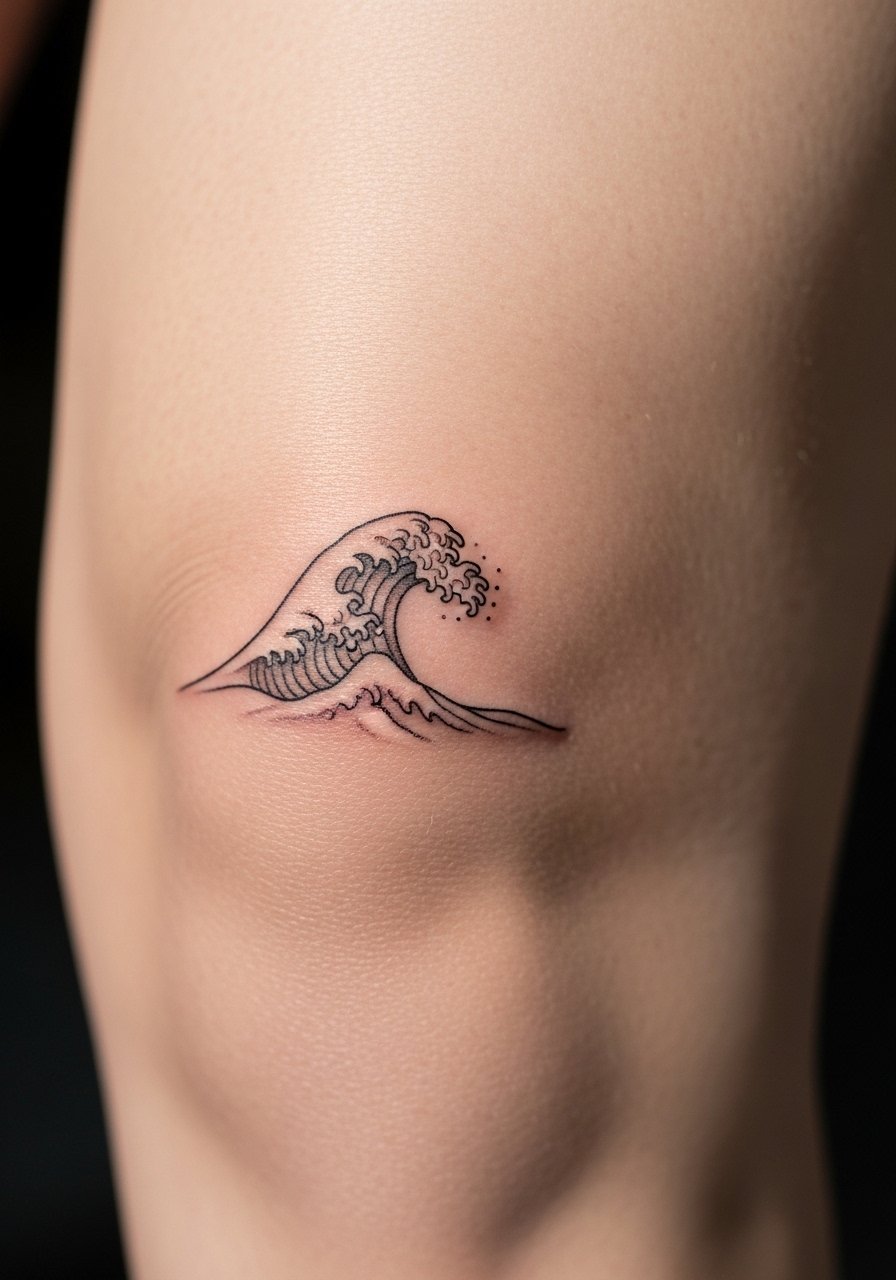
A behind-the-knee pocket tattoo is playful and shows with summer styles. The area folds, so wave placement follows creases naturally.
Style & Design Details
- Tattoo style: Fine line illustrative
- Recommended size: 1–2 inches
- Best placements: behind knee, hollow of elbow, inner ankle
- Color vs. blackwork: black with light grey shading
- Design elements: small crest, tiny foam dots, tapered curvature to follow crease
- Longevity note: folding skin can blur micro lines; careful needle depth needed
- Who it suits: festival-goers, playful placements, those who like hidden art
Finding the Right Artist
Pick an artist experienced with fold-placed micro pieces. Ask about line depth and how they compensate for skin motion. Avoid novices for this tricky spot.
Aftercare & Healing Tips
Keep area free from friction for a week; avoid tight leggings. Clean and apply Hustle Butter Deluxe. Expect a slightly longer settle time due to skin movement.
- Wave-Motif Ear Cuff (Helix Area)
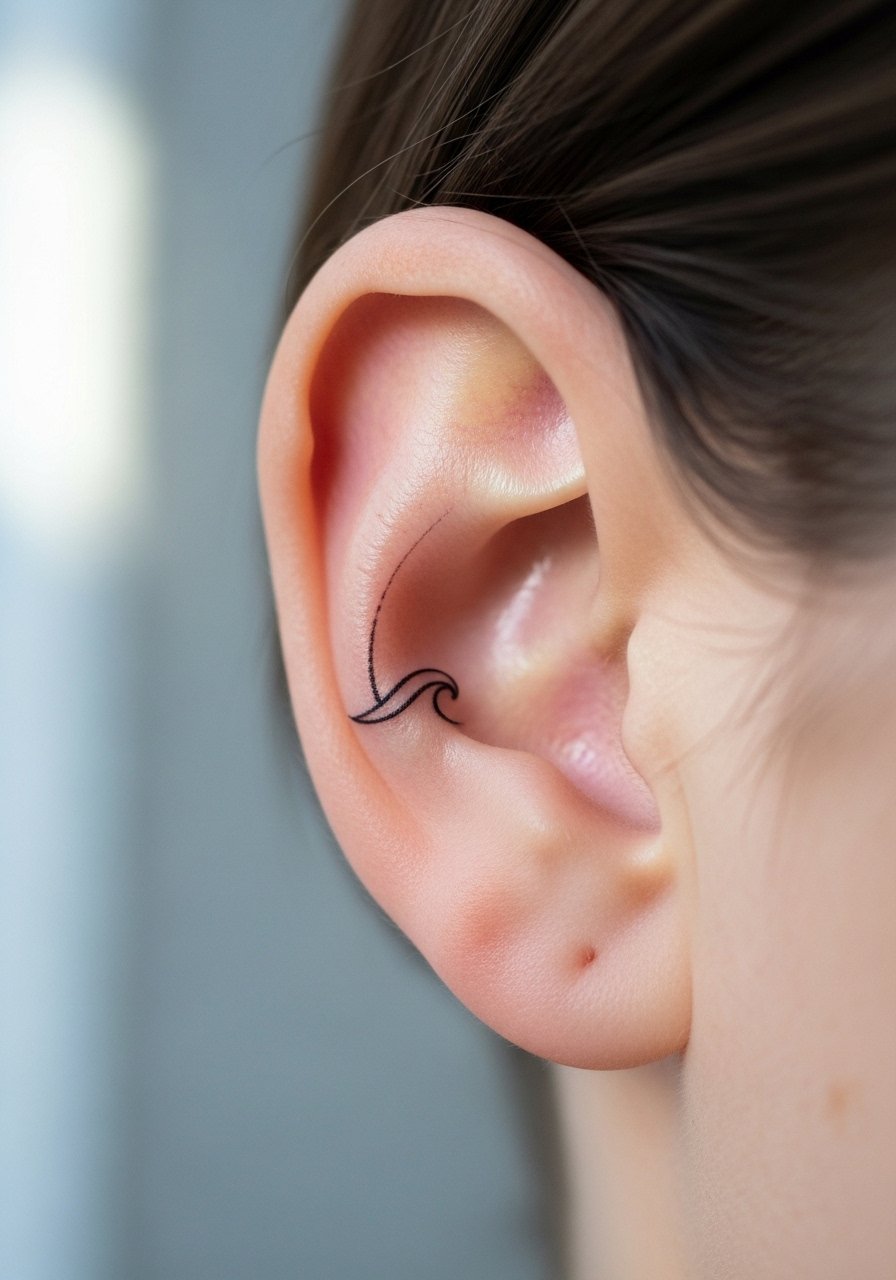
Ear-helix waves mimic jewelry and can be combined with piercings for layered adornment. They’re delicate and highly visible in cropped hairstyles.
Style & Design Details
- Tattoo style: Micro decorative
- Recommended size: tiny, under 1 inch
- Best placements: helix, tragus edge, behind ear
- Color vs. blackwork: black single-needle
- Design elements: curved tiny crest, tapered tail to follow ear rim, minimal dotwork
- Longevity note: ear skin is thin; micro lines may blur—expect touch-ups
- Who it suits: short-hair wearers, jewelry-lovers, subtle expressionists
Finding the Right Artist
Artists with micro-helix examples are ideal. Ask how they manage angles and hold for the curved surface. Avoid artists without healed ear-work samples.
Aftercare & Healing Tips
Avoid headphones that press on the area; clean gently and apply a small amount of After Inked Tattoo Lotion. Be mindful of sleeping positions for a few nights.
- Full-Back Ocean Scene with Multiple Waves
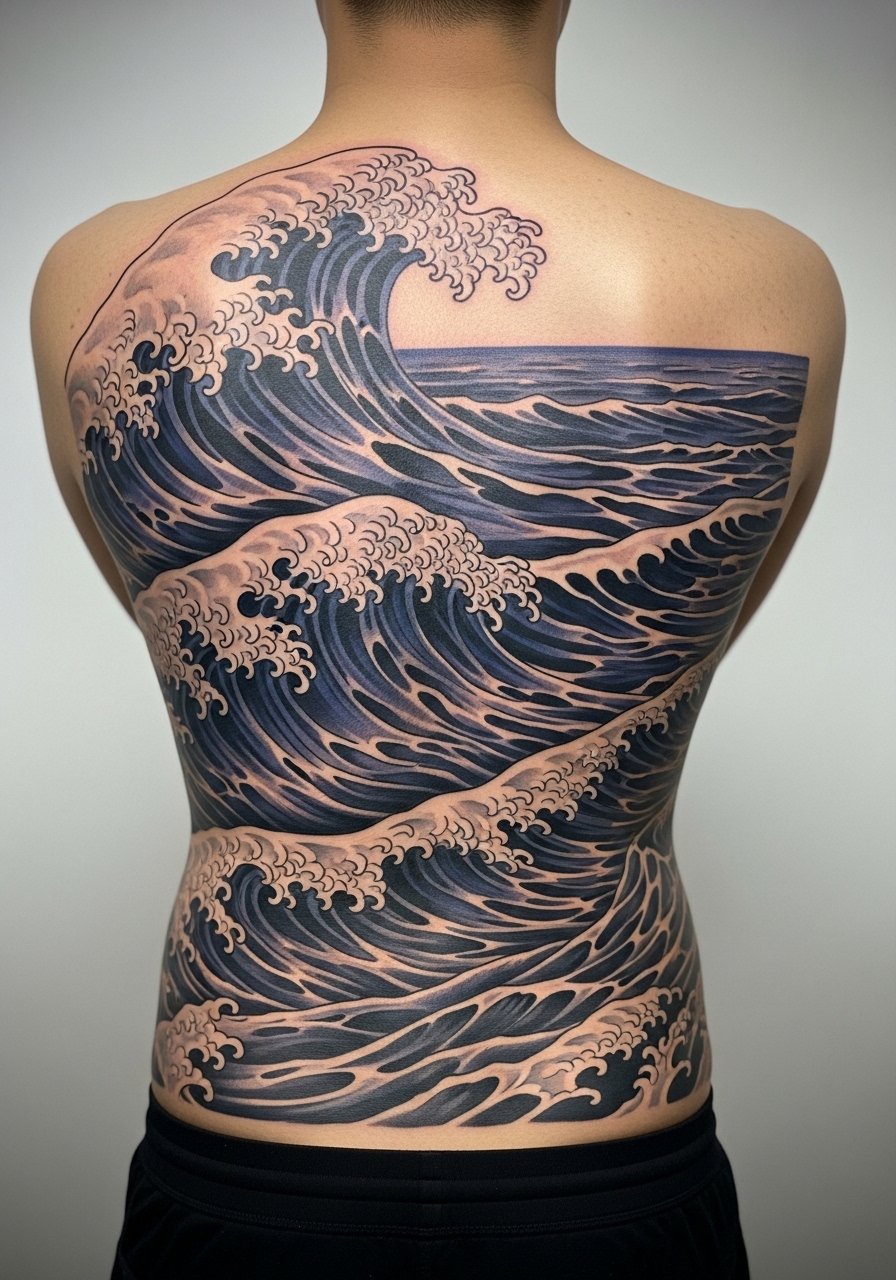
Go big with a full-back ocean composed of many layered waves. This cinematic approach gives the artist room to play with depth and narrative across the whole canvas.
Style & Design Details
- Tattoo style: Large-scale illustrative / Japanese traditional
- Recommended size: full back (12–18 inches)
- Best placements: full back, back-to-thigh wrap
- Color vs. blackwork: indigo, black, and hints of muted teal
- Design elements: layered crests, dynamic negative space, storm clouds, subtle highlights, pathway for narrative imagery
- Longevity note: large pieces hold detail longer but need consistent SPF and moisturizing
- Who it suits: collectors, long-term commitment clients, narrative lovers
Finding the Right Artist
This is a multi-session commitment. Choose an artist with full-back narrative pieces in their portfolio. Ask about session lengths, healing windows, and how they plan composition over the back’s curvature. Avoid artists without multi-session project experience.
Aftercare & Healing Tips
Expect many sessions and staged healing. Use Saniderm second skin bandage roll or follow your artist’s wrap guidance. Clean, moisturize with Tattoo Goo Aftercare Kit, and protect with long-term SPF 50 to keep contrast vivid.
You’ve just scrolled through 24 ways to wear movement — from tiny micro crests to full-back ocean narratives. There’s a Japanese traditional wave tattoo for nearly every appetite: minimal and discreet, bold and graphic, color-rich, or monochrome. Save this article and bring your favorite images to your consult so you and your artist can iterate on scale and flow.
If one product could make healing feel less chaotic, I’d recommend grabbing a Saniderm second skin bandage roll before your session — having it ready removes one small stress after the chair. Which of these wave styles is calling your name, and where are you thinking of placing it? Pin it, share it with a friend, and use the notes for your next consultation.