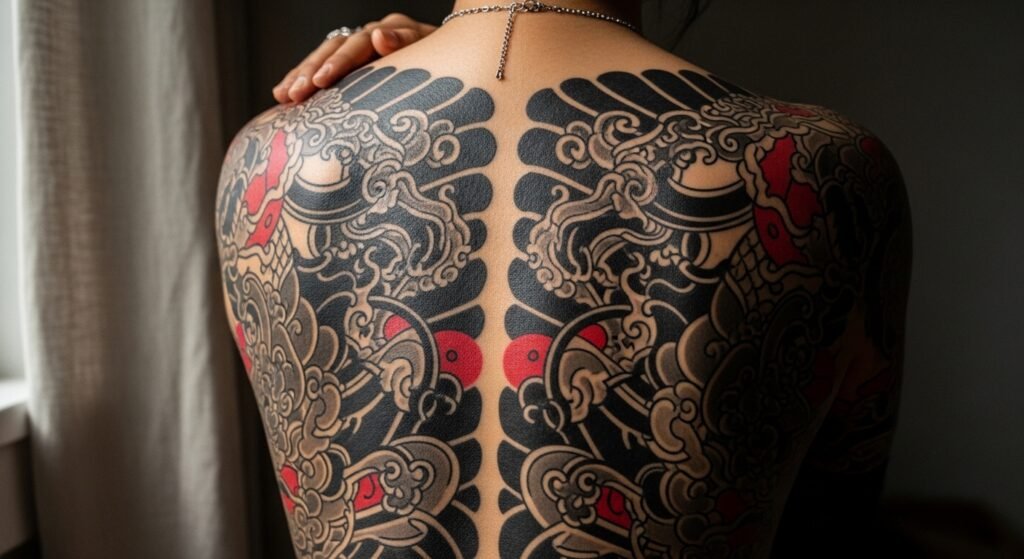
Sitting in a consultation, you might catch yourself scrolling through late-night inspiration boards, bookmarking dramatic images until one idea won't let go. A Japanese traditional tattoo back piece carries weight — cultural symbolism, sweeping movement, and the scale to tell a full story across your body. Whether you're leaning toward classical irezumi motifs or a modern neo-traditional reinterpretation, these 22 viral Japanese traditional tattoo back piece ideas will help you visualize what looks best on your canvas.
Below you'll find full-back and partial-back concepts, clear style breakdowns, pain and placement notes, and realistic healing guidance. Each idea includes tips on what to ask your artist, what to expect during healing, and helpful aftercare or prep products like Saniderm skin-safe bandages and Hustle Butter Deluxe tattoo aftercare balm that I often recommend. Pin what moves you, bring it to your appointment, and use these notes to talk through size, color, and placement with your artist.
- Dragon and Wave Full-Back Horimono
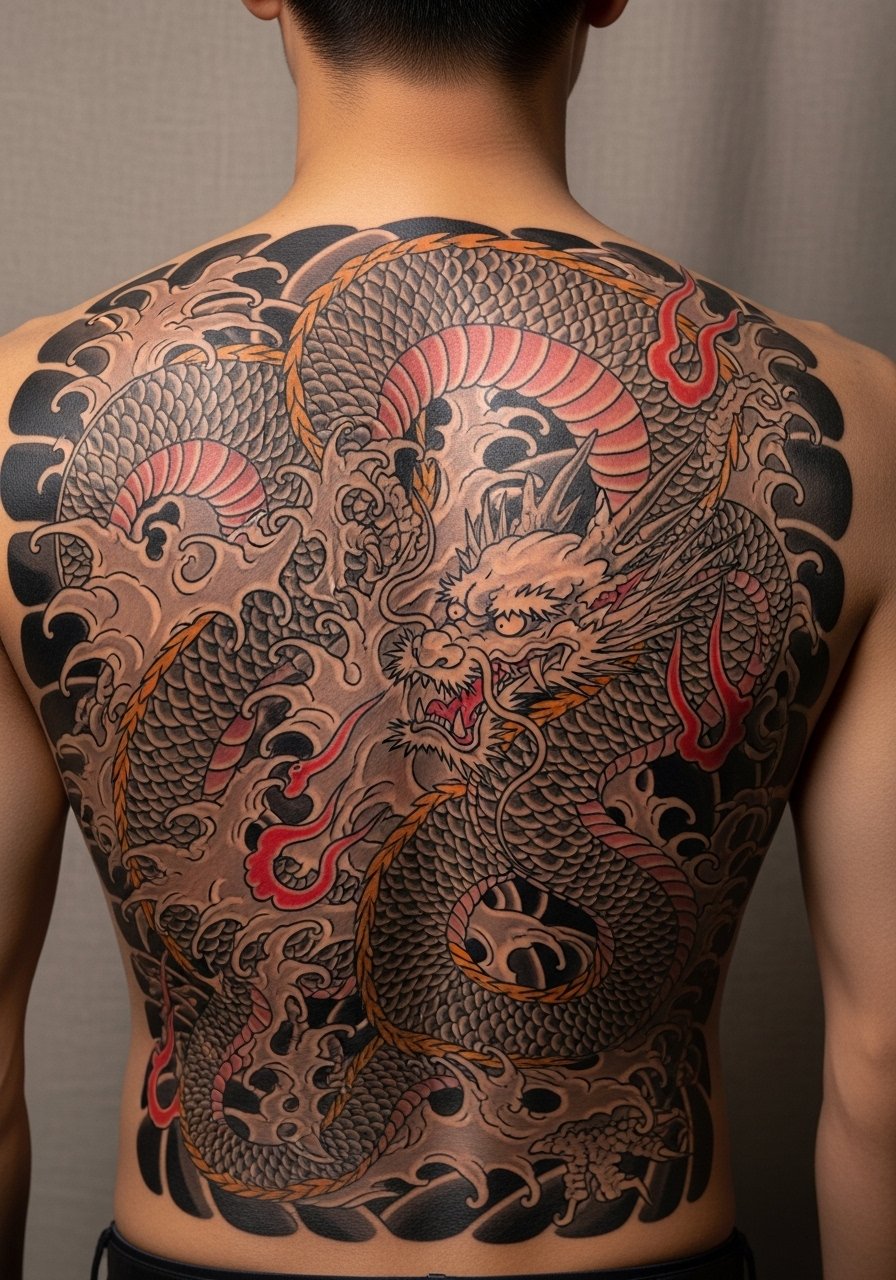
A classic irezumi composition: a winding dragon coiling down the spine amid crashing ukiyo-e waves. This design reads as motion and power, with the dragon’s scales and the wave foam providing texture against the flat black and red fills. It suits anyone wanting a dramatic, narrative back piece that carries mythic energy and movement.
- Tattoo style: Traditional Japanese (irezumi) with bold outline and sumi wash shading
- Recommended size: Full back or upper-to-mid back, often 14–18 inches tall
- Best placements: Full back, spine-centered, upper back-to-shoulder-blade wrap
- Color vs. blackwork: Rich blacks with selective red and orange accents — prevents over-saturation
- Design elements: dragon scales, cloud forms, wave crests, wind bars, chrysanthemum accents, negative-space highlights
- Longevity note: Bold lines age well; color requires regular SPF to stay vivid
- Who it suits: fans of classic irezumi, collectors, anyone comfortable with multi-session work
Finding the Right Artist
Look for portfolios with full-back horimono or apprenticeship in traditional Japanese styles. Ask about their experience with scale work and how they plan to flow the piece around your shoulder blades and spine. Red flags: an artist who only posts tiny tattoos or avoids bold color packing. For a large-scale horimono, pick a seasoned artist over an apprentice. If you’re sketching references, a tattoo flash book or using Procreate for mockups helps refine composition.
Aftercare & Healing Tips
Cover large sessions with a second-skin wrap like Saniderm for 2–5 days to limit irritation. Expect heavy scabbing first 7–10 days; use a fragrance-free soap such as Dr. Bronner’s unscented castile and a thin layer of Hustle Butter Deluxe once peeling begins. Plan touch-ups after 8–12 weeks for color saturation tweaks. Long-term, use an SPF 50 tattoo sunscreen stick to protect the reds from fading.
- Koi River Flow Mid-Back Panel
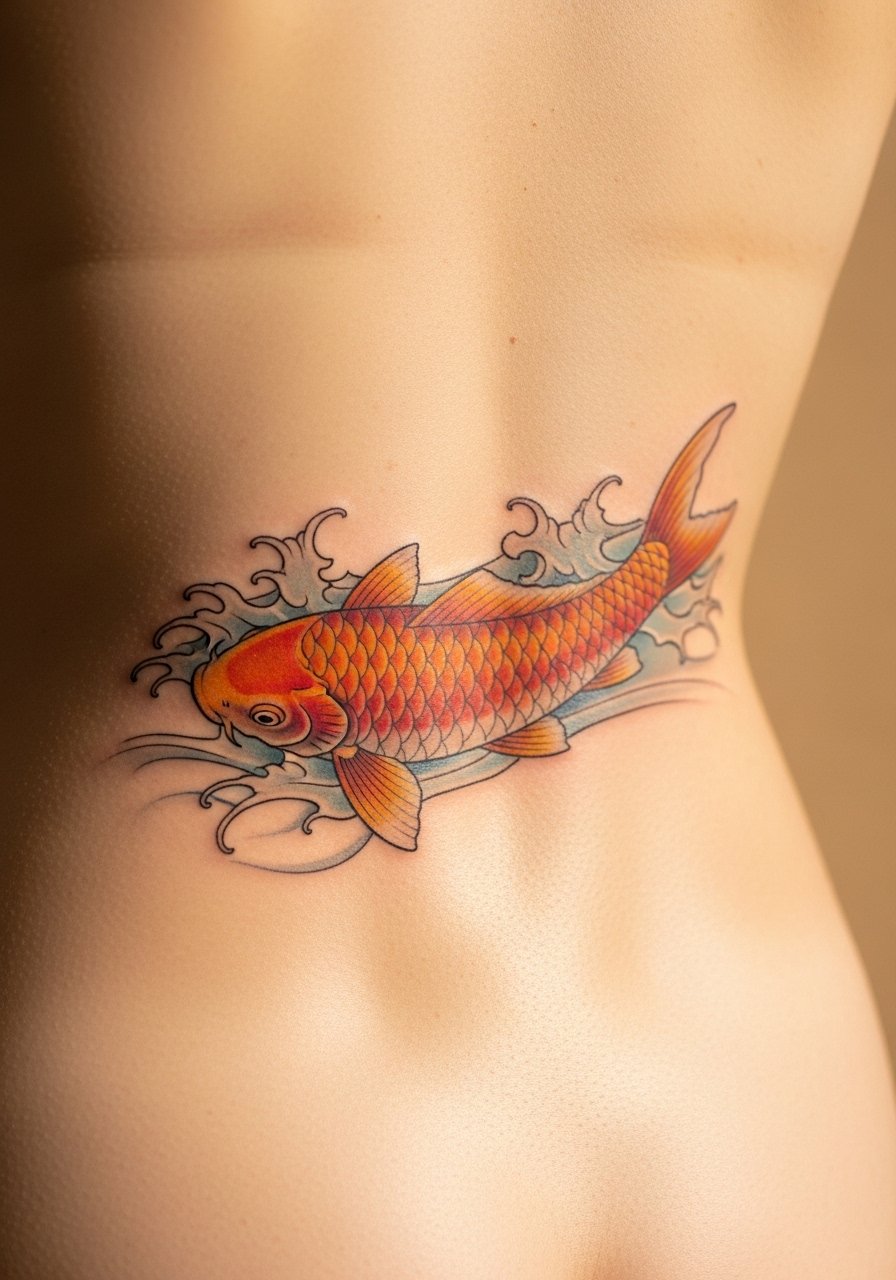
Koi swimming upstream makes for a meaningful mid-back panel with clear visual rhythm. This piece balances flowing fins and water lines, creating a dynamic silhouette that reads beautifully under clothing. It’s slightly less intimidating than a full back piece but still dramatic.
- Tattoo style: Neo-traditional Japanese with illustrative shading
- Recommended size: Palm-sized to medium panel (8–12 inches)
- Best placements: Mid-back, lower back bridge, side-of-spine for asymmetry
- Color vs. blackwork: Strong color — orange, gold, and teal for water contrast
- Design elements: koi scales, rippling water, peony or lotus accents, linework fins, drop-shading
- Longevity note: Color-packed scales hold if packed deeply; avoid shallow color packing to prevent patchy fading
- Who it suits: first-timers wanting a middle-ground scale, lovers of symbolic tattoos
Finding the Right Artist
Search artists who show animal anatomy and color transitions. Ask for healed photos of koi or similar fish. Confirm the artist’s color-packing technique and which inks they use — many pros prefer brands like Kuro Sumi or Intenze for longevity. If you want to preview placement, try a temporary Inkbox kit to test scale and flow.
Aftercare & Healing Tips
Small-to-mid panels respond well to traditional wrap-and-clean routines. Use fragrance-free soap, then switch to an unscented lotion like Lubriderm Daily Moisture while peeling. For thicker color patches, avoid excessive sun for the first 6 months and use a mineral SPF 50 stick thereafter.
- Phoenix Rising Across the Shoulder Blades
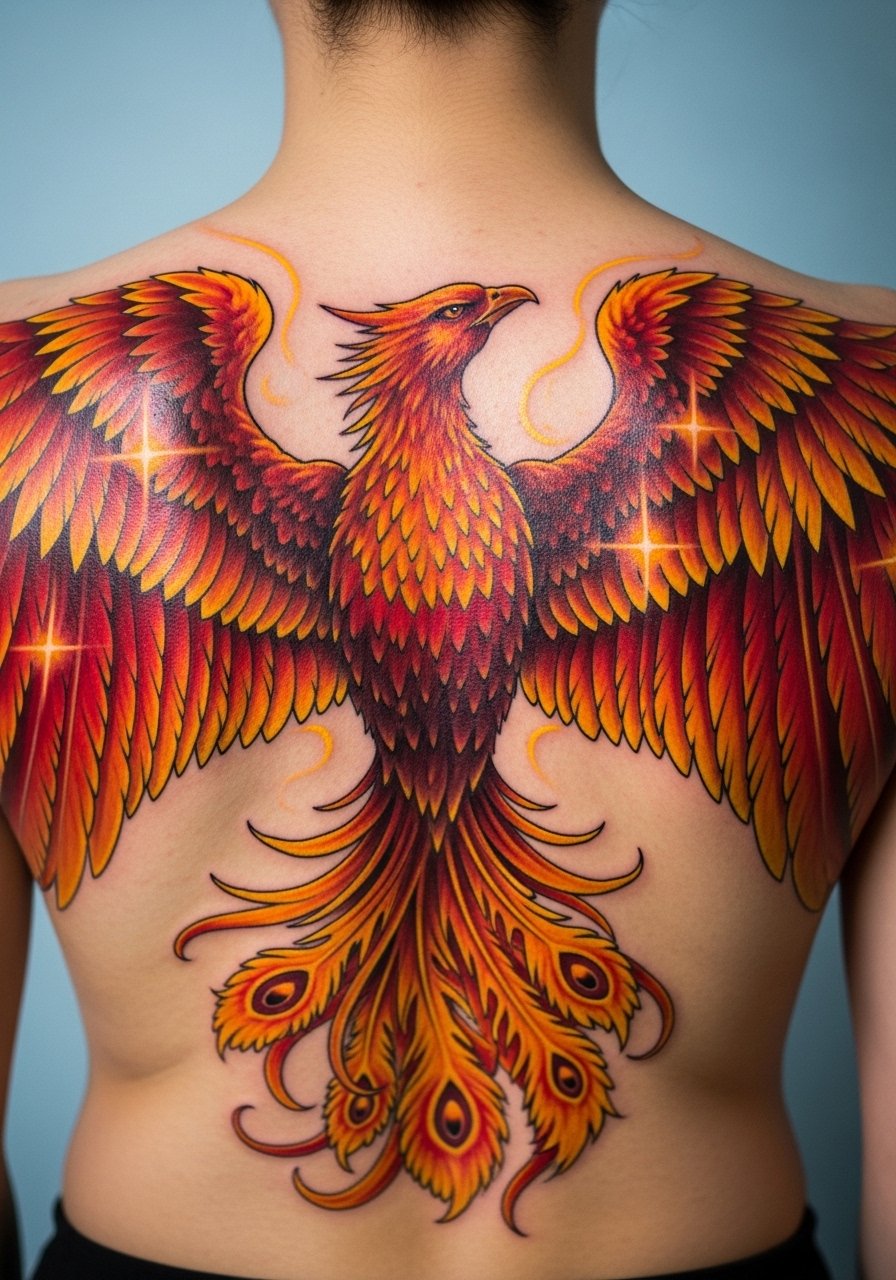
A phoenix gives dramatic vertical lift and looks stunning when its wings wrap across the shoulder blades. The interplay of warm colors and sweeping feathers makes this a showstopper that works as an upper-back focal point.
- Tattoo style: Neo-traditional / illustrative Japanese
- Recommended size: Upper back full wingspan (10–16 inches)
- Best placements: Between shoulder blades, upper back, wrap to shoulders
- Color vs. blackwork: Warm color palette recommended — reds, golds, burnt orange
- Design elements: layered feathers, subtle stipple shading, flame motifs, wind bars, talon detail
- Longevity note: Feather detail needs crisp linework; keep moisturized to prevent flaking that dulls edges
- Who it suits: comeback stories, those who want symbolic rebirth motifs
Finding the Right Artist
Look for feather work and smooth color gradients in portfolios. Ask how they avoid color migration on broad feather fills. Avoid artists who lack large color-piece examples. For sketch planning, a design tablet or Procreate mockup helps you visualize wing spread.
Aftercare & Healing Tips
Upper-back pieces often benefit from Saniderm for the first 3 days; if you're sweating, switch sooner. Clean twice daily with a mild antibacterial soap, then use a thin layer of After Inked Tattoo Moisturizer. Avoid tight straps during healing to prevent rubbing away scabs and detail.
- Samurai and Peony Narrative Back Panel
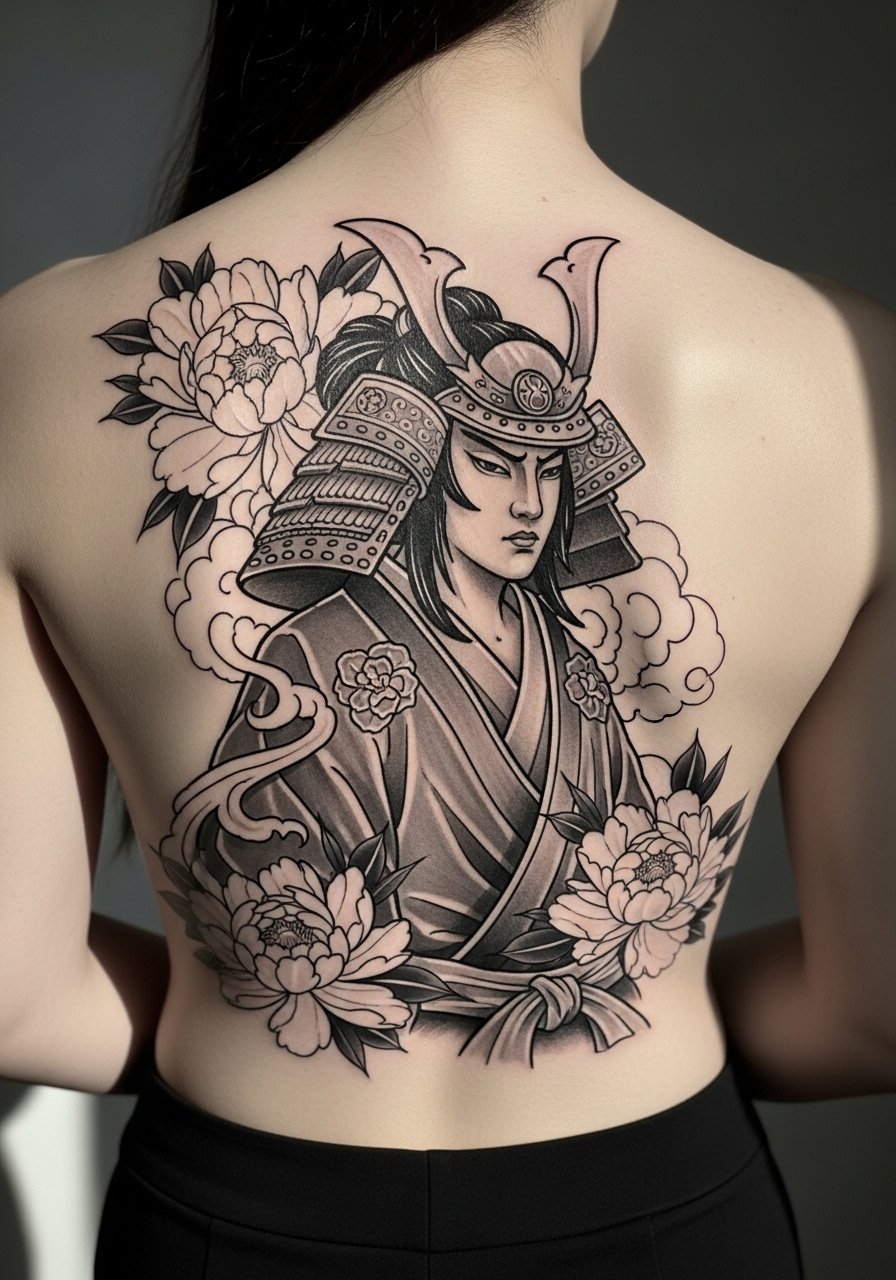
A samurai portrait anchored by peony blooms reads like a story across the back. The human figure provides focal interest while florals soften the composition. This is a great option if you want figure work mixed with traditional motifs.
- Tattoo style: Illustrative Japanese with portraiture
- Recommended size: Medium to large panel (12–16 inches)
- Best placements: Upper-to-mid back, left or right scapula with center elements
- Color vs. blackwork: Mixed — monochrome portrait with saturated floral color accents
- Design elements: portrait linework, kimono patterning, peony petals, wind bars, subtle background clouds
- Longevity note: Facial detail needs crisp single-needle work; expect touch-ups on fine features
- Who it suits: collectors, people wanting narrative elements, portrait lovers
Finding the Right Artist
Pick an artist comfortable with both faces and Japanese motifs. Ask for healed portrait examples and how they render fabric folds at large scale. Avoid those who lack experience with realistic facial proportions in tattoo form. A sketchbook with reference photos or digital mockups helps.
Aftercare & Healing Tips
Portrait lines are delicate — keep the area clean and moisturized with an unscented lotion like Lubriderm. If numbness is desired for long portrait sessions, discuss a topical numbing cream such as Zensa with your artist beforehand.
- Hannya Mask and Bamboo Vertical Spine Piece
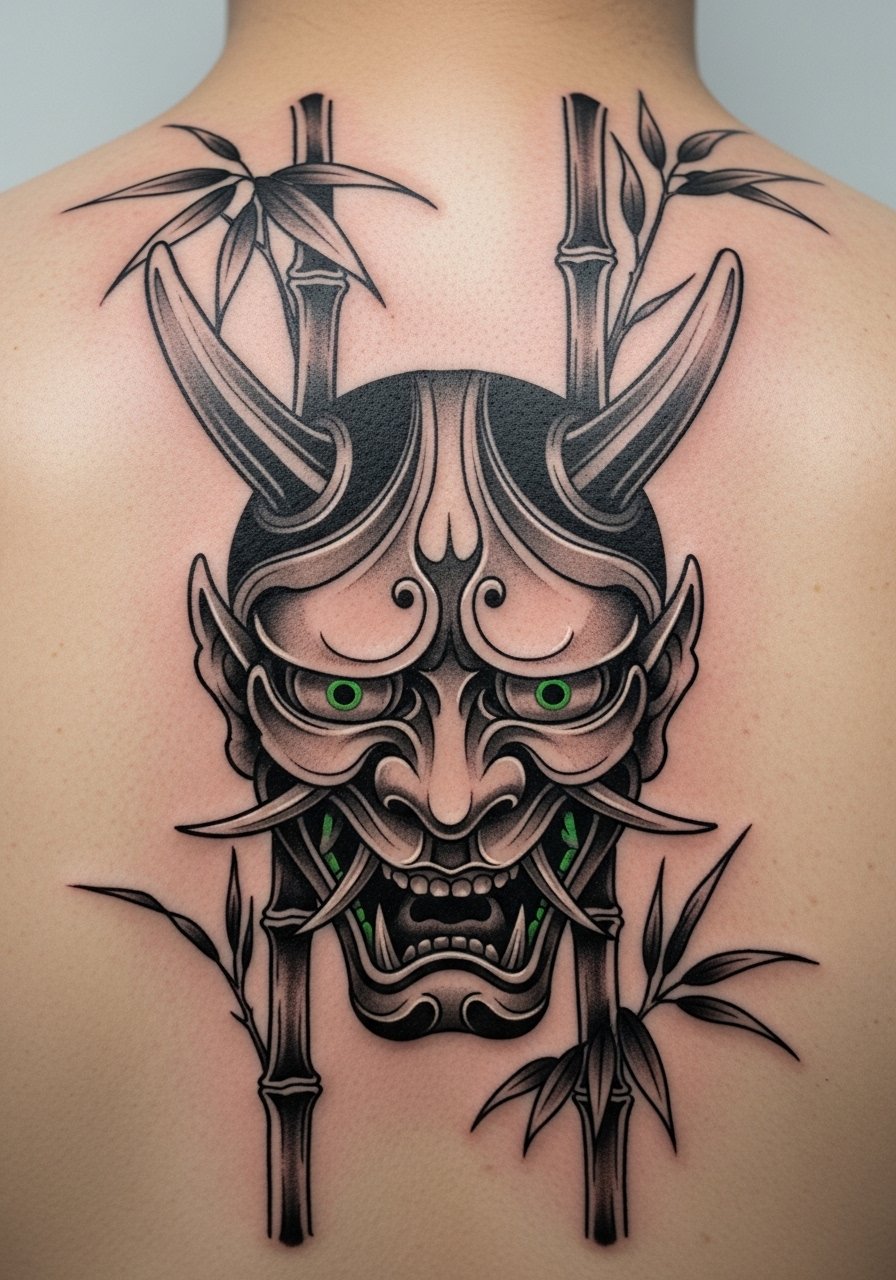
A Hannya mask centered on the spine with bamboo flanking it makes a strong vertical statement. The mask’s emotion contrasts with the serenity of bamboo, perfect for someone who likes tension in their narrative.
- Tattoo style: Traditional Japanese with bold blackwork
- Recommended size: Spine length piece (10–14 inches)
- Best placements: Centered on the spine, lower to mid-back
- Color vs. blackwork: Primarily black with green bamboo accents or muted red in the mask
- Design elements: mask facial detail, bamboo nodes, negative-space highlights, stipple background
- Longevity note: Spine placement can be prone to slight blowout if lines are too thin; choose a strong outline
- Who it suits: people who like dark symbolism, gothic or dark academia aesthetics
Finding the Right Artist
Find portfolios that show fine line work aligned to the spine. Ask about how they protect against blowouts on bone-heavy areas and which needle configurations they use. Red flags include only small tattoos or inconsistent line thickness on long lines.
Aftercare & Healing Tips
Spine tattoos can be more painful and ooze more—plan for longer sessions with breaks. Use a second-skin wrap initially, then switch to a fragrance-free lotion like After Inked during peeling. Keep clothing loose to avoid rubbing scabs.
- Full-Back Kannon (Guanyin) in Sumi-E Wash
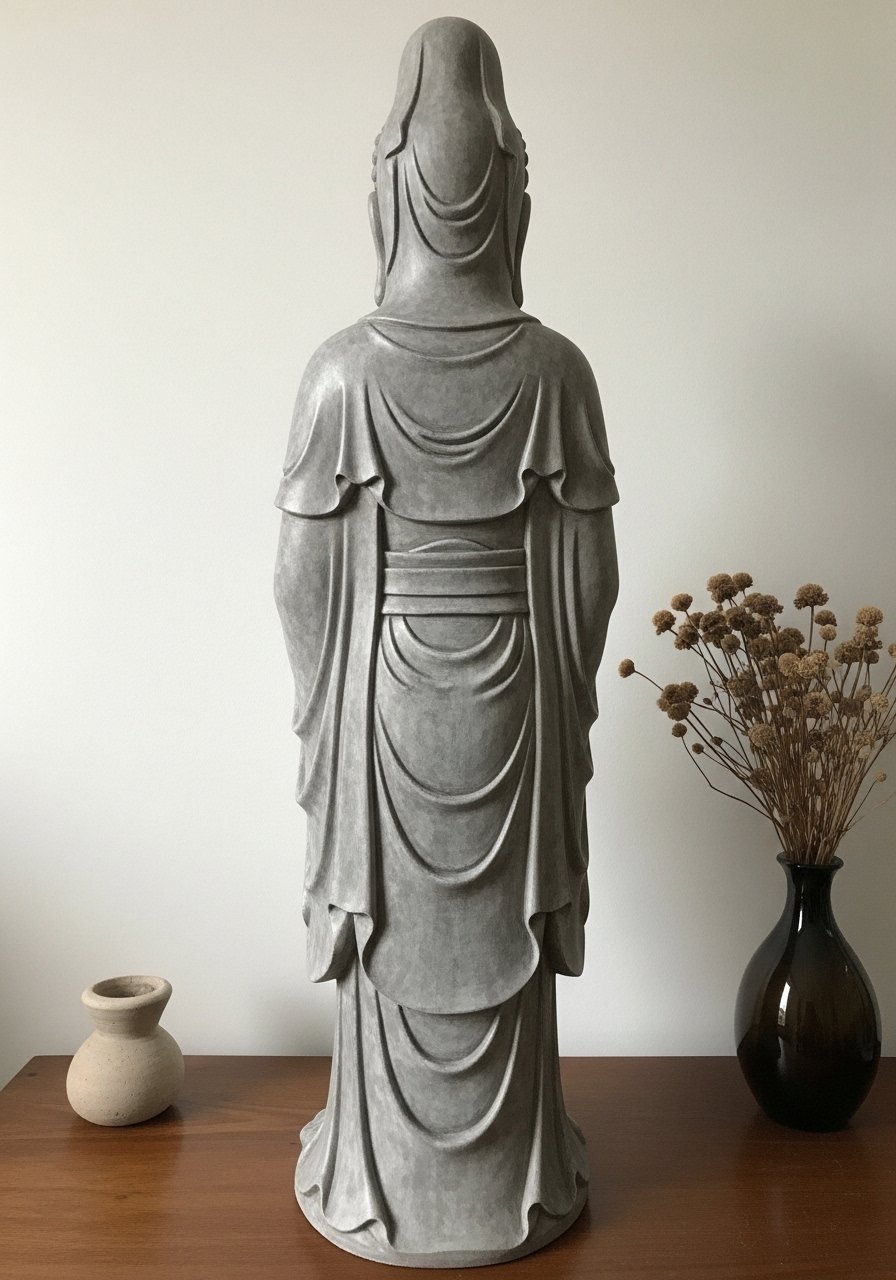
A Kannon in a sumi-e wash offers spiritual calm and painterly texture across the full back. The wash effect creates soft transitions that look like ink on paper, translating beautifully to skin in a monochrome palette.
- Tattoo style: Sumi-e / illustrative black-and-gray
- Recommended size: Full back or upper back focus (15–20 inches)
- Best placements: Full back, centered with halo spread
- Color vs. blackwork: Black-and-gray for contemplative tone
- Design elements: sumi washes, soft stippling, lotus throne, halo negative space, delicate line details
- Longevity note: Gray washes require deep saturation up front to avoid patchy fade
- Who it suits: contemplative personalities, lovers of fine-art aesthetics
Finding the Right Artist
Pick an artist experienced in black-and-gray realism and wash techniques. Ask for healed photos to see how the washes settle. Avoid artists who only do bold traditional fills if you want soft gradients. Consider a consultation to discuss session length and shading approach.
Aftercare & Healing Tips
Black-and-gray washes can scab visibly; keep them clean with a mild soap and apply a thin layer of Hustle Butter Deluxe during the flaky phase. Because the work is mostly tonal, sunscreen is critical once healed to preserve subtle gradients.
- Oni and Storm Cloud Back Panel (Dark Japanese Aesthetic)
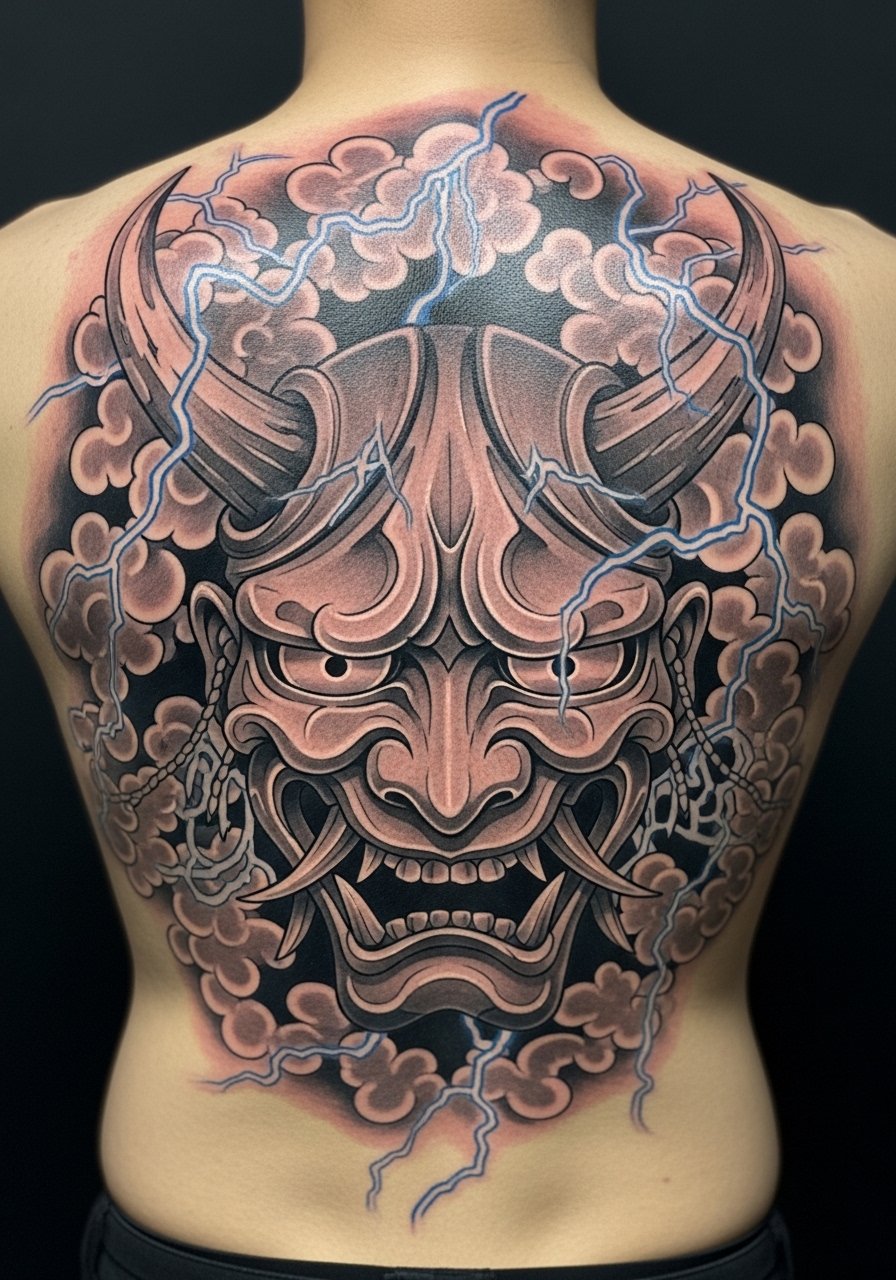
This darker aesthetic pairs demonic Oni imagery with brooding clouds and lightning. It’s a cinematic choice—sharp contrasts and dramatic shading read well from a distance and up close.
- Tattoo style: Blackwork with neo-Japanese influences
- Recommended size: Large panel spanning mid-to-upper back (12–18 inches)
- Best placements: Upper back, across shoulder blades, spine-adjacent
- Color vs. blackwork: Primarily black-and-gray with selective cool blue highlights
- Design elements: Oni horn detail, storm clouds, bolt lines, negative space lightning, textured fill
- Longevity note: High-contrast blackwork ages well; blues can dim over time
- Who it suits: dark academia, gothic aesthetics, narrative tattoo collectors
Finding the Right Artist
Seek artists who excel in heavy black fills without patchiness and who have examples of cloud texture and atmospheric shading. Ask how they avoid patchy saturation in big black areas. Avoid those with no full-back examples.
Aftercare & Healing Tips
Large black fills generate heat during sessions; plan breaks and bring cooling pads. After wrapping, use a fragrance-free lotion. For blues, protect from sun long-term with an SPF 50 tattoo sunscreen stick.
- Peony-Centered Mandala Back Piece
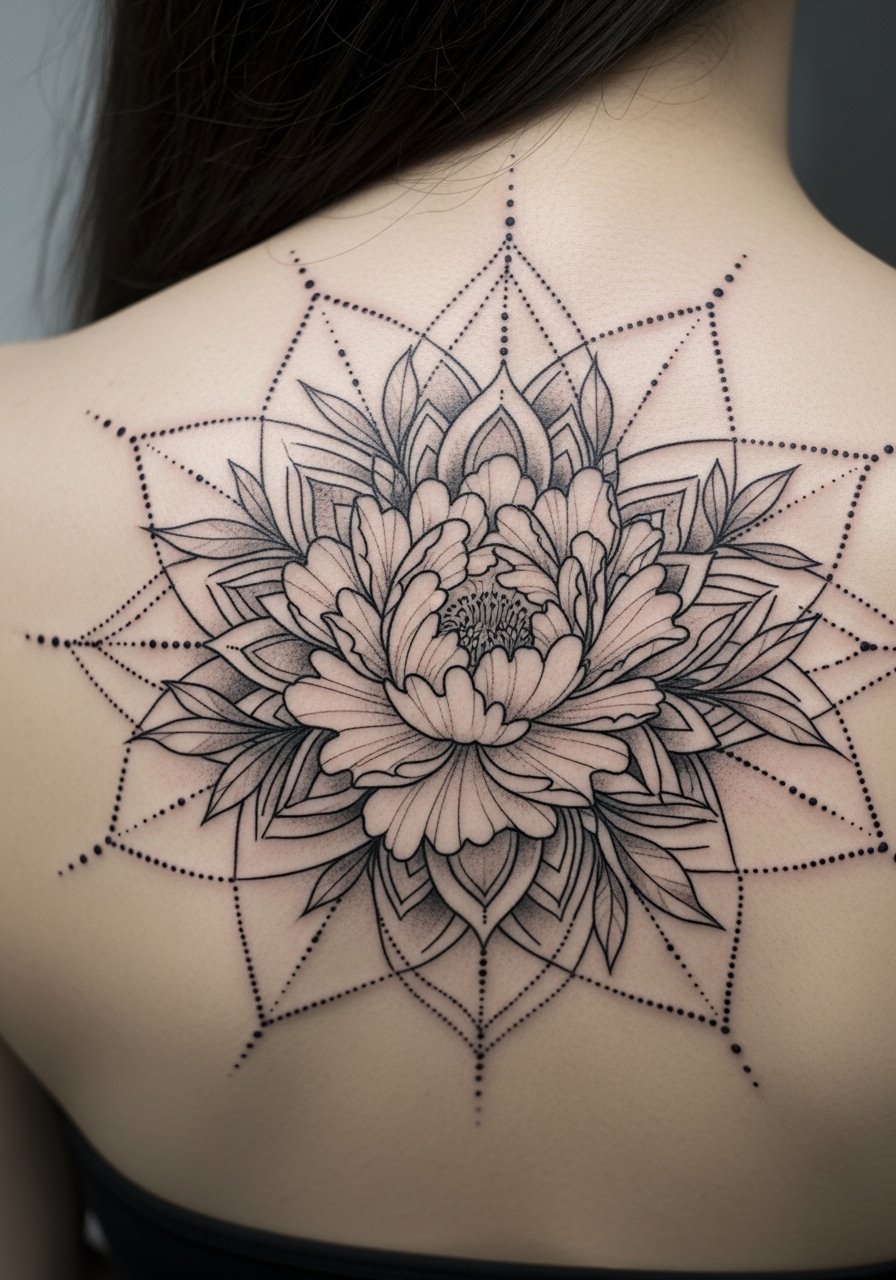
A peony mandala blends floral Japanese elements with meditative symmetry. This sits well on the upper back, offering both ornamentation and space for future additions.
- Tattoo style: Fine-line + dotwork with Japanese florals
- Recommended size: Upper-back medallion (8–12 inches diameter)
- Best placements: Centered upper back, between shoulder blades
- Color vs. blackwork: Blackwork with optional soft pink accents
- Design elements: single-needle petals, dot-shading, ornate linework, micro patterns, negative-space borders
- Longevity note: Fine lines can blur over decades; proper spacing helps longevity
- Who it suits: minimalists who want detailed work, cottagecore or dark academia vibes
Finding the Right Artist
Look for portfolios with single-needle mandala or dotwork pieces. Ask about needle size and spacing to avoid future ink bleed. Avoid artists who primarily do heavy blackwork if you want delicate lines. A stencil test on skin helps preview scale.
Aftercare & Healing Tips
Fine-line tattoos dry differently—use an unscented moisturizer like Lubriderm and avoid picking small flakes. For placement tests, try temporary stencil paper to confirm scale before booking.
- Tsubaki (Camellia) Cascade with Geometric Negative Space
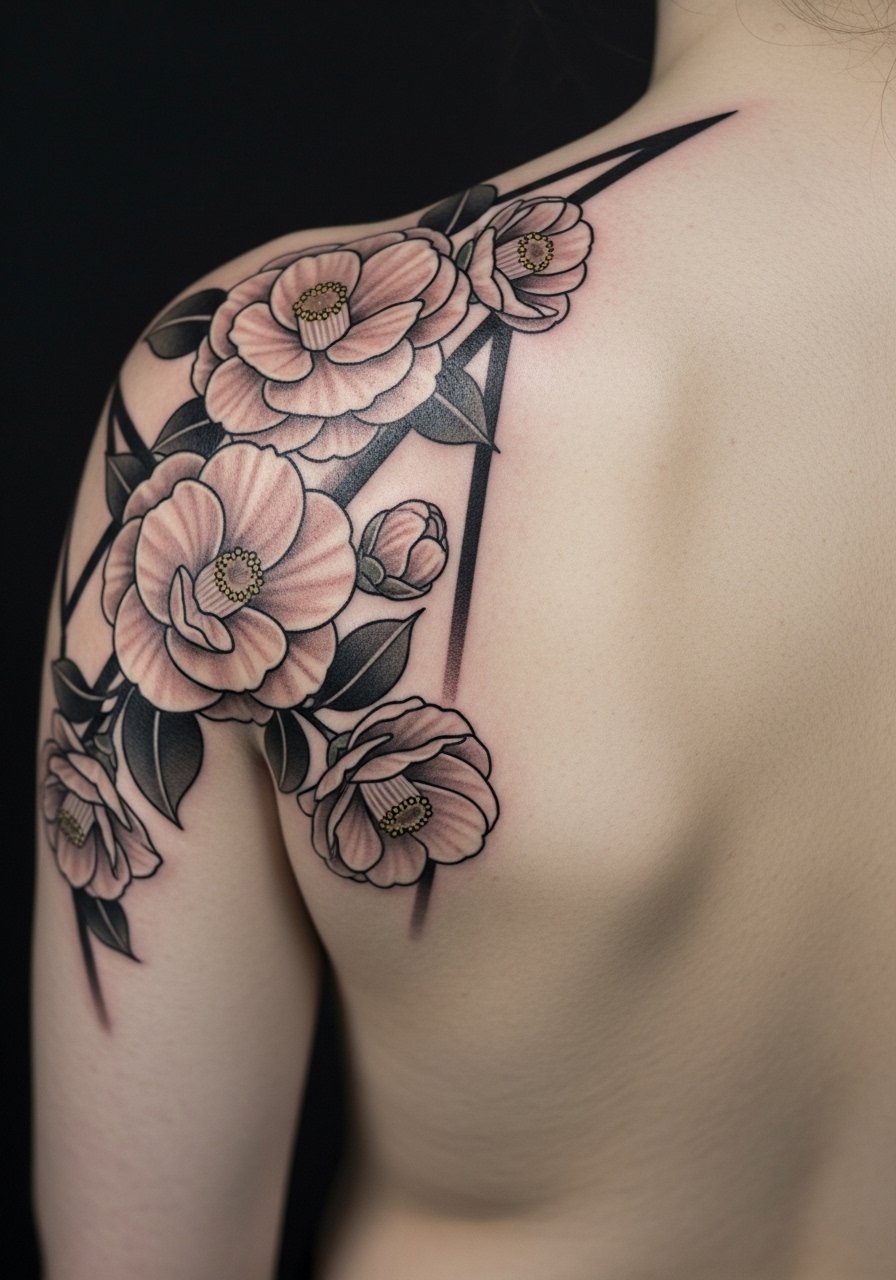
Camellias (tsubaki) offer elegant petals and a classic Japanese floral silhouette. Pairing them with geometric negative space gives a modern twist while keeping traditional symbolism intact.
- Tattoo style: Illustrative Japanese + geometric negative space
- Recommended size: Scapula cascade (6–10 inches)
- Best placements: Left or right scapula, wrap to upper rib
- Color vs. blackwork: Soft color for petals or monochrome for minimalist tone
- Design elements: layered petals, thin stems, geometric cut-outs, subtle stipple background
- Longevity note: Geometric edges need crisp lines; color fades more on sun-exposed shoulders
- Who it suits: minimalists, modern-traditional crossover fans
Finding the Right Artist
Choose someone skilled in both floral realism and clean geometry. Ask for healed photos where shapes remain sharp. A clean stencil layout is essential. Consider a digital mockup to visualize the negative-space interplay.
Aftercare & Healing Tips
Because scapula skin can stretch with movement, wear loose clothing while healing. Clean gently and apply a light fragrance-free lotion like After Inked. For color pieces, apply SPF after healing.
- Tiger Ambush Across the Lower Back
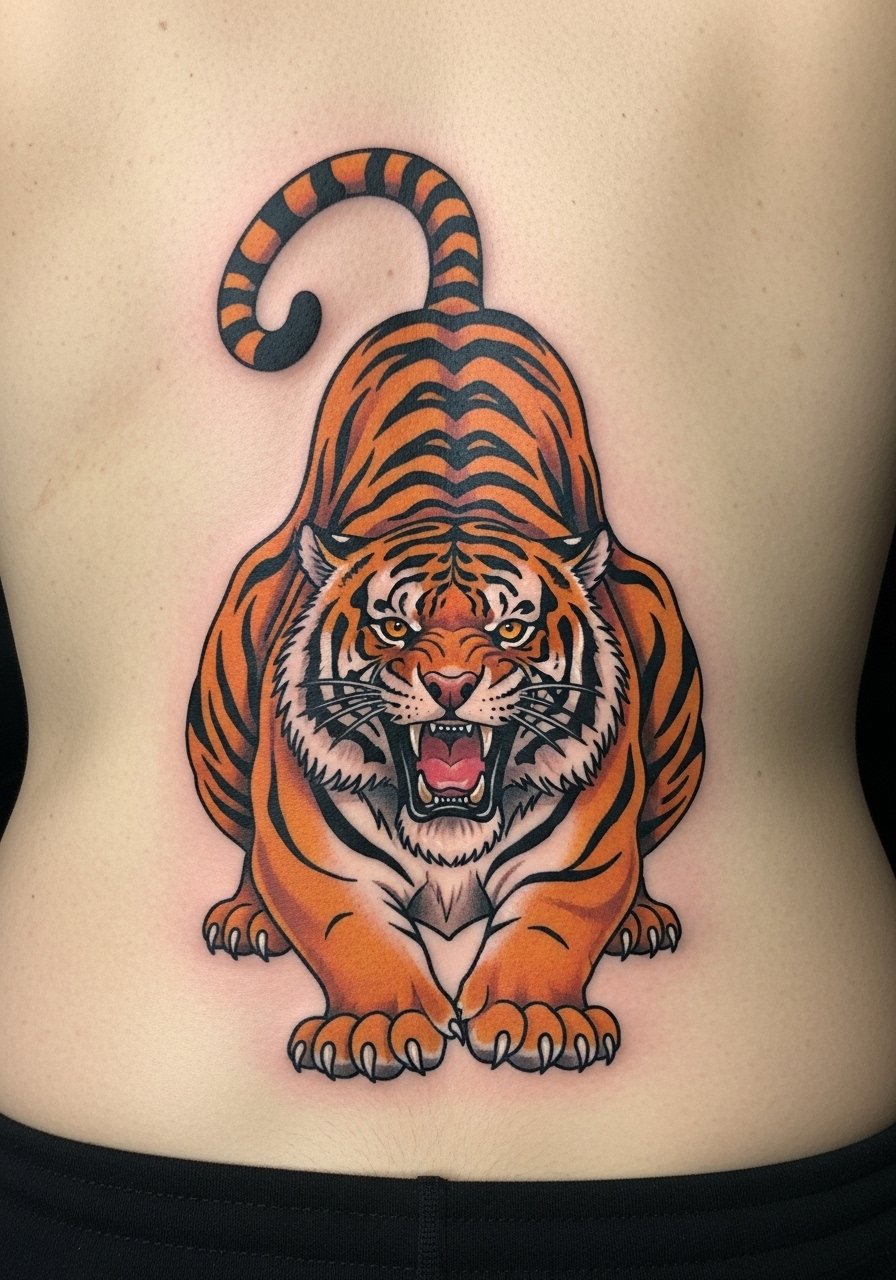
A tiger crouched as if about to pounce makes a lower-back statement. The pose accentuates the lumbar curve and offers big visual impact when moving.
- Tattoo style: Traditional Japanese with animal study
- Recommended size: Lower back span (10–14 inches)
- Best placements: Lower back, wrap slightly to hips
- Color vs. blackwork: Bold orange and deep black for contrast
- Design elements: fur stripes, muscular anatomy, ground texture, small floral accents
- Longevity note: Lower-back skin can stretch; ask artist about anchor lines to prevent distortion
- Who it suits: bold personalities, collectors of animal motifs
Finding the Right Artist
Look for realistic animal tattoos with Japanese composition sense. Ask about how they plan for body curvature and future weight change. Avoid artists who haven’t done lumbar pieces.
Aftercare & Healing Tips
Lower-back healing can be uncomfortable when sitting — plan breaks during sessions. Use a second-skin bandage for the first 48 hours, then wash gently and apply Hustle Butter Deluxe as needed.
- Crane and Pine Full-Back Landscape
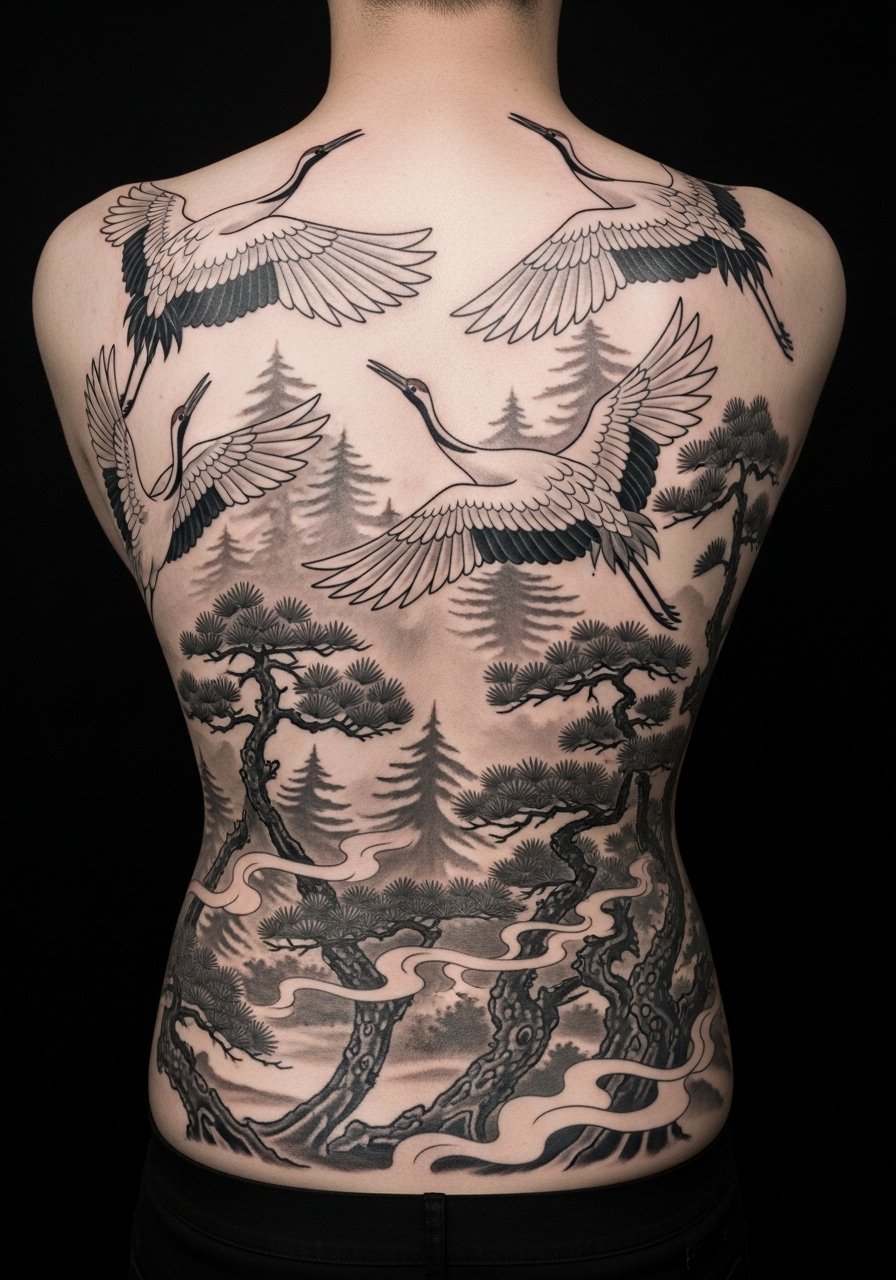
Cranes and pine trees are classic symbols of longevity and resilience. This composition reads like a landscape painting across the back, with plenty of negative space for breathing room.
- Tattoo style: Traditional Japanese landscape with illustrative detail
- Recommended size: Full back or upper-to-mid back (14–20 inches)
- Best placements: Full back, centered horizon across mid-back
- Color vs. blackwork: Black-and-gray with muted green accents
- Design elements: crane wing feather detail, pine needles, mist shading, horizon lines
- Longevity note: Landscape textures age based on saturation and sun exposure
- Who it suits: lovers of subtle narrative, serene aesthetics
Finding the Right Artist
Artists strong in landscapes or illustrative black-and-gray work are ideal. Request healed photos of similar compositions. Ask how they’ll balance empty space with detail to avoid heaviness.
Aftercare & Healing Tips
Large landscapes can take multiple sessions; keep a healing kit ready with unscented lotion and a Saniderm roll for at-home protection between sessions. Use sunscreen long-term to protect green shading.
- Snake and Chrysanthemum Spiral Down the Spine
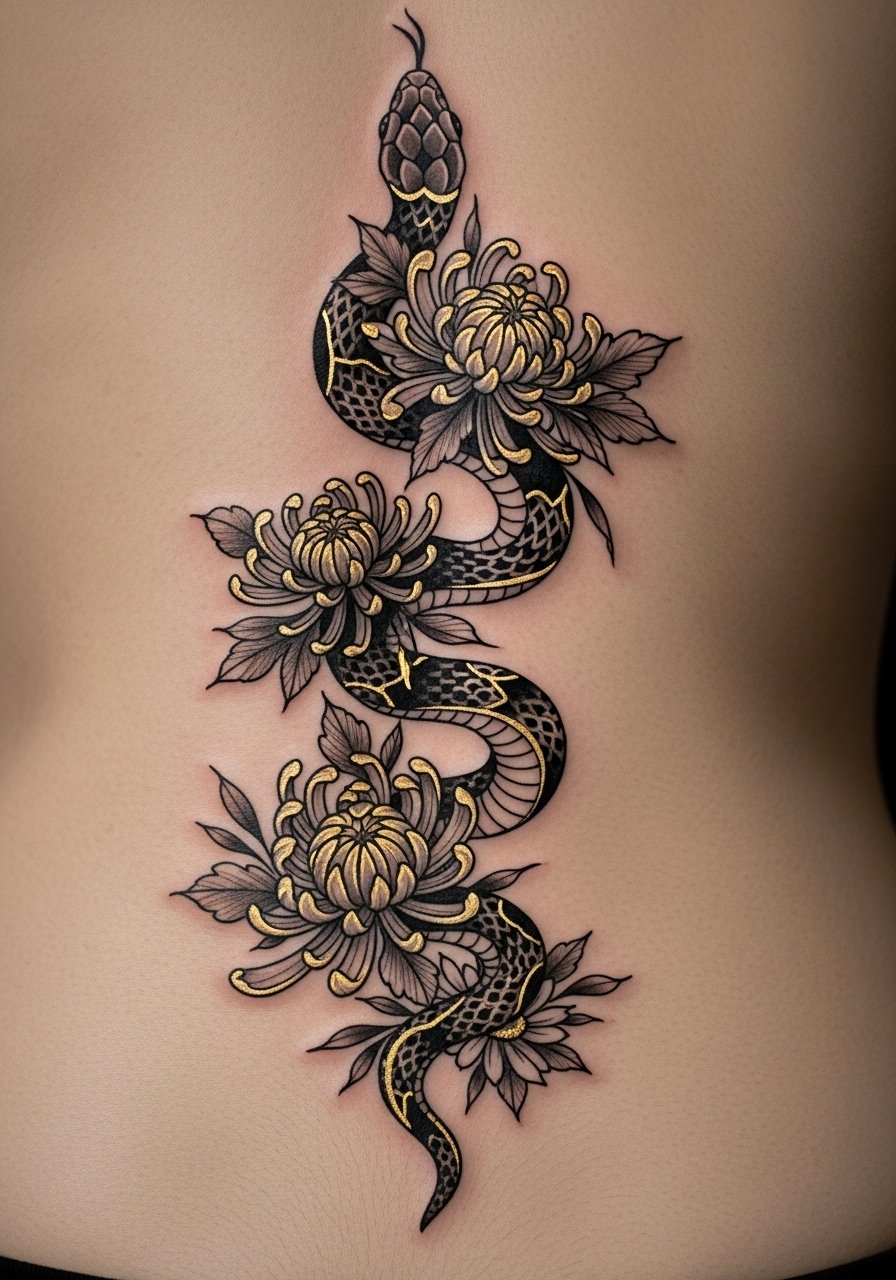
A snake spiraling down the spine creates natural curvature harmony. Chrysanthemums soften the edge while adding traditional Japanese balance.
- Tattoo style: Neo-traditional Japanese mixed with blackwork
- Recommended size: Spine length piece (10–16 inches)
- Best placements: Down the spine, centered on lower to mid-back
- Color vs. blackwork: Blackwork base with gold/yellow floral highlights
- Design elements: serpentine scales, chrysanthemum petals, subtle negative space, small dotwork
- Longevity note: Spine horizontal lines can be tricky; good outline reduces risk of blurring
- Who it suits: fans of dynamic vertical compositions, symbolic pieces
Finding the Right Artist
Look for portfolios with snakes and floral combos and ask how they handle long curves along the spine. Avoid artists who haven’t demonstrated long vertical line control.
Aftercare & Healing Tips
Spine pieces often swell more; schedule sessions with rest afterward. Use a light unscented lotion and consider applying a topical numbing cream like EMLA if you have low tolerance for long sessions.
- Geisha and Fan Dramatic Upper-Back Portrait
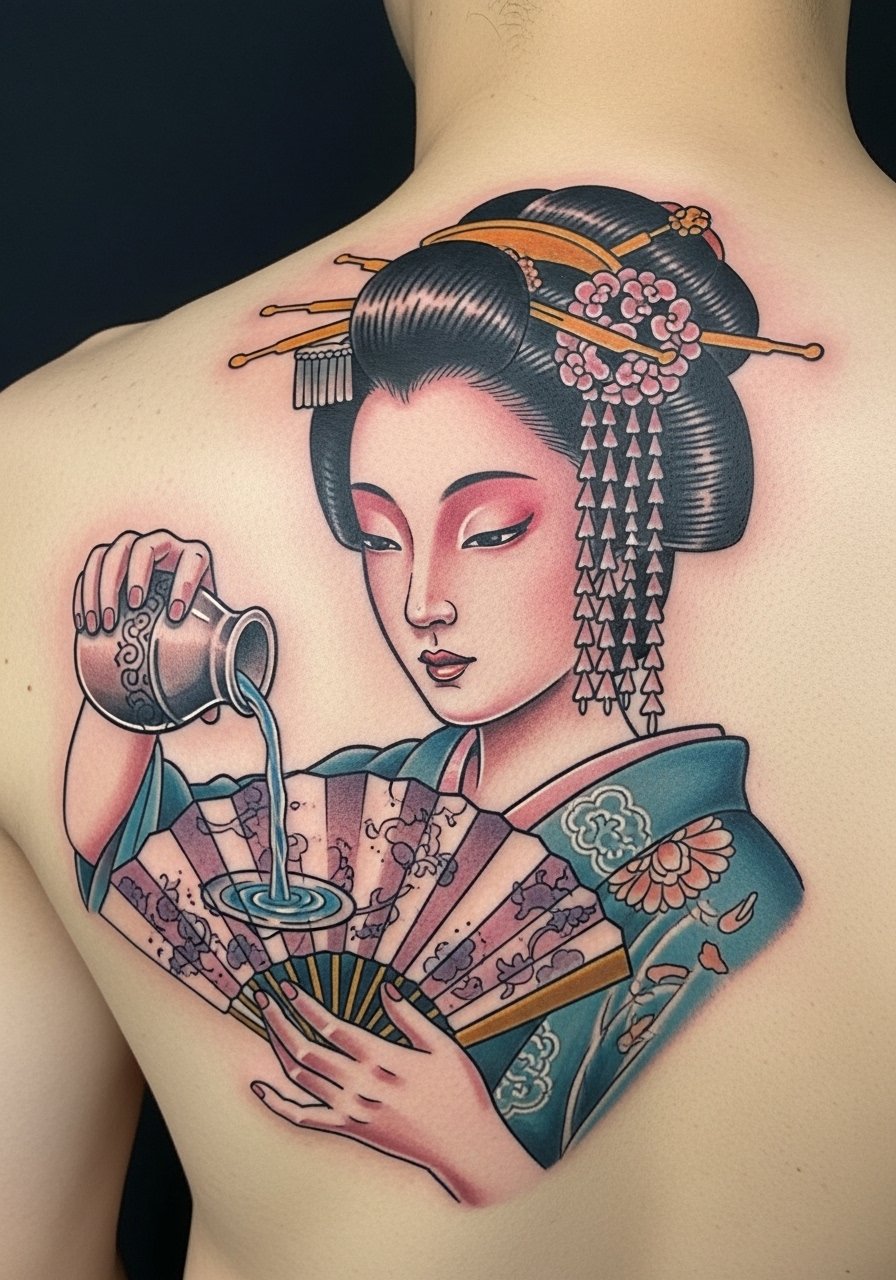
A geisha portrait with an ornate fan gives the upper back a theatrical focal point. The fan can flare wide across shoulder blades for a dramatic silhouette.
- Tattoo style: Illustrative Japanese portrait with decorative elements
- Recommended size: Upper-back panel (10–14 inches)
- Best placements: Upper back between shoulders, shoulder-blade wrap
- Color vs. blackwork: Soft pastels and black outlines to retain contrast
- Design elements: kimono patterning, hair ornaments, delicate facial linework, fan decoration
- Longevity note: Facial lines need clean single-needle work; pastel colors fade faster
- Who it suits: fans of feminine iconography, theatrical aesthetics
Finding the Right Artist
Choose an artist known for portraiture and garment patterns. Ask for healed photos of pastel work and for a plan on preserving soft colors. Avoid those with no portrait experience.
Aftercare & Healing Tips
Upper-back portraits do best with gentle cleaning and moisturizer. For pastel colors, apply SPF consistently after healing. Consider After Inked for the peeling phase.
- Hōō (Japanese Phoenix) with Watercolor Background
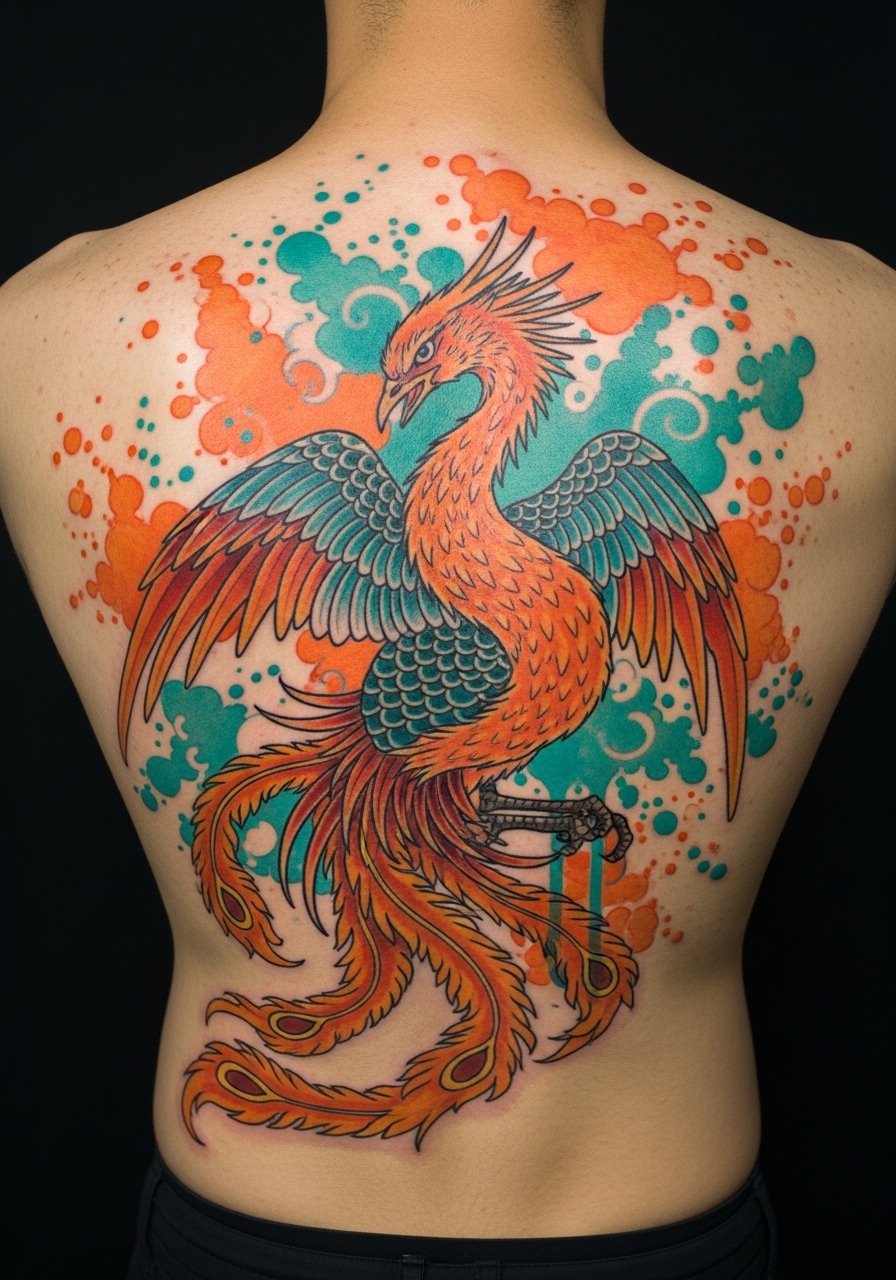
Combining Japanese phoenix forms with watercolor backgrounds keeps the figure strong while allowing modern painterly expression. This hybrid approach softens traditional boundaries.
- Tattoo style: Neo-traditional Japanese with watercolor accents
- Recommended size: Upper-to-full back (12–18 inches)
- Best placements: Full back, upper back to shoulder wrap
- Color vs. blackwork: Bold subject with loose watercolor hues behind it
- Design elements: feather detail, watercolor wash, wind bars, soft dotwork blends
- Longevity note: Watercolor fades faster; bold outlines help maintain shape
- Who it suits: creative spirits, modern-traditional crossover fans
Finding the Right Artist
Find artists who pair crisp linework with soft watercolor washes in healed photos. Ask about pigment types and how they prevent watercolor from becoming muddy over time.
Aftercare & Healing Tips
Watercolor requires careful sun protection; use an SPF 50 tattoo sunscreen stick routinely. During healing, use a gentle antibacterial soap and a thin layer of Hustle Butter Deluxe.
- Map of Japan Silhouette with Small Icon Motifs
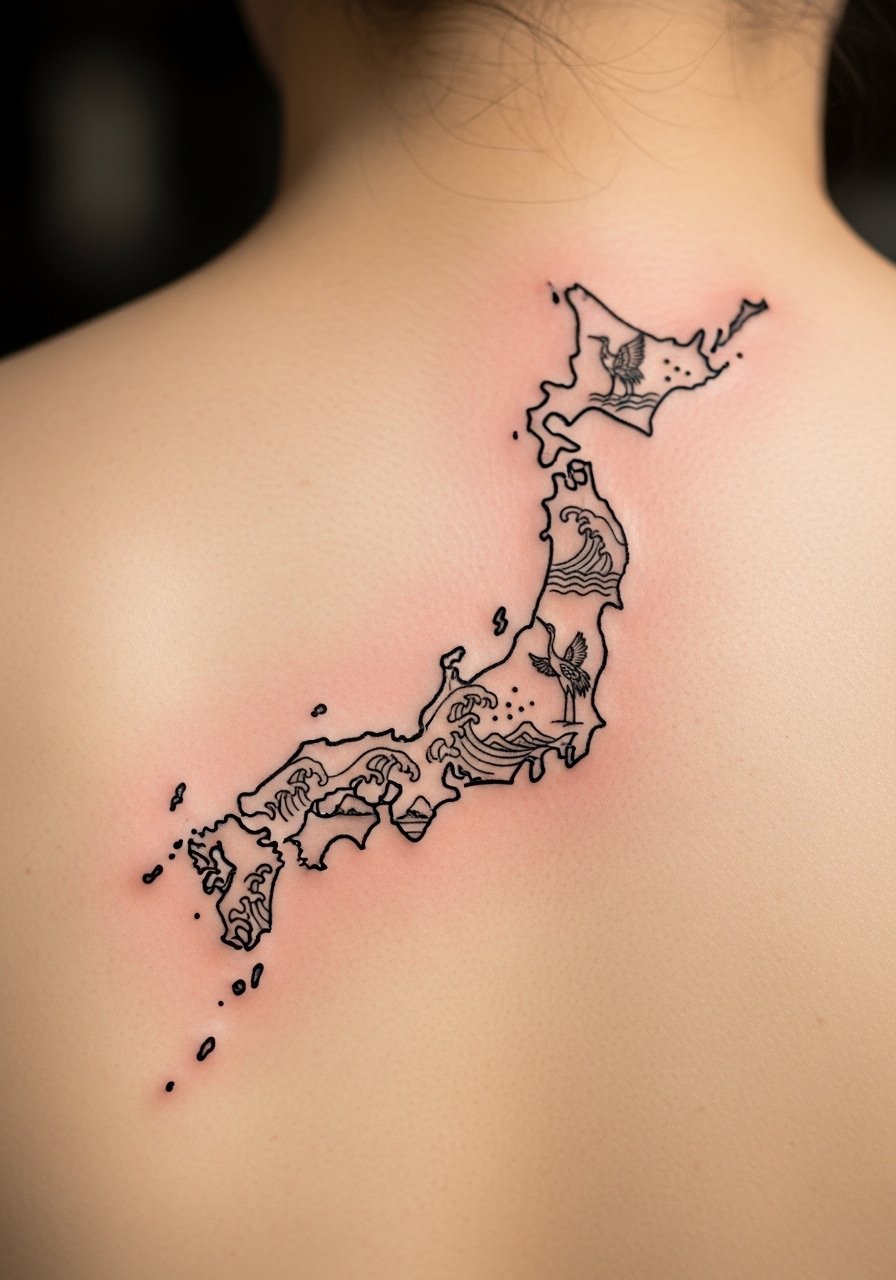
A stylized map silhouette filled with small Japanese motifs gives a back piece that’s both graphic and personal. It's modular and perfect if you want future add-ons.
- Tattoo style: Graphic illustrative with micro details
- Recommended size: Medium panel (10–14 inches)
- Best placements: Center-back, mid-back
- Color vs. blackwork: Monochrome or select color for icons
- Design elements: map outline, waves, cranes, torii gate, sakura flakes, tiny kanji accents
- Longevity note: Small icons need space to avoid blurring; give each element breathing room
- Who it suits: travelers, minimalists who like structure
Finding the Right Artist
Choose someone skilled in tiny detail at scale. Ask for healed close-ups of micro tattoos and spacing recommendations. Consider using tattoo placement stencil paper to test arrangement.
Aftercare & Healing Tips
Micro details can weaken if scabbed too heavily—keep healing gentle and moisturized. Use fragrance-free soap and Lubriderm during peeling.
- Full-Back Horimono Sleeve with Story Panels
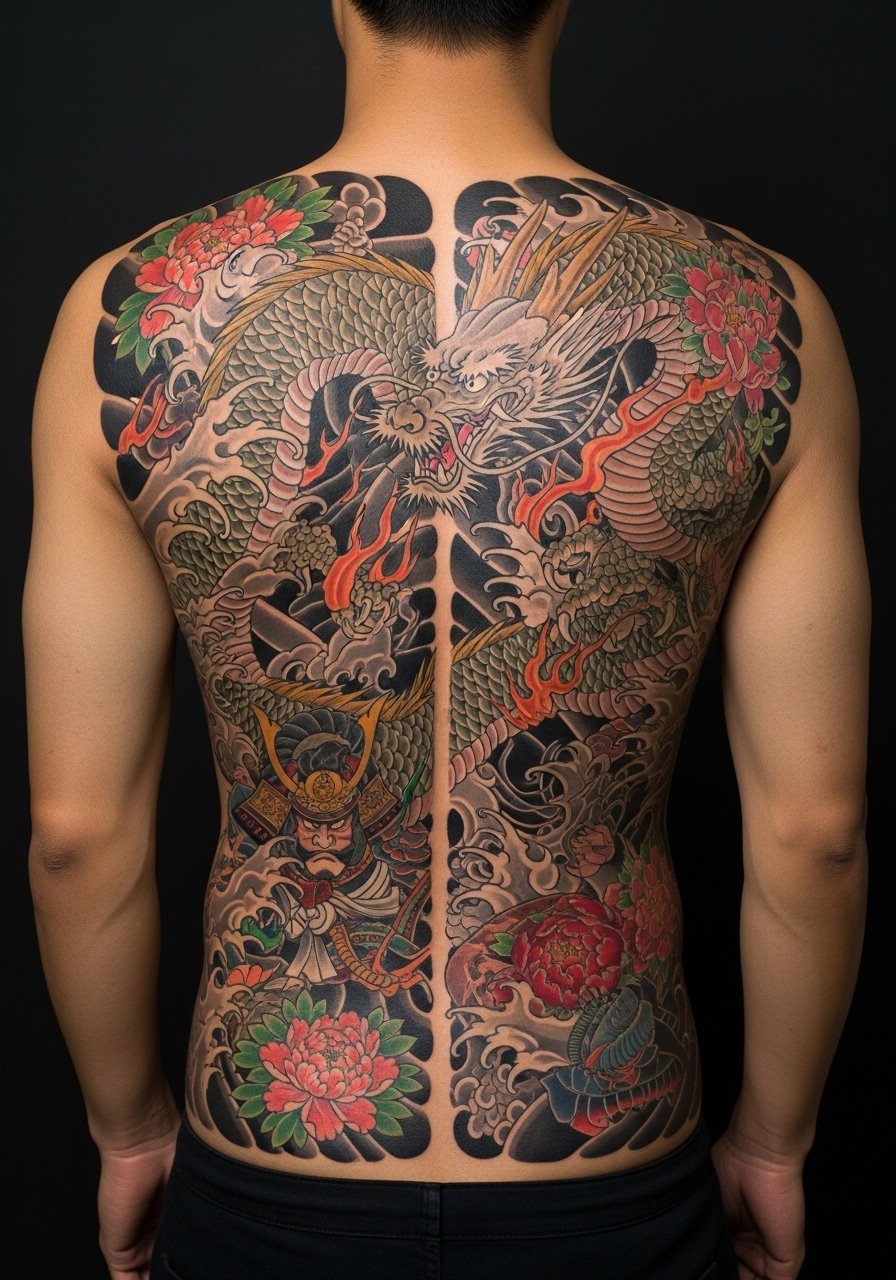
A full-back horimono that reads as a series of panels allows you to tell several connected stories across one canvas. Each panel can feature a different classic motif while the composition binds them together with wind bars.
- Tattoo style: Traditional irezumi with panel storytelling
- Recommended size: Full back (18–24 inches)
- Best placements: Entire back, may extend to arms or hips
- Color vs. blackwork: Mixed — saturated color panels with black transitions
- Design elements: panel borders, narrative symbols, wind bars, kamon-style corners
- Longevity note: Panels allow localized touch-ups; maintain SPF on color-heavy parts
- Who it suits: collectors wanting multi-motif narratives
Finding the Right Artist
This is complex; pick an artist experienced in multi-session backpieces with a strong sense of flow. Ask about session planning and how they’ll ensure continuity. Avoid artists who haven’t completed full horimono projects.
Aftercare & Healing Tips
Each panel may heal differently depending on session timing. Keep a healing kit that includes Saniderm and a fragrance-free moisturizer. Schedule touch-ups after full settling.
- Wave Crest Full-Back with Minimalist Koi Cluster
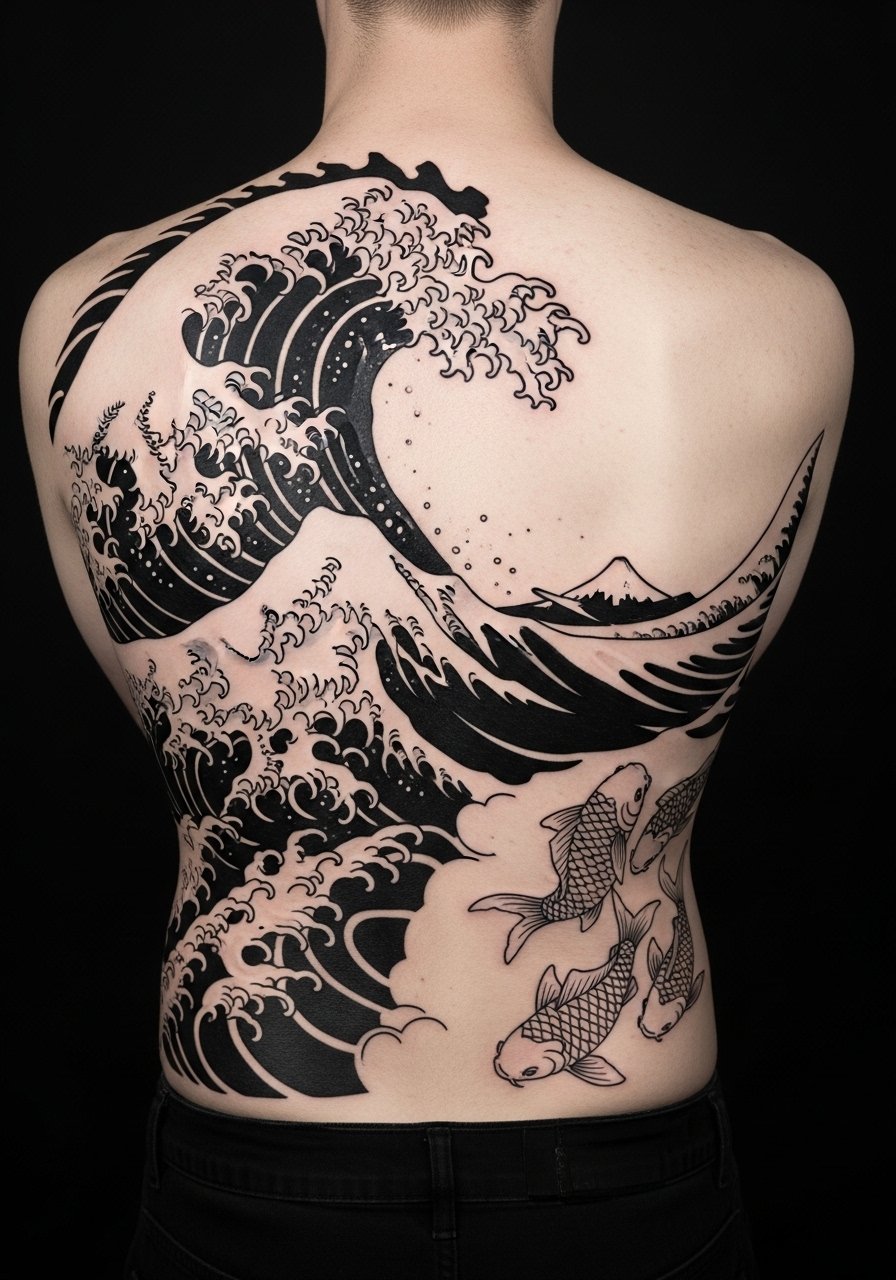
A bold wave crest anchors the visual field while a small koi cluster adds focal interest near the lower back. This balance of large graphic elements and small delicate forms is modern and wearable.
- Tattoo style: Graphic Japanese + minimalist touches
- Recommended size: Full back dominant wave (16–20 inches)
- Best placements: Full back, koi near lower back or side
- Color vs. blackwork: Mostly black with small colored koi
- Design elements: bold wave lines, single-needle koi, white highlights, ripple texture
- Longevity note: Thick wave lines age well; single-needle koi needs crisp spacing
- Who it suits: modern design lovers, minimalists wanting large-scale work
Finding the Right Artist
Look for artists who combine heavy black graphic work with delicate single-needle details. Ask for healed images showing both extremes together.
Aftercare & Healing Tips
Big black fields may blister more — follow your artist’s wrap guidance and use unscented lotion during flaking. Apply SPF to colored koi afterwards.
- Full-Back Sakura Storm with Floating Lanterns
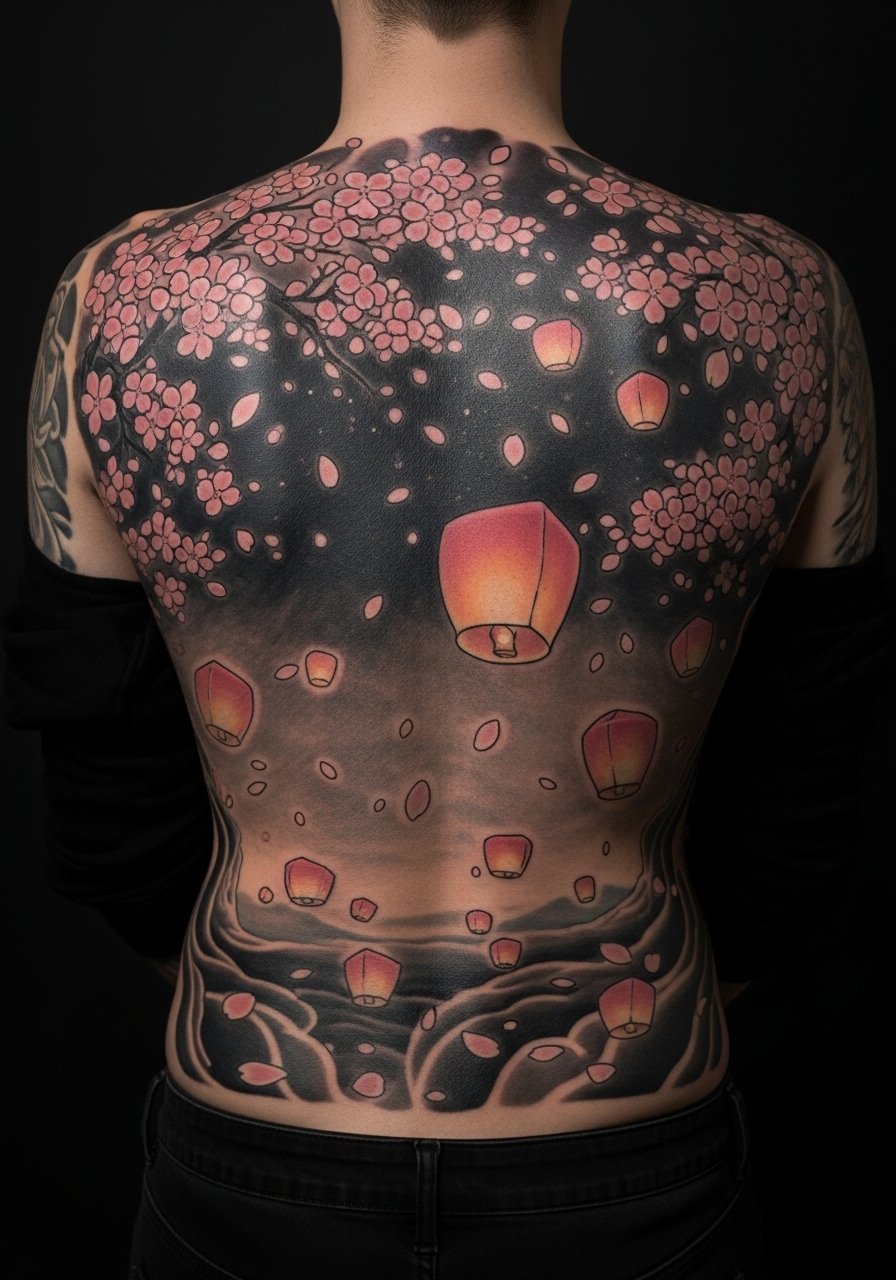
Sakura in a storm of falling petals with floating lanterns creates mood and movement. This can wrap around sides and feel cinematic.
- Tattoo style: Illustrative Japanese with atmospheric elements
- Recommended size: Full back (14–20 inches)
- Best placements: Full back, wrap to sides for lanterns
- Color vs. blackwork: Soft pinks, warm amber lanterns, black branches
- Design elements: petal clusters, lantern glow, branch silhouettes, wind bars
- Longevity note: Pastel pinks need strong initial saturation and sun protection
- Who it suits: romantic aesthetics, cottagecore, soft neo-traditional fans
Finding the Right Artist
Find portfolios with floral flow and subtle glow effects. Ask how they handle petal fade and lantern color packing. A test patch may help if you’re worried about pinks.
Aftercare & Healing Tips
Keep this piece out of direct sun while healing and use After Inked to help soft colors settle. Long-term, apply SPF when exposed.
- Minimalist Black Crane Single-Line Back Accent
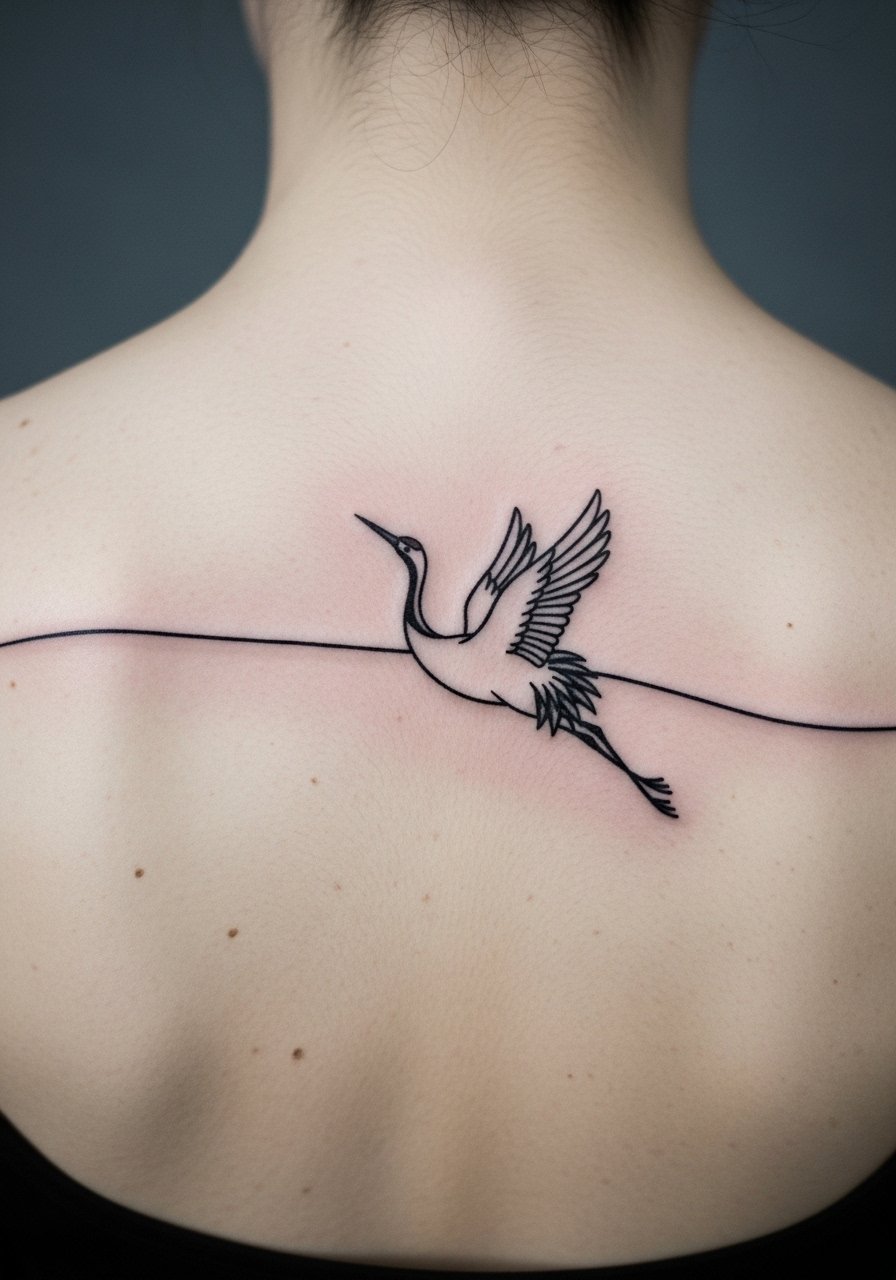
If you prefer restraint, a single-line crane across the upper back can be elegantly dramatic. Simplicity emphasizes form and negative space.
- Tattoo style: Minimalist single-line Japanese
- Recommended size: Small-to-medium upper back (6–10 inches)
- Best placements: Across upper back, between shoulder blades
- Color vs. blackwork: Pure black single-needle
- Design elements: continuous line, minimal detail, negative-space wings, small dot accents
- Longevity note: Single-line work may blur over decades; keep lines slightly thicker for stability
- Who it suits: minimalists, first-timers, those who want understated symbolism
Finding the Right Artist
Pick an artist with crisp single-line work who shows healed examples. Discuss line thickness to ensure longevity. Avoid artists who primarily do heavy shading.
Aftercare & Healing Tips
Minimal pieces scab less but still need care. Use a gentle soap and thin moisturizer. Avoid picking flakes to keep the line uninterrupted.
- Full-Back Tori Gate with Mountain Landscape
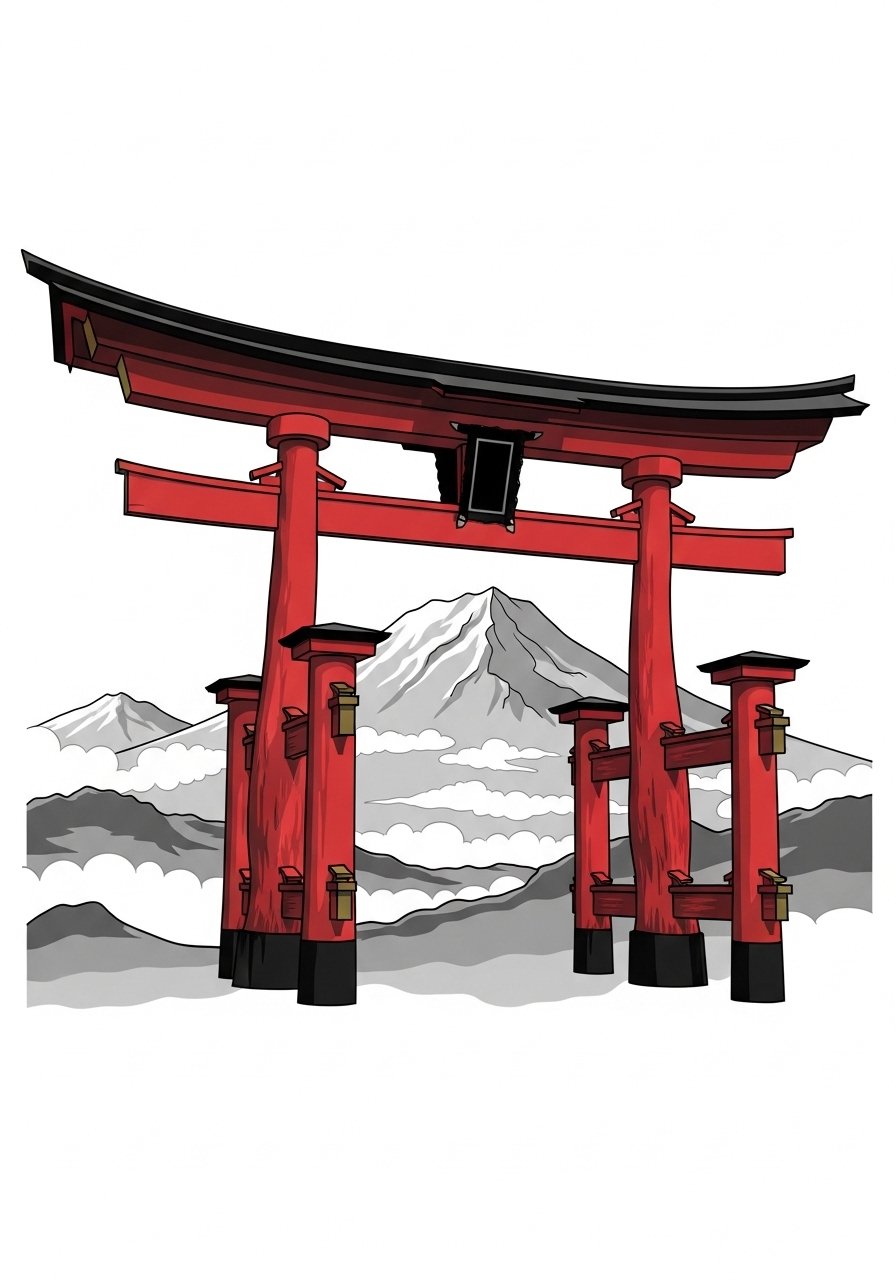
A torii gate opens up narrative possibility — it can be dramatic when paired with an expansive mountain scene across your back.
- Tattoo style: Traditional landscape with focal architectural motif
- Recommended size: Full back (16–22 inches)
- Best placements: Full back, centered with horizon lines
- Color vs. blackwork: Black-and-gray with red torii accent
- Design elements: torii silhouette, mountain peaks, mist shading, foreground flora
- Longevity note: Architectural lines need crispness; keep lines thick enough for decades
- Who it suits: lovers of scenic tattoos, meditative narratives
Finding the Right Artist
Look for portfolios with architectural and landscape work. Ask about line straightness over long spans and how sessions will be split.
Aftercare & Healing Tips
Large landscapes need staged sessions. Saniderm can protect larger sessions; then switch to Lubriderm while peeling.
- Backpiece Featuring Fudo Myoo and Flames
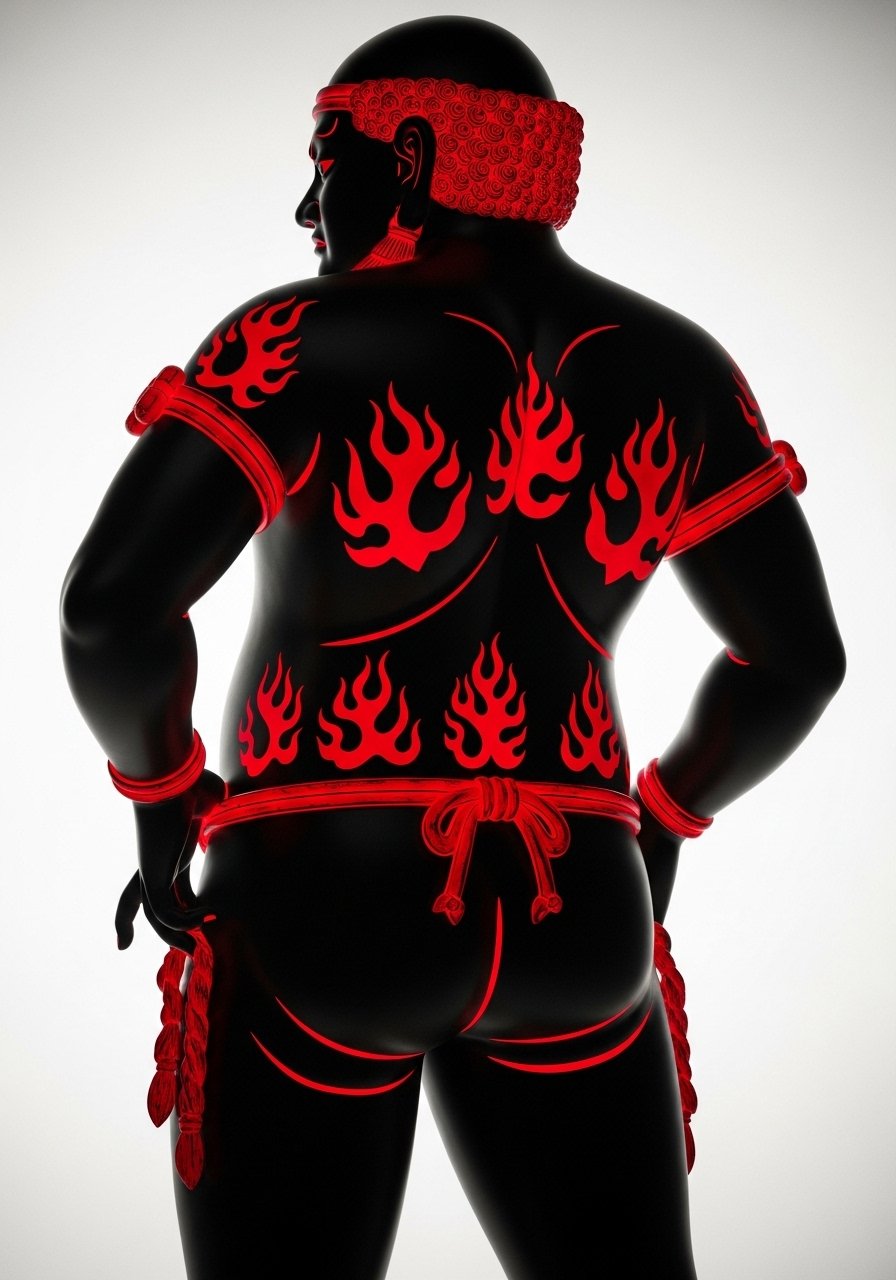
Fudo Myoo presents a forceful protector presence, surrounded by flames that make the composition intense and symbolic.
- Tattoo style: Religious iconography with bold Japanese traditional lines
- Recommended size: Mid-to-full back (12–18 inches)
- Best placements: Center-mid back, spine-adjacent
- Color vs. blackwork: Bold black with red/orange flamework
- Design elements: fierce facial detail, flame barbs, weaponry symbols, texture shading
- Longevity note: Heavy black and red combos age reliably with SPF care
- Who it suits: those drawn to protection iconography, dark traditional fans
Finding the Right Artist
Choose an artist comfortable with iconography and detailed facial expression in traditional styles. Ask how they balance heavy black with flame color patches.
Aftercare & Healing Tips
Keep the area covered and moist during early healing. Use Hustle Butter Deluxe and avoid hot showers for the first week.
- Hybrid Irezumi Collage with Modern Linework Accents
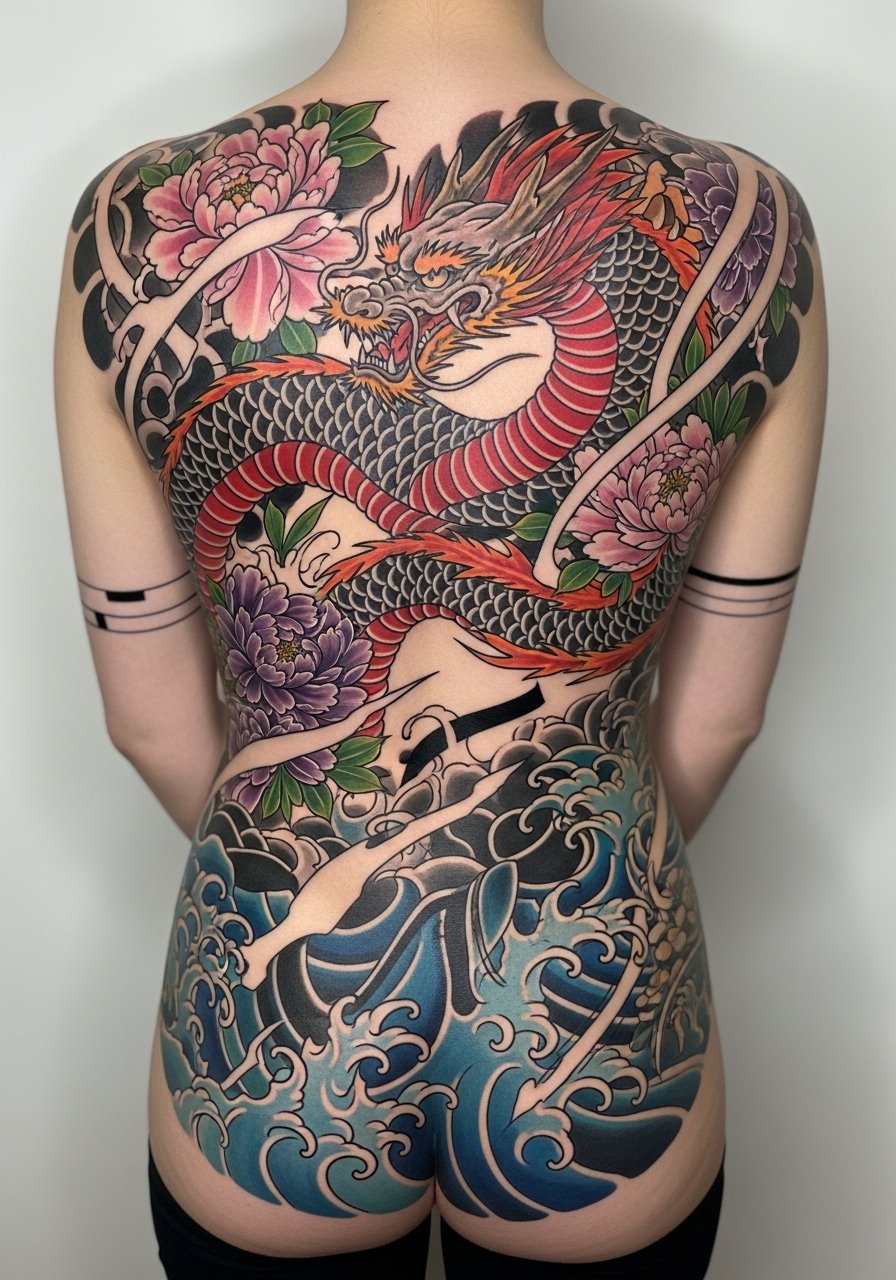
This hybrid collage takes tradition and reframes it with modern line accents and negative-space breathing room. It’s an approachable full-back option that feels fresh.
- Tattoo style: Hybrid traditional + modern fine-line
- Recommended size: Full back (18–24 inches)
- Best placements: Full back, with options to extend to limbs
- Color vs. blackwork: Mixed — bold traditional fills with fine-line highlights
- Design elements: dragon, peony, wave, thin-line geometric accents, negative space
- Longevity note: Mixed techniques require careful touch-ups to keep both bold and fine elements crisp
- Who it suits: people wanting a fresh take on classic motifs
Finding the Right Artist
Seek an artist comfortable mixing bold irezumi and single-needle work. Ask to see healed examples combining both techniques. Avoid artists who only do one style well.
Aftercare & Healing Tips
Complex mixed-technique pieces need attentive aftercare. Use a second-skin wrap initially, then switch to After Inked and regular SPF after healing to protect both color and fine lines.
Thanks for sticking with these 22 Japanese traditional tattoo back piece ideas. From full horimono narratives to minimalist cranes, the range here should help you pick a direction that reflects your aesthetic and tolerance for sessions. Save this article, pin your favorites, and bring the images and notes to your consultation so you and your artist can plan scale, color, and session timing.
If you want one final tip: pre-order a small aftercare kit — a roll of Saniderm, a jar of Hustle Butter Deluxe, and an unscented lotion like Lubriderm will cover most healing needs. Which design stole your heart — the dragon horimono, the phoenix wings, or the minimalist crane? Pin it and tell your artist which elements matter most to you.