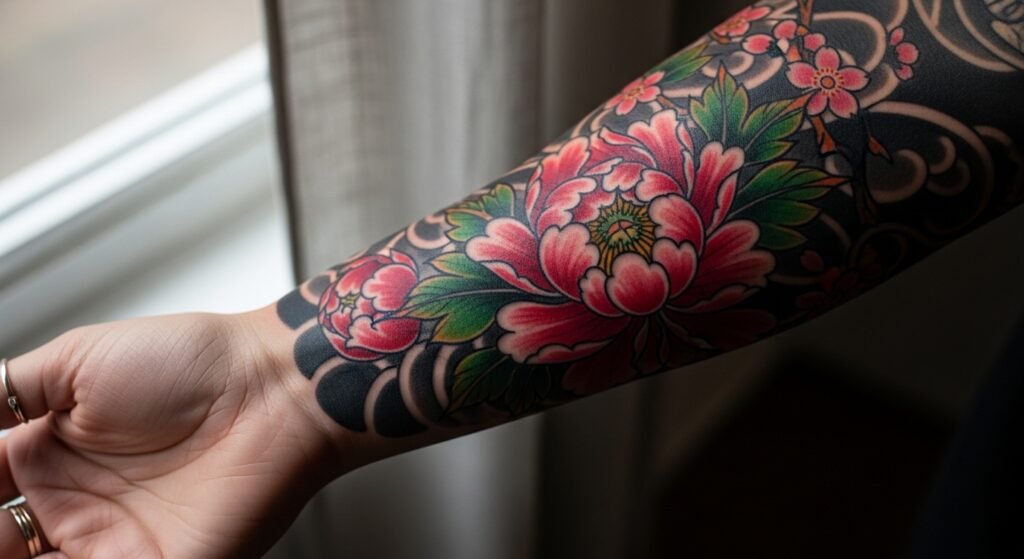
Sitting in a consultation or scrolling for inspo at midnight, you can almost feel the ink needle buzzing. If you've been dreaming about a Japanese traditional flower tattoo, this list gathers 25 ideas that balance delicate detail, color, and lifetime appeal. You’ll find everything from tiny single-stem sakura to saturated peony backpieces, with clear notes on style, placement, pain, and how the piece will age.
Each idea includes styling tips, a short artist-portfolio guide, and practical aftercare notes. For prep I often recommend using a numbing cream for sensitive placements — Zensa topical numbing cream works well for many people. Once your session is done, protecting fresh ink with a second-skin like Saniderm tattoo bandage for the first few days can cut down on fuss. Save the pin that matches your vibe and bring it to your consultation.
- Single Sakura Stem — Minimalist Wrist or Ankle
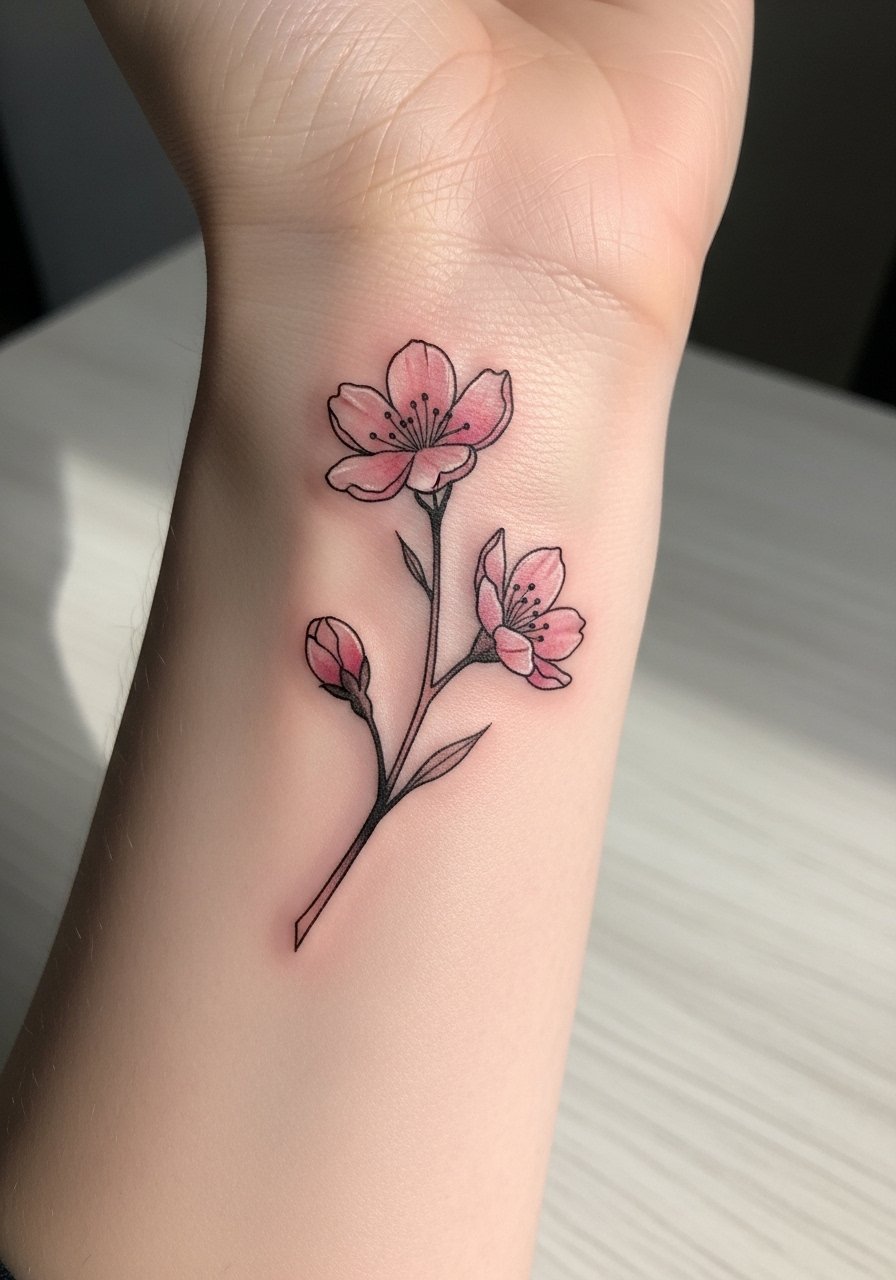
A single sakura stem reads like a quiet promise. This petite design uses ultra-fine stems and tiny clustered blossoms. It sits elegantly on the inner wrist or ankle and ages gracefully if cared for. First-timers and minimalists love it because it's small, symbolic, and easy to conceal.
Style & Design Details
- Tattoo style: fine line with a light watercolor wash
- Recommended size: 1.5–3 inches
- Best placements: inner wrist, inner ankle, behind the ear for a discreet touch
- Color vs. blackwork: pale pinks with soft grey outline for longevity; blackwork option for very active sun exposure
- Design elements: single-needle linework, tiny five-petal sakura, soft watercolor bleed, negative-space highlights
- Longevity note: fine lines can blur over years; sun and friction accelerate fading
- Who it suits: those seeking subtle symbolism, first-timers, minimalist aesthetics
Finding the Right Artist
Look for portfolios showing crisp single-needle florals and successful watercolor fades. Ask about needle sizes and how the artist stabilizes thin lines. Red flags: portfolios with inconsistent line weight or heavy blowouts. An experienced fine-line artist is better than an apprentice for lasting detail. Search Instagram tags like #finelinetattoo and local shop guest spots.
Aftercare & Healing Tips
Leave Saniderm on for 48–72 hours if the artist applies it. Wash gently twice daily with a fragrance-free soap, like Dr. Bronner's unscented castile soap. Switch to a thin layer of unscented Lubriderm lotion during peeling. Expect crisp lines at first; minor softening can occur by month three. Apply SPF 50 once healed.
- Mini Plum Blossom Cluster for Behind-the-Ear
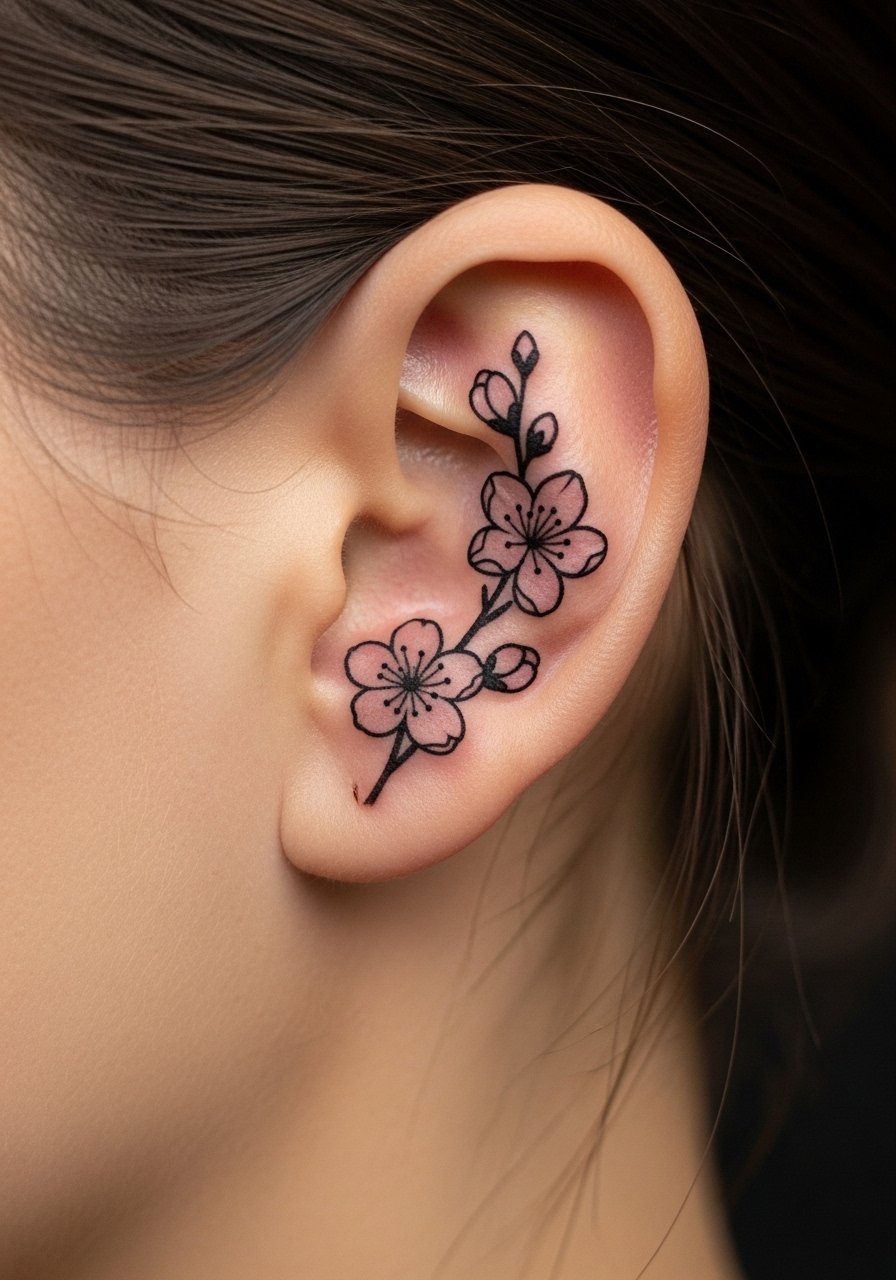
Plum blossoms (ume) are petite and symbolic of resilience. A clustered mini suits behind-the-ear placement perfectly. It feels delicate against hair and reads like a secret detail when visible. Low pain, low commitment.
Style & Design Details
- Tattoo style: single-needle illustrative
- Recommended size: 0.5–1.5 inches
- Best placements: behind the ear, nape of neck, side of finger
- Color vs. blackwork: soft mauve or pale pink for warmth; black & grey for longevity
- Design elements: tiny five-petal flowers, small stamens, light dot shading, slight stem curve
- Longevity note: small details can blur on fingers; behind-ear is lower friction so lasts better
- Who it suits: subtle aesthetes, cottagecore lovers, people who want a tiny talisman
Finding the Right Artist
Choose artists with steady dotwork and experience in small black-and-grey florals. Ask for healed photos at similar sizes and skin tones. Avoid artists whose small pieces look muddy in their portfolio.
Aftercare & Healing Tips
Keep hair pulled back until healed to avoid product transfer. Use a gentle, fragrance-free soap and a thin layer of Hustle Butter Deluxe tattoo aftercare balm post-wrap. Expect light flaking; avoid rubbing while showering.
- Wisteria Cascade Shoulder Pad
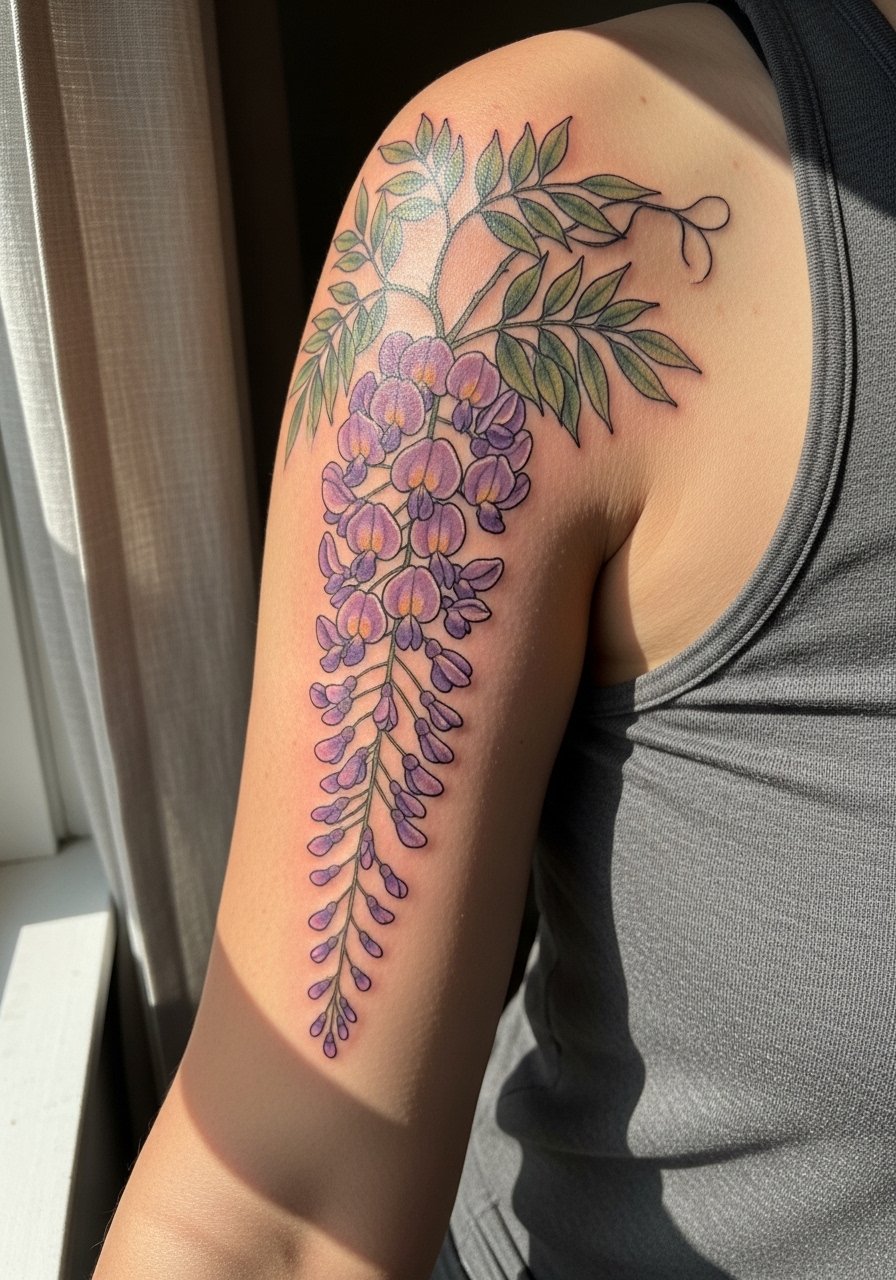
Wisteria feels romantic and motion-filled—perfect for a shoulder pad that drapes over the arm. The cascading blooms allow room for color gradation and layered shading. It works well as a standalone or as a starter for a sleeve.
Style & Design Details
- Tattoo style: illustrative neo-traditional
- Recommended size: palm-sized to half-sleeve
- Best placements: shoulder cap, upper arm, medial back
- Color vs. blackwork: soft purples with neutral shading for depth
- Design elements: layered hanging clusters, long stems, soft gradient fills, subtle white highlights
- Longevity note: medium details hold if outlines are moderate weight; sun fades purples faster
- Who it suits: romantic aesthetic fans, cottagecore, collectors planning sleeves
Finding the Right Artist
Look for artists who combine floral realism with illustrative color blending. Ask about color retention and touch-up policies. Avoid shops that don't show healed photos for color pieces.
Aftercare & Healing Tips
Large color heals need reliable coverage. Leave a Saniderm wrap for 3–5 days. After wrap removal, use fragrance-free lotion like Aveeno fragrance-free lotion. Keep the area out of direct sun until fully settled, and plan a 3–6 month touch-up if colors soften.
- Bold Blackwork Chrysanthemum on Calf
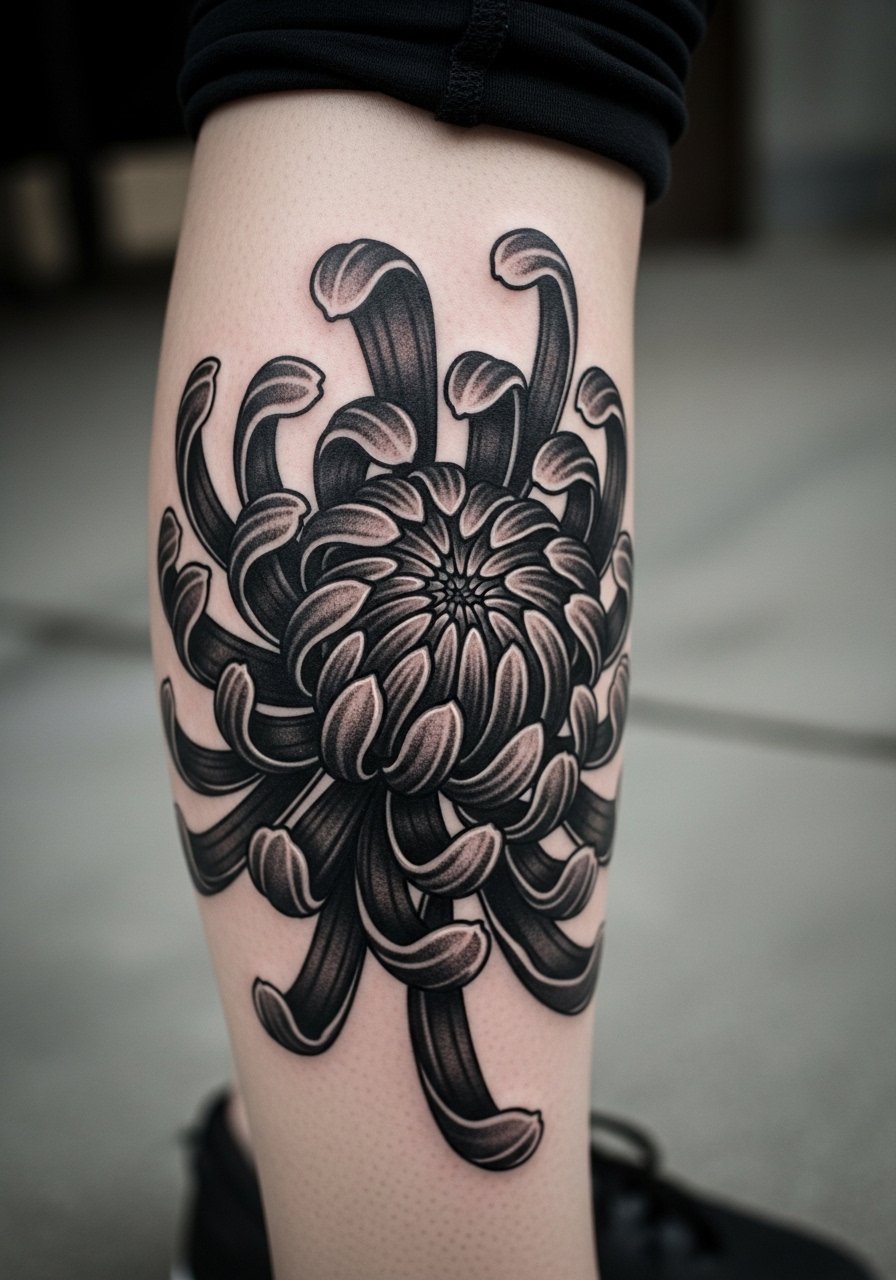
Chrysanthemum in Japanese styling reads strong and graphic when executed in blackwork. The outer calf gives a broad flat canvas for bold petal layers. This is a statement piece that ages predictably.
Style & Design Details
- Tattoo style: blackwork / illustrative
- Recommended size: palm-sized to calf-wrap
- Best placements: outer calf, shin, upper thigh
- Color vs. blackwork: heavy black fills for graphic longevity
- Design elements: layered petals, thick contour lines, negative-space veins, stipple shading for texture
- Longevity note: solid black holds well; crisp edges depend on line weight and needle technique
- Who it suits: fans of dark academia aesthetic, those who prefer low-maintenance color care
Finding the Right Artist
Seek portfolios with strong blackwork florals and consistent solid fills. Ask about needle configurations for saturated black and risks of scabbing with heavy fills. Apprentices may struggle with large black blocks; prefer a mid-level or senior artist.
Aftercare & Healing Tips
Solid fills scab noticeably. Use thin layers of fragrance-free aftercare like Tattoo Goo aftercare kit after the wrap phase. Avoid heavy creams that trap moisture. Expect a 6–8 week settle period.
- Japanese Traditional Flower Tattoo: Classic Peony Chest Piece
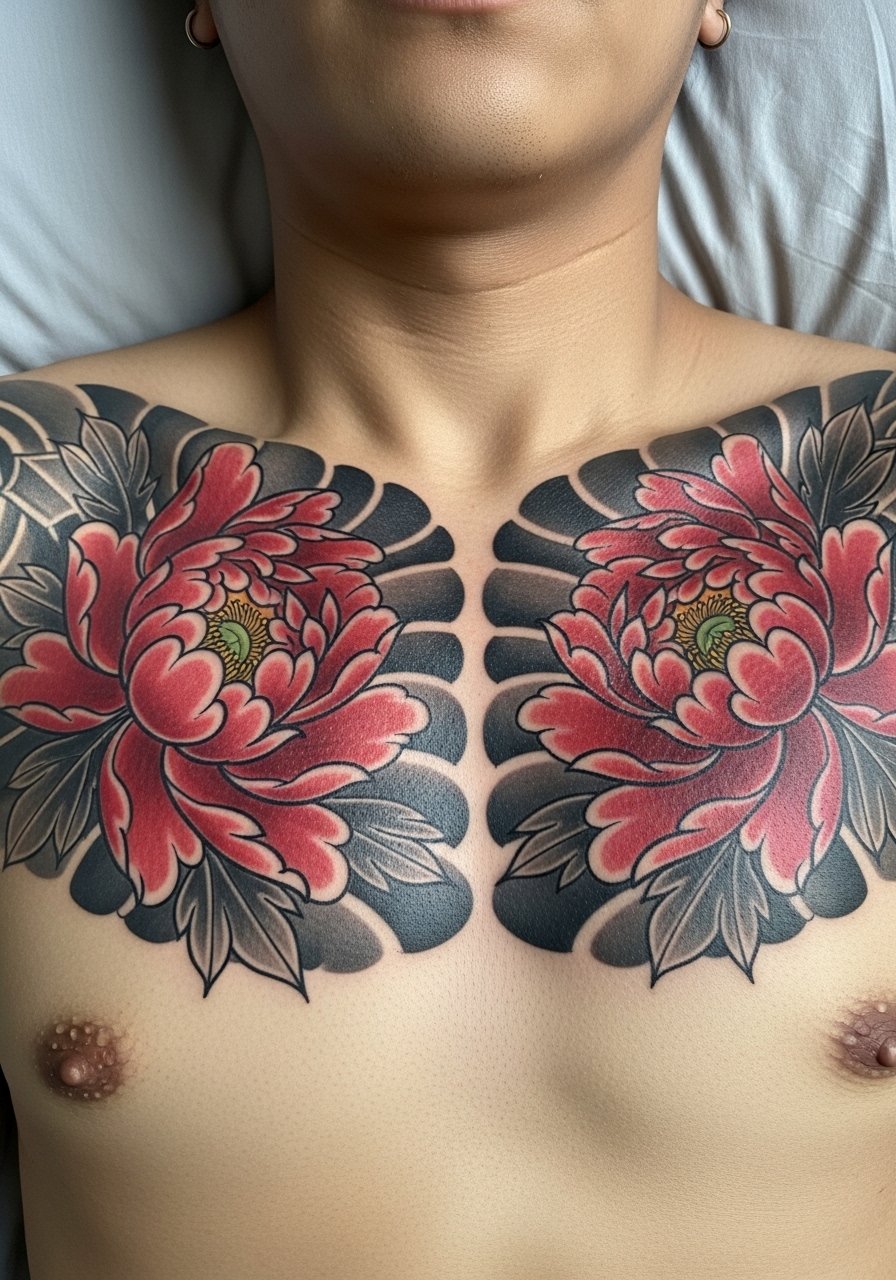
A classic peony chest piece channels traditional Japanese tattoo language—bold petals, dynamic shading, and symbolic weight. The sternum or upper chest creates a central, ceremonial placement. It reads elegantly under shirts or as nightlife reveal.
Style & Design Details
- Tattoo style: Japanese traditional (Irezumi-inspired) with neo-traditional color
- Recommended size: palm-sized to full chest panel
- Best placements: sternum, upper chest, centered over clavicles
- Color vs. blackwork: saturated reds and deep charcoal outlines for longevity
- Design elements: layered peony petals, thick contour lines, Japanese wave or cloud background, subtle gold dot accents
- Longevity note: saturated color lasts with sun care; heavy outlines preserve shape
- Who it suits: tattoo collectors, people drawn to traditional motifs and symbolism
Finding the Right Artist
For Irezumi-inspired pieces, find artists who study Japanese references and show large healed panels. Ask how they plan negative space and background motifs. Avoid artists who only do small flash if you want a chest panel.
Aftercare & Healing Tips
Large chest pieces sweat more during healing—dress in breathable fabrics. Saniderm helps over the first 48–72 hours, then switch to unscented lotion. For color upkeep, use a post-heal brightening balm like After Inked tattoo moisturizers and consistent SPF 50.
- Tiny Lotus on the Rib — Quiet and Spiritual
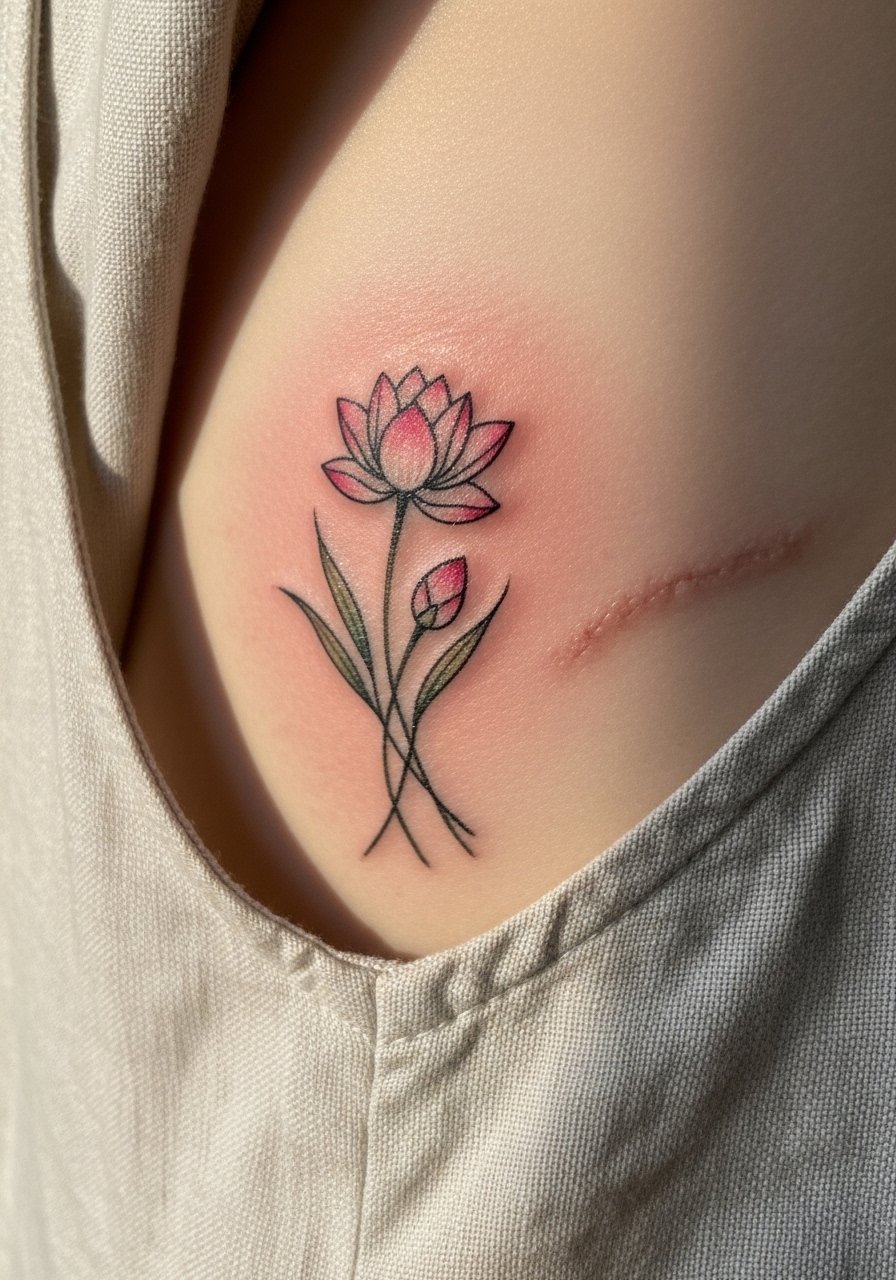
The lotus feels meditative and personal. A rib tattoo holds intimacy and looks organic with torso movement. Expect higher pain, but the delicacy rewards patience.
Style & Design Details
- Tattoo style: fine line illustrative
- Recommended size: 1–3 inches
- Best placements: ribcage, side torso, lower sternum
- Color vs. blackwork: soft pastels keep it delicate; blackwork ages better if you spend lots of time outdoors
- Design elements: layered petals, small dotwork center, gentle stem, negative-space veins
- Longevity note: thin lines on flexible skin can soften; heavier outlines can help
- Who it suits: spiritual seekers, people okay with higher-pain placements
Finding the Right Artist
Choose artists who show successful ribcage heals and can discuss pain pacing. Ask about session breaks and needle depth for thin skin. Avoid artists rushed on long sessions.
Aftercare & Healing Tips
Rib tattoos rub against clothing; wear loose shirts for two weeks. Use a numbing cream like EMLA topical anesthetic if you're sensitive, applied per instructions. Keep the area moisturized with fragrance-free lotion once peeling begins.
- Camellia Single-Needle Collarbone Accent
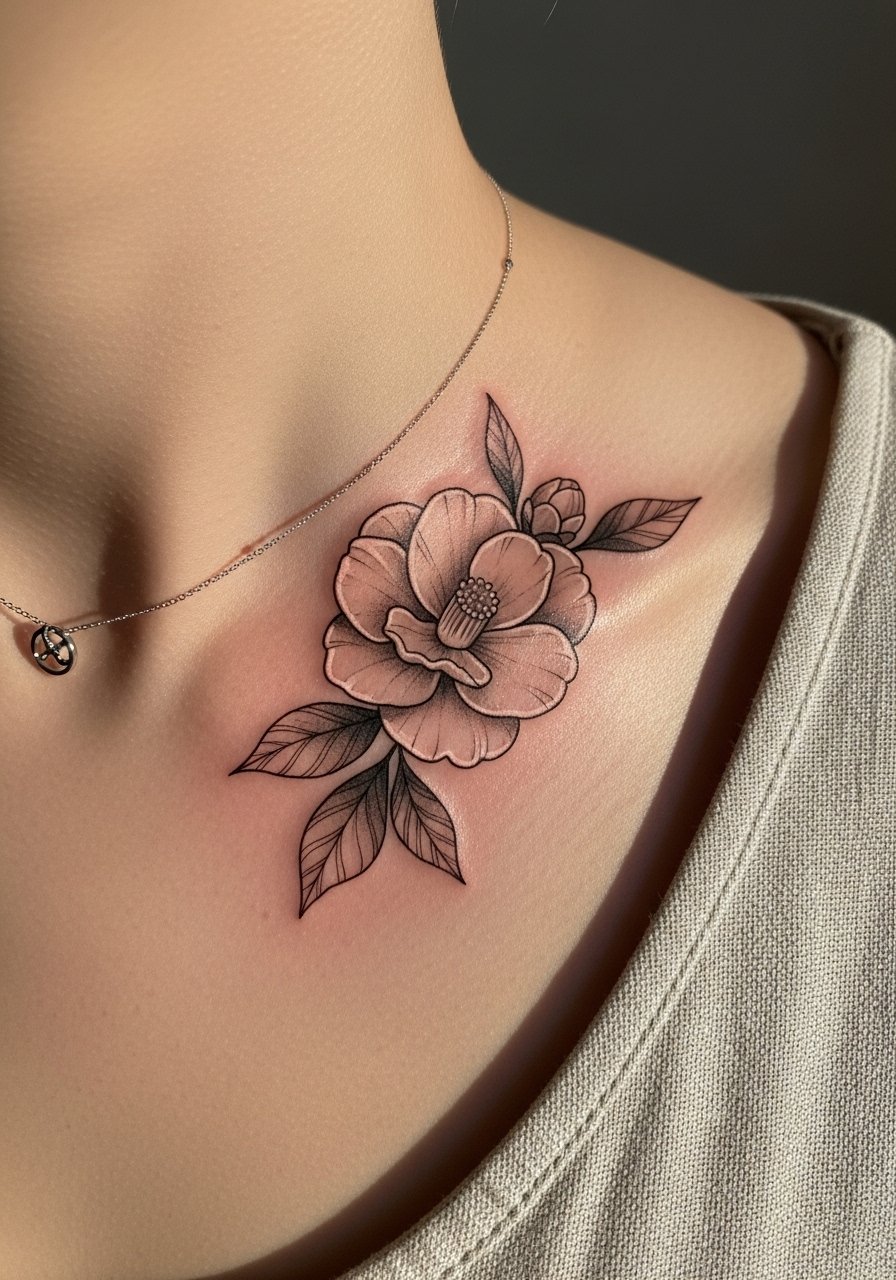
The camellia reads refined and classic on the collarbone. Single-needle work keeps it whisper-thin and elegant. Placement highlights jewelry and décolletage.
Style & Design Details
- Tattoo style: single-needle blackwork
- Recommended size: 1.5–3 inches
- Best placements: collarbone, upper chest, shoulder line
- Color vs. blackwork: blackwork sings on collarbones; small white ink highlights can add pop
- Design elements: crisp petal veins, fine stippling, thin stems, subtle negative-space edges
- Longevity note: single-needle requires touch-up over years; collarbone sees moderate sun exposure
- Who it suits: those who love minimalist jewelry-like tattoos and fine craft
Finding the Right Artist
Look for artists with healed single-needle florals and controlled line weight. Ask about touch-up timelines. Avoid portfolios where small black details look blurred.
Aftercare & Healing Tips
Collarbones can get dry; keep lotion on gently. Use an SPF stick after healed to protect the area. If pickiness about pain is a concern, try a numbing option pre-session.
- Neo-Traditional Iris Thigh Panel
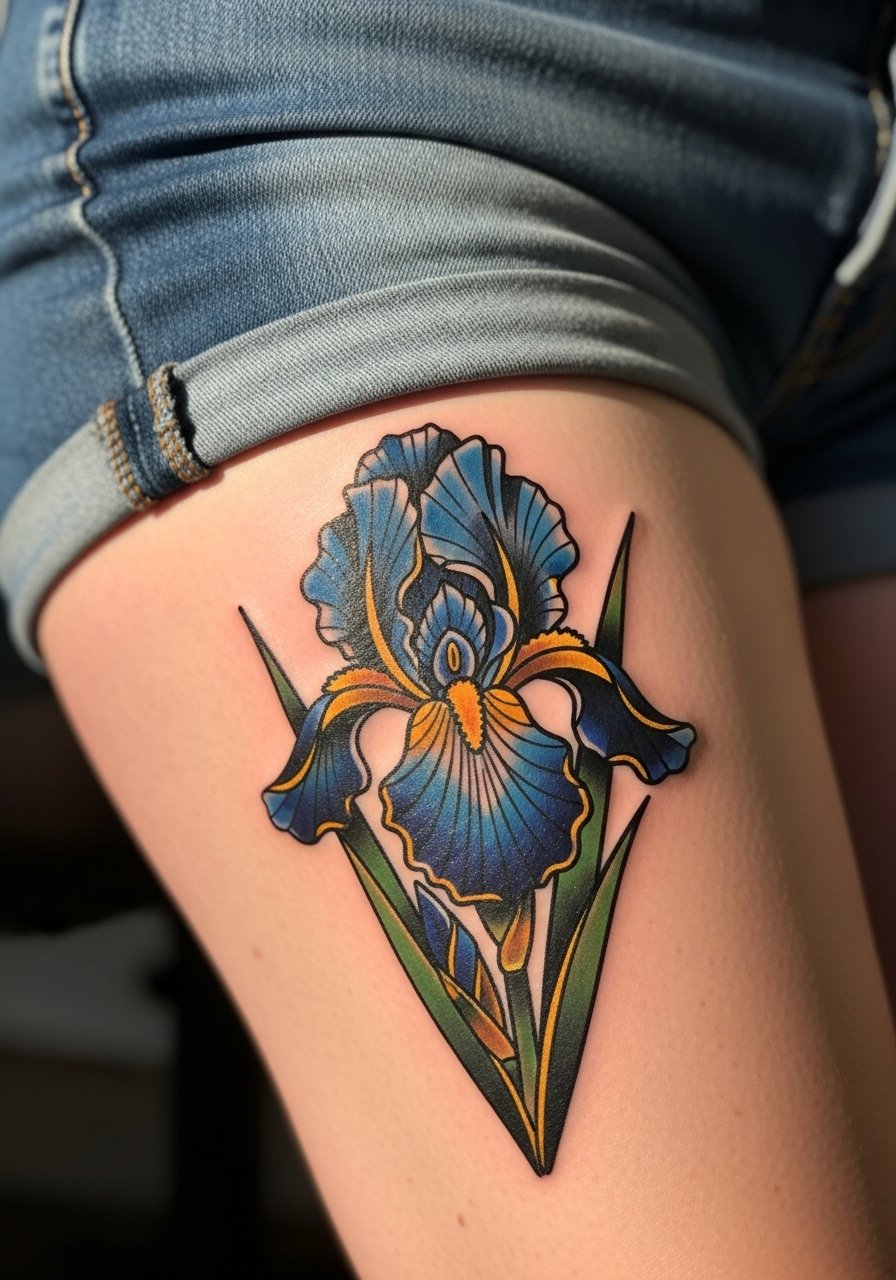
Iris brings stately lines and vertical flow—great for thigh panels that peek out of shorts or skirts. Neo-traditional linework allows for playful color and strong composition.
Style & Design Details
- Tattoo style: neo-traditional
- Recommended size: palm-sized to full thigh panel
- Best placements: outer thigh, upper leg, hip
- Color vs. blackwork: rich indigo and gold contrast well
- Design elements: bold outlines, saturated petals, decorative background scrolls, small dot accents
- Longevity note: thigh is low-sun; color retention is excellent with proper care
- Who it suits: those who want bold color and moderate coverage, fans of dark academia or cottagecore
Finding the Right Artist
Pick artists who excel in floral neo-traditional work and mid-to-large color pieces. Ask about pain management and session pacing. Avoid artists who rush color gradients.
Aftercare & Healing Tips
Thighs tolerate larger sessions well. Use Saniderm for the first night then switch to gentle soaps. Keep the leg moisturized with Hustle Butter Deluxe to minimize itch during peeling.
- Hydrangea Bunch on Upper Back
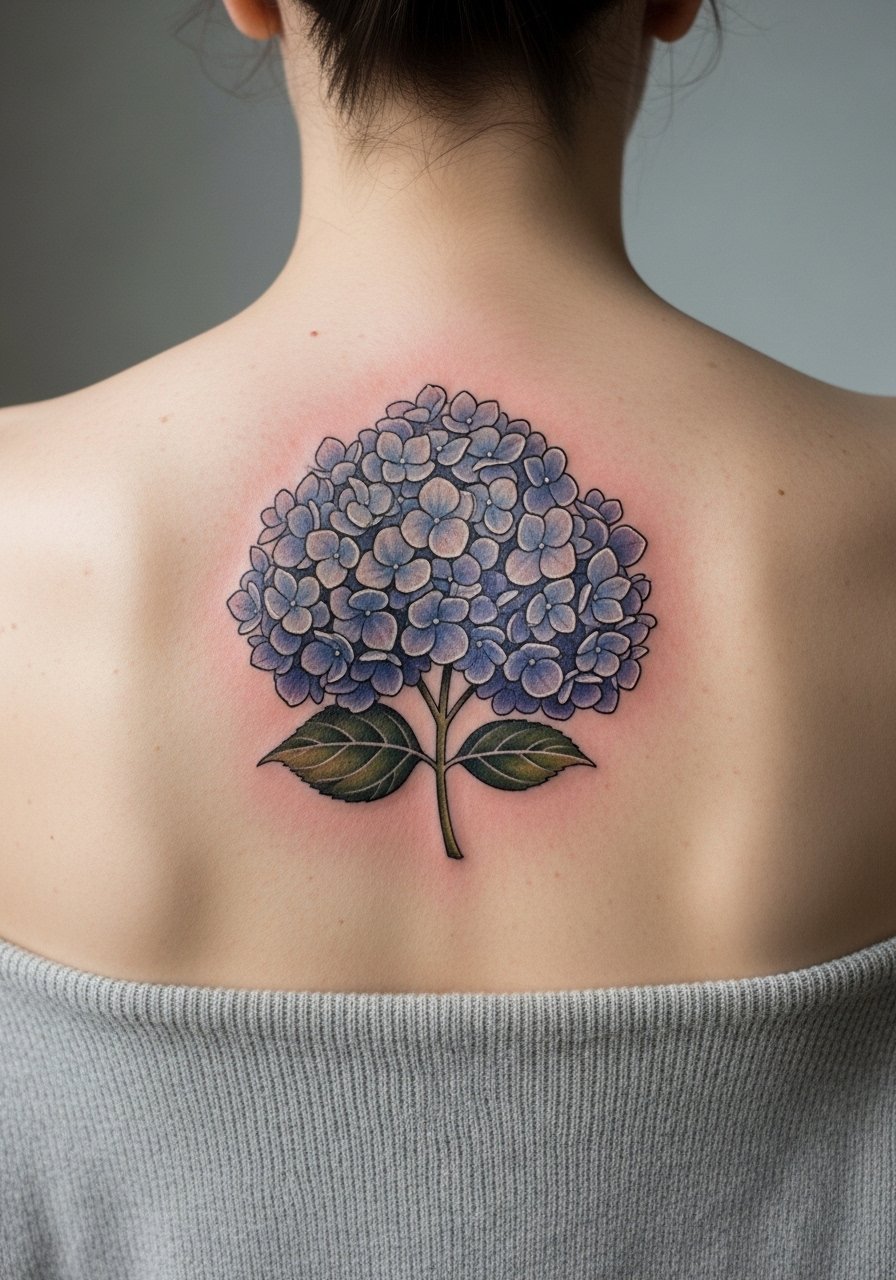
Hydrangea clusters give lush volume and color play. On the upper back it’s elegant and balances shoulder symmetry. The many small petals allow subtle shading and depth.
Style & Design Details
- Tattoo style: illustrative color realism
- Recommended size: palm to shoulder-blade panel
- Best placements: upper back, between shoulder blades, back-of-shoulder
- Color vs. blackwork: cool blues and purples that will need sun protection
- Design elements: clustered florets, layered shading, thin stems, light negative-space gaps
- Longevity note: pastels need SPF care; back placement reduces UV exposure
- Who it suits: collectors wanting a low-visibility option with big visual payoff
Finding the Right Artist
Find artists showing soft gradients and floral clusters. Ask how they'll preserve hue saturation. Avoid portfolios lacking healed color images.
Aftercare & Healing Tips
Back pieces can be awkward to moisturize—have a buddy help or use a long-handled lotion applicator. Use a nourishing unscented lotion and plan for a sun-free healing period. Touch-ups for color may be needed after winter.
- Sakura Sleeve Accent with Wind Bars
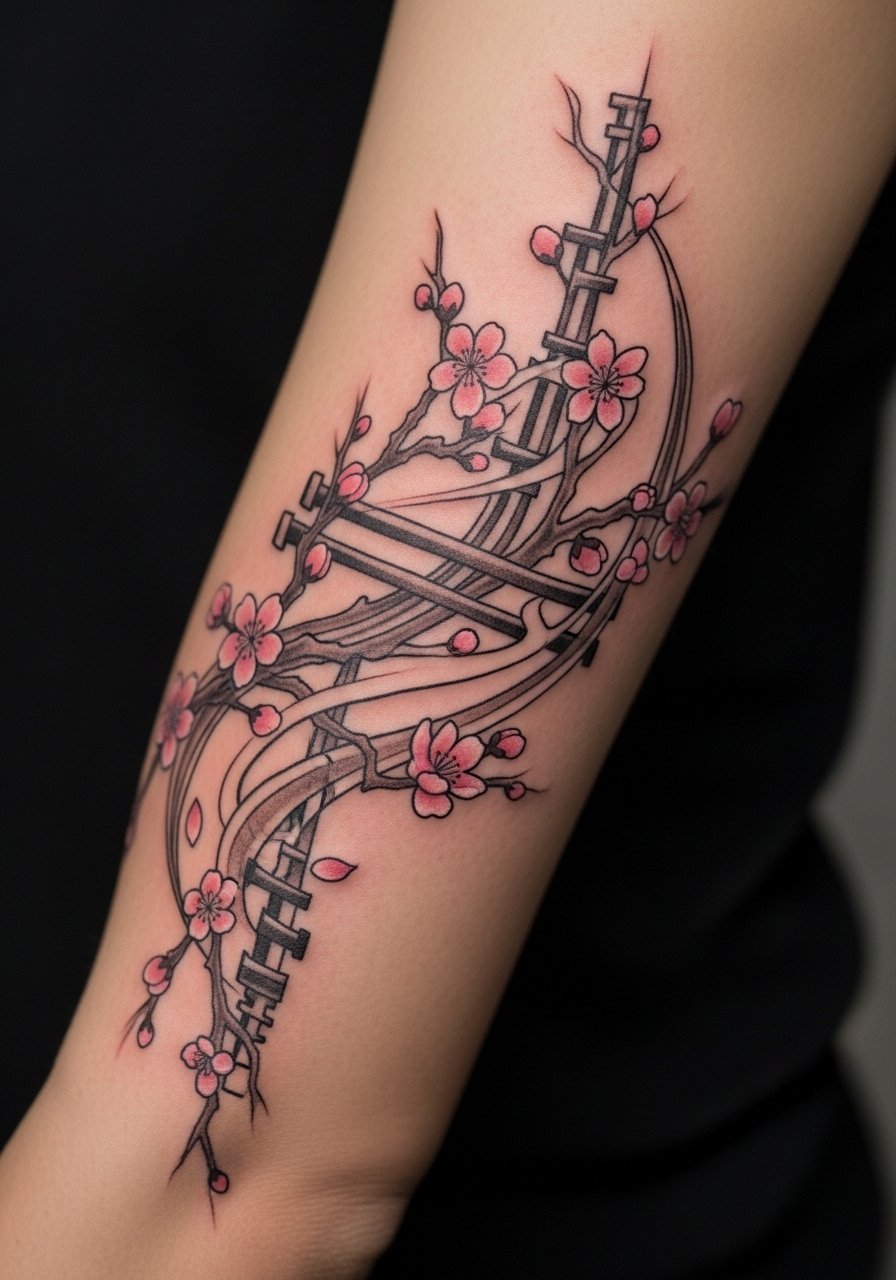
A sakura sleeve accent pairs delicate blossoms with classic wind-bar backgrounds. It reads both traditional and modern, and modular pieces can be added over time.
Style & Design Details
- Tattoo style: Japanese-traditional hybrid
- Recommended size: quarter- to half-sleeve
- Best placements: upper arm, forearm, full sleeve
- Color vs. blackwork: soft pinks and greys against heavy outlines
- Design elements: flowing sakura branches, wind bars, negative-space clouds, petal scatter
- Longevity note: sleeves with strong outlines hold composition better long-term
- Who it suits: sleeve builders, collectors who want classic motifs with modern palette
Finding the Right Artist
Seek artists who understand traditional Japanese composition. Ask how negative space will be used and whether they plan continuity with future work. Avoid artists without sleeve experience.
Aftercare & Healing Tips
Large sessions should be split. Keep each session's area wrapped with Saniderm initially. Aftercare includes gentle washing, Tattoo Goo or Hustle Butter, and sun avoidance for 6–8 weeks.
- Magnolia Bloom on Ribcage — Feminine and Soft
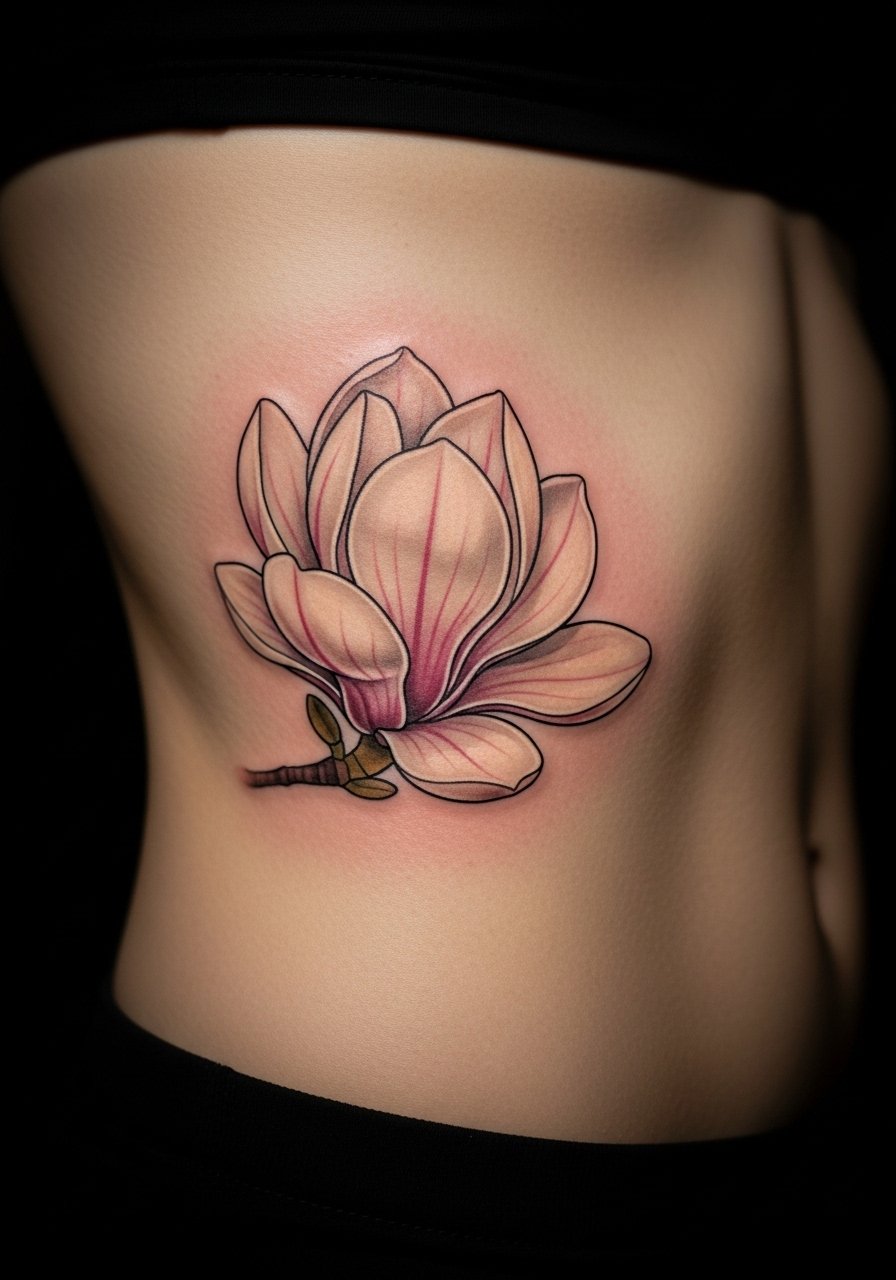
Magnolias feel soft and sculptural on the ribs. The design emphasizes large petals and elegant negative space. Expect medium-to-high pain, but the result looks like a living sculpture on your torso.
Style & Design Details
- Tattoo style: realistic illustrative
- Recommended size: 3–6 inches
- Best placements: ribcage, side torso, underboob
- Color vs. blackwork: soft creams and pale pinks; heavier black outlines optional for contrast
- Design elements: large layered petals, subtle veining, light dot shading, minimal stem
- Longevity note: large pigment areas age well with SPF; fine veining needs occasional touch-up
- Who it suits: those wanting sculptural florals and bold feminine silhouettes
Finding the Right Artist
Choose an artist with botanical realism in their portfolio. Ask about how they'll translate petal texture into tattoo. Avoid artists inexperienced in larger torso placements.
Aftercare & Healing Tips
Rib care involves loose clothing and slow breathing during sessions. Keep the area clean and moisturized with unscented lotion after the wrap phase. Use an SPF stick once healed to protect pale pigments.
- Japanese Traditional Flower Tattoo: Sakura & Wave Hip Panel
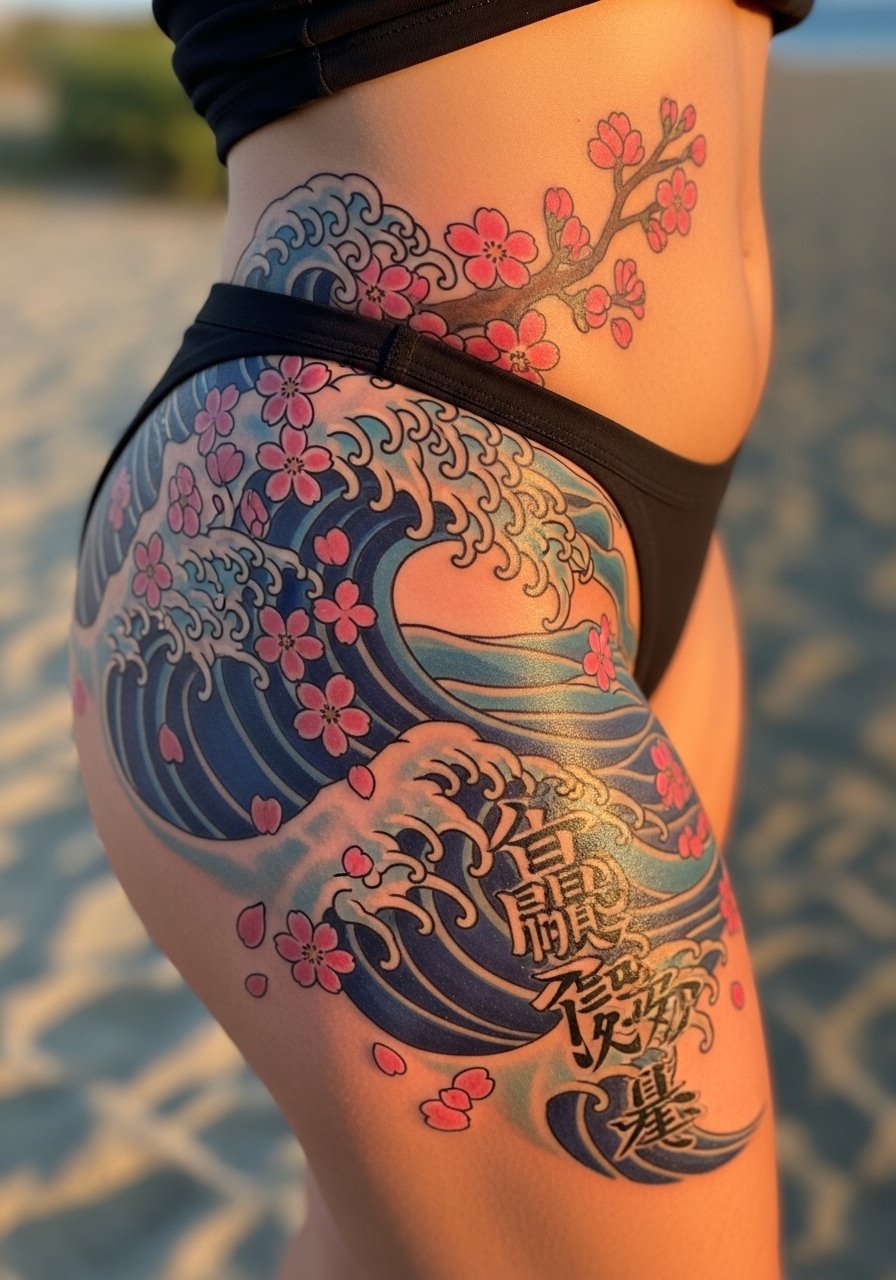
Pairing sakura with stylized Japanese waves creates classic narrative energy. The hip panel moves naturally with the body, giving a fluid, sensual placement.
Style & Design Details
- Tattoo style: traditional Japanese (Irezumi-inspired)
- Recommended size: palm-sized to hip panel
- Best placements: hip, low back side, iliac area
- Color vs. blackwork: strong indigo waves and soft pink blossoms for contrast and longevity
- Design elements: sakura clusters, stylized waves, bold outlines, light dot shading
- Longevity note: hip skin is stable; colors last with sun discretion
- Who it suits: fans of Irezumi motifs, people wanting story-driven small panels
Finding the Right Artist
Find someone versed in Japanese wave forms and floral balance. Ask to see healed sakura-and-wave pieces. Avoid artists who haven't worked on curving torso areas.
Aftercare & Healing Tips
Hip tattoos often stay covered during healing — slower friction equals better retention. Use Saniderm initially and then a light unscented lotion. For color longevity, apply SPF 50 after healing.
- Peony with Crane — Symbolic Back Panel
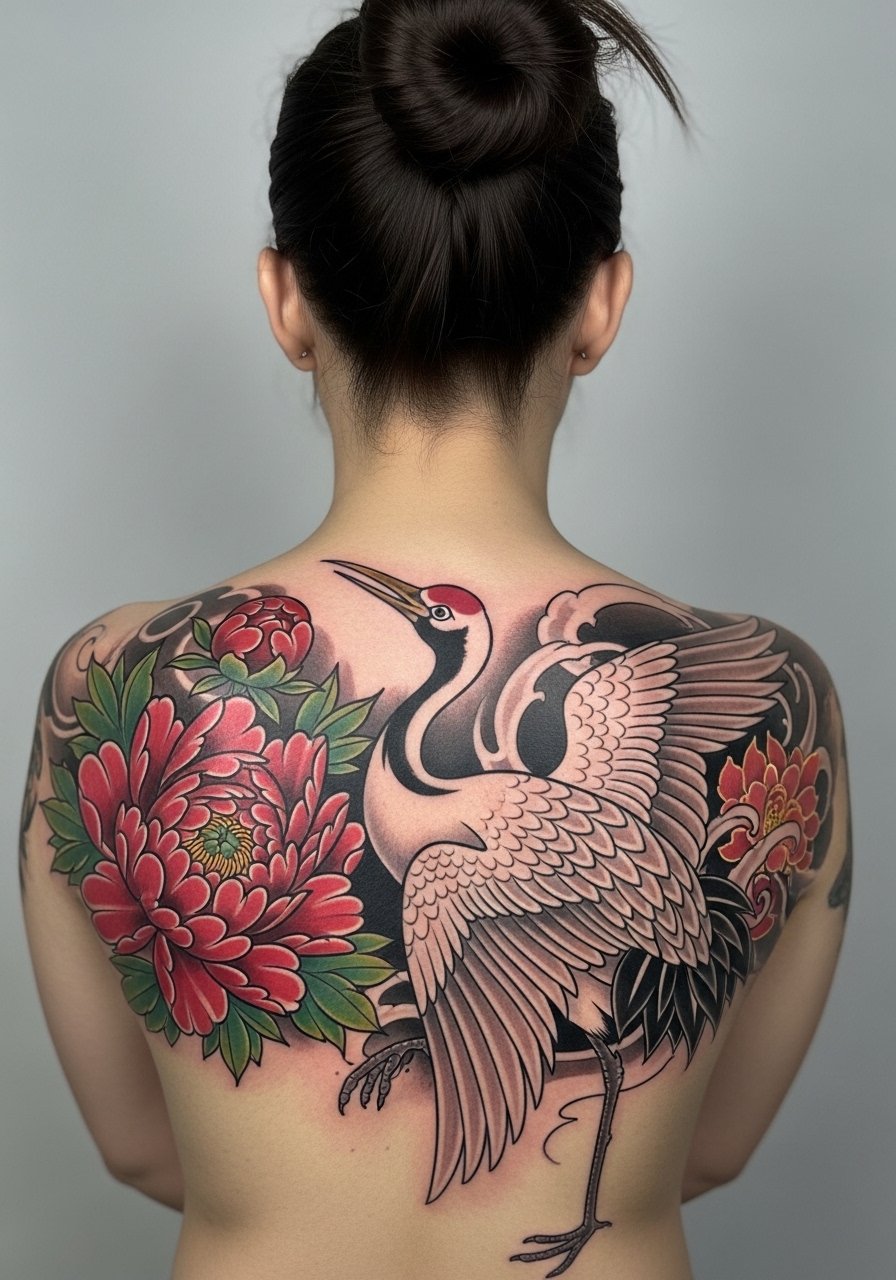
Combining the peony with a crane nods to traditional symbolism—prosperity and longevity. A back panel allows rich detail and storytelling.
Style & Design Details
- Tattoo style: Japanese traditional narrative
- Recommended size: shoulder-blade to full upper back
- Best placements: upper back, scapula area
- Color vs. blackwork: saturated reds and soft feather greys; strong outlines recommended
- Design elements: layered peony, stylized crane feathers, cloud or wave backgrounds, frame lines
- Longevity note: back placement reduces sun exposure; color holds well
- Who it suits: collectors and those wanting cultural motifs and narrative pieces
Finding the Right Artist
Select artists who show narrative Japanese pieces with harmonious composition. Ask how they'll place the crane to work with spine curvature. Avoid artists unfamiliar with figuration.
Aftercare & Healing Tips
Back panels are best healed with Saniderm initial coverage. Apply a fragrance-free lotion and keep sheets clean. Schedule a follow-up for possible touch-up on reds.
- Tiny Inkbox Test: Semi-Permanent Sakura Before Committing
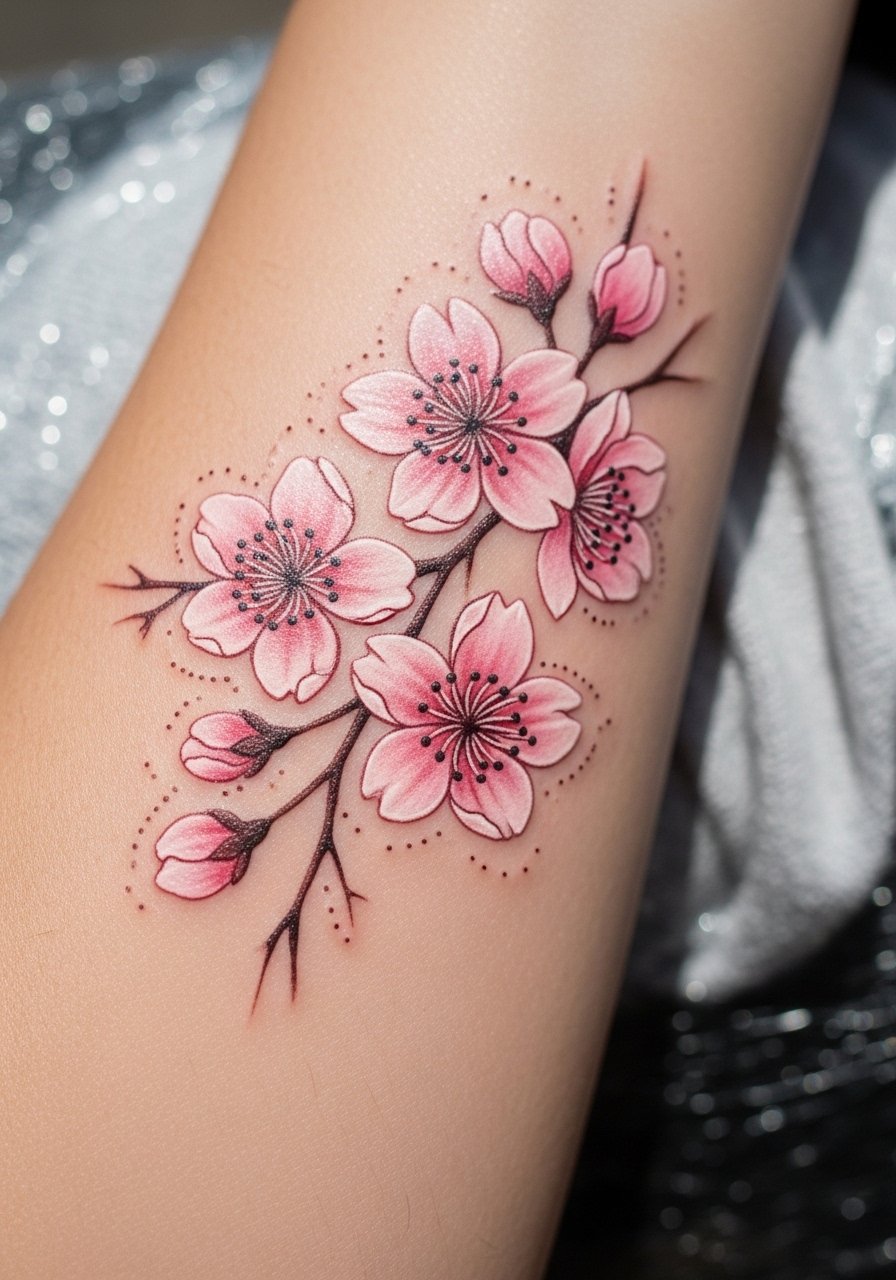
If you're unsure about placement or scale, try a semi-permanent option first. Inkbox-like kits let you test visibility and clothing interactions for a few weeks.
Style & Design Details
- Tattoo style: temporary semi-permanent
- Recommended size: any test size, often 1–4 inches
- Best placements: forearm, inner wrist, ankle
- Color vs. blackwork: typically black-brown inks; check kit varieties
- Design elements: same as your planned piece—practice placement, size, and orientation
- Longevity note: lasts 1–2 weeks; mimics real tattoo fading and placement wear
- Who it suits: indecisive clients, those testing matching placements
Finding the Right Artist
Not applicable for temporary tests. Use design transfers to map placement. For real tattoo, seek artists after testing.
Aftercare & Healing Tips
Temporary tests let you see daily wear impacts. No healing required, but take notes: clothing rub, jewelry interference, or sunlight visibility. If the test feels right, bring photos to your artist and consider scheduling.
- Red Camellia Sleeve Focal Point
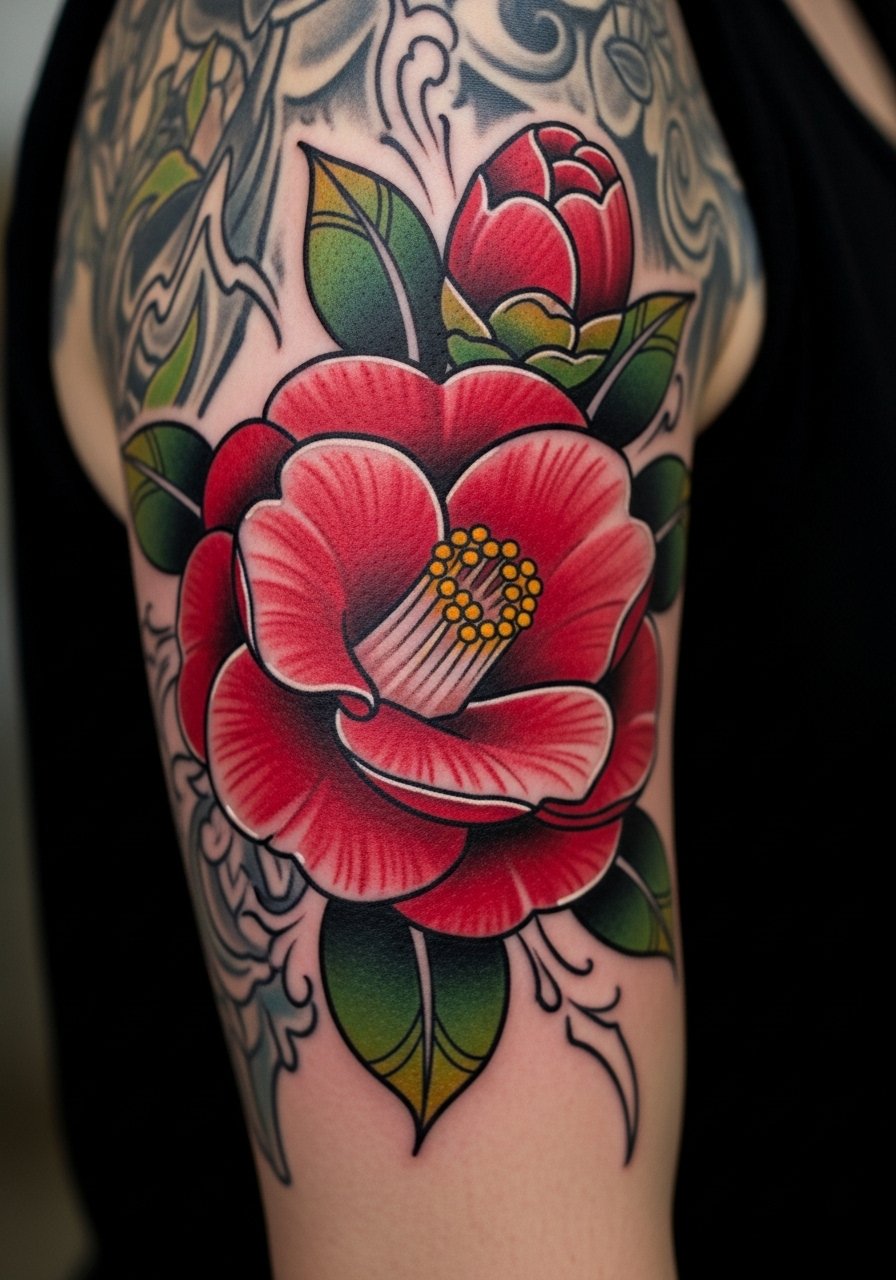
A red camellia is classic and eye-catching. As a sleeve focal point it anchors surrounding motifs like maple leaves or wind bars.
Style & Design Details
- Tattoo style: neo-traditional with Japanese influence
- Recommended size: palm-sized focal point in a sleeve
- Best placements: upper arm, full sleeve, forearm
- Color vs. blackwork: deep crimson with dark shadowing for lifespan
- Design elements: bold petals, heavy outline, subtle white highlights, decorative background motifs
- Longevity note: deep pigments fare well; track sun exposure
- Who it suits: sleeve builders and collectors who like strong focal pieces
Finding the Right Artist
Pick an artist strong in color and sleeve flow. Ask for mockups showing how the camellia integrates. Avoid artists who neglect background fill planning.
Aftercare & Healing Tips
Large color sections scab and peel—monitor and use Hustle Butter Deluxe or a similar balm. Keep sleeve areas out of sun and sweat-heavy activities during initial healing.
- Black-and-Gray Peony Forearm Band
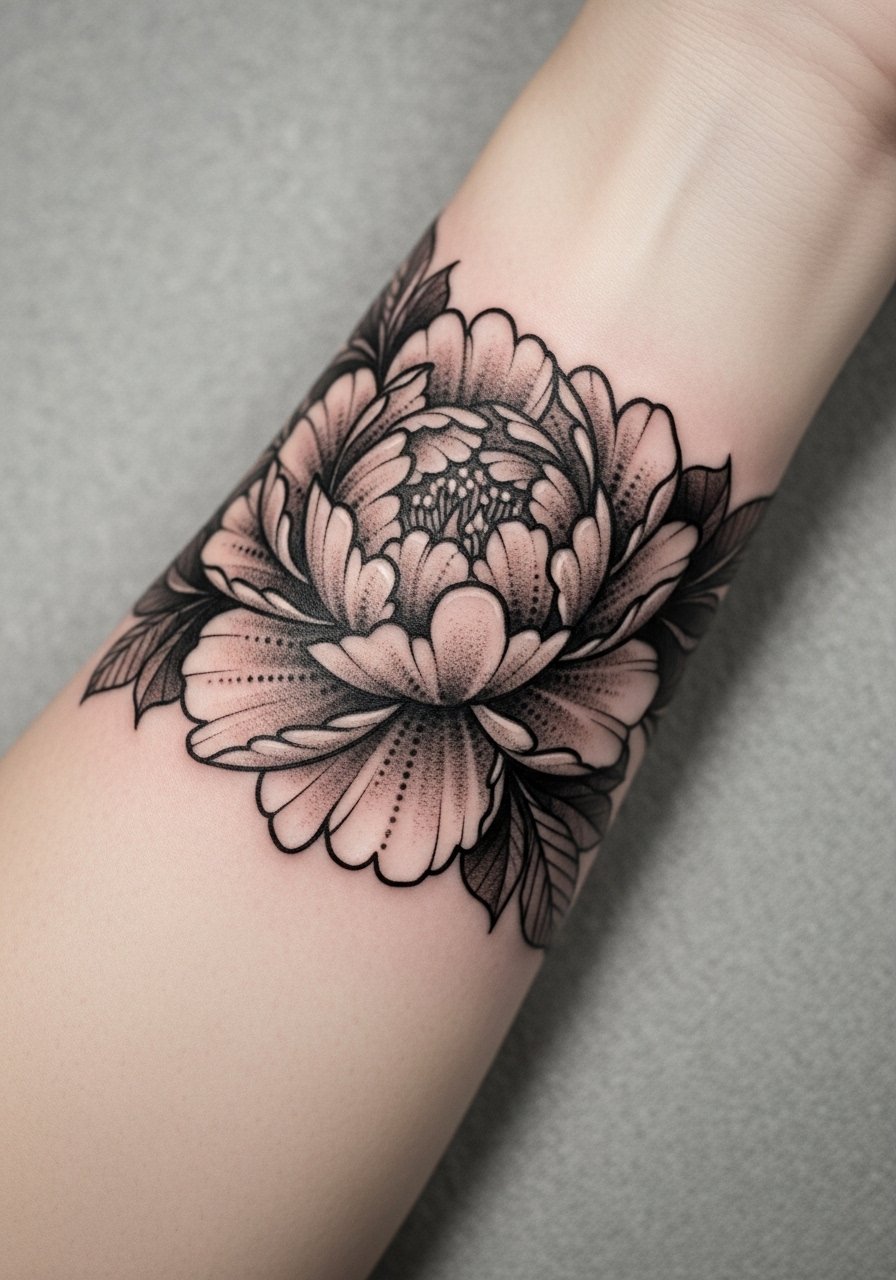
A forearm band of black-and-gray peonies reads timeless and versatile. It pairs easily with script or geometric accents.
Style & Design Details
- Tattoo style: black-and-gray illustrative
- Recommended size: band-width depends on forearm circumference
- Best placements: forearm, wristband area, upper arm
- Color vs. blackwork: tonal greys for a classic look that ages predictably
- Design elements: layered peonies, soft stippling, bold contour lines, negative-space separators
- Longevity note: greys hold well; thicker contours reduce blur
- Who it suits: monochrome lovers, people who want cohesive arm furniture
Finding the Right Artist
Choose artists with strong black-and-gray botanical work and band symmetry. Ask about wrap continuity. Avoid artists who lack forearm-wrap examples.
Aftercare & Healing Tips
Forearms are visible and need consistent SPF post-heal. Use fragrance-free soap during initial healing and a thin layer of After Inked afterward for softness.
- Minimalist Single-Petal Ear Cuff
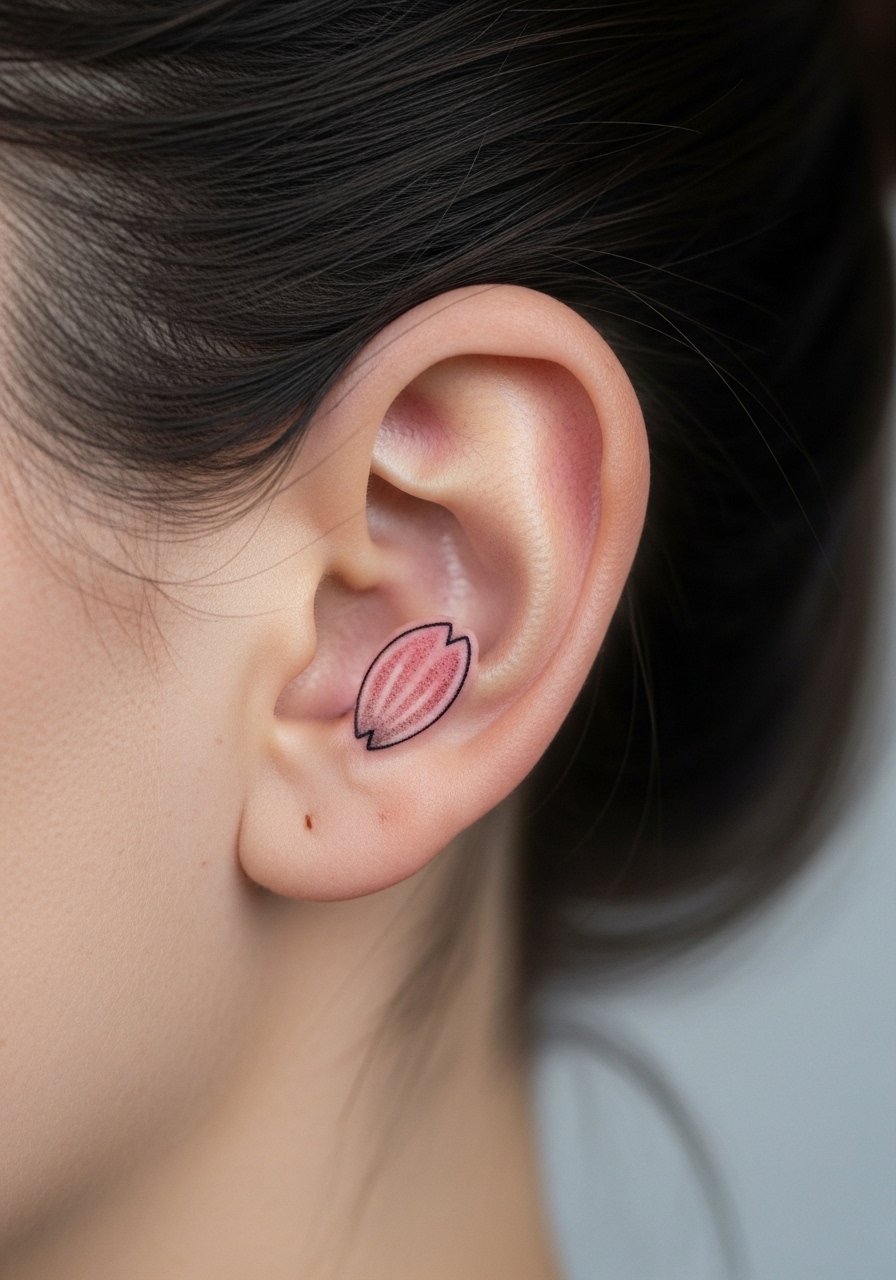
An ear-cuff petal is tiny but stylish. It works as an accent to piercings or as a subtle everyday detail. Pain is lower with cartilage numbing prep.
Style & Design Details
- Tattoo style: micro/minimalist
- Recommended size: under 1 inch
- Best placements: upper ear, behind ear, helix
- Color vs. blackwork: simple black or faint pink wash
- Design elements: single petal silhouette, micro-line veins, tiny highlight dots
- Longevity note: cartilage heals differently; micro-lines may need touch-up
- Who it suits: minimalists, music-festival goers, those with ear jewelry
Finding the Right Artist
Pick a micro-line artist with cartilage experience. Ask about sterility and needle depth for cartilage. Avoid shops without proper anesthesia protocols if you want numbing.
Aftercare & Healing Tips
Cartilage heals slower—avoid sleeping on that side. Use gentle soap and a thin layer of aftercare balm. Consider numbing cream if cartilage sensitivity is high.
- Magnolia & Script Memorial on Inner Arm
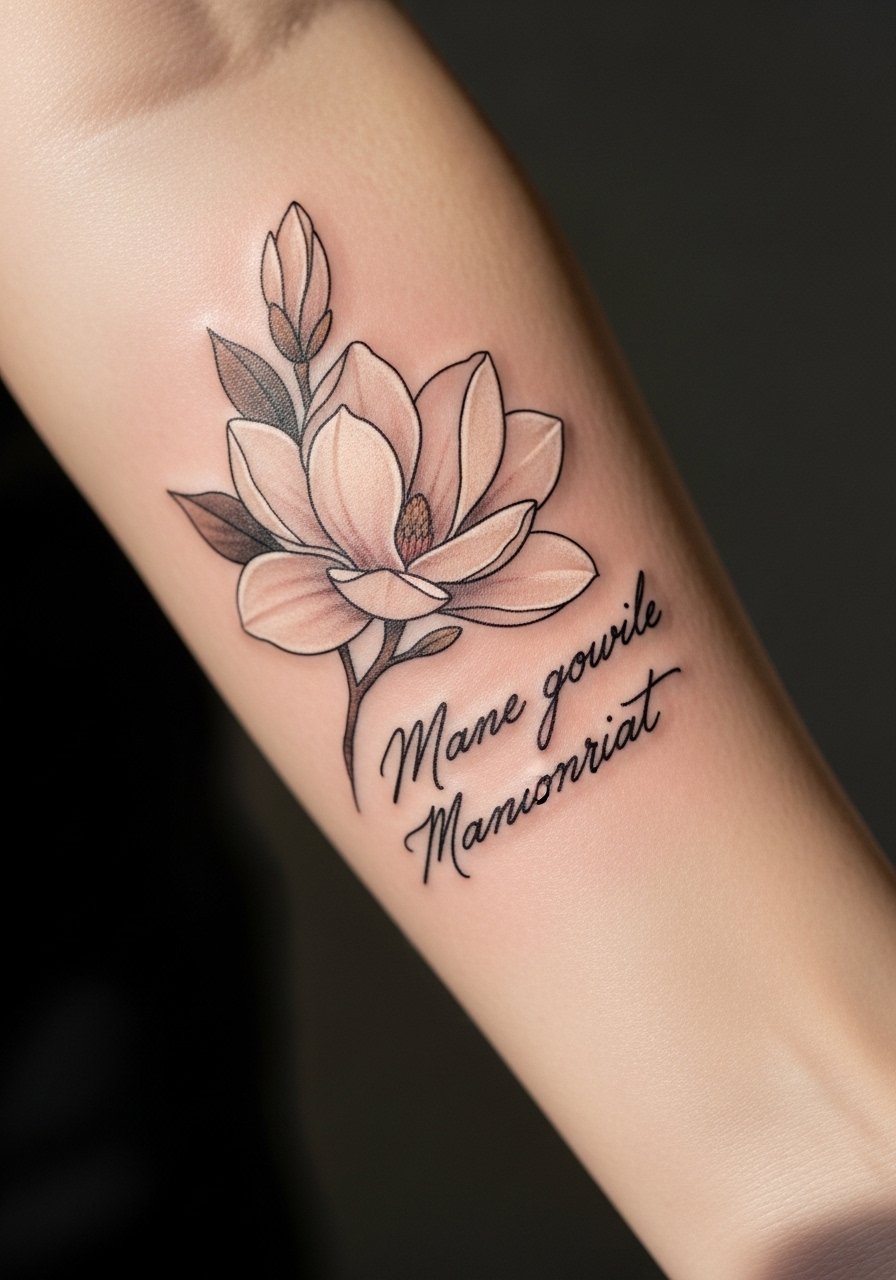
Combining a magnolia with a name or date creates a memorial piece that feels tender. Inner arm placement keeps it close to your pulse.
Style & Design Details
- Tattoo style: realistic illustrative with script
- Recommended size: 2–4 inches
- Best placements: inner forearm, rib, inner bicep
- Color vs. blackwork: cream magnolia with black script for readability
- Design elements: single magnolia bloom, flowing script, fine-vein shading, soft background dots
- Longevity note: script should be slightly thicker to avoid blurring
- Who it suits: memory tattoos, people wanting sentimental but elegant ink
Finding the Right Artist
Look for artists who do crisp script and florals together. Request healed text examples in the same font size. Avoid artists who do shaky lettering in portfolios.
Aftercare & Healing Tips
Inner-arm tattoos experience regular friction—keep moisturized and wear soft fabrics during healing. Use fragrance-free soap and a light unscented lotion. Expect text touch-up in a year if lines soften.
- Koi and Peony Side Calf Composition
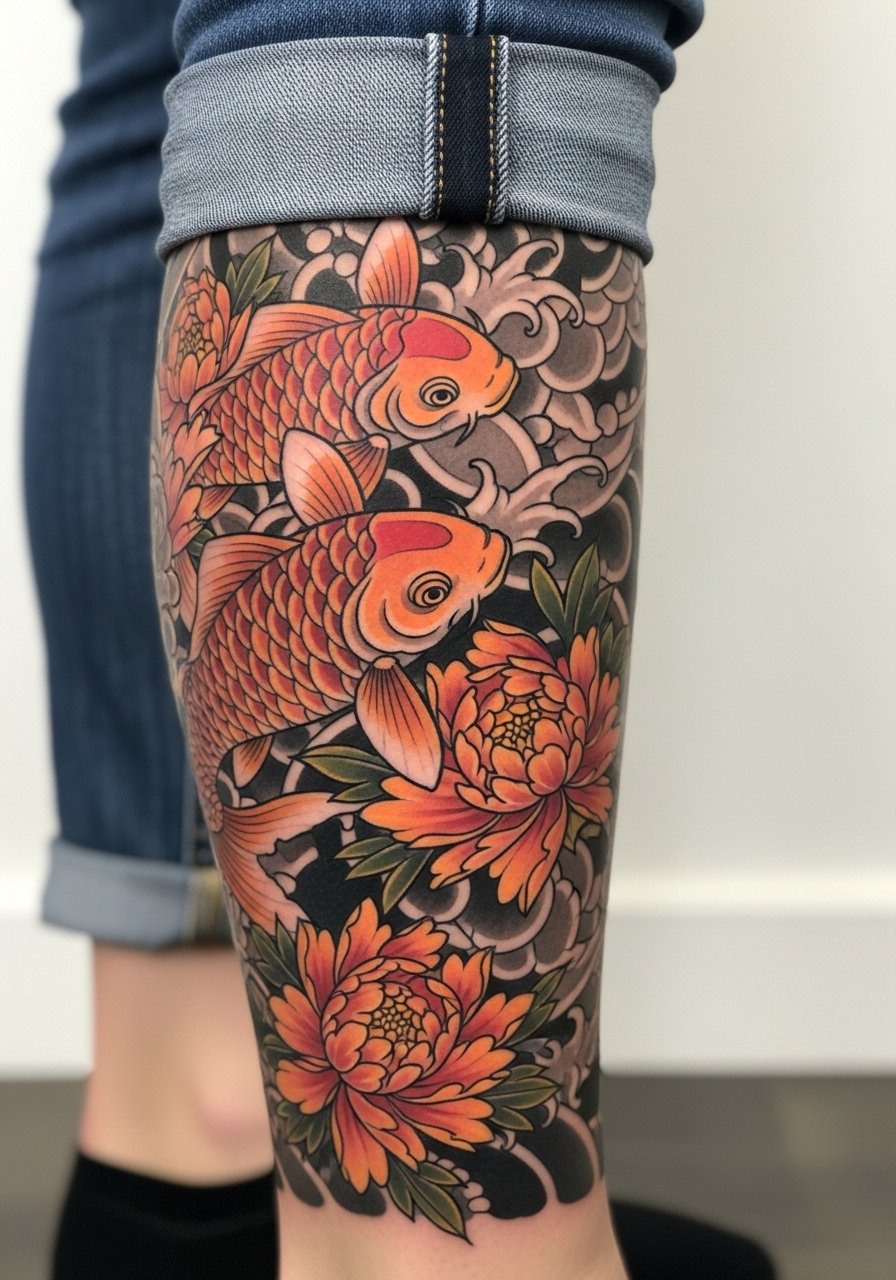
Koi with peony merges animal and floral symbolism into a dynamic composition. The calf gives vertical movement for the koi.
Style & Design Details
- Tattoo style: Japanese fusion illustrative
- Recommended size: calf-length panel
- Best placements: side calf, lower leg, thigh
- Color vs. blackwork: saturated oranges and reds offset by charcoal waves and green leaves
- Design elements: koi scales, peony petals, wave accents, bold outlines
- Longevity note: vertical leg pieces age well with lower sun exposure
- Who it suits: narrative collectors and people who want movement in their work
Finding the Right Artist
Pick someone with fish and petal experience. Ask how they will handle scale texture and motion. Avoid artists without animal anatomy or scale work.
Aftercare & Healing Tips
Legs can swell in long sessions—plan breaks and hydration. Aftercare includes Saniderm initial protection and a moisturizing schedule to reduce itching. Use SPF stick when wearing shorts.
- Fine-Line Bamboo & Cherry Blossom Sleeve Accent
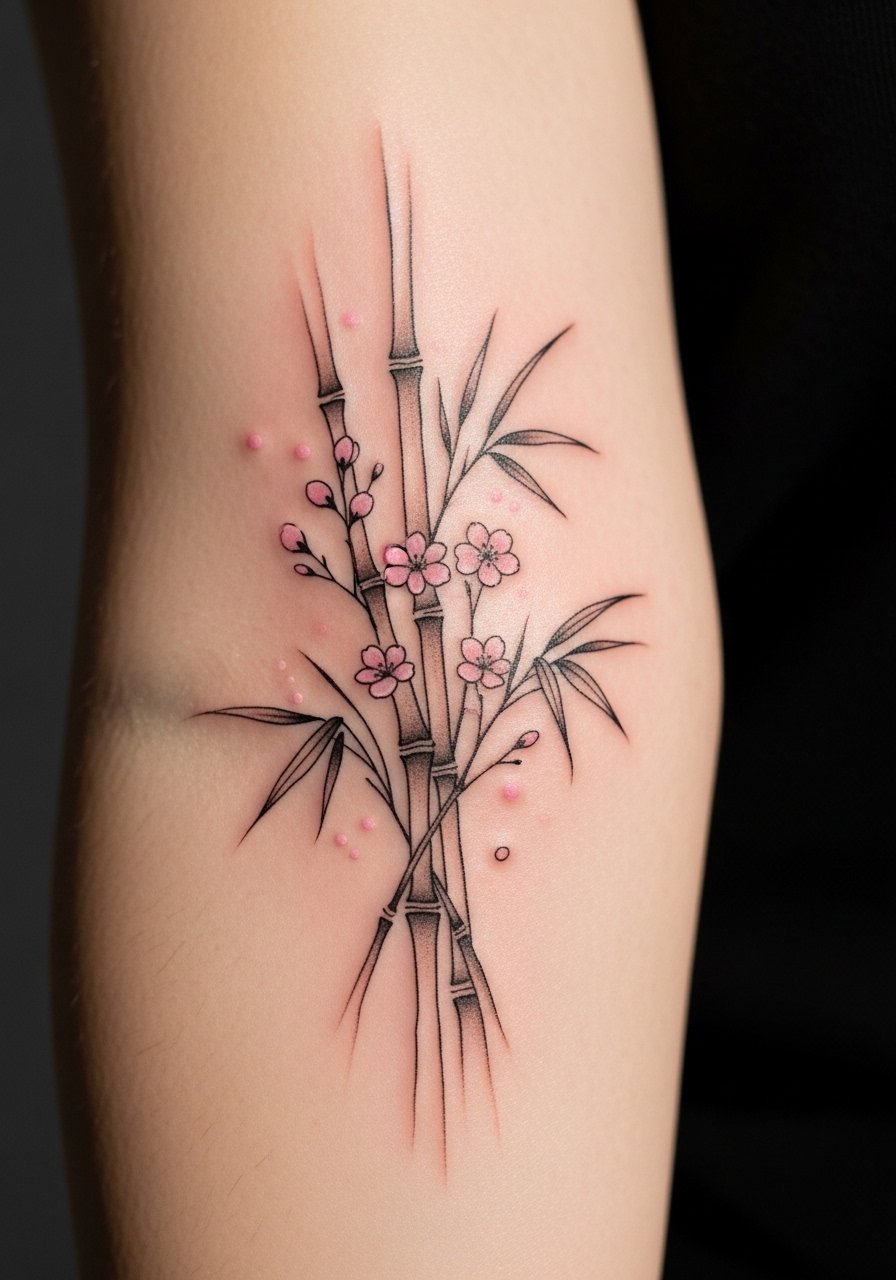
Bamboo paired with cherry blossoms gives structured vertical lines and soft floral contrast. Fine-line technique keeps it airy and elegant.
Style & Design Details
- Tattoo style: fine line + delicate color accents
- Recommended size: quarter-sleeve or forearm strip
- Best placements: inner forearm, forearm wrap, side of wrist
- Color vs. blackwork: predominantly monochrome with pink blossom hints
- Design elements: single-needle stalks, leaf veining, tiny sakura clusters, negative-space highlights
- Longevity note: fine-line bamboo can blur if lines are too thin; moderate line weight recommended
- Who it suits: minimalists who still want organic flow, lovers of botanical structure
Finding the Right Artist
Find artists with single-needle + color experience. Ask for healed photos with similar line thickness. Avoid artists whose fine-line pieces look inconsistent.
Aftercare & Healing Tips
Keep the inner forearm away from rubbing bands or tight sleeves. After the wrap, switch to unscented lotion and avoid long sun exposure. Expect a gentle fade—plan touch-up if necessary.
- Sakura Anklet — Petal Chain Around Ankle
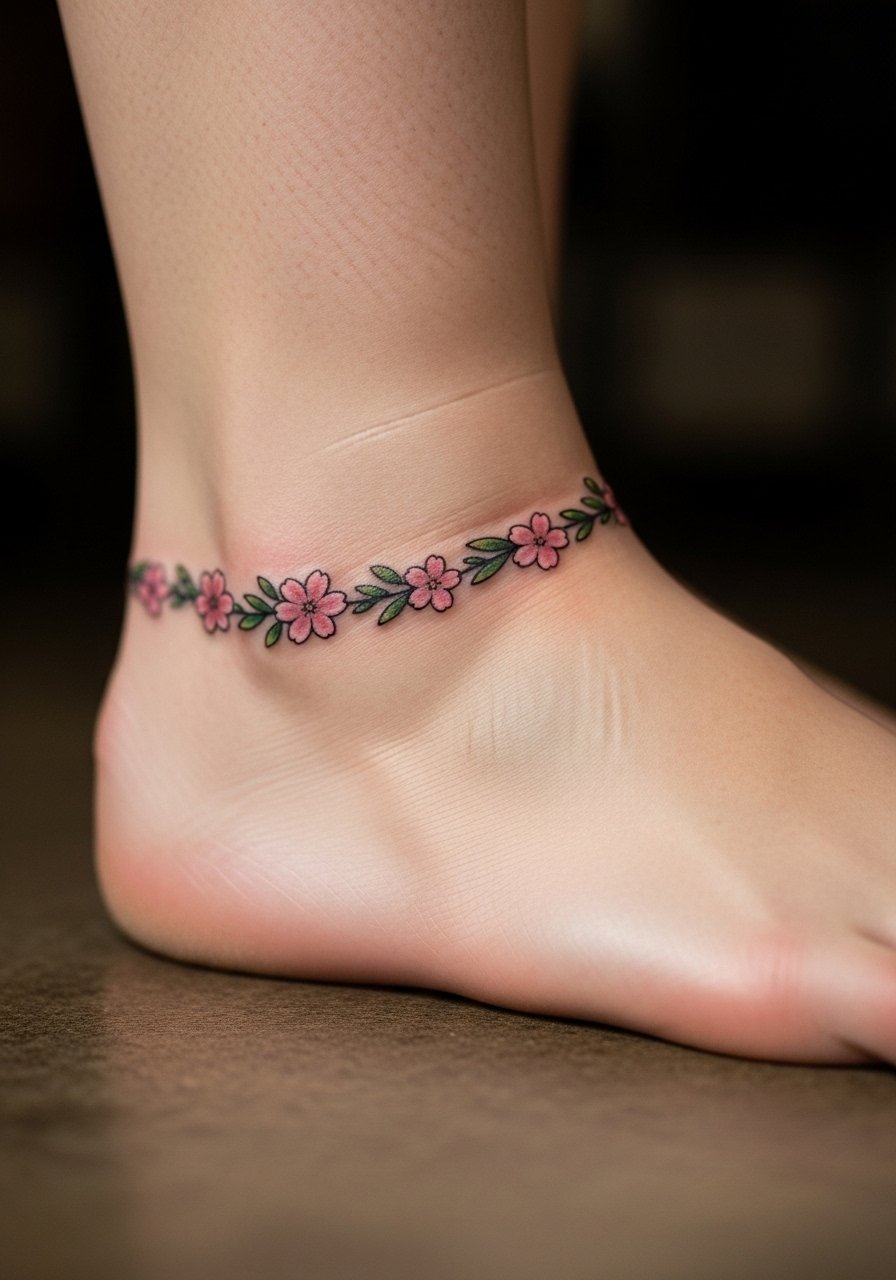
An ankle sakura anklet feels like jewelry and is very wearable. The circular design flatters ankle bones and pairs well with real anklets.
Style & Design Details
- Tattoo style: minimal decorative floral
- Recommended size: wrap-around ankle (thin band)
- Best placements: ankle, around the foot arch, ankle bone
- Color vs. blackwork: soft pink petals with thin black stemline
- Design elements: recurring petals, tiny leaves, negative-space gaps for breathability
- Longevity note: ankles see abrasion; avoid heavy footwear during healing
- Who it suits: those who want subtle adornment and ankle jewelry vibes
Finding the Right Artist
Pick an artist who has steady wrap-around pieces and can seam the band well. Ask how seams will match. Avoid artists without wrap continuity examples.
Aftercare & Healing Tips
Wear open footwear until healed. Keep socks off and use minimal friction; Saniderm can be tricky on curved ankle areas—follow artist direction. Moisturize gently and avoid long hot baths.
- Peony Fan — Decorative Fan Panel on Upper Arm
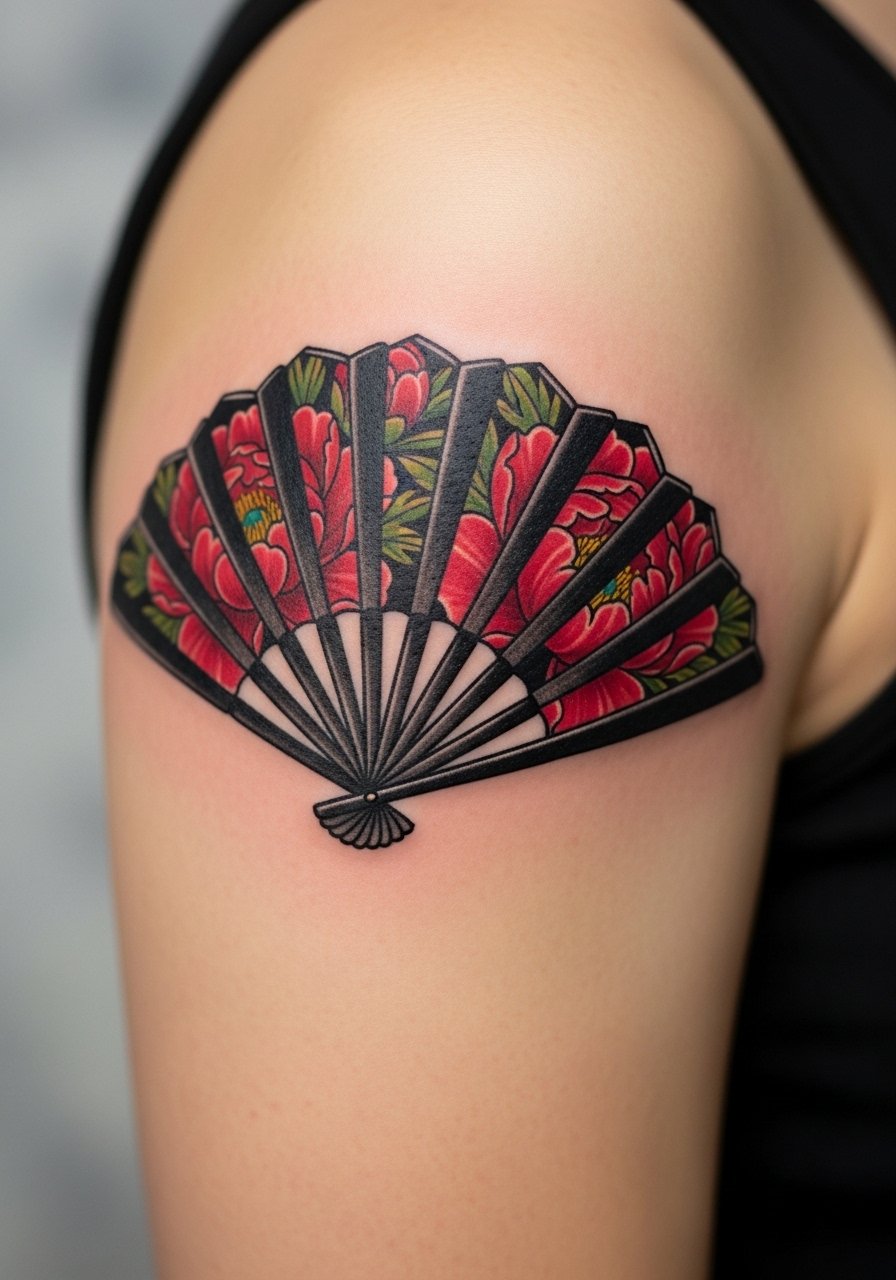
A fan design frames a peony with structural lines. Upper arm canvas suits the fan curvature and reads like wearable art.
Style & Design Details
- Tattoo style: illustrative decorative
- Recommended size: palm to upper-arm panel
- Best placements: upper arm, outer bicep, deltoid
- Color vs. blackwork: rich peony color inside bold fan ribs
- Design elements: fan ribs, peony center, wave or cloud background, frame lines
- Longevity note: upper arm is low-friction and holds color well
- Who it suits: decorative aesthetic fans, those who like framed imagery
Finding the Right Artist
Seek artists who compose framed panels and handle decorative linework. Ask to see healed examples of fan or framed pieces. Avoid artists without figure-framing experience.
Aftercare & Healing Tips
Upper-arm pieces are easy to manage. Use Saniderm initially if advised, then unscented lotion until healed. Keep out of direct sunlight during the settling months.
- Small Maple Leaves with Camellia — Autumnal Wrist Chain
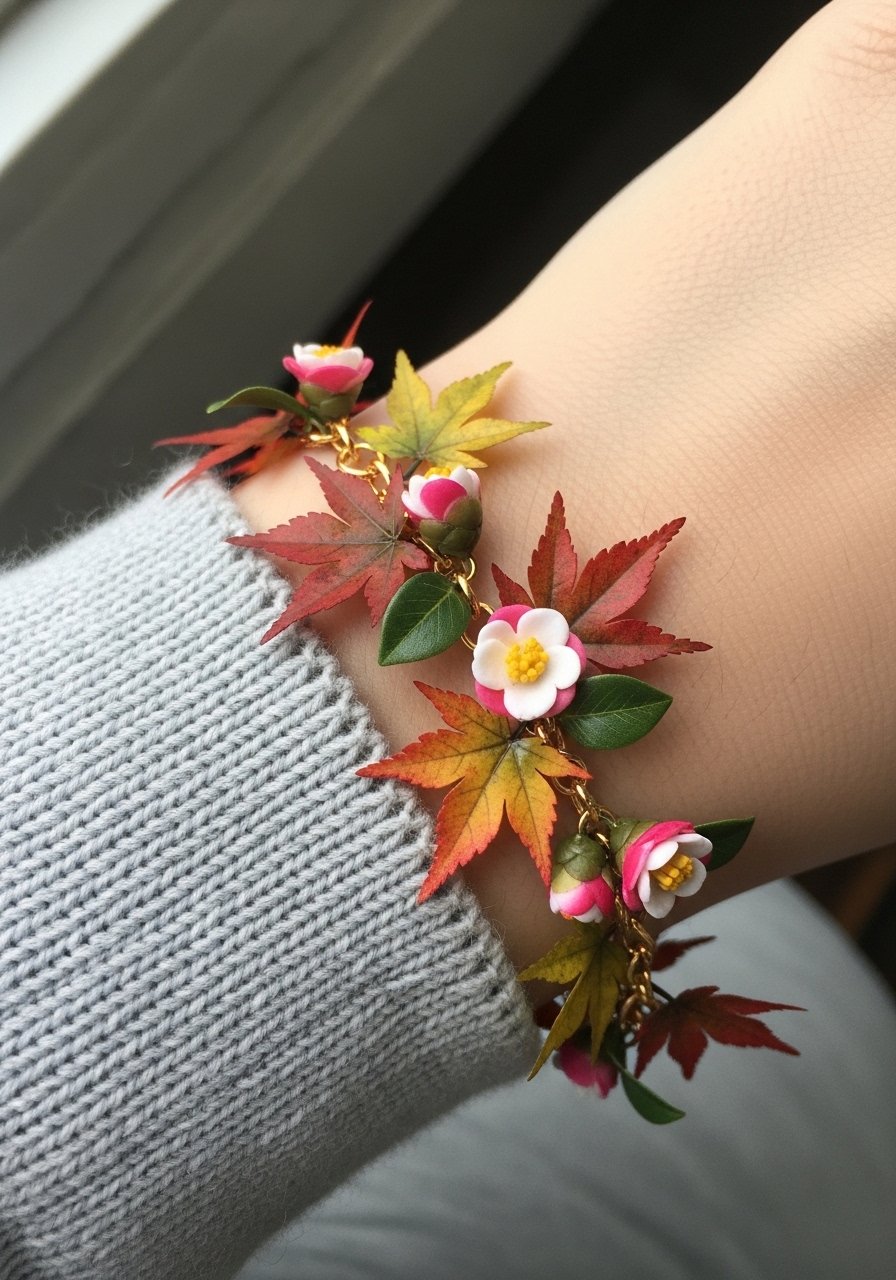
Maple leaves with camellia make a seasonal wrist chain. The warm palette feels like autumn on skin, and the wrist is ideal for visible daily reminders.
Style & Design Details
- Tattoo style: small illustrative
- Recommended size: chain around wrist (thin band)
- Best placements: wrist, inner wrist, ankle
- Color vs. blackwork: warm oranges, golds, and deep reds
- Design elements: small leaf silhouettes, tiny blooms, negative-space separators
- Longevity note: wrists see frequent use; slightly heavier lines prevent early blur
- Who it suits: people who love seasonal tones and small wrist jewelry tattoos
Finding the Right Artist
Choose artists who do cohesive wrap bands and small color. Ask for seamless pattern examples. Avoid artists who lack pattern continuity.
Aftercare & Healing Tips
Wrist areas need gentle cleanse and thin lotion layers. Avoid tight bracelets until healed. Use SPF post-heal to preserve autumnal hues.
- Back-of-Neck Small Floral Crest
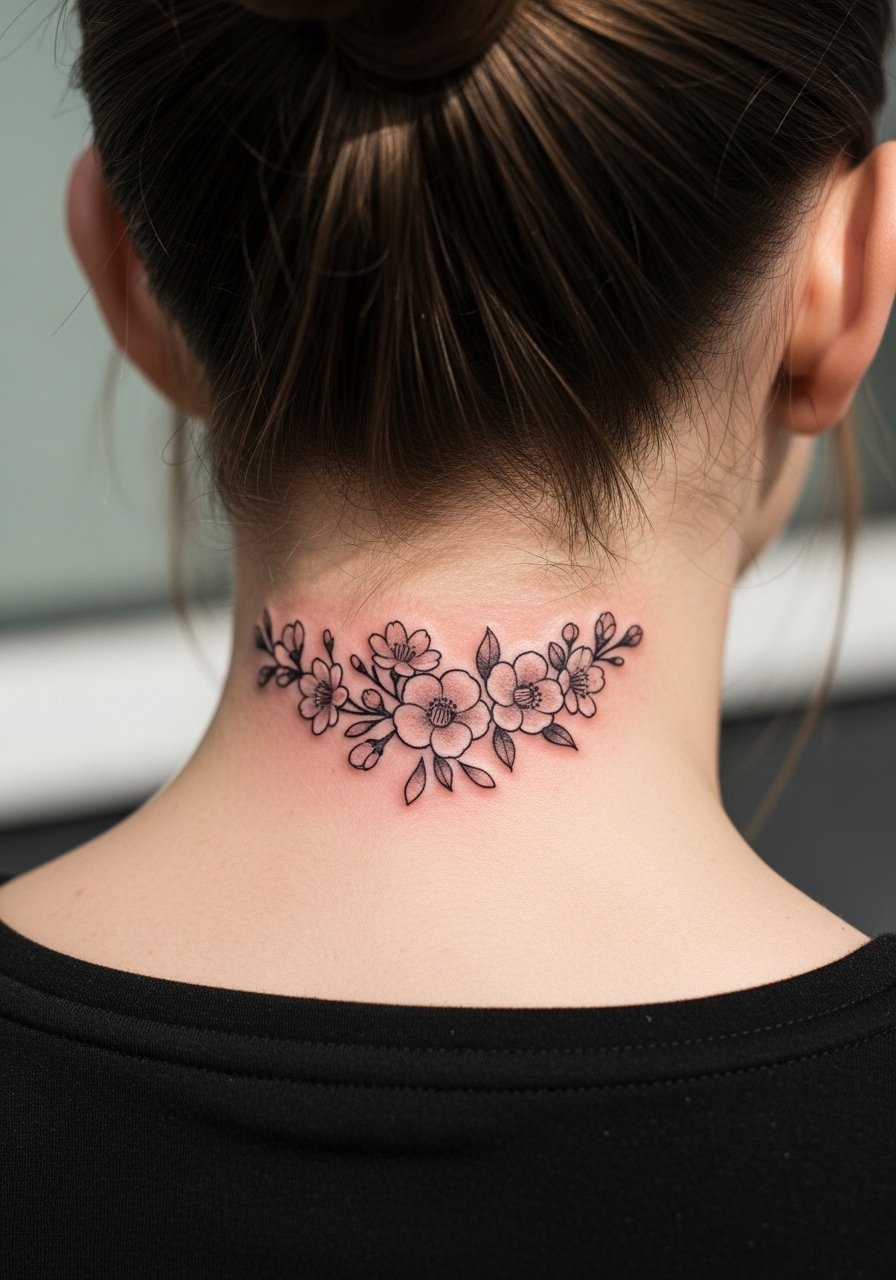
A small crest at the nape reads classic and secretive. It can be shown or hidden depending on hairstyle and clothing.
Style & Design Details
- Tattoo style: micro-crest illustrative
- Recommended size: 1–2 inches
- Best placements: nape, upper spine base
- Color vs. blackwork: black-and-grey or muted color
- Design elements: small clustered flowers, tiny leaves, subtle shading
- Longevity note: nape gets sun exposure; keep protected once healed
- Who it suits: professionals who want discreet flair, people with medium-length hair
Finding the Right Artist
Choose artists who have experience with small nape tattoos. Ask about needle depth for thin skin near the neck. Avoid artists with shaky micro work.
Aftercare & Healing Tips
Keep hair clean and away from the site. Use a soft pillowcase and loose collars. Apply aftercare balm as directed and protect with SPF once healed.
- Matching Sakura Wrist Pairs for Friends or Partners
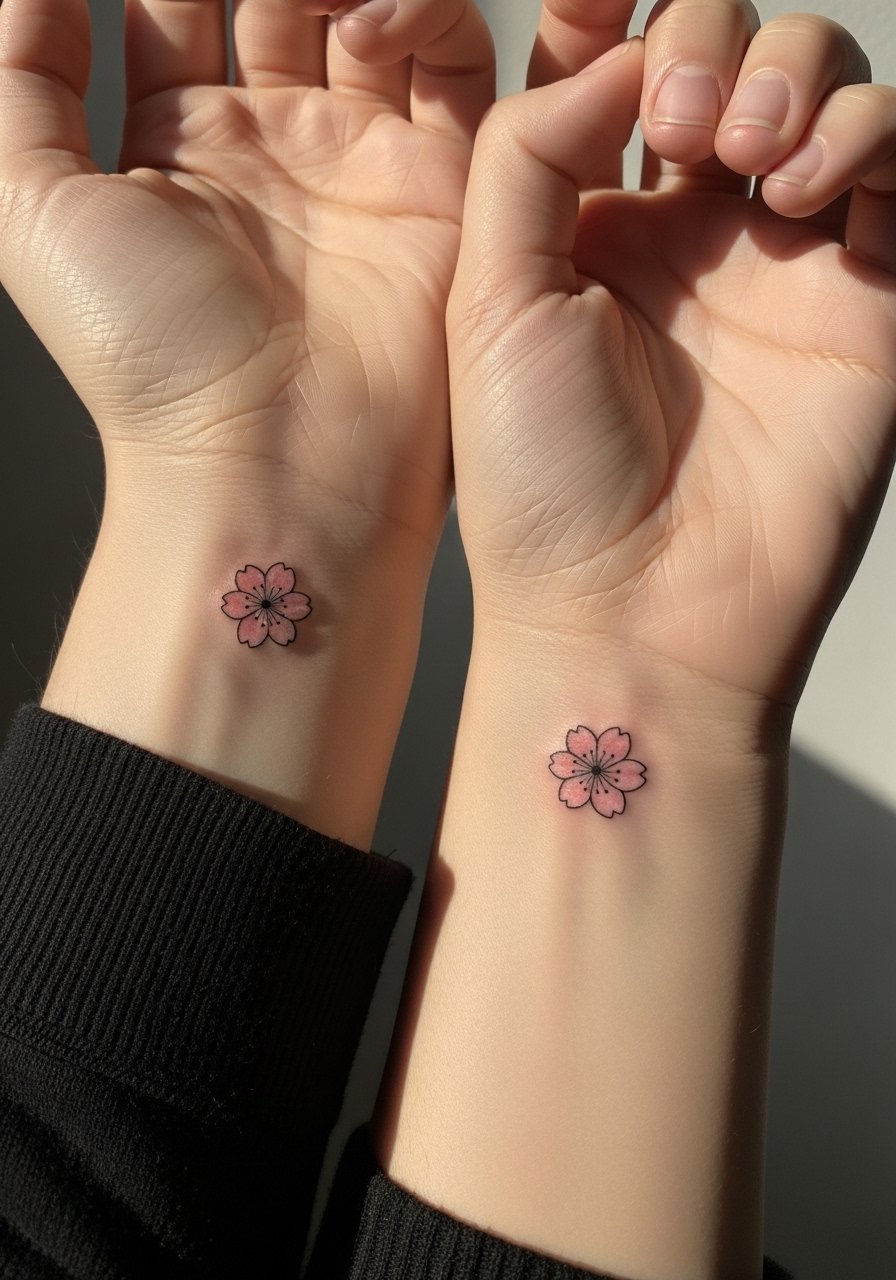
Matching sakura on the inner wrist makes a sweet shared symbol. Keep scale small and lines simple so both pieces age similarly.
Style & Design Details
- Tattoo style: minimal matching
- Recommended size: 1–2 inches
- Best placements: inner wrist, outer wrist
- Color vs. blackwork: small pink wash or black outline for longevity
- Design elements: single sakura or two small blossoms, thin stems, matching orientation
- Longevity note: matching pieces need similar aftercare and sun protection to stay consistent
- Who it suits: friends, partners, family members seeking symbolic ink
Finding the Right Artist
Book the same artist for both clients to ensure matching style and line weight. Compare healed photos of matching work. Avoid splitting sessions across different artists.
Aftercare & Healing Tips
Coordinate aftercare: both people should follow sanitary healing routines. Use Saniderm if advised, then a thin unscented lotion. Plan touch-ups together if lines soften.
Which aftercare or prep items I keep recommending across these ideas? A reliable second-skin like Saniderm tattoo bandage, a gentle fragrance-free soap such as Dr. Bronner's unscented castile soap, and a soothing balm like Hustle Butter Deluxe cover most healing needs. If you're testing placement first, try an Inkbox semi-permanent kit.
You now have 25 different directions, from tiny single-stem sakura to dramatic peony-and-crane panels. Save this pin, bring the images to your consultation, and ask your artist about needle sizes, line weight plans, and how they stage color. Which idea feels like yours — the quiet collarbone camellia or the full peony chest piece? If you want, tell me your preferred placement and I’ll suggest two designs to bring to your artist.