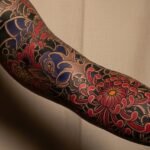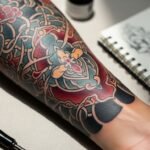
You’re sitting in a consultation, scrolling midnight boards, or finally booking that long-awaited session. That mix of nerves and excitement is familiar — especially when you want a Japanese traditional tattoo for men that reads bold, masculine, and meaningful. This guide collects 21 strong, culturally rooted ideas so you can leave the scrolling and bring something clear and confident to your artist.
Each idea below shows how the design reads on skin, what technique and style make it work, and where to place it for impact. You’ll also get realistic notes on pain, healing, and how to keep these pieces looking crisp for years. Before you sit, consider a numbing cream for sensitive placements like ribs — try Zensa numbing cream 30g about 45–60 minutes pre-session. After the session, leaving a Saniderm second-skin bandage roll on for 3–5 days makes the first week a lot easier.
Read through these 21 Japanese traditional tattoo ideas for men, save the ones you love, and bring a clear reference and questions to your consultation. Let’s get into designs that carry weight, line, and real story.
- Bold Koi and Dragon Full-Back Fusion
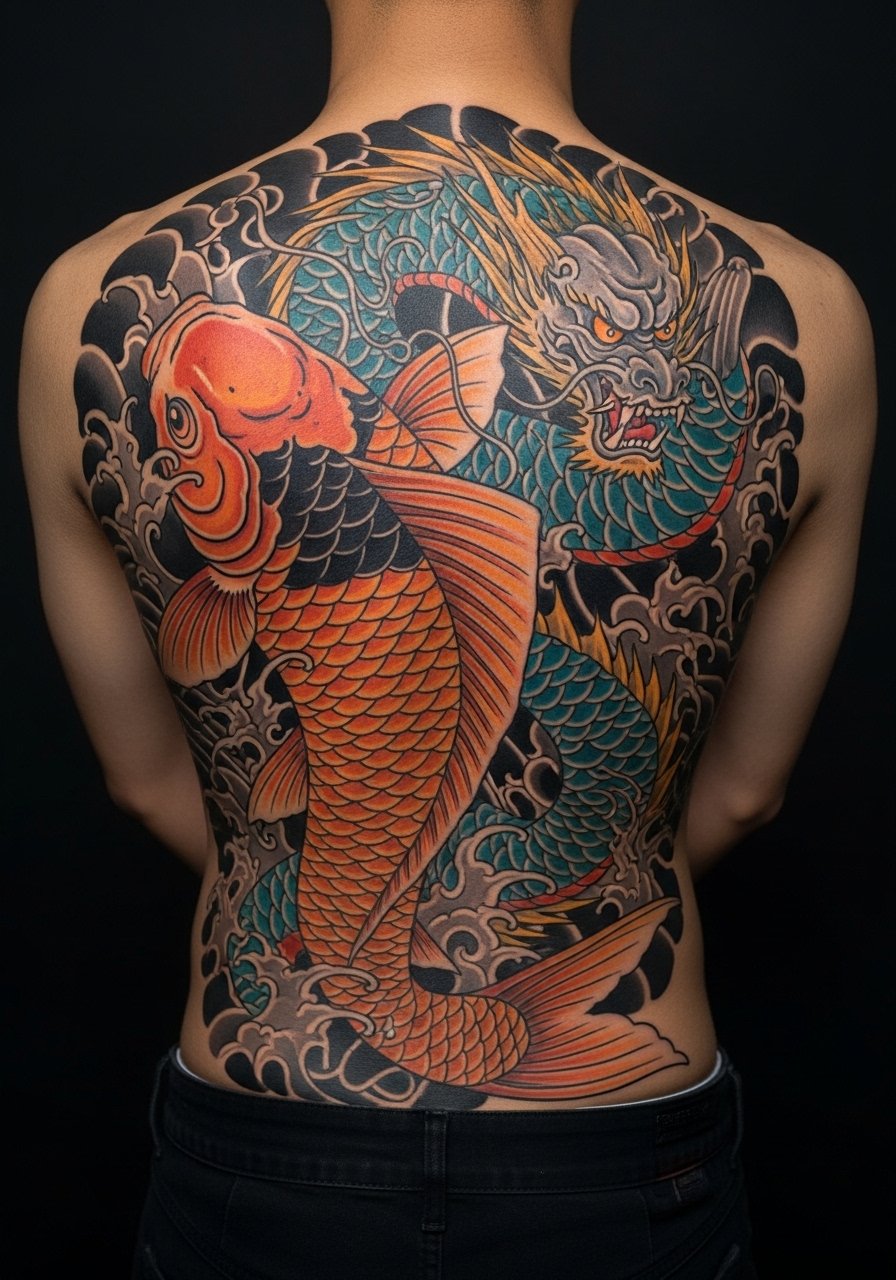
This is classic contrast: the koi fighting upstream and the dragon born from perseverance. The composition is dynamic and reads masculine when scaled large with aggressive line weight and bold fills. Guys who want a statement piece and symbolism about struggle-to-transformation will love this. It sits low on the back and wraps toward the shoulders, catching movement with every twist.
Style & Design Details
- Tattoo style: Traditional Japanese (Irezumi) with neo-traditional color fills
- Recommended size: full back or large upper-back panel (palm-sized elements won’t carry this narrative)
- Best placement(s): full back, full chest wrap, or torso-to-rib transition for dramatic flow
- Color vs. blackwork: color is preferred — saturated oranges, deep blues, and verdant greens for contrast; heavy black outlines for longevity
- Design elements: thick outlines, nishiki-e inspired scales, cloud and wave backgrounds, wind bars (kaze), negative-space highlights
- Longevity note: Bold outlines age best; bright colors may need touch-ups every 6–10 years depending on sun exposure
- Who it suits: collectors, men comfortable with long sessions, fans of mythology and bold imagery
Finding the Right Artist
Look for portfolios with large-scale Irezumi or Japanese-style backpieces. Ask to see healed photos at similar scale. Key questions: how many sessions, layering plan, color saturation approach. Avoid artists who only do small flash or fine-line work for this complexity. A senior artist experienced with full-back flow is ideal. Use tags like #irezumi #japanesetattoo or consult Tattoodo to find shops that post healed full-back work. If you sketch ideas, Procreate mockups help you visualize wrap and flow.
Aftercare & Healing Tips
Use a second-skin film like Saniderm for the first 3–5 days to protect the large surface area. Days 1–3: expect plasma build-up under the film; don’t peel. Week 1–2: gentle washing twice daily with fragrance-free soap, then a thin layer of an unscented lotion like Lubriderm Daily Moisture Fragrance Free. Full color settle: 4–6 weeks, with final touch-up discussions at 3–4 months. Long-term care: high-SPF sun protection every time the back sees sun.
- Samurai Helmet (Kabuto) Chest Plate
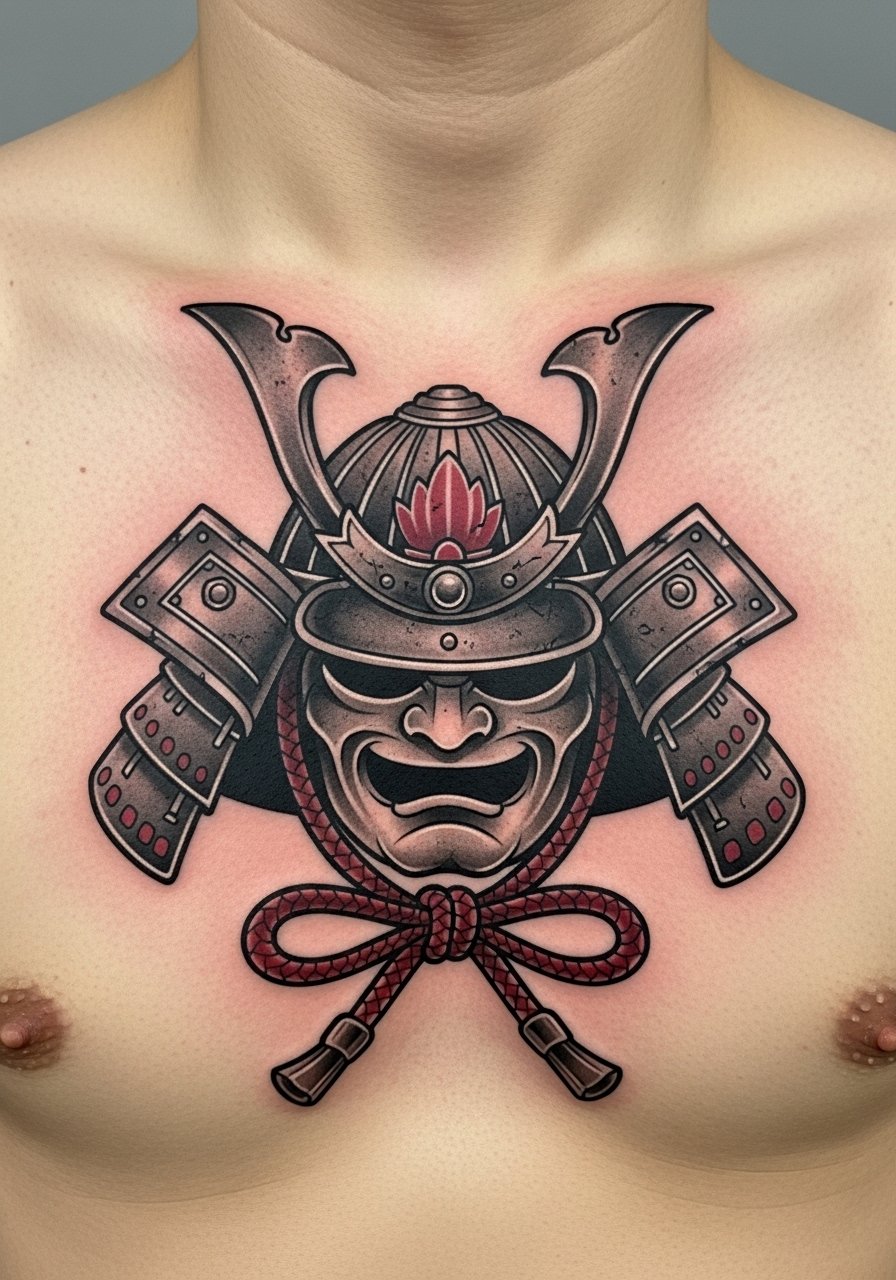
A kabuto helmet over the chest reads like armor — it feels protective and masculine. This design works well as a centered chest piece or upper sternum panel. It’s strong in blackwork or limited color, and the bold shapes stand up to movement and chest expansion.
Style & Design Details
- Tattoo style: Blackwork with illustrative shading or classic Japanese color blocking
- Recommended size: palm-to-fist size for sternum, larger for full chest plate
- Best placement(s): sternum/center chest, upper chest radiating to clavicle, or sternum-to-rib wrap
- Color vs. blackwork: blackwork for a stoic look; add cinnabar/red for accents if you want contrast
- Design elements: crested maedate, rivets, lacquered texture, kabuto tassels, bold negative-space highlights
- Longevity note: centralized pieces with heavy black age well; chest can fade faster if repeatedly exposed to sun
- Who it suits: former military, martial arts enthusiasts, men wanting symbolic protection
Finding the Right Artist
Seek artists comfortable with armor texture and metallic shading. Look for clean black fill and confident line work in chest placements. Ask how the design will align with sternum curvature and breathing. Avoid artists inexperienced with symmetrical chest work. Instagram tags: #kabuto #japanesekabuto. A design sketch or stencil transfer helps visualize symmetry—consider bringing printed references.
Aftercare & Healing Tips
Chest placements can be tender; consider a thin layer of Zensa numbing cream 30g if you have low pain tolerance. Keep the area uncovered at night when you can protect it, or use clothing that won’t rub. Wash twice daily with a gentle soap like Dr. Bronner’s unscented castile soap and apply a light fragrance-free lotion during peeling. Plan touch-up after 3 months if any shading settles unevenly.
- Fierce Tiger Half-Sleeve (Japanese Tiger)
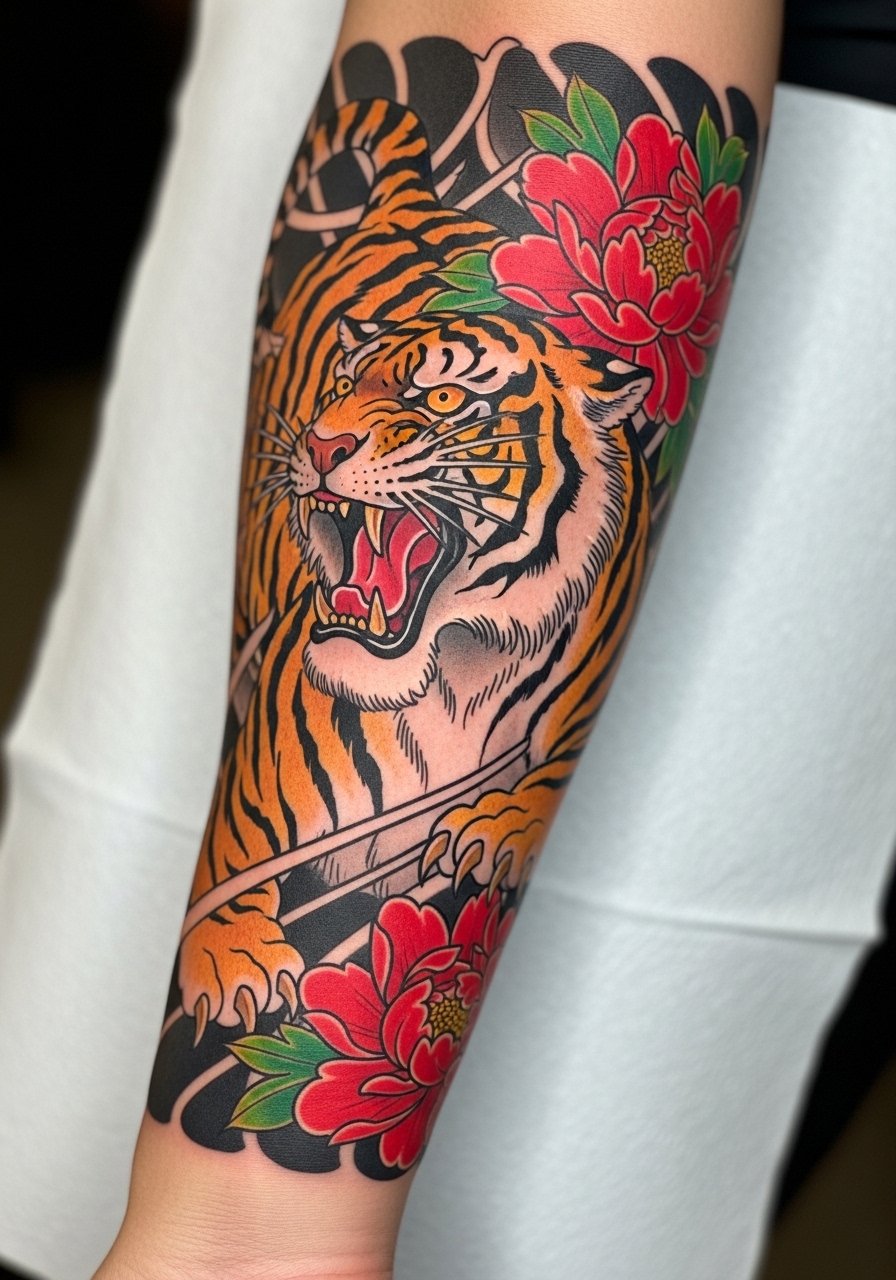
The Japanese tiger symbolizes courage and protection. A half-sleeve brings the animal’s movement around the arm, using swirl patterns and florals to accent strength. This design ages well and reads bold on most skin tones.
Style & Design Details
- Tattoo style: Traditional Japanese with neo-traditional color saturation
- Recommended size: quarter to half sleeve to keep facial detail readable
- Best placement(s): outer arm half-sleeve, thigh, or calf
- Color vs. blackwork: color recommended for the fur and peonies; strong black outlines for stripes
- Design elements: single-needle whisker detail, heavy stripe blocks, peony clusters, wind bars, negative space claws
- Longevity note: bold stripes retain definition; fine fur detail may soften and require touch-ups
- Who it suits: men wanting aggressive animal imagery, mid-career collectors
Finding the Right Artist
Look for artists who post full healed sleeve photos with animals and florals. Ask about scale for tiger facial features and striping density. Avoid artists who only do small animal portraits; find someone experienced with wrap-around anatomy. Search #japanesetiger or #irezumi. A printed side-view of the arm helps the artist plan flow.
Aftercare & Healing Tips
Forearm sleeves heal faster than torso work but still need care. Use a breathable wrap like Saniderm for the first 48–72 hours if recommended, then wash gently twice daily. Apply Hustle Butter Deluxe tattoo aftercare balm during peeling to keep colors vibrant. Avoid heavy sun exposure for the first three months and use an SPF 50 stick after healing.
- Hannya Mask Upper-Arm Statement
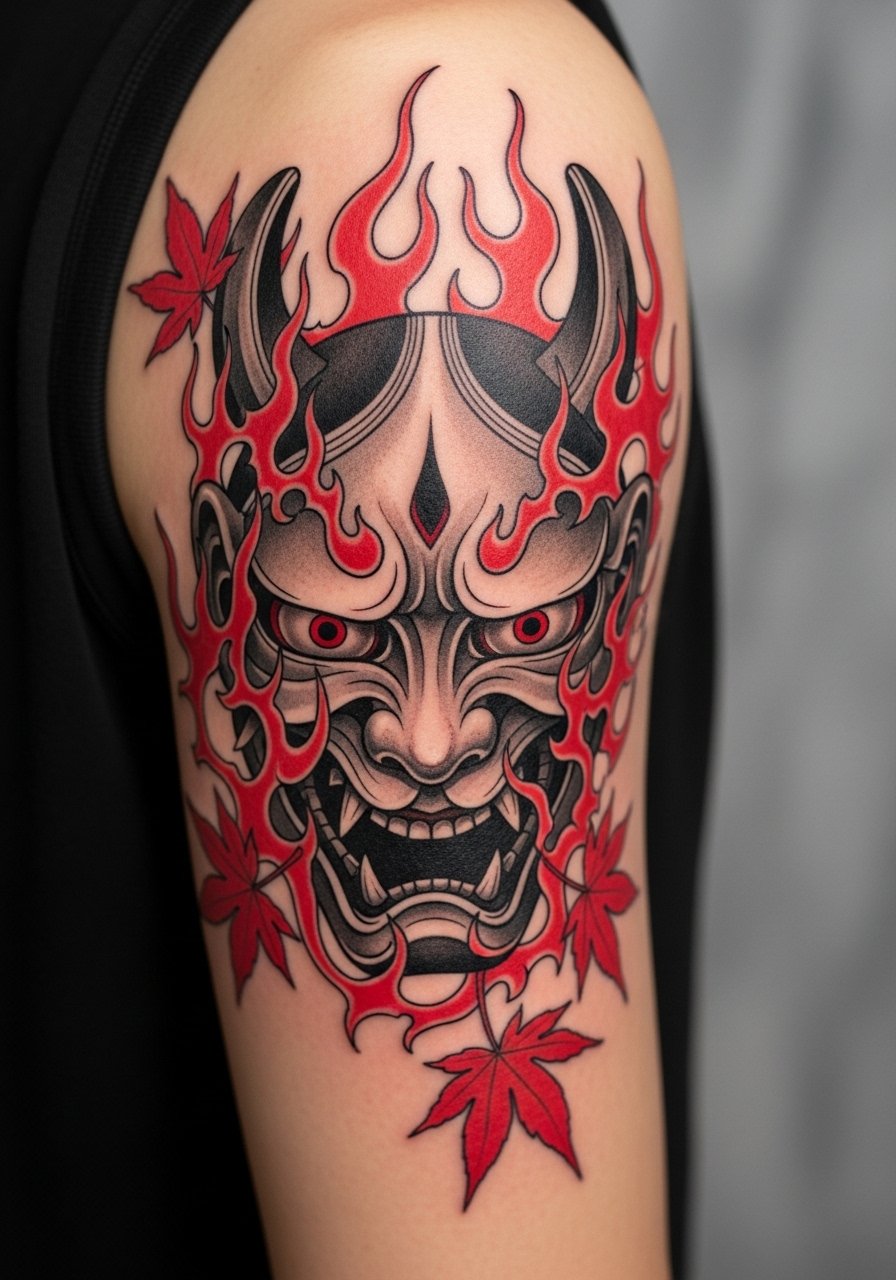
The Hannya mask is complex emotionally — jealousy, transformation, and raw humanity. As an upper-arm piece it reads masculine and theatrical. Use heavy outlines and dramatic shadowing to keep the face expressive even from a distance.
Style & Design Details
- Tattoo style: Traditional Japanese with illustrative shading
- Recommended size: palm-to-full upper arm for facial detail
- Best placement(s): outer upper arm, shoulder cap, or bicep wrap
- Color vs. blackwork: saturated red and black for contrast; metallic gold accents optional
- Design elements: horn detail, sharp teeth, maple leaf accents, stipple shadowing, wind bars
- Longevity note: facial contrasts hold; small expressive lines might soften and need touch-ups
- Who it suits: men who appreciate Japanese theater motifs and dramatic symbolism
Finding the Right Artist
Choose someone familiar with masks and facial expression through tattooing. Ask to see healed photos focused on facial detail and teeth. Avoid artists who over-finesse the face—this design needs boldness. Look up #hannya or #hannyamask on Instagram and Tattoodo.
Aftercare & Healing Tips
Upper-arm placements tend to be less painful and heal predictably. Keep the area wrapped per your artist’s preference, wash twice daily with a fragrance-free soap like Dial Gold antibacterial soap if preferred by your artist, and switch to an unscented lotion once peeling starts. Expect bright reds to mellow slightly; keep the healed piece sun-protected.
- Falling Cherry Blossoms Forearm Band
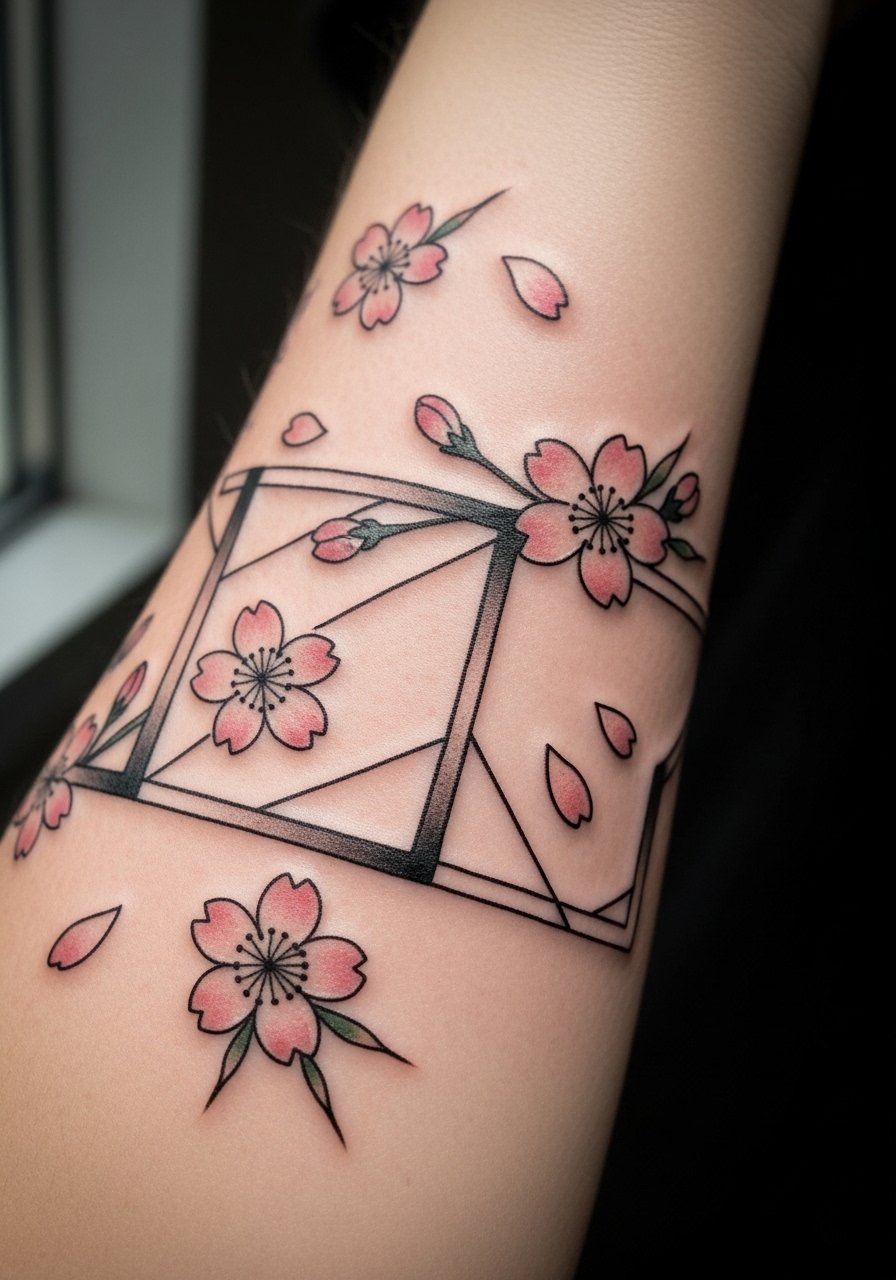
Cherry blossoms (sakura) are poetic and pair well as a band or wrap. This band reads refined and masculine when done with thicker traditional outlines and restrained color. It’s great for men who want subtle cultural nods rather than full-body commitment.
Style & Design Details
- Tattoo style: Traditional with fine-line accents
- Recommended size: 2–3 inch band width; petals sized for visibility at arm distance
- Best placement(s): forearm band, wrist wrap, calf band
- Color vs. blackwork: light pinks for petals with bold black outlines for contrast
- Design elements: sakura petals, wind bars, negative-space gaps, small dot shading
- Longevity note: lighter pinks fade faster; consider slightly deeper pigment for longevity
- Who it suits: first-timers, minimalists, men who want a cultural accent
Finding the Right Artist
Look for artists who can balance fine-line florals with traditional outlines. Ask for healed photos of bands to see how gaps hold up. Avoid artists who use too-thin lines exclusively; you want some weight. Use ink-stencil mockups to check wrap symmetry.
Aftercare & Healing Tips
Bands see friction from clothing, so avoid tight sleeves for two weeks. Use Saniderm for the first 48–72 hours if your artist recommends it, then switch to Aveeno fragrance-free lotion during peeling. If you’re testing placement, try an Inkbox temporary kit to be sure.
- Rising Phoenix Thigh Panel
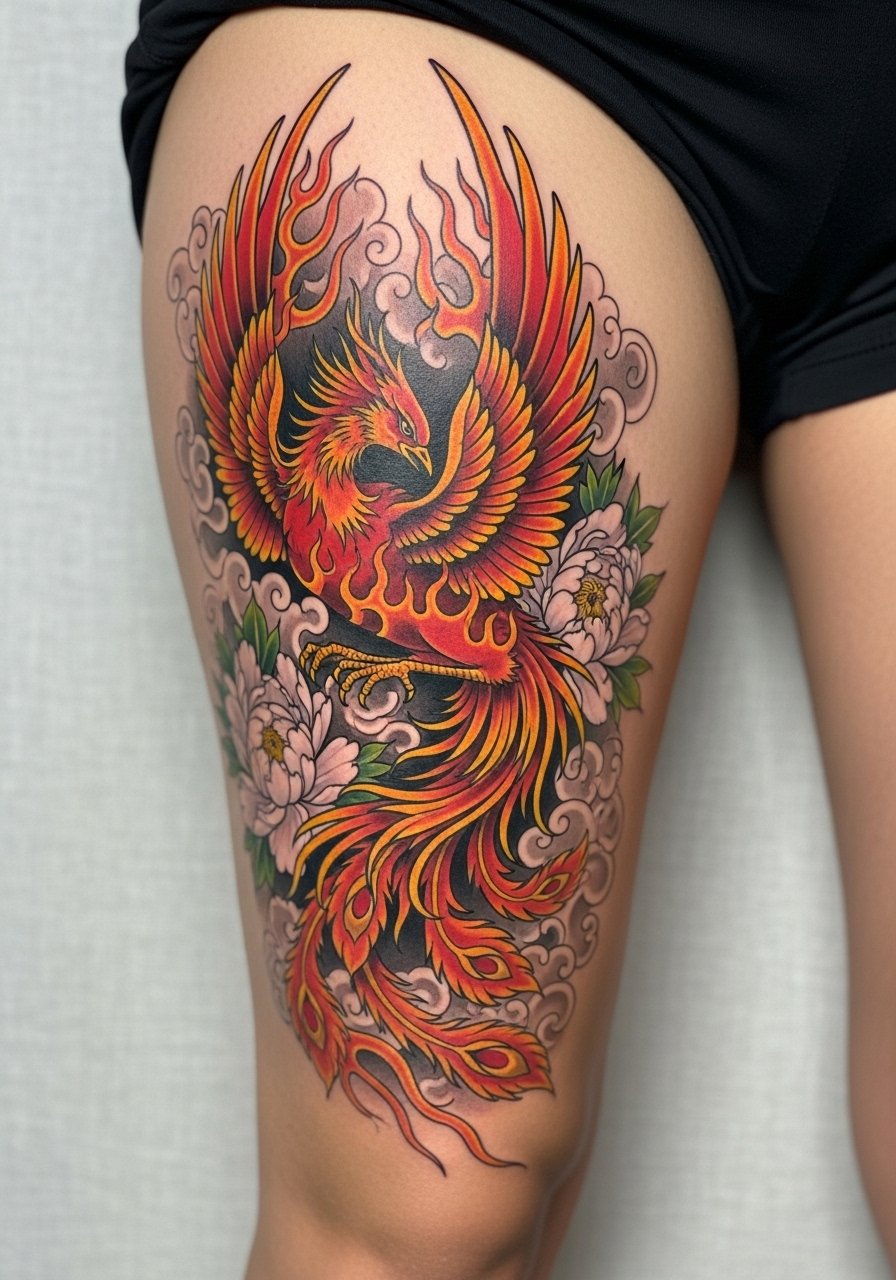
A phoenix is all about rebirth and resilience. On the thigh, it has room to spread wings and dramatic tail feathers. This placement suits men who want a bold, private piece that reads as powerful when revealed.
Style & Design Details
- Tattoo style: Neo-traditional Japanese with painterly color blending
- Recommended size: large thigh panel, palm-to-full thigh depending on coverage
- Best placement(s): outer thigh, upper thigh wrap, or side hip
- Color vs. blackwork: strong color recommended — golds, reds, and deep blues for shading
- Design elements: flame feathers, layered peony clusters, cloud and wave backgrounds, long tail filigree
- Longevity note: thigh skin often holds color well; friction from pants can impact healing
- Who it suits: men wanting dramatic private pieces, lovers of mythic animals
Finding the Right Artist
Find artists who show large animal panels and smooth color transitions. Ask about sitting times per session and how color saturation is layered. Avoid artists who don’t post healed photos of color-rich work. Use references to show preferred feather flow.
Aftercare & Healing Tips
Thigh tattoos often heal well but can chafe against pants. Wear loose clothing and consider keeping the area wrapped for the first 48 hours. Use Hustle Butter Deluxe sparingly during peeling to keep pigments vibrant. Plan touch-up after full settle if any color pockets resolve unevenly.
- Black Dragon Sleeve — Spine-to-Arm Flow
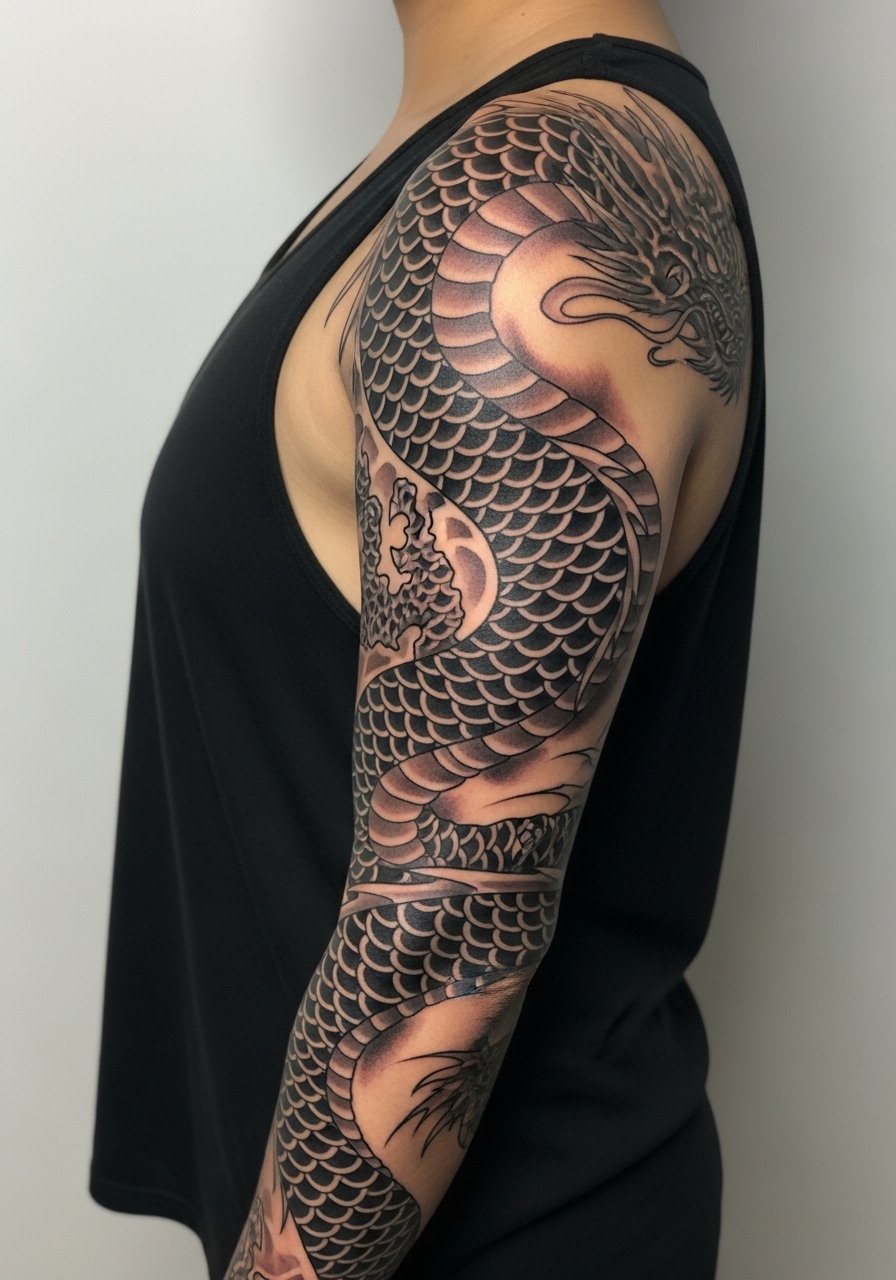
A black dragon is a staple of Japanese tradition — powerful and mysterious. This sleeve uses heavy blackwork and grey wash to keep it masculine. It’s a strong choice if you want a cohesive, intimidating look.
Style & Design Details
- Tattoo style: Blackwork with grey wash realism
- Recommended size: full sleeve or back-to-arm wrap for true flow
- Best placement(s): full sleeve, back-to-shoulder wrap, or rib-to-arm transition
- Color vs. blackwork: blackwork preferred for sensory weight and longevity
- Design elements: dense scale texture, smoke/cloud fill, clawed limbs, negative-space highlights, stipple shading
- Longevity note: blackwork ages extremely well; next-day touch-ups are rare unless blowout occurs
- Who it suits: men wanting bold, noir imagery or full-arm commitment
Finding the Right Artist
Seek artists experienced in dense black fills and large-scale negative-space planning. Ask for healed photos of similar black-scale work. Avoid apprentices for very dense fills unless closely supervised. Instagram tags: #blackdragon #japaneseblackwork.
Aftercare & Healing Tips
Large blackwork warms the skin and can scab thicker. Use a thin layer of Lubriderm Daily Moisture Fragrance Free during peel; avoid over-moisturizing. Keep regular checks for any raised scabbing that suggests too-heavy scabbing — consult your artist if concerned. SPF 50 after healing keeps black saturated.
- Samurai Warrior Half-Chest Portrait
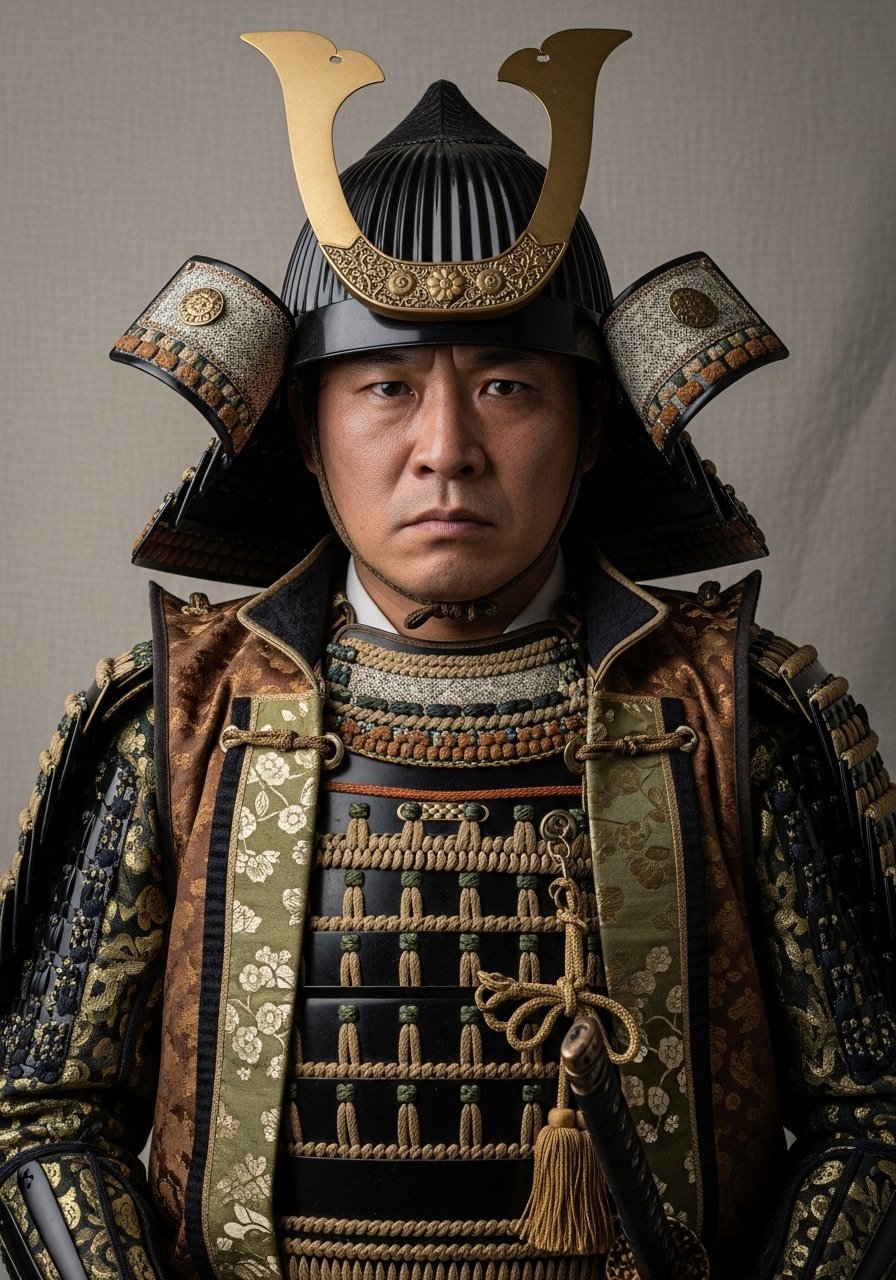
A samurai portrait reads like a personal creed — discipline, loyalty, and strength. The piece works well as a half-chest portrait, facing toward the centerline, and pairs with family crests or banners.
Style & Design Details
- Tattoo style: Illustrative Japanese portraiture with bold outlines
- Recommended size: half-chest or chest panel for facial detail
- Best placement(s): half-chest, sternum-to-shoulder, or upper back
- Color vs. blackwork: earth tones with strong black line work recommended
- Design elements: facial expression lines, armor texture, family crest (mon), banner script, wind bars
- Longevity note: portrait detail requires proper scaling; small face details may blur if too small
- Who it suits: men who value historical and martial symbolism
Finding the Right Artist
Choose an artist with portrait experience and Japanese armor work. Ask how they’ll scale facial features and render armor texture. Avoid artists without stable portrait examples. Bring reference images and discuss how a crest might integrate.
Aftercare & Healing Tips
Chest portraits need careful protection from rubbing. Consider Saniderm for the first 48–72 hours, then gentle washing. Use an unscented lotion like Aveeno fragrance-free lotion during the flaking phase. Plan a 3-month touch-up session for facial detail.
- Bamboo & Pine Sleeve (Wabi-Sabi Minimalism)
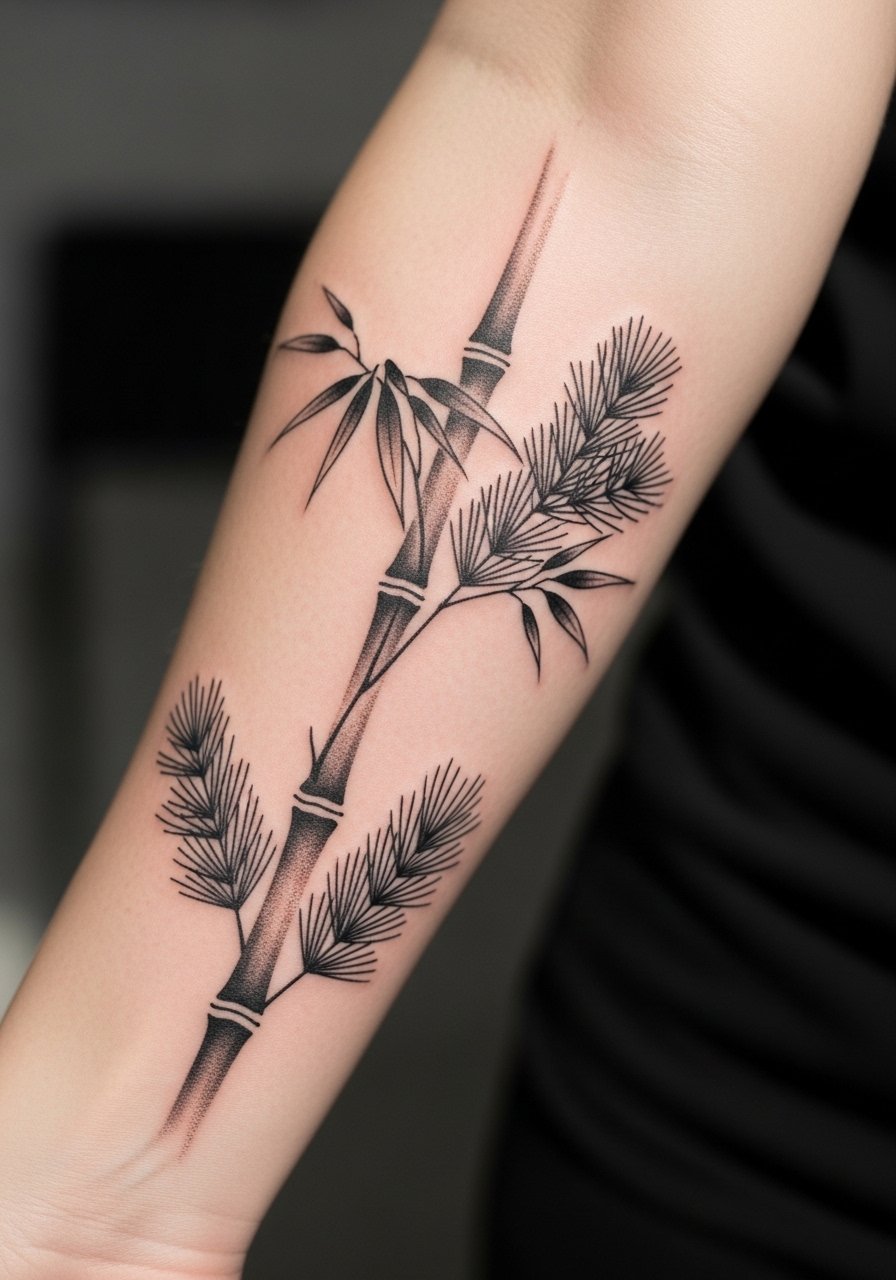
This is a subtler nod to Japanese aesthetics, focusing on resilience and longevity. The bamboo/pine combo reads understated but masculine. It fits men who prefer quiet symbolism over loud color.
Style & Design Details
- Tattoo style: Minimalist Japanese with blackwork and fine-line
- Recommended size: quarter to half sleeve or inner forearm strip
- Best placement(s): inner forearm, calf, or side rib for vertical flow
- Color vs. blackwork: blackwork preferred to retain minimal feel
- Design elements: long vertical bamboo, needle clusters, negative space, subtle stipple
- Longevity note: fine-line elements need thicker supporting lines to age well
- Who it suits: minimalists, men seeking subtle cultural references
Finding the Right Artist
Pick an artist who does fine-line botanical work with confident line weight. Ask for healed examples of vertical botanical pieces. Avoid artists who over-stylize bamboo into cartoonish shapes. Tattoo placement guides help map vertical flow.
Aftercare & Healing Tips
Inner forearm heals cleanly; prevent friction from straps or watches. Wash with unscented soap and apply Hustle Butter Deluxe during the peeling stage to keep lines crisp. After healed, protect from sun.
- Wave (Great Wave) Rib Panel — Motion and Force
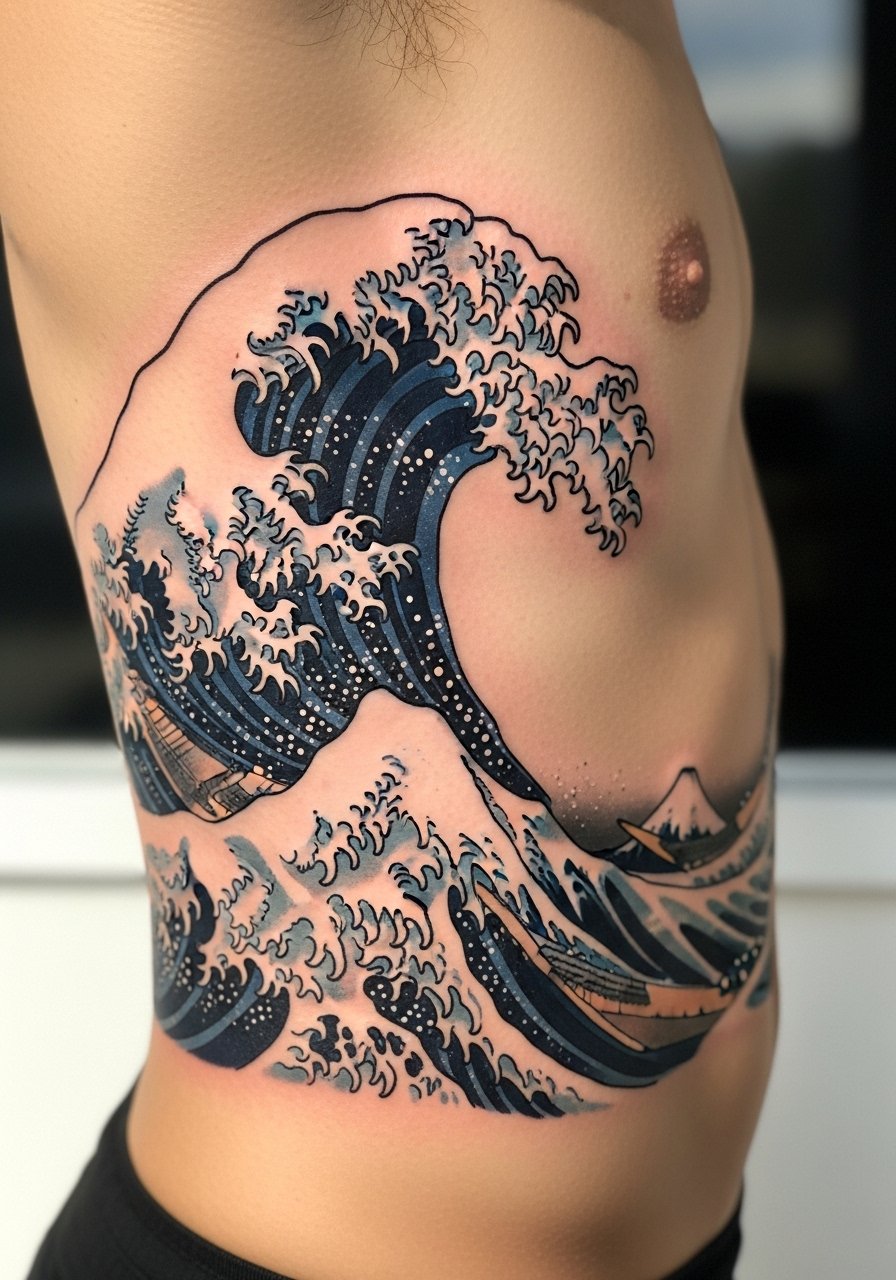
A wave on the ribs uses body curvature to sell motion. It’s a masculine way to show power and adaptability. Ribs are painful but create stunning results for those willing to sit.
Style & Design Details
- Tattoo style: Ukiyo-e inspired with bold outlines and woodblock shading
- Recommended size: palm to torso-length panel depending on wrap
- Best placement(s): ribcage, side torso, or lower chest
- Color vs. blackwork: deep navy and indigo with white negative highlights; blackwork option for starkness
- Design elements: curling crest, foam texturing, wind bars, small negative-space fish elements
- Longevity note: rib skin movement affects healing; strong outlines preserve shape
- Who it suits: men who accept higher pain for dramatic design, lovers of nautical or wave aesthetics
Finding the Right Artist
Find tattooers who post ribcage waves or woodblock-inspired work. Ask about session pacing and breathing techniques to reduce motion blur. Avoid artists who have no ribcage references. Ask about how the design will sit when you inhale.
Aftercare & Healing Tips
Ribs are high-pain and sensitive; consider a numbing cream like EMLA numbing cream if appropriate. Keep clothing loose and avoid sleeping on that side for a week. Clean with fragrance-free soap and apply an unscented lotion during peeling. Saniderm may help early healing.
- Peony & Bamboo Chest Medallion
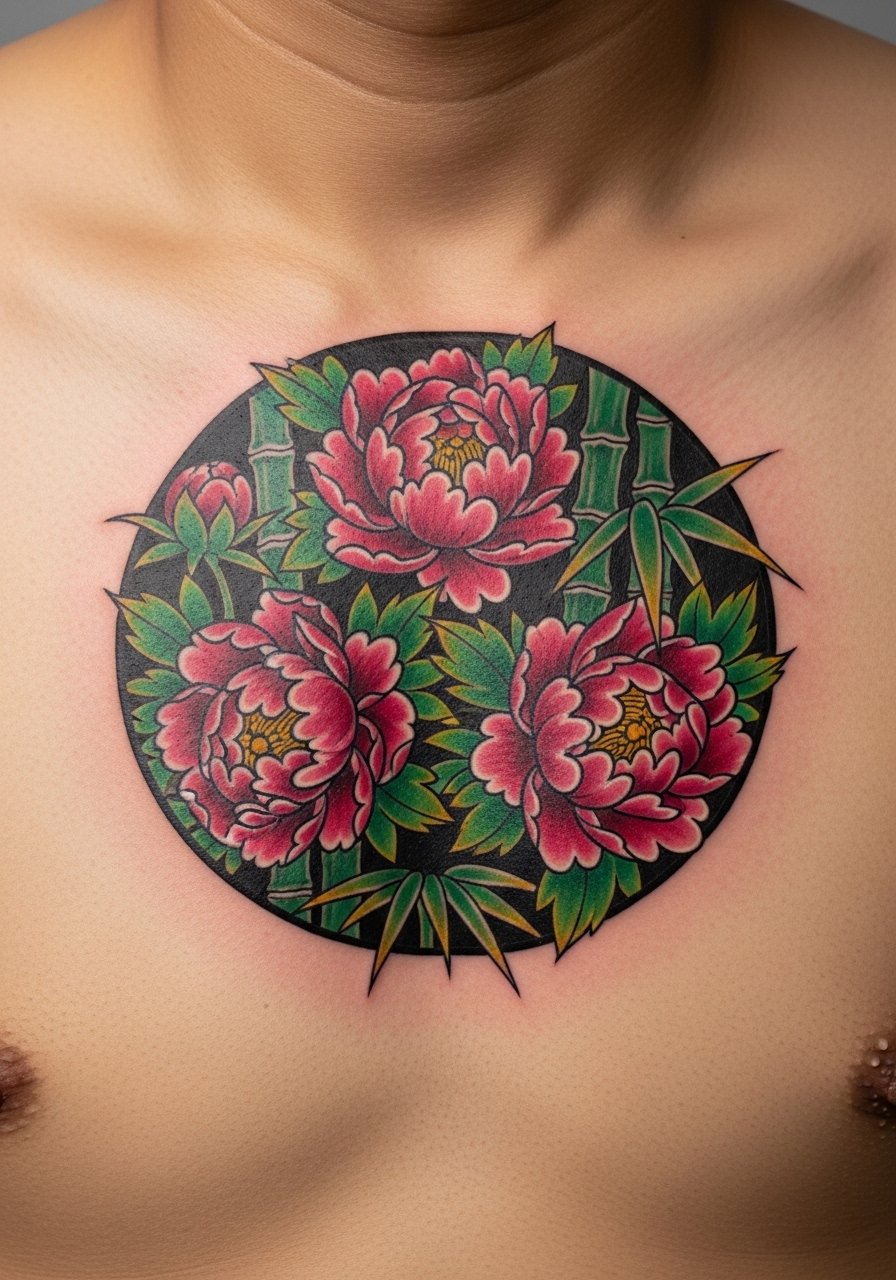
Peonies with bamboo form a balanced medallion for the chest. Peony represents wealth and bravery; bamboo adds resilience. The circular motif reads formal and masculine when executed with bold outlines.
Style & Design Details
- Tattoo style: Traditional Japanese medallion with neo-traditional color
- Recommended size: palm-sized medallion to half-chest depending on preference
- Best placement(s): center chest, sternum, or upper back
- Color vs. blackwork: color recommended for floral depth, black outlines for longevity
- Design elements: layered petals, bamboo stalk framing, dot shading centers, small wind bars
- Longevity note: color settle is predictable; center-chest exposure to sun requires protection
- Who it suits: men wanting central symbols, those who prefer balanced geometry
Finding the Right Artist
Select an artist with floral medallion experience and clean symmetrical work. Ask about how they’ll scale petals for the sternum curve. Avoid those without chest symmetry examples. Use a stencil transfer to check alignment before inking.
Aftercare & Healing Tips
Center chest can be sensitive; use Saniderm for the first 48–72 hours if your artist recommends it. Clean with Dr. Bronner’s unscented castile soap and use an unscented lotion during peel. After healed, apply an SPF 50 stick anytime the chest sees sun.
- Kitsune (Fox) Calf Portrait
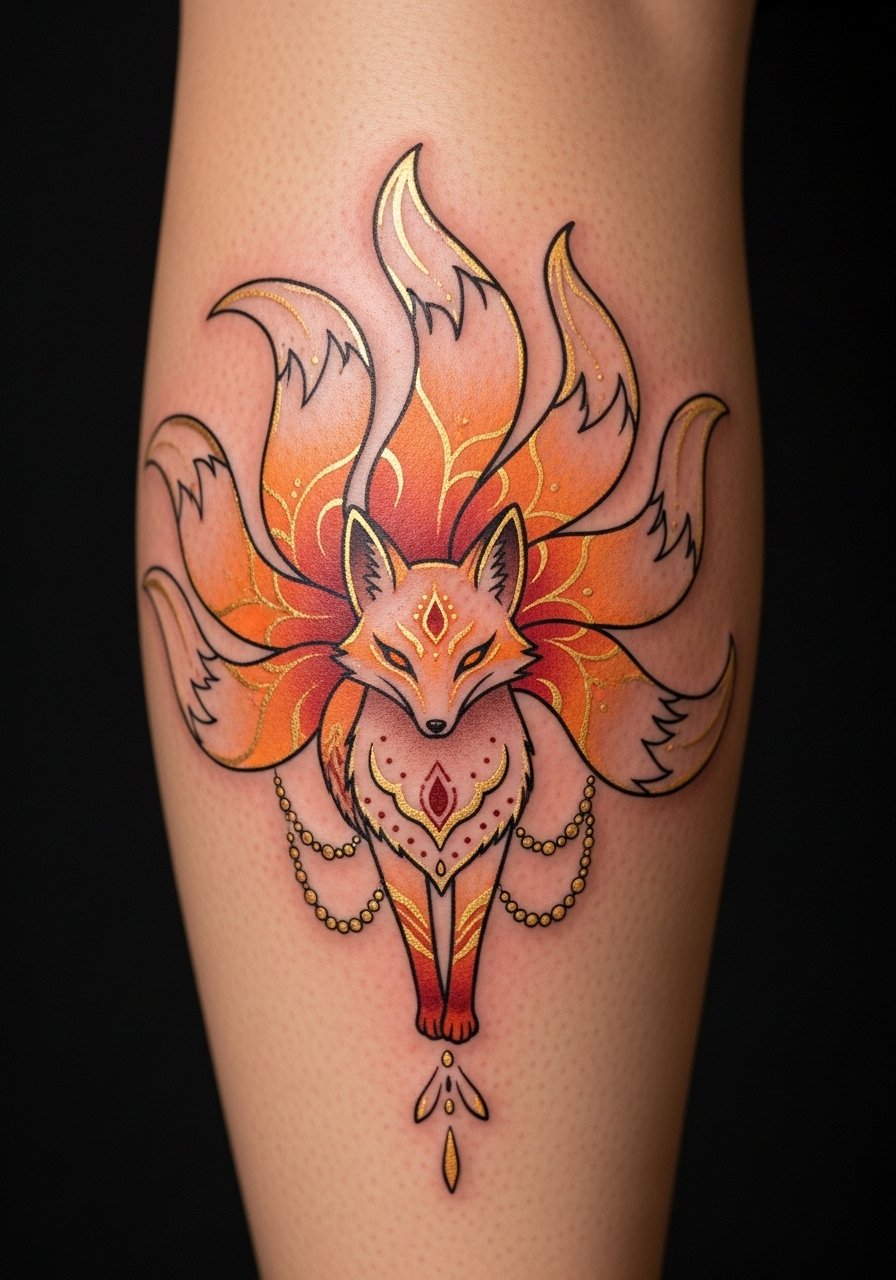
A kitsune represents cunning, transformation, and guardianship. On the calf, tails can wrap and flow, giving movement and personality. It’s a masculine, slightly playful choice with deep folklore roots.
Style & Design Details
- Tattoo style: Illustrative Japanese with neo-traditional color
- Recommended size: mid-calf to full-calf depending on tail length
- Best placement(s): outer calf, shin, or thigh for larger tails
- Color vs. blackwork: warm oranges and golds with black outlines for contrast
- Design elements: multiple tails, beadwork, small florals, negative-space fur highlights
- Longevity note: calf skin holds detail well; avoid tight socks during healing
- Who it suits: men interested in mythic animals and folklore motifs
Finding the Right Artist
Find artists who show animal anatomy and decorative ornamentation. Ask for healed calf shots to verify tail detailing. Avoid artists who over-simplify tails leading to muddled flow.
Aftercare & Healing Tips
Calf tattoos heal reliably but can be painful when sitting longer. Keep the area mobile but avoid strenuous running for a few days if swelling occurs. Use Lubriderm Fragrance Free during peeling and protect from sun after healing.
- Oni Mask Thigh Panel — Power & Warning
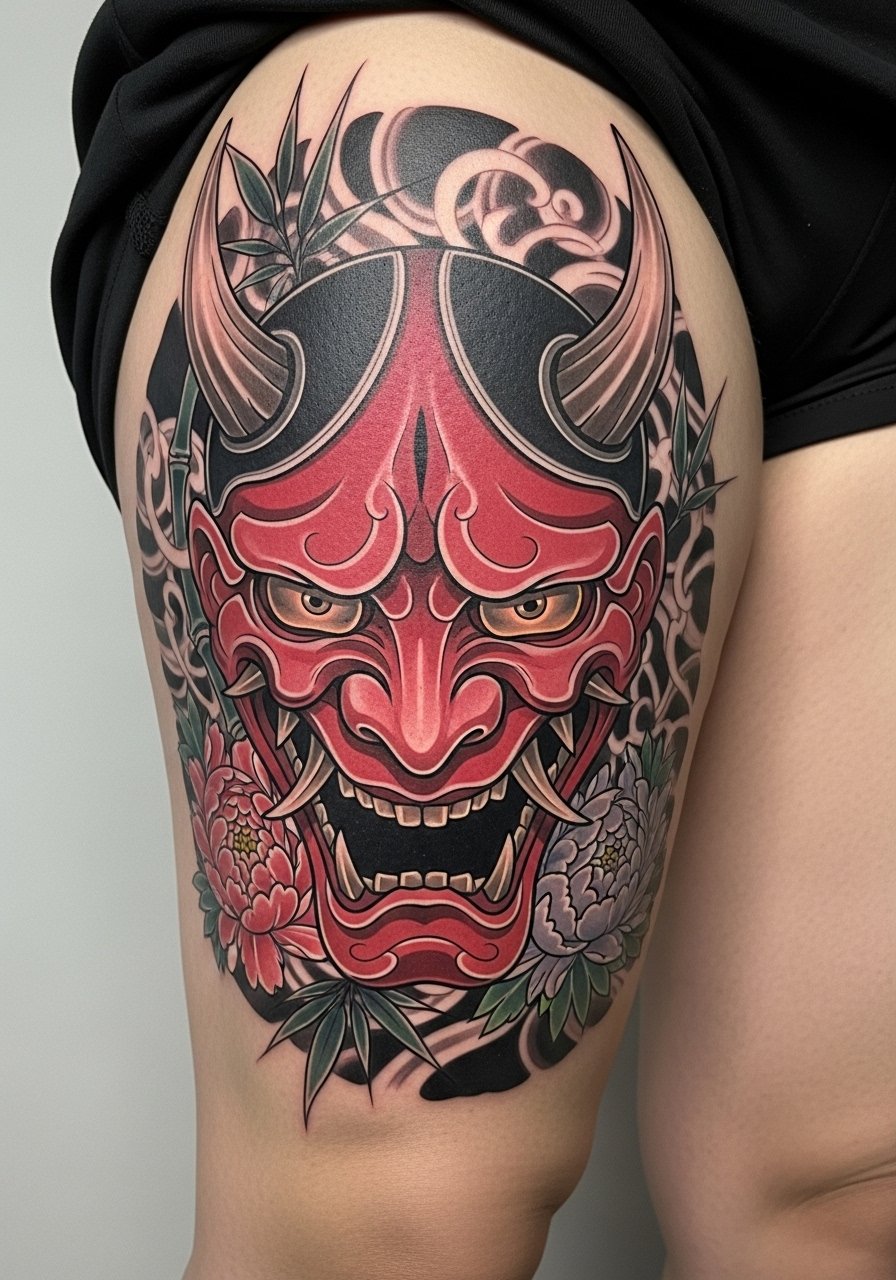
An Oni is a demon that wards evil and symbolizes protection when worn as a motif. Thigh panels let the expression be big and readable. This feels masculine and intense without being masculine-only.
Style & Design Details
- Tattoo style: Traditional Japanese with bold illustrative detail
- Recommended size: large thigh panel for facial depth
- Best placement(s): outer thigh, hip, or upper leg wrap
- Color vs. blackwork: saturated reds and blacks for aggression and contrast
- Design elements: horn shapes, snarling teeth, peony/bamboo framing, stipple shadowing
- Longevity note: bold contrasts hold; colored reds may require touch-up over time
- Who it suits: men wanting striking protective imagery, stage performers, martial artists
Finding the Right Artist
Pick an artist who handles expressive faces and large blocks of color. Ask for healed examples of Oni or mask work at similar scale. Avoid artists who haven’t handled large bold reds before.
Aftercare & Healing Tips
Thigh tattoos should be kept out of tight-fitting pants while healing. Use a breathable wrap initially and then a thin layer of Hustle Butter Deluxe during peeling. Schedule a touch-up if any reds settle unevenly after 3 months.
- Crane and Pine Collarbone Pieces
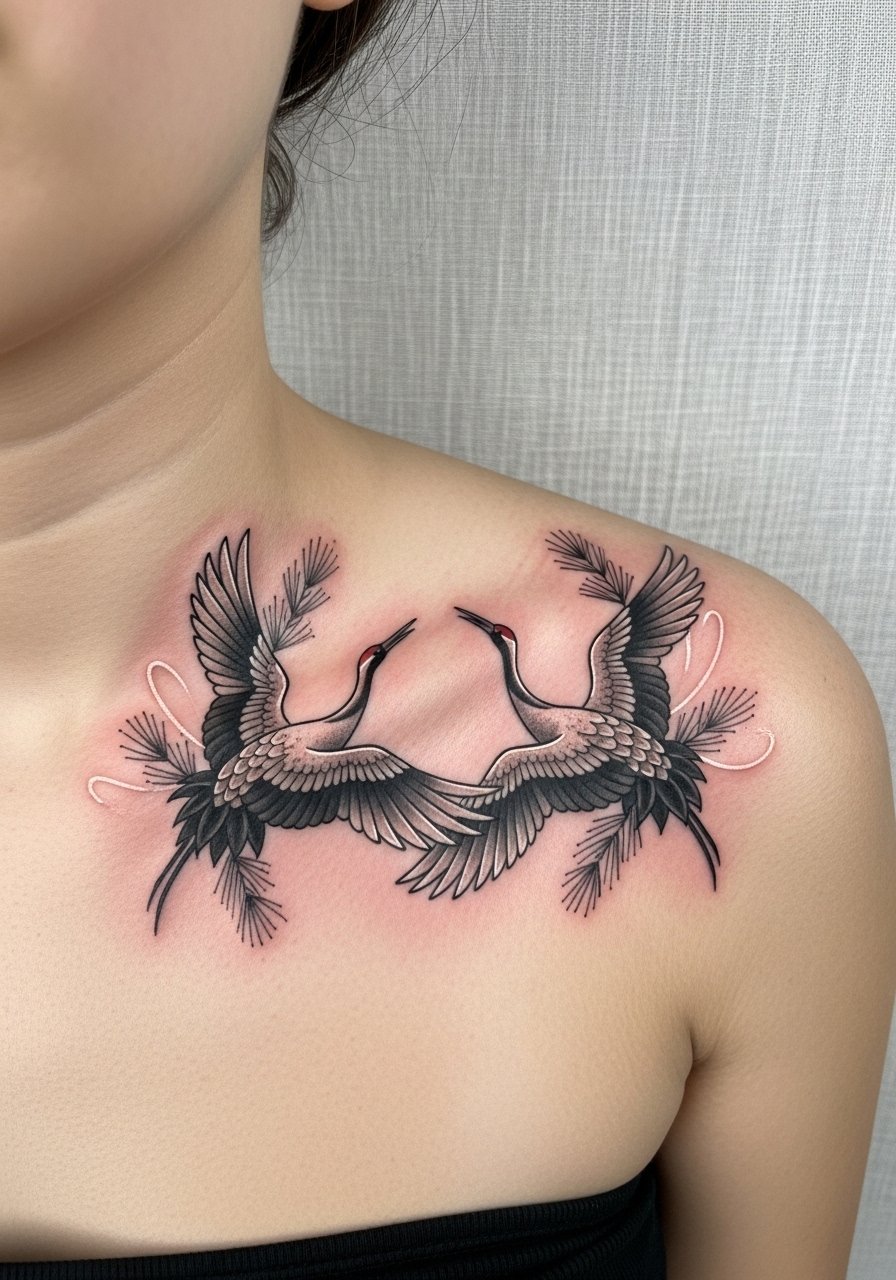
Cranes symbolize longevity and good fortune. A collarbone placement offers symmetry and a refined masculine line that reads well with shirts. These are subtle but culturally resonant.
Style & Design Details
- Tattoo style: Fine-line traditional with black and grey wash
- Recommended size: modest collarbone panels (palm-sized each)
- Best placement(s): collarbone, clavicle-to-shoulder, or chest yoke
- Color vs. blackwork: black and grey with white negative highlights recommended
- Design elements: crane wings, pine sprigs, airy negative space, delicate beak detail
- Longevity note: fine lines may soften; choose slightly thicker supporting lines for longevity
- Who it suits: men preferring refined, wearable cultural motifs
Finding the Right Artist
Find someone who does delicate birdwork with stable lines. Ask for healed collarbone examples to see how they sit under shirts. Avoid artists who over-fine the lines without thicker support.
Aftercare & Healing Tips
Collarbone area sits near clothing and necklaces — avoid chafing during the first two weeks. Clean with a gentle soap and moisturize with an unscented lotion. After healed, apply SPF when shirts expose the collarbone.
- Daruma Goal-Setting Forearm Icon
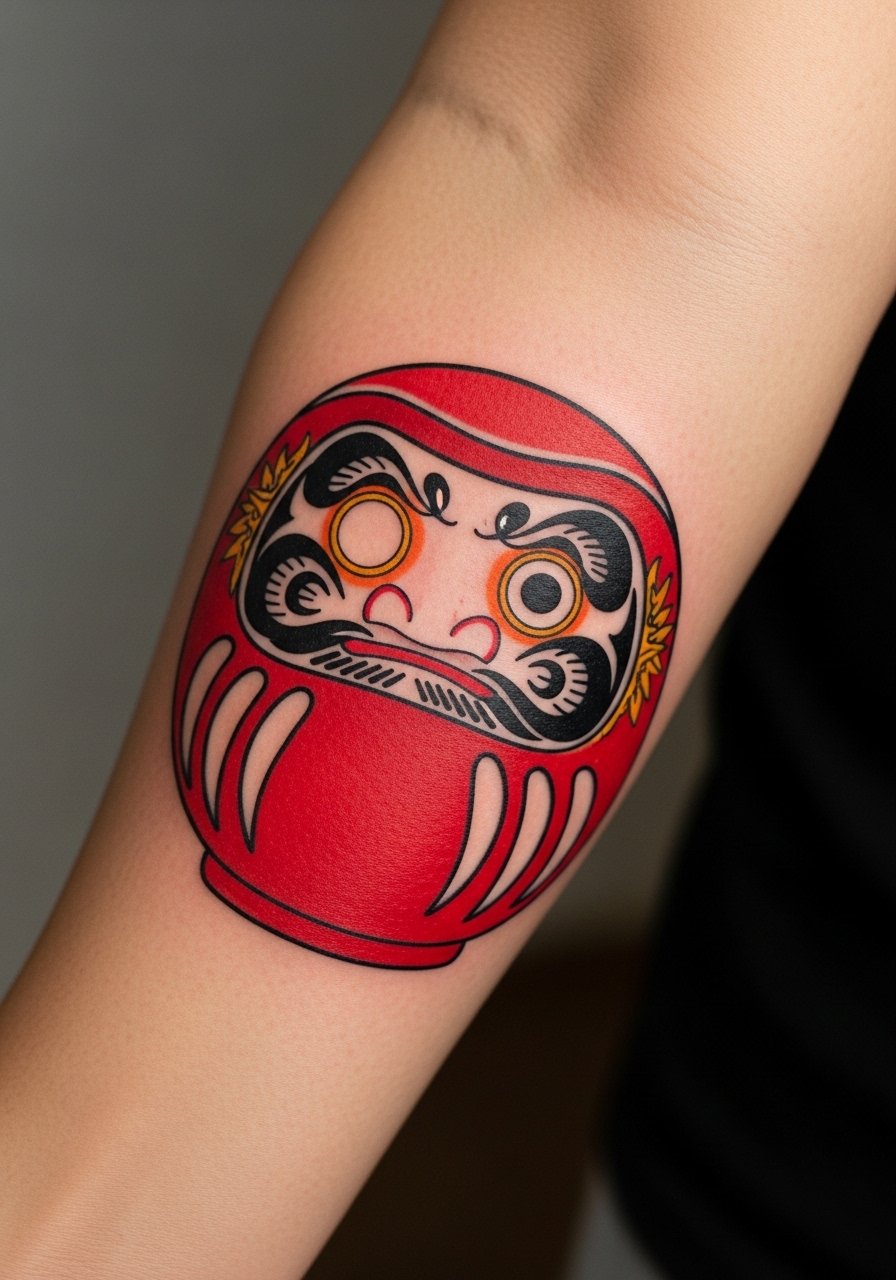
Daruma dolls are goal-setting talismans. Ink one on the forearm to mark a major life commitment or milestone. It reads masculine and intentional, especially when paired with dates or small script.
Style & Design Details
- Tattoo style: Traditional Japanese iconography with bold outlines
- Recommended size: palm-to-forearm length
- Best placement(s): outer forearm, inner forearm, or calf
- Color vs. blackwork: vermilion red with black outlines; limited palette keeps the meaning clear
- Design elements: one eye filled, stylized eyebrows and beard, small kanji optional, negative-space accents
- Longevity note: bold red and black age well; small script may need touch-ups
- Who it suits: men celebrating milestones, goal-oriented personalities
Finding the Right Artist
Look for artists who do iconography and script together. Ask about inked kanji accuracy and alignment. Avoid artists inexperienced with kanji or symbolic motifs. Bring references for the exact Daruma style you want.
Aftercare & Healing Tips
Forearm Daruma heals like most arm tattoos. Wash twice daily, use Lubriderm during peel, and keep it sun-protected. Consider getting it filled in with the second eye once your goal is achieved.
- Katana and Hollyhock Forearm Tribute
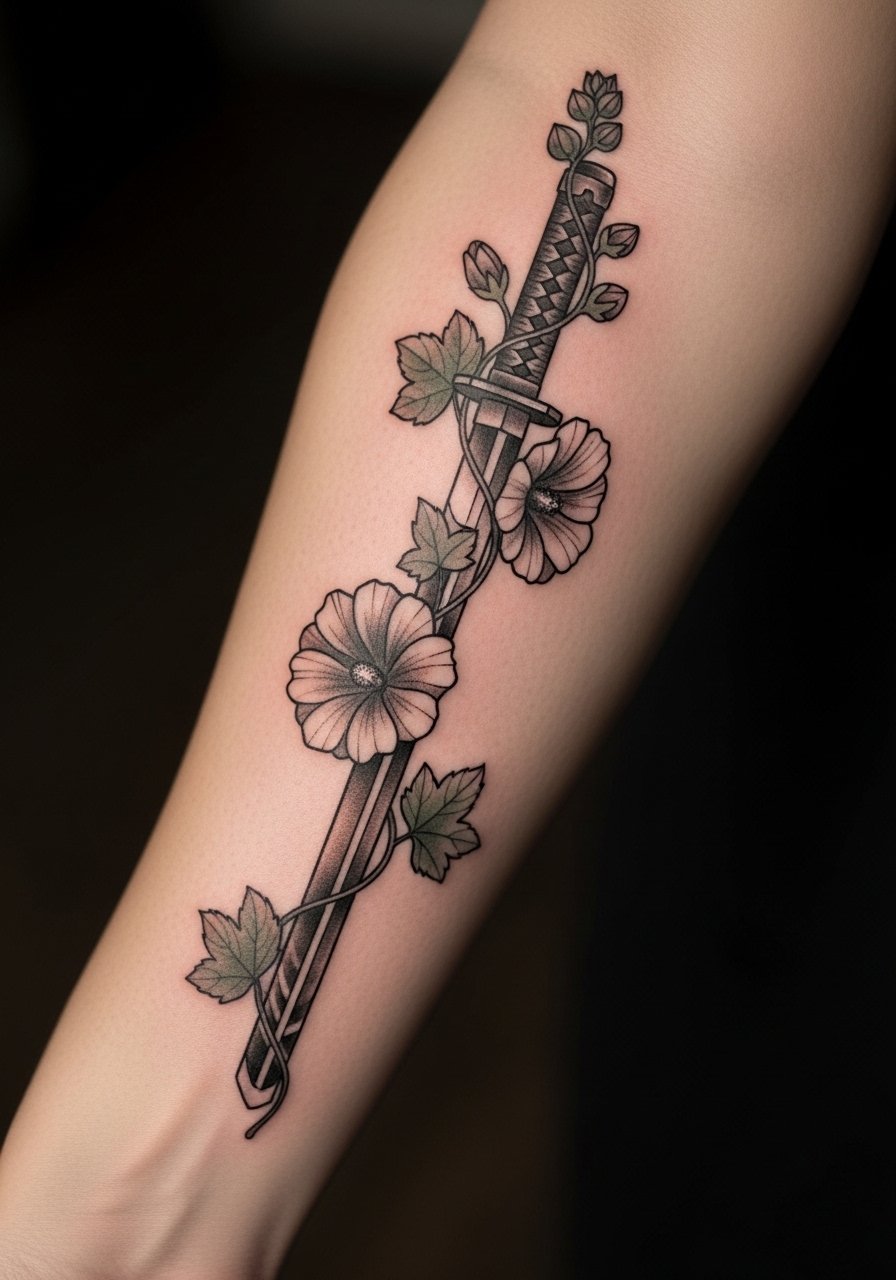
A katana paired with hollyhock floral (known in samurai crests) is a strong masculine tribute. The vertical composition favors forearms or shins, and the visual contrast between blade and floral softens the weapon imagery.
Style & Design Details
- Tattoo style: Illustrative Japanese with crisp linework
- Recommended size: long vertical forearm piece
- Best placement(s): forearm, shin, or rib vertical panel
- Color vs. blackwork: black/grey blade with muted greens for leaves recommended
- Design elements: katana hamon pattern, wrapped hilt detail, hollyhock leaves, banner script optional
- Longevity note: vertical compositions age predictably; hamon detail may require touch-up if too fine
- Who it suits: men with interest in samurai values or as a memorial piece
Finding the Right Artist
Choose an artist who renders both weapon detail and botanical forms well. Ask about how they’ll render hamon patterns at scale. Avoid artists unfamiliar with sword anatomy. Bring reference photos of blade and hilt.
Aftercare & Healing Tips
Vertical forearm pieces heal well; avoid heavy lifting for 48 hours. Clean with an unscented soap and use Hustle Butter Deluxe or a light fragrance-free lotion while peeling. Apply SPF when exposed.
- Family Crest (Kamon) Sleeve Accent
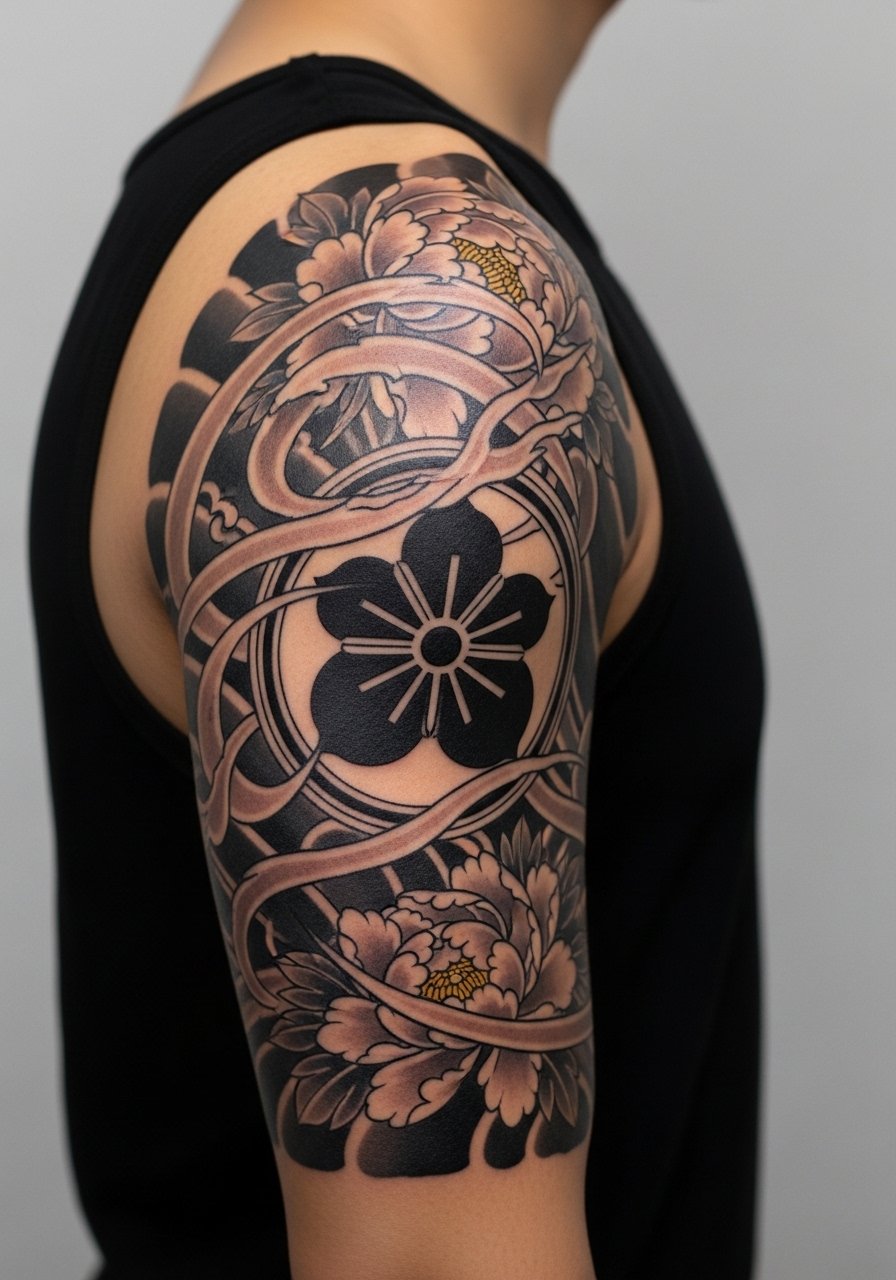
Kamon are personal emblems that can be modernized as tattoos. A kamon on the shoulder reads like heritage and identity, especially when integrated into a larger sleeve or chest panel.
Style & Design Details
- Tattoo style: Traditional Japanese emblematic blackwork
- Recommended size: 2–4 inches for clarity; larger if integrated into sleeves
- Best placement(s): shoulder cap, upper arm, chest pocket spot
- Color vs. blackwork: blackwork preferred for the emblem; accents possible
- Design elements: circular crest, stylized flora/familial symbols, negative-space precision
- Longevity note: solid black preserves symbol clarity; very fine details may fade
- Who it suits: men honoring family heritage or wanting personalized symbolism
Finding the Right Artist
Confirm the artist can render crisp circular geometry and negative space. Ask for healed examples of emblematic work. Avoid artists without geometric precision.
Aftercare & Healing Tips
Shoulder crests heal predictably. Keep clothing loose and follow standard wash-and-moisturize routine. For long-term preservation, apply SPF when exposed and consider touch-up if edges soften.
- Temple Gate (Torii) Back-of-Neck Accent
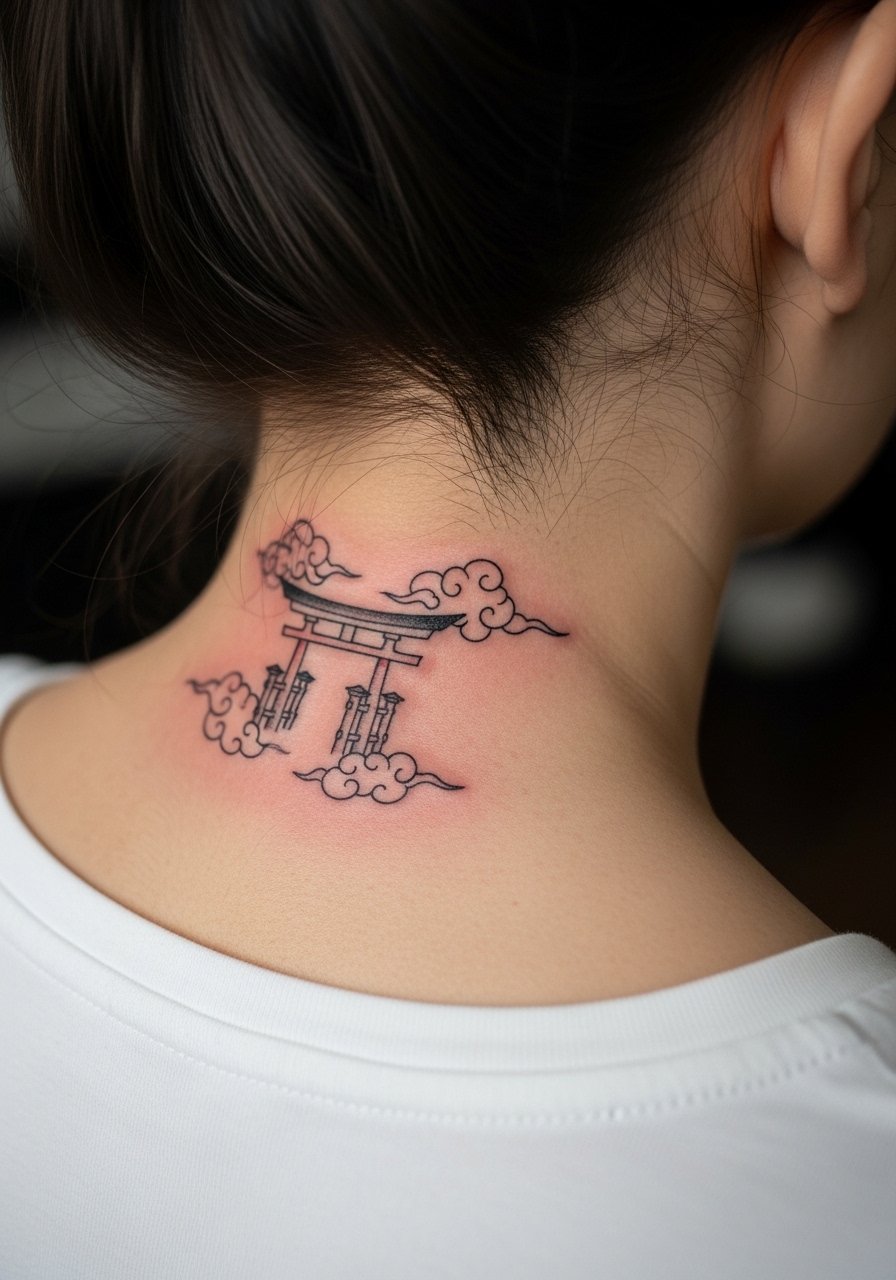
A small Torii gate at the nape is a discrete but powerful symbol of transition and passage. It’s an intimate place to carry an object that marks new chapters.
Style & Design Details
- Tattoo style: Minimalist Japanese iconography
- Recommended size: small (1–2 inches) at nape
- Best placement(s): nape, behind ear, or upper back
- Color vs. blackwork: blackwork with a single red accent reads traditional
- Design elements: torii silhouette, tiny cloud or wind bar accents, minimal negative space
- Longevity note: nape sees friction from collars; slightly bolder lines will last better
- Who it suits: men wanting a compact cultural signifier, travelers, spiritual markers
Finding the Right Artist
Find someone who does small linework with consistent depth. Ask to see healed nape/neck shots. Avoid artists who recommend ultra-fine hairline strokes for high-friction areas.
Aftercare & Healing Tips
The nape gets rubbed by collars and hair; avoid tight collars for two weeks. Clean gently and use a light unscented lotion. Consider a breathable wrap overnight if your pillow rubs the area. After healing, apply SPF when shirts expose the nape.
- Nio Guardian Shoulder Cap
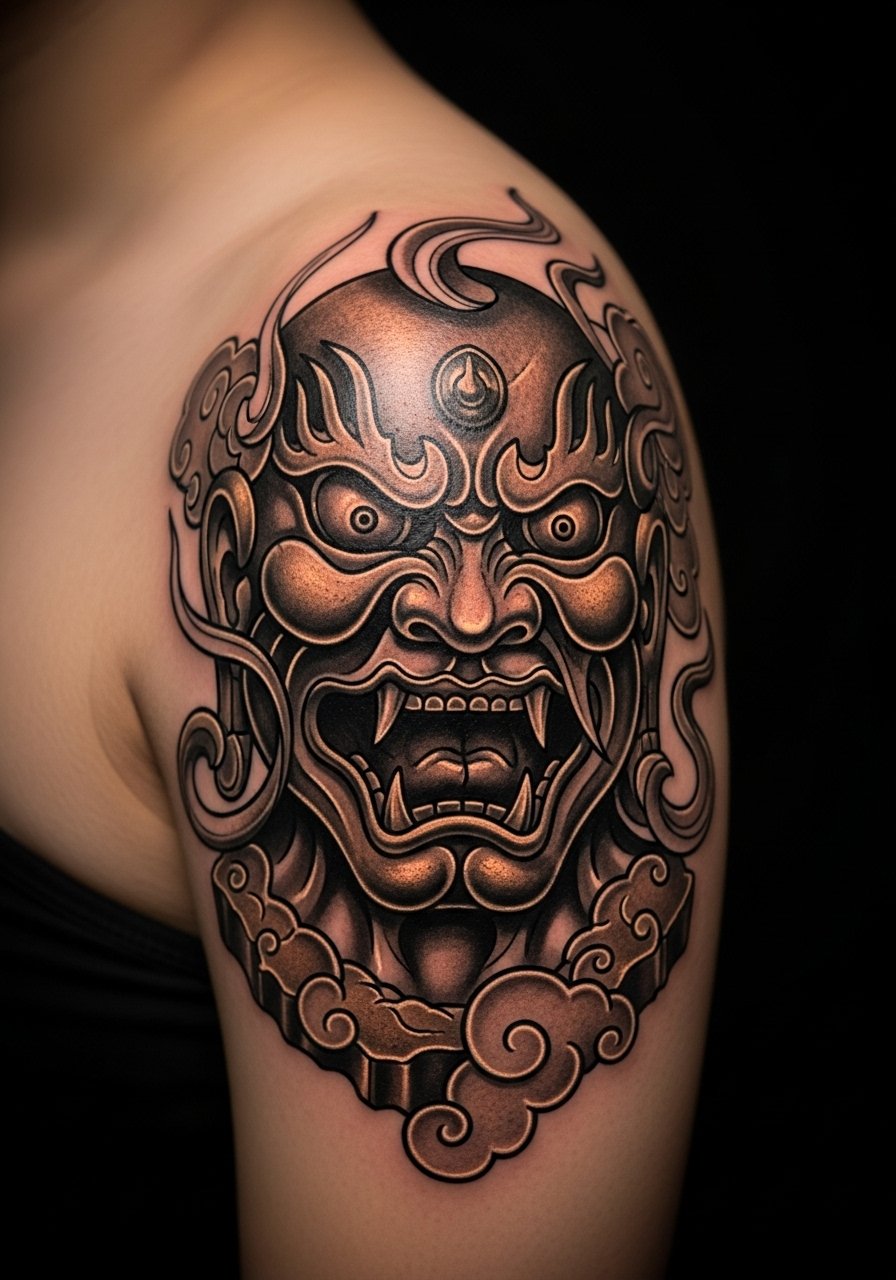
Nio guardians are protective deities placed at temple gates. Ink one on the shoulder for a protective, imposing presence. This reads masculine and spiritual, especially with heavy shading and bronze tones.
Style & Design Details
- Tattoo style: Traditional illustrative with statue-like shading
- Recommended size: shoulder cap to upper arm panel
- Best placement(s): shoulder cap, upper arm, or chest-to-shoulder wrap
- Color vs. blackwork: bronze and grey tones with strong black outlines recommended
- Design elements: exaggerated facial features, stone texture, cloud background, wind bars
- Longevity note: heavy black and grey shading holds well; fine stone texture may need touch-ups
- Who it suits: men seeking protective religious imagery with bold presence
Finding the Right Artist
Look for artists who can emulate stone texture and powerful expressions. Ask for healed shoulder cap examples. Avoid artists who can’t render large facial structure in tattoo form.
Aftercare & Healing Tips
Shoulder caps usually heal well. Keep the area free from straps and tight clothing while it scabs. Use Saniderm second-skin roll early if your artist recommends it and switch to an unscented lotion during peel.
- Chrysanthemum Wrist Medallion
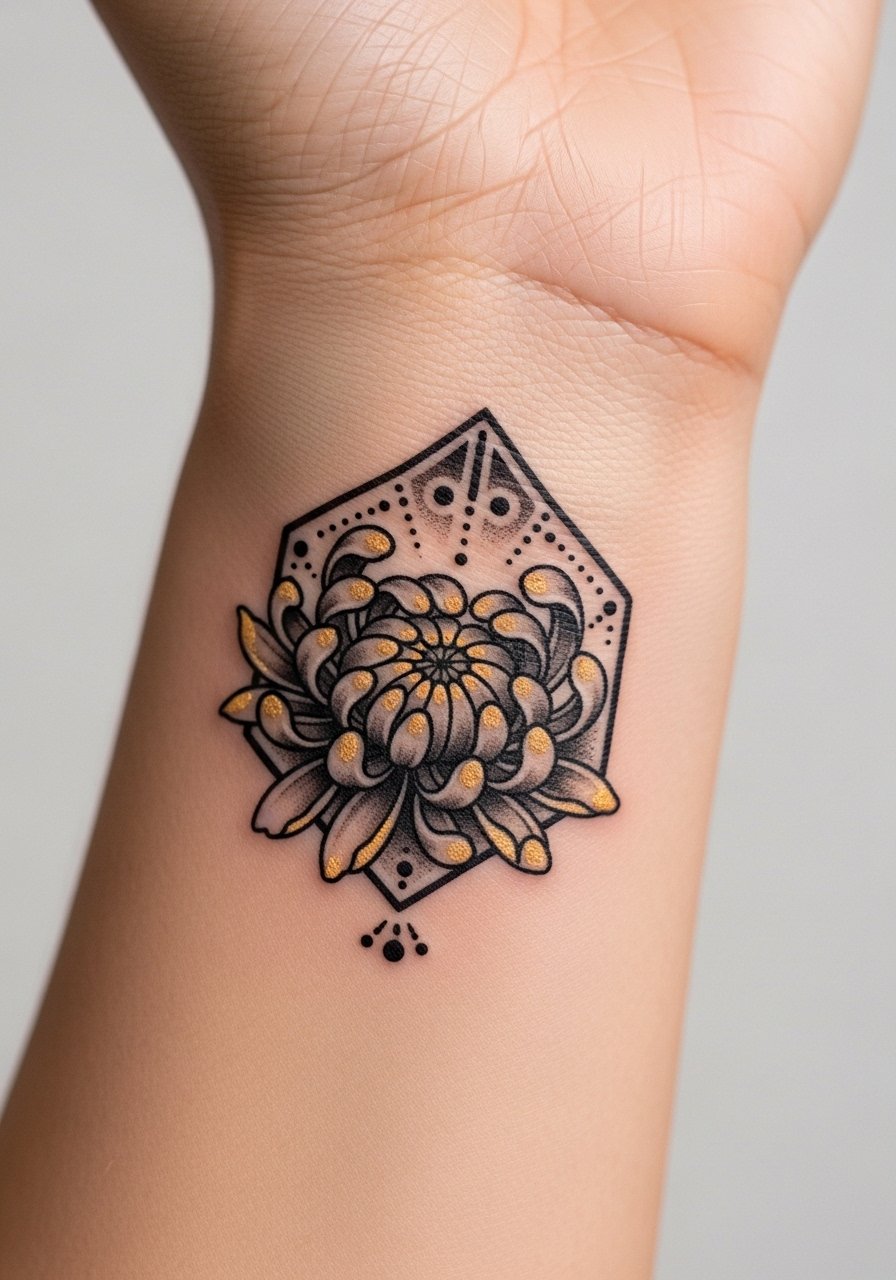
Chrysanthemums symbolize longevity and nobility. A wrist medallion is visible, restrained, and masculine when done with weight. It’s a tasteful daily reminder with cultural depth.
Style & Design Details
- Tattoo style: Traditional floral with bold outlines
- Recommended size: palm-sized medallion on wrist
- Best placement(s): inner wrist, outer wrist, or behind-ear small medallion
- Color vs. blackwork: muted gold and black for a dignified look
- Design elements: layered petals, dot shading center, negative-space accents, small wind bars
- Longevity note: wrists see heavy sun and friction; thicker lines improve longevity
- Who it suits: men who want visible but compact cultural symbolism
Finding the Right Artist
Choose an artist who does crisp small florals and medallions. Ask for healed wrist examples. Avoid ultra-fine-line only artists for wrist placements due to friction.
Aftercare & Healing Tips
Wrists scuff easily — avoid bracelets and watches for two weeks. Clean gently and use a thin layer of Lubriderm Fragrance Free during peeling. Once healed, protect with SPF regularly.
- Wave-and-Koi Inner-Bicep Story Panel (Japanese traditional tattoo for men)
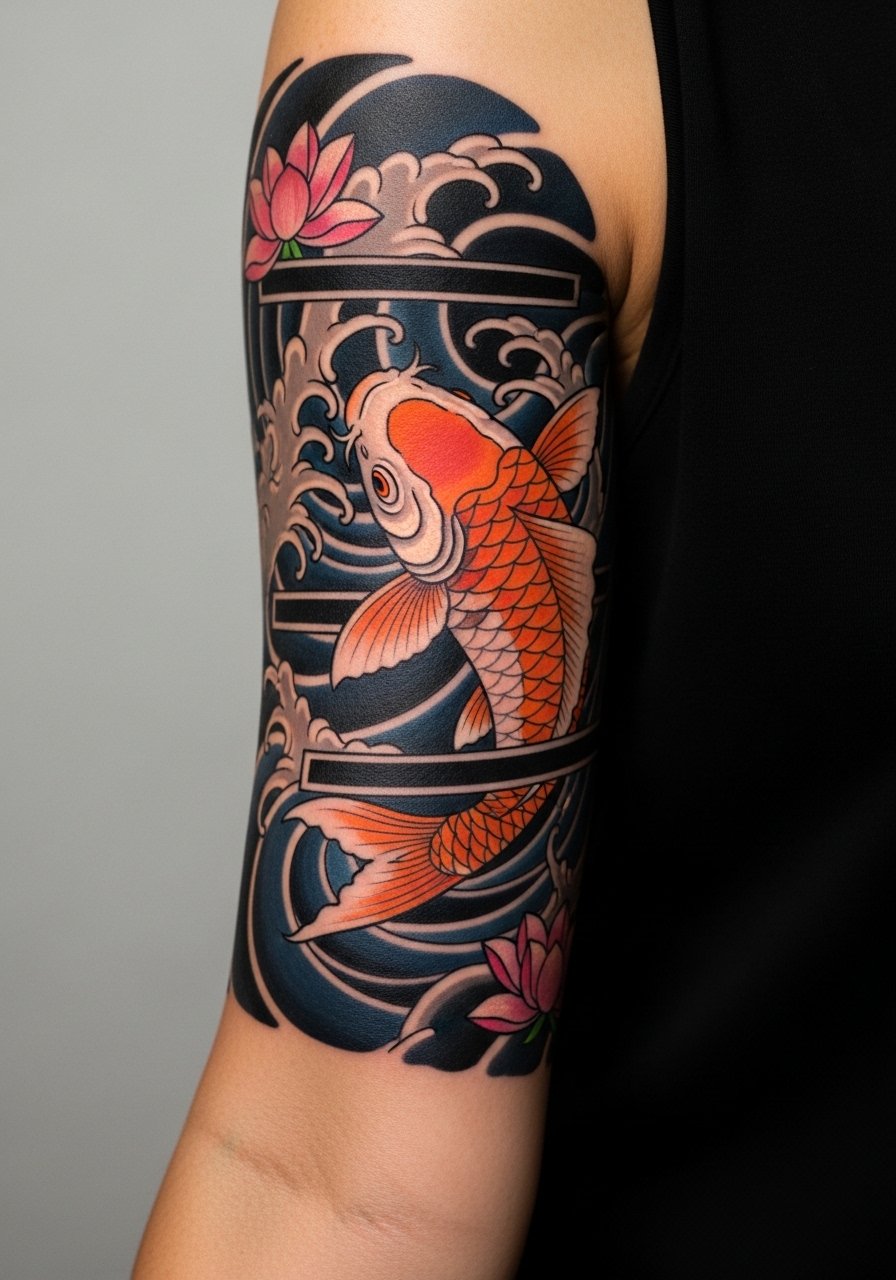
This motif combines the koi’s ambition and the wave’s challenge in a compact, intimate spot. The inner bicep gives a private-to-public reveal and reads masculine in motion. It’s also a great place for a personal narrative — anniversary dates or small script can nest in the water.
Style & Design Details
- Tattoo style: Traditional Japanese (Irezumi) with illustrative color
- Recommended size: palm-to-forearm panel depending on bicep width
- Best placement(s): inner bicep, inner forearm, or inner thigh
- Color vs. blackwork: rich koi orange with dark indigo waves recommended for contrast
- Design elements: koi scales, wave cresting, lotus leaves, wind and cloud bars, subtle white highlights
- Longevity note: inner bicep sees less sun so colors hold well; movement can slightly distort lines
- Who it suits: men wanting a meaningful personal story spot, first-timers who prefer hidden placements
Finding the Right Artist
Seek artists comfortable with small narrative panels and color blending. Ask for healed inner-arm examples. Avoid artists who haven’t worked near stretch-prone areas like the inner bicep. Consider asking for a mockup that sits with your arm relaxed and flexed.
Aftercare & Healing Tips
Inner biceps can rub against shirts and underarm area. Sleep without tight sleeves for the first week. Use Saniderm for the first 48–72 hours if recommended and switch to Hustle Butter Deluxe during peeling to keep colors vibrant. Check for irritation due to sweat in the underarm area.
You’ve just toured 21 Japanese traditional tattoo ideas for men — from bold backpieces to subtle collarbone marks. Each idea shows how line, placement, and technique shape meaning and how realistic aftercare keeps your ink crisp over years. Save the images you like and bring them to your consultation with questions about scale, color saturation, and healed photos.
If you’re booking soon, have a small kit ready: a numbing cream if your placement is sensitive, Saniderm for early protection, and Hustle Butter Deluxe or an unscented lotion on hand for the peeling phase. Which style called to you most — a roaring tiger, a transformational koi, or a quiet Torii at the nape? Pin this for later and bring your favorites to the consultation so you and your artist can plan something that lasts.