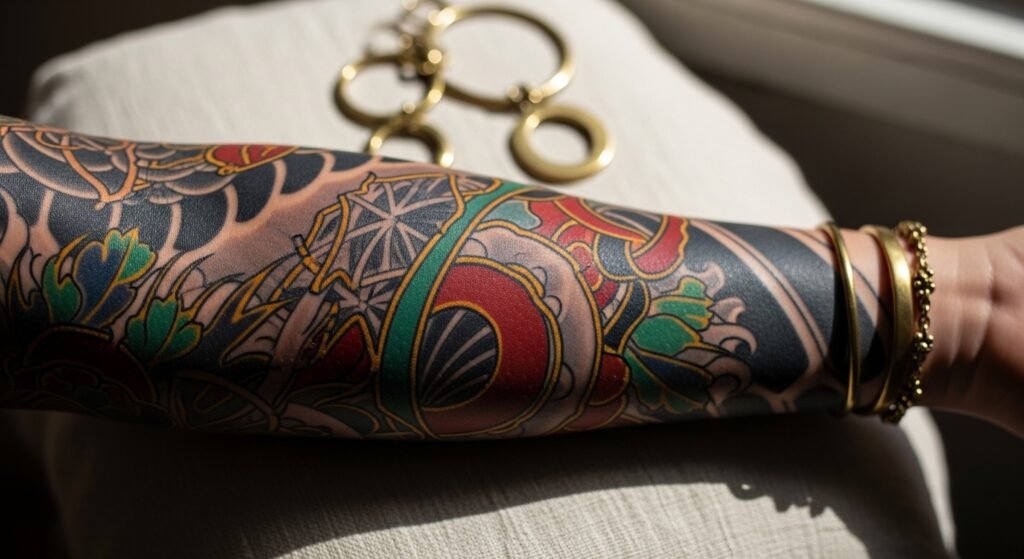
You’re sitting in a consultation, scrolling through saved pins at midnight, or finally booking that appointment you’ve been thinking about for years. Japanese traditional tattoo designs have a way of sticking with you — bold color, iconic motifs, and a language of symbols that reads well on nearly any body placement. Whether you want a compact chest piece or a full sleeve, these ideas show how classic Japanese imagery gets updated with modern palettes and techniques.
This list covers 22 bold Japanese traditional tattoo designs you can adapt for shoulder, thigh, ribcage, back, wrist, or leg. You’ll get design descriptions, style breakdowns, sizing guidance, artist-selection tips, and realistic aftercare notes. I’ll also drop real products I use — from numbing creams to Saniderm wraps — so you can walk into your session prepared. If you want to test a location first, try an Inkbox semi-permanent tattoo kit or sketch references on an iPad with an Apple Pencil for clearer consultation notes.
- Koi Carp Rising (Classic Color Composition)
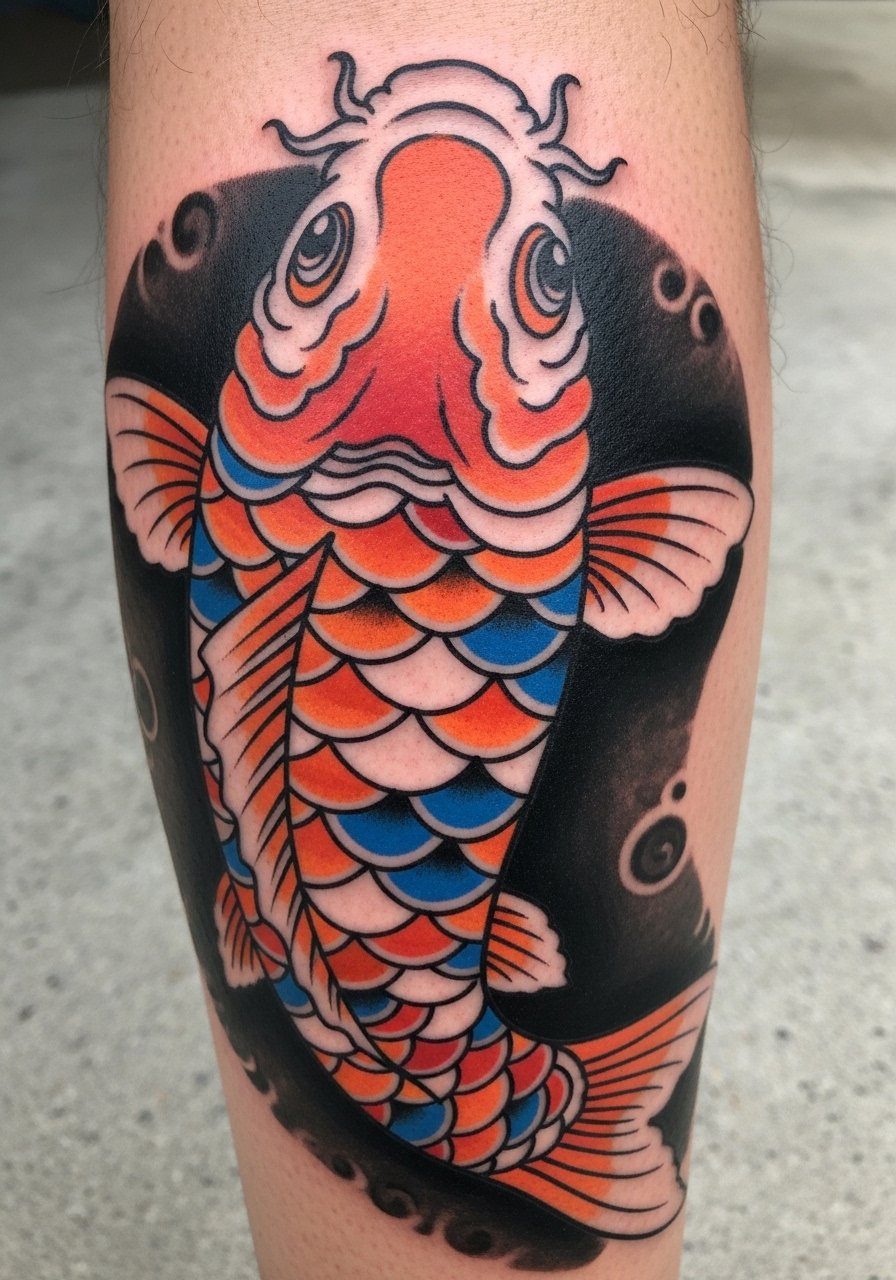
A koi carp surging upstream reads like resilience and personal victory. This piece uses bold black outlines with saturated orange and indigo fills, plus wave backgrounds in grey wash. It sits beautifully across curved areas so the fish appears to move with you. First-timers and collectors both love koi for the symbolism and visual motion; it catches light and keeps color well when healed.
Style & Design Details
- Tattoo style: Japanese traditional (Irezumi-inspired) with neo-traditional color saturation
- Recommended size: palm-sized to thigh-length (4–12 inches)
- Best placement(s): calf, outer bicep, thigh — curved surfaces accentuate motion
- Color vs. blackwork: Full color preferred to showcase scale gradients
- Design elements: thick sumi outlines, flat color fills, traditional waves, koi scales, lotus or maple leaves, negative-space highlights
- Longevity note: Solid color blocks resist fading; UV exposure and friction on calves affect longevity
- Who it suits: anyone wanting a symbolic, bold piece; stands out on light and medium skin tones
Finding the Right Artist
Look for portfolios with large-scale color Japanese work and consistent line weight. Ask how they handle scale transitions and whether they freehand wave backgrounds. Red flags: artists who lack full-color koi references or who recommend single-needle for large color blocks. For reference mockups, bring sketches or a printed photo and consider using tattoo stencil transfer paper for placement testing.
Aftercare & Healing Tips
Leave the initial wrap on per artist instructions, or use a gentle second-skin like Saniderm for 3–5 days. Clean with a fragrance-free soap such as Dr. Bronner's unscented soap twice daily, then apply a thin layer of Hustle Butter Deluxe during peeling. Expect scabbing first week; color settles by 4–6 weeks. Use SPF 50 when exposed to sunlight.
- Hannya Mask with Peonies (Dark Drama + Color Pop)
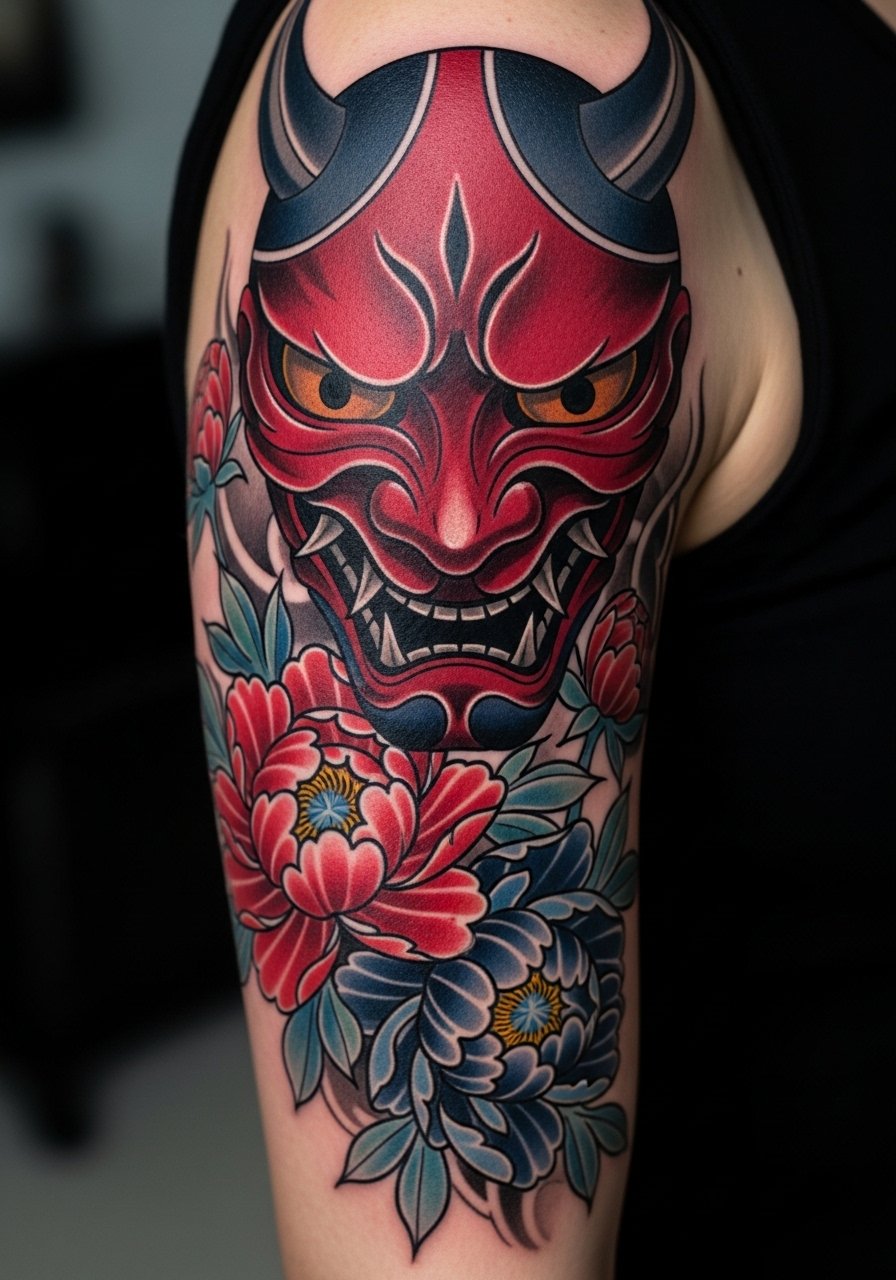
The Hannya mask adds theatrical intensity — a demon face balanced with soft peonies for contrast. Colors stay dramatic: crimson peonies, indigo shadows, golden horn accents. This is for someone who likes storytelling tattoos that pair portraiture with floral motifs; it reads strong from a distance and packs detail up close.
Style & Design Details
- Tattoo style: neo-traditional meets Japanese classic
- Recommended size: medium to large (5–10 inches)
- Best placement(s): upper arm, shoulder cap, chest — allows breathing room for floral flow
- Color vs. blackwork: Color emphasizes facial contrast; blackwork can replace color for moody looks
- Design elements: bold sumi outlines, stipple shading on mask, layered peony petals, horn detailing, negative-space teeth highlights
- Longevity note: Reds fade faster; use color-saturated inks and protect from sun
- Who it suits: lovers of theatrical, slightly gothic aesthetics; collectors of narrative pieces
Finding the Right Artist
Seek artists who showcase facial shading in Japanese pieces and floral transitions. Ask how they mix color pigments for long-term saturation. Avoid artists whose portfolios show inconsistent facial proportions or muddy color blends. If you sketch ideas, use an Apple Pencil mockup to help show scale.
Aftercare & Healing Tips
Protect raised horns and outlines with Saniderm initially. Wash gently and use an unscented lotion like Lubriderm unscented lotion after peeling begins to keep petals soft. Expect minor peeling around petals during week 2; touch-ups often happen after 8-12 weeks.
- Phoenix Rising Across the Back (Full-Body Flow)
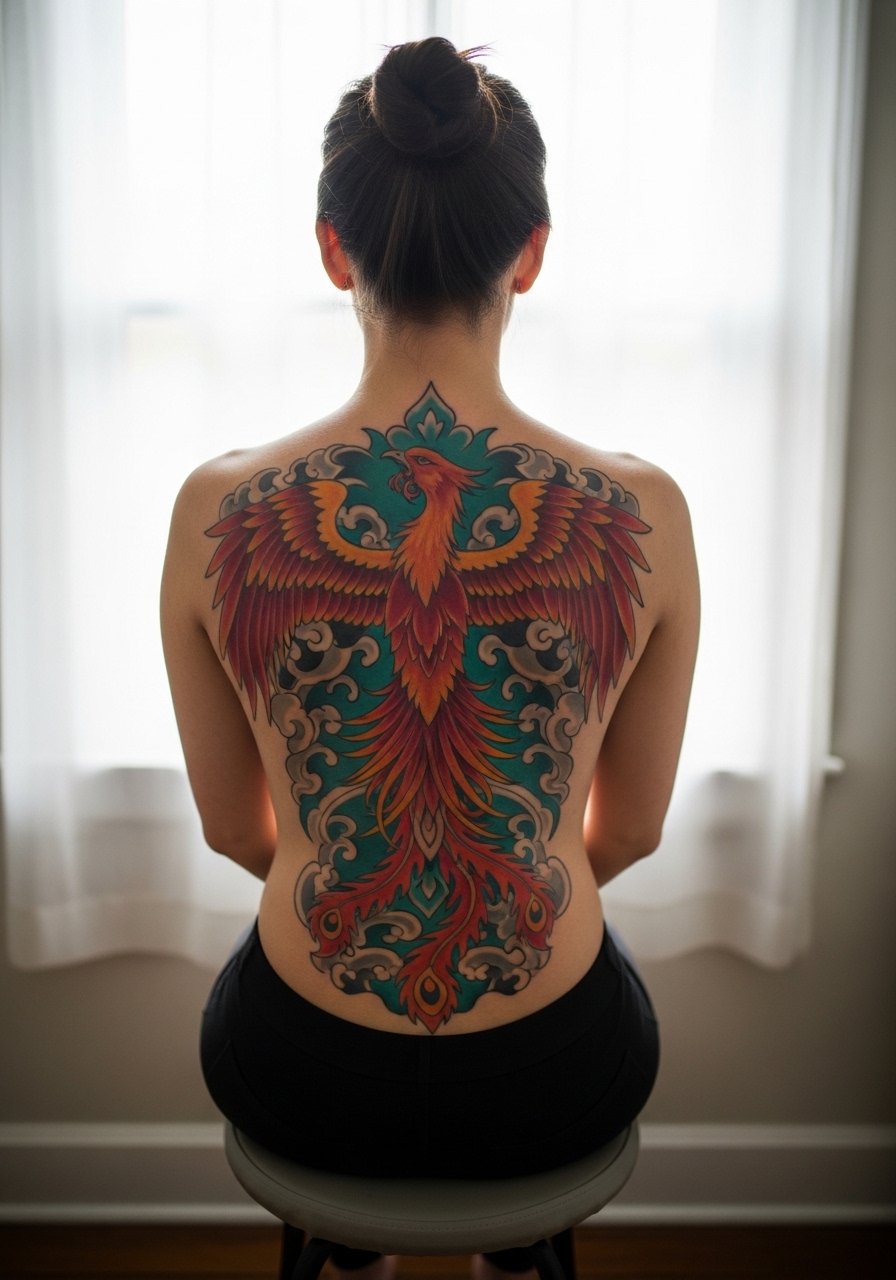
A phoenix across the back makes a dramatic statement of rebirth. Designed with elongated feathers that cascade into clouds and flames, it lets you vary detail density: dense color near the shoulders, airy feather tips near the lower back. Ideal for someone planning a major piece or a future full-back composition.
Style & Design Details
- Tattoo style: Irezumi-inspired full-color illustrative
- Recommended size: large/backpiece
- Best placement(s): full back, upper back to lumbar
- Color vs. blackwork: Full color for depth; blackwork for a graphic alternative
- Design elements: layered feathers, flame motifs, cloud backgrounds, gold leaf accents, negative space trails
- Longevity note: Large saturated areas hold but need strong aftercare; touch-ups are common on high-motion zones
- Who it suits: collectors planning large sessions, people comfortable with long sessions
Finding the Right Artist
Choose an artist experienced in full-back projects and large color saturation. Ask about session breakdown, pain management, and how they plan color continuity. Red flags: one-off session promises for a full back. Reference books or a tattoo design book help communicate vision.
Aftercare & Healing Tips
Treat like any long session: rest well, hydrate, and consider a topical numbing for prolonged sittings like Zensa numbing cream if your artist approves. Large areas often swell; Saniderm for smaller panels helps, but follow artist guidance. Use fragrance-free soap and a thin layer of After Inked tattoo lotion once peeling starts.
- Dragon Coil on Ribcage (Curved Motion + Edge)
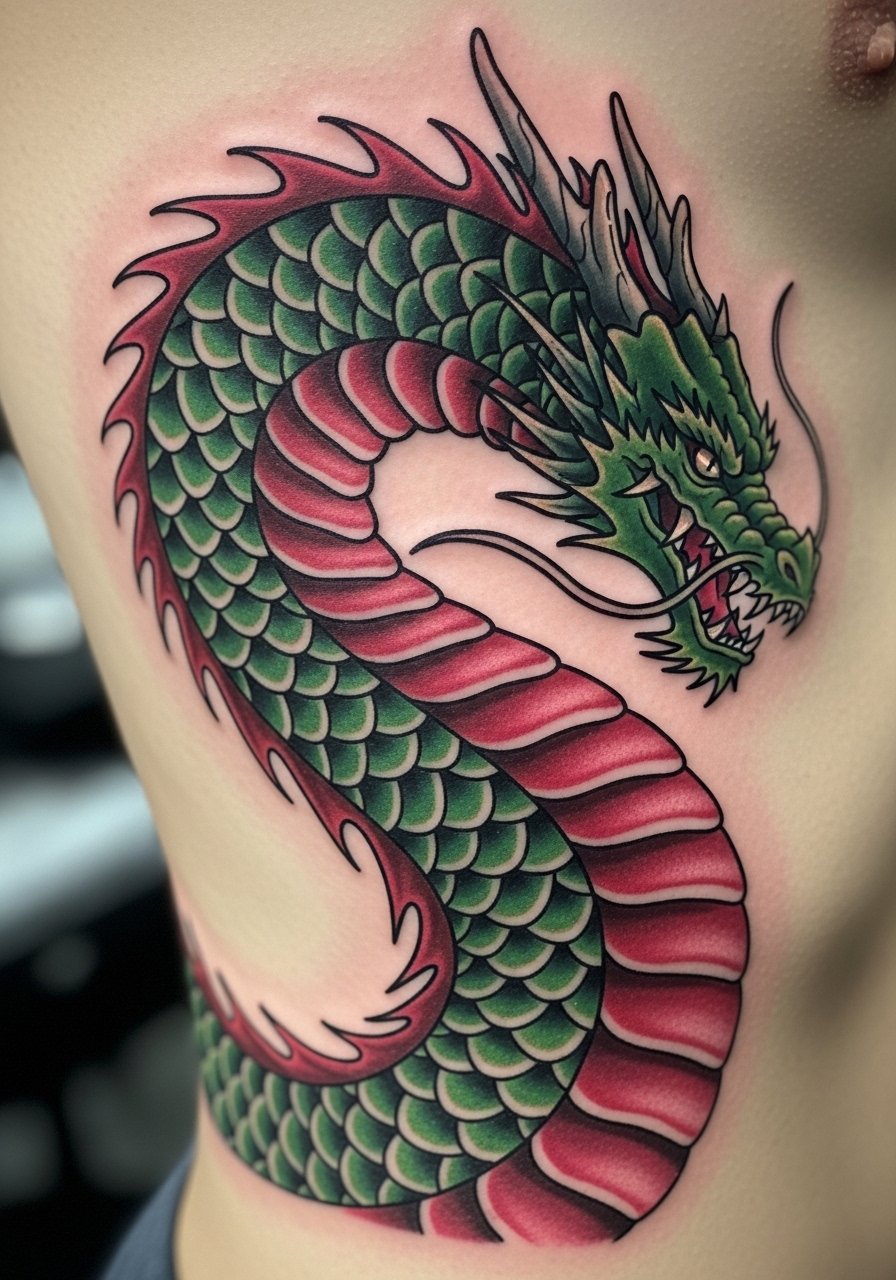
A dragon coiling on the ribcage hugs the body for a sensual, kinetic look. Expect higher pain on ribs, but the rewards are incredible: scales conform to torso curves and the motion looks different from each angle. This is a statement placement for someone who tolerates more pain for high impact.
Style & Design Details
- Tattoo style: traditional Japanese with illustrative scale detail
- Recommended size: medium to large (6–10 inches)
- Best placement(s): ribcage, side torso, sternum wrap
- Color vs. blackwork: Color shows off scales; blackwork simplifies for a moody look
- Design elements: thick outlines, layered scales, whiskers, cloud fills, bold claws, negative-space highlights
- Longevity note: Constant stretching on torso affects aging; avoid excess sun and friction
- Who it suits: patient clients used to higher pain placements, fans of dramatic anatomy pieces
Finding the Right Artist
Pick someone who regularly tattoos ribcage work and manages lines under stretch. Ask about session lengths and pain-break strategy. Avoid apprentices for deep shading across ribs unless supervised. Use reference placement testing with Inkbox semi-permanent tattoo kit to preview how movement affects the design.
Aftercare & Healing Tips
Rib tattoos swell and may weep; keep initial wrap per shop instructions. Clean with mild soap and pat dry, then apply a thin layer of Hustle Butter Deluxe. Avoid tight clothing around the area for 2 weeks. Expect the most tenderness in days 1–5; touch-ups often scheduled at 8–12 weeks.
- Samurai Portrait with Cherry Blossoms (Honor & Ephemera)
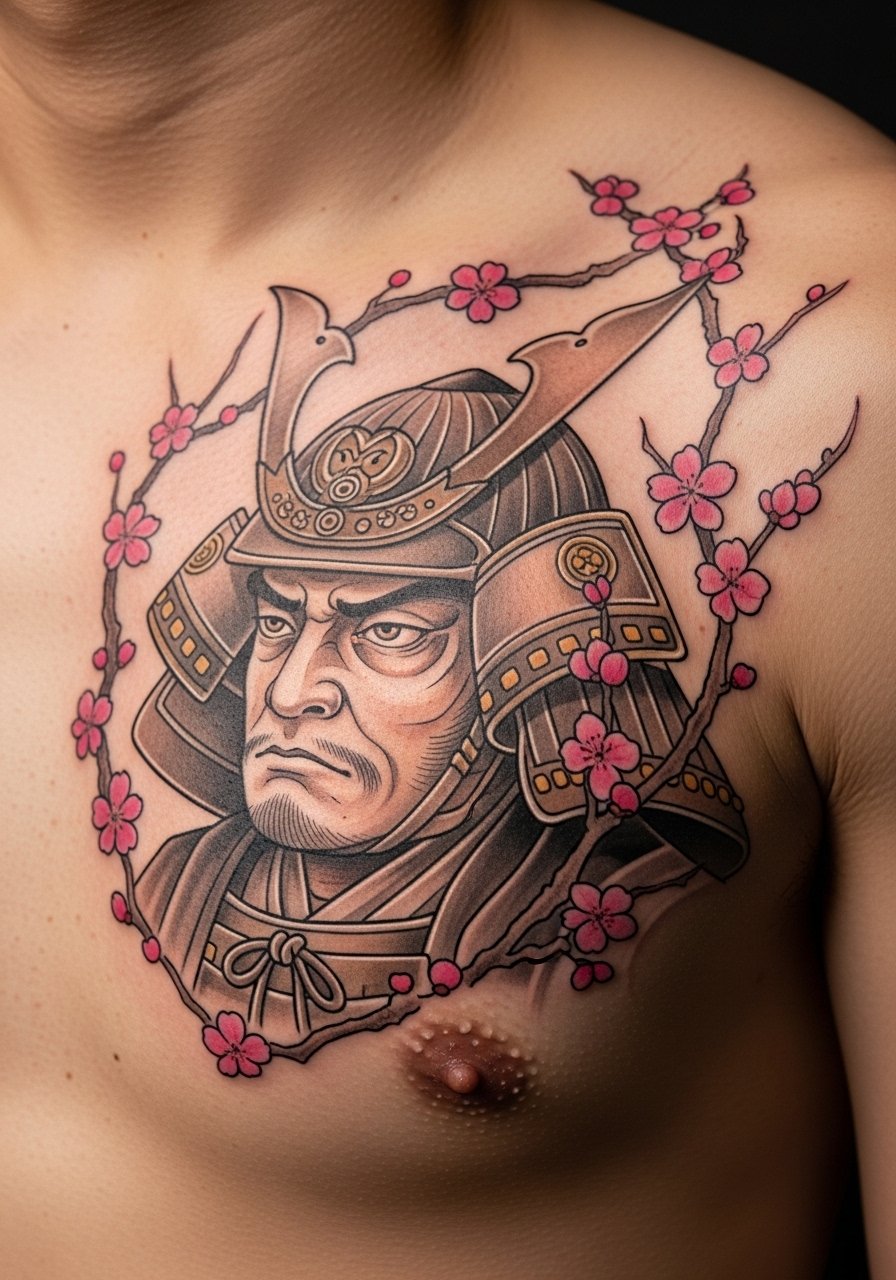
A samurai motif framed by cherry blossoms is classic — strength softened by the ephemeral bloom. This design balances portrait realism with stylized florals and is great for chest or thigh placements. It reads well as a central focus with supporting negative-space backgrounds.
Style & Design Details
- Tattoo style: illustrative portraiture with Japanese floral elements
- Recommended size: medium (5–8 inches)
- Best placement(s): chest, upper thigh, sternum — flat planes give room for portrait detail
- Color vs. blackwork: Muted color palette keeps portrait expressive; black-and-grey works for a more stoic vibe
- Design elements: facial shading, samurai helmet (kabuto), cherry blossom branch, subtle sakura petals, soft background wash
- Longevity note: Fine facial shading needs gentle handling; sun accelerates fading
- Who it suits: lovers of history, narrative portraits, and people who prefer centered composition
Finding the Right Artist
Look for artists with portrait and historical-figure work in the same portfolio. Ask how they handle facial aging and if they will do a flash mockup. Avoid shops that press for a small session when you need medium-detail portraiture. Carry reference images and consider bringing a printed photo.
Aftercare & Healing Tips
Keep the chest area clean and avoid abrasive bras or straps. Consider Saniderm if your shop recommends it. Use an unscented lotion like Aveeno fragrance-free lotion during peel to help delicate shading stay crisp.
- Oni Face on Thigh (Bold & Versatile)
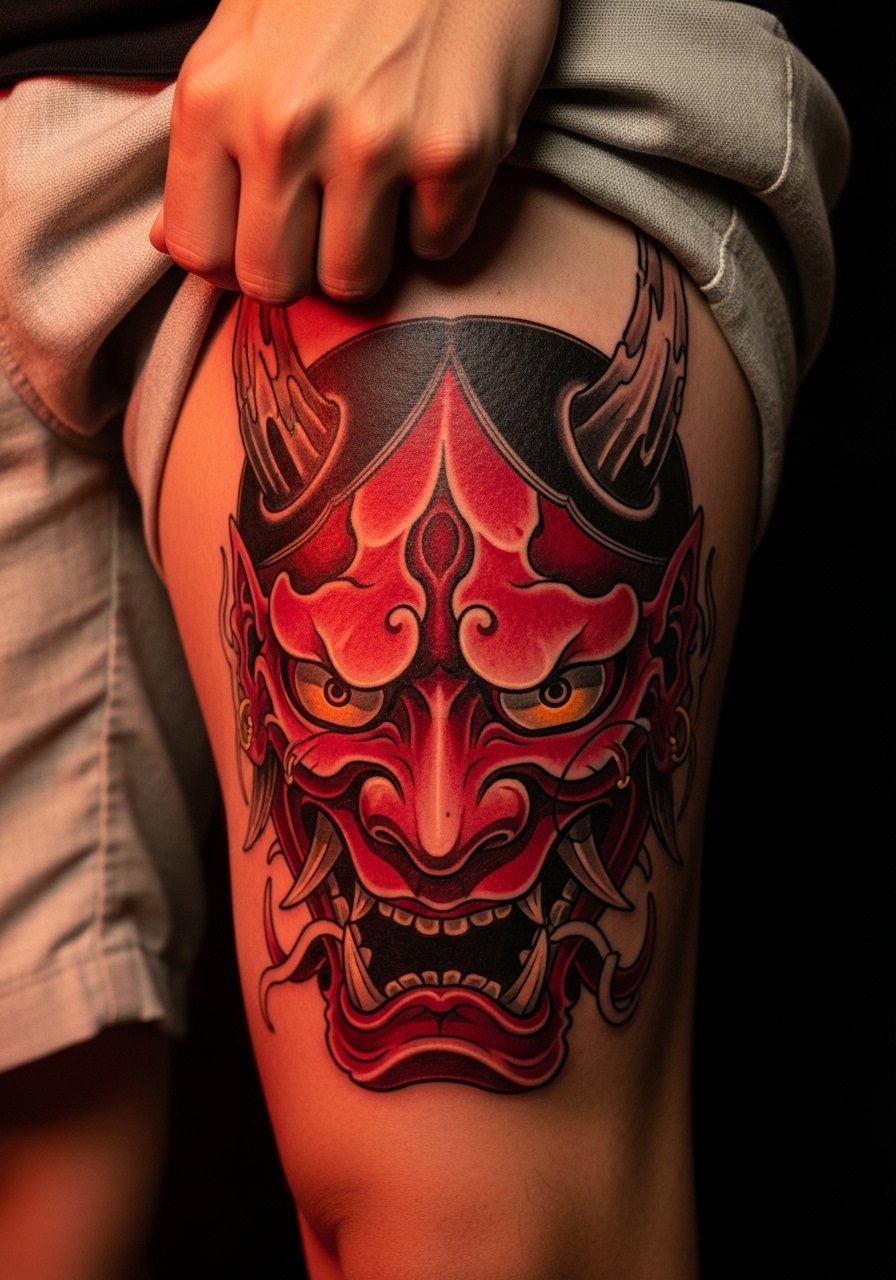
Thighs give room for a big, theatrical Oni face paired with smoke and peonies. The flesh here tolerates large sessions well, so you can have dense color and texture without compromising healing. It’s a great spot for someone who wants a private yet bold piece.
Style & Design Details
- Tattoo style: traditional Japanese with neo-trad color saturation
- Recommended size: medium to large (6–10 inches)
- Best placement(s): outer thigh, calf, upper arm
- Color vs. blackwork: Full color for theatrical faces; blackwork for a raw, angry look
- Design elements: snarling mouth, tusks, stipple shading, ornamental background, floral accents
- Longevity note: Thighs experience less UV and friction than forearms, improving color longevity
- Who it suits: patrons who want bold imagery in a less exposed spot; first-timers who want more coverage
Finding the Right Artist
Find portfolios with similar character work and color saturation. Ask how many sessions they expect and their timeline for shading and color packing. Apprentices can do linework practice, but for complex Oni shading, pick an experienced color artist.
Aftercare & Healing Tips
Thighs can be kept clean and wrapped briefly. Use fragrance-free soap and a thin layer of Hustle Butter Deluxe while peeling. Avoid tight pants that rub the area for 2 weeks. Touch-ups common after heavy saturated fills.
- Wave & Mount Fuji Band (Minimalist Wrap)
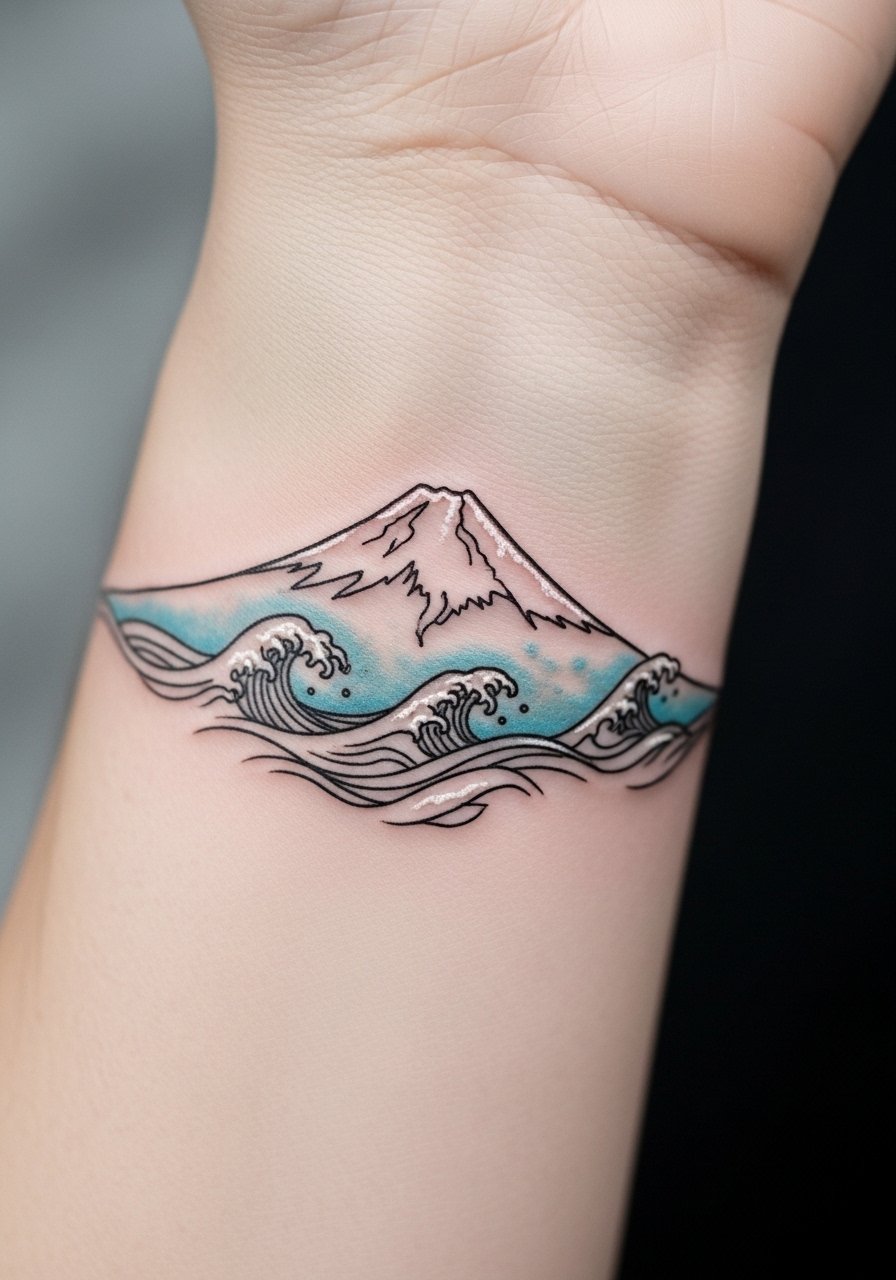
A Mount Fuji band with stylized waves is a subtle way to wear Japanese motifs. This works as a delicate wrist band or as a forearm wrap. Fine line and small color washes make it low-key but meaningful — perfect for minimalists who still want a cultural nod.
Style & Design Details
- Tattoo style: fine line illustrative with subtle color wash
- Recommended size: 2–3 inches band
- Best placement(s): wrist, inner forearm, ankle
- Color vs. blackwork: Light color wash (indigo) accentuates without overpowering
- Design elements: single-needle outlines, light watercolor fills, negative-space snowcap, small wave curls, micro-dot details
- Longevity note: Fine line fades faster; avoid excessive sun and friction
- Who it suits: minimalists, first-timers, people wanting small visible pieces
Finding the Right Artist
Choose artists who specialize in fine-line and minimalist bands. Ask about needle size and whether they use single-needle or tight liners. Avoid artists whose portfolios show blowouts on fine lines. For placement testing, try a temporary with Inkbox.
Aftercare & Healing Tips
Fine-line pieces are delicate during healing. Keep the area out of sunlight, use Dr. Bronner's unscented soap, and switch to Lubriderm unscented lotion once peeling begins. Plan a touch-up within 6 months if lines soften.
- Japanese Traditional Tattoo Designs: Komainu Guard Pair (Symmetry & Placement)
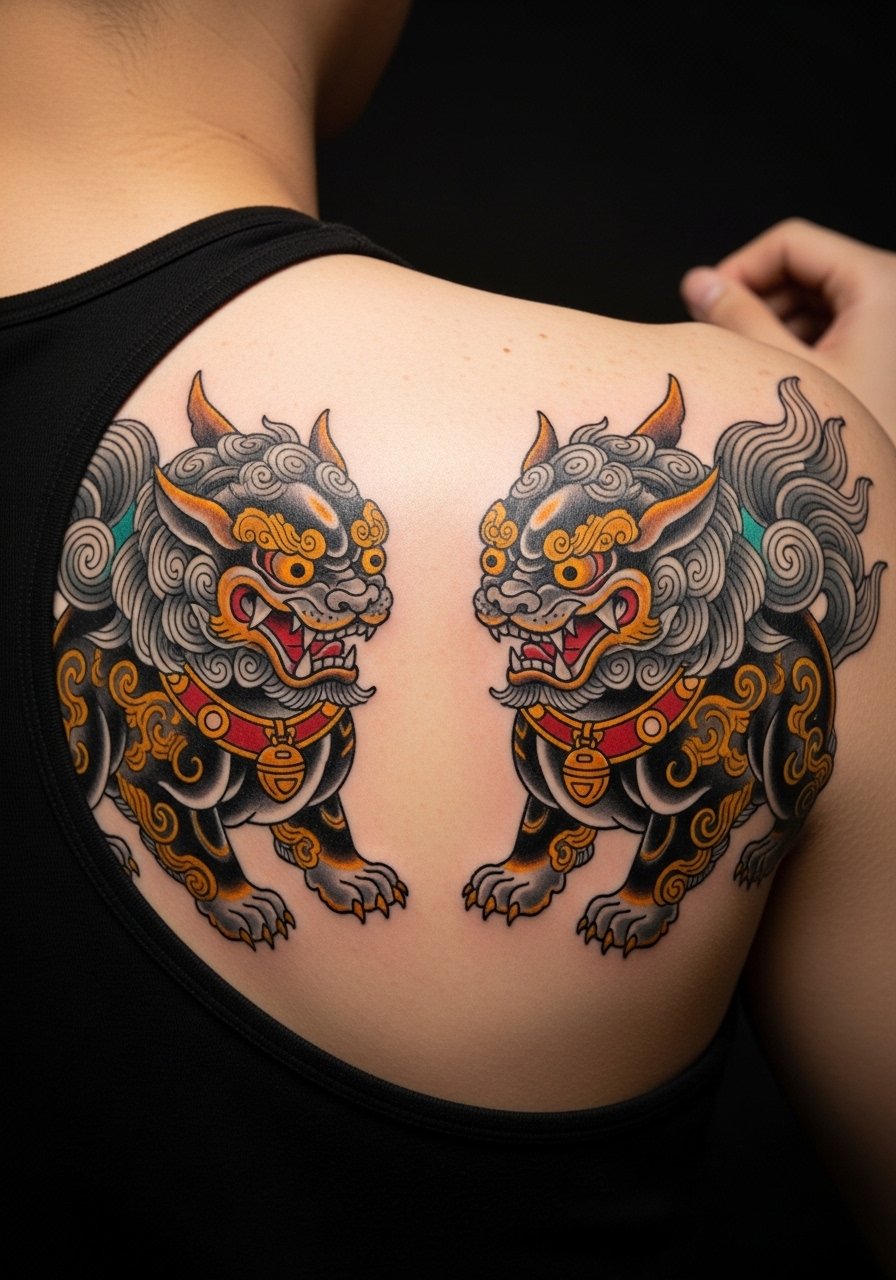
Symmetrical Komainu guardians on the shoulders give a balanced, protective aesthetic. This layout works for smaller matching pieces or larger shoulder-to-back connections. It’s a classic Japanese composition that translates well to couples, siblings, or solo mirrored designs.
Style & Design Details
- Tattoo style: Japanese traditional symmetry with decorative fills
- Recommended size: small to medium per side (3–7 inches)
- Best placement(s): shoulder blades, chest shoulders, upper arms
- Color vs. blackwork: Color adds ornamentation; blackwork creates a sculptural feel
- Design elements: fierce faces, curled manes, ornamental lines, cloud motifs, symmetrical negative space
- Longevity note: Shoulder blades get sun exposure; SPF application extends color life
- Who it suits: fans of symmetrical composition and protective symbolism
Finding the Right Artist
Search for artists who handle mirrored compositions and consistent linework across multiple sittings. Ask how they ensure symmetry and whether they’ll stencil both sides together. Use a tattoo placement reference guide for prep.
Aftercare & Healing Tips
Use Saniderm patches if your artist approves for shoulder areas. Clean and moisturize with After Inked lotion. Because shoulders are exposed, apply a tattoo SPF stick like a SPF 50 tattoo sunscreen stick whenever outdoors.
- Crane in Flight Sleeve Accent (Graceful Movement)
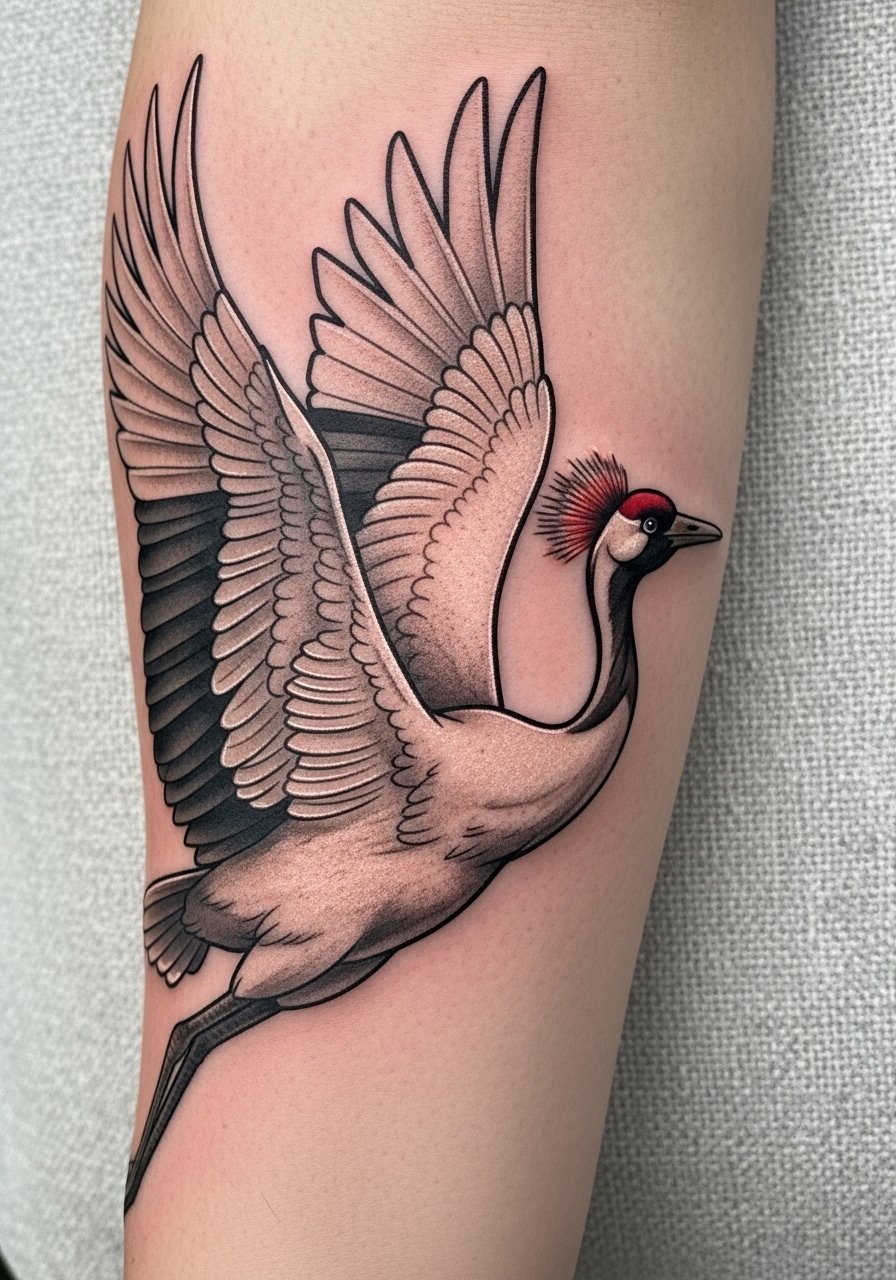
Cranes symbolize longevity and grace. A single crane integrated into a half-sleeve reads elegant, especially when combined with wind bars and subtle florals. The long neck and wings complement forearm and calf shapes beautifully.
Style & Design Details
- Tattoo style: illustrative Japanese with delicate feather detail
- Recommended size: palm-sized to quarter sleeve
- Best placement(s): outer forearm, calf, shoulder blade
- Color vs. blackwork: Minimal color highlights (red crown) with soft grey washes
- Design elements: long wingspan, feather texturing, wind bars, sakura petals, negative space
- Longevity note: Light grey washes need careful sun protection to avoid washout
- Who it suits: clean aesthetic lovers, fans of bird symbolism, and those preferring flowing compositions
Finding the Right Artist
Choose artists skilled at feathers and motion lines. Ask to see healed photos of similar feathered pieces. Consider an artist who uses a mix of magnum shading for soft feather texture. For design fine-tuning, sketch references in Procreate on iPad or bring a printed layout.
Aftercare & Healing Tips
Forearm pieces peel quickly; cleanse and switch to Hustle Butter Deluxe once the initial wrap comes off. Avoid heavy lifting that rubs the area in week 1. SPF 50 is recommended for the long term.
- Peony and Wave Compact (Traditional Floral Accent)
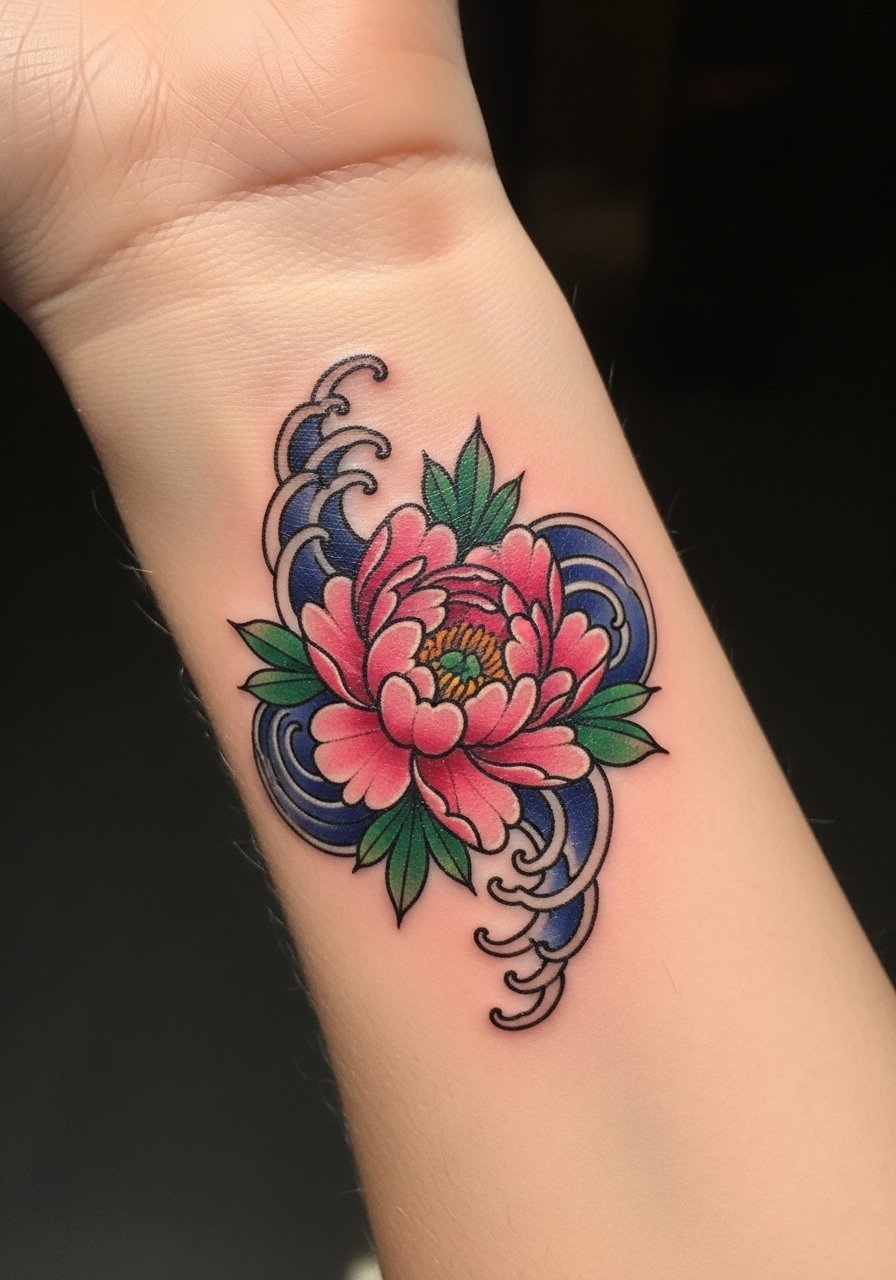
A compact peony entwined with small waves is fantastic for wrists or ankles. It’s decorative, feminine, and rooted in tradition without being overwhelming. Peony petals age well when shaded properly and protected from sun.
Style & Design Details
- Tattoo style: traditional Japanese floral
- Recommended size: 2–4 inches
- Best placement(s): inner wrist, ankle, behind the ear
- Color vs. blackwork: Color for petal depth; black-only suits muted tastes
- Design elements: layered petals, barbed leaves, wave curls, bold outlines, dot highlights
- Longevity note: Small florals require SPF to avoid color flattening
- Who it suits: first-timers, floral tattoo fans, people who want a small visible piece
Finding the Right Artist
Find someone who shows crisp petal layering and healed peony photos. Ask if they’ll scale the bloom without losing petal detail. Consider a quick consult for placement curvature.
Aftercare & Healing Tips
Wrist pieces are exposed, so use Saniderm for the initial days if recommended. Clean gently and follow with an unscented lotion like Lubriderm unscented lotion during peeling.
- Koi Circle on Shoulder (Compact Symbolism)
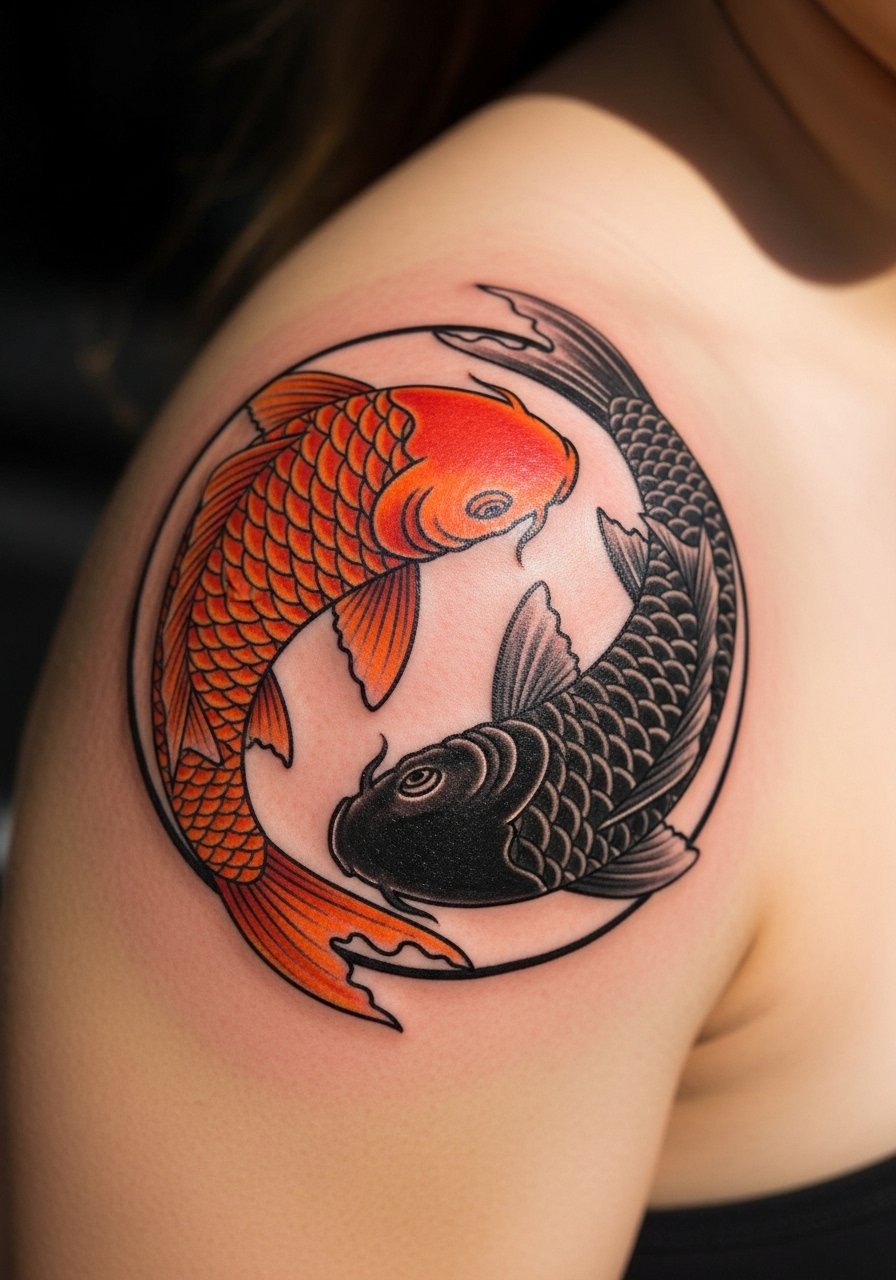
Two koi forming a circle symbolizes balance and partnership. The shoulder cap lets the design curve with muscle and looks great in summer tanks. Smaller sizes keep sessions short but still impactful.
Style & Design Details
- Tattoo style: traditional circular iconography
- Recommended size: 3–5 inches
- Best placement(s): shoulder cap, upper arm, chest pocket
- Color vs. blackwork: Color recommended for visual contrast
- Design elements: mirrored koi, circular flow, waterflakes, minimal background
- Longevity note: Shoulder skin handles color well; watch sun exposure
- Who it suits: symbolic tattoo lovers, paired designs, subtle collection pieces
Finding the Right Artist
Look for portfolio examples of symmetrical aquatic designs. Ask about line curves to avoid distortion with muscle movement. Consider a 1–2 hour session with an experienced color packer.
Aftercare & Healing Tips
Saniderm or traditional wrap is fine. Use Hustle Butter Deluxe for primary moisturization, and keep out of direct sun with a SPF 50 tattoo sunscreen stick.
- Masked Geisha Half-Sleeve (Contrast & Elegance)
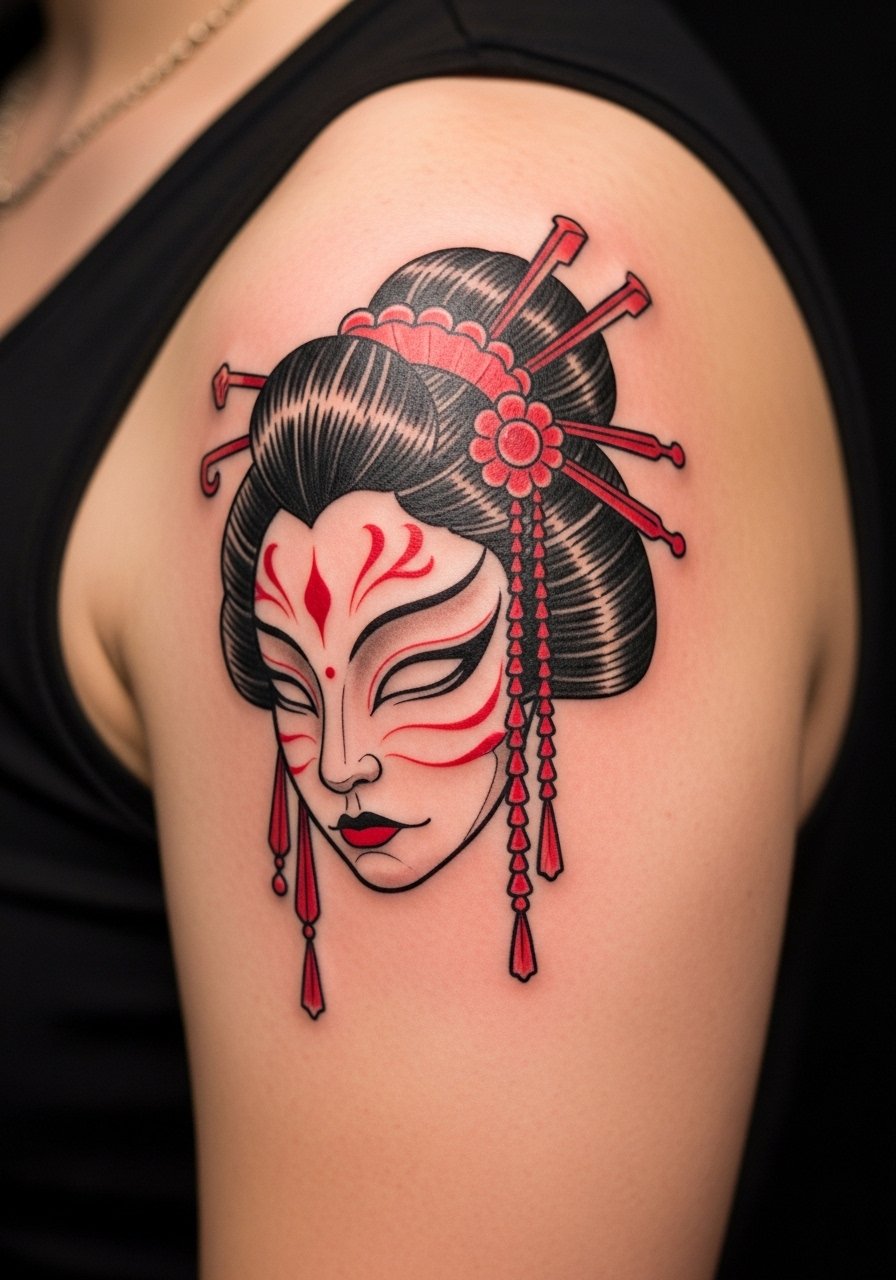
A masked geisha mixes elegance with mystery. Paired with hair ornaments and bamboo, this design plays with delicate skin tones and strong black hair fills. Half-sleeves allow the piece to breathe and connect to future work.
Style & Design Details
- Tattoo style: illustrative Japanese portrait with ornamental fill
- Recommended size: quarter to half sleeve
- Best placement(s): upper arm, inner arm wrap
- Color vs. blackwork: Balanced color palette with strong black fills
- Design elements: facial features, hair ornament, silk patterns, bamboo, sakura accents
- Longevity note: Silky shaded areas need gentle care to avoid patchiness
- Who it suits: people who love layered narrative pieces and feminine iconography
Finding the Right Artist
Find someone strong in portraiture and ornamental fills. Ask about how they’ll render fabric patterns and hair shine. Bring reference images or a digital mockup.
Aftercare & Healing Tips
For arm sleeves, avoid hot tubs and swimming until fully healed. Use fragrance-free soap and After Inked lotion. Expect layered shading to settle over 4–8 weeks.
- Snake and Peony Vertical Piece (Edgy Elegance)
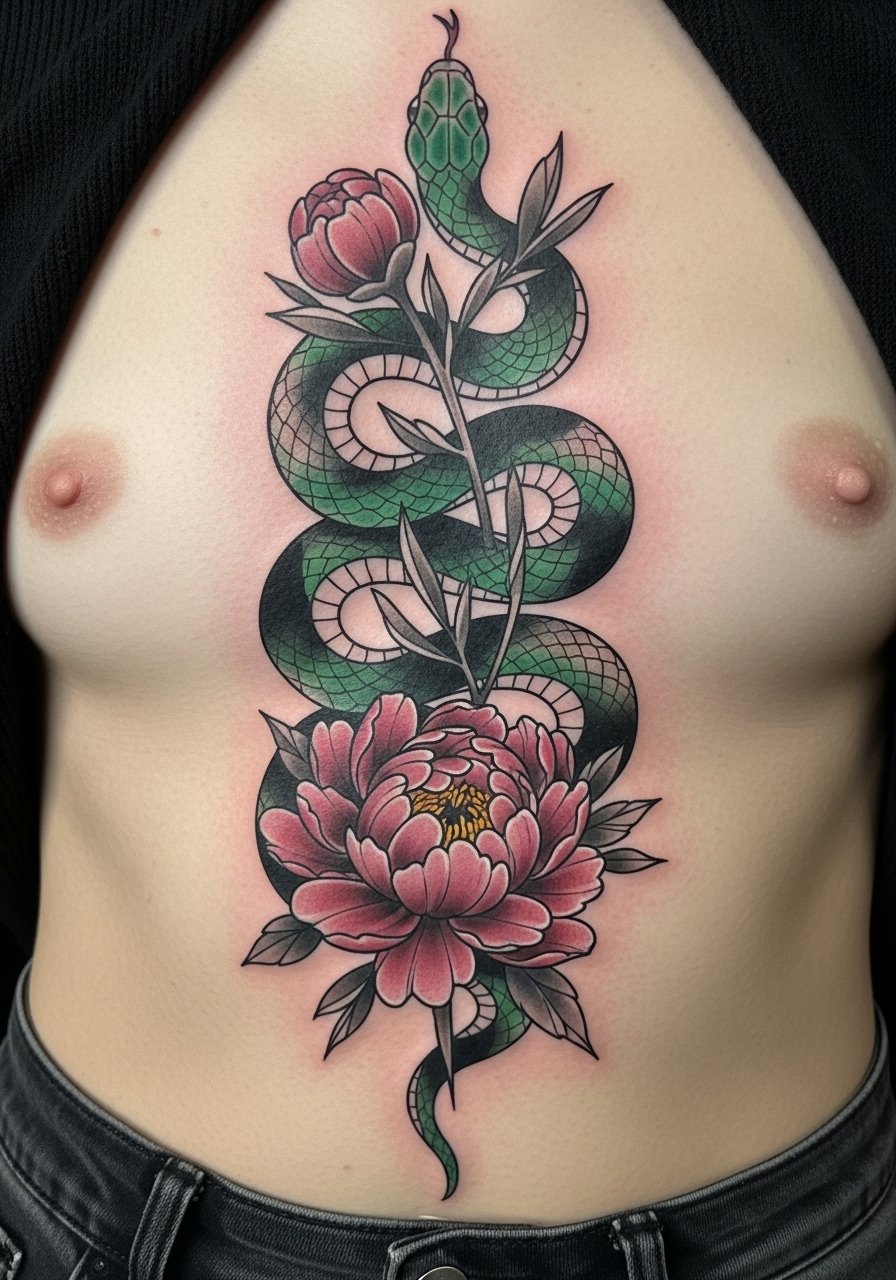
A sinuous snake winding around peony stems is dramatic and can be adjusted to fit narrow placements like the sternum or arm. The contrast between smooth scales and soft petals creates a tactile visual.
Style & Design Details
- Tattoo style: Japanese illustrative with soft botanical contrast
- Recommended size: 4–8 inches vertical
- Best placement(s): sternum, ribcage, forearm
- Color vs. blackwork: Color enhances contrast; blackwork for a grittier feel
- Design elements: scaled body, peony petals, thorns, winding motion, negative space loops
- Longevity note: High-motion areas like sternum need SPF and careful clothing choices
- Who it suits: those who like contrast, slightly edgier floral work, or symbolic snake imagery
Finding the Right Artist
Look for artists with experience in combined botanical and animal subjects. Ask for healed photos of similar texture work. Avoid artists unfamiliar with scale gradation.
Aftercare & Healing Tips
Sternum pieces can be sensitive; follow artist wrap guidelines and use Hustle Butter Deluxe while peeling. Loose clothing helps reduce friction and irritation.
- Peony Sleeve Accent with Dotwork (Textured Elegance)
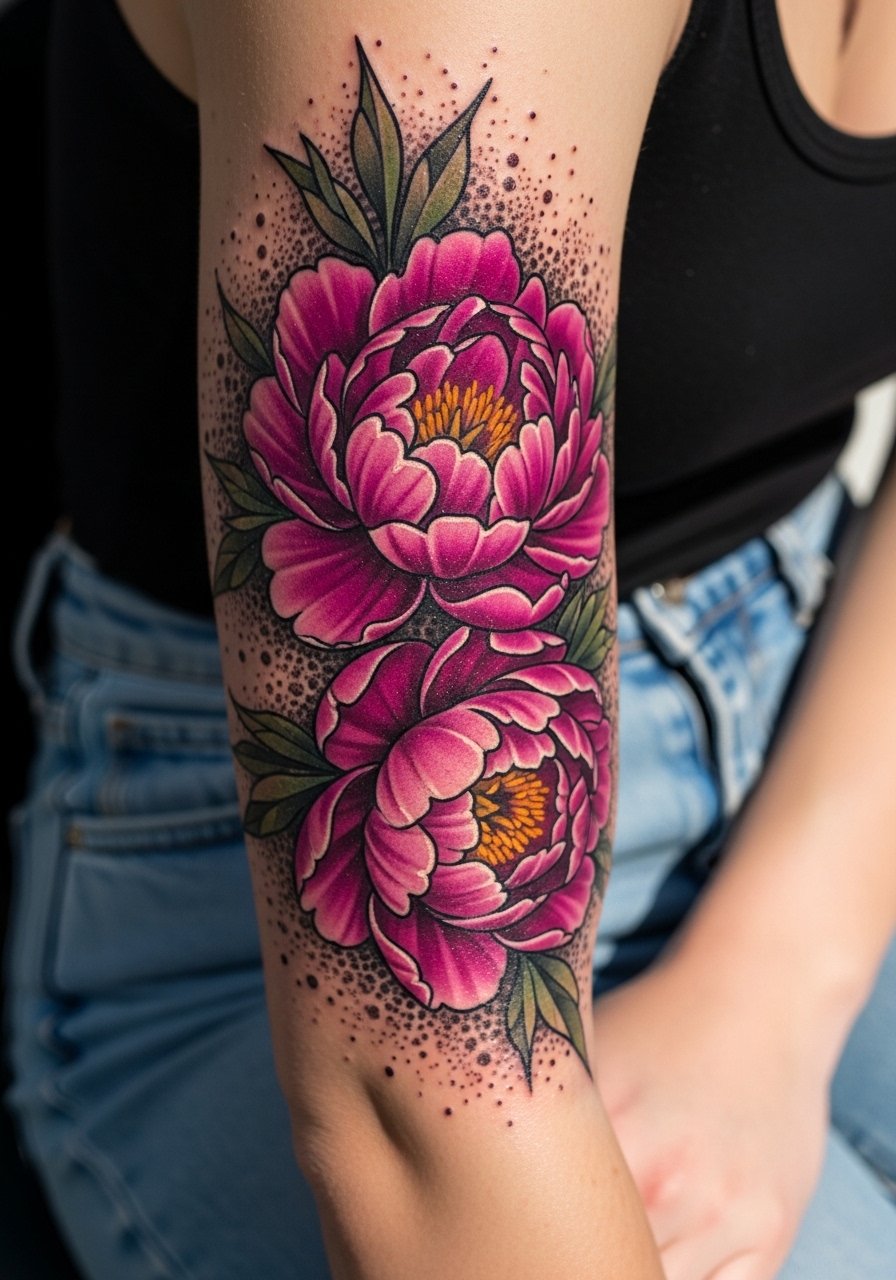
Combining bold peonies with dotwork backgrounds creates a luxe, textured look. Dotwork softens transitions and adds contrast without adding more color. Great for those who want depth without busy backgrounds.
Style & Design Details
- Tattoo style: traditional floral with dotwork background
- Recommended size: quarter to half sleeve
- Best placement(s): forearm, upper arm, calf
- Color vs. blackwork: Color for petals; dotwork stays black-and-grey
- Design elements: layered petals, stipple fills, negative-space highlights, bold outlines, leaf filigree
- Longevity note: Stipple holds well if the artist spaces dots correctly; too dense leads to patchy aging
- Who it suits: fans of tactile texture and layered florals, collectors expanding sleeve work
Finding the Right Artist
Choose an artist with clean dotwork and healed photos. Ask about dot spacing and whether they stencil patterns. Avoid rushed dotwork that looks muddy on healed photos.
Aftercare & Healing Tips
Dotwork can scab thinly; use gentle soap and then an unscented lotion like Lubriderm unscented lotion during peel. Avoid heavy friction during early healing.
- Japanese Traditional Tattoo Designs: Turtle and Waves (Old-School Balance)
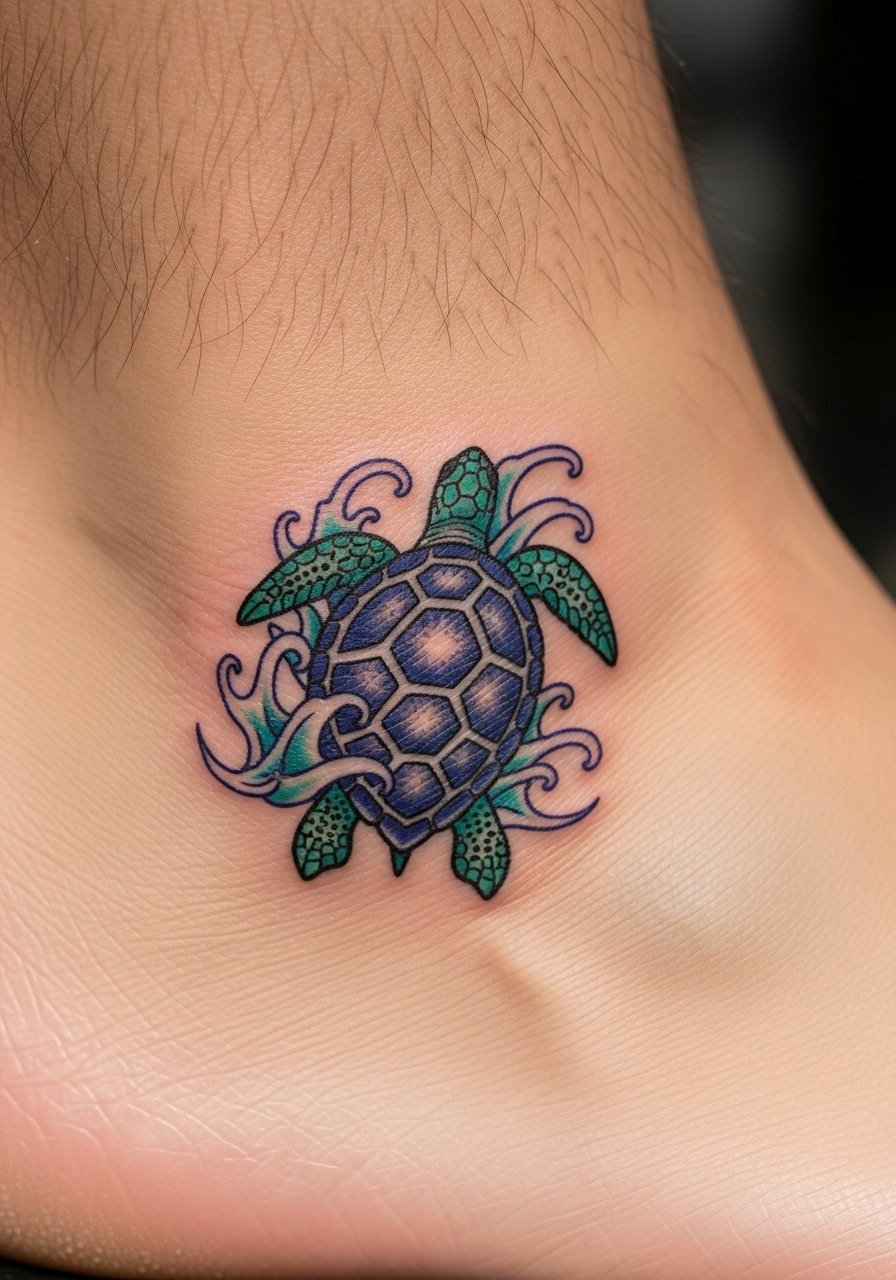
Kame (turtle) tattoos symbolize longevity and patience. A small turtle with wave accents makes a neat ankle or wrist piece. It’s compact but full of traditional symbolism and graphic clarity.
Style & Design Details
- Tattoo style: Irezumi-inspired small icon
- Recommended size: 2–4 inches
- Best placement(s): ankle, wrist, behind the ear
- Color vs. blackwork: Green and indigo color keeps it lively; blackwork for subtler looks
- Design elements: shell pattern, wave curls, dot highlights, bold outline shell sections, negative-space water spray
- Longevity note: Ankles are prone to friction and footwear rubbing, use extra protection
- Who it suits: minimalists who want traditional symbolism in a tiny package
Finding the Right Artist
Search portfolios for small animal icons and healed ankle work. Ask how they’ll protect line edges from spread. Apprentices can do small pieces under supervision, but check healed shots.
Aftercare & Healing Tips
Ankle tattoos rub from shoes. Use loose-fitting footwear for 1–2 weeks and consider an antibiotic-free wrap recommended by your artist. Clean with Dr. Bronner's unscented soap and moisturize with Hustle Butter Deluxe.
- Lotus and Bodhisattva Motif (Spiritual Centerpiece)
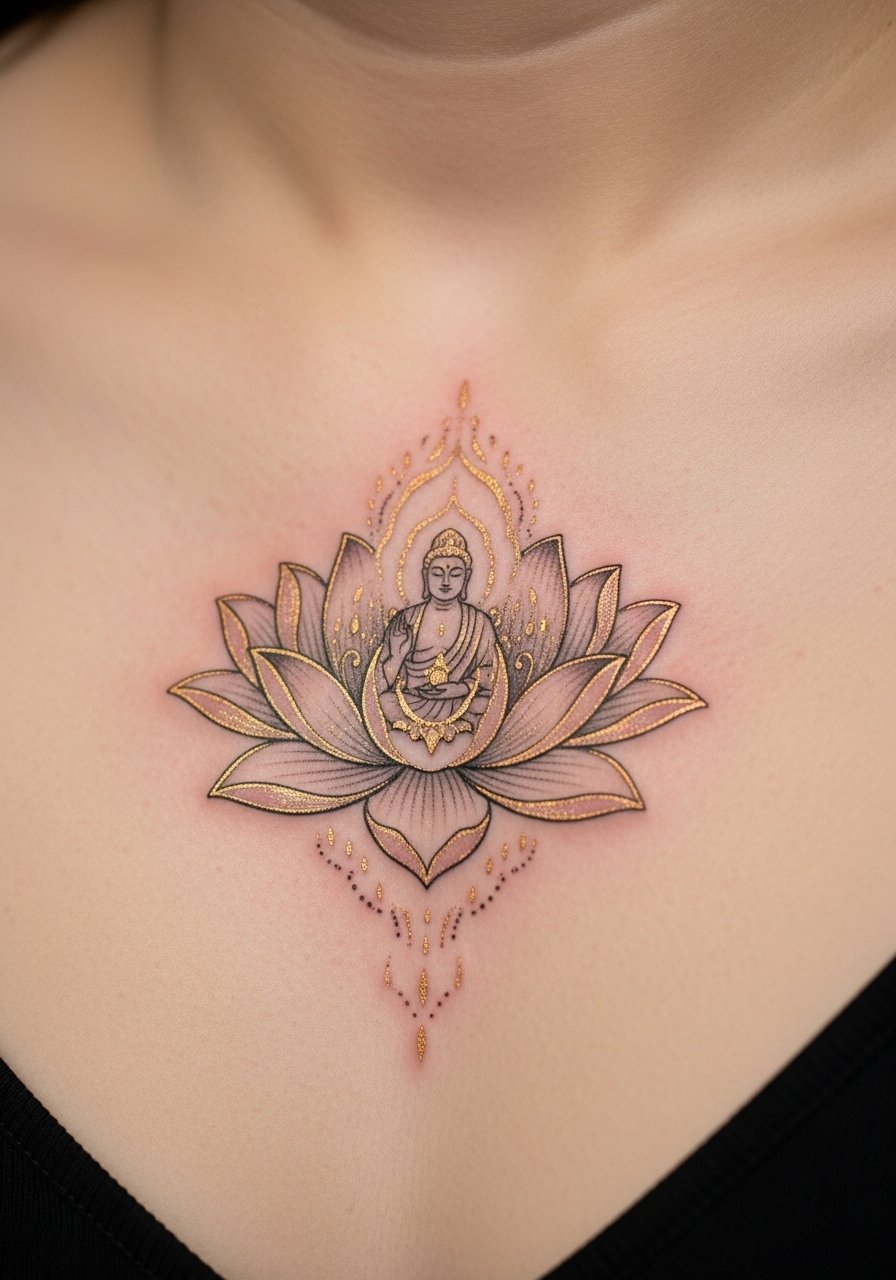
A lotus framing a bodhisattva or meditative face reads spiritual and serene. This works as a central chest or sternum piece, radiating symmetry and calm presence. Colors stay gentle and age gracefully with SPF.
Style & Design Details
- Tattoo style: spiritual illustrative with ornamental fills
- Recommended size: 4–8 inches
- Best placement(s): sternum, upper chest, mid-back
- Color vs. blackwork: Subtle color palette keeps meditative tone
- Design elements: lotus petals, halo ornament, fine-line facial detail, mandala accents, gold leaf touches
- Longevity note: Soft colors need sun protection for lasting contrast
- Who it suits: spiritually minded clients, people who want contemplative imagery
Finding the Right Artist
Seek artists with mandala and fine-line portraiture experience. Ask for mockups showing symmetry. Avoid anyone who rushes facial features or mandala spacing.
Aftercare & Healing Tips
Chest heals best with loose clothing; avoid heavy chokers or necklaces. Clean with fragrance-free soap and moisturize with After Inked lotion during the peeling phase. Use SPF 50 after healing.
- Wind Bars and Sakura Wrist Cluster (Tiny Traditional Flourish)
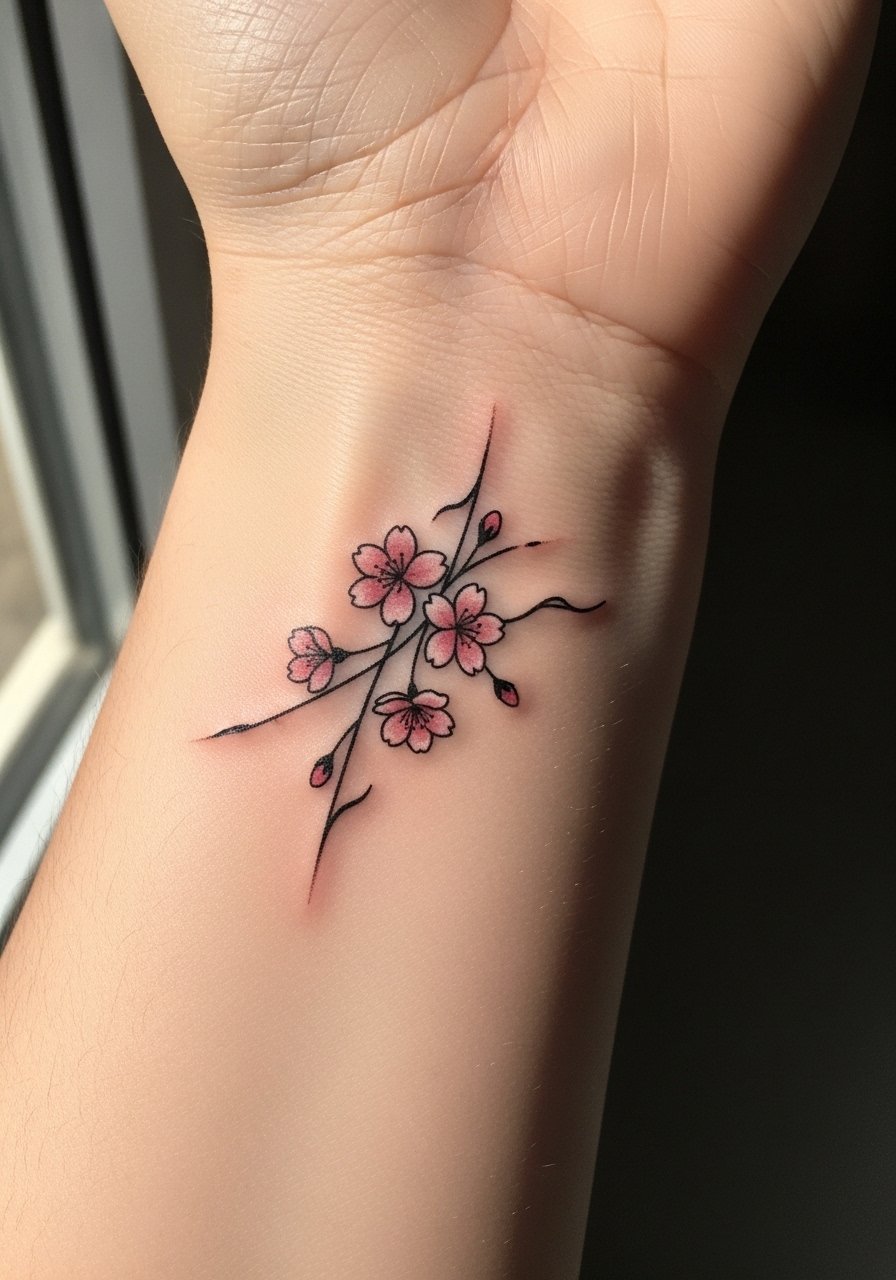
Wind bars (kaze) paired with a small sakura cluster create a whisper of motion. Wrist placement makes the tattoo feel like a charm in motion; small sizes are quick and low commitment.
Style & Design Details
- Tattoo style: minimal traditional accents
- Recommended size: 1–3 inches
- Best placement(s): inner wrist, ankle, behind ear
- Color vs. blackwork: Soft pink for sakura petals; black for wind bars
- Design elements: curved wind lines, tiny petals, thin stem, negative space droplets
- Longevity note: Small details fade faster; careful SPF and touch-ups help
- Who it suits: low-commitment clients, delicate aesthetic fans
Finding the Right Artist
Choose someone who does consistent tiny work with steady single-needle lines. Ask for healed micro photos. Avoid artists whose tiny linework shows blowouts healed.
Aftercare & Healing Tips
Wrist tattoos need sun protection; use a small SPF 50 tattoo sunscreen stick after healing. Clean gently and switch to Lubriderm unscented lotion during peeling.
- Wave Crest Half-Sleeve (Graphic Movement)
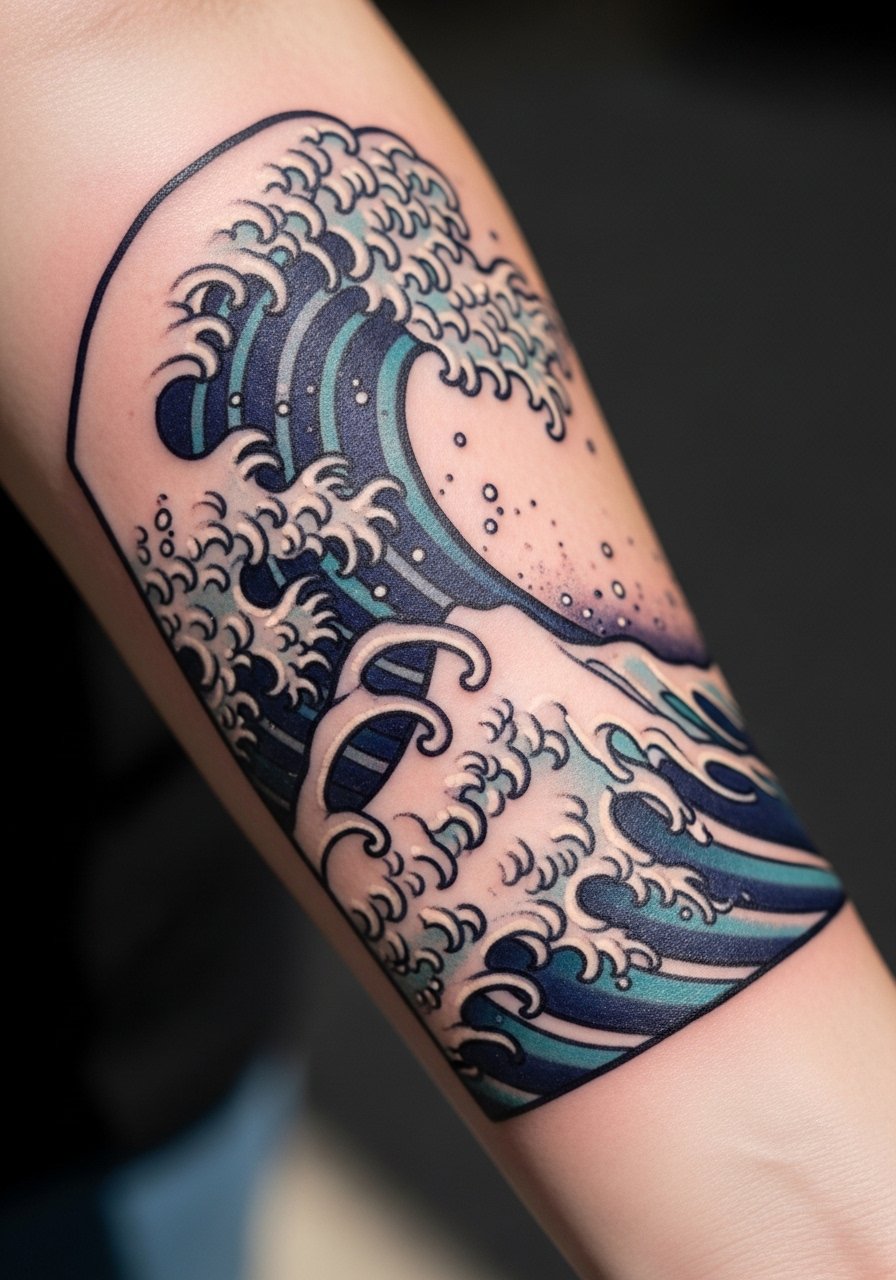
A graphic wave half-sleeve channels traditional Hokusai influences with modern color choices. It’s rhythmic and pairs well with other motifs like koi or cranes. The forearm allows movement and display.
Style & Design Details
- Tattoo style: bold illustrative wavework
- Recommended size: quarter to half sleeve
- Best placement(s): forearm, upper arm, calf
- Color vs. blackwork: Deep blues and teal gradients recommended
- Design elements: cresting waves, white negative spray, layered linework, foam dots, directional motion
- Longevity note: Blues can grey over time; sunscreen is essential
- Who it suits: lovers of motion and maritime themes, collectors building sleeves
Finding the Right Artist
Look for artists with strong wave compositions and consistent line rhythm. Ask how they’ll transition waves into skin texture. Bring wave references if you have a preferred era (classic vs modern).
Aftercare & Healing Tips
Forearms peel quickly; use Saniderm if artist recommends, then switch to Hustle Butter Deluxe. Avoid saltwater swims for 3–4 weeks.
- Minimal Single-Needle Sakura Branch (Fine Line Calm)
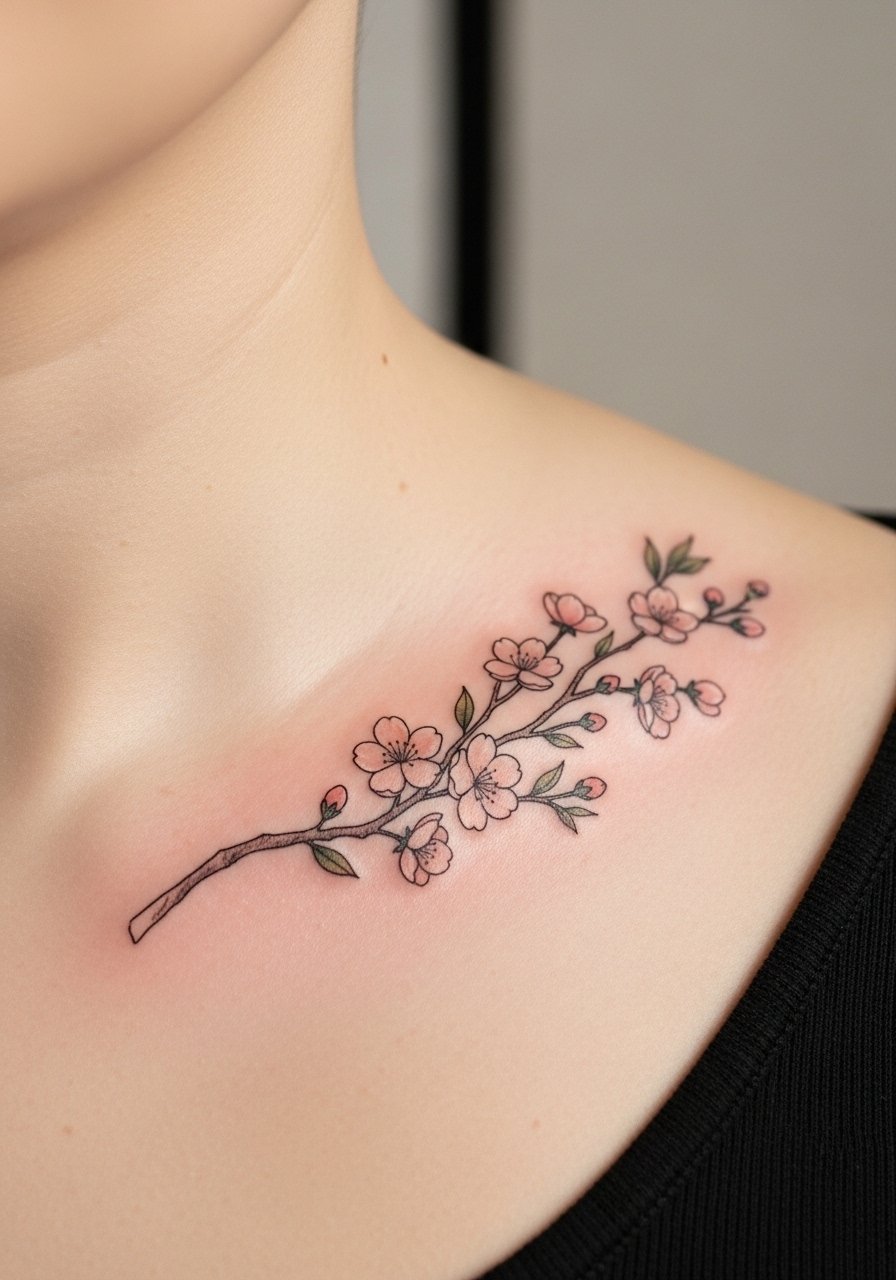
This delicate sakura branch uses single-needle technique for an airy, almost watercolor feel. Collarbone placement makes it intimate and elegant. Expect crisp initial results but note fine lines fade faster.
Style & Design Details
- Tattoo style: single-needle fine line
- Recommended size: 2–6 inches
- Best placement(s): collarbone, inner wrist, behind ear
- Color vs. blackwork: Small pink washes accent blossoms
- Design elements: single-needle stems, light color dots, negative spacing, tiny petals
- Longevity note: Single-needle fades faster, especially on sun-exposed spots
- Who it suits: minimalists, first-timers, delicate aesthetic lovers
Finding the Right Artist
Pick artists known for single-needle finesse and stable healed lines. Ask about needle size and healed photos. Avoid artists without healed single-needle examples.
Aftercare & Healing Tips
Fine-line care is strict: avoid sun, use After Inked lotion, and plan for a touch-up within 6–12 months.
- Carp and Maple Full Thigh Panel (Seasonal Color Story)
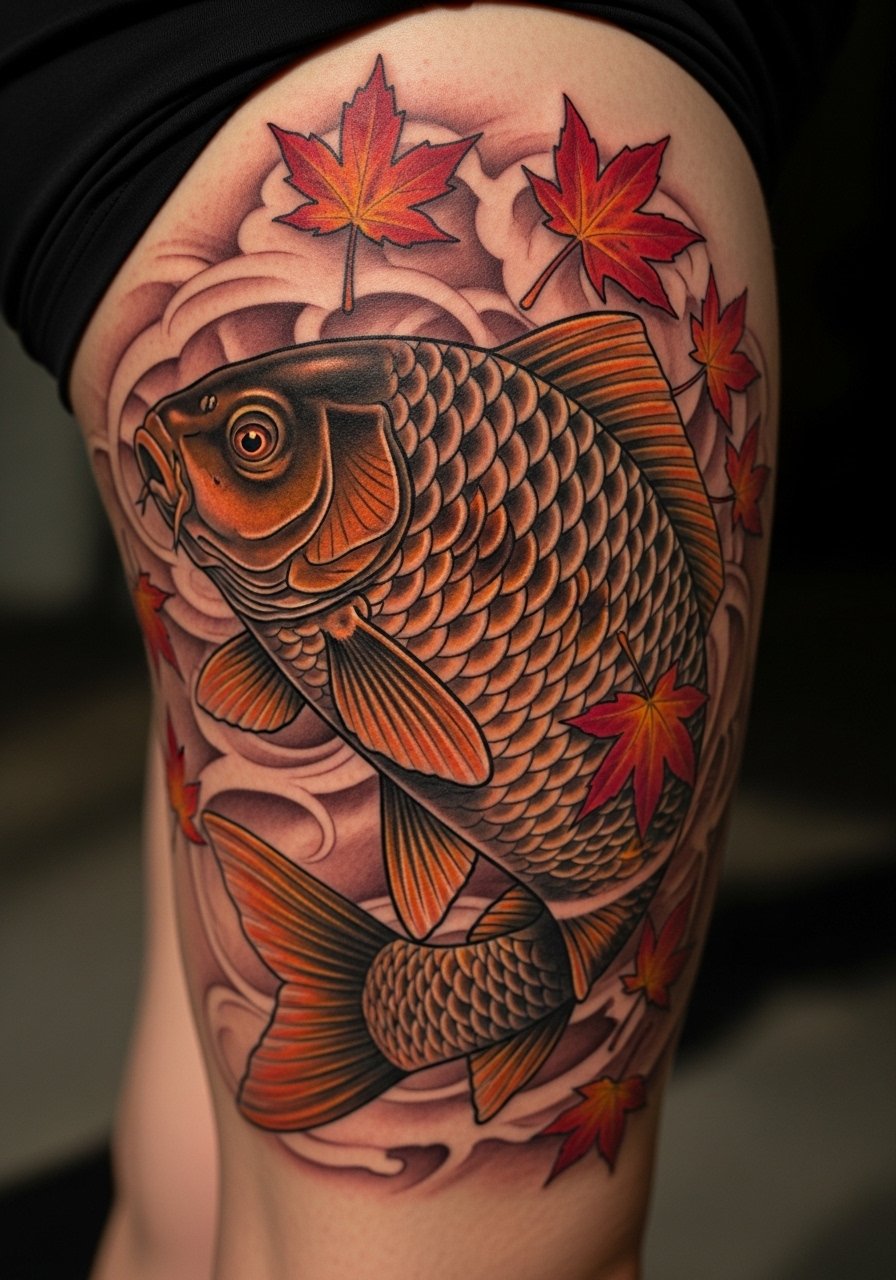
A thigh panel with koi and maple leaves embraces seasonal color shifts. Maples add motion and color contrast to the carp’s scales. Thighs give you privacy and large canvas potential.
Style & Design Details
- Tattoo style: traditional Japanese panel with seasonal accents
- Recommended size: large/thigh panel
- Best placement(s): full thigh, side torso
- Color vs. blackwork: Warm autumnal palette recommended
- Design elements: koi, maple leaves, gradient fills, wave bases, scale highlights
- Longevity note: Thighs age gently; avoid friction but sun exposure is the main threat
- Who it suits: fans of seasonal motifs, large-panel collectors
Finding the Right Artist
Select someone experienced with coordinated thigh compositions and color packing. Ask about session pacing and pain management for long sittings. Bring multiple references and consider a planning sheet.
Aftercare & Healing Tips
Wear loose shorts and avoid workouts that rub the area for 1–2 weeks. Clean gently and use Hustle Butter Deluxe while peeling. Expect touch-ups after major color packing sessions.
- Shimenawa Rope & Lantern (Cultural Accent)
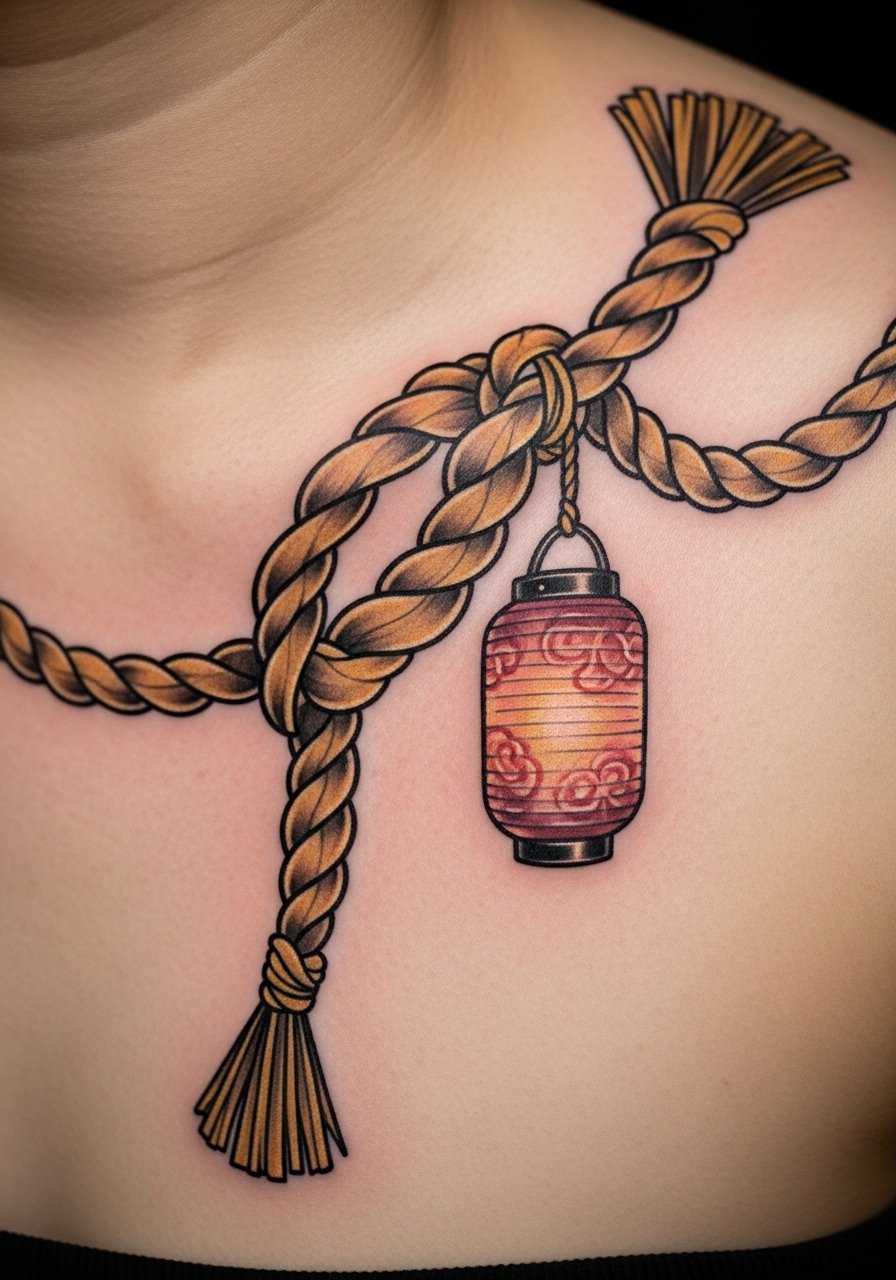
Shimenawa ropes and lanterns reference shrine iconography and carry protective connotations. This is a subtle cultural accent piece for the chest or mid-back, offering both simplicity and meaning.
Style & Design Details
- Tattoo style: symbolic Japanese iconography
- Recommended size: 3–6 inches
- Best placement(s): clavicle, upper chest, between shoulder blades
- Color vs. blackwork: Warm gold and red accents recommended
- Design elements: braided rope texture, lantern shading, tassels, subtle ornamentation
- Longevity note: Small ornamental lines can blur if too tightly spaced
- Who it suits: people who appreciate cultural motifs and clean iconography
Finding the Right Artist
Find someone who understands traditional shrine symbolism and rope texture. Ask how they’ll render braided texture for longevity. Avoid artists without examples of braided or woven texture.
Aftercare & Healing Tips
Clavicle pieces heal well but avoid necklaces and heavy straps for 2 weeks. Clean with mild soap and moisturize with After Inked lotion. Apply SPF 50 when exposed.
- Chrysanthemum Mandala Throat Accent (Bold Centerpiece)
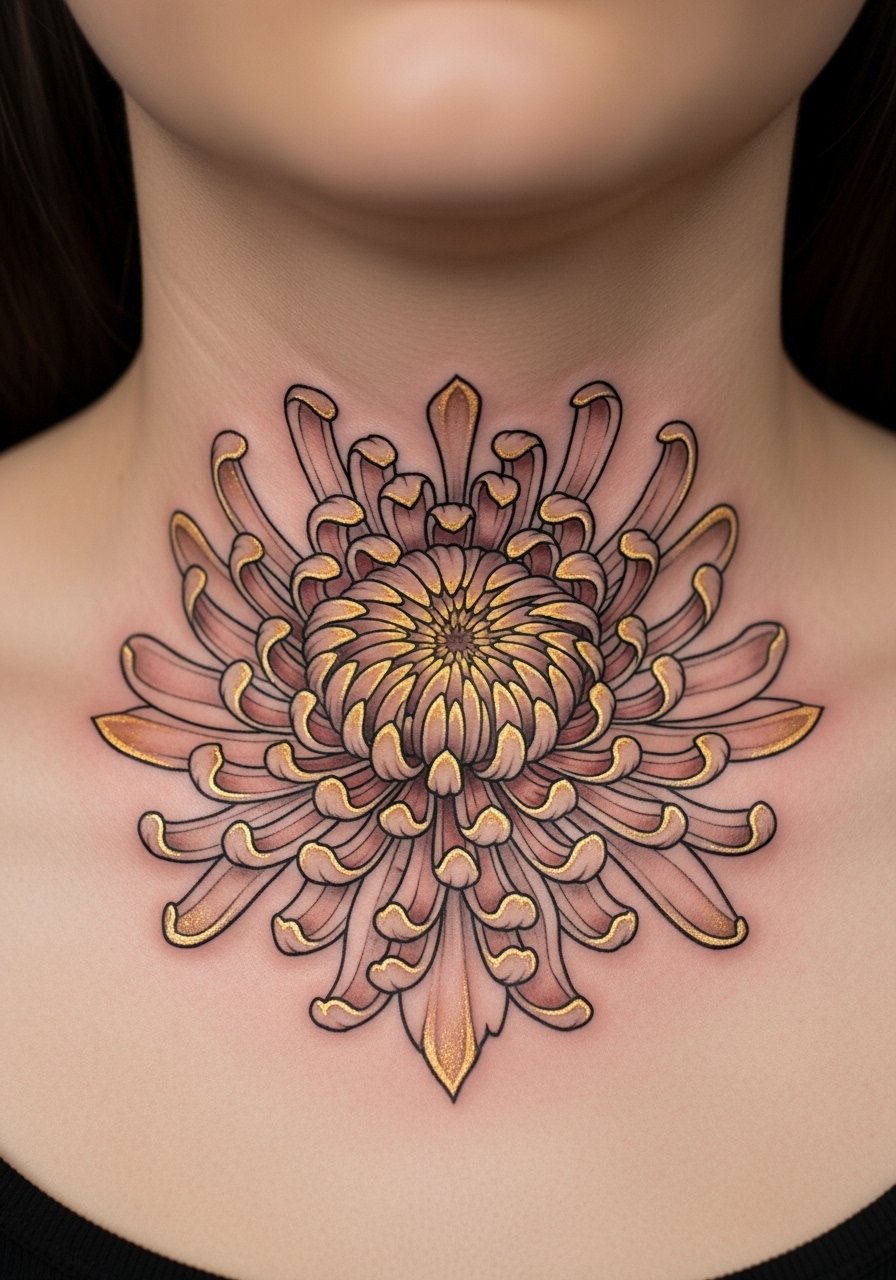
A chrysanthemum mandala at the throat is bold and central. The radial symmetry reads like jewelry and works as a focal point for neck or upper sternum placements. It’s intricate but highly graphic.
Style & Design Details
- Tattoo style: mandala with Japanese floral center
- Recommended size: small to medium (3–6 inches)
- Best placement(s): throat, upper sternum, nape
- Color vs. blackwork: Black-and-gold or black-and-red combinations work well
- Design elements: concentric petals, filigree dots, negative space rings, fine line symmetry
- Longevity note: Throat skin moves and stretches; strong outlines help longevity
- Who it suits: people comfortable with visible center placement and symmetry lovers
Finding the Right Artist
Choose an artist who does mandalas with strict symmetry and crisp healed linework. Ask about stencil placement and how they account for neck movement. Avoid artists who lack symmetrical mandala examples.
Aftercare & Healing Tips
Throat tattoos can be tender. Keep the area clean and avoid tight scarves. Use a fragrance-free wash and switch to Lubriderm unscented lotion during peeling. Expect a touch-up after settling.
You’ve just seen 22 ways classic Japanese imagery can be adapted to modern tastes and almost any body placement. From tiny sakura wrists to full-back phoenixes, these Japanese traditional tattoo designs offer options for every comfort level and aesthetic. Save this post and pin the images that call to you, then bring those pins to your consultation so your artist can see exactly what you mean.
I always recommend having a basic aftercare kit ready the day you get inked — grab a Saniderm second-skin bandage roll and a tube of Hustle Butter Deluxe before your appointment so you’re not scrambling post-session. Which design here resonates with you most, and what placement are you leaning toward?